避险资产

Search documents
特朗普上台后,金价涨近45%,机构:可能会涨到5000美元
3 6 Ke· 2025-09-30 07:46
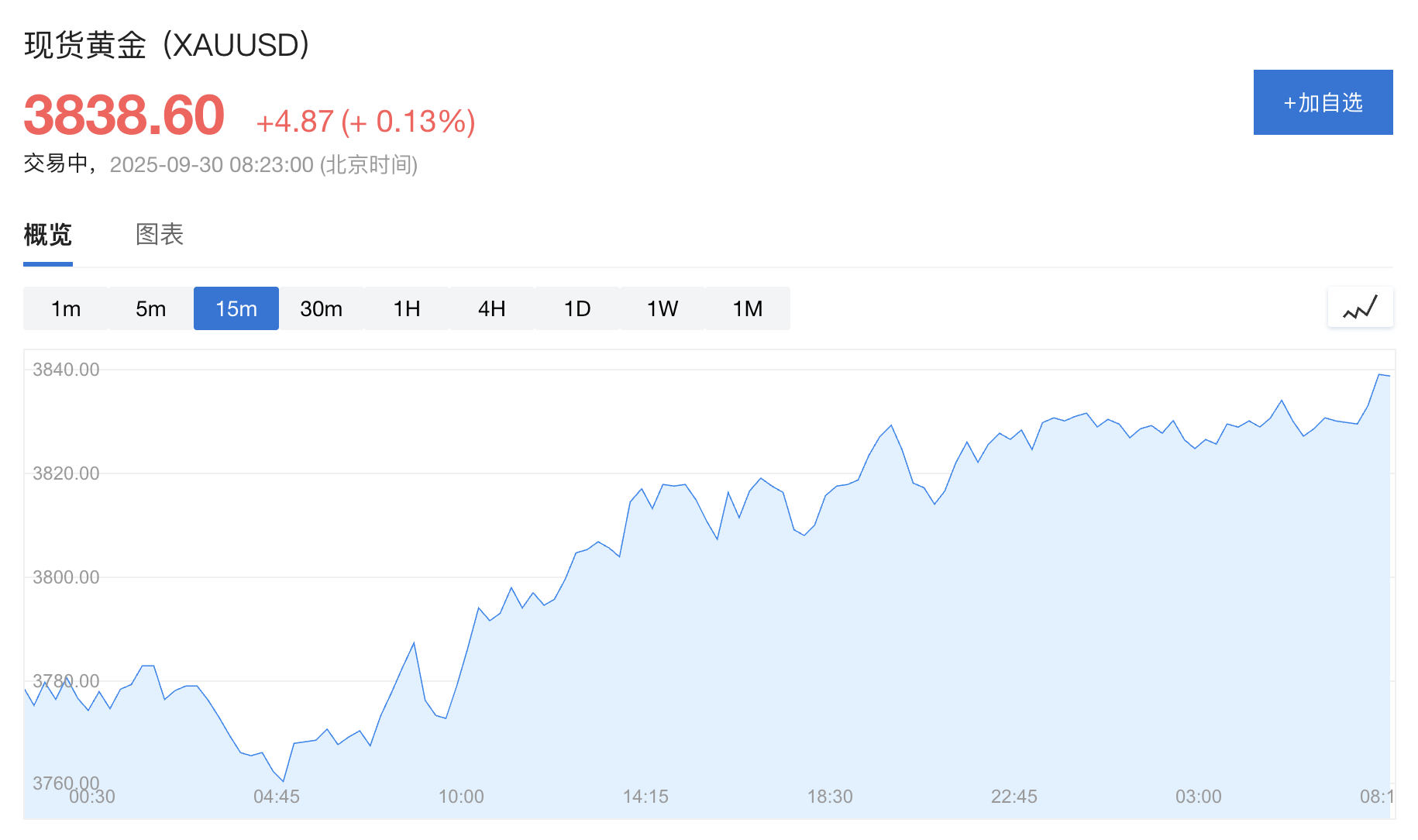
9月30日,现货黄金价格继续维持上涨趋势,现货黄金向上触及3850美元/盎司,续创历史新高,日内涨 0.42%。 黄金表现亮眼,背后有多重因素影响。 国际金价,又涨了。 世界黄金协会表示,来自美国的风险是近期金价上涨的主要推手。 据每日经济新闻报道,来自华尔街的交易员表示,特朗普政府的关门危机是一个重要因素。分析认为, 市场担心美国政府可能停摆,这或许会推迟本周关键就业数据的发布,并给美联储的货币政策路径蒙上 阴影。 自2025年1月特朗普再度当选美国总统以后,受关税政策、美国经济前景变化、美元走弱,还有特朗普 政府对美联储的持续施压等因素的影响,市场避险情绪急剧升温,不断将黄金价格推向高峰。 特朗普政府2.0时代,国际金价屡创历史新高,目前已累计上涨近45%,是全球表现最好的主流资产。 "新债王"、双线资本首席执行官兼首席投资官杰弗里·冈拉克预测,金价将在今年年底前达到每盎司 4000美元。高盛甚至认为,金价在极端情况下,未来可能会涨至5000美元。 特朗普政府与金价 自2025年1月上台以来,特朗普政府内外政策共同作用,推动国际金价飙涨。 先是摇摆不定的关税政策。 在降息政策落地后,现货黄金价格快速上冲至 ...
金荣中国:现货黄金延续走高,创下历史性高位至3850.77美元/盎司
Sou Hu Cai Jing· 2025-09-30 06:12
基本面: 整体来看,若停摆危机化解且经济数据持续强劲,金价可能面临短期回调;但若不确定性持续或地缘冲突升级,黄金牛市仍有较大空间。交易者本周将重点 关注包括非农在内的一系列美国就业数据。 技术面: 日线级别,金价昨日续录得大阳线收盘彰显强势,至尾盘时段报收至日内最高3833美元附近暗示短期仍有可观空间,或有望继续发散强劲势头挑战下一整百 关口3900一线。1--4小时级别,短线走势自此前3630附近获得支撑再度起涨至当前局面,多头仍保持较匀速上攻态势屡次创高,隔夜盘中一度击穿3800关口 后继续加强,至当前亚盘时段多头已挑战至3850一线仍未现乏力。交易者日内或保守看待短期走势以尝试回落多单为主,上方关注3870/3890附近潜在测试 风险。 周二(9月30日)亚盘时段,现货黄金延续走高并进一步创下历史性高位至3850.77美元/盎司,目前暂交投于3846美元附近。周一(9月29日)现货黄金价格 首次突破每盎司3800美元大关,最终收于3833.73美元,单日暴涨1.9%。为8月1日以来最大单日涨幅,这场看似突然的爆发,实则是货币政策预期、政治风 险与地缘冲突三大风暴共同催化的必然结果。当投资者还在股市中挣扎 ...


机构看金市:9月30日
Xin Hua Cai Jing· 2025-09-30 03:10
Core Viewpoint - The precious metals market is experiencing high uncertainty due to various factors, including potential U.S. government shutdown, geopolitical tensions, and expectations of further interest rate cuts by the Federal Reserve, leading to a surge in gold prices to new historical highs [1][2][3]. Group 1: Market Analysis - Evergrande Futures indicates that the U.S. housing market is showing signs of improvement, with the August pending home sales index rising by 0.5% year-on-year, up from a previous increase of 0.3%, driven by lower mortgage rates [1]. - The potential U.S. government shutdown on October 1 could lead to a halt in economic data releases, including the non-farm payroll report, which may create volatility in the market [2][3]. - The COMEX gold management fund's net positions increased by 1,578 contracts to 160,500 contracts, while the silver management fund's net positions rose by 1,293 contracts to 37,000 contracts, indicating a bullish sentiment in the precious metals market [3]. Group 2: Economic Indicators - The Federal Reserve's officials express concerns about inflation, suggesting that a shift to a more accommodative monetary policy may only occur if there is substantial economic weakness, which is not currently observed [1]. - Barclays Bank notes that the potential loss of Federal Reserve independence could lead to a risk premium in the dollar and U.S. Treasury bonds, making gold an unexpectedly attractive hedge [4]. Group 3: Investment Strategy - Given the current market conditions and the upcoming holiday period, investors are advised to maintain light positions in precious metals to mitigate risks associated with potential price volatility [2][3]. - Heraeus analysts highlight that the recent interest rate cuts by the Federal Reserve are likely to support gold prices, with expectations of further cuts in the coming years [3].
特朗普白宫谈判失败,美国政府距离关门“还有一天多”
Hua Er Jie Jian Wen· 2025-09-30 02:41
Core Viewpoint - The ongoing political deadlock in the U.S. regarding government funding has heightened market anxiety, leading to a surge in gold prices as investors seek safe-haven assets amid uncertainty [1][8]. Group 1: Political Situation - President Trump and congressional leaders failed to reach an agreement on funding, with the federal government set to run out of money in less than two days [1][6]. - The impasse has resulted in mutual blame between parties, with Vice President JD Vance warning of an impending shutdown and Senate Minority Leader Chuck Schumer asserting that the decision lies with the Republicans [1][6][5]. - The core issue is that despite the Republican majority in the Senate, any funding bill requires at least 60 votes, necessitating support from Democratic senators, which remains unlikely due to significant party divisions [6]. Group 2: Economic Implications - Goldman Sachs indicated that a government shutdown could delay the release of the September non-farm payroll report, potentially impacting the Federal Reserve's plans for interest rate cuts in October [4]. - The political uncertainty and a weakening dollar have driven gold prices above $3,800 per ounce, reflecting a 45% increase this year, fueled by concerns over high government debt and inflation [1][8]. Group 3: Market Reactions - The political deadlock has translated into increased demand for gold as a hedge against dollar risk and U.S. political uncertainty, with gold prices reaching new highs [8]. - Institutional and central bank buying has contributed to the surge in gold prices, with significant inflows into gold ETFs and record net long positions by speculative investors [9][10]. - The World Gold Council reported that inflows into gold ETFs have been positive for four consecutive weeks, with September's inflow nearing 100 tons, marking the fastest monthly growth since April [10].

特朗普白宫谈判失败,美国政府距离关门“还有一天多”,金价突破3800美元
Hua Er Jie Jian Wen· 2025-09-30 00:31
Core Points - The U.S. government is on the brink of a shutdown due to failed negotiations between the two parties regarding funding, causing market anxiety and pushing gold prices above $3,800 per ounce [1][8] - The political deadlock is characterized by strong stances from both parties, with President Trump and Republican leaders blaming Democrats, while Democrats insist that any agreement must include healthcare subsidies [5][6] - The potential government shutdown could delay the release of the non-farm payroll data, impacting the Federal Reserve's plans for interest rate cuts [4] Group 1: Political Negotiations - Key discussions involving President Trump and congressional leaders failed to reach an agreement, with a proposed "Continuing Resolution" rejected by Democrats [5] - The core issue lies in the requirement for at least 60 votes to pass any funding bill, necessitating support from at least seven Democratic senators [6] - The White House shows no willingness to compromise, increasing market concerns about a potential government shutdown [7] Group 2: Market Reactions - The political uncertainty and a weakening dollar have driven gold prices to surpass $3,800 per ounce, marking a 45% increase this year [1][8] - Analysts attribute the rise in gold prices to high government debt, ongoing inflation, and doubts about the dollar's status as the primary reserve currency [8] - Institutional and central bank buying has also contributed to the surge in gold prices, with significant inflows into gold ETFs and record net long positions from speculative investors [9]
突破3820美元,金价再创历史新高
Zheng Quan Shi Bao· 2025-09-29 23:21
Group 1 - Gold prices have reached a new historical high, surpassing $3820 per ounce, with London gold priced at $3827.37 per ounce, reflecting a year-to-date increase of over 45% [4] - The surge in gold prices has negatively impacted demand, particularly in the Chinese market, where physical gold demand has shown a continued decline [2][6] - The World Gold Council reported that in August, China's physical gold demand remained weak, with gold outflow from the Shanghai Gold Exchange at 85 tons, marking the lowest level for August since 2010 [7] Group 2 - High gold prices have led to a shift in consumer behavior in China, with a notable decrease in demand for physical gold products, as consumers are now more focused on craftsmanship and brand rather than investment [7][10] - The Chinese gold market has seen a significant outflow from gold ETFs, with approximately 60 billion yuan leaving the market in August, resulting in a total asset management scale decrease to 148 billion yuan [7][8] - The Chinese Gold Association noted a structural change in gold jewelry consumption, with high-value, well-designed products gaining popularity despite an overall decline in consumption [10]

Treasuries Rally as Traders Brace for Possible Delay of Payrolls Report
Barrons· 2025-09-29 15:28
Core Insights - The anticipated employment data release on Friday may face delays, leading to increased demand for high-quality debt instruments [1] Group 1 - The potential delay in employment data is causing a shift in investor behavior towards safer assets in the debt market [1]
创纪录涨势后,美国黄金储备价值触及1万亿美元
Hua Er Jie Jian Wen· 2025-09-29 13:30
Core Viewpoint - The market value of the U.S. Treasury's gold reserves has surpassed $1 trillion for the first time, driven by a significant increase in gold prices, which have risen by 45% this year, reaching a peak of $3,824.5 per ounce [1][6]. Group 1: Gold Price Dynamics - The surge in gold prices is attributed to investors seeking safe-haven assets amid trade wars, geopolitical tensions, and concerns over potential U.S. government financing crises [1][6]. - The Federal Reserve's resumption of interest rate cuts has further enhanced the attractiveness of gold by lowering the opportunity cost of holding non-yielding assets [6][10]. - Institutional and official buying has provided solid support for gold prices, with gold ETFs experiencing strong demand, marking one of the strongest years on record [6][7]. Group 2: Valuation Discrepancies - The official value of gold on the U.S. government's balance sheet remains fixed at just over $11 billion, based on a price set by Congress in 1973, creating a disparity where the market value is over 90 times the book value [3][12]. - A revaluation of the gold reserves at current market prices could theoretically release approximately $990 billion in funds for the U.S. Treasury, which is particularly enticing given the current debt ceiling constraints [4][12]. - Discussions around the potential revaluation of gold reserves have emerged, although U.S. Treasury Secretary Yellen has denied that such a move is being seriously considered [4][12][13]. Group 3: Market Sentiment and Technical Analysis - Current market sentiment indicates that speculative long positions in gold have increased but have not reached extreme levels, suggesting that the market has not entered a "panic buying" phase [10]. - Technical analysis points to a potential target price of around $4,000 per ounce, based on trend lines connecting previous highs, indicating that there may still be room for price increases [9][10]. Group 4: Historical Context and Storage - The U.S. gold reserves total approximately 261.5 million ounces, with over half stored at Fort Knox, Kentucky, and the remainder in various locations, including West Point and Denver [14]. - There have been public speculations regarding the existence of the gold at Fort Knox, fueled by comments from notable figures, highlighting ongoing interest and concern about the U.S. gold reserves [14].
三大期指齐涨,中概股普涨;现货黄金突破3800美元/盎司;阿斯利康将在纽交所上市,保留英国总部【美股盘前】
Mei Ri Jing Ji Xin Wen· 2025-09-29 11:38
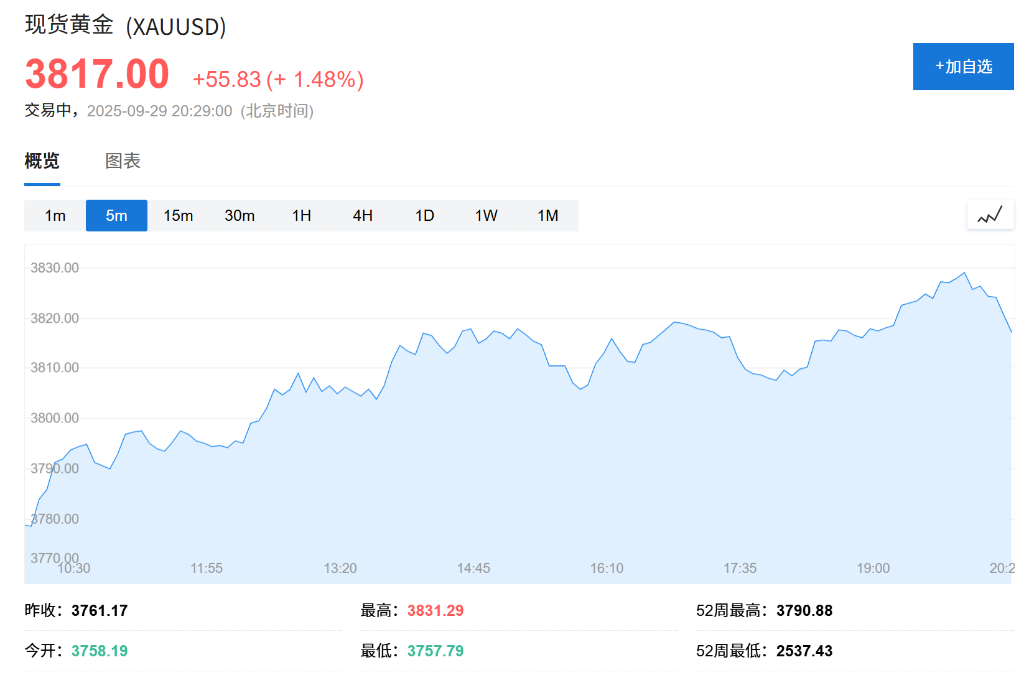
Market Overview - Major U.S. stock index futures are showing positive movement, with Dow futures up 0.37%, S&P 500 futures up 0.49%, and Nasdaq futures up 0.64% [1] Chinese Stocks - Chinese concept stocks are experiencing a pre-market rally, with Bilibili, Li Auto, and Alibaba rising over 3.5%, while JD.com, Baidu, and Beike are up over 2.5%, and Xpeng Motors is up over 1% [2] Company News - Spotify's stock has increased by over 1% in pre-market trading, following a price target upgrade from JPMorgan from $740 to $805 [3] - Electronic Arts (EA) is reportedly negotiating a privatization deal that could reach $50 billion, with potential investors including Saudi Arabia's Public Investment Fund, Silver Lake Partners, and Jared Kushner's Affinity Partners [4] - Danish pharmaceutical giant Novo Nordisk has seen its stock drop over 3% after Morgan Stanley lowered its European stock price target from 380 Danish Krone to 300 Danish Krone and downgraded its rating from "in line with the market" to "underweight" [4] - AstraZeneca plans to list on the New York Stock Exchange while retaining its headquarters in the UK, aiming to attract more investors while continuing to trade in London [4] Energy Sector - TotalEnergies has announced the sale of a 50% stake in its North American solar portfolio for $950 million to KKR, which aligns with its renewable energy business model [4] Commodities - Spot gold prices have surpassed $3,800 per ounce, reaching a new historical high, while spot silver has increased over 2%, hitting $47 per ounce, the highest since May 2011 [4] Economic Outlook - Jefferies economists suggest that U.S. interest rates may not decline as quickly or significantly as the market anticipates, due to the resilience of the U.S. economy [4]

黄金白银,彻底涨疯了!
格隆汇APP· 2025-09-29 11:11
Core Viewpoint - The article highlights a significant surge in gold and silver prices, driven by various market factors, including inflation data, geopolitical tensions, and central bank policies, indicating a strong demand for these precious metals as safe-haven assets [2][3][8]. Group 1: Market Performance - On September 29, gold futures rose by 1.35% to 866.52 CNY per gram, reaching a historical high, while silver futures surged by 3.92% to 10,939 CNY per kilogram, also breaking new records [2]. - The A-share precious metals sector increased by 3.6%, with all related stocks showing strong performance, positively impacting the non-ferrous and minor metals sectors [2]. - The trading volume for gold futures reached 287.447 billion CNY, an increase of over 50 billion CNY from the previous day, while silver futures saw a trading volume of 248.196 billion CNY, up nearly 100 billion CNY, marking a 64% increase [4][7]. Group 2: Influencing Factors - Recent favorable news for precious metals includes the U.S. August core PCE price index year-on-year at 2.9%, which alleviated concerns about interest rate cuts, leading to accelerated price increases for gold and silver [8]. - Dovish statements from several Federal Reserve officials supporting potential interest rate cuts have reinforced market expectations for an accelerated easing cycle [8]. - Geopolitical tensions, particularly in regions like Ukraine and the Middle East, have heightened market anxiety, further driving demand for gold and silver as safe-haven assets [8]. Group 3: Central Bank Activities - Global central banks have significantly increased their gold reserves, with a total value of approximately 4.5 trillion USD, surpassing the 3.5 trillion USD in U.S. Treasury reserves [9]. - China's central bank reported a gold reserve of 74.02 million ounces as of August 2025, marking a continuous increase for ten months, with a total purchase of 36 tons from January to July 2025 [12]. Group 4: Price Trends and Predictions - Gold prices have risen nearly 45% year-to-date, making it the best-performing asset among major asset classes, while silver has seen an increase exceeding 60% [15]. - Institutions have raised their price targets for gold, with expectations of reaching 4,000 USD per ounce by the end of the year, and potential scenarios suggesting prices could rise to 4,500 USD or even 5,000 USD under certain conditions [18]. Group 5: Silver Market Dynamics - Silver futures have experienced a notable increase in trading volume, indicating heightened market interest compared to gold [20][21]. - The silver market is facing a significant supply-demand imbalance, with industrial demand driven by sectors like solar energy and electric vehicles, while supply constraints are exacerbated by environmental regulations and labor disputes in major producing countries [24][26]. - The current market dynamics reflect a structural phase where industrial demand and valuation recovery are driving silver prices, supported by the ongoing energy revolution and monetary easing [33].