产业升级

Search documents
果麦文化(301052.SZ)拟530万元参设青岛川商俊创基金
智通财经网· 2025-11-26 10:11
Core Viewpoint - Guomai Culture (301052.SZ) plans to invest RMB 5.3 million as a limited partner in a joint venture with Chengdu Chuanshang Xingye Equity Investment Fund Management Co., Ltd. to explore new opportunities for industrial upgrades through professional investment resources and management advantages [1] Investment Details - The company will contribute 40.7692% of the total subscribed capital of the Qingdao Chuanshang Junchuang Venture Capital Fund Partnership (Limited Partnership) [1]
果麦文化拟530万元参设青岛川商俊创基金
Zhi Tong Cai Jing· 2025-11-26 10:07
Core Viewpoint - Guomai Culture (301052.SZ) plans to invest RMB 5.3 million as a limited partner in collaboration with Chengdu Chuanshang Xingye Equity Investment Fund Management Co., Ltd. to explore new opportunities for industrial upgrades through professional investment resources and management advantages [1] Investment Details - The company will contribute 40.7692% of the total subscribed capital of the Qingdao Chuanshang Junchuang Venture Capital Fund Partnership (Limited Partnership) [1]
果麦文化(301052.SZ):拟与专业机构共同投资合伙企业
Ge Long Hui A P P· 2025-11-26 09:54
Core Viewpoint - Guomai Culture (301052.SZ) aims to promote sustainable development by leveraging resources and investment management advantages from professional investment institutions, exploring new opportunities for industrial upgrades while ensuring stable growth of its main business [1] Group 1: Investment Strategy - The company plans to invest RMB 5.3 million as a limited partner in collaboration with Chengdu Chuanshang Xingye Equity Investment Fund Management Co., Ltd. and its wholly-owned subsidiary [1] - Guomai Culture will hold a 40.7692% stake in the total committed capital of the Qingdao Chuanshang Junchuang Venture Capital Fund Partnership (Limited Partnership) [1]
华龙证券:产业升级驱动结构性机遇 高端智造引领新成长
智通财经网· 2025-11-26 08:25
Core Viewpoint - The general equipment industry is characterized by "demand pressure and industrial upgrading coexistence," with investment recommendations focusing on embracing industrial upgrades and identifying cost benefits and reversal opportunities [1] Market Performance - The general equipment index outperformed the CSI 300 index, rising by 46.05% from early 2025 to October 30, compared to a 21.47% increase in the CSI 300, resulting in a relative return of 24.58% [2] Valuation Analysis - Valuation has seen some recovery, with the general equipment sector's price-to-earnings ratio at 43.44 as of November 18, 2025, compared to 31.05 for the machinery equipment sector and 13.27 for the CSI 300. Sub-sectors show significant differentiation, with some still having upward potential [3] Performance Analysis - Overall revenue in the general equipment sector slightly declined by 1.15% year-on-year to 392.702 billion yuan, while net profit increased by 7.55% to 23.725 billion yuan. High-value-added sub-sectors related to industrial upgrading performed well, while traditional cyclical sub-sectors continued to face pressure [4] Outlook - The manufacturing PMI in October showed a decline, indicating pressure on demand, particularly from external sources. However, structural industrial upgrading remains a core driving force, with strong resilience in high-end sectors like new energy and automation [5] Investment Recommendations - **Main Line One: Embrace Industrial Upgrading and High Prosperity Tracks** - Focus on machine tools benefiting from manufacturing upgrades, with notable companies including Haitan Precision (601882.SH) and Neway CNC (688697.SH) [6] - In the instrumentation sector, companies like Hexin Instruments (688622.SH) and Anpeilong (301413.SZ) are highlighted for their strong positioning in high-tech fields [6] - **Main Line Two: Explore Cost Benefits and Reversal Opportunities** - Metal products are benefiting from low steel prices, with companies like Neway (603699.SH) and Dongmu (600114.SH) recommended for their stable downstream demand [7] - Other general equipment and refrigeration air conditioning sectors show potential for valuation recovery, with a focus on companies related to emerging demands like AI infrastructure and environmental protection [8]
政策机遇:5-10亿产投债为县区城投产业化转型撑起一片天
Sou Hu Cai Jing· 2025-11-26 07:08
Core Viewpoint - The article discusses the historic turning point for county-level investment platforms in China, driven by the national "14th Five-Year Plan" and the recent issuance of guidelines by the State Council to support the issuance of industrial investment bonds (产投债) by these platforms, enabling a shift from land financing tools to industrial investment entities [1][12]. Group 1: Policy Benefits - The introduction of industrial investment bonds significantly reduces funding costs, with interest rates as low as 3% and a minimum term of 5 years, addressing the issue of short-term loans for long-term investments. For instance, a 500 million yuan bond can save over 75 million yuan in interest over five years, reducing local fiscal burdens by 15% [2]. - The policy provides targeted guidance for investment, mandating that funds from industrial investment bonds be used for "industrial upgrading, green economy, and rural revitalization," aligning with the strategic goals of county-level platforms [3]. - A risk-sharing mechanism is established to encourage social capital participation, allowing the use of industrial investment bonds in conjunction with industry funds and PPP models to leverage government funding for larger investments [4]. Group 2: Transformation Pathways - In the financial control sector, issuing 800 million yuan in industrial investment bonds can attract new energy and new material companies, potentially generating 120 million yuan in returns over five years while fostering 2-3 listed companies [5]. - In the urban service sector, 200 million yuan in bonds can fund solar power and waste-to-energy projects, covering 30% of the county's electricity needs and reducing fiscal pressure, with an expected annual revenue increase of 50 million yuan [6]. - In the agricultural investment sector, the remaining 300 million yuan can enhance local agricultural products' value by 25% through modern agricultural parks and services, benefiting 5,000 farmers [7]. Group 3: Revenue Outlook - A case study from a central county indicates that a total investment of 2 billion yuan (including 800 million yuan in industrial investment bonds) can yield annual comprehensive returns of 300-500 million yuan over five years, alongside social benefits such as 8,000 new jobs and improved utility coverage [8]. Group 4: Action Guidelines - County platforms are advised to follow a three-step approach to align with policies: establish a special team to identify eligible projects, collaborate with brokers and rating agencies to design bond issuance plans, and engage with provincial development departments for inclusion in national project databases [10]. - The use of funds should adhere to four principles: professional management through independent SPV companies, market-driven assessments to boost investor confidence, transparency in fund usage, and sustainability by reinvesting 20% of returns into industry funds [11].
工业母机ETF(159667)飘红,产业升级趋势明确
Mei Ri Jing Ji Xin Wen· 2025-11-26 06:30
Core Insights - The mechanical and automation equipment industries are expected to benefit from external demand and the "two new" (emerging industries and new infrastructure) related chains by 2025 [1] - There is a noticeable "temperature difference" at the mid-level, with high prosperity in emerging sectors like the AI industry chain and high-end equipment manufacturing, while traditional sectors are experiencing lower prosperity due to weak investment and consumption [1] - Investment in equipment tools has seen a cumulative year-on-year growth of 13.0% in the first ten months of 2025, and the added value of high-tech manufacturing has increased by 9.3%, indicating a clear trend of industrial upgrading [1] - Under the "14th Five-Year Plan," traditional manufacturing is expected to improve supply-demand balance through "optimization and upgrading" policies by 2026, potentially narrowing the prosperity gap between emerging and traditional sectors, thus expanding overall industry profitability [1] - The Industrial Mother Machine ETF (159667) tracks the China Securities Machine Tool Index (931866), which selects listed companies involved in machine tool manufacturing, component supply, and related services to reflect the overall performance of the machine tool industry chain [1] - The index covers the entire industry chain from upstream materials to downstream applications, with a particular focus on the high-end equipment manufacturing sector [1]
利好!广东,重磅发布!
Zheng Quan Shi Bao· 2025-11-26 04:46
Core Viewpoint - Guangdong Province has launched a financial support plan to promote industrial chain integration and mergers, aiming to enhance the quality and competitiveness of key industries by 2027 [1][2]. Group 1: Financial Support for Industrial Integration - The plan emphasizes a market-oriented, legal, and international approach to build a comprehensive financial support system for the modern industrial system in Guangdong [2][5]. - It aims to strengthen the collaboration between upstream and downstream enterprises in the industrial chain, facilitating financial resources to key integration and merger processes [2][6]. - Specific measures include supporting mergers and acquisitions (M&A) in key industries, enhancing the quality of listed companies, and promoting the integration of state-owned enterprises [3][4]. Group 2: Encouragement of Cross-Border Mergers - The plan encourages the establishment of cross-border integration funds with Hong Kong and Macau, optimizing mechanisms for qualified foreign and domestic limited partners [4][5]. - It supports enterprises in issuing offshore RMB bonds in Hong Kong and Macau to finance industrial chain integration and encourages the use of RMB for cross-border M&A settlements [4][6]. Group 3: Financing Channels and Mechanisms - The plan outlines strategies to broaden direct financing channels in the capital market and improve the fund system to empower industrial chain integration [5][6]. - It encourages local governments to enhance comprehensive services for enterprise listings and supports technology-driven companies in accessing capital markets [5][6]. - The establishment of provincial government investment guidance funds and M&A funds is promoted to attract social capital for investment in key industrial chain segments [6][7]. Group 4: Support for Technology and Innovation - The plan highlights the need for financial institutions to develop innovative financial products tailored for technology enterprises, addressing their unique asset-light and high-risk characteristics [7]. - It encourages collaboration among banks, insurance, and investment institutions to create a comprehensive financial service system that supports technology innovation and green transformation [7].
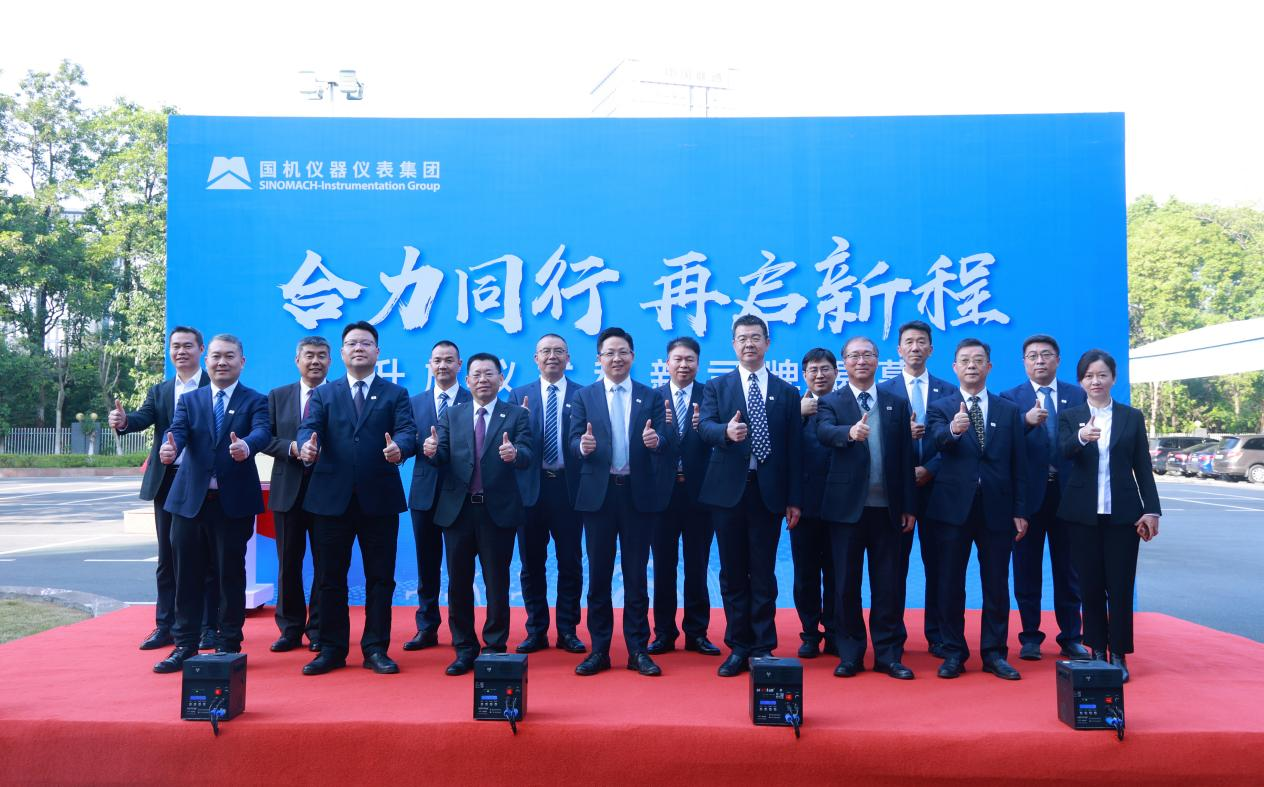
川仪股份入列国机集团谱写仪器仪表产业升级新篇
Xin Lang Cai Jing· 2025-11-26 04:37
Core Insights - The event "Working Together for a Win-Win Future" was held by the China Machinery Instrumentation Group in Chongqing, coinciding with the 60th anniversary of Chuan Yi Co., Ltd. and its formal integration into the China Machinery Group [1][1][1] - The aim of the event is to promote the construction of the Chongqing instrumentation industry cluster, focusing on technological innovation and industrial upgrading to create industry leaders and improve the industrial ecosystem for high-quality development in China's instrumentation sector [1][1][1] Company Developments - Chuan Yi Co., Ltd. has undergone a change in actual control to the China Machinery Group, which will manage it under the China Machinery Instrumentation Group [1][1][1] - The China Machinery Group, as a state-owned backbone enterprise in the machinery industry, possesses strong research platforms, abundant industrial resources, and extensive market channels, while Chuan Yi Co., Ltd. has a rich technical foundation and a complete industrial chain advantage built over 60 years [1][1][1] Strategic Initiatives - The newly established China Machinery Instrumentation Group has significantly enhanced its comprehensive strength, forming a complete R&D and manufacturing system covering high-performance materials, advanced sensors and components, high-end instruments, and intelligent control systems [1][1][1] - During the strategic cooperation signing session, the China Machinery Instrumentation Group reported on its establishment process and future development outlook, showcasing new achievements and products in core technology and innovation [1][1][1] Future Directions - The China Machinery Instrumentation Group aims to focus on intelligent, green, and integrated development, continuously strengthening original innovation and key core technology breakthroughs, optimizing forward-looking research layouts, and promoting deep integration of technological and industrial innovation to fully support national strategies [1][1][1] - Chuan Yi Co., Ltd. plans to leverage the central enterprise platform to enhance its core competitiveness and investment value, solidifying its leading position in the process automation industry and expanding its competitive advantages [1][1][1]

2025搜狐财经年度论坛议程公布,吴晓求、刘纪鹏、阎学通等20余位重磅嘉宾齐聚,共探中国经济韧性
Sou Hu Cai Jing· 2025-11-26 04:25
Core Viewpoint - The 2025 Sohu Finance Annual Forum will be held in Beijing on November 27, featuring over 20 experts from academia, industry, and investment sectors discussing key topics such as macro policies, industrial upgrades, corporate internationalization, capital market reforms, and international dynamics [2]. Group 1: Forum Structure - The forum will include a morning session with prominent scholars and business leaders discussing economic trends and real estate transformation [2]. - Notable entrepreneurs will explore innovation in industry competition, while experienced industry professionals and renowned fund managers will share insights on investment management and asset allocation [2]. Group 2: Afternoon Session Focus - The afternoon session will feature discussions on China's economy, stock market development, new consumer dynamics, and international situations by leading experts [2]. - Entrepreneurs will share their experiences on maintaining long-term strategies and building core competitiveness amidst cyclical fluctuations and external challenges, embodying the spirit of modern entrepreneurship [2].

川仪股份入列国机集团 谱写仪器仪表产业升级新篇
Zheng Quan Shi Bao Wang· 2025-11-26 02:46
Core Viewpoint - The event "Working Together for a Win-Win Future" held by the China Machinery Instrumentation Group aims to promote the development of the Chongqing instrumentation industry cluster, focusing on technological innovation and industrial upgrading to support high-quality development in China's instrumentation sector [1][3]. Group 1: Company Developments - The actual controller of Chuan Yi Co., Ltd. has changed to China Machinery Industry Group Co., Ltd., marking a significant step in the integration of central and local enterprises in the instrumentation industry [3]. - Chuan Yi Co., Ltd. has a rich history of 60 years, possessing deep technical expertise and a complete industrial chain advantage, which will synergize with the resources of the China Machinery Instrumentation Group [3]. - The newly established China Machinery Instrumentation Group has significantly enhanced its comprehensive strength, forming a complete R&D and manufacturing system covering high-performance materials, advanced sensors, high-end instruments, and intelligent control systems [3]. Group 2: Strategic Initiatives - During the strategic cooperation signing, the China Machinery Instrumentation Group showcased its journey and future outlook, highlighting new achievements in core technology and product development [4]. - The group signed strategic cooperation agreements to explore innovative paths with important state-owned enterprises in Chongqing and to expand overseas marketing channels with e-commerce platforms [4]. - The focus for the future includes intelligent, green, and integrated development, emphasizing original innovation and key technology breakthroughs to support national strategic needs and industrial transformation [4]. Group 3: Market Positioning - Chuan Yi Co., Ltd. aims to leverage the central enterprise platform to enhance its core competitiveness and investment value, solidifying its leading position in the process automation industry [4]. - The company is accelerating its internationalization process, striving to become a world-class brand and positioning "Chuan Yi Intelligent Manufacturing" as a pioneer in serving the new type of industrialization [4].