
商业航天

Search documents
跟踪指数创近29个月新高!华宝中证光伏产业指数基金今起火热开售
Xin Lang Cai Jing· 2026-01-27 01:05
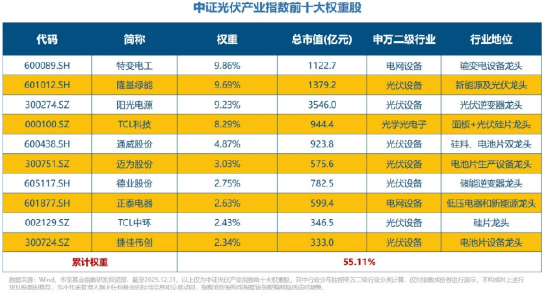
Core Insights - The current wave of investment in the photovoltaic (PV) sector is unexpectedly driven by commercial aerospace, with significant market potential identified for low Earth orbit satellites and space computing [1][9] - The PV industry is facing five major investment opportunities: anti-involution, technological iteration, overseas demand, energy storage demand, and space photovoltaics, making it an attractive sector for investors [1][9] Investment Opportunities - The Chinese PV industry chain is the most competitive globally, with various investment opportunities across different segments, including PV battery components, inverters, and silicon materials [2][10] - The newly launched Huabao CSI Photovoltaic Industry Index Fund (code: 026754) tracks the CSI Photovoltaic Industry Theme Index, covering a wide range of segments from upstream to downstream in the PV industry [2][10] - The CSI Photovoltaic Industry Index includes 50 constituent stocks, with the top five stocks accounting for 41.9% and the top ten for 55.11%, indicating a balanced structure of leading and supporting companies [2][10] Performance Metrics - From the index's inception on April 22, 2019, to December 31, 2025, the CSI Photovoltaic Industry Index has achieved a cumulative return of 47.48% and an annualized return of 6.67%, outperforming the CSI 300 Index and other related indices [3][13] - The index's annualized volatility is lower than that of comparable indices, indicating a favorable risk-return profile [4][13] Market Trends - The CSI Photovoltaic Industry Index has shown significant upward movement, reaching a new high of 3444 points on January 26, 2024, marking the highest level in nearly 29 months [5][15] - The index's price-to-book (PB) ratio is 2.52, indicating a low valuation and high elasticity, which enhances its investment appeal [5][15] Future Outlook - The fund manager of the Huabao CSI Photovoltaic Industry Index Fund anticipates focusing on anti-involution and new growth opportunities in the first half of 2026, while emphasizing the importance of industry profit recovery in the second half [6][16] - The manager highlights that recent price increases in the industry and the alignment of customer bases between energy storage systems and PV components present significant growth potential [17][16]

中信证券:掘金商业航天产业链上游合金材料
Xin Lang Cai Jing· 2026-01-27 00:49
Core Insights - The commercial aerospace sector is experiencing a rigid expansion driven by reusable iterations and the ITU timeline, leading to a multiplier effect in material demand [3][18] - Four core materials are expected to accelerate in industrialization: high-strength high-conductivity copper alloys, niobium alloys, tantalum alloys, and high-temperature alloys [3][18] Launch and Manufacturing Trends - In 2025, global rocket launches are projected to reach 329, with commercial aerospace accounting for 214 launches, approximately 65% of the total; China is expected to have 92 launches with 50% being commercial, while the US will have 198 launches with 82% commercial [4][18] - The recent approval of 203,000 low-orbit satellites in China, combined with existing projects, brings the total to over 255,000, indicating a significant push in satellite manufacturing [4][18] Policy Developments - Various policies have been established since 2014 to encourage private investment in commercial aerospace, marking the opening of the market [5][19] - The 2024 government work report includes commercial aerospace as a new growth engine, elevating its strategic importance in national economic development [5][19] Material Applications and Demand Drivers - High-strength high-conductivity copper alloys are crucial for liquid rocket engine combustion chambers, requiring materials that can withstand temperatures of 3000-4000°C [6][20] - Niobium alloys are essential for secondary rocket vacuum nozzles and high-performance thrust chambers, with C-103 and Nb521 being key grades [10][24] - Tantalum alloys are utilized for radiation resistance and thermal management in satellite applications, with significant demand in low-orbit satellite networks [12][26] - High-temperature alloys are central to commercial aerospace engine components, with various manufacturing processes being employed [15][29] Investment Strategy - The period from 2026 to 2030 is identified as critical for the transition of core aerospace materials from technology validation to mass industrialization, with a focus on high-strength high-conductivity copper alloys, niobium/tantalum alloys, and high-temperature alloys [16][31] - Investment recommendations include focusing on integrated engine and high-temperature materials, structural components using ring forgings and metal 3D printing, and radiation-resistant/spaceborne electronics [16][31]


人民日报:商业航天,“高热度”下的“冷思考”
Ren Min Ri Bao· 2026-01-27 00:47
Core Viewpoint - The development of China's commercial space industry is at a critical juncture, with significant opportunities and challenges ahead, particularly in achieving reusable rocket technology and enhancing launch frequency and cost-effectiveness [1][6]. Group 1: Industry Development and Opportunities - China has submitted plans for a satellite network comprising over 200,000 satellites, necessitating rapid advancements in rocket capacity, satellite production, and reusable technology [1]. - By 2025, China aims to conduct 25 commercial rocket launches and place 311 satellites into orbit, representing 84% of the total satellites launched that year [1]. - The industry is witnessing a surge in demand for rocket launches driven by extensive satellite deployment, with a need to launch over 25,000 satellites in the next nine years [3]. Group 2: Technological Innovations - Blue Arrow Aerospace's Zhuque-2 rocket became the world's first liquid oxygen-methane rocket to reach orbit, marking a significant step towards reusable rocket technology [2]. - Companies like Tianbing Technology and Galaxy Aerospace are pioneering various technologies, including "one rocket, 36 satellites" launch capabilities and lightweight engines [2]. - The development of stackable satellites is emerging as a trend to enhance launch efficiency, allowing multiple satellites to be launched simultaneously [5]. Group 3: Efficiency and Production - The industry consensus is to produce satellites in bulk, akin to automobile manufacturing, to improve efficiency [4]. - Galaxy Aerospace's recent satellite launch demonstrated a fully digitalized production process, significantly reducing assembly time from several months to as little as 20-25 days [4]. - The Chinese aerospace industry is advancing towards a model where 500 kg satellites can be ready for launch in just 20 days [4]. Group 4: Challenges and Constraints - The commercial space sector faces challenges in establishing a profitable business model, with many companies still reliant on external funding and struggling to generate revenue [6]. - Limited launch opportunities due to a shortage of launch sites and resources are constraining the frequency of commercial launches [9]. - The high cost of rocket launches, primarily driven by engine and airframe expenses, remains a significant barrier to industry growth [7][8]. Group 5: Policy and Support - The Chinese government is actively promoting the commercial space sector, with policies aimed at fostering innovation and reducing regulatory burdens [14]. - The State Council has issued guidelines to encourage the expansion of satellite service applications, aiming to bridge the gap between satellite capabilities and market demand [12]. - There is a call for a regulatory framework that supports frequent launches and efficient resource allocation, akin to aviation management practices [10].
商业航天:技术与政策共振,商业航天需求高景气
Soochow Securities· 2026-01-27 00:24
Investment Rating - The report suggests a positive outlook for the commercial aerospace industry, highlighting significant growth potential and investment opportunities [3]. Core Insights - The commercial aerospace sector is experiencing high demand driven by limited low Earth orbit (LEO) satellite resources and competitive international efforts to secure orbital and frequency resources [3][10]. - The global commercial aerospace market is projected to reach $800 billion by 2030, with a compound annual growth rate (CAGR) of approximately 10% from 2025 to 2030 [3][39]. - The report emphasizes the urgency for China to accelerate its satellite deployment, with over 250,000 satellites applied for, while actual launches remain significantly lower compared to the U.S. [3][31]. Summary by Sections Section 1: Limited Low Earth Orbit Resources - The LEO satellites are crucial for commercial applications, with the ITU rules favoring early applicants for orbital and frequency resources [3][10]. - The U.S. leads in satellite deployment, primarily through SpaceX, which has launched over 9,000 satellites, accounting for about 60% of the global total [3][23]. - China's satellite deployment is lagging, with a pressing need for launches from 2026 to 2030 to meet its ambitious plans [3][31]. Section 2: U.S. Satellite Deployment and Competitive Landscape - The U.S. has significantly increased its rocket launch frequency since 2015, with projections of 324 launches in 2025, of which 194 will be from the U.S. [3][13]. - SpaceX's Falcon 9 rocket has drastically reduced launch costs, facilitating the rapid deployment of the Starlink satellite constellation [3][17]. - Other international players, such as OneWeb and Amazon's Kuiper Project, are also expanding their satellite constellations, contributing to a competitive landscape [3][29]. Section 3: Market Growth and Investment Opportunities - The commercial aerospace market is expected to grow from $4.8 trillion in 2024 to $8 trillion by 2030, driven by increasing demand for satellite services [3][39]. - The report identifies several companies as potential investment opportunities, including Minstar, Optoelectronics, and Fujida, among others [3]. - The commercial aerospace industry is characterized by a comprehensive supply chain, from materials to end-user applications, indicating robust growth potential across various segments [3][43].
上证早知道|280亿元,紫金矿业拟收购黄金资产!亚马逊,云服务涨价!商业航天,招标2.2亿元
Shang Hai Zheng Quan Bao· 2026-01-26 22:55
Company News - Puran股份预计 2025年净利润约为2.05亿元,同比减少29.89% [13] - Chunzhong Technology预计 2025年度归属于上市公司股东的净利润为2.65亿元至2.90亿元,同比增长208.86%至238.00% [13] - SanSheng Guojian发布2025年年度业绩预告,预计归属于上市公司股东的净利润为29亿元左右,同比增长311.35% [13] - Haili股份预计2025年度实现归母净利润为6500万元到7800万元,同比增加92%到130% [13] - Youhao Group预计2025年度实现归母净利润为1450万元至1650万元,同比增加357%到420% [13] - Duofluor预计2025年度归属于上市公司股东的净利润为2.00亿元–2.80亿元,上年同期亏损3.08亿元,受益于新能源汽车及储能市场需求的快速增长 [13] - Haike New Source与比亚迪锂电池签署长期合作协议,协议有效期为3年,每年至少供应10万吨产品 [14] - Zijin Mining控股的Zijin Gold International计划以44加元/股的价格收购Allied Gold Corporation,收购对价约为55亿加元(约合人民币280亿元) [15] - Tongfu Microelectronics控股股东华达集团减持公司股份1500万股,减持后持股比例为18.80% [15] Industry Insights - Amazon Web Services (AWS) recently raised prices for its EC2 machine learning capacity blocks by approximately 15%, indicating a significant shift in cloud computing pricing logic amid AI resource shortages [10] - The National Health Commission of China is promoting high-quality development in the traditional Chinese medicine industry, encouraging the establishment of county-level medical communities and accelerating product innovation [11] - The gold market is experiencing a surge, with international gold prices reaching historical highs, driven by factors such as real interest rates and geopolitical situations [6] - The demand for silver is increasing due to its essential role in solar energy, electric vehicles, and data centers, leading to accelerated price growth [6] - The A-share market has seen a significant increase in trading volume, with total trading exceeding 3 trillion yuan for two consecutive days, highlighting market activity [6][7]

商业航天:“高热度”下的“冷思考”(深度观察)
Ren Min Wang· 2026-01-26 22:38
Core Viewpoint - The development of China's commercial space industry is at a critical juncture, with significant opportunities and challenges ahead, particularly in achieving reusable rocket technology and scaling up production efficiency to meet the demand for satellite launches [1][8]. Group 1: Technological Innovation - Technological innovation is the foundation for development, with a focus on improving the cost-effectiveness of rocket launches and developing reusable rocket technology [3]. - The successful launch of the Zhuque-2 rocket by Blue Arrow Aerospace marked a significant milestone as the world's first liquid oxygen-methane rocket to reach orbit, showcasing advancements in key technologies [3]. - Companies like Tianbing Technology and Galaxy Aerospace are leading in various technological advancements, including multi-satellite launches and high-performance engines [3][6]. Group 2: Efficiency Improvement - Experts estimate that over the next nine years, China needs to launch more than 25,000 satellites, with a total of over 120,000 satellites in the next twelve years to meet the demand [4]. - The industry consensus is to produce satellites in bulk, akin to automobile manufacturing, to enhance efficiency [5]. - Innovations in production lines have significantly reduced the assembly time for satellites, with some companies achieving a turnaround of 20-25 days for satellite assembly [5]. Group 3: Ecological Support - The establishment of a comprehensive commercial space industry chain at the Dongfang Spaceport in Shandong is crucial, integrating satellite manufacturing, rocket launching, and control services [7]. - Beijing has emerged as a hub for commercial space enterprises, housing over 70% of the country's commercial rocket companies, facilitating a closed-loop from rocket manufacturing to satellite utilization [7]. Group 4: Development Challenges - The commercial space industry is facing challenges in profitability, with many companies relying heavily on financing and struggling to generate revenue from launch tasks [8]. - The high cost of rocket launches remains a core constraint, with the engine and rocket body costs accounting for over 70% of total expenses [9]. - Limited launch opportunities due to a shortage of launch sites and resources are hindering the frequency of commercial launches [11]. Group 5: Policy and Market Dynamics - The Chinese government is actively promoting the development of commercial space through supportive policies, including the encouragement of satellite service applications and the establishment of a market-driven procurement model [13][15]. - The upcoming launches of several commercial rockets in 2026 are expected to further bridge the technological gap with international counterparts [15].
商业航天赛道新年大热 四川如何布局发力
Xin Lang Cai Jing· 2026-01-26 21:05
Core Insights - The commercial space industry is experiencing rapid growth, with significant developments in both technology and investment, particularly highlighted by SpaceX's potential IPO valued at $1.5 trillion [2][3] - China is projected to launch a record 92 rockets in 2025, indicating a booming demand for satellite launches and commercial applications [3][4] - Sichuan province is positioning itself as a key player in the commercial space sector, leveraging its comprehensive industrial capabilities and strategic location [4][6] Group 1: Industry Growth Factors - The commercial space sector in China is driven by favorable government policies, including the establishment of a dedicated Commercial Space Administration and supportive local government initiatives [3][4] - There is a surge in demand for satellite launches, with over 250,000 satellites registered, necessitating the launch of more than 25,000 satellites in the next nine years [3][4] - The industry is focusing on reducing launch costs through the development of reusable rocket technology, which is seen as a critical path for cost efficiency [3][6] Group 2: Sichuan's Strategic Position - Sichuan is recognized for its strong latecomer advantages in the commercial space industry, with a robust industrial chain and significant investments in rocket production and satellite technology [4][6] - The province is home to key projects, such as the construction of a reusable liquid rocket production base, which is expected to be completed by December this year [6] - Sichuan's government is actively promoting the establishment of a Western Commercial Spaceport to enhance launch capabilities and attract industry players [7][8] Group 3: Future Directions - The demand for satellite infrastructure, including payloads and ground stations, is expected to grow significantly, providing opportunities for Sichuan to expand its market presence [7] - The development of a Western Commercial Spaceport is a priority for Sichuan, aimed at addressing regional launch capacity shortages and fostering industry collaboration [7][8] - Experts suggest increasing support for local enterprises and encouraging investment in the commercial space sector to drive innovation and growth [8]
解码太空能源主力技术 砷化镓太阳能电池片产线实探
Zhong Guo Zheng Quan Bao· 2026-01-26 21:00
Core Insights - The space energy system, particularly gallium arsenide (GaAs) solar cells, is becoming a key competitive track in the commercial aerospace industry, with GaAs solar cells dominating the market due to their superior performance [1] Group 1: Performance Advantages - GaAs is recognized as a second-generation semiconductor with high electron mobility, allowing for better matching with the solar spectrum and lower energy loss compared to traditional silicon-based cells [2] - GaAs solar cells can operate stably in extreme space environments, showing slower efficiency degradation and longer lifespan, making them the preferred choice for spacecraft energy systems [2] - Sanan Optoelectronics has made significant advancements in GaAs multi-junction solar cell technology, achieving conversion efficiencies of 30% in 2014, 31.5% in 2017, and 34.5% with the latest four-junction and five-junction cells [2] Group 2: Cost Challenges - The high cost of GaAs solar cells is primarily due to the scarcity of raw materials like germanium and gallium, as well as the complex manufacturing processes involved [3] - Despite the superior performance of GaAs cells, their costs are several times higher than silicon cells, which is a significant barrier to wider adoption [3] - The industry is exploring flexible solar cell technology as a breakthrough to reduce the size and weight of solar wings on spacecraft, thereby lowering launch costs [3] Group 3: Market Potential - The commercial aerospace sector is experiencing rapid growth, leading to a projected increase in the global space-grade solar cell market from $605 million in 2025 to $1.02 billion by 2032, with a compound annual growth rate of 7.9% [6] - The rising demand for solar cells is reflected in the supply chain, with Sanan Optoelectronics significantly increasing its production capacity, having acquired over 120 MOCVD devices [6] - The company has already begun mass production of GaAs multi-junction solar cells for commercial satellite power, serving multiple domestic and international clients [6] Group 4: Industry Developments - The upcoming listing of Electric Science Blue Sky on the Sci-Tech Innovation Board highlights its role as a core supplier in the field, with advanced technologies in high-efficiency GaAs solar cells [7] - In 2024, Electric Science Blue Sky is expected to support 144 spacecraft with its power systems, capturing over 50% of the domestic market for aerospace power products [7]


筑梦星辰海 川跃新境
Si Chuan Ri Bao· 2026-01-26 20:52
Group 1: Core Technology Trends - The global technology wave is reshaping the economic landscape, with a shift from "what can be done" to "what should be done" in 2026, integrating social responsibility into technological development [2] - Artificial intelligence (AI) is the main driver of technological innovation, moving towards large-scale implementation and industrialization [2][3] - AI will transition from conceptual demonstrations to a phase of value realization, focusing on the integration of technology, industry, and governance [3] Group 2: Robotics and AI - Humanoid robots are entering a phase of large-scale trials, driven by breakthroughs in physical AI that allow robots to understand and interact with physical laws [4][5] - The development of humanoid robots will significantly change human-machine coexistence, requiring global collaboration and unified technical standards [5] Group 3: Commercial Space - The commercial space industry in China is poised for significant growth, transitioning from capability building to value creation, with a focus on reusable rockets and satellite networks [6][7] - 2026 is expected to be a pivotal year for the commercialization of space services, driven by advancements in satellite communication technology [7] Group 4: Future Transportation - Super high-speed rail, utilizing low vacuum tube technology, aims to achieve speeds over 1000 km/h, overcoming weather-related disruptions [8][9] - China is at the forefront of this technology, with significant engineering breakthroughs and ongoing trials [10] Group 5: Quantum Technology - Quantum technology is becoming a focal point for global research, with quantum error correction recognized as a key area for future advancements [11][12] - China is positioned in the leading tier of quantum communication and computing, with significant contributions expected from regions like Sichuan [12] Group 6: 6G Technology - The development of 6G technology is underway, promising speeds 10-100 times faster than 5G and enabling comprehensive coverage across air, land, and sea [13][14] - Sichuan is actively working on key technologies to accelerate the industrialization of 6G [15] Group 7: Controlled Nuclear Fusion - Research in controlled nuclear fusion is advancing towards engineering practice, with multiple countries exploring various technological routes [16][17] - China's strategic development in nuclear fusion is gaining momentum, supported by recent legislative frameworks [17] Group 8: Deep Space Exploration - Deep space exploration aims to expand human understanding of the universe, with significant global advancements in observational technology [18][19] - Sichuan is emerging as a key research hub for astronomy and deep space exploration, contributing to national strategic initiatives [19] Group 9: Brain-Computer Interfaces - Brain-computer interfaces are evolving to enhance human-machine interaction, with applications in healthcare and consumer technology [20][21] - Sichuan has developed a complete industry chain for brain-computer interfaces, with a market size of 1 billion yuan, entering a new phase of clinical application [22] Group 10: Biomedicine - The biomedicine sector is a critical area for innovation, integrating biotechnology with pharmaceuticals to drive high-quality development [23][24] - Sichuan is actively cultivating its biomedicine industry, focusing on various key and emerging sectors to enhance its competitive edge [24]

北京市:推动全国重点实验室集群式发展
Xin Lang Cai Jing· 2026-01-26 19:00
Group 1 - Beijing aims to activate technological innovation through multi-dimensional measures during the "14th Five-Year Plan" period, focusing on regional innovation development and enhancing efficiency [1] - The city will support the development of national key laboratories and integrate innovation resources across regions, with a focus on major scientific infrastructure and research institutions [1] - High-level research universities will be encouraged to undertake significant national and regional technological challenges, with continued implementation of special projects [1] Group 2 - Beijing plans to establish itself as a global hub for artificial intelligence innovation, focusing on foundational technologies such as chips, algorithms, and large model architectures [2] - The city will develop a comprehensive innovation system in the pharmaceutical and medical device sectors, aiming to cultivate a world-class health industry cluster [2] - Efforts will be made to enhance the integrated network technology for satellite internet and 6G, as well as to advance the development of autonomous driving and robotics industries [2] Group 3 - Talent is identified as a core support for technological innovation, with initiatives to attract strategic scientists, leading technology talents, and young professionals [3] - The city will promote the construction of "new engineering" disciplines and encourage universities to expand enrollment in critical fields [3] - Collaborative education efforts will be strengthened through the establishment of innovation joint bodies and engineering colleges [3]