大模型

Search documents
大模型推广,也开始“送鸡蛋”了
创业邦· 2025-12-31 09:48
Core Viewpoint - Ant Group's AI health application AQ has been upgraded to "Ant Afu," which has seen extensive promotion through various channels, including traditional methods like street marketing, raising questions about its legitimacy and effectiveness in user acquisition [6][10][24]. Group 1: Marketing Strategy - Ant Afu has adopted a unique marketing strategy by utilizing ground promotion (地推) to acquire users, which is uncommon for AI models in recent years [6][10]. - The cost for acquiring new users through ground promotion is approximately 10 yuan per user, contrasting with the higher costs associated with online user acquisition methods [10][12]. - Other major AI models, such as Kimi and Yuanbao, have not employed ground promotion, focusing instead on digital marketing strategies [12][14]. Group 2: Product Positioning and Features - Ant Afu has shifted its positioning from a tool-based application to an "AI health friend," aiming to provide comprehensive health services, including health companionship and consultation [20][24]. - The application connects with over 5,000 hospitals and integrates a dual service model involving both AI and real doctors, facilitating online consultations and appointment scheduling [23][24]. - Ant Afu's strategy includes leveraging user data from smart devices to enhance its health advisory services, aiming to create a sustainable business model [26][28]. Group 3: Market Demand and Future Prospects - There is a growing demand for health insurance and services in lower-tier cities, which Ant Afu aims to address by providing accessible and professional health services [29]. - The application is currently focused on increasing its user base and has not yet reached the monetization stage, with no advertisements or paid promotions in its Q&A results [29]. - Ant Afu's marketing efforts, including partnerships with popular media, aim to enhance brand visibility and user engagement, particularly among younger demographics [29].


美国《连线》杂志:2026年将是阿里千问之年
Guan Cha Zhe Wang· 2025-12-31 09:40
Core Insights - The article highlights a significant shift in the global AI industry, indicating that 2026 will be a pivotal year for Alibaba's Qwen model, as it gains traction against competitors like OpenAI's GPT-5 and Google's Gemini 3 [1][3][6] Industry Trends - The performance of Chinese AI models such as Qwen, DeepSeek, and others is increasingly recognized, with their flexibility and developer-friendly nature contributing to their rising popularity [3][6] - The article notes a transition in Silicon Valley, where companies are beginning to favor Chinese models for their cost-effectiveness and performance, as exemplified by Airbnb's CEO praising Qwen over OpenAI's offerings [6][7] Technological Advancements - Chinese AI models are not only competing on price but are also advancing in technology, with a commitment to openness and continuous improvement, contrasting with the more closed-off approach of some American companies [7][9] - The rise of Chinese models reflects a new industry standard that prioritizes application breadth and deployment flexibility over mere parameter size and conversational intelligence [9][12] Capital Market Dynamics - MiniMax and Zhizhu AI have successfully attracted significant international investment, validating the global value of Chinese AI as a core asset, with MiniMax securing approximately $350 million from 14 cornerstone investors [13][14] - The article emphasizes that the recognition of Qwen by a leading tech media outlet signifies a broader acceptance of Chinese AI models in the global market, suggesting a collective movement towards international expansion [14]


被OpenAI 盯上的中国公司,要去港股上市了
3 6 Ke· 2025-12-31 09:38
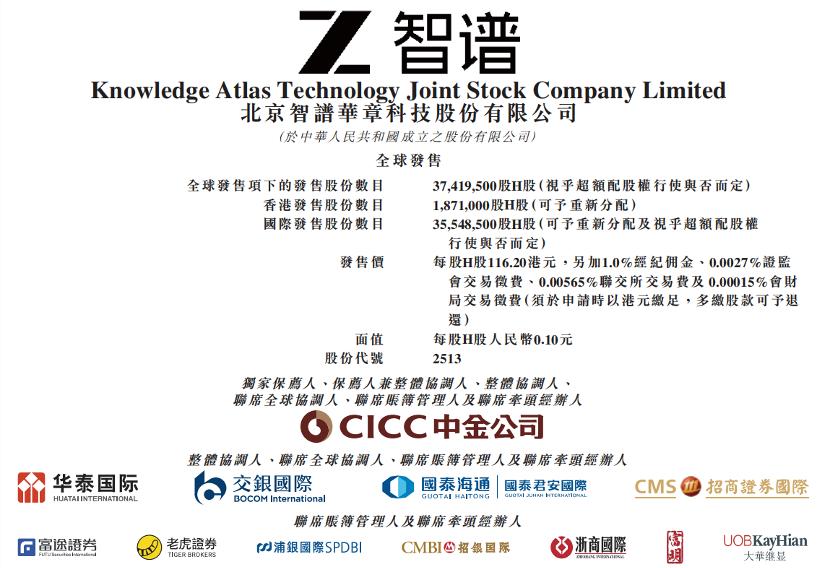
Core Viewpoint - Zhiyu is set to become the first "big model" stock in the global market, with an IPO scheduled for January 8, 2026, on the Hong Kong Stock Exchange, aiming to raise approximately HKD 4.3 billion and achieve a market valuation exceeding HKD 51.1 billion [1][3][8]. Financial Performance - Zhiyu's revenue is projected to grow from HKD 57.4 million in 2022 to HKD 312.4 million in 2024, representing a compound annual growth rate (CAGR) of 130% [3][4]. - The company reported a revenue of HKD 190 million for the first half of 2025, indicating significant growth [4]. - Gross margins for Zhiyu are reported at 54.6%, 64.6%, and 56.3% for the years 2022 to 2024, showcasing a stable commercial framework [6]. Market Position and Competitive Landscape - Zhiyu is recognized as the largest independent large model vendor in China, holding a market share of approximately 6.6% among general large model companies [6]. - The company has been acknowledged by OpenAI, indicating its growing significance in the global AI landscape [4][19]. Business Model and Growth Strategy - Zhiyu has developed a scalable cloud service system since 2021, with over 2.9 million users on its API platform, and expects API revenue to grow tenfold by 2025 [5]. - The company's MaaS (Model as a Service) business is becoming a foundational infrastructure for enterprise AI strategies, with over 65% of large enterprises planning to allocate at least 30% of their AI budgets to MaaS solutions in the next two years [5]. Technological Advancements - Zhiyu has invested over HKD 4 billion in R&D over the past three and a half years, with more than 70% allocated to computing power procurement [4]. - The company has launched several models, including GLM-4.7, which has achieved top rankings in coding ability assessments, indicating its competitive edge in model capabilities [10][13]. Global Expansion and Strategic Alliances - Zhiyu is positioning itself as a "national team" for AI model export, with its models already integrated into critical business processes across various sectors, including finance and healthcare [15][19]. - The company has initiated the "International Alliance for Autonomous Large Models" to help build national-level AI infrastructure in countries along the Belt and Road Initiative [17]. Future Outlook - The global AI market is expected to grow significantly, with projections indicating a market size of RMB 53 billion in 2024, increasing to RMB 101.1 billion by 2030, which presents a substantial opportunity for Zhiyu [19]. - Zhiyu's strategy aligns with global trends, aiming to establish itself as a key player in the foundational infrastructure of AI, similar to OpenAI [20].
Qwen-Image-2512开源发布
Di Yi Cai Jing· 2025-12-31 09:37
(文章来源:第一财经) 据通义大模型消息,Qwen-Image-2512开源发布。相较于8月发布的Qwen-Image基础模型,本次聚焦于 三大核心能力的飞跃式提升:更真实的人物质感、更细腻的自然纹理、更复杂的文字渲染,让生成的图 像无限接近真实世界。 ...
电子行业2026年度策略:算力需求景气高企,端侧AI持续迭代
Xiangcai Securities· 2025-12-31 09:32
Core Insights - The report highlights the ongoing iteration of large model technology, leading to a wave of innovation in AI-enabled consumer electronics, particularly in edge AI deployment, which offers low cost, high performance, and enhanced privacy security [4][20][26]. Group 1: Industry Performance - The electronic industry has shown a relative return of 30.2% over the past 12 months, outperforming the CSI 300 index, with an absolute return of 47.9% [3]. - Traditional consumer electronics have entered a phase of low growth, with smartphone and PC sales stabilizing, while TWS (True Wireless Stereo) devices are also experiencing slow growth [15]. Group 2: Edge AI Development - The development of model compression technology has laid the groundwork for deploying large models on edge devices, enhancing the capabilities of edge AI [21][26]. - Companies like Huawei and ByteDance are showcasing significant applications of edge AI in smartphones, with products like the Doubao mobile assistant demonstrating the potential for complex operations and cross-application functionality [30][32]. Group 3: ASIC Demand - The demand for ASIC (Application-Specific Integrated Circuit) is surging due to its cost-effectiveness and customization advantages over GPUs, with the market expected to grow from $6.6 billion in 2023 to $55 billion by 2028, reflecting a compound annual growth rate (CAGR) of 53% [5][71]. - Major tech companies are increasingly developing their own ASICs, with Google and Amazon leading the way in supplying these chips, further validating their performance and commercial value [9][71]. Group 4: PCB Market Growth - The demand for PCBs (Printed Circuit Boards) is expected to rise as AI companies and global internet giants invest heavily in data center expansions, with a projected CAGR of 21% in global data center capital expenditures by 2029 [6]. - The increasing complexity of AI servers and high-speed switches is driving up the value of individual PCBs, leading to a simultaneous increase in both volume and price [6][68]. Group 5: Investment Recommendations - The report suggests focusing on companies within the edge AI, ASIC, and PCB supply chains, maintaining a bullish outlook on the electronic industry [8][9]. - Specific companies to watch include Rockchip, Hengxuan Technology, and Horizon Robotics in the edge AI sector, and Chipone and Cambrian in the ASIC sector [9].
迈瑞医疗接待205家机构调研,包括淡水泉(北京)投资管理有限公司、MY.Alpha Management HK Advisors Limited等
Jin Rong Jie· 2025-12-31 08:59
Core Viewpoint - Mindray Medical is facing temporary pressure in the domestic market due to multiple factors, but sees a historic opportunity for import substitution in the IVD market, aiming to double its market share in the next three years in the fields of chemiluminescence, biochemistry, and coagulation [1][3][4]. Market and Business Outlook - The domestic market has experienced a decline in capacity over the past two years, but the company believes this impact is temporary. The demand for quality improvement and cost control in medical institutions presents a significant opportunity for high-end breakthroughs and import substitution [3][4]. - The company expects positive growth in domestic business by 2026, with IVD leading the growth of three major product lines and emerging businesses achieving rapid growth [4]. Emerging Business Segments - Mindray's emerging businesses, including minimally invasive surgery, minimally invasive intervention, and animal healthcare, are projected to reach nearly 3.9 billion RMB in 2024, contributing over 10% to total revenue, and exceed 2.6 billion RMB in the first half of 2025, contributing over 15% [2][14]. - The minimally invasive surgery market is expected to grow significantly, with a projected market size of approximately 37.3 billion RMB in China by 2024, and a growth rate of 10.8% from 2024 to 2030 [15]. - The minimally invasive intervention market is also rapidly expanding, with a projected market size of approximately 32.5 billion RMB in China by 2024, driven by factors such as aging population and increasing prevalence of cardiovascular diseases [16]. Technological and Competitive Advantages - Mindray has established significant core advantages in the ultrasound market through nearly 30 years of investment, including a comprehensive product line, deep clinical insights, and a global platform [2][6][7]. - The company is leveraging AI technology and clinical expertise to create intelligent solutions that enhance operational efficiency and improve patient care [7][8]. Integration and Collaboration - The integration with Huatai Medical is progressing as planned, with a focus on enhancing operational efficiency and management standards while respecting the independence of Huatai [10][11]. - Mindray aims to deepen collaboration across various functions to strengthen Huatai's competitiveness in the cardiovascular field [11]. AI and Digital Solutions - Mindray's AI models have been successfully implemented in top hospitals, enhancing digital transformation and supporting precision medicine [12][13]. - The company is committed to integrating AI solutions with hardware and IT systems to maximize the effectiveness of its digital healthcare offerings [13].

MiniMax今起招股:阿里等基石投资者认购超27亿港币
Sou Hu Cai Jing· 2025-12-31 08:17
Core Viewpoint - MiniMax (稀宇科技) has officially launched its IPO in Hong Kong, aiming to raise up to HKD 4.19 billion (USD 538 million) with a share price range of HKD 151 to 165, and is expected to have a market capitalization exceeding HKD 40 billion upon listing [1][3]. Group 1: IPO Details - The IPO will issue 25.389 million shares, with the subscription period running until January 6, 2026 [1]. - The stock is expected to be listed on January 9, 2026, under the ticker "HK00100" [1]. Group 2: Investor Participation - MiniMax has secured 14 cornerstone investors, including Aspex, Eastspring, Mirae Asset, Alibaba, and E Fund, with a total subscription amount of approximately USD 350 million (about HKD 27.23 billion) [3][4]. Group 3: Financial Performance - The company's operating expenses are projected to increase from USD 14.4 million in 2022 to USD 100.4 million in 2023, and further to USD 290.4 million in 2024, primarily due to investments in third-party cloud services for training [5]. - MiniMax reported net losses of USD 73.7 million, USD 269.2 million, and USD 465.2 million for the years ending in 2022, 2023, and 2024, respectively [5]. Group 4: Cash Flow and Use of Proceeds - As of September 30, the company had a cash balance of approximately USD 1.046 billion, which, assuming a monthly cash burn of USD 28.1 million, would sustain operations for about 37 months without IPO proceeds [5]. - If the shares are priced at the lower end of the range (HKD 151), the proceeds from the IPO would allow for approximately 54 months of operation [5][6]. - Approximately 90% of the net proceeds from the IPO are planned for R&D over the next five years, with 70% allocated to developing large models and 20% to AI-native products [6]. Group 5: User Growth and Market Reach - MiniMax's self-developed multimodal models and AI-native applications have served over 200 million individual users from more than 200 countries and regions, as well as over 100,000 enterprise clients and developers from more than 100 countries [9]. - The company has seen significant user growth in its AI-native products, with projections indicating a rise from 11,131 users in 2023 to 212,247 by 2025 [11]. Group 6: Company Profile - MiniMax was established in early 2022 and focuses on the development of multimodal models, having created a series of models including MiniMax M2, Hailuo 2.3, Speech 2.6, and Music 2.0 [7]. - The company employs 385 people, with an average age of 29, and approximately 74% of its workforce is dedicated to R&D [12].

MiniMax开启招股:获国际长线资本及阿里3.5亿美元基石认购
Sou Hu Cai Jing· 2025-12-31 07:59
Group 1 - MiniMax, a large model company, has officially launched its IPO, with shares priced between HKD 151 to 165, aiming to raise up to HKD 4.189 billion and achieve a valuation between HKD 46.123 billion and HKD 50.399 billion [2] - The company has secured cornerstone investments totaling USD 350 million (approximately HKD 2.723 billion) from 14 investors, including major players like Alibaba and Eastspring [3] - MiniMax has experienced significant revenue growth, with a year-on-year increase of over 170% in the first nine months of 2025, and overseas market revenue contributing over 70% of total income [8][10] Group 2 - The company has made notable technological advancements, launching its first speech model, Speech 01, in 2023, and generating over 2.2 billion hours of speech by mid-2025 [6][7] - MiniMax's video generation model, Video 01, was released in August 2024, and has since helped create over 590 million videos [7] - The company has received backing from prominent investors such as miHoYo, Alibaba, Tencent, and Sequoia, positioning it as one of the fastest-growing AI technology firms [15][18] Group 3 - MiniMax's financial performance shows a net loss of USD 269.246 million for 2023, with a projected loss of USD 512.013 million for 2025, indicating a trend of increasing losses despite revenue growth [9][10] - The company has a strong focus on research and development, with R&D expenses increasing significantly, reflecting its commitment to innovation in AI technology [10] - MiniMax's employee base consists of 385 individuals, with nearly 74% in R&D roles, highlighting its emphasis on technical expertise [11]

【IPO追踪】行业风头正劲,大模型企业MINIMAX开启招股
Sou Hu Cai Jing· 2025-12-31 07:41
Group 1: Industry Overview - The AI sector has experienced explosive growth in recent years, making AI concepts highly favored in the capital markets [2] - Companies such as Moer Thread (688795.SH), Muxi Co., Ltd. (688802.SH), and Wallen Technology (06082.HK) have recently gone public, with Wallen Technology seeing a 73% increase in dark market trading [2] Group 2: MiniMax IPO Details - MiniMax-WP (00100.HK) is set to launch a global IPO on December 31, aiming to issue approximately 25.39 million H-shares, with 5% allocated for public sale in Hong Kong and 95% for international sale [3] - The expected price range for the shares is HKD 151-165, with a projected net fundraising amount of approximately HKD 3.818 billion, of which 70% will be invested in R&D for large models [3][4] - The subscription period for MiniMax is from December 31 to January 6, 2026, with shares expected to be listed on January 9, 2026 [3] Group 3: MiniMax Business Model and Products - MiniMax is a global AI large model company focused on driving innovation in artificial intelligence, capable of executing various human cognitive tasks [5] - The company has developed a series of proprietary large models and launched a range of AI-native products, attracting a significant user base with monthly active users (MAU) projected to grow from 3.1 million in 2023 to 27.6 million by September 2025 [5] Group 4: Financial Performance - MiniMax's revenue from 2022 to the first three quarters of 2025 is reported as follows: USD 0, USD 3.46 million, USD 30.52 million, and USD 53.44 million, with adjusted losses of USD 12.15 million, USD 89.07 million, USD 244 million, and USD 186 million respectively [6]

我,AI创业,中途撤退
投资界· 2025-12-31 07:31
Core Insights - The article discusses the journey of a 33-year-old algorithm engineer, Zhang Cheng, who transitions from a high-stakes AI startup to seeking stability in state-owned enterprises (SOEs) amid the volatile AI industry landscape [4][5]. Group 1: Career Transition - Zhang Cheng, once a technical supervisor at an AI startup, faces a significant salary cut and increased work pressure, leading him to seek employment in SOEs for stability [5][6]. - The initial excitement of joining an AI startup quickly fades as the reality of job insecurity and constant project changes sets in, prompting a desire to "get ashore" to a more stable job environment [4][5][10]. Group 2: Industry Challenges - The AI startup environment is characterized by high uncertainty, where decisions are often based on the founder's intuition rather than data-driven analysis, leading to project failures [10][11][12]. - The competitive landscape in the AI sector is dominated by large companies, making it difficult for startups to survive without significant resources and market presence [12][14]. Group 3: Personal Struggles - Zhang Cheng experiences a sense of professional inadequacy as he navigates the challenges of being a mid-career professional in a rapidly evolving industry, feeling the pressure of younger candidates vying for the same roles [6][7][15]. - The article highlights the irony of Zhang Cheng's situation, where he is perceived as a successful AI expert by outsiders, yet internally struggles with job security and personal fulfillment [16].