消费升级

Search documents
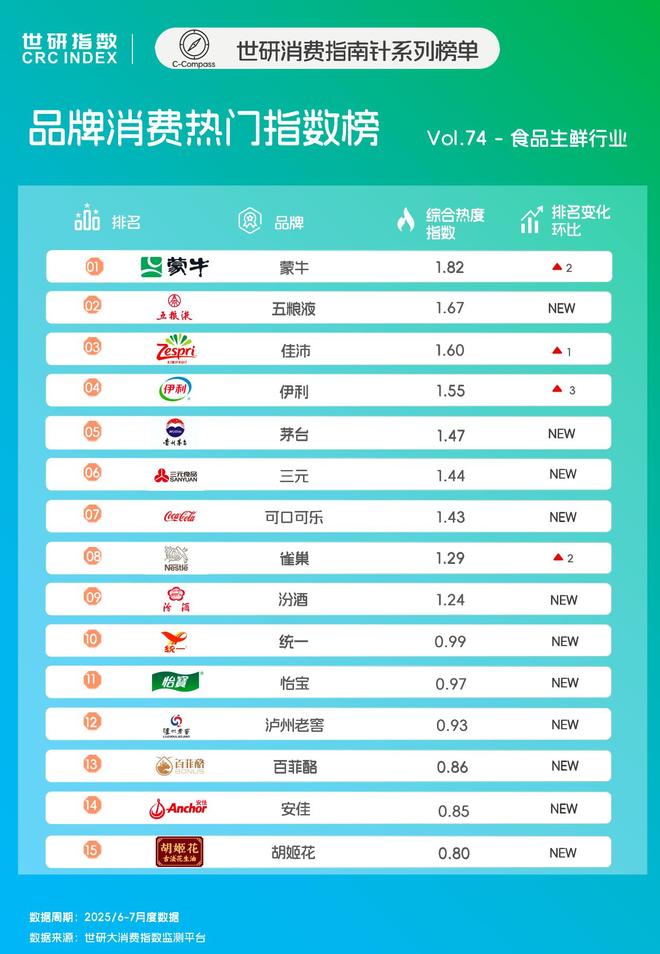
乳品聚焦夏季营养补给,特色食材价值重构|世研消费指数品牌榜Vol.74
3 6 Ke· 2025-10-11 11:04
Group 1 - The core viewpoint of the articles highlights the innovation in the dairy industry, focusing on health technology and targeted nutritional solutions to meet summer dietary needs [2] - Major dairy brands such as Mengniu, Yili, and San Yuan are leveraging biotechnological breakthroughs to address specific consumer pain points, such as children's immunity and digestive sensitivity [2] - The report indicates a shift from homogeneous nutritional offerings to precise health management, driven by technological advancements and unique processing methods [2] Group 2 - The scarcity attributes of specialty ingredients are reshaping their value, with brands like Zespri and Hu Jihua enhancing product appeal through health claims and cultural connections [3] - Zespri is positioning its products as "healthy luxury symbols" by utilizing unique varieties and premium packaging, while Hu Jihua emphasizes traditional craftsmanship to differentiate its peanut oil [3] - Brands like Coca-Cola and Yibao are effectively tapping into basic consumer needs, transforming their products into emotional and experiential offerings [3] Group 3 - The report outlines a comprehensive index evaluation system developed by Shiyan Index, which includes various consumption trend reports across multiple industries [4] - The index aims to objectively present trends in consumer behavior, assisting brands and industries in tracking market dynamics and enhancing competitive strength [4]



“双节”智能家居产品销量增长14.3%
Nan Fang Du Shi Bao· 2025-10-11 04:48
Core Insights - The "Double Festival" during National Day and Mid-Autumn Festival has led to increased consumer spending on home appliances, with a reported 2.7% year-on-year growth in sales for key retail and catering enterprises during the holiday period [1] - Major e-commerce platforms have seen significant growth in energy-efficient appliances, with smart refrigerators and smart home products experiencing increases of 20.7% and 16.8% respectively [1] Group 1: Consumer Trends - New household appliances such as dishwashers, water purifiers, and dryers have emerged as the "new three major appliances," with Suning's sales of high-end appliances (over 10,000 yuan) increasing by 73% [2] - There is a noticeable shift towards quality, health, and smart home products, with consumers willing to invest in appliances that enhance comfort and convenience [2][3] - The demand for large-capacity and smart appliances is rising, with products like 600L refrigerators and smart washing machines becoming bestsellers [3] Group 2: Sales Performance - The sales of dishwashers increased by 59%, while clothes dryers and shoe cleaners saw growth rates of 82% and 211% respectively during the holiday [4] - The emotional value of appliances is becoming increasingly important, with sales of projectors, coffee machines, and home gaming consoles growing by 245%, 181%, and 292% respectively [4] - E-commerce platforms like JD.com reported a threefold increase in sales for action cameras and a twofold increase for digital cameras during the holiday [4][6] Group 3: Government Initiatives - The recent issuance of 690 billion yuan in special bonds for consumer upgrades has significantly stimulated consumer spending, with over 3.3 billion people applying for subsidies [5] - Retail sales of home appliances and related goods have seen substantial year-on-year growth, with categories like home appliances and audio-visual equipment increasing by 28.4% and 22.3% respectively [5]


6.3亿元销售额书写假日经济新篇章,青岛双节消费市场活力迸发
Xin Lang Cai Jing· 2025-10-11 04:23
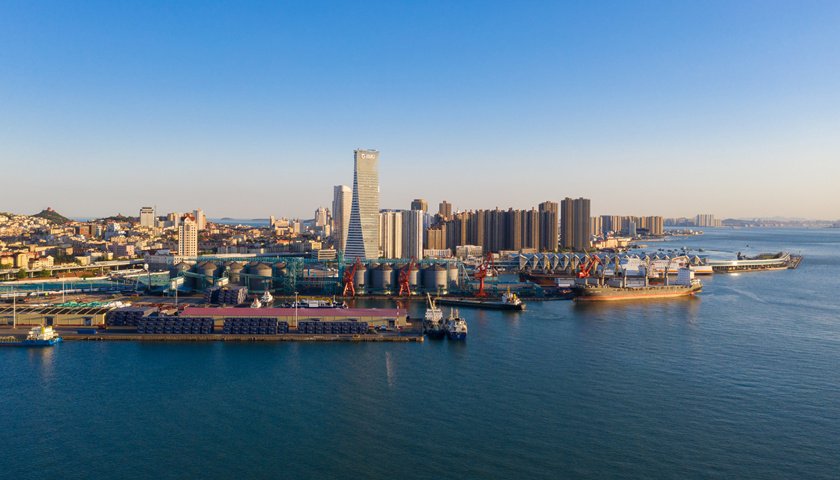
文 | 徐雅琳 国庆期间,浮山湾畔以"大美中国"为主题的绚烂灯光秀点亮了岛城的金秋夜空,将节日的喜庆氛围渲染得淋漓尽致,与城市跃动的消费脉搏同频共 振。 遍布全市的商业综合体内,涌动的人流穿梭在各色店铺之间,熙熙攘攘的消费场景汇聚成这个假期最温暖的市场热潮。 据青岛市商务局数据,今年国庆中秋假期,青岛市十大重点商贸监测企业(集团)实现销售额6.3亿元,较去年同期增长6.4%,这份亮眼的成绩单生 动诠释了消费市场的复苏活力。 在"家国同庆、月圆琴岛"的主题引领下,商旅文体健展多元业态的深度融合与持续创新,为青岛消费市场注入了源源不断的新动能,释放出蓬勃发 展的内生动力。 图片来源:摄图网 区市联动,全域激活消费新动能 双节期间,青岛各区市呈现出"一区一特色"的促消费氛围,全域联动、多业态参与的假日消费格局迅速形成。 市南区的浮山湾灯光秀成为市民游客争相打卡的热点,这场以"大美中国"为主题的光影表演分为四个篇章,以绿水青山为底色,伴随红绸丝带飘 动,一幕幕展现祖国的发展成就,传递着大美中国的家国情怀。与青岛风光主题灯光秀编组播放的演出,为市民游客营造了浓厚的节庆氛围。 图片来源:青岛市商务局 市北区台东步行街推出 ...
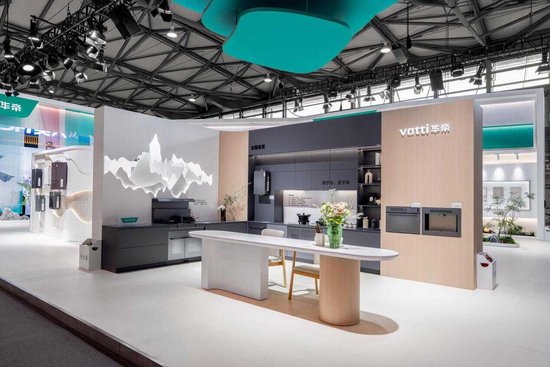
华帝中报解读:高端化驱动的成长逻辑
Xin Lang Zheng Quan· 2025-10-11 02:47
Core Viewpoint - The domestic kitchen and bathroom appliance sector is experiencing intense competition, leading to declining profit margins for many brands. However, Vatti's mid-term report shows resilience with revenue of 2.7998 billion yuan and a net profit of 272 million yuan, indicating a strategic shift towards high-end positioning and value-driven growth [1][10]. Group 1: Financial Performance - Vatti's revenue for the first half of 2025 reached 2.7998 billion yuan, with a net profit attributable to shareholders of 272 million yuan, maintaining a stable overall scale [1]. - The offline channel gross margin increased to 45.89%, up 6.83 percentage points year-on-year, while the new retail channel gross margin reached 41.51%, indicating improved profitability [3][5]. Group 2: Strategic Shift - Vatti is transitioning from a "scale-driven" model to a "value-driven" approach, focusing on high-end products and quality channels rather than competing on price [5][10]. - The company has streamlined its product line by reducing ineffective SKUs, concentrating resources on core categories, particularly in the high-end segment of the smoke and stove market [5][6]. Group 3: Product Innovation - Vatti has introduced innovative products like the "Beauty Bath" water heater, redefining traditional functions into health and aesthetic lifestyle products, appealing to younger consumers [6][8]. - The launch of new kitchen appliances emphasizes "intelligence + aesthetics," transforming individual products into comprehensive kitchen solutions, enhancing customer experience and brand loyalty [8][9]. Group 4: Brand and Market Positioning - Vatti aims to reposition itself from a kitchen appliance manufacturer to a provider of high-end kitchen solutions, establishing long-term relationships with consumers through product innovation and comprehensive solutions [8][9]. - The company's ongoing investment in R&D, with 472 new patents added in the first half of 2025, supports its technological edge and innovation capacity, reinforcing its high-end strategy [9][10]. Group 5: External Environment - The "old-for-new" policy and the trend of consumption upgrading are driving demand for kitchen and bathroom appliances, allowing Vatti to capitalize on the willingness of younger consumers to pay for health, intelligence, and quality [9].

微型车走下神坛,月薪5000的小镇青年,正成为车企“新活水”
3 6 Ke· 2025-10-10 23:40
Core Insights - The microcar market is experiencing a significant decline, with sales of micro electric vehicles dropping from 45% to 12% year-on-year in lower-tier cities during the recent National Day holiday [1][3] - High-end electric vehicles, such as Xiaomi SU7 and Xpeng P7, are gaining popularity in these markets, indicating a shift in consumer preferences towards better-designed and more expensive models [1][3] Market Trends - Microcars were once considered essential for low-tier cities due to their affordability, with models like Wuling Hongguang MINIEV priced at 2.88 million yuan, making car ownership accessible [5][6] - However, the market share of A00-class electric vehicles has decreased from 36.1% in 2021 to 27% in 2022, with retail sales further declining by 27.9% in 2023 [5][6] - The microcar segment is now dominated by only a few players, such as BYD Seagull and Geely Xingyuan, indicating a strategic retreat from this market by many manufacturers [6][8] Consumer Behavior - Consumers are increasingly opting for small SUVs and sedans that offer better space, range, and features, leading to a decline in microcar sales [11][12] - Safety concerns regarding microcars, which often lack essential safety features, are also driving consumers away [11][12] Emerging Consumer Segments - The rise of younger consumers in lower-tier cities, who are willing to spend on higher-quality vehicles, is reshaping the market dynamics [12][15] - The "silver-haired" demographic is also becoming a significant consumer group, with retirees returning to their hometowns and seeking vehicles that offer comfort and advanced features [17][18] Strategic Shifts in the Industry - The competition in the electric vehicle market is intensifying, with manufacturers shifting focus to lower-tier cities as the growth potential in first and second-tier cities diminishes [18][20] - Sales of electric vehicles in third-tier and below cities have surged from under 500,000 to over 5 million units between 2020 and 2024, capturing nearly half of the national market share [18][20] - Companies like BYD and Li Auto are actively expanding their presence in these markets, with strategies tailored to local consumer preferences [20][23]



体验经济崛起 “十一”酒店市场价稳、人旺、“更会玩”
Zhong Guo Jing Ying Bao· 2025-10-10 21:25
Core Insights - The "Super Golden Week" during the Mid-Autumn Festival and National Day in 2025 saw a significant boost in the tourism and hotel industry, with hotel occupancy rates exceeding 80% and a notable increase in guest numbers [1][3][8] Hotel Industry Performance - Huazhu Group reported over 10.55 million guests during the holiday period, a 36% increase year-on-year, with foreign guests rising by 75% [1] - The overall hotel occupancy rate peaked at over 80%, with more than 8,100 hotels fully booked on October 3 [1] - High-end hotels in popular cities like Beijing, Chengdu, and Hangzhou experienced high demand, leading to limited availability [1] New Developments in High-End Hotels - Huazhu Group launched its high-end cultural resort brand, Huajian Tang, in Beijing, marking a strategic expansion into the high-end hotel sector [2] - The brand aims to provide an immersive urban vacation experience, reflecting a trend towards structural upgrades in the hotel industry [2] Emerging Trends in Tourism - The holiday period saw a surge in bookings for lesser-known destinations, with some areas experiencing a doubling of orders for accommodations [3] - Events like music festivals and sports competitions significantly boosted hotel bookings, with some locations seeing increases of up to 260% [3] Travel Behavior Changes - Over 30% of office workers opted for staggered travel, extending the holiday experience and alleviating peak demand pressures [4] - Domestic flight volumes increased by 20%, while outbound travel grew by 30% during the holiday [4] Night Economy and Outbound Travel - The night economy gained traction, with a 200% increase in searches for night activities, highlighting its role in attracting tourists [5] - Outbound travel saw a significant rise, with hotel bookings in popular destinations like Japan and Thailand increasing dramatically [5] Shift Towards Experience Economy - The hotel industry is witnessing a shift towards high-end, personalized, and culturally immersive experiences, driven by consumer demand for unique travel experiences [6][7] - Huajian Tang's expansion exemplifies this trend, focusing on local culture and modern aesthetics [6] Conclusion on Market Maturity - The "Super Golden Week" reflects a more mature and layered tourism consumption market, with consumers seeking emotional, cultural, and social experiences rather than just accommodation [8]

双节一线城市消费账本:京深客单价降,广州“最会花钱”
Sou Hu Cai Jing· 2025-10-10 14:16
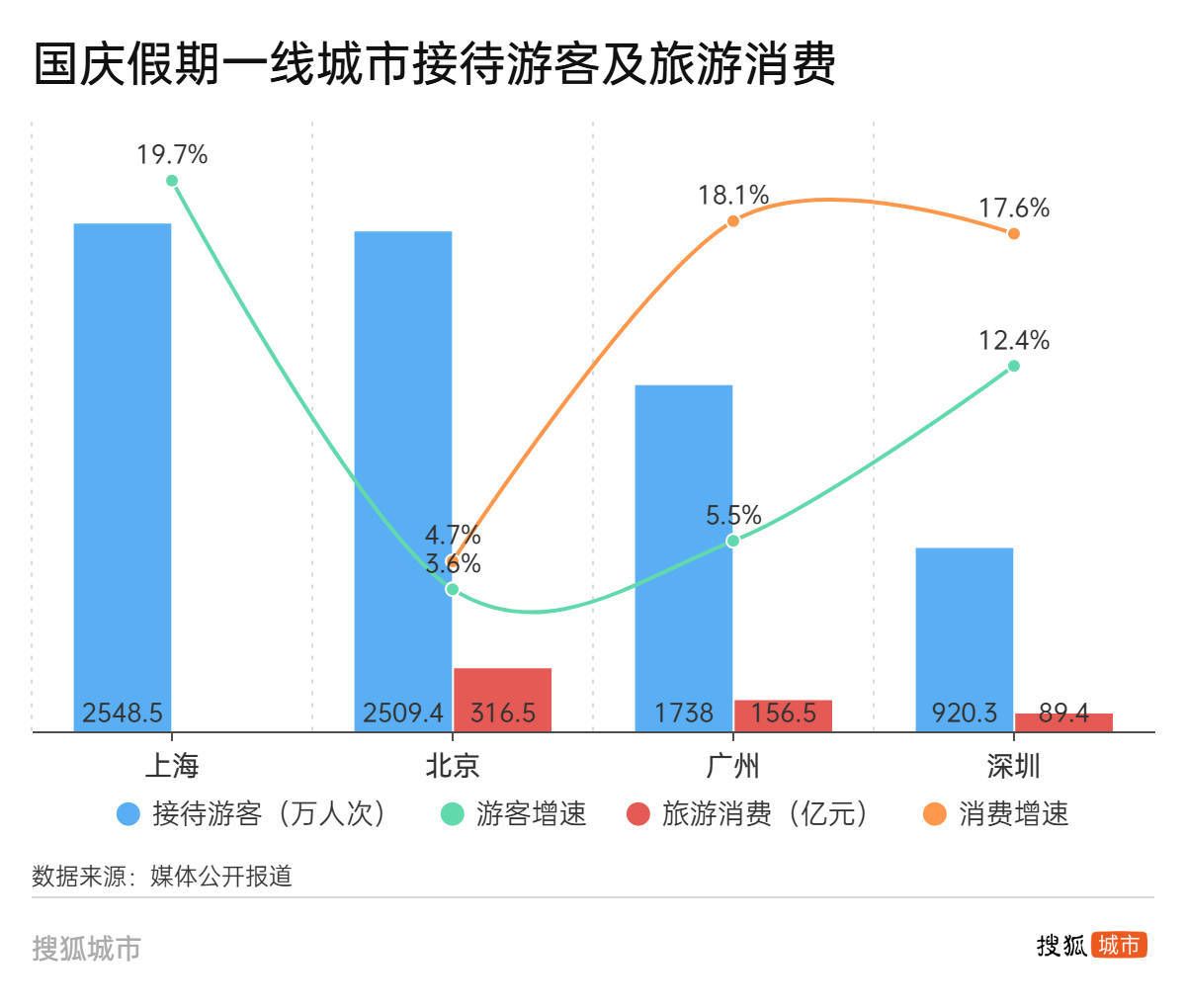
Core Insights - The overlapping of National Day and Mid-Autumn Festival provided a unique opportunity to observe consumer vitality in China's first-tier cities, with all four cities reporting a positive overall consumption performance during the eight-day holiday [1] - While total visitor numbers and consumption amounts increased, there was a nuanced differentiation in per capita spending, with Beijing and Shenzhen experiencing declines, while Guangzhou showed a slight increase [1][5] Group 1: Visitor Statistics - Shanghai received 25.485 million visitors, a year-on-year increase of 19.7%, making it the leading city in terms of visitor numbers [5] - Beijing followed closely with 25.094 million visitors, a 3.6% increase, while Guangzhou welcomed 17.38 million visitors, up 5.5% [5] - Shenzhen had over 9.2 million visitors, marking a 12.4% increase [5] Group 2: Consumption Data - Beijing led in total tourism spending with 31.65 billion yuan, a 4.7% year-on-year increase [5] - Guangzhou reported 15.65 billion yuan in spending, an 18.1% increase, while Shanghai's total payment volume reached 79.6 billion yuan, reflecting a 3% increase [5] - Per capita spending in Beijing decreased to 157.66 yuan, down 20 yuan from last year, while Shenzhen's per capita spending fell to 121.43 yuan, a decline of 11.3 yuan [5] Group 3: City-Specific Trends - Guangzhou's per capita spending increased slightly from 111.63 yuan to 112.56 yuan, indicating resilience supported by strong sectors like gold, automobiles, and real estate [6] - Beijing's holiday theme revolved around "events and culture," with significant increases in hotel bookings and cultural performances, showcasing a vibrant cultural economy [9][11] - Shanghai emphasized "fusion" and "international flair," with high-end events and art exhibitions driving sales growth in key commercial areas [13][14] - Shenzhen focused on "new" and "trendy" experiences, with innovative attractions like the ice world and immersive dining experiences appealing to younger consumers [16] Group 4: Year-to-Date Retail Performance - Shanghai's retail sales reached 1.0926 trillion yuan in the first eight months, a 3.7% year-on-year increase, positioning it for a strong annual performance [21] - Beijing's retail sales totaled 866.1 billion yuan, down 5.1%, indicating a need for recovery strategies [21] - Guangzhou's retail sales were approximately 723.7 billion yuan, up 4.9%, but faced challenges from changing consumer behaviors [21] - Shenzhen's retail sales were about 856 billion yuan, lagging behind Chengdu, which has seen rapid growth in consumption [21][22]
叫停四个传统冻品项目,“冻品一哥”3.6亿转投冷冻烘焙,能否打破增长瓶颈?
3 6 Ke· 2025-10-10 11:21
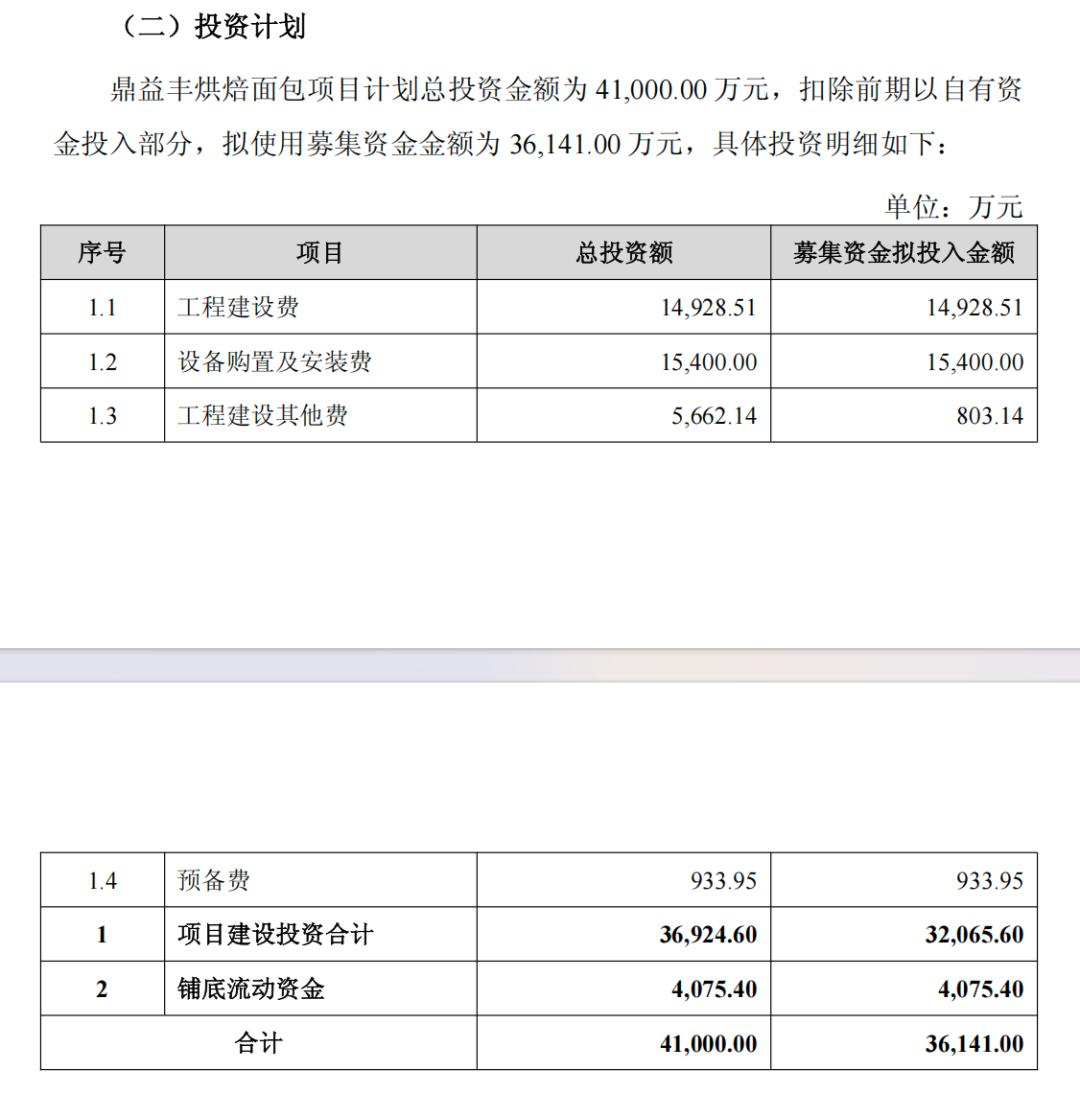
Core Viewpoint - The change in fundraising allocation by Anjii Food reflects the challenges faced by the frozen food industry, indicating a need to explore new growth opportunities, particularly in the frozen baking sector [1][4]. Fundraising Purpose Change - Anjii Food announced a change in the use of funds from a non-public stock issuance, reallocating part of the funds originally intended for four frozen food projects to a new baking project [1][4]. - The four original projects include upgrades in Sichuan, Liaoning, and Taizhou, and an expansion project in Henan, with a total of 361 million yuan being redirected to the Dingyifeng baking project, which has a total investment of 410 million yuan [1][3]. Financial Projections - The Dingyifeng baking project is expected to have a construction period of two years, with projected annual revenue of 613 million yuan and a profit of 67.83 million yuan, yielding an internal rate of return of 10.38% and a payback period of 8.05 years [3][4]. Industry Challenges - Anjii Food's decision to change the fundraising project is attributed to the evolving macroeconomic environment, industry policies, and consumer demand, which have shifted towards healthier and more diverse food options [4][5]. - The traditional frozen food sector, particularly frozen rice and noodle products, is experiencing a contraction, with Anjii's revenue for the first half of the year showing only a slight increase of 0.8% to 7.604 billion yuan, while net profit fell by 15.79% to 676 million yuan [5][7]. Market Trends - The frozen baking sector is viewed as a potential growth area, with the market expected to exceed 23 billion yuan by 2025 and a compound annual growth rate of over 25% in recent years [9][10]. - Competitors in the frozen food industry, such as Qianwei and Hai Xin, are also exploring new product categories, indicating a broader trend of seeking growth beyond traditional frozen food offerings [7][9]. Competitive Landscape - Anjii Food has made strategic acquisitions to enhance its presence in the frozen baking market, including a 70% stake in Jiangsu Dingwei and a 100% stake in Dingyifeng, totaling an investment of 444.5 million yuan [7][9]. - The competitive environment in the frozen baking sector is intensifying, with other companies also launching baking brands and experiencing varying growth rates, highlighting the need for Anjii to leverage its past successes to strengthen its market position [10][11].

华夏时评:价格治理不是“终点”,需求扩张才是“起点”
Hua Xia Shi Bao· 2025-10-10 10:53
Core Viewpoint - The 2025 Golden Week saw a significant increase in domestic travel and spending, indicating a stable growth in total consumption, but further efforts are needed to stimulate consumer confidence and market order [2][3]. Group 1: Economic Performance - During the 8-day holiday, there were 888 million domestic trips, an increase of 123 million compared to the 2024 National Day holiday [2]. - Total domestic spending reached 809 billion yuan, up by 108.19 billion yuan from the previous year [2]. Group 2: Market Regulation - The National Development and Reform Commission and the State Administration for Market Regulation issued an announcement to combat price disorder and maintain a fair market price order [2][3]. - The announcement includes a three-step approach: industry average cost investigation, warning reminders, and law enforcement inspections to address issues like below-cost pricing [2]. Group 3: Demand Management - Price governance is seen as a starting point for demand expansion, emphasizing the need for both short-term stimulus and long-term structural reforms [4]. - Short-term measures should focus on fiscal expansion and monetary policy coordination to meet economic development goals [4]. Group 4: Long-term Strategies - Strategies to stimulate domestic demand should include promoting consumption upgrades and addressing livelihood shortcomings to support the next growth cycle [4][5]. - Emphasis on income distribution reform is crucial to enhance consumer spending power and address insufficient domestic demand [5].
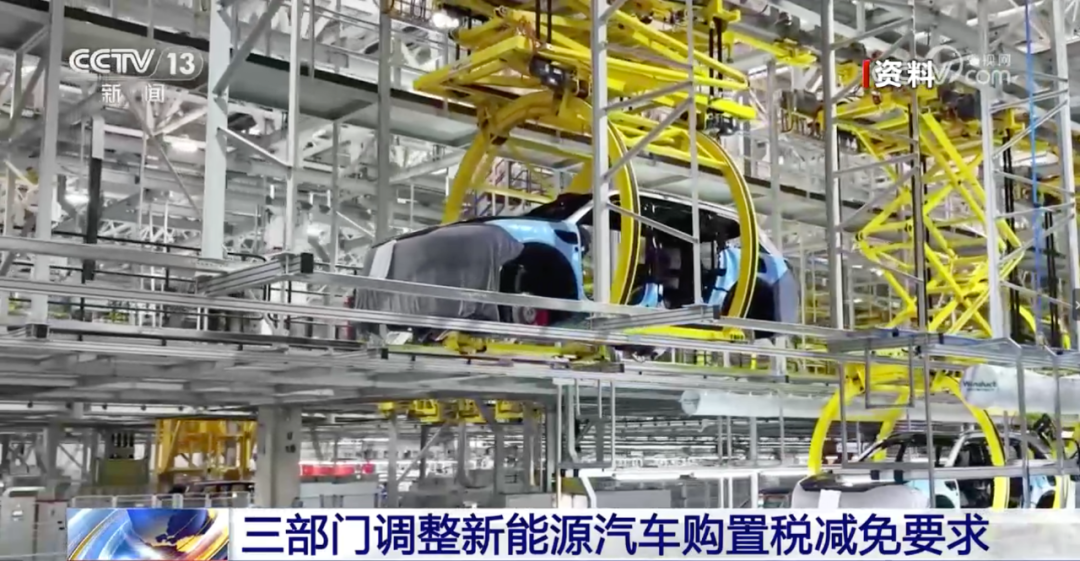
事关新能源车!重磅公告发布
Ke Ji Ri Bao· 2025-10-10 07:03
Core Viewpoint - The Ministry of Industry and Information Technology, the Ministry of Finance, and the State Taxation Administration have jointly announced adjustments to the technical requirements for electric vehicles and plug-in hybrid vehicles eligible for vehicle purchase tax exemptions from 2026 to 2027, aiming to enhance the overall quality and performance of new energy vehicles in the market [1]. Summary by Category Adjustments to Technical Requirements - For pure electric vehicles, the new regulations stipulate that the energy consumption for traveling 100 kilometers must not exceed the national standard for similar vehicles. Heavier vehicles (over 3.5 tons) will be held to stricter energy consumption standards based on the 3.5-ton model [3]. - For plug-in hybrid vehicles, including those that can be charged and fueled, the new rules require that: - The effective electric range must be at least 100 kilometers when running solely on electricity. - The fuel and electricity consumption must be lower than the national standards when running on fuel alone. - Similar to pure electric vehicles, heavier models must adhere to the standards set for 3.5-ton vehicles [4]. Implementation Timeline - Starting January 1, 2026, vehicles listed in the "Directory of New Energy Vehicles Eligible for Vehicle Purchase Tax Exemption" must comply with the new requirements. Vehicles already listed before December 31, 2025, that meet the new standards will automatically transition to the 2026 first period directory, while those that do not will be removed [6]. - Vehicles that do not meet the new requirements but wish to be included in the 2026 first period directory must complete their application by December 12, 2025. Removed vehicles can reapply for inclusion [7]. Impact on Consumers and Industry - Consumers may face changes in purchase costs as models that do not meet the new technical requirements will no longer qualify for tax exemptions. This could lead to a temporary reduction in available models, but in the long term, it is expected to encourage the market to offer higher-quality products [9]. - Industry experts believe that the new regulations will drive technological upgrades in battery capacity and hybrid systems, enhancing driving experience and safety. Stricter standards are anticipated to promote the introduction of higher-performance models, meeting consumer demands for longer range and lower energy consumption, thus supporting both industrial and consumer upgrades [9].