AI大模型

Search documents
“十四五”期间我国日均揽收快件量超5亿件
Yang Shi Wang· 2025-09-07 11:46
Core Viewpoint - During the "14th Five-Year Plan" period, China's express delivery business volume is projected to grow from 108.3 billion packages in 2021 to 175 billion packages by 2024, leading the world in express delivery volume [1] Group 1: Business Growth - The average daily collection of express packages in China exceeds 500 million, reflecting a substantial business volume supported by efficient resource allocation [1] - The express delivery industry is expected to support online retail sales exceeding 13 trillion yuan in 2024 [1] Group 2: Technological Advancements - AI large models are facilitating intelligent upgrades in express delivery companies, enhancing operations from warehousing to last-mile delivery [1] - The use of "unmanned" technology in warehousing, transportation, and delivery has improved delivery efficiency, achieving a maximum daily collection of 729 million packages [1] Group 3: Industry Collaboration - The express delivery sector is focusing on serving the real economy, deepening collaboration with modern agriculture and advanced manufacturing [1] - Over 1,600 key projects have been established to support various industries during the "14th Five-Year Plan" period [1]
调研速递|绿联科技接受嘉实基金等32家机构调研 透露多项业务关键数据与规划要点
Xin Lang Zheng Quan· 2025-09-07 10:57
Core Viewpoint - The company, Shenzhen Ugreen Technology Co., Ltd., has engaged with 32 institutions and 89 participants during a recent investor research event, highlighting its revenue distribution and overseas expansion strategies. Group 1: Revenue Insights - In the first half of the year, Ugreen's revenue from major domestic e-commerce platforms was as follows: Tmall generated 425 million yuan, accounting for 11.01% of main business revenue; JD.com generated 513 million yuan, accounting for 13.30% of main business revenue [1]. Group 2: Overseas Expansion Strategy - Ugreen has established a presence in Hong Kong, the United States, and Germany to enhance its overseas market penetration. The company plans to recruit management and sales talents with international experience and strong marketing skills, while also optimizing its compensation management system to attract and retain top talent [2]. Group 3: Historical Development - Founded in 2012, Ugreen began its brand development by entering major domestic e-commerce platforms like Tmall and JD.com. From 2013 to 2015, the company expanded globally by joining international platforms like Amazon and building offline distribution networks. Between 2016 and 2019, it focused on product design and supply chain enhancements. From 2020 to 2023, Ugreen deepened its brand strategy and localization efforts, and since 2024, it has continued to enhance brand localization and announced a global brand ambassador [3]. Group 4: Product Offering - Ugreen's NAS products cover a full range from entry-level to mid-to-high-end, with prices starting from around 1,000 yuan to several thousand yuan. The entry-level products are cost-effective and suitable for general users, while mid-to-high-end products cater to small businesses or individuals with higher data storage needs [4]. Group 5: Production Model - Ugreen has developed a dual-driven smart supply chain system comprising "outsourced finished product procurement + self-production." The company has strengthened its self-production capabilities through its subsidiaries, with self-production accounting for over 20% and outsourced production for about 70% in recent years [5]. Group 6: Audio and Video Product Highlights - Ugreen's audio and video product line includes various types of headphones and microphones. New products include the T6s×Xiaolong Green co-branded headphones with deep noise cancellation and high-resolution sound; the HiTune T6s headphones, which received a national A-level 52dB noise reduction certification; the HiTune Max6 headphones featuring AI real-time translation; the HiTune S7 headphones designed for sports with lightweight and waterproof features; and the HiTune S8 headphones that combine active noise cancellation with AI capabilities for a comfortable and interactive experience [6].
汽车会飞行 车衣能充电
Bei Jing Wan Bao· 2025-09-07 07:43
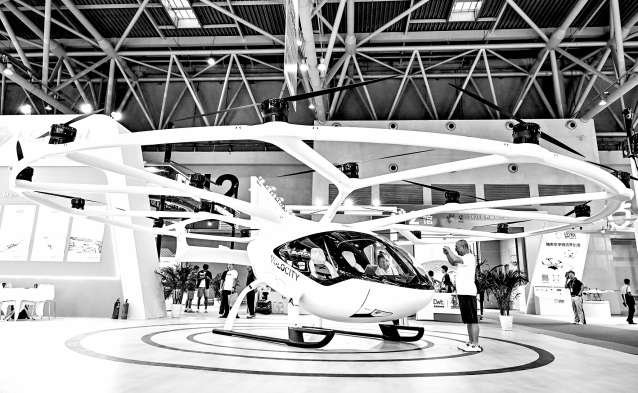
Core Insights - The 2025 World Intelligent Industry Expo is currently being held in Chongqing, focusing on intelligent connected new energy vehicles with over 150 participating automotive companies [1] Group 1: New Technologies in Transportation - A "flying car" showcased at the expo features a lightweight design using carbon fiber and aluminum, with a maximum takeoff weight of 620 kg, enhancing energy efficiency and range [4] - The flying car can reach a maximum speed of 130 km/h, with a flight duration of 25 minutes and a range of 30 km on a single charge [4] - A portable flying backpack that can be assembled in about ten minutes was also presented, capable of carrying 100 kg and allowing for automatic flight with the use of a smart helmet and glasses [5] Group 2: Advancements in AI and Safety - Changan Automobile demonstrated a vehicle that can automatically adjust air conditioning, activate seat massage, and play soft music based on voice commands, showcasing advancements in humanized interaction through AI [7] - A new battery collision monitoring system was introduced, providing real-time damage assessment and alerts to enhance safety [7] - The concept of automotive safety has expanded from traditional aspects to include data security, reflecting the rapid development of intelligent connected technologies [7] Group 3: Innovations in Energy and Sustainability - A new transparent photovoltaic body technology was unveiled, allowing vehicles to generate energy while driving, with a daily energy replenishment range of 20 to 50 km [8] - The integration of AI, materials, and energy technologies is driving the evolution of vehicles, positioning them as vital components in the development of smart cities [8]

英伟达的劲敌,拿下百亿美元芯片大单
21世纪经济报道· 2025-09-06 14:53
Core Viewpoint - Broadcom has reported impressive earnings driven by strong demand for AI-related products, particularly custom ASIC chips, which are tailored for cloud service providers, contrasting with Nvidia's focus on general-purpose GPU chips [1][3][5]. Financial Performance - For Q3 of FY2025, Broadcom achieved revenue of $15.952 billion, a 22% year-over-year increase, and adjusted net income of $10.702 billion, up 30.15% [1]. - AI business revenue reached $5.2 billion in the same quarter, reflecting a 63% year-over-year growth, slightly exceeding the previous guidance of $5.1 billion [1]. Market Dynamics - The demand for ASIC chips is rising as they are better suited for specific AI inference needs, leading to a competitive landscape where both GPU and ASIC markets are expected to grow together [4][8]. - Broadcom's CEO indicated that AI semiconductor revenue is projected to accelerate, with expectations of reaching $6.2 billion in Q4, marking 11 consecutive quarters of growth [5]. Customer Demand - Broadcom's XPU business accounted for 65% of its AI revenue in Q3, driven by increasing orders from three major clients, which are expected to create a serviceable addressable market of $60 billion to $90 billion by FY2027 [5]. - A new order worth $10 billion for XPU chips has been received, potentially from OpenAI, which could enhance Broadcom's AI performance beyond previous expectations [5]. Competitive Landscape - Other companies like Marvell are also benefiting from the demand for custom ASIC chips, with Marvell reporting a 58% year-over-year revenue increase in its latest quarter [6]. - The ASIC chip market is anticipated to expand as AI applications grow, potentially surpassing the AI training market, which is dominated by GPU chips [6][8]. Future Projections - Analysts predict that from 2023 to 2028, the compound annual growth rate (CAGR) for high-end cloud AI accelerators will be 50% for GPUs and 52% for AI ASICs, suggesting that AI ASIC shipments may exceed those of GPUs by 2028 [9].



更聪明 更安全 更开放——从智博会看智能网联新能源汽车新趋势
Xin Hua Wang· 2025-09-06 11:12
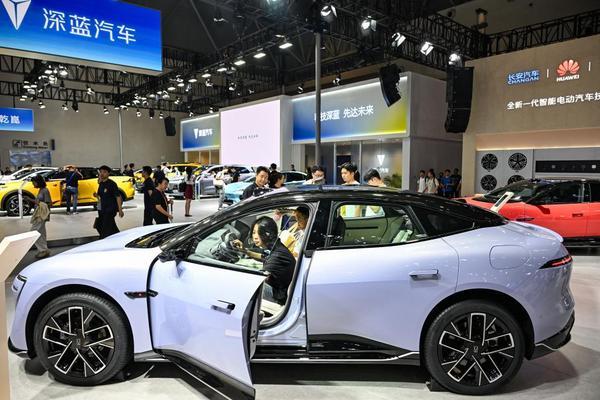
Core Insights - The automotive industry is rapidly evolving with the integration of AI technologies, enhanced safety measures, and cross-industry collaborations showcased at the 2025 World Intelligent Industry Expo in Chongqing [1][2][3] Group 1: AI Empowerment - AI large models are enabling smarter vehicle interactions, allowing cars to respond to user commands for adjusting settings like air conditioning and seat massage [2] - The introduction of multimodal large model technology is giving vehicles emotional perception capabilities, enabling real-time monitoring of driver emotions and automatic adjustments to the car's environment [2] - The penetration rate of L2 and above assisted driving functions in China's new energy passenger vehicles reached 82.6% in the first half of the year [2] Group 2: Safety Enhancements - New battery collision monitoring systems are being developed to provide precise damage assessment and warnings, addressing safety concerns related to battery fires and explosions [5] - The release of mandatory national standards for electric vehicle battery safety has upgraded safety requirements, with innovations from various automakers to enhance battery safety [5][6] - Privacy protection measures are being implemented in vehicles, including local processing of biometric data and user control over data sharing [6] Group 3: Open Ecosystem - The "Human-Car-Home" ecosystem is moving towards large-scale implementation, allowing users to control home devices from their vehicles [3] - The automotive industry is focusing on the deep integration of AI with terminal devices, particularly in smart cockpits [3] - The introduction of innovative technologies like transparent photovoltaic car bodies demonstrates the industry's commitment to breaking traditional barriers and fostering collaborative innovation [9] Group 4: Intelligent Transportation - The integration of smart traffic systems with autonomous vehicles is being piloted in 20 cities, enhancing traffic management and safety [10] - The future vision includes vehicles as integral components of smart cities, contributing to mobile computing and energy storage [10]

财经聚焦丨更聪明 更安全 更开放——从智博会看智能网联新能源汽车新趋势
Xin Hua Wang· 2025-09-06 10:53
Core Insights - The automotive industry is evolving with smarter, safer, and more open technologies showcased at the 2025 World Intelligent Industry Expo in Chongqing [1] Group 1: Smarter Technologies - AI large models are enhancing smart interactions in vehicles, allowing for personalized responses to user commands [3] - The integration of multimodal large model technology enables vehicles to develop "emotional perception" capabilities, adjusting settings based on the driver's emotional state [3] - The penetration rate of L2 and above assisted driving functions in new energy passenger vehicles in China reached 82.6% in the first half of the year [3] Group 2: Safety Enhancements - New battery collision monitoring systems provide real-time damage assessment, addressing safety concerns related to battery fires and explosions [7] - The introduction of mandatory national standards for electric vehicle battery safety has been implemented, enhancing safety requirements [7] - Various automakers are innovating battery technologies to prevent fires and improve safety, such as the "Golden Shield" battery technology from Changan [7][8] Group 3: Open Ecosystem - The development of a "new transparent photovoltaic body" technology allows vehicles to generate energy while driving, showcasing the integration of AI, materials, and energy technologies [9] - The automotive industry is shifting from a focus on individual technologies to a competitive landscape centered around ecosystem collaboration and collective strength [10] - The implementation of vehicle-road-cloud integration is being piloted in 20 cities, enhancing traffic management and safety through real-time data sharing [10][11]

财经聚焦|更聪明 更安全 更开放——从智博会看智能网联新能源汽车新趋势
Xin Hua She· 2025-09-06 10:51
Group 1: Smart Integration in Vehicles - The integration of AI large models into vehicles enhances intelligent interaction, allowing cars to respond to user needs more humanely, such as adjusting air conditioning and playing music based on voice commands [1] - The adoption of multi-modal large model technology enables vehicles to develop "emotional perception" capabilities, monitoring driver emotions and adjusting the environment accordingly [1] - The penetration rate of L2 and above assisted driving functions in China's new energy passenger vehicles reached 82.6% in the first half of the year [1] Group 2: Safety Enhancements - New battery collision monitoring systems provide precise damage assessment and warnings, enhancing battery safety [2] - The introduction of national standards for electric vehicle battery safety has been implemented, addressing concerns over battery fires and explosions [3] - Various automakers are innovating battery technologies to ensure safety, such as the ability to withstand punctures without igniting [3] Group 3: Open Ecosystem Development - The automotive industry is evolving through cross-industry collaboration, integrating AI, materials, and energy technologies to create innovative solutions like transparent photovoltaic car bodies that can generate energy while driving [5] - The development of a "car-road-cloud" integrated system is underway, with pilot projects in 20 cities to enhance traffic management and safety [6] - The automotive sector is shifting from a focus on individual technologies to a competitive landscape centered around ecosystem collaboration and collective strength [5][6]
凯利普:互联网巨浪一场改写人类文明的双向奔赴
Sou Hu Cai Jing· 2025-09-06 08:08
Group 1: Solar Industry Development - The solar power industry has seen a rapid development, with costs decreasing by over 90% in the past decade, making it one of the most economical power generation methods [1] - Innovations such as high-efficiency PERC cells, heterojunction technology, and perovskite solar cells continue to enhance conversion efficiency [1] - Distributed solar power systems are transforming rooftops into micro power stations, while large solar power plants are being constructed in remote areas, creating a complete industrial chain and job opportunities [1] Group 2: Wind Energy Technology - Wind energy technology is advancing, with onshore wind turbines exceeding 6 megawatts and offshore wind turbines moving towards capacities over 10 megawatts [1] - Intelligent control systems allow wind turbines to automatically adjust their positions based on wind speed, maximizing energy capture [1] - The maturity of floating offshore wind technology enables the development of deep-sea wind resources [1] Group 3: Internet Empowerment in New Energy - The internet's role in the new energy sector has evolved beyond basic online monitoring, with AI algorithms enhancing solar panel efficiency by 12% in specific projects [3] - Virtual power plant platforms in Germany aggregate thousands of households' solar and storage devices for market participation [3] - China's State Grid's new energy cloud platform connects the largest scale of new energy station data globally, using machine learning to predict power generation with less than 3% error [3] Group 4: Energy and Internet Integration - Data centers, which account for 2% of global electricity consumption, are being transformed by renewable energy solutions, such as Microsoft's underwater cooling and Google's wind-powered data centers [3] - The proliferation of renewable energy is expected to facilitate a societal shift from a carbon-based economy to a silicon-based economy, supporting high-energy applications like the metaverse and AI models [3] Group 5: Industry Transformation through Internet - The Kellyp project leader has decided to leverage the internet for industry transformation, utilizing offline foundations and online channels for marketing through mini-programs and social media [5]

从手动“做T”到借力券商T0算法:个人投资者迎来量化交易时刻
Zheng Quan Ri Bao Zhi Sheng· 2025-09-05 16:18
Core Insights - The introduction of T0 algorithm services by brokerage firms is democratizing access to advanced trading tools, previously exclusive to financial institutions, allowing individual investors to engage in day trading strategies [1][3][7] - T0 algorithms utilize AI and quantitative trading techniques to help investors capture intraday price fluctuations while maintaining their end-of-day net positions [2][5] - The performance of T0 algorithm services varies among users, with some reporting stable returns while others face challenges due to market conditions and transaction costs [5][6] Group 1: T0 Algorithm Services Overview - T0 algorithm services are automated trading tools based on AI quantitative models, designed to help investors lower holding costs and enhance returns through intraday trading [2][3] - Over 20 brokerage firms, including Guangfa Securities and China Merchants Securities, have launched T0 algorithm services, with more firms preparing to offer similar services [3][7] - The T0 algorithm service differs fundamentally from high-frequency trading, as it operates on a lower trading frequency and is less impactful on market dynamics [2][3] Group 2: User Experience and Performance - Users of T0 algorithm services report a mixed experience, with some achieving more stable returns compared to manual trading, while others express dissatisfaction due to high transaction fees [5][6] - Factors influencing the effectiveness of T0 algorithms include market conditions, stock performance, and the investor's trading strategy [6][7] - T0 algorithm services are particularly suited for investors with medium to long-term holdings and those with some trading experience [6] Group 3: Impact on Brokerage Firms - T0 algorithm services are expected to become a significant revenue stream for brokerages by increasing trading volumes and client engagement [7][8] - The asset threshold for accessing T0 algorithm services varies among brokerages, ranging from 200,000 to 1,000,000 yuan, with commission rates differing as well [7] - The proliferation of T0 algorithm services is likely to reshape the wealth management landscape, pushing brokerages towards more personalized and intelligent advisory services [8]
佳禾智能(300793.SZ):公司智能硬件产品留有接入AI大模型的端口
Ge Long Hui A P P· 2025-09-05 10:00
Core Viewpoint - The company, Jiahe Intelligent (300793.SZ), has indicated that its smart hardware products are designed with ports for integrating AI large models, allowing customers to select and provide the AI model based on their product positioning, technical requirements, and strategic planning [1] Group 1 - The company offers technical support and hardware-software collaborative solutions based on the AI model chosen by the customer, ensuring effective implementation of related AI functionalities [1]