
产业升级

Search documents
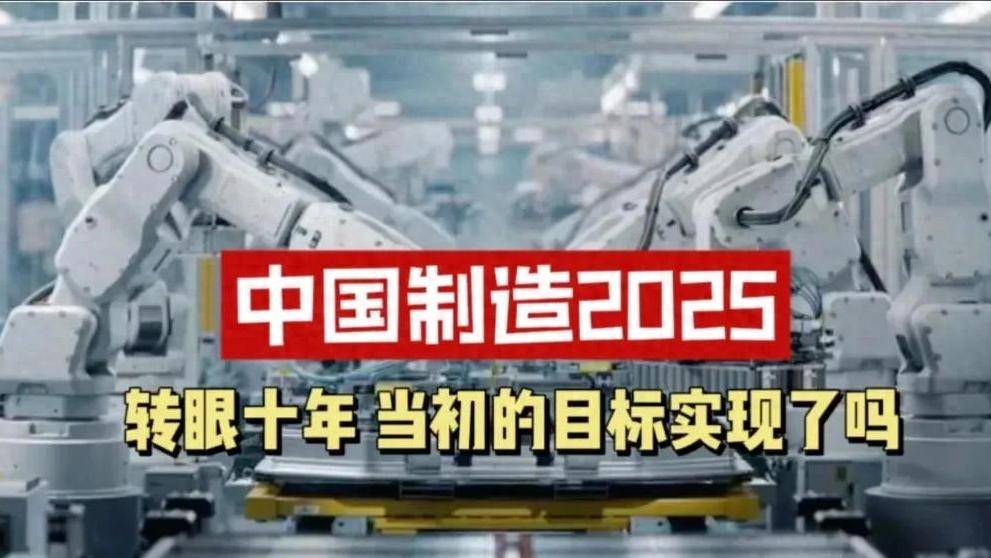
美国行动失败!中国制造2025大获成功,中国已是高端制造强国
Sou Hu Cai Jing· 2025-11-24 12:12
Core Insights - The article discusses the significant shift in global manufacturing power, highlighting China's rise as a high-end manufacturing powerhouse, which has led to the United States losing its technological dominance [1][4][6]. Group 1: Historical Context - Seven years ago, the U.S. initiated a campaign to suppress China's industrial development, aiming to prevent China from upgrading its manufacturing capabilities and implementing its "Made in China 2025" plan [8][9]. - The U.S. envisioned a scenario where China would remain at the bottom of the industrial chain, relying on low-value manufacturing [11][13]. Group 2: Current Developments - A recent report from the U.S.-China Economic and Security Review Commission indicates that the U.S. strategy to contain China has failed, resulting in a stronger Chinese industrial sector [6][15]. - The report reveals that China's manufacturing capabilities have not only survived but have significantly advanced, surpassing the original goals set by the "Made in China 2025" initiative [15][19]. Group 3: Economic Impact - From 2021 to 2023, Chinese companies listed as targets by the U.S. contributed nearly 25% to global export growth, with exports soaring to $1.5 trillion, capturing 30% of the global market share in certain sectors [17][19]. - The report highlights that China now controls approximately 98% of global rare earth production, giving it a critical advantage in the global industrial landscape [21]. Group 4: Technological Advancements - China has emerged as the largest producer and exporter of semiconductors, transforming from a country heavily reliant on imports to a leader in chip production [23][25]. - In 44 key advanced technologies, China has secured leadership in 37 areas, leaving the U.S. with only 7 strongholds [27]. Group 5: Strategic Implications - The report indicates a shift in the balance of power, with China's industrial strength now posing a significant challenge to U.S. dominance, particularly in defense and technology sectors [29][33]. - The U.S. is facing a crisis of confidence as its allies reassess their dependence on American industrial capabilities amid changing global dynamics [31][39].

德国连续四年衰退,彻底被中国击败?英媒:都是特朗普关税的错
Sou Hu Cai Jing· 2025-11-24 10:18
Core Insights - The article discusses the significant economic decline of Germany, attributing it to a combination of long-term structural issues and external pressures, particularly from the trade policies initiated during Trump's administration [1][3][20] - Germany's industrial output has reverted to levels not seen in 20 years, indicating a severe downturn in its manufacturing sector [3][19] - The shift from trade surplus to trade deficit with China by 2025 raises concerns about Germany's economic standing globally [5][19] Economic Decline - Germany's GDP has been in decline since 2022, marking four consecutive years of negative growth, which is indicative of deeper economic issues rather than short-term fluctuations [3][20] - The industrial production level has fallen back to 2005 standards, highlighting a significant regression in Germany's manufacturing capabilities [3][19] Trade Dynamics - Germany has transitioned from a trade surplus with China to a trade deficit by 2025, which poses challenges to its economic stability and raises questions about its global economic position [5][19] - The rising costs of logistics and energy have further exacerbated the situation, leading to increased industrial costs and reduced profits for German companies [10][19] Competitive Pressures - The slow pace of industrial upgrades in Germany has allowed Chinese manufacturing to catch up rapidly, with significant price advantages and improving product quality [6][15] - German companies are facing increased competition from Chinese firms, which have demonstrated faster innovation cycles and adaptability in emerging sectors like renewable energy and smart manufacturing [11][13][15] Policy Impact - Trump's tariffs have disrupted global supply chains, particularly affecting German manufacturers who rely heavily on international sourcing for materials and components [8][10] - The combination of external trade barriers and internal policy pressures has constrained the operational space for German businesses, especially small and medium-sized enterprises [11][13] Future Outlook - The article suggests that Germany must adapt its industrial and policy strategies to regain its competitive edge, as the global economic focus shifts eastward [22] - Without significant changes in approach, Germany risks falling further behind in the next industrial revolution, highlighting the urgency for transformation in its economic model [22]
国际智链大讲堂正式开播:让共同富裕理念走进千家万户
Sou Hu Cai Jing· 2025-11-24 07:08
在全面推进中国式现代化的新征程上,共同富裕被明确为国家发展的重要目标。如何让政策更透明?如 何让百姓真正参与并共享国家发展红利?如何让社会各界理解供应链安全、数字经济和产业升级对国家 长远未来的重要意义? 为回应这些关切,在有关部门指导下,国际智链大讲堂正式开播,面向全国公众提供权威、系统、通俗 的政策解读与知识普及服务。 推动共同富裕,让红利走向百姓 共同富裕不是一句口号,而是实实在在的国家战略。它既需要顶层设计,也离不开全民参与。国际智链 大讲堂的开播,就是为了让更多普通群众看懂国家政策、理解时代方向、掌握发展机遇。 作为扎根供应链数字化领域的综合平台,国际智链长期参与产业链补链强链、数字人民币跨境流通、农 产品出海扶持、小微企业贸易赋能等项目,在推动"产业增效""企业增收""百姓增益"方面积累了大量的 实践经验。 大讲堂将以公开、普惠、低门槛的形式向社会开放,帮助老百姓理解: 国家为什么大力推进共同富裕? 普通群众能从产业升级中获得什么? 国家在供应链、数字经济、消费促进等领域推出了哪些新政策? 这一系列面向民生的核心议题,将在大讲堂中逐步展开。 国际智链大讲堂将严格遵守国家法律法规,坚持正确舆论导向, ...
奋进的河南 决胜“十四五”·三门峡篇丨天鹅之城 材料新城 ——三门峡市交出厚重“十四五”答卷
He Nan Ri Bao· 2025-11-24 01:56
Core Viewpoint - Sanmenxia is undergoing a transformation from a resource-dependent city to an innovation-driven city, showcasing significant economic growth and industrial upgrades during the "14th Five-Year Plan" period. Economic Growth - The city's GDP is projected to grow at an average annual rate of 4.8% from 2021 to 2024, with a per capita GDP exceeding 80,000 yuan in 2024, ranking 4th in the province [2] - In the first three quarters of 2025, the GDP grew by 5.6% year-on-year, indicating steady economic progress [2] - Major economic indicators show consistent improvement, with industrial added value and retail sales growing at annual rates of 7% and 5.8%, respectively [2] Innovation and Industrial Upgrade - R&D investment intensity has increased from 1.81% to 2.99%, maintaining a leading position in the province for five consecutive years [3] - The city has established 835 innovation platforms, including key laboratories and research bases, to support industrial innovation [3][4] - Breakthroughs in key technologies, such as ammonia-free molybdenum metallurgy and ultra-thin copper foil production, have been achieved [3] Structural Changes in Industry - The mining sector's contribution to the economy has decreased from nearly 40% to 20%, while manufacturing has increased from 50% to nearly 70% [5] - The city has invested 364 million yuan in special funds for industrial upgrades, resulting in an average production efficiency increase of 42% and cost reduction of over 26% for 846 industrial enterprises [5] Emerging Industries - The copper-based new materials sector has seen significant growth, with production capacity reaching 78,000 tons, making it the largest in the country [5] - New energy storage and superconducting materials are being developed, with projects like the energy storage equipment industrialization underway [6] Environmental and Ecological Initiatives - The city has implemented effective ecological governance, restoring 1.9 million mu of wetlands and achieving a forest coverage rate of 41.2% [8] - Air quality has improved, with PM10 and PM2.5 concentrations decreasing by 11.8% and 12.5%, respectively [8] Open Economy and Trade - Sanmenxia has enhanced its external trade capabilities, with a continuous increase in service trade by an average of 49.6% annually from 2021 to 2024 [9] - The establishment of the Sanmenxia Port and the operation of the Sanmenxia Customs have facilitated local trade [9] Social Development and Welfare - The per capita disposable income for rural residents is projected to reach 22,307 yuan in 2024, growing by 7.6% [10] - The city has implemented 105 key livelihood projects, expanding medical resources and improving social security [10] Governance and Leadership - The city emphasizes the role of party leadership in governance, enhancing grassroots organizational strength and promoting effective management [11][12] Future Goals - Sanmenxia aims to become a center for industrial strength, ecological sustainability, cultural richness, openness, and digital innovation, contributing to the modernization of the Central Plains [13]

赋能“强链补链”,并购重组激活产业升级新动能
Sou Hu Cai Jing· 2025-11-23 23:20
Core Viewpoint - The merger and acquisition (M&A) market is experiencing a new trend focused on strategic collaboration and strengthening the industrial chain, with a significant increase in disclosed M&A activities this year compared to the previous year [1] Group 1: M&A Market Trends - As of November 23, 151 companies have disclosed M&A activities this year, significantly surpassing the same period last year [1] - Deep mergers driven by industrial integration have become mainstream, indicating a shift in M&A strategies [1] - Market participants expect that M&A activities driven by leading enterprises and "chain masters" in the industry will remain active [1] Group 2: Future Outlook - Future M&A will focus more on horizontal collaboration and vertical extension, suggesting a strategic shift in how companies approach mergers [1] - Qualifying high-quality enterprises are expected to receive more policy support, which may further enhance the activity level of industrial mergers [1] - State-owned enterprises (SOEs) are anticipated to play a significant role in industrial integration, with broader development opportunities ahead [1]
A股:大涨前的最后砸盘,大家做好准备,不出意外,周一,股市会迎来新行情
Sou Hu Cai Jing· 2025-11-23 18:04
当前这轮下跌,从市场结构和资金行为角度看,更接近于: 在阶段性牛市框架下,高位品种的集中出货 + 指数维稳下的结构性换手。 不是典型的流动性危机式崩盘,而是: 通过"指数护住、个股先跌"的方式, 实现高位筹码向后手资金、尤其是中小投资者的有序转移, 为后续一轮指数级别的反弹乃至趋势延伸,腾出"空间"和"换手基础"。 "最后砸盘"更多是盈利兑现+筹码再分配的技术动作,而不是趋势逆转的根本性信号。 二、市场表象与核心差异:指数没怎么跌,持股体验很差 1. 指数层面:被权重股"托着"走 最近一段时间,上证指数在银行、保险、白酒等权重板块的轮番拉升下,表面波动有限: 银行、保险:估值在1倍PB附近,处于"政策维稳+高股息"功能性角色; 白酒、部分消费龙头:在盈利相对稳定+情绪修复下,阶段性担当"护盘工具"。 结果是: 指数回撤不深,看上去"风险不大"; 但权重护盘掩盖了中小市值、高弹性品种的持续阴跌。 2. 个股层面:提前下跌 + 指数跌时再补刀 这次大家难受在两点: 很多个股从 9 月起就开始阴跌,尤其是高位的科技资产; 当指数这几天开始补跌时,个股并不是提前跌完,而是"继续大跌"——体验远比指数曲线惨烈。 市场结 ...
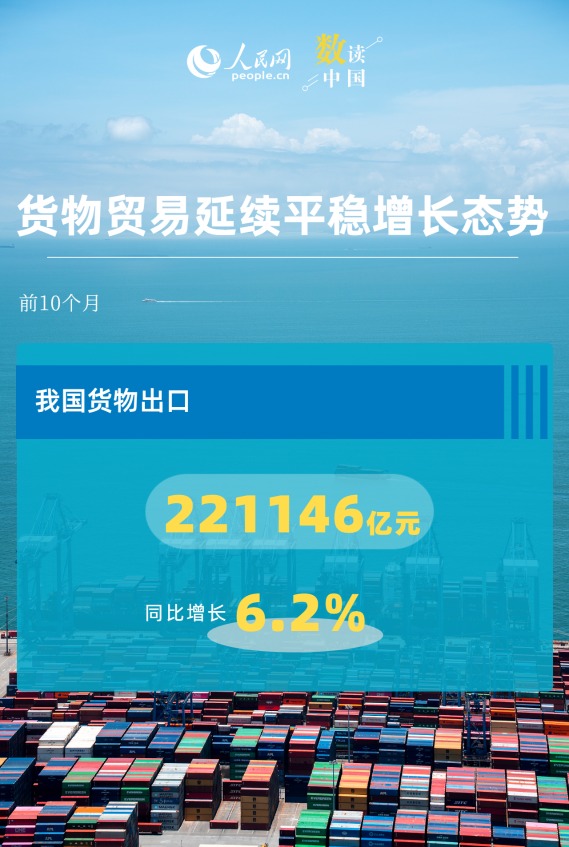
数读中国 6.2%!我国出口动能向优向新
Ren Min Wang· 2025-11-23 01:42
Group 1 - The core viewpoint of the articles indicates that China's goods trade has maintained steady growth this year, with an emphasis on the increasing competitiveness and technological advancement of export products [1] - The export of electromechanical products has expanded significantly, with a total export value of 60.7% in the first ten months, reflecting a year-on-year growth of 27% [3] - Integrated circuit exports grew by 24.7%, while automobile exports increased by 14.3%, highlighting the strong performance of key sectors [3] Group 2 - High-tech product exports have shown positive growth, with a total export value increase of 7.396 billion, outpacing the overall export growth rate [5][6] - The "Made in China" initiative is leading upgrades in manufacturing, with double-digit growth in exports of green products such as railway electric locomotives and wind power generators [9] - The trade structure is continuously optimizing, with cross-border e-commerce exports reaching approximately 7.063 trillion, marking a growth of 66% [11][13]
贵州榕江:稻蟹共生绘丰景 "村超山水蟹"成共富新引擎
Nan Fang Nong Cun Bao· 2025-11-22 11:30
贵州榕江:稻蟹 共生绘丰景 "村 超山水蟹"成共 富新引擎_南方 +_南方plus 金秋时节,贵州 省榕江县古州镇 车江坝区620亩 稻蟹共生基地稻 穗低垂、蟹肥膏 黄。"一水两 用、一地双 收"的生态种养 模式,成就了亩 产河蟹120斤、 水稻1100斤 的"双丰收"场 景,亩均产值突 破11400元。这 片示范基地带动 320名搬迁群众 稳定就业,助农 年增收120万 元,成为激活乡 村振兴动能的关 键支点。 趣味十足的捕蟹竞赛。 近日,"村超山 水蟹,乐享丰收 季"文化节暨电 商直播大赛在基 地启幕。捕蟹竞 赛、百人品蟹直 播等活动多维度 江县委常委、副 县长银政在开幕 式上表示:"以 蟹为媒、以农促 旅,是榕江探索 农业高质高效、 农民富裕富足的 重要实践。"未 展现特色农产品 的生态价值。榕 来榕江将持续推 动稻蟹产业升 级,全力打 造"村超山水 蟹"全国品牌。 依托"村超"品牌 效应,文化节同 步启动电商直播 与短视频大赛, 带动脐橙、罗汉 果、山茶油等本 地特产出山。通 过"体育引流、 产业变现"的融 合路径,"村超 流量"正转化为 触达全国的"致 富增量"。中国 渔业协会河蟹分 会副秘书长柴永 ...

悦尚花客服同比增超三倍!A股再融资规模破万亿,主板受理单数占据“半壁江山”
Sou Hu Cai Jing· 2025-11-22 09:52
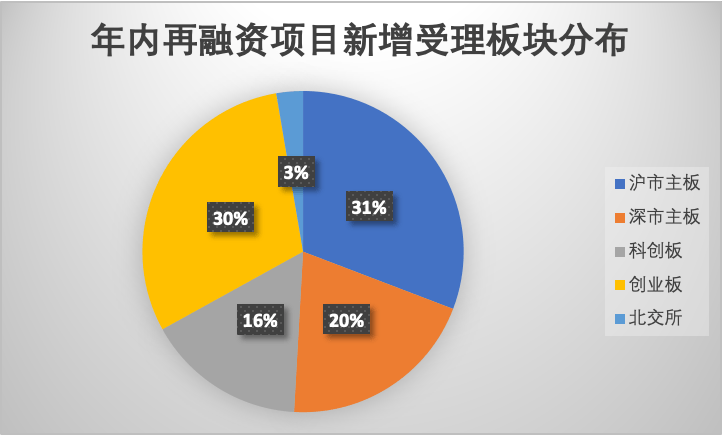
Group 1 - The core viewpoint of the article highlights the significant growth in the A-share refinancing market, with a total of 205 companies raising 10,180.72 billion yuan, representing a 368% increase compared to the same period last year [1][5][10] - The number of newly accepted refinancing applications reached 224, with October alone accounting for 65 applications, marking a new monthly high for the year [1][2] - The main board of the Shanghai and Shenzhen stock exchanges accounted for 51% of the new refinancing applications, indicating strong demand from traditional industries and large-cap companies [2][5] Group 2 - The increase in refinancing activity is driven by policy optimization and the need for industrial upgrades, with a notable "scissors gap" between refinancing and IPOs [5][6] - Companies engaging in refinancing are primarily from traditional and emerging industries, focusing on expanding production capacity, market development, and technological upgrades [5][6] - The average financing scale for main board companies exceeds 15 million yuan, with funds primarily allocated for hard investments such as capacity expansion and technology upgrades [6][11] Group 3 - The recovery of the refinancing market has positively impacted the performance of investment banks, with a 23.46% year-on-year increase in net income from investment banking activities among 42 comparable securities firms [7][8] - The top five firms dominate the refinancing business, accounting for nearly 70% of the total underwriting revenue in the industry [8][10] - The characteristics of qualified refinancing projects have evolved, focusing on profitability quality, cash flow stability, and strategic investment purposes [10][11]




瑞泰新材携手关联方增资2亿元 助力泰瑞联腾1.5万吨六氟磷酸锂项目
Zheng Quan Ri Bao· 2025-11-22 04:05
Core Viewpoint - The company Jiangsu Ruitai New Material Co., Ltd. plans to increase its investment in Jiangsu Tairui Lanteng Material Technology Co., Ltd. by 200 million yuan, aiming to enhance its position in the lithium battery materials sector amid rising market prices for lithium hexafluorophosphate driven by the growth of the new energy vehicle and energy storage industries [1][2]. Group 1 - The investment will be made through a capital increase where Jiangsu Ruitai will contribute 50 million yuan and its affiliate, Jiangsu Xintai Material Technology Co., Ltd., will contribute 150 million yuan [1]. - Jiangsu Tairui Lanteng was established with a total investment of 1 billion yuan, with Jiangsu Ruitai holding a 25% stake, Jiangsu Xintai holding 70%, and Ningde New Energy holding 5% [1]. - The company primarily engages in the research, production, and sales of electronic chemicals and organic silicon materials, including lithium-ion battery electrolytes and their additives [1]. Group 2 - The second phase of the lithium hexafluorophosphate project, which aims to produce an additional 15,000 tons, is being advanced due to the increased demand and rising prices in the market [2]. - The strategic decision to invest is based on the current industry prosperity and future development trends, which will enhance the company's supply chain and overall competitiveness in the lithium battery materials sector [2]. - Industry experts suggest that the rising prices of lithium hexafluorophosphate will stimulate upstream production expansion, stabilize midstream profits, and deepen collaboration within the industry, leading to a virtuous cycle [2].