大模型

Search documents
突发!Meta官宣收购Manus,肖弘将出任Meta副总裁;中芯国际:拟406亿元购买中芯北方49%股权;1月1日起,我国调整部分商品关税税率税目
雷峰网· 2025-12-30 00:25
Group 1 - Meta has announced the acquisition of Manus, a Singapore-based AI company, for several billion dollars, marking its third-largest acquisition to date [4][5] - Manus is known for its general-purpose AI agent product, which has shown a 23.7% improvement in complex task handling and achieved an accuracy rate of 86.5% in GAIA benchmark tests [4] - The acquisition is expected to enhance Meta's AI capabilities and integrate Manus's technology into its product lines, with Manus founder Xiaohong becoming Meta's VP [5] Group 2 - SMIC plans to acquire a 49% stake in SMIC North for 40.6 billion yuan, which will make SMIC North a wholly-owned subsidiary [7][8] - This acquisition aims to improve asset quality and business synergy for SMIC, with no changes to its main business operations expected [7] - SMIC reported a revenue of 49.51 billion yuan for the first three quarters of 2025, a year-on-year increase of 18.2%, with a net profit of 3.81 billion yuan, up 41.1% [8] Group 3 - One of the major developments is the adjustment of import tariffs on 935 items starting January 1, 2026, aimed at enhancing domestic and international market synergy [9] - The adjustments include lowering tariffs on key components and advanced materials to promote technological self-reliance and support economic development [9][10] Group 4 - A major investment of 3.74 billion yuan from FAW Group into Leap Motor is set to strengthen the latter's market position and brand recognition [12][13] - The investment will be allocated for R&D, operational funding, and expanding sales and service networks [13] Group 5 - NVIDIA has completed a $5 billion acquisition of Intel shares, making it a significant shareholder and paving the way for collaboration on AI platforms and integrated GPU solutions [38][39] - This partnership is expected to reshape the market landscape, particularly with the anticipated release of integrated RTX GPU processors [39] Group 6 - Fujitsu is joining a collaborative project led by SoftBank and Intel to develop HBM memory alternatives, aiming for commercial production with enhanced capacity and reduced power consumption [45][46] - The project plans to invest 8 billion yen by the fiscal year 2027, with contributions from various partners [46]






中关村科金总裁喻友平:为何有些Agent企业一试用就没了下文?
雷峰网· 2025-12-30 00:25
Core Viewpoint - The only correct strategy for To B platform companies is to focus on a core track, invest sufficient resources to achieve excellence, and rely on ecosystem collaboration for other parts [2]. Group 1: AI and Intelligent Agents - The essence of large models is to address the issues of intelligent and scalable service processes, but not all problems require intelligent agents [3][6]. - The application of intelligent agents is focused on enhancing collaboration and productivity in marketing, customer service, and sales [6][9]. - The commercial model for AI agents is still in a state of exploration, with various billing methods being tested, but the priority should be on delivering value to clients [11][12]. Group 2: Industry Positioning and Strategy - The core mission of the company is to integrate past experiences and product matrices with new AI technologies to find a unique ecological position in the industry [4][26]. - The company emphasizes the importance of deep integration with existing business processes and the need for continuous effect tuning based on industry experience [7][8]. - The company has launched the "Super Connection" global ecosystem partnership plan, collaborating with major cloud and computing companies to enhance its service offerings [15][26]. Group 3: Market Trends and Client Needs - The demand from clients varies by sector, with state-owned enterprises focusing on efficiency and innovation, while private enterprises prioritize revenue growth and cost reduction [14][20]. - The future trend is expected to shift towards "everyone having an agent," facilitating direct communication and collaboration between personal and business agents [9][10]. - The company aims to create a comprehensive marketing service platform that integrates various customer interaction points, enhancing the overall customer experience [23][24][25]. Group 4: Product Development and Ecosystem - The company has developed a product matrix that includes various platforms and applications to support the deployment of intelligent agents across different industries [26][27]. - The focus is on ensuring that the intelligent agent platforms can effectively support business scenarios and provide measurable value [29]. - The company believes that the biggest opportunity in the AI industry lies in the chip sector, anticipating that chips will become standardized products, thus enabling broader application opportunities [28].

2025年第51周:数码家电行业周度市场观察
艾瑞咨询· 2025-12-30 00:07
Industry Environment - In 2025, a stark contrast is observed between the "Six Little Dragons" in Hangzhou and the "Invisible Champions" in Shenzhen, with Hangzhou focusing on narrative and traffic operation while Shenzhen emphasizes technical refinement and a pragmatic approach [3] - The AI landscape is witnessing a competition akin to the Android vs. Apple battle, with the launch of the open-source AI Agent model AutoGLM by Zhiyu, which supports cross-device operations and aims to prevent AI monopolies [4] - The AI glasses market is experiencing intense competition, with major players like Google and Alibaba entering the fray, focusing on vertical scenarios and data control, despite consumer hesitance [5] - The evolution of IoT in China is shifting towards emotional value, driven by the "loneliness economy," with AI emotional products gaining traction among young consumers [6] - The humanoid robot sector is facing scrutiny over its reliance on remote control rather than autonomous intelligence, with significant discrepancies between market sentiment and actual order volumes [8] AI Transformation in Healthcare - The modern healthcare system is grappling with digital transformation challenges, necessitating a comprehensive overhaul of data governance and decision-making processes to effectively integrate AI [9] AI Unicorn IPO Race - Domestic AI unicorns MiniMax and Zhiyu are preparing for IPOs in Hong Kong, marking a shift from technology to commercialization, with significant backing from industry giants [10] AI Content Creation - The rise of "manga dramas" as a new content form is driven by AI technology, significantly lowering production costs and attracting major IP and platform players [12] AI Companion Toys Market - The AI companion toy market is rapidly growing but facing challenges of high return rates due to low emotional connection and user experience issues [13] Small Home Appliances Industry - The small home appliance sector is experiencing a bifurcation, with companies like Delmar adjusting strategies amid declining performance, while others expand production and explore overseas markets [14] AI Model Competition - The AI model landscape is diversifying into three camps, with ByteDance's Doubao leading in user engagement, DeepSeek excelling in technology, and Alibaba's Tongyi Qianwen focusing on practical applications [16] Future of AI - The year 2026 is projected to be pivotal for AI, transitioning to an "AI-native" era characterized by natural language interaction and autonomous task completion [17] AI Agent Development - The AI Agent market is expected to grow significantly, with applications across various sectors, although companies face challenges in implementation and compliance [18] Humanoid Robot Development - Japan is re-entering the humanoid robot development race, aiming for prototype release by 2030, intensifying global competition in the sector [19] AI Toys and Emotional Economy - Major tech companies are entering the AI toy market, which is projected to grow significantly, but face challenges related to pricing and user experience [21] AI Mapping Services - AI is becoming central to the mapping industry, with major players like Baidu and Gaode launching AI strategies, but user experience and privacy concerns remain critical issues [22] AI Investment Trends - The AI investment landscape is evolving, with figures like Duan Yongping advocating for rational participation and practical applications of AI technology [31] Apple’s Entry into Robotics - Apple is accelerating its entry into the humanoid robot market, aiming to leverage its brand and manufacturing capabilities, despite facing significant challenges [32] Robotics and AI Commercialization - Companies like Yundongchu Technology are securing funding to advance embodied intelligence technologies and expand market applications [34]



智谱华章(02513.HK)开启招股:估值超511亿港元 拟募资43亿港元
Ge Long Hui· 2025-12-29 23:28
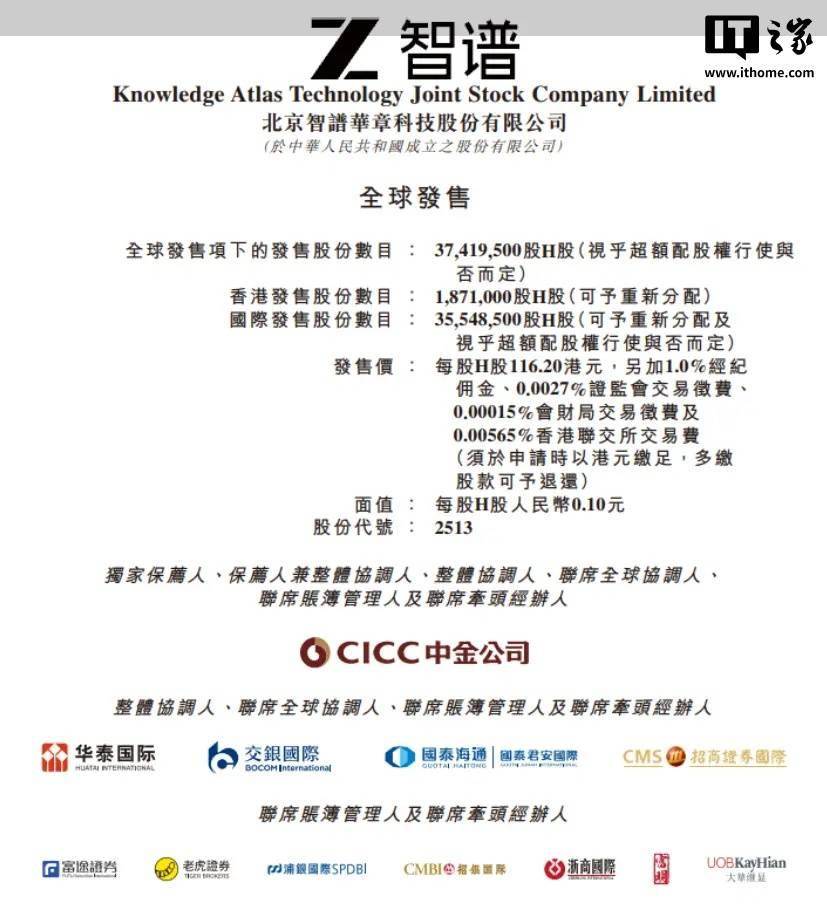
Group 1 - The company, Zhihui Huazhang Technology Co., Ltd., has officially launched its IPO in Hong Kong, with the offering period from December 30, 2025, to January 5, 2026, and plans to list on January 8, 2026, under the stock code "2513" [1] - The company plans to issue a total of 37.42 million H-shares, with 1.87 million shares available for public offering in Hong Kong and 35.55 million shares for international offering [1] - The expected issue price is HKD 116.20 per share, aiming to raise approximately HKD 4.3 billion, with a projected market capitalization exceeding HKD 51.1 billion at IPO [1] Group 2 - As the "first stock of global large models," Zhihui Huazhang has attracted significant interest from capital markets, securing cornerstone investments from 11 institutions, including JSC International Investment Fund SPC and Shanghai Gao Yi, with a total intended subscription of HKD 2.98 billion [1] - The company operates a MaaS (Model as a Service) model, providing intelligent capabilities to developers and enterprises through API calls, showing exponential growth in its cloud MaaS and subscription business [1] - Zhihui Huazhang has empowered over 12,000 enterprise clients globally, with more than 80 million end-user devices and over 45 million developers, making it the leading independent general-purpose large model developer in China [2]
智谱:香港IPO拟发行逾3700万股,定价116.2港元
Sou Hu Cai Jing· 2025-12-29 23:15
IT之家 12 月 30 日消息,智谱华章科技股份有限公司在港交所公告,在港上市拟发行 37,419,500 股 H 股(视乎发售量 调整权及超额配股权行使与否而定),定价 116.2 港元 / 股。预期 H 股将在明年 1 月 8 日开始交易。 中国证监会国际合作司于 12 月 22 日发布关于北京智谱华章科技股份有限公司境外发行上市及境内未上市股份"全流 通"备案通知书,公司拟发行不超过 43,032,400 股境外上市普通股并在香港联合交易所上市。 在此之前,该公司于 12 月 19 日披露招股书,宣布赴港冲刺"全球大模型第一股"。招股书显示,公司 2022 年、2023 年、2024 年收入分别为 5740 万人民币、1.245 亿、3.124 亿元。2022 年到 2024 年的年收入复合年增长率达到 130%, 2025 年上半年收入为 1.9 亿,收入连续三年翻倍。报告期内,公司收入主要来自于大模型收入,这也支撑其成为中国 最大的独立大模型厂商。 IT之家注意到,目前,智谱正在与大模型创业公司 MiniMax (稀宇科技)角逐,力争成为中国首家上市的 AI 模型开 发商。稀宇科技擅长视频和音频生 ...
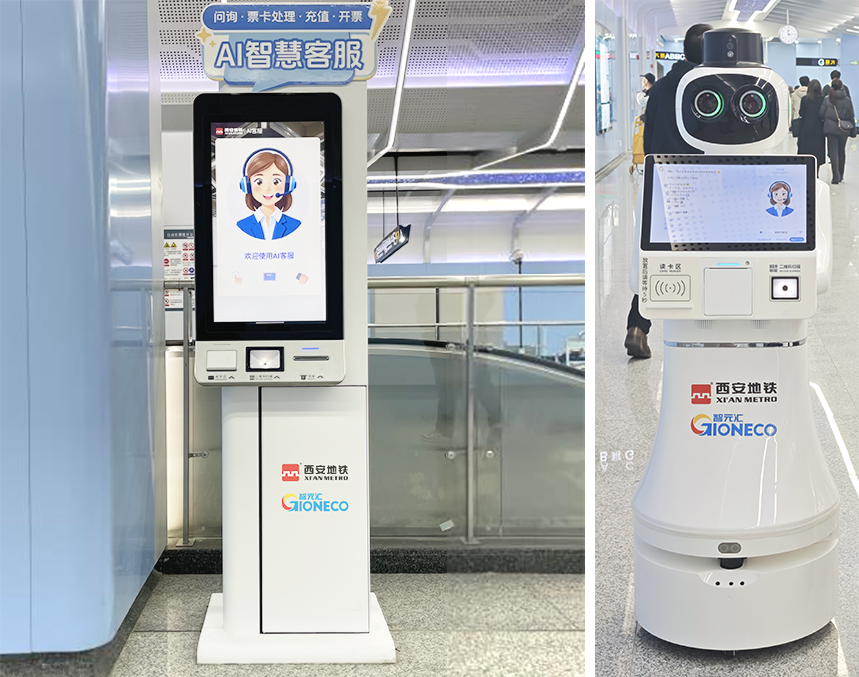
智元汇AI客服智能体亮相西安地铁15号线
Xin Lang Cai Jing· 2025-12-29 13:40
Core Insights - The opening of the Xi'an Metro Line 15 marks the completion of the third phase of Xi'an's rail transit construction, with Chengdu Zhiyuanhui Information Technology Co., Ltd. launching the industry's first AI customer service system based on large models [1][14][26] Group 1: AI Customer Service System - The AI customer service system aims to provide a "无人化、智能化" (unmanned and intelligent) service experience, utilizing AI and big data technologies to enhance passenger services [1][14] - The system integrates ticketing, customer service, and specialized knowledge graphs, targeting the replacement of traditional customer service centers and addressing issues like long queues and high labor costs [2][17] - It covers over 97% of traditional ticket booth services, significantly improving efficiency and user experience [2][17] Group 2: Technical Features - The system supports multimodal interaction capabilities, including voice (in Mandarin and some dialects) and text inputs, designed to function effectively in noisy subway environments [3][18] - It features cross-system linkage technology that connects with clearing systems and cloud data platforms, enabling an integrated "perception-analysis-response-service" model [4][18] - The dual concurrency capability allows a single operator to manage multiple AI customer service terminals, greatly reducing labor costs [5][18] Group 3: Comprehensive Service Offerings - The AI customer service system provides a full range of ticketing services, including card recharging, ticket sales, invoice issuance, and trip analysis, transitioning from logical interfaces to natural language interfaces [8][20] - It offers intelligent inquiry services that can answer complex passenger questions and provide real-time data on ticket prices, schedules, policies, and more [10][22] - The system's cross-system innovation ensures real-time synchronization of ticket data and establishes a service loop combining AI processing with human support [12][24] Group 4: Industry Impact and Future Plans - The deployment of this AI customer service system represents a significant advancement in the digital transformation of urban public transportation, marking the entry into a "large model-driven" era [14][26] - The company plans to continue promoting the large model technology in the rail transit sector, aiming to provide high-quality, convenient, and inclusive travel services while leading the digital transformation in public transportation [16][28]
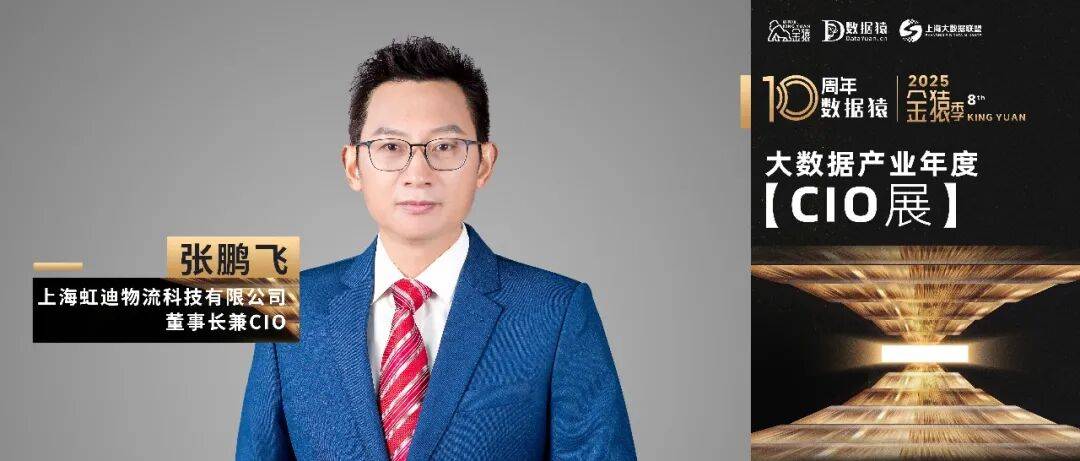
【金猿CIO展】上海虹迪物流科技有限公司董事长兼CIO张鹏飞:聚焦数字化核心——物流供应链的的智慧演进之路
Sou Hu Cai Jing· 2025-12-29 12:38
Core Viewpoint - The logistics industry is undergoing a transformation driven by digitalization, focusing on efficiency, resilience, and data insights. Shanghai Hongdi Logistics Technology Co., Ltd. aims to integrate digital technology into every aspect of logistics, transitioning from traditional labor-intensive operations to a data-driven, intelligent decision-making model. Group 1: Digital Transformation Strategy - The core strategy of Hongdi Technology is to build a unified, open integrated digital logistics platform that connects the entire data flow from customer orders to warehousing, transportation, and final delivery, addressing inefficiencies caused by fragmented processes [2][3] - The platform enables real-time tracking of goods and status, transforming passive inquiries into proactive awareness [2] - Order information flows seamlessly between WMS and TMS, significantly reducing order fulfillment cycles through process collaboration [2] Group 2: Intelligent Operations - Hongdi Technology has introduced advanced intelligent devices and algorithms at key nodes in warehousing and transportation, achieving breakthroughs in efficiency [5] - The deployment of intelligent warehouse robots, in collaboration with leading solution providers, enhances accuracy and operational efficiency, achieving nearly 100% accuracy in warehousing [5] - Predictive planning using historical data and market trends allows for precise demand forecasting and inventory optimization, effectively mitigating supply-demand fluctuations [5][6] Group 3: AI Integration - The advanced stage of digitalization involves a fundamental transformation of operational models, utilizing AI to shift from passive responses to proactive predictions and optimizations [6] - AI agents are integrated into daily operations, enhancing customer service efficiency by automating routine inquiries and allowing human agents to focus on complex issues [6] - Real-time monitoring of transportation processes by AI systems ensures safety and quality of delivery, converting manual inspections into automated executions [6] Group 4: Evolution of Logistics Capabilities - The transportation capability has evolved from mere physical movement to a flexible, reliable data-driven network, enabling customized transport solutions and enhancing market responsiveness [9] - Warehousing has transformed into a smart fulfillment center, capable of high efficiency and accuracy in order processing, with dynamic inventory layouts based on algorithmic predictions [10] - The synergy between agile transportation networks and intelligent warehousing creates a "1+1>2" effect, driving faster, more accurate, and more collaborative operations [11] Group 5: Future Outlook - The digital transformation journey for Hongdi Technology is ongoing, focusing on addressing real business pain points and creating measurable efficiency improvements and customer value [11] - The company aims to deepen the application of AI, IoT, and large models across logistics scenarios, striving to become a trusted partner in smart logistics and shaping a more efficient, agile, and intelligent supply chain future [11]
大厂“抢人”战,从涨薪开始
3 6 Ke· 2025-12-29 12:23
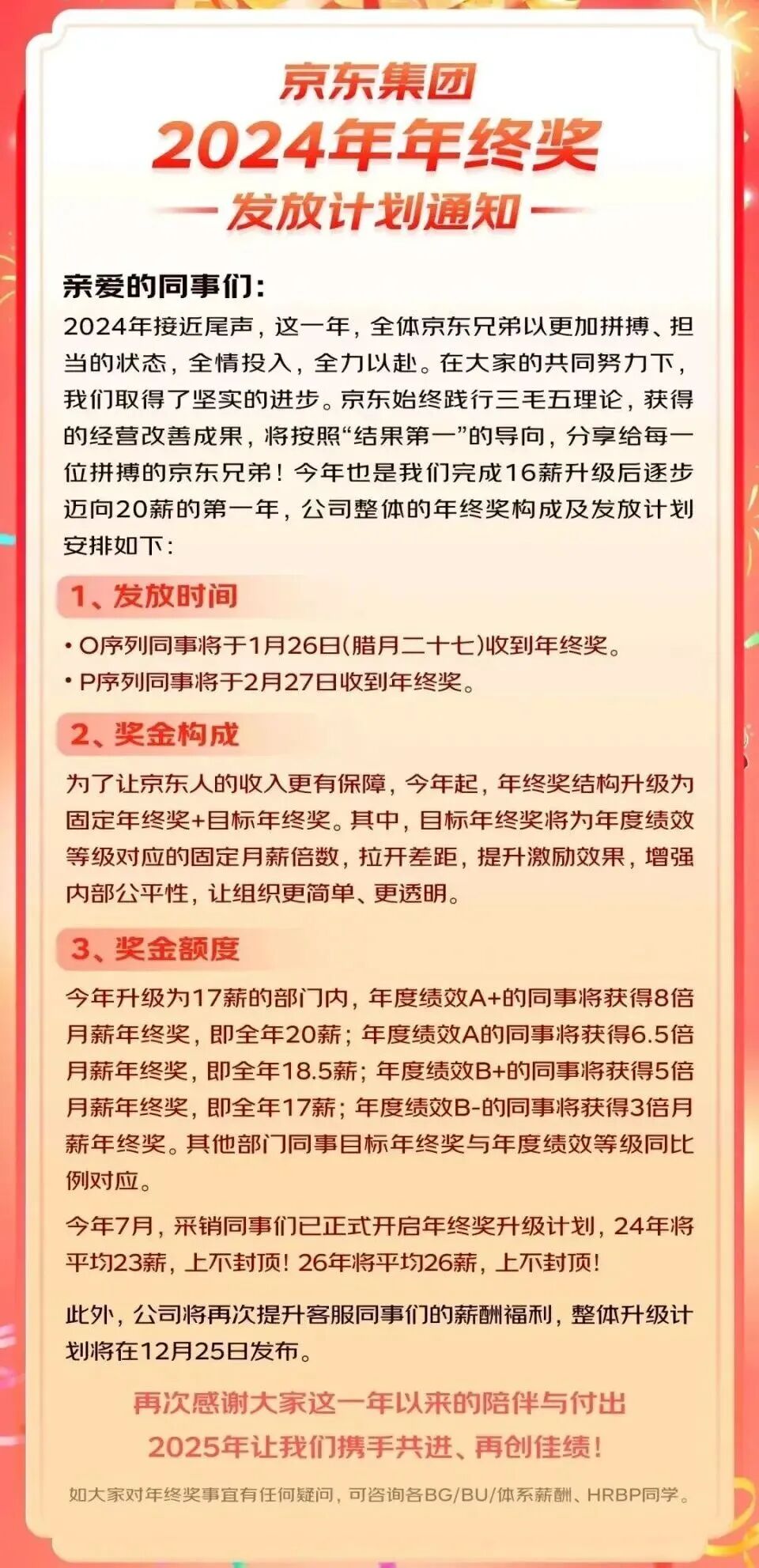
Core Insights - Major companies in the tech and automotive sectors, including ByteDance, JD.com, BYD, and CATL, have announced salary increases and year-end bonuses, indicating a shift in compensation strategies despite a backdrop of layoffs in other firms [1][2][4] - The current wave of salary increases is seen as a strategic response to competitive pressures and a need to attract and retain top talent in a tightening labor market, particularly in AI and technology sectors [17][18] Group 1: Salary Increases and Bonuses - JD.com reported that 92% of its employees received full or exceeded year-end bonuses, with total bonus investment increasing by over 70% year-on-year [1] - ByteDance announced a 35% increase in bonus investment and a 1.5 times increase in salary adjustment budget, raising both the lower and upper limits of salary packages [1][12] - BYD and CATL also implemented salary increases for a large number of grassroots employees, reflecting a broader trend across industries [1] Group 2: Competitive Landscape - The salary increase trend is not new; JD.com initiated a 20 salary upgrade plan in September of the previous year, indicating a long-term strategy rather than a reactionary measure [2] - Companies like Tencent, Alibaba, and ByteDance have also been increasing salaries since last year, suggesting a collective shift in the industry towards higher compensation [4][6] - The competition for talent has intensified, particularly in AI, with companies like Tencent reportedly offering double salaries to attract talent from ByteDance [16][17] Group 3: Structural Changes in Compensation - The current salary adjustments are aimed at rewarding high-performing employees rather than those who simply wait for promotions, addressing inefficiencies within large organizations [13][14] - Alibaba has restructured its job grading system to eliminate the previous "P series" levels, allowing for a more merit-based approach to promotions and compensation [13] - ByteDance has expanded its job grading system to provide more opportunities for salary increases, reflecting a need to address "talent inflation" [14] Group 4: Future Investment Strategies - The salary increases are part of a broader strategic investment in talent, moving away from cost-cutting measures towards enhancing workforce capabilities [18] - Companies are recognizing the importance of both high-end technical talent and the stability of grassroots employees, with JD.com planning significant investments in employee housing [22][23] - The shift in focus from user engagement to talent acquisition highlights the changing competitive landscape in the tech industry, particularly as AI technologies redefine market dynamics [20][21]



大模型推广,也开始“送鸡蛋”了
3 6 Ke· 2025-12-29 11:36
Core Viewpoint - The article discusses the unusual marketing strategy of Ant Group's AI health application, "Antifufu," which has adopted offline customer acquisition methods, including ground promotion, despite the high internet penetration rate in China. This approach raises questions about the target user base and the effectiveness of traditional marketing channels in the current digital landscape [1][9]. Group 1: Marketing Strategy - Ant Group has launched a comprehensive promotional campaign for Antifufu, utilizing both online and offline channels, including public transport and ground promotions [1][3]. - The ground promotion for Antifufu is unique among major AI models, as most competitors rely on digital marketing strategies rather than offline methods [3][6]. - The cost of acquiring new users through ground promotion for Antifufu is approximately 10 yuan per user, which is lower than the average cost of acquiring users through digital marketing [3][7]. Group 2: User Acquisition and Market Position - Antifufu's user acquisition strategy appears to target a broad audience, potentially indicating a lack of specific user requirements [9][10]. - The application has seen a significant increase in user engagement, with 55% of its users coming from lower-tier cities, addressing the demand for accessible healthcare services in underserved markets [19][20]. - The competitive landscape shows that while other AI models have shifted away from ground promotion, Antifufu's approach may allow it to capture a larger user base in a market with growing demand for health services [6][19]. Group 3: Product Features and Business Model - Antifufu has transitioned from a tool-based application to a more comprehensive "AI health friend," offering features such as health companionship, health inquiries, and services [14][15]. - The application is positioned to leverage data from smart hardware to provide personalized health insights, which could lead to a viable business model through partnerships with healthcare providers and insurance companies [17][19]. - Antifufu's strategy includes building a user base before monetization, focusing on providing valuable health services without immediate advertising or monetization strategies [19][20].

稳中求进与战略定力|《财经》社评
Sou Hu Cai Jing· 2025-12-29 11:27
Group 1 - The central economic work conference has successfully set the direction and boosted confidence for the implementation of the "14th Five-Year Plan" and the work in 2026, providing a clear roadmap for future efforts [2] - The meeting emphasized the importance of avoiding impatience and adhering to the guiding principles, recognizing the unique potential and challenges faced by the Chinese economy at this stage [2][3] - The complexity of China's economy as a super-large economy means that high-speed growth is no longer feasible, and the focus should shift to innovation-driven, quality improvement, and structural optimization [3] Group 2 - Maintaining strategic determination involves avoiding reckless competition in emerging industries, which require substantial capital, talent, and a robust industrial foundation [4] - Addressing existing risks, such as those in the real estate sector and local government debt, requires a long-term, systematic approach rather than quick fixes [4][5] - The resolution of China's issues relies on development, with existing risks needing to be addressed through new growth, and confidence in market and technological reforms is essential [5]