数字化赋能

Search documents
京东超市生鲜海参负责人:从消费趋势到平台赋能,打造海参产业增长新引擎
Sou Hu Cai Jing· 2025-07-05 05:33
Core Insights - The establishment of the Shandong Sea Cucumber Industry Alliance aims to promote high-quality development in the sea cucumber industry, with participation from key stakeholders including JD Supermarket [1][3] - JD Supermarket's fresh sea cucumber division presented insights on consumer behavior and industry trends, emphasizing the importance of market understanding for strategic decision-making [1][3] Company Insights - JD Supermarket has developed a comprehensive retail ecosystem encompassing nine business sectors, including retail, technology, logistics, and health, with a structured store matrix of flagship, specialty, and dedicated stores [3] - The company has successfully attracted several high-quality Shandong sea cucumber brands to its platform, enhancing brand influence through digital empowerment [3] Consumer Insights - A survey revealed that health and nutrition are the primary reasons consumers purchase sea cucumbers, with gift-giving also being a significant factor [4] - Consumers prioritize product quality, taste, and safety, indicating that these attributes will be critical competitive points in the future sea cucumber market [4] Industry Trends - The sea cucumber market is diversifying, with strong potential in various product categories such as traditional dried sea cucumbers, ready-to-eat options, and fresh stewed varieties [5] - Yantai, as a major sea cucumber production area, possesses a robust industrial foundation and the largest sea cucumber distribution market in the country, providing significant supply chain advantages [5] - However, the online presence of Shandong sea cucumber merchants is limited, indicating room for growth in e-commerce and brand influence [5][6] Strategic Initiatives - JD plans to leverage its platform advantages, including high user concentration and quality, to support Shandong sea cucumber brands in achieving online breakthroughs [6] - The company will implement targeted resource allocation strategies, such as one-on-one category sales services and subsidy support, to facilitate the digital, brand, and premium transformation of the industry [6]


“必吃榜”广东商户数全国第一,本地特色、鲜烹现制成关键词
Nan Fang Du Shi Bao· 2025-07-04 14:25
Core Insights - The 2025 "Must-Eat List" award ceremony successfully concluded in Shenzhen, covering Guangdong, Hainan, and Fujian provinces, with 551 restaurants recognized, highlighting a strong preference for local flavors and long-established eateries [1][2] Group 1: Award Ceremony Highlights - The 2025 "Must-Eat List" was fully revealed on June 25, featuring 3,091 restaurants across 144 cities, with 25 new culinary cities added to the list [2] - In the Guangdong province, 396 restaurants made the list, ranking first in the number of recognized establishments nationwide [2] - Over 70% of the recognized restaurants in Guangdong are small local eateries, and nearly 35% are over ten years old, indicating a trend towards traditional dining experiences [2] Group 2: Consumer Trends - The data shows that local eateries and long-standing restaurants are the main focus of this year's "Must-Eat List," with nearly 80% of the total list comprising small local shops and over 40% being establishments older than ten years [2] - The increase in recognition of local flavors is evident, with nearly 55% of the restaurants on the list being new entries, enhancing the sense of discovery for consumers [2] Group 3: Regional Growth and Marketing Initiatives - The growth of dining orders from users outside the local area in Guangdong, Hainan, and Fujian provinces is outpacing overall market growth, driven by local cuisine preferences [5] - The upcoming third "Must-Eat Festival" in July will involve significant marketing investments to convert the list's recognition into new consumption momentum across all listed cities [6] - Future award ceremonies will be held in Shenyang, Chongqing, and Xi'an to further promote local eateries and engage with local governments to stimulate consumption and cultural innovation [6]


菏泽驾培平台实现服务质量与监管效能双提升
Qi Lu Wan Bao Wang· 2025-07-01 12:39
Core Insights - The Heze Driving Training Public Service Platform has been launched to enhance the driving training industry through digitalization, ensuring better service quality and regulatory effectiveness since May 28 this year [1] Group 1: Platform Coverage and Effectiveness - The platform has successfully onboarded 98 out of 121 licensed driving schools, allowing students to register and pay online, implementing a "sunshine fee system" to eliminate unreasonable charges [2] - The platform ensures that tuition fees are regulated and disbursed in phases based on training progress, addressing previous issues of arbitrary fees and contract signing difficulties [2] Group 2: Service Quality Improvement - The implementation of the "sunshine fee system" has reduced price competition among driving schools, allowing them to focus on service quality rather than undercutting prices [3] - Driving schools have diversified their offerings with over 520 class types available on the platform, achieving a 100% contract signing rate among students [3] Group 3: Regulatory Effectiveness and Student Rights - As of June 30, the platform has registered over 26,500 users and trained more than 17,000 students, with a 43.2% decrease in complaints compared to the previous year [4] - The platform has achieved a 100% response rate to user inquiries and a 100% satisfaction rate in handling complaints [4] Group 4: Industry Image Restructuring - The local police have conducted a crackdown on illegal driving training institutions, shutting down 9 unlicensed schools and confiscating equipment used for illegal training [5] - The joint efforts of transportation and police departments have improved the connection between driving training and examinations, promoting high-quality industry development [5]
中国数字化赋能实体商业实践白皮书
艾瑞咨询· 2025-06-27 06:46
Core Viewpoint - Digital empowerment has become the core driving force for the high-quality development of physical commerce, reshaping growth models in the data-driven era [1][2][3] Group 1: Research Significance - The study focuses on the practice of digital empowerment in physical commerce and the key role of the Wanda Smart Business Platform in industry transformation [1] - It aims to provide strong support for brand merchants to optimize operational models and enhance market competitiveness, while offering forward-looking insights for industry decision-makers and investors [1] Group 2: Current Status and Challenges - The report analyzes the current status, challenges, and development paths of digital empowerment in physical commerce, showcasing how digital technology aids in transformation and upgrade [2] - The digital transformation of physical commerce is a systematic project that covers the entire process from brand location selection to operational expansion [7] Group 3: Industry Trends - The digital upgrade is an inevitable choice for the transformation of physical commerce, with full-link intelligent transformation reconstructing the growth paradigm of the industry [3][69] - The future will see physical commerce moving towards deep integration of digital and physical, leading a new wave of industry digital transformation through technological collaboration and ecological reconstruction [3][72] Group 4: Development History - The rise of e-commerce in the early 21st century posed unprecedented challenges to physical commerce, prompting exploration of online-offline integration [4] - Commercial complexes have become key drivers for revitalizing the physical economy, enhancing competitiveness through digital transformation and service quality improvement [4][6] Group 5: Macroeconomic Background - From 2017 to 2024, China's per capita disposable income is projected to grow from 26,000 to 41,000 yuan, while per capita consumption expenditure is expected to rise from 18,000 to 28,000 yuan, providing a solid economic foundation for the development of physical commerce [7][8] - The rental market for commercial streets and shopping centers is experiencing slight increases, with demand for shop leasing expected to continue to release [11] Group 6: Brand Development - The restaurant sector is focusing on diversification and experiential consumption, with significant potential in lower-tier cities [18] - The retail sector emphasizes precise matching of "people-goods-scene" to penetrate the market, targeting lower-tier markets as potential growth areas [22] Group 7: Digital Transformation Needs - Digital transformation addresses four major challenges: location selection, marketing, operations, and expansion, reconstructing the growth methodology of physical commerce [31] - The core paths for digital transformation include data assetization, operational digitization, and service ecosystem development, enhancing brand competitiveness [35] Group 8: Wanda Smart Business Platform - Wanda Smart Business leverages over 20 years of commercial management experience to create a self-sustaining cycle of "precise leasing - merchant growth - data feedback," maximizing commercial value [54] - The platform has successfully supported various brands, such as Tea Baidao and Hu Shang Ayi, in their digital transformation and expansion efforts [57][60]

【独家专访】百年烘焙品牌嘉顿的转型:在传承与创新中重构品牌生命力
东京烘焙职业人· 2025-06-27 06:44
Core Viewpoint - The article discusses the transformation of Garden, a century-old baking brand in China, from a traditional food manufacturer to a modern consumer brand, emphasizing the importance of innovation while maintaining quality and emotional connections with consumers [4][5][22]. Group 1: Brand History and Evolution - Garden was founded in 1926 in Hong Kong and has become a significant part of the daily lives of millions of consumers in China, representing a nostalgic childhood flavor for many [4][9]. - The brand's key product, "Life Bread," was launched in 1960 to address nutritional deficiencies in Hong Kong, becoming a legendary product that has sold for over 60 years [12][14]. - Garden has evolved from a traditional food manufacturer to a modern consumer brand, focusing on quality and emotional connections with consumers while adapting to market changes [4][22]. Group 2: Market Strategy and Consumer Engagement - Garden's strategy involves maintaining its core values of quality and trust while embracing change, optimizing supply chains, and enhancing R&D efficiency to accelerate product innovation [22][24]. - The brand is focusing on younger consumers by launching products that cater to their lifestyles, such as "Healthy Multi-Bread" and "Lucky Cookies," which emphasize lightness and interactivity [28][31]. - Garden is rebranding itself to appeal to younger audiences, shifting from a nostalgic narrative to a contemporary resonance, utilizing social media for engagement and user-generated content [36][39]. Group 3: Trends and Future Directions - The company identifies five key trends shaping the industry: health consciousness, functional foods, convenience, community-driven consumption, and digitalization [52][53]. - Garden is investing in health-oriented product development, creating low-sugar and high-fiber options to meet the evolving nutritional preferences of consumers [49][47]. - The brand is enhancing its digital capabilities to better understand consumer needs and streamline operations, ensuring agility in responding to market demands [64][65]. Group 4: Localized Production and Sustainability - Garden is establishing a localized production and distribution network across China to improve efficiency and responsiveness to regional market needs [66][68]. - This strategy not only meets the demand for product diversity but also strengthens the brand's connection to various consumer cultures across the country [68].

以数字化技术赋能 助力零售户经营能力跃升
Zhong Guo Chan Ye Jing Ji Xin Xi Wang· 2025-06-26 02:26
Core Viewpoint - The article highlights the innovative practices of the Qiaokou Tobacco Marketing Department in the digital economy, focusing on a four-part digital empowerment system that enhances traditional cigarette retail operations through technology and service [1][2][4]. Group 1: Digital Experience and Strategy - The Qiaokou Marketing Department has identified a structural change in the retail industry towards online operations, emphasizing the importance of personalized IP platforms for community retail [1]. - A strategy called "5-kilometer living circle digital attack" was proposed, focusing on serving nearby communities and office clientele, as over 65% of sales come from familiar customers within a 5-kilometer radius [1]. Group 2: Cognitive Revolution in Retail - The department recognizes the need for a shift from experience-driven to data-driven thinking among retailers, addressing common fears and reliance on traditional methods [2]. - A three-step training system was developed: "cognitive breaking—skill charging—practical training," targeting younger, adaptable retailers to gradually expand the initiative [2]. Group 3: Digital Application Practices - Retailer Li has successfully implemented a personal app for online sales, significantly increasing his snack sales and overall store profits through efficient order collection and delivery [3]. Group 4: Risk Management and Compliance - The Qiaokou Marketing Department prioritizes risk prevention by regularly educating retailers on legal regulations related to online sales and monitoring compliance to ensure proper practices [4]. - The overall digital empowerment practice is characterized by a comprehensive approach that combines deep research, innovative teaching, practical application, and strict management, fostering a positive transformation in traditional retail operations [4].
质量强区战略激发高质量发展新动能 山西综改区锻造新质生产力“主引擎”
Zhong Guo Zhi Liang Xin Wen Wang· 2025-06-24 07:12
Core Viewpoint - The Shanxi Transformation and Comprehensive Reform Demonstration Zone (referred to as "Comprehensive Reform Zone") aims to become a pioneer in cultivating new quality productivity and shaping new development advantages through a strategy focused on quality enhancement in enterprises, supply chains, and regions. Group 1: New Quality Productivity Development - The Comprehensive Reform Zone emphasizes leading industrial chains and focuses on high-end equipment, new materials, synthetic biology, and artificial intelligence to accelerate the cultivation of new driving forces and enhance the competitiveness of advanced manufacturing quality. The zone accounts for 24.3% of chain leaders and 16.6% of core enterprises among the 16 key industrial chains in Shanxi Province, with high-tech enterprises representing 26.1% and specialized new enterprises 20.4% of the province's total. The added value of high-tech manufacturing accounts for 50% of the province's total [1][2]. Group 2: Technological Innovation Support - To strengthen technological innovation, the Comprehensive Reform Zone has introduced a series of policies, including "Several Measures to Promote High-Quality Industrial Development," guiding enterprises to continuously improve core technology levels. The zone has fostered 229 provincial-level and 3 national-level manufacturing champions, achieving breakthroughs in various products, such as the world's first parallel operation of excavation, support, and transportation by Shanxi Tiandi Coal Machine Equipment Co., Ltd. [2]. Group 3: Brand Development and Quality Improvement - The Comprehensive Reform Zone focuses on cultivating new brand dynamics by promoting quality awards and "Shanxi Boutique" initiatives. It conducts enterprise excellence performance management, quality improvement training, and organizes "Quality Month" activities, significantly enhancing enterprise quality awareness and product competitiveness. Three companies, including Shanxi ShuoKe Crystal Co., Ltd., received nominations for the Shanxi Quality Award [3]. Group 4: Standardization and Quality Enhancement - The Comprehensive Reform Zone continues to deepen standardization reforms and innovations, introducing the China Standardization Research Institute to optimize standard supply. Enterprises in the zone have participated in the formulation and revision of 13 international standards, accounting for 44.8% of the province's total. Over the past three years, the zone has rewarded 52 enterprises with 104 standardization awards, involving funds of 31.5 million yuan [3].
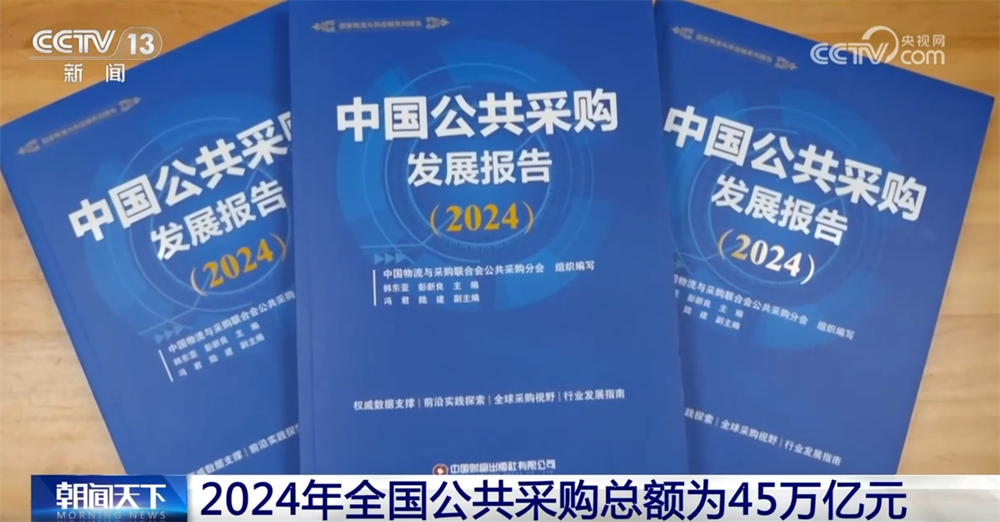
2024年全国公共采购向“绿”而行 以“数”为媒构建高质量发展新引擎
Yang Shi Wang· 2025-06-19 06:38
Core Insights - The total public procurement amount in China for 2024 is projected to be 45 trillion yuan, representing a year-on-year decrease of 2.18% [1] - Government procurement continues its downward trend, estimated at approximately 3.3 trillion yuan for 2024, marking a third consecutive decline [1] - State-owned enterprises (SOEs) show a slight increase in procurement spending, with central enterprises' procurement exceeding 18 trillion yuan [1] Group 1: Public Procurement Overview - The report indicates a significant structural differentiation in public procurement, with SOEs acting as a stabilizing force [1] - The total number of public resource trading projects is expected to reach around 1.84 million in 2024, with a transaction value of approximately 20 trillion yuan, reflecting a 5% year-on-year increase [5] Group 2: Green Procurement Initiatives - The government is intensifying its green procurement policies, expanding the range and scale of green product procurement [6] - The scope of government procurement supporting green building materials has been expanded from 48 to 100 cities, mandating compliance with standards for various government projects [6] - A notification from the Ministry of Finance requires that at least 30% of annual government procurement for official vehicles should be for new energy vehicles, promoting their usage [8] Group 3: Digitalization and Sustainability - The push for green procurement is seen as a driver towards low-carbon and sustainable development in public procurement [10] - Central enterprises are leading the charge in building green supply chains and implementing green procurement practices, including the establishment of online procurement platforms [12]
广州入选全国零售业创新试点,“千年商都”二次创业
2 1 Shi Ji Jing Ji Bao Dao· 2025-06-16 11:22
Core Insights - The Ministry of Commerce and other departments have officially announced the first batch of 38 pilot cities for retail innovation and enhancement, with Guangzhou being selected as a key city [1][2] - The pilot cities are required to implement the "Retail Innovation and Enhancement Implementation Plan," focusing on modern commerce, convenience living circles, and optimizing the business environment [1][3] Summary by Sections Pilot City Selection - Guangzhou has been recognized for its advantages as a commercial consumption center, supported by policies, cultural integration, digital empowerment, and improved infrastructure [2] - The city achieved a retail sales total of 376.09 billion yuan from January to April, with a year-on-year growth of 4.0%, indicating a 0.5 percentage point increase from the previous quarter [2] Focus Areas for Guangzhou - The notification suggests that Guangzhou should focus on "one store, one strategy" for scenario-based transformation, diversified innovation, and digital empowerment [3] - The city is expected to leverage its historical and cultural resources, with significant projects undergoing renovation and upgrades in the next 3-5 years [3] Retail Innovation Strategies - Guangzhou's retail landscape is set to explore cross-industry and multi-scenario innovations, such as collaborations between traditional brands and modern retail formats [4] - The city is projected to achieve over 500 billion yuan in live-streaming retail sales by 2024, leading the nation in this sector [5] Common Characteristics of Selected Cities - The selected pilot cities share common traits, including significant urban functions, population concentration, and robust transportation networks, facilitating cross-city consumption [6][7] - These cities also benefit from favorable policy environments that support commercial development [8] Retail Market Trends - Retail enterprises are encouraged to adopt diversified innovations to differentiate themselves in a competitive market, focusing on lifestyle offerings rather than just product sales [8] - The integration of retail with services and experiences is emphasized, promoting a more holistic approach to consumer engagement [8]

养老院“闯三关”:消防、预付款监管和现金流
经济观察报· 2025-06-16 10:36
Core Viewpoint - The current competition in the elderly care industry is intense, leading companies to focus on maintaining existing scale while waiting for market conditions to improve before seeking further expansion opportunities [1][5]. Market Conditions - Investment enthusiasm for expansion among elderly care institutions has decreased, with some small and medium-sized institutions and large real estate projects seeking to sell [2]. - In the first half of the year, elderly care institutions faced tightening cash flow and declining profit margins, alongside adapting to regulatory challenges [3]. Regulatory Environment - Many elderly care facilities underwent intensive fire safety inspections, requiring significant investments in infrastructure upgrades to meet safety standards [4]. - The transition to a strong regulatory model for prepayment systems has increased cash flow pressure on institutions, as fees must now be managed in a tripartite account [4][12]. Financial Challenges - The tightening of prepayment regulations has led to cash flow impacts, particularly for small and non-chain institutions, which may face risks of funding shortages [14]. - Many elderly care institutions are struggling to reach the breakeven point, with occupancy rates in Beijing reported at only 38%, necessitating a minimum of 50% for profitability [10]. Technological Advancements - Companies like Jiurucheng are investing in digital management systems, with approximately 60 million yuan allocated to enhance operational efficiency and standardization [6][21]. - The introduction of artificial intelligence technologies is being explored to improve operational efficiency and reduce long-term costs, despite initial investments [20][21]. Workforce Development - The industry is actively recruiting young talent to ensure long-term sustainability, with management programs being established to nurture new employees [19][20]. - The lack of management personnel in the elderly care sector presents significant growth opportunities for young professionals [19].