
有效投资

Search documents
“十五五”投资进入质效时代
Di Yi Cai Jing· 2025-11-03 12:53
Core Insights - The investment strategy is shifting from quantity expansion to quality enhancement, emphasizing precise management over extensive management [1] - The "14th Five-Year Plan" has optimized investment direction and structure, but the "scale-driven" model has not fundamentally changed, leading to structural contradictions and risks [2][3] - Effective investment is essential for stabilizing the macro economy, fostering a modern industrial system, addressing development imbalances, and promoting green transformation [4][5][6] Investment Strategy and Focus - The focus should be on technological innovation and industrial upgrading to support high-quality development [7] - Investments must prioritize public welfare and services to enhance common prosperity [8] - Emphasis on green low-carbon initiatives and energy security to create new advantages for future development [9] - Strengthening infrastructure connectivity to facilitate domestic and international dual circulation [10] Mechanism Innovation - Institutional and mechanism innovation is crucial for effective investment during the "14th Five-Year Plan" [11] - Investment decision-making and generation mechanisms need to be improved for precise allocation [12] - Resource allocation efficiency can be enhanced through innovative funding coordination and input mechanisms [13] - Project management and performance evaluation mechanisms should ensure comprehensive lifecycle management [14] - Incentive compatibility and risk prevention mechanisms are necessary for sustainable investment [15] - Optimizing the business environment is essential for better integration of an effective market and proactive government [16]
拓展增量 提升效益 畅通循环 锚定三方面重点任务 建设强大国内市场
Zhong Guo Zheng Quan Bao· 2025-11-02 20:39
Group 1: Core Insights - The "15th Five-Year Plan" emphasizes the importance of a strong domestic market as a strategic foundation for Chinese modernization, focusing on expanding domestic demand and enhancing the interaction between supply and demand [1][2][3] - Key tasks include boosting consumption, increasing effective investment, and removing barriers to the construction of a unified national market [1][6] Group 2: Consumption Boosting Strategies - The plan prioritizes boosting consumption, leveraging China's large population and the expected growth of the middle-income group to tap into market potential [2] - Measures include increasing public service spending to enhance consumer capacity and implementing inclusive policies to support livelihoods [2][4] Group 3: Supply-Side Enhancements - The strategy involves leading new supply with new demand, focusing on high-quality, personalized, and green products and services to meet the evolving needs of consumers [3][4] - Institutional guarantees will be established to optimize the consumption environment, encouraging consumer spending [3][5] Group 4: Effective Investment Focus - "Investment in people" is highlighted as a key approach to drive economic and social structural transformation, with a focus on enhancing public service and human capital investment [4][5] - The plan aims to optimize investment structure, improve investment efficiency, and reform the investment financing system to better allocate government funds [4][5] Group 5: Market Barrier Removal - The removal of market barriers is crucial for efficiently aggregating domestic and international resources, facilitating a unified national market [6][7] - The plan outlines systematic deployments to eliminate local protectionism and market segmentation, aiming to create a high-standard market system [6][7]
21社论丨有效投资与消费升级双管齐下,助力扩内需
21世纪经济报道· 2025-11-01 05:03
Group 1 - The National Development and Reform Commission (NDRC) is implementing a series of important policy signals to stabilize economic growth in the short term while planning for quality improvement in the long term [1] - The NDRC is utilizing special bonds and policy financial tools to promote effective investment and stabilize economic growth, with a focus on key projects in specific provinces [1][2] - A total of 500 billion yuan in new policy financial tools has been fully allocated, supporting over 2,300 projects with a total investment scale of approximately 7 trillion yuan, targeting sectors like digital economy and urban renewal [2] Group 2 - The government is actively promoting the development of new consumption formats through diversified pilot policies, with financial support for trial cities based on their category [2] - The "Urban Commercial Quality Improvement Action Plan" aims to create a structured urban commercial ecosystem, establishing a three-tier commercial system to enhance consumer experience [3] - The importance of developing the service industry is emphasized, with plans to introduce measures to promote its growth, which is crucial for expanding domestic demand and optimizing economic structure [3][4] Group 3 - The government plans to guide funds towards key areas in the service industry, such as elderly care and cultural tourism, to enhance service quality and innovation [4] - The service consumption share of total consumption expenditure has been increasing, reaching 46.8% in the first three quarters of this year, indicating strong growth potential in the market [3]

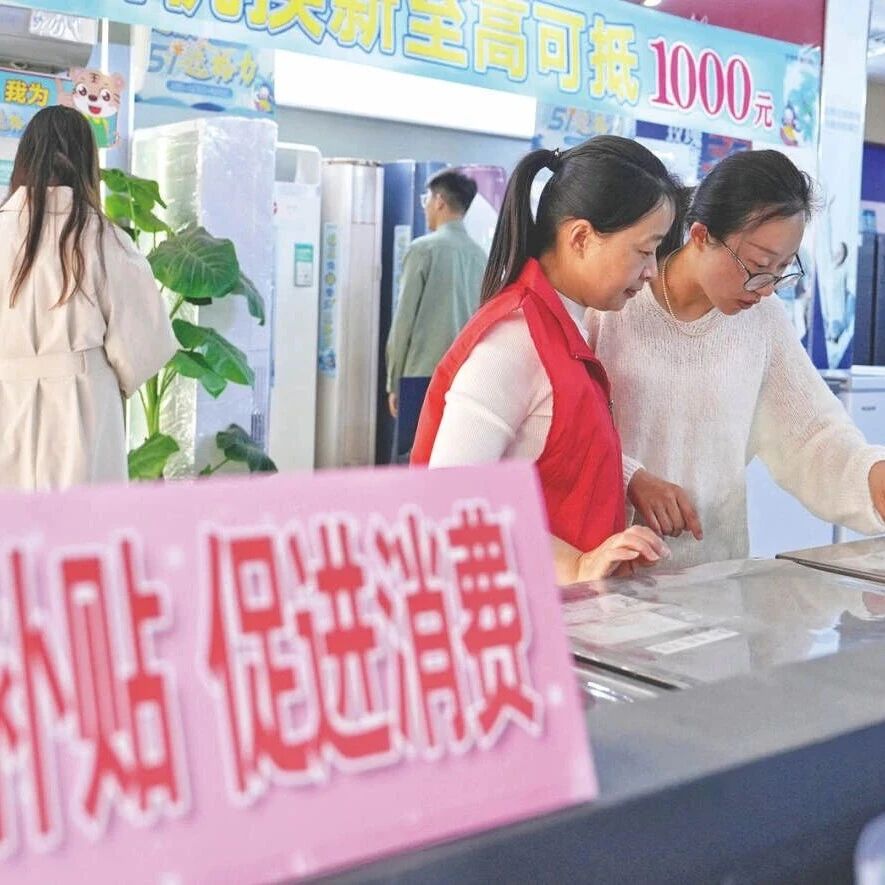
有效投资与消费升级双管齐下,助力扩内需
2 1 Shi Ji Jing Ji Bao Dao· 2025-10-31 22:37
Group 1 - The National Development and Reform Commission (NDRC) is implementing a series of important policy signals to stabilize economic growth in the short term while planning for high-quality development in the long term [1] - The NDRC is utilizing special bonds and policy financial tools to promote effective investment and stabilize economic growth, with a focus on key projects in specific provinces [1][2] - A total of 500 billion yuan in new policy financial tools has been fully allocated, supporting over 2,300 projects with a total investment scale of approximately 7 trillion yuan, targeting sectors like digital economy and urban infrastructure [2] Group 2 - The NDRC is actively promoting the development of new consumption formats and has launched a series of support measures for new business models and scenarios [2] - The Ministry of Commerce and other departments have introduced an "Urban Commercial Quality Improvement Action Plan" to create a structured urban commercial ecosystem, emphasizing a three-tier commercial system [3] - The importance of developing the service industry has been highlighted, with plans to introduce measures to promote innovation and efficiency in life service sectors, which are crucial for expanding domestic demand [4]
基本实现社会主义现代化夯实基础全面发力:\十五五规划建议\解读
Huafu Securities· 2025-10-29 12:30
Group 1: Economic Development Strategy - The "15th Five-Year Plan" emphasizes building a modern industrial system as the material and technical foundation for Chinese-style modernization[2] - The plan aims to optimize traditional industries while fostering emerging and future industries, focusing on high-level technological self-reliance[3] - It highlights the need for breakthroughs in key core technologies in areas such as integrated circuits and advanced materials to enhance national innovation capabilities[3] Group 2: Consumption and Investment - The plan proposes actions to boost consumption and effective investment, addressing the impact of real estate market adjustments on durable goods consumption[4] - It suggests enhancing residents' consumption capacity and removing unreasonable restrictions on consumption in sectors like automobiles and housing[4] - The government aims to maintain reasonable investment growth and improve investment efficiency by optimizing investment structures and clarifying investment directions[4] Group 3: Macro Policy Implementation - The plan calls for a moderately loose monetary policy and the resumption of government bond trading in the open market[4] - It emphasizes the need for coordinated fiscal and monetary policies to enhance macroeconomic governance effectiveness[4] - The central bank will implement a one-time personal credit relief policy in early 2026 to alleviate residents' debt burdens and stabilize the real estate market[4] Group 4: Risk Considerations - There are risks associated with the expansion of fiscal policy and the extent of monetary policy easing not meeting expectations[5]
投资要有效才投,消费无条件优先
李迅雷金融与投资· 2025-10-28 07:34
Group 1 - The core viewpoint of the article emphasizes the importance of boosting domestic consumption and effective investment as a strategic foundation for China's economic development, aiming to enhance the internal circulation of the economy [2][5][15] - The article highlights that in the first three quarters, China's total retail sales of consumer goods reached 36,587.7 billion yuan, growing by 4.5%, with a notable increase in goods retail sales by 4.6% and a slower growth in catering revenue at 3.3% [2] - It is noted that the growth of service consumption outpaced that of goods consumption, indicating a shift in consumer behavior, although challenges remain with insufficient effective demand [5][11] Group 2 - The article discusses the relationship between boosting consumption and effective investment, stating that while consumption is prioritized, investment must be effective, focusing on sectors like AI and new infrastructure rather than traditional infrastructure [6][9] - The concept of "effective investment" is defined, emphasizing the need for investments in areas that support high-tech advancements and sustainable development, such as energy supply for AI computing [6][9] - The article mentions that the new policy financial tools introduced in the fourth quarter aim to support new infrastructure and strategic emerging industries, contrasting with previous tools that included traditional infrastructure [9] Group 3 - The article stresses the importance of public consumption in enhancing private consumption, particularly through social security and welfare programs, to support low- and middle-income groups [11][12] - It highlights the necessity of developing the service industry to absorb employment, especially as traditional industries become more automated [13] - The article suggests that relaxing regulations in certain sectors could stimulate domestic consumption among high-income groups, thereby creating job opportunities and increasing tax revenue [14]

专访李迅雷:投资要有效,消费无条件优先
2 1 Shi Ji Jing Ji Bao Dao· 2025-10-27 14:23
Core Points - The Fourth Plenary Session of the 20th Central Committee of the Communist Party of China emphasized the importance of building a strong domestic market and accelerating the construction of a new development pattern [1] - The session highlighted the need to boost consumption and effective investment, while breaking down barriers to the construction of a unified national market [1][6] - Recent consumption data shows that China's total retail sales of consumer goods reached 36.5877 trillion yuan, growing by 4.5% in the first three quarters of the year [1] Group 1: Consumption and Investment - The core task of macro policy in the next phase is to significantly boost consumption, with a focus on developing the service sector to absorb employment [4] - The relationship between boosting consumption and effective investment is crucial, with the emphasis on "effective" investment being a key distinction [7] - Effective investment should prioritize sectors like AI and new infrastructure, moving away from traditional infrastructure investments that have seen a decline [7][10] Group 2: New Infrastructure and Market Demand - New infrastructure projects should be aligned with real market demand, ensuring resources are allocated to areas that enhance economic density and facilitate the flow of factors [9] - The government is expected to introduce new policy financial tools to stimulate fixed investment, focusing on digital economy and green technology rather than traditional infrastructure [10] Group 3: Social Welfare and Employment - The Fourth Plenary Session stressed the importance of improving public welfare and ensuring common prosperity, particularly in the context of an aging population [12] - Public consumption spending is expected to expand rigidly, focusing on social security, childcare, and basic public services to encourage private consumption [12][13] - The development of the service sector is seen as a key area for creating quality employment opportunities, especially as traditional industries become more automated [13]

专访李迅雷:投资要有效,消费无条件优先
21世纪经济报道· 2025-10-27 13:49
Core Viewpoint - The article emphasizes the importance of boosting domestic consumption and effective investment as key strategies for China's economic development, particularly in the context of the recent Fourth Plenary Session of the 20th Central Committee of the Communist Party of China [1][4]. Group 1: Domestic Market and Consumption - The Fourth Plenary Session highlighted the need to strengthen the domestic market and accelerate the construction of a new development pattern, focusing on expanding domestic demand and enhancing the interaction between supply and demand [1][4]. - In the first three quarters, China's total retail sales of consumer goods reached 36,587.7 billion yuan, growing by 4.5%, with retail sales of goods increasing by 4.6% and catering revenue growing by 3.3% [1][4]. - The article notes that while service consumption is growing faster than goods consumption, there are signs of insufficient effective demand, as evidenced by the 0.9% growth in catering revenue in September [6][4]. Group 2: Investment Strategies - The article discusses the distinction between "effective investment" and general investment, emphasizing that investment must be effective, while consumption should be prioritized unconditionally [7][4]. - It suggests that to enhance domestic circulation, significant efforts are needed to boost consumption, which in turn will drive new supply and create new demand [6][4]. - The focus of new infrastructure investment should shift from traditional infrastructure to areas like electricity and computing power, which are essential for supporting high-tech advancements [7][10]. Group 3: Policy Implications - The article indicates that the government is expected to introduce incremental policies in the fourth quarter, with a focus on new infrastructure and strategic emerging industries, aiming to stabilize investment growth [10][15]. - A new policy tool involving 500 billion yuan is highlighted, which will primarily target new infrastructure and strategic emerging industries, contrasting with previous tools that included traditional infrastructure [10][15]. - The article stresses the importance of public consumption in driving private consumption, particularly through social security and welfare measures aimed at low- and middle-income groups [12][14].

21专访|中泰国际李迅雷:投资要有效,消费无条件优先
2 1 Shi Ji Jing Ji Bao Dao· 2025-10-27 12:21
Group 1: Core Insights - The Fourth Plenary Session of the 20th Central Committee emphasizes the construction of a strong domestic market and accelerating the formation of a new development pattern [1] - The focus is on boosting consumption and effective investment, with a strategic basis on expanding domestic demand [1][4] - The latest consumption data shows a retail sales total of 36,587.7 billion yuan in the first three quarters, with a growth rate of 4.5% [1] Group 2: Consumption and Investment Dynamics - There is a need to enhance domestic circulation's endogenous power to stimulate consumption effectively [5] - The distinction between "boosting consumption" and "effective investment" is highlighted, with consumption prioritized without conditions [6] - Effective investment should focus on new infrastructure and high-tech sectors rather than traditional infrastructure, which has seen a decline [6][8] Group 3: New Infrastructure and Market Demand - New infrastructure projects should align with real market demands and resource allocation to enhance economic density [7] - The upcoming 500 billion yuan policy tool aims to support new infrastructure and strategic emerging industries, differing from previous tools that included traditional infrastructure [8] Group 4: Social Welfare and Employment - The Fourth Plenary Session stresses the importance of improving public welfare to stimulate private consumption, especially in the context of an aging population [9] - Development of the service industry is crucial for job creation, with suggestions to relax regulations in certain sectors to enhance employment opportunities [11] - The focus on high-quality employment and the need for effective taxation on wealth to encourage domestic consumption are also discussed [11][10]

前三季度项目投资保持增长,投资结构继续优化
Guo Jia Tong Ji Ju· 2025-10-20 02:38
Core Insights - The overall fixed asset investment in China for the first three quarters of the year reached 371.535 billion yuan, showing a year-on-year decline of 0.5%, primarily influenced by the real estate sector [1] - Excluding real estate development investment, project investment increased by 3.0% year-on-year [1] Group 1: Industrial Investment - Industrial investment grew by 6.4% year-on-year, contributing 2.1 percentage points to total investment growth [1] - Mining investment increased by 3.7%, while manufacturing investment rose by 4.0%, with consumer goods manufacturing up by 6.3% and equipment manufacturing up by 1.6% [1] - Investment in electricity, heat, gas, and water production and supply surged by 15.3%, contributing 1.1 percentage points to total investment growth, with renewable energy investments (solar, wind, nuclear, and hydropower) collectively growing by 13.9% [1] Group 2: Infrastructure Investment - Infrastructure investment saw a year-on-year increase of 1.1%, contributing 0.2 percentage points to total investment growth [1] - Private investment in infrastructure grew by 7.0%, accounting for 20.0% of total infrastructure investment, an increase of 1.1 percentage points from the previous year [1] - Notable growth in private investment was observed in water management (42.4%) and air transport (24.4%) [1] Group 3: Equipment Investment - Equipment purchase investment maintained a growth rate of over 10%, with a year-on-year increase of 14.0%, contributing 2.0 percentage points to total investment growth [2] - This segment accounted for 16.6% of total investment, an increase of 2.2 percentage points compared to the previous year [2] Group 4: High-Tech Service Investment - Investment in high-tech services grew by 6.1% year-on-year, representing 5.3% of total service investment, an increase of 0.5 percentage points from the previous year [3] - Information service investment experienced significant growth of 33.1% [3] Group 5: Agricultural and Related Investment - Investment in the primary industry increased by 4.6% year-on-year, with forestry investment growing by 40.0% and fishery investment by 12.9% [4] - The food processing industry saw a 14.3% increase in investment, while food manufacturing grew by 10.8% [4] - Investment in electricity and heat production and supply rose by 17.9% [4] Future Outlook - The focus will be on implementing new policy financial tools to accelerate project construction and stimulate private investment in new productivity, emerging services, and new infrastructure [4]