消费升级

Search documents
门票做减法,消费做乘法
Xin Lang Cai Jing· 2026-02-23 02:13
Group 1 - The core viewpoint of the articles highlights the shift in the cultural tourism industry from "selling tickets" to "selling experiences," as evidenced by the success of the Beijing-Tianjin-Hebei tourism scenic area joint ticketing model, which has generated over 300 million yuan in direct and indirect consumption from the sale of more than 80,000 tickets in just over six months [1][2] - The "joint ticket model" has effectively broken down the "invisible barriers" that have historically limited demand, as high ticket prices have deterred tourists from exploring multiple attractions. The joint ticket, priced at 298 yuan, offers access to over 200 scenic spots valued at nearly 10,000 yuan, allowing for unlimited visits throughout the year, thus stimulating local and surrounding tourism markets [1] - The model has also led to a significant increase in secondary consumption at these attractions, as the reduced emphasis on ticket prices allows tourists to allocate more budget towards dining, accommodation, and cultural products, thereby extending the industry chain and benefiting various sectors [1] Group 2 - The joint ticket model is gaining recognition nationwide as a solution for regional integration and consumption upgrades, with the State Council supporting the implementation of such models across different regions. For instance, Shandong has introduced a "high-speed rail tour" that bundles train tickets with scenic area admissions, enabling tourists to visit multiple cities at a low cost within five days [2] - The Chengdu-Chongqing region has launched the "Chengdu-Chongqing Cultural Tourism Card," covering over 60 scenic spots and cultural venues, allowing tourists to experience both cities affordably and promoting the integration of the dual-city living circle [2] - Looking ahead, as the Beijing-Tianjin-Hebei collaborative development deepens, there are expectations that the joint ticket model will evolve to encompass more functions, transforming the "flow" of tourism into "incremental" economic growth for the region [2]
视频丨为节日幸福感加码 多地出台一系列消费利好政策
Xin Lang Cai Jing· 2026-02-23 02:12
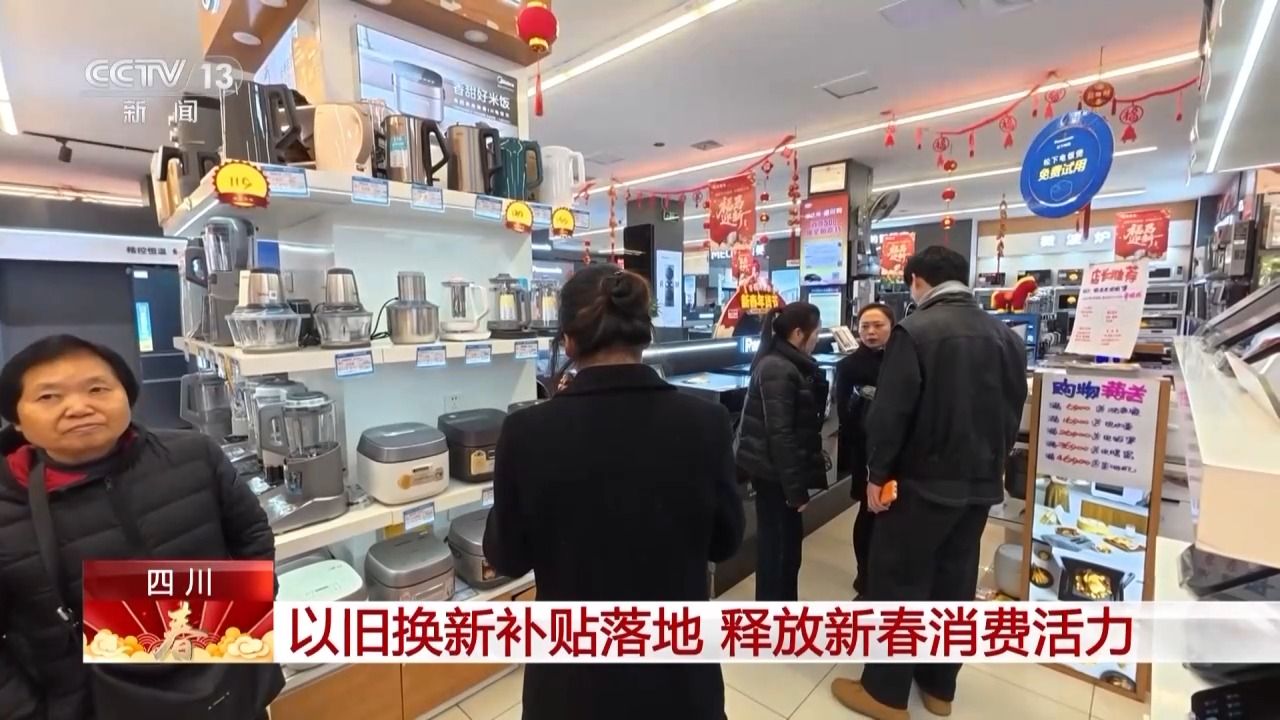
Group 1 - The article highlights the introduction of various consumer-friendly policies across the country, enhancing the festive happiness of citizens during the Spring Festival [1] - In Sichuan, the "old for new" policy has led to significant consumer engagement, with 1.124 million applications for home appliance exchanges, generating a consumption boost of 4.344 billion yuan [4] - The "old for new" initiative not only provides financial benefits to consumers but also promotes consumption upgrades and green transformation, becoming a key growth point in the Spring Festival market [4] Group 2 - Jiangsu's "Lego New Year" special event offers consumers substantial financial incentives, with mobile phones remaining a popular item, alongside emerging tech products like smart glasses and small appliances [5] - The inclusion of smart glasses in national subsidy policies has attracted considerable consumer interest, showcasing the evolving preferences in technology [5][7] - In Anhui, the expansion of the "Two New" policy has invigorated the automotive market, with local subsidies expected to drive monthly consumption by 150 million yuan [9]

为节日幸福感加码 多地出台一系列消费利好政策
Xin Lang Cai Jing· 2026-02-23 02:12
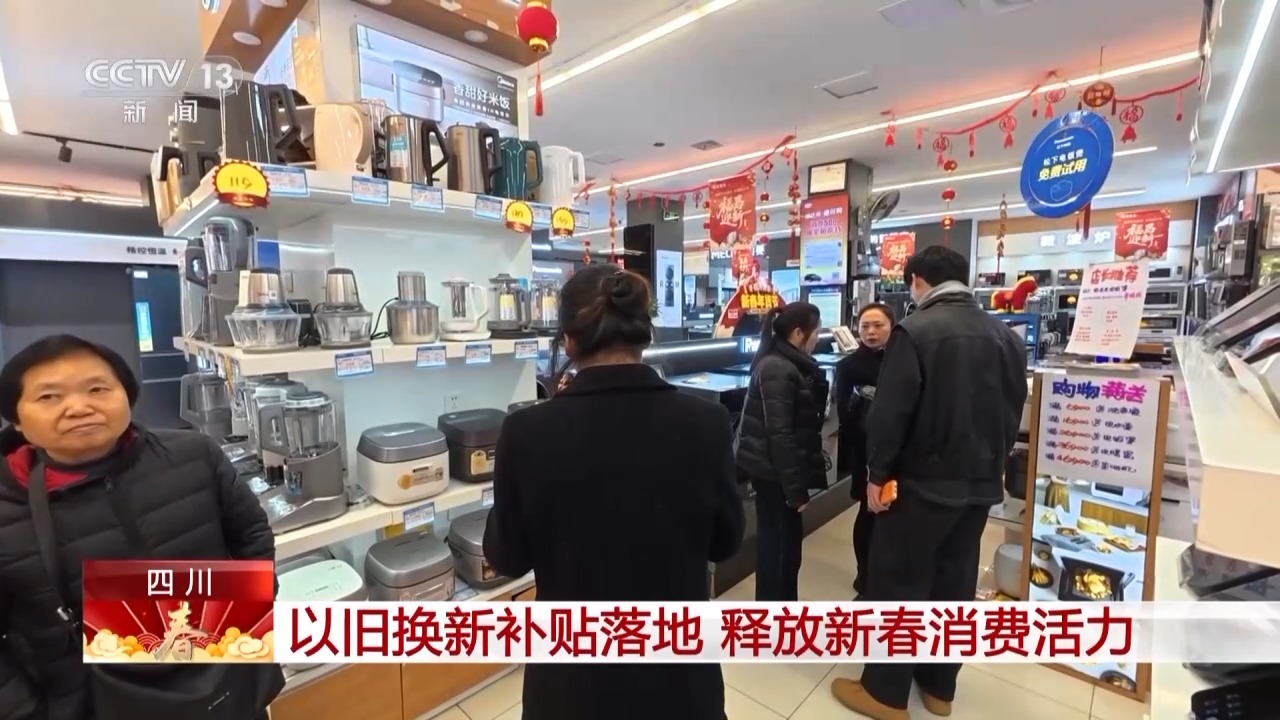
Group 1 - The core viewpoint of the article highlights the positive impact of various consumer-friendly policies implemented across the country, enhancing the festive experience for citizens during the Spring Festival [1] - In Sichuan, the "old for new" policy has led to significant consumer engagement, with 1.124 million applications for home appliance exchanges, generating a consumption boost of 4.344 billion yuan [3] - The demand for digital and smart products is also notable, with 1.618 million applications resulting in a consumption increase of 4.878 billion yuan, indicating a trend towards consumption upgrades and green transformation [3] Group 2 - Jiangsu province organized a special "Happy Shopping Spring Festival" event, providing consumers with substantial incentives, and highlighting the popularity of smartphones and smart gadgets among consumers [4] - The introduction of smart glasses into the national subsidy policy has attracted considerable consumer interest, showcasing the growing trend of technology integration in daily life [4][6] - In Anhui's Chuzhou, the automotive market has been revitalized through combined subsidies and streamlined processes, with expectations of generating 150 million yuan in monthly consumption from automotive purchases [8]
门票做减法,消费做乘法(余音)
Xin Lang Cai Jing· 2026-02-23 02:11
Group 1 - The core viewpoint of the article highlights the transformation of the cultural tourism industry from "selling tickets" to "selling experiences," as evidenced by the success of the Beijing-Tianjin-Hebei tourism scenic area joint ticketing model, which has sold over 80,000 tickets and generated 300 million yuan in direct and indirect consumption [1][2] - The "joint ticket model" breaks down the "invisible barriers" that have historically limited effective demand, as high ticket prices have deterred tourists from exploring multiple attractions. The joint ticket, priced at 298 yuan, offers access to over 200 scenic spots valued at nearly 10,000 yuan, allowing unlimited visits throughout the year, thus stimulating local and surrounding tourism markets [1] - The model also facilitates a significant increase in secondary consumption at scenic spots, as the reduction in ticket costs allows tourists to allocate more budget towards dining, accommodation, and cultural products, thereby extending the industry chain and benefiting various sectors [1] Group 2 - Nationwide, the "joint ticket model" is recognized as a key solution for regional integration and consumption upgrades, with the State Council supporting the implementation of this model across different regions. For instance, Shandong has introduced a "high-speed rail tour of Qilu," bundling train tickets with scenic area tickets, enabling tourists to visit multiple cities at a low cost within five days [2] - The Chengdu-Chongqing region has launched the "Chengdu-Chongqing Cultural Tourism Card," covering over 60 scenic spots and cultural venues, allowing tourists to experience both cities affordably and promoting the integration of the dual-city living circle [2] - Looking ahead, as the collaboration in the Beijing-Tianjin-Hebei region deepens, there are expectations that the joint ticketing model will evolve to support more functions, transforming the "flow" of tourism into "incremental" economic growth for the region [2]
看电影、赏演出、观赛事 文体市场热气腾腾
Jing Ji Ri Bao· 2026-02-23 00:19
Core Insights - The Chinese New Year holiday has sparked a significant surge in the cultural and sports consumption market, with various events and activities enhancing consumer engagement and spending [1][3] Group 1: Film Industry - The 2026 Spring Festival film market features 8 new films across genres such as comedy, animation, and sci-fi, catering to diverse audience preferences [1] - As of February 22, 2026, the total box office for the Spring Festival period has exceeded 5 billion yuan, with over 100 million admissions recorded [1] - Cinemas are enhancing the viewing experience by integrating local customs and offering discounts through a "ticket root economy" initiative, encouraging consumers to engage with surrounding businesses [1][3] Group 2: Television and Streaming - The popularity of the TV series "Taiping Nian" has led to a trend of tourism in Hangzhou, linking the viewing experience with travel opportunities [2] - Various media outlets are launching programs that combine food, travel, and shopping, allowing audiences to engage with the content while promoting local consumption [2] Group 3: Sports Events - The "2026 New Year Cup" tennis event in Shanghai has filled a gap in high-end sports events during the holiday, showcasing the integration of culture, commerce, and sports [2][3] - The use of ticket stubs for discounts in local businesses has created a comprehensive consumption chain, maximizing the economic benefits of sports events [3] - The National Sports Administration has introduced outdoor sports routes across the country, promoting a healthy lifestyle during the holiday season [3] Group 4: Consumer Trends - The thriving cultural and sports market reflects a trend of consumption upgrade, where a single movie ticket can stimulate broader commercial activity [3] - The combination of the longest Spring Festival holiday and local consumption policies has created a favorable environment for the cultural and sports industries to meet the growing demands of consumers [3]
【新春看市场】文体市场热气腾腾
Xin Lang Cai Jing· 2026-02-22 23:05
Group 1: Movie Market Insights - The 2026 Spring Festival film market has seen a total box office exceeding 5 billion yuan, with over 100 million viewers during the holiday period [1] - Eight new films across various genres have been released, catering to diverse audience preferences [1] - The cinema experience has been enhanced with initiatives like "ticket root economy," allowing moviegoers to enjoy discounts at nearby shopping malls [1] Group 2: Cultural and Tourism Integration - A themed bus in Hangzhou, promoting the TV series "Taiping Nian," serves as a cultural guide, linking on-screen content with real-life tourism [2] - Various media outlets have launched programs that combine food, travel, and shopping, encouraging viewers to engage in festive consumption [2] - The integration of cultural content with consumer experiences is evident in activities like "follow the micro-drama to travel," promoting new consumption methods [2] Group 3: Sports and Event Engagement - The "2026 New Year Cup" tennis event in Shanghai has created a vibrant atmosphere, offering discounts for attendees at local businesses [3] - The National Sports Administration has introduced outdoor sports routes across the country, promoting healthy lifestyles during the holiday [3] - The overall prosperity of the cultural and sports market reflects a trend of consumption upgrade, driven by high-quality offerings that meet the public's growing demand for better living [3]
文体市场热气腾腾
Jing Ji Ri Bao· 2026-02-22 22:42
Group 1 - The core viewpoint of the articles highlights the vibrant cultural and sports market during the Spring Festival, showcasing a significant increase in consumer engagement and spending [1][3] - The film market saw a total box office exceeding 5 billion yuan with over 100 million viewers during the Spring Festival period, driven by a diverse range of new film releases [1] - The integration of cinema experiences with traditional customs, such as the "ticket root economy," enhances consumer engagement and stimulates additional spending in surrounding commercial areas [1][3] Group 2 - The launch of a themed bus service in Hangzhou, promoting the TV series "Taiping Nian," effectively connects on-screen content with real-world tourism, enhancing cultural engagement [2] - Various media platforms are promoting consumer activities through programs that combine food, travel, and shopping, encouraging viewers to participate in festive consumption [2] - The introduction of the "2026 Spring Festival Outdoor Sports Boutique Routes" by the National Sports Administration offers diverse outdoor activities, promoting a healthy lifestyle during the holiday season [3]
一斤松子抵20斤猪肉?实探新春“炒货市场”
Hua Xia Shi Bao· 2026-02-22 02:03
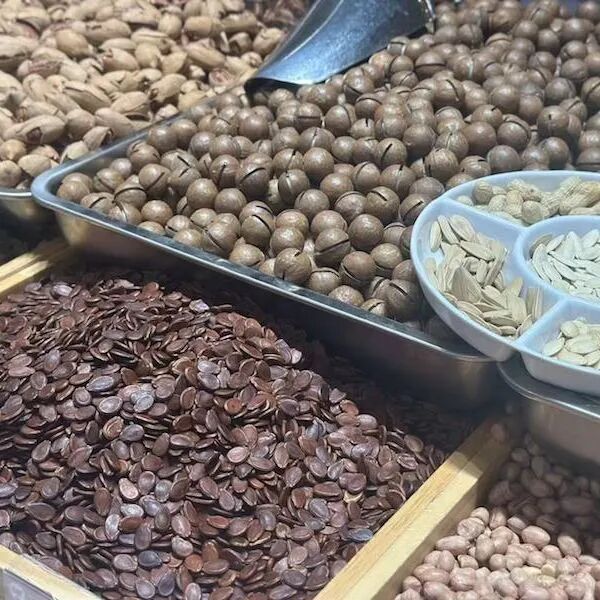
Core Viewpoint - The rising prices of nuts and seeds during the Spring Festival have led to consumer hesitation, with some products priced significantly higher than traditional food items, prompting discussions about the pricing logic in the snack industry [4][9][19] Pricing Trends - Prices for nuts have surged, with sunflower seeds reaching 23.8 yuan per jin and hand-shelled pine nuts as high as 218 yuan per jin, leading to comparisons where one jin of nuts can buy 20 jin of pork [4][9][11] - The pricing strategy has shifted from a focus on raw material costs to include factors like rental costs, emotional premiums, and storytelling, reflecting a fundamental change in the industry’s pricing paradigm [13][14] Consumer Behavior - Consumers are increasingly opting for bulk purchases to manage costs, with many expressing discomfort over high prices and the shift from traditional pricing methods to per-piece pricing [6][9] - The perception of high-end brands like Xueji has changed, with consumers now viewing them as benchmarks for value rather than luxury [9][14] Market Dynamics - The contrast between bustling retail stores and quieter wholesale markets indicates a significant transformation in the distribution channels and value structures within the nut industry [11][13] - The growth of gift box products during the festive season highlights a shift in consumer preferences, where the social currency of gifting is becoming more important than the actual food value [16][18] Future Outlook - Analysts predict a dual strategy for brands, focusing on both premium gift boxes and affordable bulk options to cater to diverse consumer needs [18][19] - The industry is expected to return to a focus on value, with a potential shift towards transparency in pricing and product quality to regain consumer trust [19]
路费省了加份鱼丸“,春节17天出行零费用,福州消费福利”马力全开“
Hua Xia Shi Bao· 2026-02-22 02:02
Core Viewpoint - Fuzhou is promoting a vibrant consumer atmosphere during the Spring Festival of 2026 by offering 17 days of free public transportation and distributing millions in consumer vouchers, enhancing both local and tourist spending [2][7][22] Public Transportation Initiatives - The free public transport initiative runs from February 15 to March 3, covering all subway lines and certain bus routes, allowing for seamless travel across the city [7] - The initiative has led to a 40% increase in passenger flow during the holiday period, with additional staff deployed to assist travelers [7] - The "Fulaifuwang" air-rail intermodal service has been introduced, allowing tourists arriving at the airport to transfer to the subway for free, enhancing accessibility [7] Consumer Engagement Strategies - Fuzhou launched the "Hui Ju Rong Cheng Yue Gou" shopping season on February 5, enabling residents to redeem consumer vouchers at major shopping centers and restaurants [11] - Various consumer vouchers are available, including discounts for small purchases and larger reductions for significant spending, aimed at stimulating both daily and festive shopping [14] - The combination of free transportation and consumer vouchers has effectively lowered both monetary and non-monetary costs, encouraging spending across different districts [21] Economic Impact - The initiatives have created a complete consumption cycle, linking travel, entertainment, shopping, and dining, thereby maximizing consumer engagement [21] - The approach demonstrates that improving public services and consumer incentives can coexist, contributing to both enhanced quality of life and economic vitality [21][22] - Fuzhou's model serves as a potential blueprint for sustainable urban development, focusing on citizen satisfaction and long-term economic resilience rather than solely on short-term GDP growth [21]
新春走基层|新能源浪潮涌入小县城,增长背后亦有“变速”
Hua Xia Shi Bao· 2026-02-22 02:01
Core Insights - The penetration rate of new energy vehicles (NEVs) in China is projected to reach 47.9% by 2025, with December 2025 marking the first month where it surpasses 50%, maintaining its position as the world's largest market for 11 consecutive years [2] - The transition of NEVs from a niche market to a mainstream consumer product is evident, with a significant increase in the variety of models available, including higher-end brands like Tesla and NIO [3][4] - Consumer preferences are shifting towards higher-value vehicles, as evidenced by the increasing presence of models priced above 200,000 yuan in the market [5] Market Dynamics - The growth of NEVs in rural areas, such as Zhuolu County, is accompanied by a structural shift in consumer preferences, moving from low-cost models to more diverse options that include premium brands [3][4] - The rapid expansion of charging infrastructure is supporting the growth of NEVs, with over 20 million charging facilities nationwide by the end of 2025, and a 56.2% year-on-year increase in private charging stations [6] - Despite the growth in infrastructure, charging anxiety persists, with only 28.7% of households having private charging stations, indicating a gap between infrastructure expansion and actual accessibility [6] Consumer Behavior - The demand for plug-in hybrid vehicles (PHEVs) is declining, with their contribution to the NEV market dropping from 69.7% in 2024 to 15.1% in the first three quarters of 2025, reflecting a market adjustment as pure electric vehicles become more affordable [7][8] - The average selling price of A-class gasoline vehicles has fallen below that of PHEVs, leading consumers to reassess the cost-effectiveness of hybrid models compared to traditional gasoline vehicles [8] - The willingness to pay for advanced driving features is low among consumers in rural areas, with a significant portion preferring basic, practical vehicles over those with high-tech features [9][10] Industry Trends - The 2025 NEV catalog includes a record 124 models, but there is a noted decrease in basic practical models designed for everyday use, as manufacturers focus on higher-margin products [10] - The current market environment allows consumers to make more informed choices, leading to a clearer understanding of genuine needs versus artificially stimulated demand [10]