
红利策略

Search documents
华夏基金多只ETF同日登顶成交额榜首
Zheng Quan Ri Bao Wang· 2025-12-05 11:14
Group 1 - The core viewpoint of the articles highlights the strong performance of three ETFs managed by Huaxia Fund, which have achieved the highest trading volumes in their respective categories on December 4 [1][2] - Huaxia CSI 1000 ETF recorded a trading volume of 978 million yuan, leading among 15 similar ETFs, and has an average daily trading volume of 786 million yuan since its launch in March 2021, with its total assets surpassing 44 billion yuan [1] - Huaxia SSE Sci-Tech Innovation Board 100 ETF led its category with a trading volume of 26.9 million yuan and a turnover rate of 10.63%, indicating high trading activity in the tech innovation sector [1] - Huaxia CSI Hong Kong Stock Connect Central State-Owned Enterprises Dividend ETF achieved a trading volume of 287 million yuan, ranking first among four similar ETFs, and is the only product in its category with assets exceeding 1 billion yuan [2] Group 2 - The Hong Kong Stock Connect Central State-Owned Enterprises Dividend ETF has a total asset size of 5.131 billion yuan, making it the only product in its category with assets over 1 billion yuan [2] - This ETF is favored in the current low-interest-rate environment due to its high dividend yield and low valuation, tracking leading central state-owned enterprises in sectors such as finance, transportation, and oil [2] - The ETF's liquidity and scale advantages position it as a preferred tool for conservative investors looking to allocate to dividend assets [2]
长期跑赢红利、聚焦大中市值、月月评估分红,现金流ETF(159399)优势解析
Mei Ri Jing Ji Xin Wen· 2025-12-05 04:24
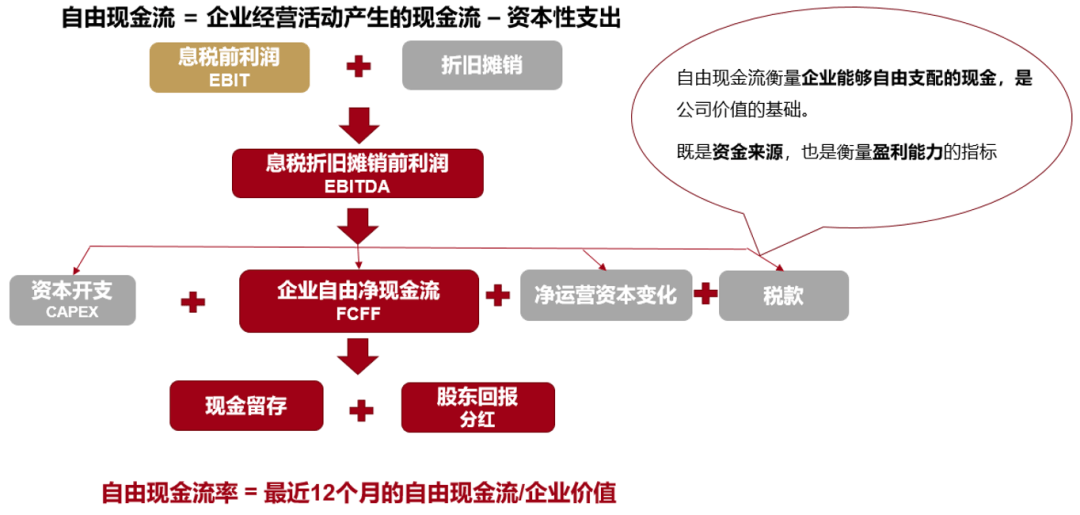
我们认为现阶段市场关注度较高、资金增持较多的方向当属现金流策略。以自由现金流收益率为核心选股标准的这一策略,于今年上半年在A股市场 逐步落地,当时市场对其存在不少质疑,且存在不同看法。总结下来,无论是现金流策略还是现金流ETF(159399)都属于偏价值型的范畴,今年以来, 该策略的相关指数已跑赢红利低波指数及其他一些红利策略类指数,作为价值类指数,其推出后的第一年表现相对较好。 在今年二、三季度市场风格整体偏成长的背景下,现金流策略与红利策略确实均明显跑输成长风格指数,同时也跑输了部分宽基指数。但从现阶段对 未来展望,从中长期配置视角出发,我们认为明年整个市场的风格有望更加均衡。现金流策略近期已受到不少资金关注,现金流ETF(159399)近期持续 获得资金净增持。 首先,从现金流策略来讲,其核心关注的是上市公司的自由现金流率,即企业最近四个季度财报中披露的自由现金流除以企业价值,这一指标构成了 指数的核心选股因子。 而红利策略是以上市公司的分红金额除以总市值,也就是股息率来选股,由此可见,两个策略在计算指标的分子与分母上均存在差异。对于自由现金 流率指标,分子对应的是自由现金流,相比于净利润等盈利指标,自 ...

风险偏好各异公募投顾调仓泾渭分明
Zhong Guo Zheng Quan Bao· 2025-12-04 20:22
Group 1 - Multiple public fund advisory products have initiated a new round of portfolio adjustments, with some increasing positions in growth sectors like technology and healthcare, while others adopt a more conservative strategy by slightly reducing equity positions and increasing fixed-income assets [1][2] - The market environment shows favorable indicators for equity assets, including valuation, risk premium, and new fund issuance, alongside supportive policies aimed at expanding domestic demand and reducing competition, which are expected to benefit the A-share market [1] - Several advisory products have favored growth-oriented funds, particularly in technology and healthcare sectors, with specific funds being added to portfolios, such as those focused on AI and innovative medical solutions [1][2] Group 2 - Some advisory products have taken a defensive approach by slightly reducing equity positions due to increased volatility in the stock and gold markets, while enhancing bond allocations [3] - Recent market adjustments have led to a rebound, with expectations of further positive developments in technology sectors, although market participants remain cautious about domestic policy and external economic conditions [3][4] - The overall market is experiencing a structural rebalancing, with many funds suggesting that the current valuation levels are attractive, particularly in low-valuation sectors like real estate and cyclical industries [2][4] Group 3 - Investment strategies recommended by various advisory firms include focusing on sectors with potential for valuation recovery, such as agriculture and brokerage, while also considering long-term investments in technology [5] - The technology sector is viewed as having a solid long-term investment rationale, despite short-term trading congestion and a lack of positive catalysts, indicating a period of adjustment [4][5]
AH红利资产“双星”闪耀,策略互补引资金青睐
Ge Long Hui· 2025-12-04 12:44
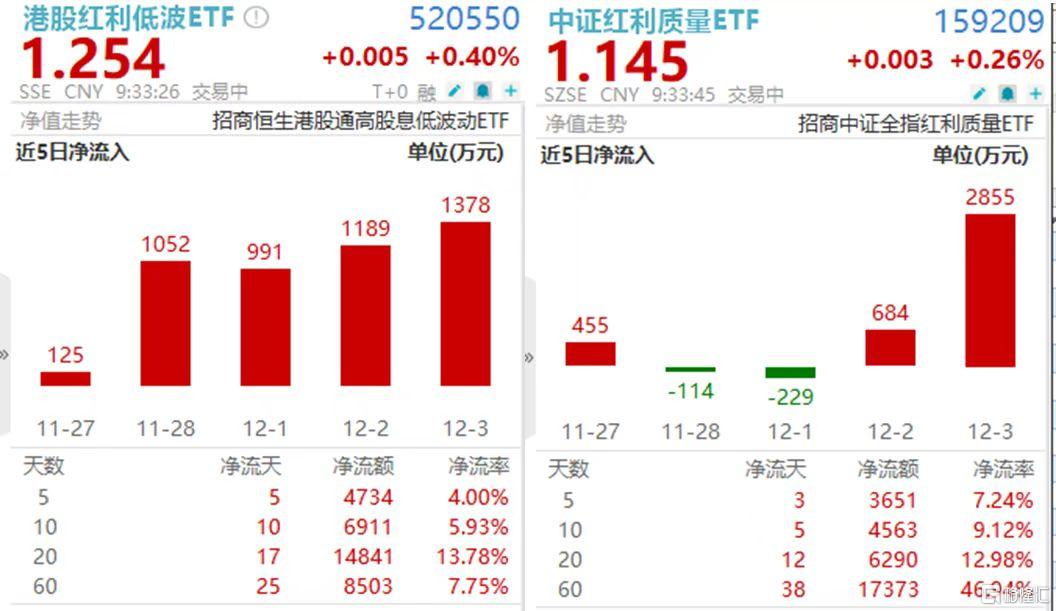
Core Viewpoint - The A-share and Hong Kong stock markets have shown strong performance in dividend assets, with two representative ETFs recording gains, indicating increasing market attention and capital inflow [1]. Group 1: ETF Performance - The Hong Kong Dividend Low Volatility ETF (520550) increased by 0.48%, while the China Securities Dividend Quality ETF (159209) rose by 0.26% [1]. - Over the past five trading days, these two funds have collectively received a net inflow of over 84 million yuan [1]. Group 2: Investment Strategies - The Hong Kong Dividend Low Volatility ETF (520550) follows a "deep value" investment approach, focusing on high dividend yield and low volatility stocks, particularly in stable sectors like finance, utilities, and energy [2][3]. - In contrast, the China Securities Dividend Quality ETF (159209) adopts a "value growth" strategy, emphasizing high profitability quality alongside high dividend yield, targeting sectors like consumer goods and pharmaceuticals for long-term growth [3]. Group 3: Fund Features - Both ETFs are designed with low fees and a monthly dividend assessment mechanism to enhance the long-term holding experience for investors [3]. - Investors are encouraged to combine these two ETFs, which represent defensive and offensive strategies, to create a diversified dividend strategy across markets [3].
分红新规落地?债基崩了, 他们慌了!
Xin Lang Cai Jing· 2025-12-04 11:25
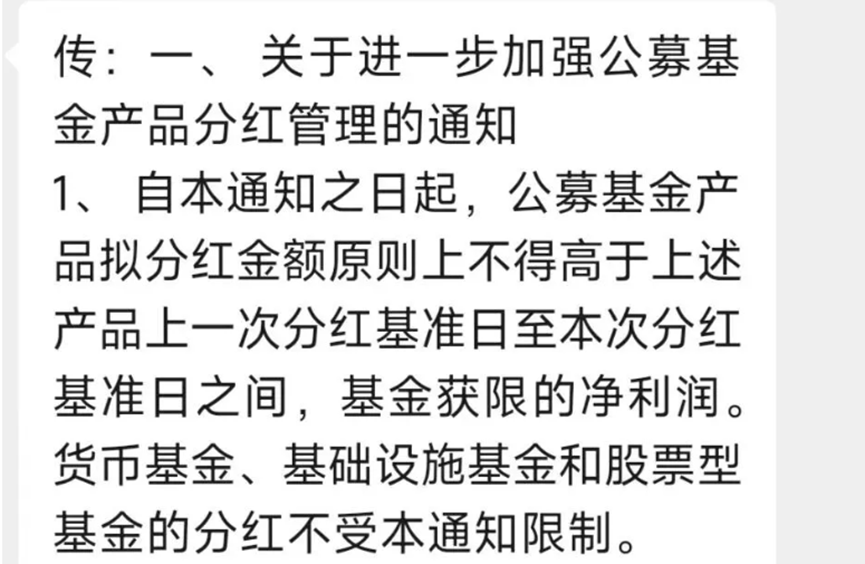
Core Viewpoint - The recent changes in public fund dividend regulations are expected to significantly impact the bond market and public bond funds, particularly affecting institutions heavily reliant on large dividend payouts [1][3][4]. Summary by Sections Impact of New Dividend Regulations - The new regulations stipulate that future dividend amounts must not exceed the net profit generated between the last and current dividend dates, effectively prohibiting the previous practice of "overdrawing" past profits for large dividends [3][10]. - The primary targets of these regulations are public bond funds and mixed funds, which are heavily utilized by institutional investors and have frequently issued large dividends [3][10]. Tax Implications for Institutional Investors - Under current tax laws, there is a significant difference in how institutional investors are taxed on their earnings from public funds, with capital gains being taxable while dividend income remains temporarily tax-exempt [4][11]. - The new regulations aim to disrupt the strategy where institutions buy into profitable public bond funds, receive tax-free dividends, and then redeem shares after a net asset value drop, thereby reducing their tax burden [4][11]. Future of Institutional Business - Although there may still be opportunities for one last large dividend payout under the new rules, the overall landscape for institutional business is expected to change, leaving little room for "tricks" and necessitating compliance with the new regulations [5][11]. - Smaller public funds that lack comprehensive capabilities and have relied on such strategies will also need to adapt to survive this regulatory shift [5][11]. Implications for Retail Investors - Retail investors seeking stable cash flow should not be overly concerned about the impact of the new dividend regulations, as they will benefit from clearer and more sustainable dividend information without the interference of institutional strategies [12][13]. - The new rules are not expected to affect the frequency or sustainability of dividends, and may actually enhance the long-term stability of both fund net values and dividends [12][13]. Support for Equity Products - The regulations specifically exclude stock-type products, indicating ongoing regulatory support for equity investments, which may enhance the appeal of high-dividend equity funds under the new dividend strategy [6][14].
12月想搭“红利快车”?就看这个数,红利基金分红榜来了!
Sou Hu Cai Jing· 2025-12-04 11:16
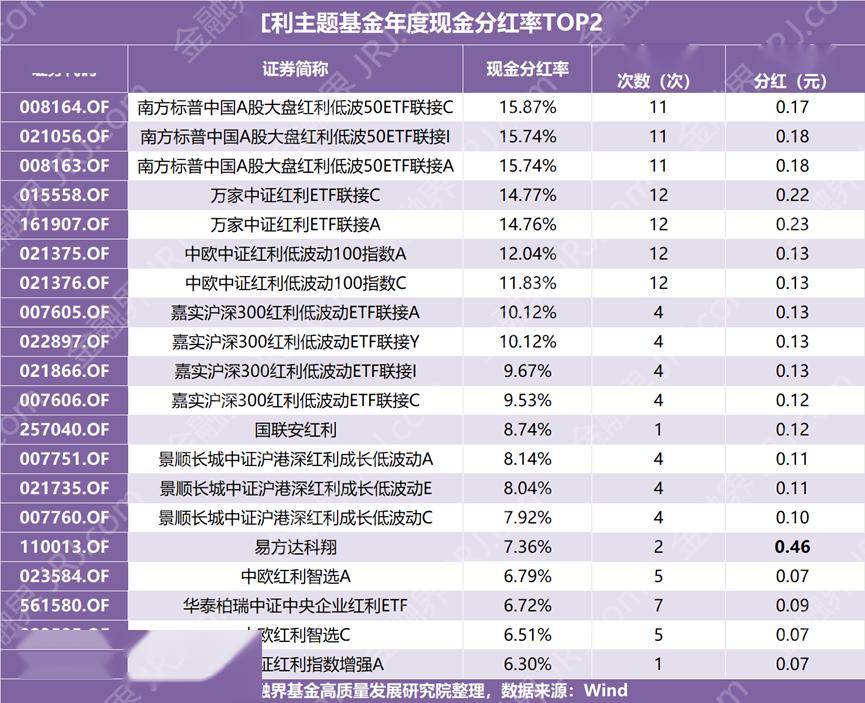
Group 1 - The core viewpoint of the articles highlights the increasing popularity of dividend funds towards the end of the year, driven by the "calendar effect" where low-volatility dividend strategies tend to outperform high-growth strategies in December [1] - Historical data shows that since 2015, the China Securities Dividend Total Return Index has had a winning rate of over 50% in December, with rates reaching as high as 70%-90% in other months like April, May, and November [1] - Institutional investors are actively increasing their holdings in bank stocks, which are considered stable dividend assets, thus boosting the overall interest in the dividend sector [1] Group 2 - For investors looking to capitalize on dividend funds, the cash dividend rate is a crucial indicator of a fund's quality, reflecting the health of the underlying companies and the fund's ability to generate cash returns [3] - The top dividend funds based on cash dividend rates show that several funds from Southern and Wan Jia have rates exceeding 15%, indicating strong performance in terms of cash returns [4] - Notably, funds that offer monthly dividends provide more predictable cash flow for investors, suggesting stable underlying asset profitability [4] Group 3 - Among actively managed funds, the E Fund Kexiang has the highest unit dividend payout of 0.46 yuan, showcasing its strong performance since its inception in 2008 [5] - The fund's net asset value has exceeded 6 yuan, and it has shown impressive growth this year, making it a standout in the dividend fund category [5]
红利产品成立节奏加快下半年以来规模已超200亿元 资金或提前布局“分红行情”
Zhong Guo Jing Ying Bao· 2025-12-03 09:04
Core Viewpoint - Public funds are accelerating the layout of dividend products, with a significant increase in the number of new dividend funds and their total scale in the second half of the year [1][2]. Group 1: Market Dynamics - As of December 1, 49 new dividend funds have been reported since the second half of the year, with an 83.33% month-on-month increase in November alone [1]. - The total scale of 37 newly established dividend funds in the second half of the year exceeds 20 billion yuan, with an average scale of over 500 million yuan per fund, compared to only 5.565 billion yuan for 26 funds established in the first half [2][3]. - The recent market dynamics are attributed to a combination of market sentiment, capital allocation, and industry trends, with investors showing a preference for stable and defensive investments as year-end approaches [1][3]. Group 2: Fund Performance and Investor Behavior - The number of new dividend funds established in November was 8, with 5 of these funds exceeding 500 million yuan in scale and 2 exceeding 1 billion yuan [2]. - The increase in dividend fund scale by 8 billion yuan since the end of the third quarter indicates a shift in investor behavior towards lower volatility and stable dividend-paying assets [3]. - The performance of dividend strategies has been strong in recent months, with major dividend indices showing significant excess returns [3]. Group 3: Future Outlook - The dividend strategy is expected to maintain its strong performance due to several factors, including the year-end assessment period for investment institutions and the increasing willingness of companies to distribute dividends [4][5]. - The regulatory environment is encouraging higher dividend payouts, which aligns with the demand from pension funds and insurance companies for stable cash flow [5]. - The outlook for 2026 suggests a moderate recovery in the domestic economy, with dividend assets remaining attractive for their cost-effectiveness and safety [5].
红利资产“冰火两重天” 机构看好两类细分板块
Zhong Guo Jing Ying Bao· 2025-12-03 09:00
在经历10月红利板块整体回暖后,11月红利资产的表现则明显分化。 Wind数据显示,11月,银行、石油石化、有色板块继续成为避险资金的核心配置方向。其中,银行板 块在10月上涨4.18%后,11月再涨3.1%。石油石化板块同样如此,在10月获得5.68%的涨幅后,11月再 攀升3.37%。有色板块截至11月末已连续6个月收红,不过11月涨幅收窄为0.61%。而电力、交运、公用 事业等传统红利板块则结束了10月的上行,在11月相继回调,相关指数分别下跌2.23%、2.49%、 1.76%。 业内人士表示,资金正从"全面防御"向"结构性高股息"切换。业内人士预计,未来红利资产还将继续分 化,资金将更聚焦于分红稳定、基本面扎实的优质标的。其中,"稳"字头的细分红利板块或可成为避险 或者"安全垫"资产,高股息叠加顺周期的细分板块则是配置型资金的重要选择。 红利资产现结构性分化 畅力资产董事长宝晓辉强调,红利资产近期已呈现结构性分化特征,他预计,未来这一分化态势大概率 会持续。 "之所以会出现这种情况,主要有两大因素影响了红利资产的股息率变化。"宝晓辉解释道,一是股价上 涨、下跌带来的"被动股息率变化",二是经营基本面 ...
自由现金流ETF与创业板人工智能ETF华夏:资金流入、行情有别
Sou Hu Cai Jing· 2025-12-03 04:13
Group 1 - A-shares experienced a significant decline with a trading volume of 280 billion, while the CPO sector saw a brief surge in early trading [1] - The AI ETF from Huaxia on the ChiNext index rose over 2% before turning negative, with a net subscription of 28 million units as of the report [1] - The Free Cash Flow ETF expanded its gains to 0.59%, attracting a net inflow of 140 million units during the session, marking 18 consecutive days of inflows totaling 2.027 billion [1] Group 2 - Recent developments in AI, including Alibaba's increased focus on AI applications and ByteDance's launch of the Doubao mobile assistant, are driving demand for computational power [1] - The stock price of Credo surged after exceeding earnings expectations, prompting Morgan Stanley to significantly raise its production forecast for Google's TPU [1] - The market is shifting styles as year-end approaches, with increased attention on dividend strategies [1]

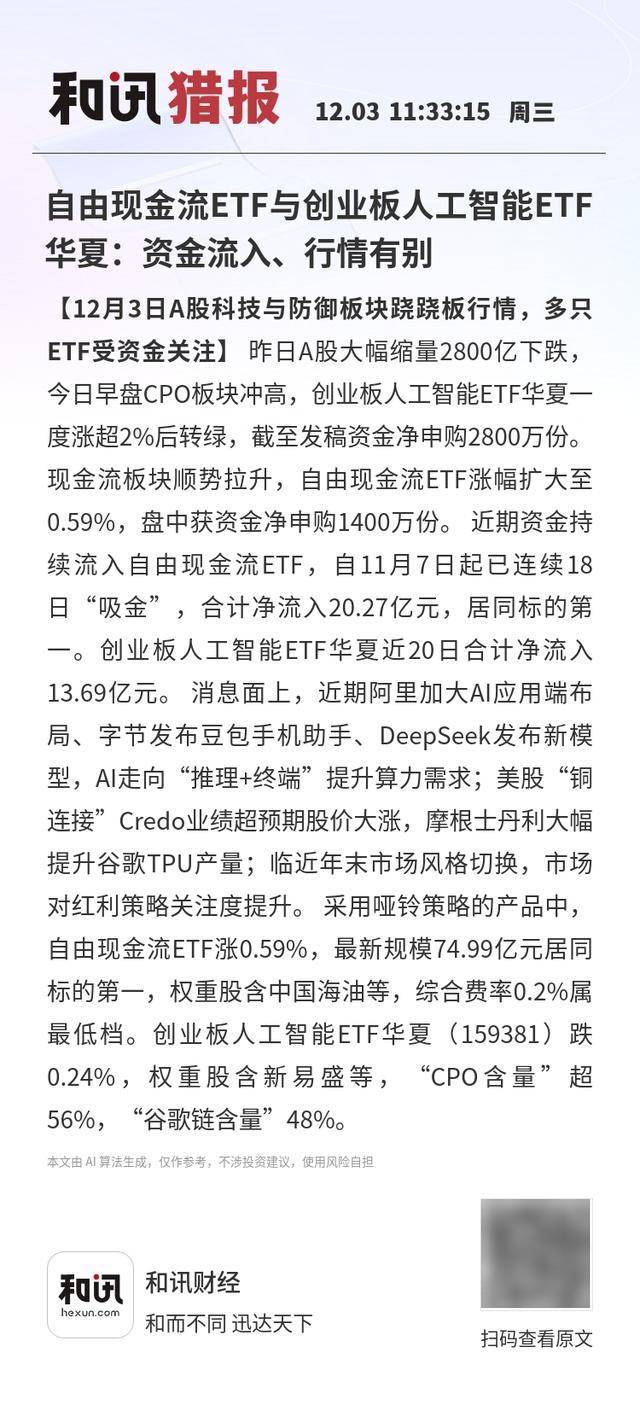
资金两手抓,盘中加速涌入创业板人工智能ETF华夏(159381),自由现金流ETF(159201)连续18日获净申购
Ge Long Hui· 2025-12-03 03:25
Group 1 - A-shares experienced a significant drop of 280 billion with reduced trading volume, while technology and defensive sectors showed a contrasting performance today, with the CPO sector rising in the morning [1] - The AI ETF from the ChiNext market saw a peak increase of over 2% before turning negative, with a net subscription of 28 million shares during the day [1] - The free cash flow ETF also gained traction, with an increase of 0.59% and a net subscription of 14 million shares, reflecting a continuous inflow of funds since November 7, totaling 2.027 billion yuan over 18 days [1] Group 2 - Recent developments include Alibaba increasing its AI application efforts, ByteDance launching the Doubao mobile assistant, and DeepSeek releasing a new model with inference capabilities approaching GPT-5, indicating a rising demand for computing power as AI moves towards "inference + terminal" [2] - In the US market, Credo's performance exceeded expectations, leading to a 10% stock price increase, while Morgan Stanley raised Google's TPU production forecasts [3] - As the year-end approaches, market sentiment is shifting, with major banks halting large-denomination time deposits, increasing focus on cash flow and dividend strategies [3] Group 3 - The free cash flow ETF (159201) is noted for its low fee structure, with a current scale of 7.499 billion yuan, and includes major stocks like China National Offshore Oil Corporation and Gree Electric Appliances [4] - The ChiNext AI ETF (159381) has the highest CPO content and lowest fees among AI indices, with a slight decrease of 0.24%, featuring stocks such as Xinyiseng and Tianfu Communication [4]