
被动投资

Search documents
2000亿公募,副总转任高级专员!
中国基金报· 2025-09-02 14:18
Core Viewpoint - The article discusses the resignation of Wang Hui, the Deputy General Manager of Xinyuan Fund, who has transitioned to a senior specialist role within the company due to work arrangements. This change reflects the ongoing adjustments in the management structure of the fund [2][4]. Company Overview - Xinyuan Fund was established in August 2013, initiated by Nanjing Bank and Nanjing Gaoke Co., Ltd., with a registered capital of 1.7 billion RMB and headquartered in Shanghai [6]. - As of the end of Q2 2023, Xinyuan Fund's total asset scale reached 211.784 billion RMB, with over 60% in bond funds and over 30% in money market funds [2][8]. Management Changes - Wang Hui has been with Xinyuan Fund since its inception, serving in various roles including Chief Marketing Officer and Assistant General Manager before becoming Deputy General Manager in April 2016. He has held the Deputy General Manager position for over nine years [6][8]. - The current management team includes Long Yi as Chairman, Yu Jingliang as General Manager, and Li Xiaoyan as Chief Supervisor, with three Deputy General Managers: Wu Ju, Zhang Pengfei, and Yang Xiaoyu [6][7]. Fund Performance and Structure - Xinyuan Fund's asset net value has significantly increased from 89.704 billion RMB in mid-2022 to 211.784 billion RMB by mid-2023, improving its industry ranking from 55th to 36th [8]. - The fund's product structure shows that 54 bond products account for 64.6% of the total scale, while 2 money market funds make up 33.85%. Together, these two categories represent over 98% of the total fund scale [9]. - The growth in management scale is primarily driven by the expansion of fixed-income products, with bond fund scale increasing by 76.729 billion RMB and money market fund scale rising by 44.046 billion RMB since mid-2022 [9]. New Fund Initiatives - In the second half of the year, Xinyuan Fund launched 9 new funds, including 1 FOF, 3 mixed funds, and 5 index equity funds. The company aims to enhance its passive investment capabilities while consolidating its active management strengths [10].


重磅回归!德意志银行(DB.US)时隔七年重返欧洲斯托克50指数
智通财经网· 2025-09-01 23:41
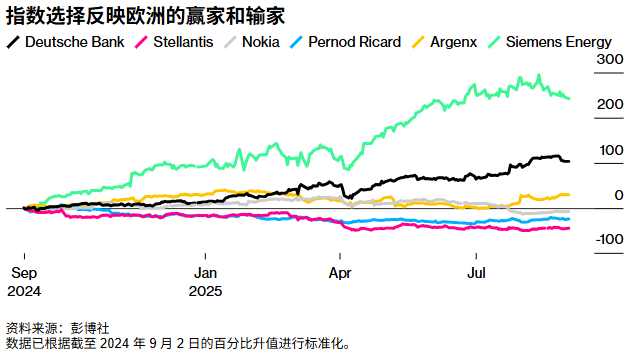
Core Viewpoint - Deutsche Bank has returned to the Euro Stoxx 50 index after being excluded for seven years, reflecting a recovery in its stock price and the overall strength of the European banking sector [1][12] Group 1: Deutsche Bank's Return - Deutsche Bank will join Siemens Energy and Argenx SE in the Euro Stoxx 50 index, replacing Nokia, Stellantis, and Pernod Ricard [1] - The bank's stock price has doubled in the past 12 months, leading to its re-inclusion in the index [1] - The return to the index comes after a challenging period since 2018, when the bank was removed due to performance issues [1] Group 2: Market Conditions and Challenges - The Stoxx 600 banking index recently fell by 4.5%, marking the largest weekly decline since April, indicating a cooling market sentiment [2] - Multiple negative factors are impacting European banks, including political instability in France, discussions of windfall taxes in the UK, and concerns over potential tax policy changes in Italy [5] - Despite these challenges, some market participants remain optimistic about the resilience of European banks due to strong capital positions and positive business activity in the US and Europe [5] Group 3: Performance of Other Companies - Siemens Energy has seen its stock rise over 200% since September last year, benefiting from increased demand for gas turbines and grid equipment [11] - Argenx has experienced a 30% stock price increase over the past year, driven by advancements in its drug development for cancer and autoimmune diseases [11] - The companies being removed from the index face various challenges: Nokia's stock fell 7% due to US tariff policies, Stellantis' stock dropped 46% amid leadership changes and weak sales, and Pernod Ricard's stock decreased 24% due to global trade tensions [11]

重磅!证监会监管最新表态定调A股!
摩尔投研精选· 2025-09-01 10:17
Core Viewpoint - The A-share market has shown signs of recovery with a strong performance in the ChiNext index, while the large financial sector has negatively impacted the Shanghai Composite Index, indicating a structural divergence within the market [1][2]. Group 1: Regulatory Insights - The China Securities Regulatory Commission (CSRC) has emphasized the importance of the "14th Five-Year Plan" and the implementation of various policies that have positively influenced market stability and investor confidence [3][5]. - Suggestions for the "15th Five-Year Plan" include enhancing the multi-tiered capital market system, improving the quality of listed companies, and promoting long-term capital inflows [4][6]. Group 2: Market Dynamics - Central Huijin has significantly increased its holdings in stock ETFs, reaching a market value of 1.28 trillion yuan, which has bolstered market confidence [7][8]. - The trend of passive investment through index funds and ETFs is becoming mainstream, leading to a concentration of capital in companies included in major indices, while those not included may face marginalization [11]. Group 3: Investment Opportunities - The upcoming market focus is expected to shift towards policy-driven and event-driven opportunities, with three main themes identified: 1. Consumer recovery, particularly in tourism and home appliances, driven by upcoming holidays and supportive policies [12]. 2. Technological innovation, especially in semiconductor domestic substitution and AI applications [13]. 3. Beneficiaries of policy support and industry recovery, such as infrastructure and hydrogen energy sectors [13]. - Companies demonstrating genuine technological breakthroughs and performance delivery should be prioritized for investment, rather than speculative plays [14].


ETF总规模突破5万亿元大关
Zhong Guo Ji Jin Bao· 2025-08-30 09:33
Group 1: Satellite Communication Industry - The Ministry of Industry and Information Technology released guidelines to optimize business access and promote the development of the satellite communication industry [1] Group 2: ETF Market Growth - The total scale of ETFs in the market reached 5.07 trillion yuan as of August 25, marking the fastest time to cross the 5 trillion yuan threshold in history [2] - The E Fund ChiNext ETF surpassed 100 billion yuan, becoming the largest ChiNext ETF in the market [3] Group 3: Brokerage Performance - Major brokerages such as CITIC Securities reported significant growth in their mid-year performance, with CITIC Securities achieving an operating income of 33.039 billion yuan, a year-on-year increase of 20.44% [8] - The total assets of CITIC Securities exceeded 1.8 trillion yuan, reflecting a growth of 5.67% compared to the end of the previous year [8] Group 4: Fund Management Changes - Huang Deliang was appointed as the new chairman of Xingyin Fund, expected to enhance collaboration between the fund company and its stakeholders [5] - Tan Zhiyong was appointed as the deputy general manager of China Merchants Fund, part of ongoing efforts to optimize the management team [10] - Li Yongxing was appointed as the deputy general manager of Su Xin Fund, bringing 18 years of experience in the securities industry [11] Group 5: Financial Technology and Investment in Hong Kong - The Hong Kong Investment Promotion Agency highlighted opportunities in the financial services and fintech sectors, driven by a resurgence in IPO activities [6] - Many entrepreneurs are establishing family offices in Hong Kong to manage family assets, indicating a trend of expansion into international markets [6][7] Group 6: Private Equity Insights - Private equity firms are actively increasing their positions in the stock market, focusing on sectors such as technology, consumption, and biomedicine, as the market shows signs of a bullish trend [15]

一周基金大事件|ETF总规模突破5万亿元大关
Sou Hu Cai Jing· 2025-08-30 09:14
Group 1 - The Ministry of Industry and Information Technology released guidelines to optimize business access and promote the development of the satellite communication industry [2][3] - The guidelines aim to deepen the reform of the satellite communication access system and facilitate high-quality development in the sector [3] Group 2 - The total scale of ETFs in the market reached 5.07 trillion yuan as of August 25, marking the fastest time to surpass the 5 trillion yuan milestone in history [4] - The growth in ETF scale reflects the accelerating trend of passive investment in various asset classes [4] Group 3 - The E Fund ChiNext ETF has surpassed 100 billion yuan in scale, becoming the largest ChiNext ETF in the market [6] - There are currently seven ETFs in the market with a scale exceeding 100 billion yuan, covering major indices such as CSI 300 and SSE 50 [6] Group 4 - Major securities firms, including CITIC Securities and China Galaxy Securities, reported significant growth in their mid-year performance for 2025, with CITIC Securities achieving a revenue of 33.04 billion yuan, a year-on-year increase of 20.44% [11] - CITIC Securities' net profit attributable to shareholders reached 13.72 billion yuan, up 29.80% year-on-year, marking its best mid-year performance in history [11] Group 5 - The Hong Kong Investment Promotion Agency is focusing on facilitating the establishment of family offices by mainland entrepreneurs and promoting investment in Hong Kong's innovative technology sector [9][10] - The establishment of a treasury center committee by the Hong Kong Chinese Enterprises Association aims to enhance collaboration with large enterprises setting up treasury centers in Hong Kong [10] Group 6 - The asset management industry is witnessing significant personnel changes, with major firms like China Merchants Fund announcing key management appointments to optimize their leadership teams [13][14] - The report indicates that several foreign-controlled wealth management companies have seen substantial growth in their product scales, with some exceeding 60% growth in the first half of 2025 [13]
一周基金大事件|ETF总规模突破5万亿元大关
中国基金报· 2025-08-30 09:05
Group 1 - The Ministry of Industry and Information Technology released guidelines to optimize business access and promote the development of the satellite communication industry [3] - The total scale of ETFs in the market reached 5.07 trillion yuan as of August 25, marking the fastest time to cross the 50 trillion yuan threshold in history [4] - The E Fund ChiNext ETF has surpassed 100 billion yuan, becoming the largest ChiNext ETF in the market [8] Group 2 - Major securities firms such as CITIC Securities and China Galaxy Securities reported significant growth in their mid-year performance for 2025, with CITIC Securities achieving a revenue of 33.04 billion yuan, a year-on-year increase of 20.44% [14] - The Hong Kong Investment Promotion Agency highlighted the opportunities in the financial sector, particularly with the return of IPOs and the establishment of family offices by mainland entrepreneurs [12] - The asset management industry is seeing a trend of significant growth, with some foreign-controlled wealth management companies reporting over 60% growth in their product scales for the first half of 2025 [17]
资管机构拥抱被动投资浪潮 共同破局低利率时代“资产荒”
2 1 Shi Ji Jing Ji Bao Dao· 2025-08-28 03:47
Core Insights - The rise of passive investment, particularly index-based investment, is becoming a significant focus for asset management institutions as they adapt to changing market dynamics [1][2][3] - The total scale of ETFs listed in China has officially surpassed 5 trillion yuan, marking a historical high and indicating the growing importance of passive investment in capital markets [1][2] Group 1: Factors Driving ETF Growth - Regulatory support and guidance from authorities have been crucial in the rapid development of the ETF market [2] - Significant capital inflows from large institutional investors have provided a solid funding base for ETFs [2] - The supply side has seen public funds increasingly view ETFs as a key growth area, allocating substantial resources to this segment [2] - The ecosystem surrounding ETFs is maturing, with innovations in sales, research, and advisory services further promoting market development [2] Group 2: Characteristics and Trends in Passive Investment - Passive investment is characterized by its transparency, tradability, large capacity, and convenience, making ETFs one of the best tools for asset management companies to engage in equity market investments [2][3] - The structure of stock market investors is rapidly changing, with institutional investors now holding over 50% of the market, which influences the index curves that passive investments track [3] Group 3: Challenges in the Passive Investment Market - The passive investment market faces issues of significant homogeneity and concentrated supply, leading to potential resource wastage within the industry [3][4] - Many asset management firms are grappling with the decision to enter the passive investment space, as competition is fierce and often results in many participants exiting the market [3] Group 4: Strategies for Asset Management Institutions - Asset management institutions are exploring various strategies to provide stable and sustainable returns to investors, particularly in a low-risk environment [5][6] - Institutions are focusing on multi-asset allocation opportunities and enhancing their research capabilities to improve investor returns and client experiences [9][10] - The need for diversified asset allocation is emphasized, as single asset classes may not effectively navigate market cycles [9][10] Group 5: Innovations and Future Directions - Institutions are increasingly adopting quantitative strategies within passive index investment, with trends such as "passive active" and "active passive" emerging [7] - Wealth management institutions are enhancing their strategy for index products and focusing on investor education to promote the value of ETFs [8]
年内第四次创下新高 公募基金规模突破35万亿元
Jin Rong Shi Bao· 2025-08-28 01:40
Group 1 - The total scale of public funds in China reached 35.08 trillion yuan by the end of July, marking a significant increase of 682.99 billion yuan from June and surpassing the 35 trillion yuan milestone for the first time [1][2] - As of the end of July, there are 164 public fund management institutions in China, including 149 fund management companies and 15 asset management institutions with public qualifications [2] - This marks the fourth consecutive month in which the scale of public funds has reached a new high in 2023, following previous milestones of 33 trillion yuan in April, 34 trillion yuan in June, and now 35 trillion yuan in July [2] Group 2 - The number of open-end funds increased in July, with stock funds seeing the largest growth, adding 72 new funds, followed by bond funds with 24 new funds, and mixed funds with 12 new funds [3] - The net asset value of open-end funds increased significantly, with a total increase of over 1.95 trillion yuan in July. Money market funds saw the largest increase of 381.38 billion yuan, followed by stock funds and mixed funds with increases of 192.59 billion yuan and 138.56 billion yuan, respectively [3] - The total number of open-end funds reached 11,681 by the end of July, an increase of 108 funds from the previous month [3] Group 3 - The total scale of ETFs in China reached 5.07 trillion yuan by August 25, marking a new high after surpassing 4 trillion yuan in April [4] - The rapid growth of ETFs is attributed to market changes and policy support, with significant contributions from bond ETFs and Hong Kong stock ETFs [4][5] - The ETF market has seen continuous product innovation, with new products such as free cash flow ETFs and technology innovation index ETFs being approved and achieving good fundraising results [4][6]
总规模突破5万亿元!哪些ETF基金贡献最大?
天天基金网· 2025-08-27 12:15
Core Insights - The ETF market in China has seen a significant influx of capital this year, with various types of ETFs, including stocks, bonds, and commodities, experiencing continuous growth. The total ETF scale officially surpassed 5 trillion yuan on August 25, marking the fastest time to reach this milestone in history, reflecting the accelerating trend of passive investment [1][10]. ETF Scale Growth - The total scale of ETFs in China has crossed several key thresholds in a progressively shorter time frame: - From 4 trillion to 5 trillion yuan in just four months - From 3 trillion to 4 trillion yuan in seven months - From 2 trillion to 3 trillion yuan in ten months - The first time crossing the 1 trillion yuan mark occurred in October 2020 [2][10]. Leading ETFs - As of August 26, there are seven ETFs with a scale exceeding 100 billion yuan. The largest is the Huatai-PB CSI 300 ETF, which has surpassed 400 billion yuan, reaching 417.24 billion yuan. The second and third largest are the Huatai-PB CSI 300 ETF and the Huaxia CSI 300 ETF, with scales of 296.02 billion yuan and 218.73 billion yuan, respectively [4][10]. Year-to-Date Growth - The ETFs with the highest scale increase this year are primarily the various Huatai-PB CSI 300 ETFs. The Huatai-PB CSI 300 ETF has grown by 57.61 billion yuan, while the Huaxia CSI 300 ETF has increased by 54.72 billion yuan. Several other Huatai-PB CSI 300 ETFs have also seen growth exceeding 30 billion yuan [7][11]. Performance Rankings - The top-performing ETFs this year are dominated by Hong Kong's innovative pharmaceutical and technology sectors. The Hong Kong Stock Connect Innovative Drug ETF leads with a remarkable increase of 109.05%, with several other related ETFs also showing impressive gains exceeding 100% [8][11].

ETF,连破两项纪录!
Zheng Quan Shi Bao Wang· 2025-08-27 04:42
Core Insights - The total scale of ETFs has surpassed 5 trillion yuan for the first time, with over 100 products exceeding 1 billion yuan in size, marking a significant milestone in the ETF market [1][2][3] Group 1: ETF Market Growth - As of August 26, the total ETF market size reached 5.07 trillion yuan, with stock ETFs accounting for 3.46 trillion yuan (68.25%), cross-border ETFs at 753.72 billion yuan (14.86%), and bond ETFs at 555.90 billion yuan (10.96%) [2] - The number of ETFs with a scale exceeding 1 billion yuan has reached 101, with 7 of them exceeding 10 billion yuan, primarily driven by the CSI 300 ETFs [3] - The growth in ETF scale is attributed to a shift in investor behavior from stock picking to asset allocation, which helps stabilize market volatility and improve value discovery efficiency [5][6] Group 2: Investor Behavior and Market Dynamics - Investors are increasingly recognizing the benefits of passive and index-based investment strategies, leading to a more optimized investor structure [5] - The recent market trends and policy support, such as the "Action Plan for Promoting High-Quality Development of Index Investment," have further encouraged the growth of ETFs [5][6] - The total number of ETF shares has increased to 2.81 trillion, reflecting a 6.04% growth compared to the end of 2024, while the total scale has grown over 35% from 3.73 trillion yuan [5] Group 3: Future Outlook and Product Innovation - The ETF market is expected to continue evolving, with a focus on developing new products that cater to emerging investment opportunities and adapting existing ETFs to align with economic developments [8][9] - The expansion of asset classes covered by ETFs, including equities, bonds, and commodities, is anticipated to enhance the diversity and richness of ETF offerings [9] - The introduction of derivative tools like stock index futures and ETF options is expected to mature the ETF ecosystem, attracting more investors [9]