
量化紧缩(QT)

Search documents
君諾外匯:中国物价止跌企稳,通胀回升是否预示经济拐点来临?
Sou Hu Cai Jing· 2025-10-15 09:44
Group 1: Central Bank Insights - Federal Reserve Chairman Powell's speech almost confirms a 25 basis point rate cut on October 29, indicating that the U.S. economic outlook has not changed significantly since September, but labor market risks are rising [2] - European Central Bank President Lagarde reiterated that inflation and economic outlook risks are broadly balanced, keeping all options open regarding future rate cuts, with a 50% probability of a rate cut by Q1 2026 [3] - Bank of England Governor Bailey warned of the coexistence of inflation above target and a weak labor market, with the IMF predicting the fastest price growth among major economies for the UK over the next two years [3] Group 2: Market Reactions - Despite the significant speeches from the three central bank leaders, the impact on the bond market was limited, with UK government bond yields falling between 4.9 to 6.9 basis points [3] - German long-term yields decreased by approximately 3.2 basis points, while U.S. Treasury yields varied from a decrease of 2.1 basis points for 2-year bonds to an increase of 1.3 basis points for 30-year bonds [3] - The EUR/USD rebounded above 1.16, partly benefiting from a weaker dollar, and stock index futures indicate a likely higher opening for the market [3] Group 3: Economic Data - China's September Consumer Price Index (CPI) rose 0.1% month-on-month, ending a three-month decline, while year-on-year it fell by 0.3%, primarily due to a 4.4% drop in food prices [4] - The core CPI, excluding food and energy, increased from 0.5% to 1%, marking a 19-month high, while the Producer Price Index (PPI) remained flat month-on-month and decreased by 2.3% year-on-year [4] - In Australia, the central bank's assistant governor warned that core inflation for the September quarter may exceed expectations, with a 40% probability of a rate cut anticipated in November [5]


港股中长期趋势不改,恒生ETF港股通(159312)盘中走强涨近2%,均衡覆盖金融、科技等港股赛道龙头
Sou Hu Cai Jing· 2025-10-15 06:03
Group 1 - Federal Reserve Chairman Powell indicated that the central bank may end its balance sheet reduction process in the coming months to prevent liquidity tightening in short-term funding markets, signaling a potential shift in quantitative tightening (QT) policy and strengthening market expectations for a rate cut this month, with a 95.7% probability of a 25 basis point cut in the October meeting according to CME FedWatch Tool [1] - As of October 14, southbound capital has seen a cumulative net inflow of 119.86 billion HKD this year, setting a new historical high for annual net inflows, despite recent adjustments in the Hong Kong stock market, which are viewed as short-term disturbances that may provide a buying opportunity for investors [1] - Huatai Securities noted that China has many high-quality technology companies, primarily listed in Hong Kong, with stable performance in overseas Chinese stocks in the first half of 2025, particularly in sectors like new consumption, innovative pharmaceuticals, and technology, suggesting that structural opportunities may still exist after market corrections [1] Group 2 - According to招商证券, AI remains a clear main theme in the Hong Kong stock market, with the internet sector expected to continue benefiting, while Guotai Junan Securities anticipates that the Hong Kong stock market may reach new highs in the fourth quarter, driven by the deepening narrative of "AI empowerment" and policy support, alongside foreign capital inflows [2] - As of October 15, 2025, the Hang Seng ETF Hong Kong Stock Connect (159312) rose by 1.60%, with the top ten weighted stocks accounting for 55.66% of the total, including Alibaba-W, which increased by 3.02%, and Xiaomi Group-W, which rose by 1.77% [2] - The Hang Seng ETF Hong Kong Stock Connect has seen a growth of 11.31 million HKD in scale over the past six months, leading comparable funds, with a share increase of 5 million units, also the highest among comparable funds, reflecting significant long-term allocation value due to the recovery of the domestic economy and AI industry trends [2]
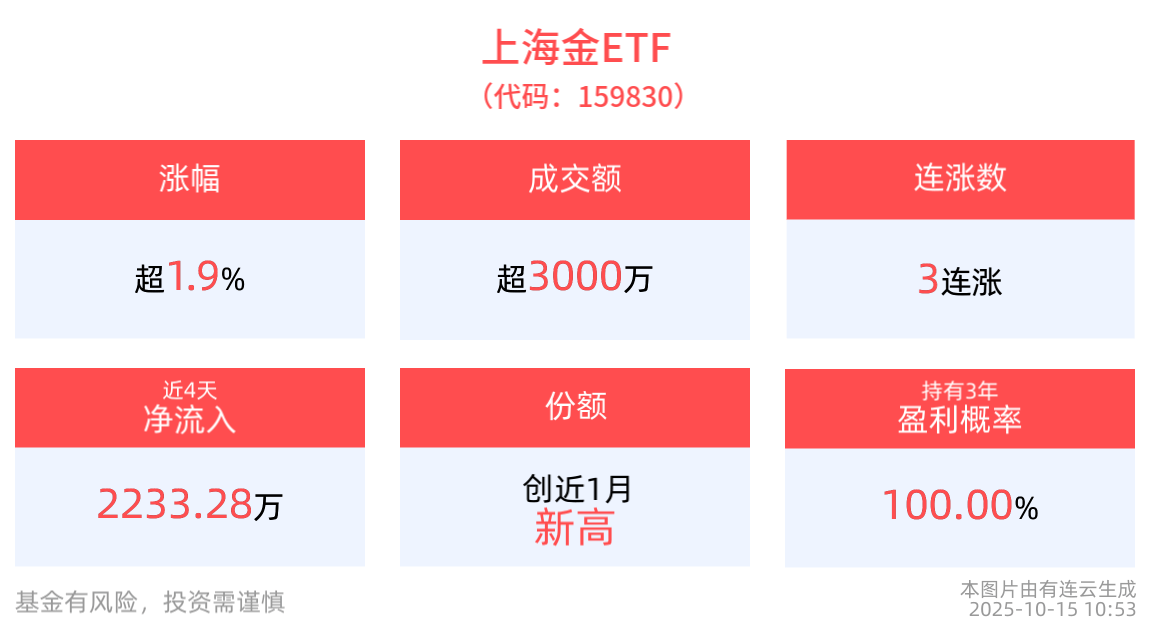
美联储降息大消息,金价应声飙升!上海金ETF(159830)涨超2%冲击3连涨,现货黄金价格续创历史新高
Sou Hu Cai Jing· 2025-10-15 03:05
Group 1 - Shanghai Gold ETF (159830) has seen a price increase of over 2%, currently up 1.92%, marking a potential three-day rally with a trading volume of 30.59 million yuan [3] - As of October 14, the latest share count for Shanghai Gold ETF reached 159 million, a one-month high, with a net inflow of 11.31 million yuan recently [3] - Over the past four trading days, the total capital inflow into Shanghai Gold ETF has amounted to 22.33 million yuan [3] Group 2 - Federal Reserve Chairman Jerome Powell indicated that the Quantitative Tightening (QT) plan may be nearing its end due to tightening liquidity in the financial system, while not suppressing expectations for a rate cut in October [4] - The market anticipates a 25 basis point rate cut during the Federal Reserve's meeting on October 28-29, with Powell's statements reinforcing this easing expectation [4] Group 3 - The international spot gold price has continued to rise, reaching a new historical high of $4,186.80 per ounce on October 15, with futures hitting $4,205.80 per ounce [5] - The recent surge in gold prices is attributed to three main factors: rising expectations for Federal Reserve rate cuts, escalating geopolitical risks, and central banks increasing gold reserves while reducing U.S. Treasury holdings [6] - The recent U.S. government shutdown has further driven demand for gold, suggesting that the current upward trend in gold prices may continue [6]
恒生科技早盘高开,机构:港股四季度先抑后扬,结构上继续重点推荐科技/AI及互联网
Mei Ri Jing Ji Xin Wen· 2025-10-15 02:12
Group 1 - The Hong Kong stock market opened positively on October 15, with the Hang Seng Index rising by 1.08%, the Hang Seng Tech Index by 1.31%, and the State-Owned Enterprises Index by 1.19% [1] - Technology stocks, gold stocks, and Chinese brokerage stocks saw widespread gains, while innovative drug concepts and automotive stocks were also active [1] - The Hang Seng Tech Index ETF (513180) followed the index's upward trend, with notable gains in holdings such as Bilibili, ASMPT, Midea Group, Xpeng Motors, BYD, Sunny Optical Technology, and Xiaomi [1] Group 2 - The Federal Reserve Chairman Jerome Powell indicated that the central bank may end its balance sheet reduction process in the coming months to prevent liquidity tightening in short-term funding markets, signaling a potential shift in quantitative tightening policy [1] - The market anticipates a high probability (over 95%) of a 25 basis point rate cut in the upcoming Federal Reserve meeting in October, according to the CME FedWatch Tool [1] - According to China Merchants Securities, the short-term outlook for the Hong Kong stock market is expected to be volatile, but marginally positive factors are likely to accumulate, driving future gains, particularly in technology/AI and internet sectors, as well as non-ferrous metals [1] Group 3 - The medium to long-term outlook for the Hong Kong stock market is optimistic, with expectations of an economic turning point due to improved supply-demand dynamics [2] - Capital expenditures and R&D investments in the technology sector are anticipated to translate into corporate profits, becoming a new growth engine [2] - The combination of easing policies in both the U.S. and China is expected to attract continuous inflows of southbound and foreign capital, driving a slow bull market trend in the Hong Kong stock market [2] Group 4 - As of October 14, the latest valuation (P/E TTM) of the Hang Seng Tech Index ETF (513180) was 22.64 times, which is approximately 27.36% below its historical average, indicating a relative undervaluation [2] - The high elasticity and growth characteristics of the index suggest significant upward momentum [2] - Investors without a Hong Kong Stock Connect account may consider using the Hang Seng Tech Index ETF (513180) to gain exposure to core Chinese AI assets [2]
鲍威尔最新讲话强化降息预期,机构称港股震荡后打开上行空间
Mei Ri Jing Ji Xin Wen· 2025-10-15 01:34
Market Overview - On October 14, Hong Kong's three major indices collectively declined, with the Hang Seng Index falling by 1.73% to 25,441.35 points, the Hang Seng Tech Index dropping by 3.62% to 5,923.26 points, marking a seven-day consecutive decline, and the Hang Seng China Enterprises Index decreasing by 1.55% to 9,079.16 points [1] - The pharmaceutical sector experienced a significant downturn, while the semiconductor industry showed a notable pullback. Key stocks such as Hua Hong Semiconductor fell over 13%, SMIC dropped nearly 8.5%, Kuaishou declined nearly 7%, Baidu fell nearly 5.5%, and Alibaba decreased by nearly 4.5% [1] Southbound Capital - On October 14, southbound capital recorded a net purchase of Hong Kong stocks amounting to 8.603 billion HKD. Year-to-date, the cumulative net purchase has reached 1,198.567 billion HKD, significantly exceeding last year's total net purchase [2] U.S. Market Performance - The U.S. stock market showed mixed results, with the Dow Jones rising by 0.44%, the S&P 500 declining by 0.16%, and the Nasdaq falling by 0.76%. Notable gainers included Walmart, which rose nearly 5%, and Caterpillar, which increased by over 4%. Conversely, major tech stocks like Nvidia and Amazon saw declines of over 4% and 1%, respectively [3] - The Nasdaq Golden Dragon China Index, which tracks Chinese stocks listed in the U.S., fell by 1.95%. The Hang Seng Index ADR rose, closing at 25,667.98 points, an increase of 226.63 points or 0.89% compared to the Hong Kong close [3] Key Messages - Federal Reserve Chair Jerome Powell indicated that the central bank may end its balance sheet reduction process in the coming months to prevent liquidity issues in short-term funding markets. This statement suggests a potential shift in the Fed's quantitative tightening policy and reinforces market expectations for a rate cut this month, with a 95.7% probability of a 25 basis point cut according to the CME FedWatch Tool [4] - Baidu's annual technology and product launch event, Baidu World 2025, is scheduled for November 13, focusing on three main themes: the depth of large model technology, the breadth of AI-native applications, and the global perspective of its overseas strategy, marking a critical milestone for Baidu's next decade [4] Short Selling Data - On October 14, a total of 658 Hong Kong stocks were short-sold, with a total short-selling amount of 48.236 billion HKD. Notably, Alibaba, Xiaomi Group, and Tencent Holdings had the highest short-selling amounts, at 3.717 billion HKD, 2.634 billion HKD, and 2.457 billion HKD, respectively [5] Institutional Views - According to China Merchants Securities, the Hong Kong stock market is expected to experience a short-term decline followed by a rebound in the fourth quarter, with an upward trend in the medium to long term. In the absence of new positive factors, the market may continue to oscillate. However, marginal positive factors are anticipated to accumulate, driving the market upward, including the robust development of China's tech industry represented by AI, potential resolutions to U.S.-China tariff issues, and upcoming discussions on the "14th Five-Year Plan" which may improve expectations and boost risk appetite. The continued strengthening of rate cut expectations from the Federal Reserve is also likely to facilitate foreign capital inflow into Hong Kong stocks. The focus remains on technology/AI, internet, and non-ferrous metals sectors [6] Hong Kong Stock ETFs - The Hong Kong Consumption ETF (513230) focuses on e-commerce and new consumption, covering relatively scarce new consumption sectors compared to A-shares [7] - The Hang Seng Tech Index ETF (513180) includes core AI assets in China, encompassing relatively scarce technology leaders compared to A-shares [8]



港股早参丨鲍威尔最新讲话强化降息预期,机构称港股震荡后打开上行空间
Mei Ri Jing Ji Xin Wen· 2025-10-15 01:24
Market Overview - On October 14, Hong Kong's three major indices collectively declined, with the Hang Seng Index falling by 1.73% to 25,441.35 points, the Hang Seng Tech Index dropping by 3.62% to 5,923.26 points (marking a seven-day consecutive decline), and the Hang Seng China Enterprises Index decreasing by 1.55% to 9,079.16 points [1] - The pharmaceutical sector experienced a broad decline, while the metals industry opened high but closed low, and the semiconductor sector showed a notable pullback [1] - Key stocks such as Hua Hong Semiconductor fell over 13%, SMIC dropped nearly 8.5%, Kuaishou declined nearly 7%, Baidu Group fell nearly 5.5%, and Alibaba decreased nearly 4.5% [1] - The Hang Seng Tech Index ETF (513180) closed down by 2.78% [1] Southbound Capital - On October 14, southbound capital net bought Hong Kong stocks worth 8.603 billion HKD, bringing the cumulative net purchase amount for the year to 119.8567 billion HKD, significantly exceeding last year's total net purchase [2] U.S. Market Performance - The U.S. stock market showed mixed results, with the Dow Jones increasing by 0.44%, the S&P 500 decreasing by 0.16%, and the Nasdaq falling by 0.76% [3] - Notable gainers included Walmart, which rose nearly 5%, and Caterpillar, which increased over 4%, leading the Dow [3] - The Nasdaq Golden Dragon China Index, which tracks popular Chinese stocks, fell by 1.95% [3] - The Hang Seng Index ADR rose, closing at 25,667.98 points, an increase of 226.63 points or 0.89% compared to the Hong Kong close [3] Key Messages - Federal Reserve Chair Jerome Powell indicated that the central bank may end its balance sheet reduction process in the coming months to prevent liquidity issues in short-term funding markets, suggesting a potential shift in the Fed's quantitative tightening policy and reinforcing market expectations for a rate cut this month, with a 95.7% probability of a 25 basis point cut according to the CME FedWatch Tool [4] - Baidu's annual important technology and product launch event, Baidu World 2025, is scheduled for November 13, focusing on three main themes: the depth of large model technology, the breadth of AI-native application ecosystems, and global perspectives on overseas strategies, seen as a critical milestone for Baidu's next decade [4] Short Selling Data - On October 14, a total of 658 Hong Kong stocks were short-sold, with total short selling amounting to 48.236 billion HKD. Notably, Alibaba, Xiaomi Group, and Tencent Holdings had the highest short selling amounts at 3.717 billion HKD, 2.634 billion HKD, and 2.457 billion HKD, respectively [5] Institutional Views - According to China Merchants Securities, the Hong Kong stock market is expected to experience a short-term decline followed by a rebound in the fourth quarter, with an upward trend in the medium to long term. However, in the absence of new positive factors, the market may continue to fluctuate [6] - Marginal positive factors are anticipated to accumulate, driving the Hong Kong stock market upward, including the robust development of China's technology sector represented by AI, potential resolution of U.S.-China tariff issues, discussions on the "14th Five-Year Plan," and ongoing expectations for Fed rate cuts, which could facilitate foreign capital inflow into Hong Kong stocks [6] - The focus remains on sectors such as technology/AI, the internet, and non-ferrous metals [6] Hong Kong Stock ETFs - The Hong Kong Consumption ETF (513230) focuses on e-commerce and new consumption, covering relatively scarce new consumption sectors compared to A-shares [7] - The Hang Seng Technology Index ETF (513180) includes core AI assets in China, encompassing relatively scarce technology leaders compared to A-shares [8]
鲍威尔敞开降息大门:就业下行风险显著 或接近停止缩表
Hua Er Jie Jian Wen· 2025-10-15 00:25
李丹,华尔街见闻 在本月末美联储会议静默期前的最后一次经济和货币政策相关公开讲话中,美联储主席鲍威尔暗示,美 国的劳动力市场持续恶化,尽管政府关门影响了对经济的判断,仍保留了本月降息的可能性。他还称, 联储可能会在未来几个月内停止缩减资产负债表(缩表)这一量化紧缩(QT)行动。 在事先准备的讲稿中,出席全美商业经济协会(NABE)今年年会的鲍威尔表示,自上月美联储决策会 议以来,将近一个月时间内,美国的就业和通胀前景并没有多大改变。他说,虽然一些重要的经济数据 因美国联邦政府关门而推迟发布,但 "根据我们掌握的数据,可以公平地说,自四周前我们9月的会议以来,就业和通胀前景似乎 没有太大变化。" 紧接着鲍威尔指出,政府关门前的数据表明,经济增长可能比预期略为稳健。失业率8月保持低位,工 资增长大幅放缓,可能部分源于移民减少和劳动力参与率下降导致劳动力增长放缓。 "在这个活力不足且略显疲软的劳动力市场中,就业的下行风险似乎有所增加。" 鲍威尔在讲稿中重申,因为就业下行风险增加,联储对就业和通胀目标所面临风险平衡的评估改变,因 此9月决定降息。为了应对双重目标的紧张关系,"不存在毫无风险的政策路径"。他提到,现有的 ...
鲍威尔敞开降息大门,或接近停止缩表(附讲稿)
华尔街见闻· 2025-10-14 23:44
Core Views - The Federal Reserve Chairman Jerome Powell indicated a potential interest rate cut this month due to a deteriorating labor market, despite the impact of the government shutdown on economic assessments [1][2][3] - Powell suggested that the Fed may halt its balance sheet reduction in the coming months, as the economic growth trajectory appears slightly stronger than expected [2][6][7] Labor Market and Employment - The labor market shows increasing downside risks, with Powell noting that the balance of risks regarding employment and inflation has shifted, leading to the decision to cut rates in September [3][5][46] - Despite a low unemployment rate in August, wage growth has significantly slowed, partly due to a decrease in immigration and labor force participation [2][46] - Job openings have declined, which may reflect an impending rise in the unemployment rate [5][46][47] Inflation and Economic Indicators - Current data suggests that rising commodity prices are primarily due to tariffs rather than broader inflationary pressures [4][48] - The core Personal Consumption Expenditures (PCE) inflation rate was 2.9% over the past 12 months, slightly up from earlier in the year, with short-term inflation expectations rising while long-term expectations remain aligned with the 2% target [48] Monetary Policy and Balance Sheet Management - Powell emphasized the importance of balancing the dual mandate of employment and inflation, stating that there is no risk-free policy path [5][48] - The Fed's balance sheet, which stood at $6.5 trillion as of October 8, consists mainly of $2.4 trillion in Federal Reserve notes and $3 trillion in reserves [21][22] - The Fed plans to stop reducing its balance sheet when reserves are slightly above what is deemed sufficient, with indications that liquidity is tightening [7][40] Market Stability and Future Outlook - Powell highlighted the need for careful management to avoid a repeat of the 2019 repo market crisis, indicating that the Fed will take cautious measures to maintain market stability [8][10][40] - The Fed's framework for sufficient reserves has proven effective in controlling policy rates and supporting financial stability [38][44] - The Fed is closely monitoring various indicators to inform its decisions regarding the balance sheet and interest rates in light of evolving economic conditions [40][45]
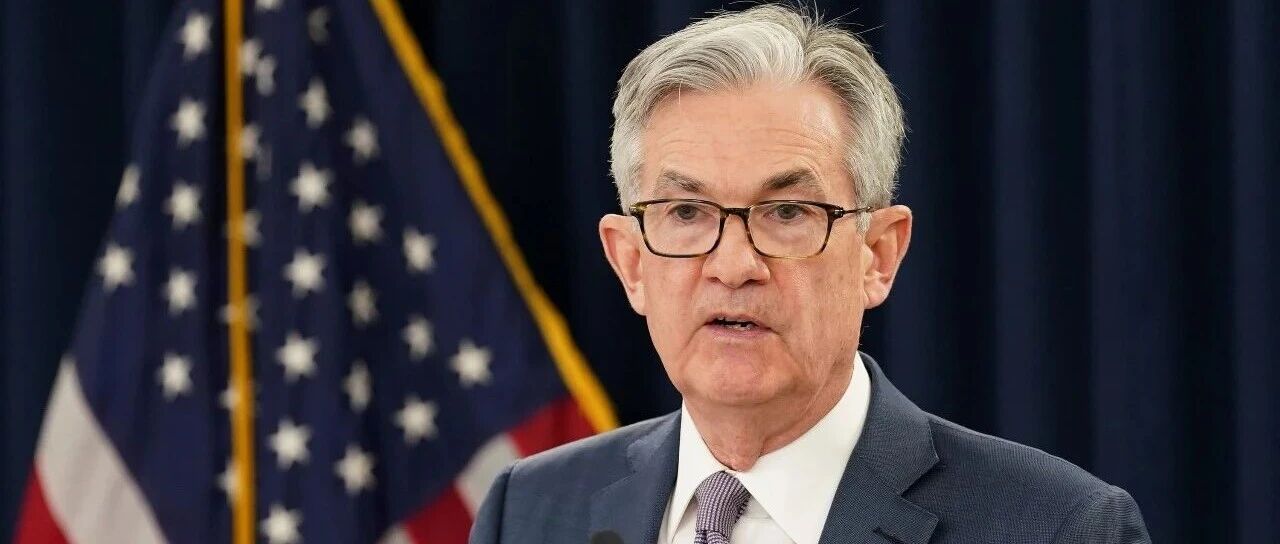
鲍威尔敞开降息大门:就业下行风险显著,或接近停止缩表
Hua Er Jie Jian Wen· 2025-10-14 22:29
Core Viewpoint - The Federal Reserve Chairman Jerome Powell indicated a potential interest rate cut this month due to a deteriorating labor market, despite the impact of the government shutdown on economic assessments [1][2][24]. Economic Outlook - Powell noted that since the last Federal Reserve meeting, the employment and inflation outlooks have not changed significantly, with economic growth appearing slightly more robust than expected [1][24]. - The unemployment rate remained low in August, but wage growth has slowed considerably, partly due to a decrease in immigration and labor force participation [1][24][25]. - There are increasing risks to employment in a labor market that is described as lacking vitality and somewhat weak [1][24]. Monetary Policy Actions - Powell emphasized the risks associated with balancing the dual mandate of employment and inflation, stating that a rapid rate cut could leave inflation targets unmet, while a slow cut could harm the job market [2][24]. - The Federal Reserve may halt the reduction of its balance sheet in the coming months, as it approaches a level deemed sufficient for reserves [4][18]. - Powell acknowledged signs of tightening liquidity but assured that the Fed would act cautiously to avoid a repeat of the "taper tantrum" experienced in September 2019 [5][19]. Labor Market Insights - The hiring pace has slowed, and the number of job vacancies is decreasing, which may lead to a rise in the unemployment rate [2][24]. - Powell did not provide specific figures for the equilibrium point of employment growth necessary to maintain stable unemployment rates, but noted that the unemployment rate has significantly decreased [2][24]. Inflation and Price Pressures - Current data suggests that rising commodity prices are primarily due to tariffs rather than broader inflationary pressures [1][25]. - The core Personal Consumption Expenditures (PCE) inflation rate was reported at 2.9% over the past 12 months, slightly higher than earlier in the year, driven by increases in core goods inflation [25]. Federal Reserve's Balance Sheet Management - The Federal Reserve's balance sheet, which stood at $6.5 trillion as of October 8, consists mainly of $2.4 trillion in Federal Reserve notes and $3 trillion in reserves [11]. - The Fed plans to adjust its asset holdings, potentially increasing short-term assets, which some investors view as a form of implicit quantitative easing [7][20]. - Powell defended the effectiveness of the reserve system, stating that it is crucial for controlling interest rates and ensuring financial stability [18][21].
美股三大股指涨跌不一,市场押注10月再度降息,中概股普遍下跌
Feng Huang Wang· 2025-10-14 22:29
贝尔德私人财富管理公司投资策略师Ross Mayfield评论称:"市场正艰难判断事态将走向何方,如果特 朗普政府真打算再次升级紧张关系,那么以当前的估值水平来看,市场显得过于昂贵。尤其是在100% 关税和其他措施重新被摆上台面的情况下。" 鲍威尔当天表示,美联储长期推进的资产负债表缩减计划,也就是所谓的量化紧缩(QT),可能即将接近 尾声。 道明证券策略师认为,鲍威尔为未来几个月结束量化紧缩铺平了道路。"我们预计美联储将在10月的政 策会议上宣布停止资产负债表缩减。"资产负债表可能会在一段时间内保持稳定,但如果年末压力过 大,可能会促使美联储在2026年重新开始购买国债,向市场注入流动性。 此外,鲍威尔在讲话中并未刻意打压市场普遍预期,即美联储可能在10月28日至29日的会议上再次降 息,尽管他同样没有明确认同这一预期。 MacroPolicy Perspectives创始人Julia Coronado表示:"美联储10月份的降息已板上钉钉,没有什么能改变 劳动力市场仍存在下行风险的观点。" 鲍威尔也承认:"现在几乎不存在无风险路径,因为通胀似乎仍在缓慢上升……但劳动力市场已经显露 出相当显著的下行风险。无 ...