
AI算力

Search documents
AI算力浪潮驱动存储市场量价齐升
Zheng Quan Ri Bao Zhi Sheng· 2026-01-08 17:09
Core Insights - The price of storage chips, particularly DDR5 server memory, has surged due to explosive demand driven by AI, with prices exceeding 50,000 yuan and approaching 60,000 yuan [1] - The current supply-demand imbalance is expected to persist until 2028, primarily due to the increased memory requirements of AI servers, which are 8 to 10 times higher than traditional servers [1] - Major cloud service providers like Google, Meta, Microsoft, and Amazon AWS are projected to invest a historical high of 600 billion USD in AI infrastructure by 2026, further driving demand for storage chips [2] Market Trends - Since September 2025, the spot price of DDR5 memory chips has increased by over 300%, while DDR4 memory chips have risen by 158% [2] - The rapid expansion of AI data centers is expected to lead to further increases in storage chip demand and prices in 2026 [2][3] - The global supply of DRAM is anticipated to grow by 15% to 20%, while demand is expected to increase by 20% to 25% in 2026, indicating a continued supply shortage [3] Industry Opportunities - The domestic storage industry is seen as entering a historic opportunity phase, with a focus on domestic substitution and benefits across the supply chain [4] - Companies like Changxin Technology are accelerating their investments, with plans to raise 29.5 billion yuan for technological upgrades and R&D, aiming to complete most equipment installations by the end of 2027 [4] - Xi'an Yiswei Materials Technology and Ningbo Jiangfeng Electronic Materials are also expanding their production capabilities to meet the growing global demand for high-end semiconductor materials [4] Market Size Projections - The storage chip market in China is expected to approach 500 billion yuan by 2026, driven by strong demand from AI models, data centers, and smart terminals [5]
马斯克:中国AI算力将“远超世界他国”
财联社· 2026-01-08 16:05
Group 1 - The core viewpoint is that China is expected to surpass other countries in AI computing power due to its significant electricity production capabilities, with projections indicating that by 2026, China's electricity generation may reach approximately three times that of the United States [3][6]. - Elon Musk emphasized that the ability to produce electricity is a critical factor in scaling AI systems, and he noted that the challenges in increasing electricity supply are often underestimated [4][5]. - The competition among global companies to build AI data centers is intensifying, with many of these centers consuming electricity comparable to that of a small city. Goldman Sachs highlighted that electricity shortages could hinder the U.S. in the AI race, as stable and sufficient power supply is crucial for the competition [6][7]. Group 2 - Goldman Sachs predicts that by 2030, China may have around 400 gigawatts of backup power capacity, which is more than three times the total electricity demand of global data centers [6][7]. - OpenAI has called for significant investments in energy capacity in the U.S. to maintain a competitive edge in the AI race, stating that electricity is not just a utility but a strategic asset, likening it to "the new oil" [7]. - Morgan Stanley has revised its forecast for the cumulative electricity shortfall in U.S. data centers from 44 gigawatts to 47 gigawatts for the years 2025-2028, equivalent to the electricity consumption of nine Miami cities or fifteen Philadelphia cities [8].


泰晶科技:2025年前三季度营收同比增长16.22%
Zheng Quan Ri Bao· 2026-01-08 14:12
Core Viewpoint - The company, Taijing Technology, is actively participating in market competition through pricing strategies and new product development, aiming for a revenue growth of 16.22% year-on-year in the first three quarters of 2025 [2] Group 1: Market Strategy - The company is focusing on expanding its market share by implementing competitive pricing strategies and developing new products [2] - The company is targeting high-growth sectors such as automotive electronics, optical communications, data centers, and AI computing [2] Group 2: Financial Performance - The company anticipates a year-on-year revenue increase of 16.22% for the first three quarters of 2025 [2] - The completion of production line construction and the gradual release of production capacity are expected to significantly contribute to the company's revenue [2] Group 3: Long-term Competitiveness - The company aims to enhance its long-term competitiveness and optimize its profit structure through strategic investments in product layout and production lines [2]

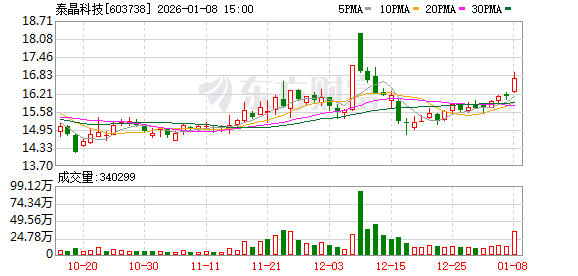
泰晶科技:公司加大汽车电子、光通信等高增长领域的产品布局与产线投入
Zheng Quan Ri Bao Wang· 2026-01-08 14:09
Group 1 - The company, Taijing Technology (603738), is increasing its product layout and production line investment in high-growth areas such as automotive electronics, optical communication, data centers, and AI computing power [1] - The company claims to have the capability to meet market demand in these sectors [1]
加仓?
第一财经· 2026-01-08 10:41
Market Overview - The A-share market shows a mixed and volatile pattern, with the Shanghai Composite Index dragged down by the financial sector, while the Shenzhen Component Index was influenced by the consumer sector, ultimately closing lower. The ChiNext Index also experienced weakness due to pullbacks in the semiconductor and new energy sectors [3]. Market Performance - Out of 3730 stocks, 1-3 stocks declined, indicating a general upward trend in the market [4]. - The market exhibited a "broad-based rally" with sectors like military industry, commercial aerospace, brain-computer interface, and 6G showing repeated activity, driving most stocks higher. However, major financial sectors, lithium mining, and CPO saw collective pullbacks [5]. Trading Volume - The total trading volume across both markets was over 2.8 trillion yuan, reflecting a slight decrease of 1.89%, yet indicating a high level of market participation [5]. Fund Flow - There was a net outflow of 36.4 billion yuan from institutional funds, while retail investors saw a net inflow [6]. - Institutions are reallocating funds from large financial and traditional cyclical sectors to defense, military, computer, and high-end manufacturing sectors. Retail investors are favoring short-term trades, particularly in AI computing, robotics, and AI applications, while remaining cautious towards high-priced tech stocks [7]. Investor Sentiment - Retail investor sentiment stands at 75.85%, indicating a generally optimistic outlook [8]. - Among investors, 38.19% are increasing their positions, 16.49% are reducing their holdings, and 45.32% are maintaining their current positions [12]. Market Predictions - A survey indicates that 53.04% of participants expect the market to rise in the next trading day, while 46.96% anticipate a decline [15]. Asset Performance - In terms of asset performance, 8.74% of investors have achieved over 50% profit, while 10.22% have profits between 20% and 50%. Conversely, 21.93% of investors are facing losses of up to 20% [20].

观察 | 融资数亿!红杉高瓴抢投的核聚变,藏着你未来10年的财富密码
未可知人工智能研究院· 2026-01-08 10:03
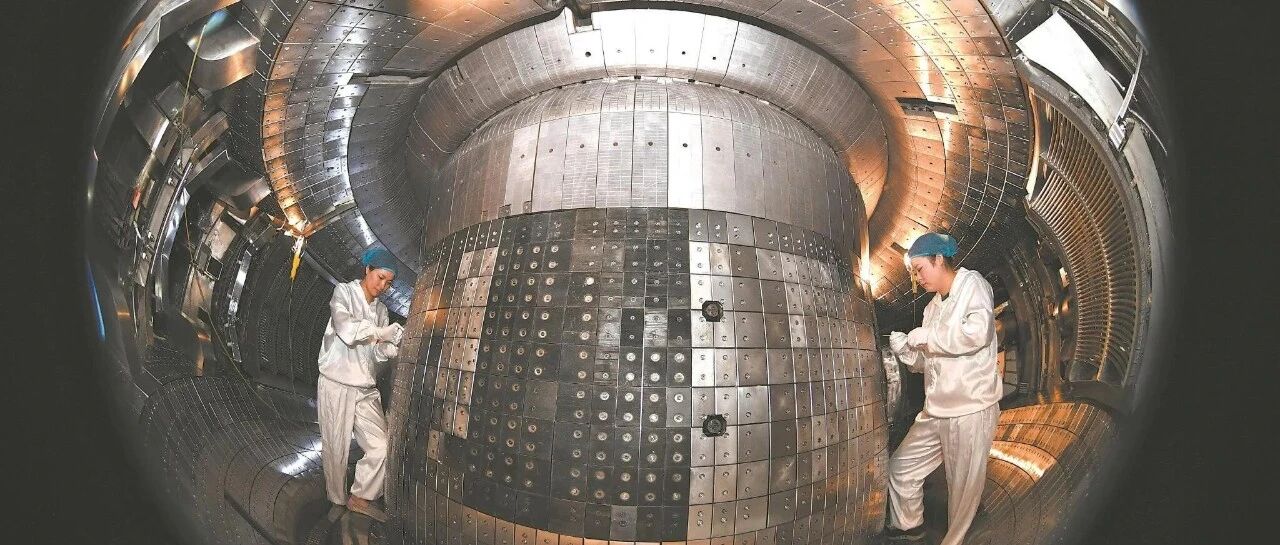
Core Viewpoint - The article discusses the increasing investment in nuclear fusion technology, highlighting its potential as a solution to the energy demands of the AI era and the significant financial backing from top venture capital firms and government initiatives [2][8][20]. Group 1: Investment Trends - Dongsheng Fusion, a newly established nuclear fusion company, secured several hundred million yuan in its angel round funding [2]. - Major investors include Sequoia, IDG, Hillhouse, and Dinghui, indicating a strong interest from top-tier venture capital firms [3]. - The trend of investing large sums in early-stage, high-risk projects like nuclear fusion is unusual, as traditionally, venture capitalists avoid significant investments at the angel stage due to high risks [9][10]. Group 2: Energy Demand and AI - The demand for AI computing power is driving a shift in focus from acquiring more chips to securing sufficient electricity, as the operational costs of AI data centers are heavily influenced by electricity expenses [17][19]. - The capital expenditures of major tech companies like Microsoft, Google, and Amazon are projected to approach $400 billion, with a significant portion allocated to addressing energy shortages [19]. Group 3: Nuclear Fusion as a Solution - Nuclear fusion is being viewed as a "ultimate energy" solution due to the limitations of traditional energy sources and the safety concerns associated with nuclear fission [21][22]. - Notable investments in nuclear fusion include a $375 million investment by OpenAI's CEO in Helion and a power purchase agreement between Google and Commonwealth Fusion [24][25]. Group 4: Domestic Developments - In China, the establishment of the China Fusion Energy Company and significant funding rounds for various fusion startups indicate a strong governmental push towards fusion energy, with plans to invest over 300 billion yuan by 2030 [28][31]. - The timeline for fusion energy development includes milestones such as starting combustion experiments in 2027 and completing engineering experimental reactors by 2035 [35]. Group 5: Technological Advances - The article outlines three main approaches to nuclear fusion: Tokamak, FRC, and inertial confinement, each with its own advantages and challenges [41]. - Recent breakthroughs in high-temperature superconductors and AI technology are accelerating the development of nuclear fusion by making it more feasible and cost-effective [46][48]. Group 6: Opportunities for Individuals - The transition from laboratory to engineering in nuclear fusion presents numerous job and entrepreneurial opportunities across various fields, including engineering, materials science, and project management [57]. - Investment opportunities exist in the supply chain related to nuclear fusion, such as superconducting materials and precision manufacturing [58]. - Understanding the implications of nuclear fusion and energy transformation can provide individuals with a competitive edge in future investment opportunities [58]. Group 7: Dongsheng Fusion's Significance - Dongsheng Fusion is pursuing a unique "deuterium-helium-3" fusion route, which is considered safer and cleaner than traditional methods [61]. - The company is backed by a team from Fudan University and supported by significant funding from local government initiatives [62]. - The interest from top-tier VCs in Dongsheng Fusion is attributed to its differentiated technology, strong academic foundation, and robust policy support [63].
近百家中国半导体企业涌入A股港股,10家已IPO
21世纪经济报道· 2026-01-08 09:39
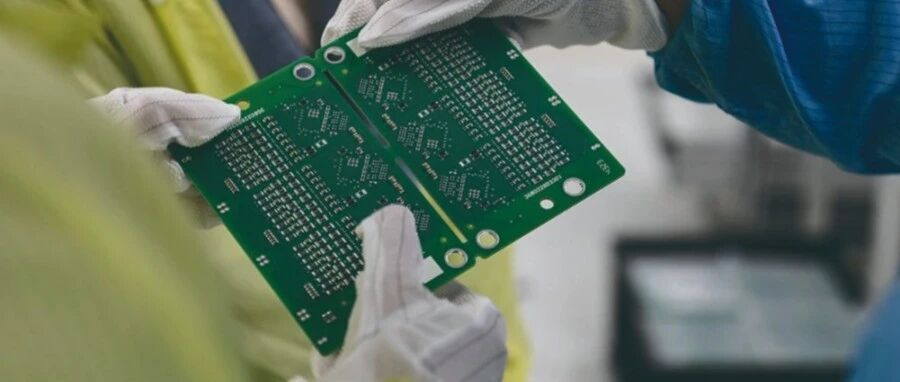
Core Viewpoint - The Chinese semiconductor industry is experiencing an unprecedented IPO boom, with nearly all domestic chip companies vying for entry into the capital market, indicating strong investor interest and potential for rapid development in the sector [1][2][20]. Group 1: IPO Activity - A total of 95 semiconductor companies have initiated or accelerated their IPO processes, with 10 already listed and 85 preparing for listing [1]. - In the A-share market, there are 55 companies involved, with 4 already listed, while 40 companies are in the Hong Kong market, with 6 listed and 34 aiming for listing [2][7]. - Since 2025, 38 semiconductor companies have started the A-share IPO process, aiming to raise nearly 100 billion yuan, averaging 26.23 million yuan per company [4]. Group 2: Capital Raising Trends - The IPO fundraising amounts are diverse, with leading companies like Changxin Technology, Moer Thread, and Guangdong Yu Chip Semiconductor raising 295 billion yuan, 80 billion yuan, and 75 billion yuan respectively [5][12]. - Many companies are raising around 10 billion yuan, covering various fields such as RF front-end chips, electronic components, and semiconductor equipment [5][12]. Group 3: Market Dynamics - The current IPO wave reflects a dual focus on capital and technology, driven by ongoing innovation and favorable policies in the Chinese semiconductor industry [2][20]. - The demand for AI computing power is surging, with projections indicating that China's smart computing demand will reach 486 EFLOPS by 2025, over ten times that of 2023 [14]. Group 4: Sector Focus - The IPOs are concentrated in key areas such as AI chips, GPU, CPU, and storage chips, with significant interest in high-performance computing and advanced manufacturing processes [12][20]. - Companies like Moer Thread and Nuxin Technology have seen massive oversubscription rates during their IPOs, indicating strong market enthusiasm for these sectors [14][15]. Group 5: Future Outlook - The collective IPO efforts signal a maturation of the domestic semiconductor industry, emphasizing the need for capital to support technological advancements and competitive positioning in the global market [20]. - The trend towards "A+H" listings is also notable, with several companies seeking to expand their market presence both domestically and internationally [8][19].
天数智芯港股上市:市值超400亿港元,国产GPU四小龙齐聚资本市场
3 6 Ke· 2026-01-08 08:28
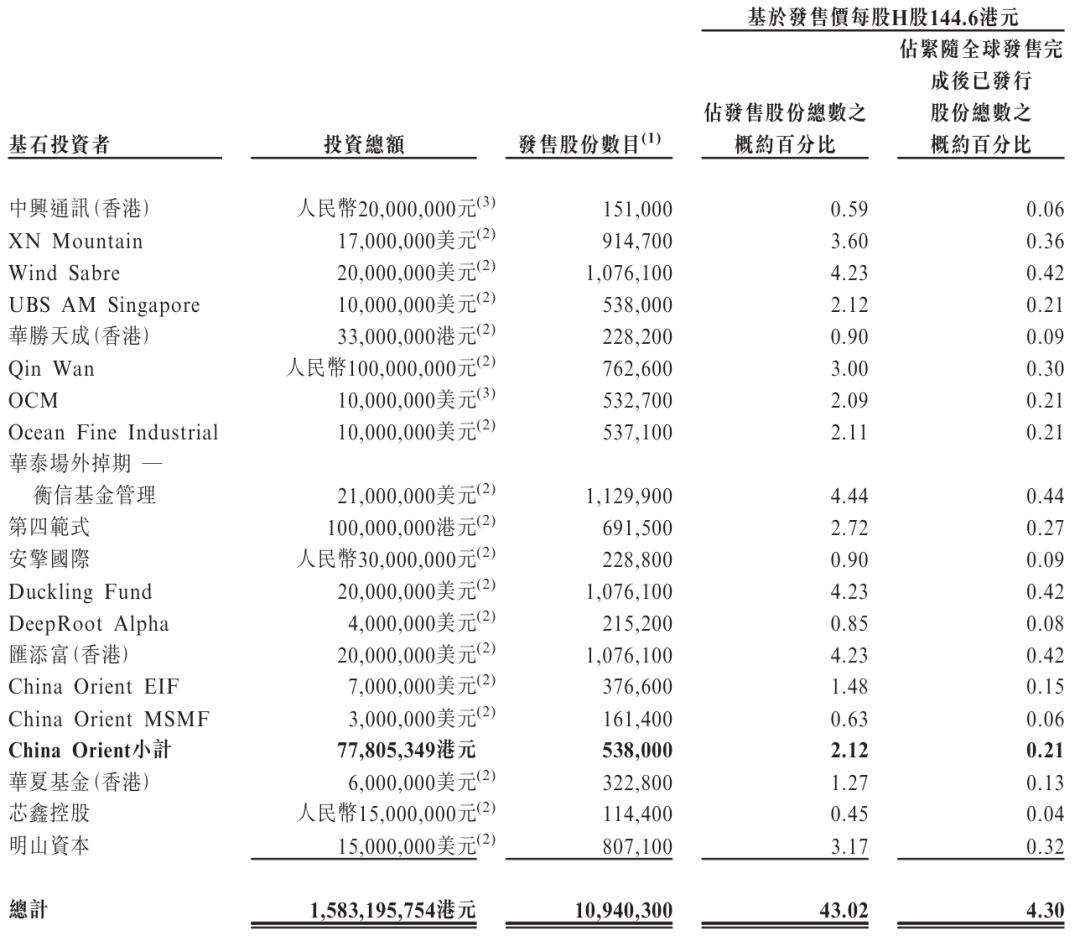
Core Viewpoint - TianShu ZhiXin Semiconductor Co., Ltd. (stock code: 9903) has successfully listed on the Hong Kong Stock Exchange, marking a significant milestone for the domestic general GPU industry and reflecting the growing demand for AI computing power globally [1][6]. Fundraising and Investor Participation - TianShu ZhiXin issued shares at a price of HKD 144.60, raising approximately HKD 3.677 billion, with a net fundraising amount of about HKD 3.5 billion after deducting expenses [2][4]. - The cornerstone investors include notable firms such as ZTE Corporation (Hong Kong), XN Mountain, UBS AM Singapore, and others, collectively subscribing for HKD 1.583 billion [2][3]. Market Position and Product Development - The company focuses on developing general GPU chips and AI computing solutions, with around 80% of the raised funds allocated for R&D and commercialization over the next five years [4][10]. - TianShu ZhiXin has established a comprehensive product system, including general GPU products and AI computing solutions, and is recognized as the first domestic company to achieve mass production of inference and training general GPU chips [10][11]. Financial Performance - For the first half of 2025, the company reported revenue of RMB 324.26 million, a significant increase from RMB 197.43 million in the same period last year, with a gross profit of RMB 162.43 million [12][13]. - The company has experienced substantial losses, with net losses of RMB 609.32 million for the first half of 2025, compared to RMB 403.99 million in the same period last year [14][15]. Industry Outlook - The general GPU market is expected to grow rapidly, with a compound annual growth rate (CAGR) of 72.8% from 2022 to 2024, and continued strong growth projected from 2025 to 2029 [17]. - The demand for AI computing infrastructure is surging, driven by the rapid adoption of large language models in China, which is expected to significantly increase the need for AI chips [16][17]. Investment and Financing History - TianShu ZhiXin has successfully completed multiple financing rounds, raising over RMB 3.5 billion in its B round and RMB 8.2 billion in its C round, with a pre-financing valuation reaching RMB 100 billion in its D round [18][19]. Shareholding Structure - Major shareholders include DaChuang Capital with a 22.92% stake and other entities holding smaller percentages, reflecting a diverse investor base [20][22].
天数智芯登陆港股 高开31.54%
Xin Lang Cai Jing· 2026-01-08 07:44
Core Viewpoint - TianShu ZhiXin Semiconductor Co., Ltd. has successfully listed on the Hong Kong Stock Exchange, raising HKD 3.7 billion, indicating strong investor interest in the company and its future growth potential in the GPU and AI sectors [1]. Group 1: IPO and Market Performance - TianShu ZhiXin's shares opened at HKD 190.2, reflecting a 31.54% increase, with a market capitalization exceeding HKD 40 billion [1]. - The IPO saw a total of 25.43 million shares issued, with 10% allocated for public offering in Hong Kong, which was oversubscribed by approximately 414.24 times, while the international offering (90% of shares) was oversubscribed by 10.68 times [1]. Group 2: Fund Allocation and Strategic Goals - 80% of the raised funds will be invested in the research and commercialization of general-purpose GPU chips and AI computing solutions over the next five years [1]. - 10% of the funds will be used for sales and market expansion, while the remaining 10% will supplement working capital, aiming to create a positive cycle of "capital empowerment - technological breakthroughs - commercial scaling" [1]. Group 3: Market Position and Product Development - As China's first general-purpose GPU company, TianShu ZhiXin has developed a comprehensive product matrix covering both training and inference scenarios, with a strong R&D team of over 480 members, many of whom have over 20 years of industry experience [2]. - The company has established a complete ecosystem of "software and hardware collaboration," achieving end-to-end autonomy from compilers to libraries and frameworks, fully compatible with major AI frameworks like PyTorch and TensorFlow [2]. Group 4: Market Share Growth - The market share of domestic general-purpose GPUs in China has increased from 8.3% in 2022 to an expected 17.4% in 2024, with projections indicating it could exceed 50% by 2029 [1].
算力赛道再迎政策东风!云计算50ETF(516630)涨近2%,宝信软件强势涨停
Mei Ri Jing Ji Xin Wen· 2026-01-08 07:22
Core Insights - The AI sector showed mixed performance on January 8, with the Cloud Computing 50 ETF rising by 1.89%, while the AI ETF and 5G Communication ETF experienced slight declines [1] - The Ministry of Industry and Information Technology released an action plan to enhance the integration of industrial internet and AI, focusing on improving computing power supply and promoting the application of intelligent computing in the industrial sector [1] - Guotai Junan Securities predicts a significant increase in the proportion of domestic AI chip products in the AI computing power procurement plans of domestic tech companies by 2026 [1] Group 1: Market Performance - The Cloud Computing 50 ETF (516630) saw a substantial increase of 1.89%, with an intraday peak exceeding 2% [1] - The AI ETF (159381) on the ChiNext board fell by 0.26%, while the 5G Communication ETF (515050) declined by 0.81% [1] - Notable declines were observed in previously popular stocks such as Changxin Bochuang, Zhongji Xuchuang, and Zhongci Electronics [1] Group 2: Policy and Industry Developments - The action plan from the Ministry aims to accelerate the integration of industrial internet with computing centers, encouraging public computing service providers to support industrial enterprises [1] - The plan emphasizes the construction of a national integrated computing network and the promotion of intelligent cloud services in the industrial sector [1] - The initiative aims to enhance the efficiency and capability of industrial intelligent computing supply [1] Group 3: Future Projections - Guotai Junan Securities anticipates a significant rise in the share of domestic AI chips in the procurement plans of tech companies by 2026 [1] - Domestic computing power manufacturers are accelerating the development of super-node AI computing clusters, with server manufacturers expected to launch super-node products by 2025 [1] - The shift towards super-nodes, which have a higher proportion of switching devices and software compared to traditional servers, is expected to improve the profitability of domestic server manufacturers [1] Group 4: ETF Details - The ChiNext AI ETF (159381) tracks the ChiNext AI Index and has a significant weight in optical modules, covering domestic software and AI application companies [2] - The 5G Communication ETF (515050) focuses on the 5G communication theme index, with major holdings in companies like Nvidia, Apple, and Huawei [2] - The Cloud Computing 50 ETF (516630) tracks a cloud computing index with a high AI computing power content, covering various sectors including data centers and AI servers [2]
