绿色转型

Search documents
【省交通运输厅】铺就三秦幸福路 奋楫笃行新征程
Shan Xi Ri Bao· 2025-10-20 22:43
Core Viewpoint - The transportation system in Shaanxi is undergoing significant development, focusing on high-quality growth and the establishment of a modern comprehensive transportation network that enhances economic and social development in the province [1][2][3]. Investment and Infrastructure Development - Shaanxi's transportation investment reached 591 billion yuan in the first nine months of the year, laying a solid foundation for the annual target of 700 billion yuan [2]. - Five major high-speed rail lines are advancing simultaneously, with a total investment of 1,174.5 billion yuan completed by the end of September [2]. Comprehensive Transportation Network - The total length of highways in Shaanxi has surpassed 6,750 kilometers, with ongoing projects expected to further enhance connectivity [3]. - The expansion of Xi'an Xianyang International Airport and the construction of new airports are solidifying Shaanxi's position as a national aviation hub [3]. International Trade and Logistics - The Xi'an International Port Station has become the first in the country to exceed 30,000 trips for the China-Europe Railway Express, significantly contributing to international freight transport [5][6]. - Shaanxi's exports to Central Asian countries increased by 48.1% in 2024, reflecting the positive impact of improved transportation links [6]. Urban and Rural Integration - The construction of over 600 kilometers of upgraded national and provincial highways and the development of rural roads have improved connectivity and supported rural revitalization [8][9]. - The integration of postal services and logistics in rural areas has enhanced the delivery of goods, benefiting local communities [9]. Smart and Green Transportation - Shaanxi is advancing smart transportation initiatives, including the development of a comprehensive traffic management system and the promotion of low-carbon transport solutions [10][12]. - The province aims to achieve full coverage of charging facilities in highway service areas, supporting the transition to green transportation [12]. Safety and Regulatory Framework - The transportation system is focusing on safety improvements through enhanced monitoring and response mechanisms, ensuring the safety of public travel [13].
全球航运减排行动分歧加剧
Sou Hu Cai Jing· 2025-10-20 16:22
Core Points - The International Maritime Organization (IMO) postponed the vote on the Net-Zero Framework, reflecting significant divisions among countries regarding the agreement [3][4][5] - The framework aims to establish legally binding emissions reduction targets for the shipping industry, which accounts for approximately 3% of global emissions [5][9] - The delay in the framework's approval may lead to prolonged uncertainty for shipowners and green fuel developers, with potential implementation not expected until around 2030 [4][6] Group 1: Framework Overview - The Net-Zero Framework is intended to be a comprehensive global emissions reduction scheme for the shipping industry, with interim targets of a 20% reduction by 2030 and 70% by 2040 compared to 2008 levels [9] - The framework's compliance mechanism includes incentives for ships that exceed emissions targets and penalties for those that do not meet them, creating a system of rewards and consequences [11][12] Group 2: Support and Opposition - The United States leads the opposition, arguing that the framework could increase global shipping costs by 10% and threatening retaliatory measures against supporting countries [5][6] - Supporters, including some developed nations and small island states, argue that unified global action is necessary to avoid fragmented regulations and to meet climate goals [7][8] - Countries like China have expressed concerns about the framework's fairness, advocating for a more equitable approach that considers varying national capacities [8] Group 3: Industry Impact - The shipping industry currently relies heavily on traditional fossil fuels, with 93.5% of fuel consumption coming from diesel, gasoline, and heavy fuel oil [13] - The transition to low-carbon fuels is underway, but significant technological advancements and incentives are needed to increase the adoption of alternative fuels like green methanol and ammonia [13][16] - The shipping sector will require a substantial increase in low-carbon fuel supply to meet the IMO's 2030 emissions reduction targets, estimated at 25 million tons of oil equivalent annually [16]


激发新质生产力,需要社会合力
第一财经· 2025-10-20 16:01
2025.10. 20 本文字数:1795,阅读时长大约3分钟 作者 | 一财评论员 10月20日,国家统计局发布了前三季度主要经济数据。今年以来,国民经济顶压前行,不仅稳住了 基本盘,不少关键领域还实现了新突破、新提升;前三季度经济增长5.2%,快于上年同期0.4个百分 点,为实现全年主要目标奠定了坚实基础。 国家统计局在答记者问时指出,前三季度新质生产力发展情况主要有五个方面的特点:创新成果竞相 迸发,创新能力有效提升;新产业新产品快速发展,新业态新模式加快拓展;人工智能赋能增强,数 字经济蓬勃发展;绿色转型步伐稳健,经济发展"含绿量"不断提升;技术改造继续深化,传统产业焕 新发展。 新质生产力的加快培育为高质量发展增添了新动能,推动中国经济换上新的增长引擎。同时,新质生 产力的发展将继续创造新的经济增长点,从而更有效激发自主创新活力与产业升级动力,也有助于对 冲下行压力,增强上行动力。 今后一个时期,新质生产力发挥的推动作用会更加重要。 今年以来,各方面继续加大创新投入,推动新兴领域投资扩产,促进新质生产力形成。国家统计局的 数据表明,2024年研发经费投入比上年增长8.9%,研发经费投入强度比上年提高 ...

一财社论:激发新质生产力,需要社会合力
Di Yi Cai Jing· 2025-10-20 13:37
继续创造新的经济增长点,激发自主创新活力与产业升级动力。 今年以来,各方面继续加大创新投入,推动新兴领域投资扩产,促进新质生产力形成。国家统计局的数 据表明,2024年研发经费投入比上年增长8.9%,研发经费投入强度比上年提高0.11个百分点。 10月20日,国家统计局发布了前三季度主要经济数据。今年以来,国民经济顶压前行,不仅稳住了基本 盘,不少关键领域还实现了新突破、新提升;前三季度经济增长5.2%,快于上年同期0.4个百分点,为 实现全年主要目标奠定了坚实基础。 国家统计局在答记者问时指出,前三季度新质生产力发展情况主要有五个方面的特点:创新成果竞相迸 发,创新能力有效提升;新产业新产品快速发展,新业态新模式加快拓展;人工智能赋能增强,数字经 济蓬勃发展;绿色转型步伐稳健,经济发展"含绿量"不断提升;技术改造继续深化,传统产业焕新发 展。 新质生产力的加快培育为高质量发展增添了新动能,推动中国经济换上新的增长引擎。同时,新质生产 力的发展将继续创造新的经济增长点,从而更有效激发自主创新活力与产业升级动力,也有助于对冲下 行压力,增强上行动力。 今后一个时期,新质生产力发挥的推动作用会更加重要。 要持续增 ...
(经济观察)电车出行折射中国“十四五”绿色转型力度
Zhong Guo Xin Wen Wang· 2025-10-20 12:26
Core Insights - The article highlights the significant progress China has made in the green transformation of its transportation sector, particularly through the adoption of electric vehicles (EVs) and the expansion of charging infrastructure [1][3]. Charging Infrastructure Development - During the recent National Day and Mid-Autumn Festival holiday, China's highway electric vehicle charging volume reached 123 million kilowatt-hours, with a daily average increase of over 45% year-on-year, marking a historical high [1]. - By the end of August 2025, the total number of electric vehicle charging facilities in China is expected to reach 17.348 million, approximately ten times the number five years ago [1]. - Over 40,000 charging facilities have been established along highways, five times the number from five years ago, with significant expansion into rural areas, where 97% of county towns and 80% of townships now have public charging facilities [1]. Charging Speed Improvements - The average power of newly added direct current charging stations has increased from 73.90 kilowatts at the end of 2021 to 98.51 kilowatts by June 2025, indicating a rapid proliferation of high-power charging facilities [2]. - Shenzhen has become a "supercharging city," with 1,057 supercharging stations and over 487,000 charging piles, surpassing the number of gas stations and pumps [2]. Renewable Energy Integration - The "14th Five-Year Plan" period is noted as the fastest for green and low-carbon transformation, with renewable energy generation capacity increasing from 40% to around 60% [3]. - Wind and solar power generation has seen significant growth, with the share of wind and solar in total electricity consumption rising from 9.7% in 2020 to an expected 18.6% by 2024 [3]. - All new electricity consumption in the first half of this year has been sourced from renewable energy [3]. Traditional Energy Sector Adaptation - Coal-fired power generation is undergoing rapid low-emission upgrades, with 95% of coal power units achieving ultra-low emissions [4]. - The comprehensive utilization rate of coal gangue is projected to increase by 3.1 percentage points by 2024 compared to 2020 [4]. - China has set ambitious new targets for 2035, aiming for non-fossil energy to account for over 30% of total energy consumption and for wind and solar power capacity to reach six times that of 2020 [4].
中国航运民企“逆势出海”,供应链变局下机遇与挑战并存
Di Yi Cai Jing· 2025-10-20 10:28
Core Insights - The trend of Chinese enterprises "going global" has evolved from individual actions to a collective "industrial belt going overseas" approach, reflecting both the adventurous spirit of private enterprises and the historical opportunities presented by global supply chain restructuring [1][2] Group 1: Opportunities in Global Expansion - Private enterprises are becoming the main force in the "industrial belt going overseas," acting as a crucial support for China's economic integration with the world [1][2] - The acceleration of Chinese enterprises' global expansion is leading to a transformation in their business models, providing solutions for factory relocations, overseas manufacturing, and logistics distribution [2] - AI technology is playing a significant role in facilitating the global expansion of Chinese enterprises by overcoming language barriers and enhancing communication capabilities [2][3] Group 2: Digitalization and Green Transformation - The industry consensus is shifting towards green transformation, with electric trucks and supporting infrastructure becoming a key trend in port and road transportation [3] - The operational cost of new energy heavy trucks can be reduced by 40% to 50% compared to traditional fuel trucks, indicating significant cost-saving potential [3] - Future opportunities for private enterprises in the shipping sector include logistics equipment exports, service standard outputs, and the replication of digital capabilities [3] Group 3: Challenges and Cultural Integration - Private enterprises face challenges such as adapting to local environments and talent shortages when expanding internationally [4] - Cultural integration is emphasized as crucial for success, with the need for training industries and educational institutions to engage with overseas markets [4] - Companies should seek ecological harmony rather than merely profit opportunities when expanding abroad, focusing on win-win scenarios [4] Group 4: Caution in Expansion - Private entrepreneurs are likened to adventurers, with the need for caution in their global expansion efforts, particularly for small and medium-sized enterprises [5] - It is advised that companies should strengthen their domestic capabilities before attempting to establish a foothold in international markets [5]
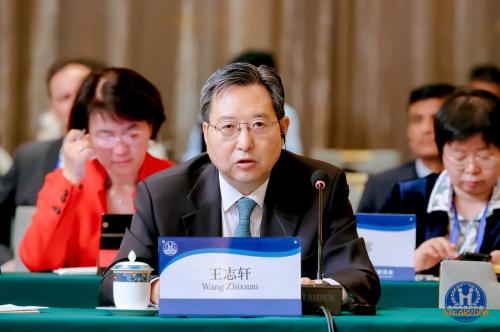
专访王志轩: 以太阳能、风能替代传统能源的绿色转型趋势不会变
2 1 Shi Ji Jing Ji Bao Dao· 2025-10-20 09:20
Core Viewpoint - The green transition is a significant trend in China, with a focus on achieving dual carbon goals and addressing energy, environmental, and resource challenges during the "14th Five-Year Plan" period [1][4]. Group 1: Trends and Key Points - China's environmental quality is expected to continue improving, and the shift from fossil fuels to renewable energy sources like solar and wind will remain unchanged [5][6]. - Three critical points to consider are: 1. The endpoint signifies the end of traditional pollution control models [5]. 2. The starting point involves new environmental requirements, issues, and policy layouts [5]. 3. The risk point emphasizes the need for the government to enhance future risk management, particularly regarding red lines and bottom lines [5][6]. Group 2: Energy Transition Challenges - The energy transition is characterized as a fundamental, long-term, and comprehensive economic and social transformation centered around electricity, facing new challenges in energy security, resource constraints, and environmental impacts [1][6]. - The transition from coal power as the main energy source to a regulatory role for system stability is noted, with coal's economic viability declining due to reduced operating hours [9]. Group 3: Policy and Market Coordination - The relationship between energy, environment, and climate is crucial, with energy transition being essential to controlling greenhouse gas emissions and achieving climate goals [8]. - Effective policy and market coordination are necessary to balance energy security, environmental sustainability, and economic transition [8][12]. Group 4: Green Electricity Consumption - Factors limiting green electricity consumption include system costs and stability issues, as well as the need for a robust consumption mechanism [12]. - The government is encouraged to enhance policy guidance and regulation, improve procurement mechanisms, and create a fair market environment for enterprises [13].

第十四届中国国际专利技术与产品交易会能源石化领域专场路演活动顺利举办
Zhong Guo Fa Zhan Wang· 2025-10-20 07:56
Core Insights - The global energy landscape is undergoing profound changes driven by the "dual carbon" goals, leading to significant opportunities for transformation and green development [1] Group 1: Event Overview - The 14th China International Patent Technology and Product Trading Fair was held from October 13 to 15 in Dalian, focusing on showcasing patent technologies in the energy and petrochemical sectors [1] - The event aimed to create a high-level platform for the display and exchange of patent technologies, promoting the integration of innovative achievements with industrial resources and financial capital [1] Group 2: Key Themes and Objectives - The energy and petrochemical special roadshow emphasized "energy security" and "green transformation," serving as an important practice for the efficient integration of innovative technologies, capital, and markets [2] - The event showcased advanced technologies and innovative projects in areas such as fuel cells, hydrogen energy, composite coatings, and sodium-ion batteries [2] Group 3: Project Signings and Collaborations - Two projects were signed on-site, including a knowledge property analysis and transformation service project between Dalian West Pacific Petrochemical Co., Ltd. and Dalian Zhigao Patent Office [2] - Another project involved the production of key core materials for flow batteries and fuel cells, signed between Zhongke Energy Materials Technology (Dalian) Co., Ltd. and Liaoning Xinde New Materials Technology Group Co., Ltd. [2] Group 4: Industry Development Goals - The roadshow provided a platform for energy and chemical enterprises to deepen cooperation, promoting the high-end, intelligent, and green development of the local energy and chemical industry [2]
从“变废为宝”到“无中生油”,上海机场集团助力SAF产业开启绿色航空新纪元
Xin Lang Cai Jing· 2025-10-20 07:01
Core Insights - The 2025 Sustainable Global Leaders Conference is scheduled from October 16 to 18 in Shanghai, co-hosted by the World Green Design Organization and Sina Group, focusing on sustainable development and green practices [1] Group 1: China's Future and Technological Advancements - China's future is promising due to its "striving spirit" and "technological self-reliance," with a new generation excelling in various fields, contributing to national success [1] - Significant progress has been made in China's renewable energy technology, with green electricity emerging as a crucial resource, akin to "oil in the new era" [1] Group 2: Shanghai Airport Group's Green Practices - Shanghai Airport Group is committed to green transformation, emphasizing the importance of innovative technology to enhance sustainability [1] - The group is focusing on two main Sustainable Aviation Fuel (SAF) technology routes: 1. "Turning waste into treasure" by developing SAF from waste cooking oil, which eliminates hydrogenation and heavy metal catalysts, improving efficiency [1] 2. "Creating oil from nothing" by exploring methods to produce SAF without relying on biomass, addressing future aviation fuel demands [1] - The company aims to drive development through innovation, overcoming challenges and setting new paths in the industry [1]

帮主郑重财经解读:前三季度GDP增5.2%,这几个信号比数字更关键
Sou Hu Cai Jing· 2025-10-20 04:14
Core Insights - China's GDP growth of 5.2% in the first three quarters is considered stable despite external economic pressures, with an increase of 136.8 billion yuan compared to the previous year [1][3] - The urban survey unemployment rate remained steady at 5.2%, indicating stability in employment, while per capita disposable income grew in line with GDP, reflecting real economic benefits for the population [3][4] - High-tech manufacturing and equipment manufacturing sectors showed significant growth rates of 9.6% and 9.7%, respectively, outpacing overall industrial growth, highlighting the emergence of new economic drivers [3][4] Economic Trends - Despite a slight decline in growth rate to 4.8% in the third quarter, China's economic performance remains strong compared to other major economies, with a total output of 35.5 trillion yuan in a single quarter [3][4] - Domestic demand is strengthening, evidenced by double-digit sales growth in home appliances and furniture driven by trade-in policies, alongside a recovering consumer market as indicated by a rising core CPI [3][4] - The innovation index has entered the global top ten for the first time, showcasing the development of new productive forces and economic resilience [4]