去美元化

Search documents
2026年贵金属与有色金属的开年强势 或将成为新一轮行业景气周期的起点
Sou Hu Cai Jing· 2026-01-19 14:01
来源:新华财经 2026年开年贵金属及有色金属市场行情以"开门红"姿态迅猛展开,不足半月便上演了一轮波澜壮阔的普 涨行情,价格突破与成交量放大形成共振,市场热度较往年同期显著升温。 对于黄金矿业公司而言,本轮开年行情的强度与结构特征,既意味着短期收益的快速体现,更预示着行 业中长期格局的重构。金价突破关键阻力位后,资源储备价值迎来重估,而产业资本的密集并购也意味 着优质矿产资源的竞争将进一步加剧。在生产端,金价高位运行为智能化、绿色开采技术投入提供了资 金支撑;市场端则需要密切关注美联储降息节奏、地缘政治演变及交易所风控政策变化,在把握中长期 趋势的同时,防范短期波动带来的经营风险。 值得注意的是,本轮金属开年行情在强势上涨中伴随显著波动特征。金价在突破关键关口后出现短期震 荡,有色金属市场也呈现类似态势,沪铝在创历史新高后当日便出现回调,反映出短期获利盘了结与长 期看好情绪的博弈。这种"快涨伴震荡"的走势,与历史上开年行情多为平稳爬坡的特征形成鲜明对比, 背后是资金快速涌入与基本面支撑的双重作用。美联储降息预期升温、地缘政治紧张推升避险情绪,叠 加新兴产业刚需增长,使得市场在短期内聚集大量资金,而散户投资者 ...
全球央行抢金潮,如何重塑国际储备格局
3 6 Ke· 2026-01-19 13:46
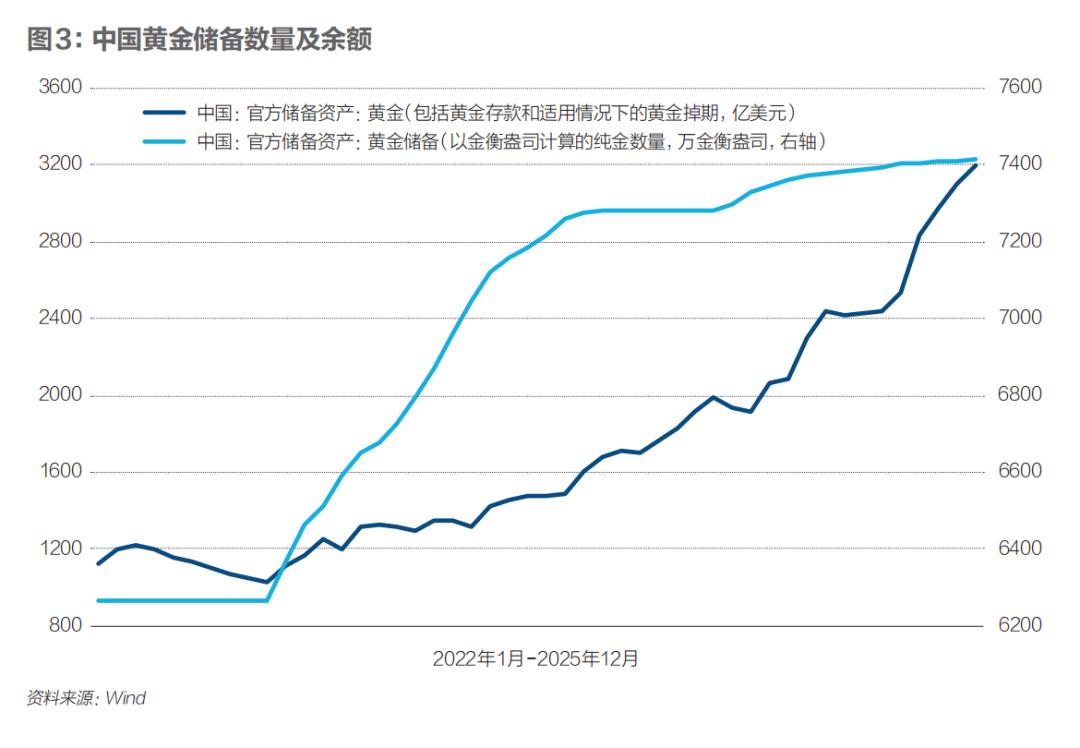
Group 1 - As of the end of Q3 2025, global official gold reserves reached approximately $3.69 trillion, accounting for 28.9% of total official reserves, marking a new high since 2000 [4][10][33] - The International Monetary Fund (IMF) reported that the share of the US dollar in global foreign exchange reserves fell to 56.92% in Q3 2025, the lowest level since 1995, continuing a trend of being below 60% for over ten consecutive quarters [10][33] - The People's Bank of China (PBOC) has been increasing its gold reserves consistently, with a total increase of 1,151 million ounces (approximately 358 tons) since November 2022 [2][12][16] Group 2 - The trend of central banks increasing gold reserves has been ongoing for 15 years, with net purchases exceeding 1,000 tons annually from 2022 to 2024 [24][26] - In 2025, central banks added 634 tons of gold, maintaining a high level compared to the average of 473 tons from 2010 to 2021 [8][24] - Emerging market central banks, particularly Turkey and China, have been significant contributors to gold purchases, with China being the largest buyer in 2023 [7][27] Group 3 - The World Gold Council's report indicates that the demand for gold from central banks is expected to remain strong, with over 90% of surveyed central banks anticipating an increase in gold reserves by 2026 [43] - The ongoing geopolitical tensions and the desire for diversified reserve assets are driving central banks to favor gold over traditional assets like US Treasury bonds [9][36] - The trend of "de-dollarization" is influencing central banks to increase their gold holdings as a hedge against the risks associated with US dollar assets [36][43]

地缘政治强行“续命”石油美元?
Xin Lang Cai Jing· 2026-01-19 13:16
Group 1 - The core viewpoint of the article is that the U.S. military intervention in Venezuela is reshaping the geopolitical landscape in Latin America and bringing oil dollars back into focus for investors, providing a new short-term narrative for the U.S. dollar [2][3][15]. - The recent strengthening of the U.S. dollar index is attributed not only to economic fundamentals but also to geopolitical restructuring and monetary policy expectations [3][15]. - The U.S. military action in Venezuela is seen as a way to reintroduce the largest undeveloped oil reserves into the dollar settlement system, thus injecting new support into the oil dollar mechanism [4][16]. Group 2 - Venezuela, holding approximately 300 billion barrels of proven oil reserves (17% of the global total), has strategic energy assets that exceed typical geopolitical conflict targets [4][16]. - The Trump administration's announcement allowing U.S. energy companies to participate in the reconstruction of Venezuela's oil infrastructure indicates a long-term management plan for resource development [4][16]. - The military intervention has led to a rapid market response, with the dollar index rising and non-U.S. currencies weakening [4][16]. Group 3 - U.S. economic data, such as a December 2025 unemployment rate of 4.4% (below the expected 4.5%), provides fundamental support for the dollar, reducing expectations for a Fed rate cut in January [17]. - Despite the dollar's strength, precious metal prices are experiencing upward movement due to increased geopolitical uncertainty and rising demand for safe-haven assets [5][17]. - The Trump administration's unconventional monetary policy, referred to as "Trump QE," aims to stimulate the housing market by purchasing $200 billion in mortgage-backed securities, which may indirectly support precious metals [5][17]. Group 4 - The current foreign exchange market is undergoing a structural repricing driven by geopolitical factors, with the dollar gaining new support from its connection to Venezuelan oil resources [6][18]. - The potential institutionalization of the U.S. management model in Venezuela could reflect a broader strategy to prolong the dollar's dominance [6][18]. - Investors are advised to monitor OPEC+ responses, U.S. arrangements for Venezuelan oil exports, and the actual implementation scale of "Trump QE," as these variables will influence the future dynamics between the dollar and precious metals [6][18].

黄金周报|地缘风险提升,金价震荡走强
Sou Hu Cai Jing· 2026-01-19 12:49
回顾上周以来海外主要市场动态:最新通胀数据显示温和降温,市场仍存在一定降息预期;美国当周初 请失业金人数意外下降,或对降息可能有所压制。此外,上周美国司法部对美联储主席鲍威尔展开刑事 调查,引发市场对美联储独立性的担忧,导致金价上涨;而特朗普表示倾向于让哈赛特留任国家经济委 员会主任而非担任美联储主席,贵金属价格有所调整。另外,地缘风险持续激发市场避险情绪。总体来 看,在地缘冲突持续与众多宏观事件落地后,金价震荡走强,或可考虑逢低分批布局黄金基金ETF (518800)。 周度回顾: (1)海外经济 截至上周五(1月16日),伦敦现货黄金报收4599.04美元/盎司,自1月9日以来累计上涨90.02美元/盎 司,涨幅达2%。上周伦敦现货黄金价格震荡走强,金价最高上行至4643美元/盎司。 经济数据上:通胀方面,美国12月CPI反弹幅度不及预期,核心CPI环比增速0.2%,低于预期的0.3%。 能源成本上涨推动美国11月PPI环比上涨0.2%,但核心PPI环比持平。美国至1月10日当周初请失业金人 数意外下降至19.8万人,为去年11月底以来的新低,显著低于21.5万人的市场预期;此外前值下修,截 至1月10日 ...
美债冲上9.36万亿,中国减到17年新低,日本为何越买越狠
Sou Hu Cai Jing· 2026-01-19 12:32
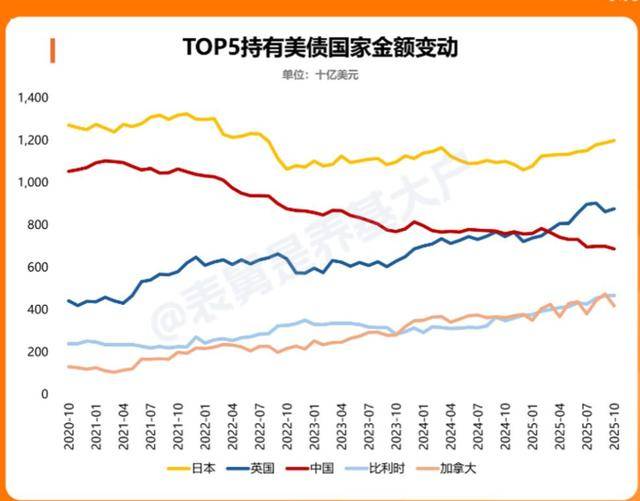
哈喽,大家好,老庐今天和大家聊个关键话题——2026年开年的全球金融市场,藏着一个极具反差的信 号。 美国财政部最新数据显示,外国投资者持有美债规模冲破9.36万亿美元,创下历史新高,看似美元资产 依旧是全球"香饽饽"。 但细究就会发现,作为美债主要持有国的中国和日本,操作却完全相反:一个持续减持至近17年新低, 一个不断加码创下近年高位。全球资本对美债的态度为何分裂?这种背离背后,又藏着怎样的大国金融 逻辑? 反差迷局:美债新高下的中日"加减法" 表面看,美债市场一片繁荣,外资纷纷涌入推高持仓规模,这背后是部分经济体对短期美元流动性溢价 的追逐,毕竟市场仍有美联储维持高利率的预期,美债短期收益颇具吸引力,但这份繁荣,却掩盖了核 心经济体的分歧。 中国的减持步伐从未停歇。2025年11月,中国再减61亿美元美债,总持仓降至6826亿美元,不仅较年初 缩水超10%,更回到了2008年雷曼兄弟倒闭时的水平。 从2013年近1.3万亿美元的峰值算,中国已累计削减超40%的美债持仓,与之对应,日本则连续11个月 增持,当月加仓26亿美元,总持仓达1.202万亿美元,创下2022年以来新高,稳坐美债最大海外持有国 宝座 ...
中国再抛61亿美债,特朗普破防,美媒:想赢中国只有一条路可选!
Sou Hu Cai Jing· 2026-01-19 11:36
Group 1 - China recently sold $6.1 billion in U.S. Treasury bonds, reducing its holdings to below $690 billion, the lowest in nearly 15 years, having decreased over $500 billion from a peak of $1.2 trillion [3] - The U.S. is facing significant financial pressure with a national debt exceeding $37.9 trillion and annual interest payments surpassing $1 trillion, leading to a record monthly deficit of $145 billion in December 2025 [3] - The U.S. media suggests that to avoid a severe loss against China, the U.S. should stabilize the credibility of its debt and refrain from using the Federal Reserve as a political tool [3][4] Group 2 - Other countries, including the UK, Canada, Australia, and South Korea, are also adjusting their U.S. Treasury holdings, indicating a broader trend of reducing reliance on U.S. debt [3] - The global share of the dollar in foreign exchange reserves has fallen below 40%, and the actions of the U.S. are accelerating the trend of de-dollarization among nations [3] - China's strategy of reducing U.S. bond holdings while increasing gold reserves is seen as a way to mitigate risks associated with dollar fluctuations and U.S. policies [3]

黄金时间·观点:2026年贵金属与有色金属的开年强势,或将成为新一轮行业景气周期的起点
Xin Hua Cai Jing· 2026-01-19 11:15
新华财经北京1月19日电 2026年开年贵金属及有色金属市场行情以"开门红"姿态迅猛展开,不足半月便 上演了一轮波澜壮阔的普涨行情,价格突破与成交量放大形成共振,市场热度较往年同期显著升温。 值得注意的是,本轮金属开年行情在强势上涨中伴随显著波动特征。金价在突破关键关口后出现短期震 荡,有色金属市场也呈现类似态势,沪铝在创历史新高后当日便出现回调,反映出短期获利盘了结与长 期看好情绪的博弈。这种"快涨伴震荡"的走势,与历史上开年行情多为平稳爬坡的特征形成鲜明对比, 背后是资金快速涌入与基本面支撑的双重作用。美联储降息预期升温、地缘政治紧张推升避险情绪,叠 加新兴产业刚需增长,使得市场在短期内聚集大量资金,而散户投资者的活跃交易进一步放大了波动幅 度。 产业端的反应同样印证行情强度。开年以来矿业公司并购动作密集,盛达资源1月内连续完成两起矿山 收购,湖南黄金启动重大资产重组,洛阳钼业10.15亿美元收购海外金矿的交易持续推进,产业资本的 快速布局凸显对本轮行情持续性的认可。 对比分析来看,2026年贵金属和有色金属的上涨呈现"金融属性与工业属性共振"的独有特征。历史上开 年行情多由单一逻辑驱动,如2009年的政 ...
中国再抛61亿美债!特朗普口风变了,鲍威尔保住乌纱帽
Sou Hu Cai Jing· 2026-01-19 10:17
Core Viewpoint - China is strategically reducing its holdings of US Treasury bonds, selling $6.1 billion in November 2025, bringing its total holdings down to $682.6 billion, the lowest level since 2008, indicating a deliberate shift in asset management strategy [1][4]. Group 1: China's Strategy - Since April 2022, China has actively reduced its US Treasury bond holdings to below $1 trillion, marking a three-year trend of asset restructuring [4]. - This reduction is not a reaction to market trends but a calculated move aimed at enhancing national asset security and long-term risk hedging [4][17]. - In contrast, other countries like Japan and the UK have increased their US Treasury holdings during the same period, indicating that China's actions are not a market trend but a strategic decision [4]. Group 2: Shift to Gold - Following the reduction in US Treasury holdings, China's gold reserves have increased to 74.15 million ounces, with continuous accumulation over 14 months [6]. - This transition from US debt to gold serves as a hedge against risks associated with the US dollar, particularly in light of rising US debt and inflation concerns [6][20]. - Gold is viewed as a stable asset that cannot be easily manipulated by any single country, making it a strategic buffer for China [6]. Group 3: US Political and Economic Context - The US is experiencing internal political tensions affecting monetary policy, with former President Trump pressuring the Federal Reserve for interest rate cuts ahead of the 2026 midterm elections [9][12]. - Despite Trump's calls for action, the Federal Reserve, led by Powell, is cautious about lowering rates due to persistent inflation, complicating the political landscape [12][15]. - The independence of the Federal Reserve is under scrutiny, and any perceived political interference could undermine market confidence in the US dollar [15][22]. Group 4: Future Outlook - The trend of reducing US Treasury holdings is expected to continue as inflation remains high and the US faces ongoing fiscal challenges [18]. - China is diversifying its reserve assets away from a singular reliance on the US dollar towards a more varied portfolio, which is a gradual but strategic process [20][22]. - This shift is not a complete disengagement from US debt but a methodical approach to mitigate risks and establish a more resilient foreign exchange structure [22].

每日机构分析:1月19日
Xin Hua Cai Jing· 2026-01-19 09:43
Group 1 - Berenberg Bank's chief economist indicates that the U.S. government's attempt to forcibly purchase Greenland and threaten tariffs on eight countries has shattered market expectations for a tariff easing in 2026, potentially leading to a consumer price increase of up to 0.15% in the U.S. if the U.S.-EU tariff agreement is abolished [1] - Apex Securities analysts highlight Malaysia's strong domestic demand, predicting a solid economic growth support in 2026, with a GDP growth forecast of 4.3% driven by robust service sector performance, government tourism initiatives, and ongoing policy support [1] - Westpac Bank notes that tensions between the U.S. and Europe over Greenland are exacerbating downward pressure on the dollar and reigniting discussions on "de-dollarization," emphasizing the geopolitical risks associated with the U.S.'s significant international net liabilities [2] Group 2 - Mitsubishi UFJ Financial Group warns that the Indonesian rupiah is under increasing depreciation pressure due to fiscal deficits nearing legal limits and weak tax revenues, predicting it may fall to 17,000 per dollar by Q1 2026 [3] - Barclays analysts forecast that the Indonesian rupiah could further decline to a historical low of 17,300 per dollar in 2026, reflecting deep market concerns over Indonesia's fiscal sustainability [3] - BlackRock reports that European institutional investors are accelerating their investments in private markets to navigate a new landscape characterized by increased volatility and changing stock-bond correlations, with EMEA clients contributing approximately 35% to BlackRock's global private fundraising in 2025, which surged over 50% year-on-year [3]
中邮证券:坚定持有贵金属 建议逢低做多铜铝锡
智通财经网· 2026-01-19 09:01
Group 1: Precious Metals - The long-term trend of de-dollarization is expected to continue, and investors are advised to hold onto low-position precious metals without fear of volatility [2] - Silver prices have risen this week, with the US CPI data showing a downward trend below 3%, and expectations for strong interest rate cuts remain unchanged [2] - Political events in the Americas around New Year's may trigger market risk aversion, and inflows into ETFs due to rate cut trades are expected to support the precious metals sector [2] Group 2: Copper - Copper prices have declined this week due to Nvidia's revision of data center copper usage, impacting speculative expectations [3] - There is a forecast of supply-demand tightness in copper for 2026, driven by expected production cuts from Freeport and Teck Resources [3] - The company recommends buying copper equities on dips, as moderate price adjustments will help downstream industries accept higher prices [3] Group 3: Aluminum - The weekly operating rate for downstream industries is at 60.2%, with high aluminum prices suppressing downstream consumption and industry recovery [4] - Social inventory of aluminum ingots has increased by 22,000 tons compared to the previous week, indicating ongoing pressure on aluminum prices [4] - Despite the pressure from inventory accumulation, strong macro policy expectations and geopolitical risks are providing support for aluminum prices, suggesting a buy on dips strategy [4] Group 4: Tin - Tin prices have retreated after reaching highs, influenced by increased trading margins and limits set by exchanges to cool down the overheated market [5] - The supply side remains uncertain due to conflicts in the Democratic Republic of the Congo, policies in Indonesia, and slower-than-expected production recovery in Myanmar [5] - The company suggests buying on dips for tin, as AI capital expenditures are expected to maintain high growth in 2026, indicating a positive outlook for tin prices [5] Group 5: Lithium - Lithium carbonate prices continue to rise, driven by expectations of demand front-loading due to export tax rate reductions announced by the Ministry of Finance [7] - The strong demand outlook in the energy storage sector remains intact, despite a seasonal slowdown in demand from power batteries [7] - The company believes that short-term demand for lithium has not been disproven, and prices are expected to remain high and volatile [7] Group 6: Investment Recommendations - The company recommends focusing on stocks such as Xingye Silver Tin, Tin Industry Co., Huaxi Nonferrous, New Jinlu, Dazhong Mining, Guocheng Mining, Zhongkuang Resources, Shengda Resources, Chifeng Gold, Zijin Gold International, Zhaojin Gold, Shenhuo Co., and Zijin Mining [8]