
科技自立自强

Search documents
中信建投:关注中国制造突破下工业软件发展机遇
Zheng Quan Shi Bao Wang· 2025-10-19 23:57
Core Viewpoint - China has essentially completed its 2025 manufacturing goals and is progressing towards achieving a medium-level status among global manufacturing powers by 2035 [1] Industry Summary - The industrial sector has become a core driver of GDP growth in China [1] - High demand is observed in advanced fields such as equipment manufacturing, high-tech manufacturing, and digital products [1] - The manufacturing PMI continues to improve, indicating a positive trend in the sector [1] Technology and Innovation - The acceleration of industrial AI implementation is noted as a significant development [1] - The importance of technological self-reliance is emphasized in light of the U.S. plans to increase tariffs on China and restrict key software exports [1] - Key areas such as CAD, CAE, and industrial operating systems are expected to see continuous breakthroughs [1]

创新答卷彰显新型举国体制优势(科技视点)
Ren Min Ri Bao· 2025-10-19 22:27
Group 1 - The core viewpoint emphasizes the importance of leveraging the advantages of a new type of national system to accelerate high-level technological self-reliance and strength in China [1] - During the 14th Five-Year Plan period, significant historical achievements and transformations in China's technological innovation have been made under the strong leadership of the central government [1][2] - The strategic goal of building a strong technological nation by 2035 is anchored on addressing major national needs through collaboration between government and market forces [1][5] Group 2 - China's space station has achieved complete domestic production of products and materials, with 100% self-control of key core components, resulting in hundreds of space science experiments conducted in orbit [4] - The Chang'e missions have successfully returned lunar samples, with Chang'e 5 collecting 1,731 grams from the moon's surface and Chang'e 6 expected to bring back 1,935.3 grams from the moon's far side [4][5] - The national strategic scientific and technological strength has been continuously strengthened, with the construction of national laboratories and the enhancement of research capabilities in institutions and universities [5][9] Group 3 - Original achievements in technology are continuously emerging, exemplified by the EAST project achieving a world record of 1 million degrees Celsius for 1,066 seconds, marking a significant leap in fusion energy research [6][7] - The total R&D expenditure in society is expected to exceed 3.6 trillion yuan in 2024, maintaining China's position as the second-largest in the world [7][9] - The proportion of corporate R&D investment is projected to exceed 77% in 2024, with over 524,000 companies holding valid invention patents, accounting for 74.4% of the total in China [9] Group 4 - The innovation capacity of enterprises has significantly improved, with the successful development of the world's first 8.6-generation OLED glass substrate in Anhui, marking a breakthrough in domestic technology [8][9] - The integration of technology innovation systems involving industry, academia, and research has been strengthened, with enterprises taking a leading role in innovation [8][9] - The "dual-directional leaderboard" mechanism has been implemented in Sichuan Province to enhance the connection between market demand and scientific research, facilitating technology transfer and commercialization [12][13]
财政政策向科技创新注入动能
Jing Ji Ri Bao· 2025-10-19 22:08
Group 1 - The core viewpoint emphasizes the need for continuous policy and financial support to achieve high-level technological self-reliance and strength [1][3] - Significant investments in technology are prioritized in fiscal spending, with a focus on creating a strong policy synergy to promote technological innovation [1][3] - Recent data indicates that tax reduction and increased fiscal input have injected strong momentum into technological innovation, leading to the rapid emergence of major technological achievements [1][2] Group 2 - Fiscal policy serves as a crucial tool for macroeconomic regulation and is vital for supporting technological innovation [2][4] - Structural tax reductions and refunds have significantly alleviated the tax burden on enterprises, with a reported 1.3336 trillion yuan in tax reductions and refunds supporting technological innovation in the first eight months of the year [2] - The R&D expense deduction policy has been enhanced during the 14th Five-Year Plan period, effectively incentivizing enterprises to increase R&D investments [2] Group 3 - National fiscal science and technology expenditure is projected to reach 5.5 trillion yuan during the 14th Five-Year Plan, marking a 34% increase from the previous five-year period, with a focus on foundational and strategic research [3] - The government aims to optimize the structure of technology spending and enhance the effectiveness of fiscal policies to support key areas of innovation [3][4] - Collaboration between fiscal and financial policies is essential to mobilize more financial resources and social capital towards technological innovation [4]
沪市芯片、生物医药、高端装备和新能源企业“十四五”数量翻倍
2 1 Shi Ji Jing Ji Bao Dao· 2025-10-19 10:19
Group 1 - The proportion of technology innovation companies in the Shanghai Stock Exchange has increased from 32% to 41% over the past five years, with their market value share rising from 27% to 32% [1] - Nearly 70% of newly listed companies in the past five years are technology innovation enterprises, with significant growth in integrated circuits, biomedicine, high-end equipment, and new energy sectors [1][3] - The Shanghai Stock Exchange has implemented various reforms, including the "Science and Technology Innovation Board" policies, resulting in 376 new listings, with a notable number of unprofitable and special equity structure companies [3] Group 2 - The stock issuance financing amount in the Shanghai market has increased by 16% during the "14th Five-Year Plan" period compared to the previous five years, while the bond market issuance scale has grown by 42% [4] - The Shanghai Stock Exchange has played a significant role in mergers and acquisitions, with a notable increase in asset restructuring cases, including major transactions involving China Shipbuilding and Guotai Junan [4] - The Shanghai Stock Exchange has focused on enhancing the awareness of corporate responsibility among listed companies, promoting increased dividend payouts, and fostering cross-border capital market cooperation [4] Group 3 - The Shanghai Stock Exchange has emphasized a system-oriented approach to opening up, enhancing cross-border investment mechanisms, and improving services for international investors [5] - The inclusion of Science and Technology Innovation Board stocks in the Hong Kong Stock Connect has increased the international appeal of innovative sectors [5] - The Shanghai Stock Exchange has become a core platform for international capital allocation in Chinese assets, reflecting the resilience and openness of the Chinese economy [5]


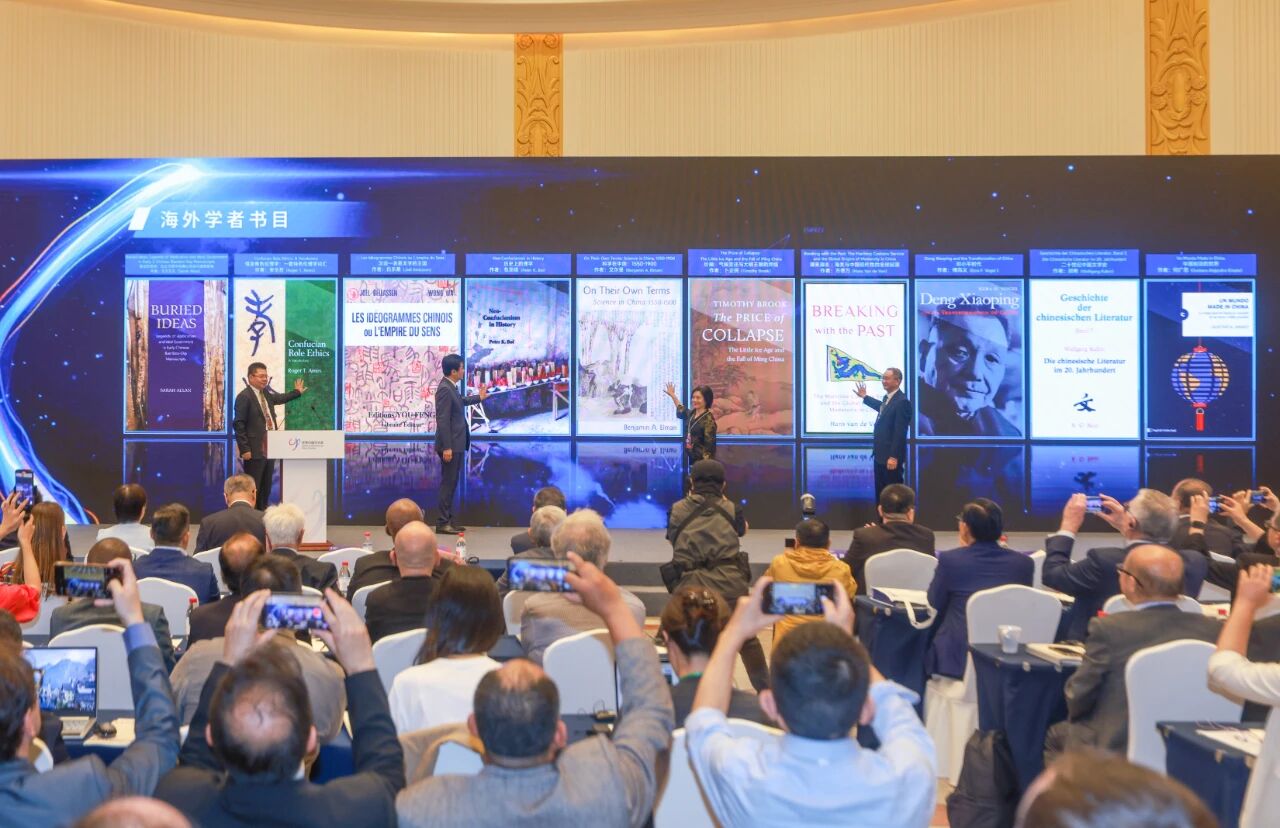
中国学|马豪恩:中国式现代化为何对拉美国家具有借鉴意义?
Zhong Guo Xin Wen Wang· 2025-10-18 07:58
Core Viewpoint - The development experience of China is seen as a valuable reference for Latin American countries, particularly in the context of new productive development policies needed to escape low growth traps and address global geopolitical challenges [1]. Group 1: Insights on China - The importance of understanding China through original Chinese literature rather than Western interpretations is emphasized, as it provides a clearer perspective on contemporary China [2]. - The cultural similarities between Argentina and China are highlighted, suggesting that despite geographical distance, both nations share values such as respect for ancestors, family, and education [4]. Group 2: Chinese Modernization - Chinese modernization is defined as a unique, multi-faceted process that encompasses economic, social, political, technological, and cultural advancements, with a focus on long-term national development goals [6]. - The emphasis on a people-centered economic policy in China, which prioritizes social welfare, poverty alleviation, and environmental protection, is noted as a significant reference for Latin American countries exploring their own modernization paths [5][6]. Group 3: Belt and Road Initiative - The Belt and Road Initiative is recognized for its role in enhancing connectivity in Latin America, which is crucial for activating economic potential in both urban and rural areas [8]. - Over 20 Latin American countries have signed cooperation memorandums with China under the Belt and Road Initiative, indicating its importance in regional economic development [8]. Group 4: Bilateral Cooperation - The potential for higher quality cooperation between Argentina and China is discussed, particularly through technology transfer, which could enhance Argentina's ability to process agricultural and mineral products for export [10].
建设智慧城市、研发创新药,一线科技人才在中戏讲述科研“破冰”
Xin Jing Bao· 2025-10-18 04:10
Core Insights - The event highlighted the importance of developing China's own artificial intelligence foundation and reducing reliance on imported targeted drugs, emphasizing the role of big data and AI in urban governance and improving people's livelihoods [1][2][4] Group 1: AI Development - Wang Shaolan, president of Beijing Zhipuhua Technology Co., shared insights on creating a general AI foundation for China, emphasizing that large models enable machines to think like humans [2] - The journey of developing AI models began in 2010, with significant challenges such as limited funding and resources, yet the team managed to create a "national-level foundation" [2] - The focus on large models is driven by the belief that overcoming difficulties in this area is crucial for national technological independence [2] Group 2: Pharmaceutical Innovation - Sun Yinghui, deputy general manager of Shiyao Holdings, discussed the progress in developing targeted drugs, transforming previously untreatable conditions into manageable ones [2][4] - The narrative of self-reliance in drug development reflects a broader commitment to national technological independence and innovation in the pharmaceutical sector [4] Group 3: Smart City Initiatives - Zheng Yu, vice president and chief data scientist of JD Group, presented on the evolution of smart cities in China, highlighting the transition from following to leading in this field [3] - His experience in smart city projects across major cities illustrates the integration of technology in urban development and governance [3] Group 4: Personal Commitment to National Development - The speakers emphasized the connection between personal career development and national progress, advocating for individual contributions to the country's technological and scientific advancements [4] - The importance of integrating personal ideals with national needs was a recurring theme, encouraging students to pursue careers that align with the country's goals [4]
梁振英率港区全国政协委员考察团赴陕西考察
Shan Xi Ri Bao· 2025-10-18 00:04
Group 1 - The core viewpoint of the news is the collaboration between Hong Kong and Shaanxi to enhance high-quality development through improved exchange mechanisms and cooperation in various sectors [1][2] - The Hong Kong delegation, led by Vice Chairman Leung Chun-ying, conducted a study tour in Shaanxi, visiting 14 sites including technology enterprises, cultural tourism projects, and agricultural demonstration areas [1] - The delegation acknowledged the significant achievements of Shaanxi in implementing the new development philosophy and focusing on high-quality development, particularly in technology self-reliance and modern industrial system construction [1] Group 2 - Hong Kong is recognized as an international financial, shipping, and trade center with a highly developed trade system and rich international connections, while Shaanxi is seen as a key region for western development with abundant technological innovation resources [2] - The complementary strengths of Hong Kong and Shaanxi suggest potential for deeper cooperation in industries, education, finance, and cultural tourism, which can contribute to national development goals [2] - An opinion feedback meeting was held on October 17, attended by various officials and members of the National Committee of the Chinese People's Political Consultative Conference, indicating a structured approach to collaboration [2]
社评:湾芯展呈现了连接世界的另一种力量
Huan Qiu Wang Zi Xun· 2025-10-17 16:02
Core Insights - The 2025 Bay Area Semiconductor Industry Ecosystem Expo showcased over 600 companies and highlighted significant technological breakthroughs, indicating China's advancements in the semiconductor sector [1] - The event demonstrated the establishment of a comprehensive semiconductor industry chain in China, capable of producing both mature and advanced process chips, reflecting a systemic progress in the high-tech field [1] - The expo illustrated China's commitment to an open and collaborative approach in the semiconductor industry, countering narratives of isolation and emphasizing a shared global future in technology [3][4] Group 1 - The expo featured notable products such as the 90 GHz ultra-high-speed real-time oscilloscope from Wanlian and EDA software from Qiyunfang, showcasing China's capabilities in key semiconductor areas [1] - China's semiconductor industry is supported by a large domestic market, continuous R&D investment, and strategic regional development, particularly in the Guangdong-Hong Kong-Macao Greater Bay Area [2] - The narrative surrounding China's semiconductor industry has shifted from being a "catch-up" player to a collaborative innovator, emphasizing an open ecosystem that includes research institutions, industry clusters, and international enterprises [2][3] Group 2 - Despite geopolitical tensions, international companies from the US, Japan, and Germany participated in the expo, indicating a willingness to collaborate and innovate within the global semiconductor landscape [3] - The expo signifies a transformation in China's role within the global technology system, moving from a passive follower to an active rule-maker and ecosystem builder [3] - The future of technology is seen as dependent on inclusive solutions, with the expo highlighting that true technological independence involves connecting with the world rather than isolating from it [4]
上交所发布“十四五”改革发展情况回顾:五年来沪市科技创新公司数量占比从32%升至41%
Zheng Quan Ri Bao· 2025-10-17 15:39
Core Viewpoint - The Shanghai Stock Exchange (SSE) has made significant progress during the 14th Five-Year Plan period, focusing on high-quality development and becoming a world-class exchange, while supporting China's modernization and financial strength [1]. Group 1: Market Development - SSE has become the third-largest stock market globally, the largest exchange bond market, and the second-largest ETF market in Asia [1]. - The number of technology innovation companies in the Shanghai market increased from 32% to 41%, and their market capitalization rose from 27% to 32% over five years [2]. - R&D investment in Shanghai-listed companies grew from 0.64 trillion yuan to 1.07 trillion yuan, a 66% increase, accounting for nearly 40% of national R&D investment [3]. Group 2: Financing and Investment - The total financing from stock initial public offerings (IPOs) in the Shanghai market increased by 16% compared to the previous five years [4]. - The bond market's total issuance reached 31 trillion yuan, a 42% increase, with over 10 trillion yuan in industrial bonds and asset-backed securities (ABS) [4]. - The scale of ETF products surged from 0.9 trillion yuan to 4 trillion yuan, a nearly 3.5-fold increase, becoming a crucial channel for long-term capital [5]. Group 3: Reform and Governance - The SSE has enhanced the awareness of corporate responsibility, with a 51.2% increase in total dividend payouts to 7.32 trillion yuan over five years [6]. - The proportion of professional institutions holding A-shares increased by 47%, with long-term funds growing by 55% [6]. - The SSE has implemented a robust regulatory framework, resulting in nearly 800 disciplinary actions against violations, including significant penalties for financial fraud [8]. Group 4: Internationalization and Openness - The SSE has actively integrated into the national strategy for opening up, with a 275% increase in cumulative transactions through the Stock Connect program [7]. - The issuance of Global Depositary Receipts (GDRs) by 10 companies raised a total of 3.35 billion USD [7]. - The SSE's cross-border index product scale exceeded 320 billion yuan, enhancing its international influence [7]. Group 5: Investor Protection and Education - The SSE has promoted a "big investor protection" concept, enhancing market ecology through strict regulatory measures and investor education [8]. - The average dividend yield in the SSE approached 2.5% during the 14th Five-Year Plan period, encouraging companies to implement multiple dividend distributions [8]. - The SSE has established a three-tier investor education and protection mechanism to better match investors with suitable products [8].
小米17整体销量比上代同比增长20%,恒生科技ETF天弘(520920)跌近3%,机构建议逢低积极布局港股
2 1 Shi Ji Jing Ji Bao Dao· 2025-10-17 07:42
Group 1 - The Hang Seng Technology Index fell over 3.8% during trading on October 17, with major stocks like Alibaba, Tencent, and Meituan experiencing declines [1] - The Hang Seng Technology ETF Tianhong (520920) saw a decrease of 2.96% with a trading volume of 167 million yuan and a turnover rate exceeding 6.8%, indicating active trading [1] - Since its listing, the Hang Seng Technology ETF Tianhong has attracted a cumulative net inflow of 1.374 billion yuan over seven consecutive trading days [1] Group 2 - Xiaomi's overall sales of the Xiaomi 17 have increased by 20% compared to the previous generation, with the Pro series sales being three times that of the last generation [1] - The report from Ping An Securities (Hong Kong) suggests that investors should actively consider buying Hong Kong stocks during the current market pullback, highlighting the advantages of lower valuations and increasing trading activity [2] - The core theme for the future of Hong Kong stocks is expected to be technological self-reliance, with leading companies in this sector likely to see medium to long-term development opportunities [2]