资产配置

Search documents
“凭空多出一大笔开销”与“没想到成了投资收益最好的部分” 金价狂飙下的市场众生相
Zhong Guo Zheng Quan Bao· 2025-10-09 21:48
Core Insights - The rising gold prices have created a divide among consumers, with some feeling pressured by the increased costs of gold jewelry while others have benefited from their investments in gold [1][2][3] Consumer Behavior - Many consumers, like Mr. Wang, are postponing their purchases of gold jewelry due to high prices, which have exceeded 900 RMB per gram earlier this year and are now around 1160 RMB per gram [2][3] - Consumers are increasingly considering alternatives, such as purchasing gold bars from banks, which are cheaper than retail jewelry prices, leading to significant savings [3][4] Investment Trends - Investors who bought gold earlier, like Ms. Jia, have seen substantial returns, with some reporting profits exceeding 13,000 RMB from their investments in gold accumulation products [1][3] - The demand for gold-related financial products, such as gold accumulation and structured deposits, has surged as consumers seek to capitalize on rising gold prices [5][6] Market Dynamics - The gold market is characterized by two main participant types: financial investors who drive price movements and non-financial investors who provide market support [6][7] - Analysts suggest that while gold prices may experience short-term fluctuations, the long-term outlook remains positive due to ongoing geopolitical risks and sustained investment demand [6][7]
理财公司“掘金”热
Zhong Guo Zheng Quan Bao· 2025-10-09 20:53
Core Insights - The rise in gold prices has led to strong performance in various gold-related financial products, with some products significantly outperforming others in the same risk category [1][2] - Financial institutions are actively developing "gold+" investment products to cater to diverse investor risk preferences, emphasizing the importance of diversified asset allocation for stable asset growth [1][3] Group 1: Performance of Gold-Related Financial Products - As of October 9, the spot gold price was reported at $4027 per ounce, remaining above the $4000 mark despite a slight pullback [1] - Some gold-related financial products have shown impressive returns, such as a product from Xingyin Wealth Management with an annualized return of 8.41% over the past month, and a product from China Merchants Wealth Management with a 6.27% return for the same period [1] - The number of active gold-related financial products reached 48, with 14 new products launched this year, indicating a significant increase in issuance since September [1][2] Group 2: Strategies and Innovations in Product Design - Financial institutions are exploring diverse investment strategies and risk management models, moving beyond traditional gold price-linked products to include range returns, composite structures, and automatic profit-taking mechanisms [2] - The asset allocation for these products has expanded to include not only direct gold price links but also gold ETFs, gold stock ETFs, and actively managed funds focused on gold themes [2] - China Merchants Wealth Management offers two main categories of gold-related products: a "fixed income+" series that combines high-grade credit bonds with gold and quantitative strategies, and structured products that invest in gold-related derivatives [2] Group 3: Market Challenges and Investor Considerations - The volatility of gold prices, influenced by multiple factors, presents significant challenges for financial institutions in product development and risk management [3] - The current rise in gold prices is supported by expectations of a Federal Reserve interest rate cut, increased gold reserves by emerging market central banks, and heightened risk aversion due to global conflicts [3] - Investors are increasingly valuing gold's hedging properties, prompting more financial companies to enter the market and develop varied gold investment strategies [3]
金价狂飙下的市场众生相
Zhong Guo Zheng Quan Bao· 2025-10-09 20:53
Group 1 - The article highlights the contrasting sentiments among consumers regarding rising gold prices, with some feeling pressured by increased costs while others celebrate their investment gains [1][2][3] - The current price of gold jewelry in China has surpassed 1160 RMB per gram, with specific brands like Liufu and Chow Sang Sang pricing their gold jewelry at 1168 RMB and 1170 RMB per gram respectively [1][2] - Consumers planning weddings are particularly affected, as the cost of gold jewelry has significantly increased, leading to budgetary concerns for those who view gold as a traditional necessity rather than an investment [2][3] Group 2 - Investors who purchased gold earlier are experiencing substantial returns, with individuals like Ms. Jia reporting gains exceeding 13,000 RMB from her investments in accumulated gold [1][3] - Banks are seeing a rise in inquiries about gold-related products, with customer managers recommending accumulated gold as a way to average investment costs and mitigate risks associated with high prices [3][4] - The demand for gold-related financial products, such as structured deposits and ETFs, has surged as gold prices continue to rise, indicating a growing interest in gold as an investment asset [5] Group 3 - The article notes that the gold market is influenced by two main participant categories: financial investors who drive price movements and non-financial investors who provide market support [5] - Analysts suggest that while gold has long-term investment value, short-term volatility remains a concern, with various factors such as monetary policy and geopolitical risks affecting market dynamics [5]

30万亿房贷,我国欠款率从3%升至65%!这3大现象席卷中国4亿家庭
Sou Hu Cai Jing· 2025-10-09 17:05
第一大现象:高房贷导致"房奴"家庭消费降级 在主要城市,房贷支出已成为普通家庭最大的财务负担。据中国家庭金融调查报告显示,2024年中国城镇家庭平均房贷支出占家庭月收入比例达到38.2%, 远高于国际公认的30%警戒线。在一线和强二线城市,这一比例甚至超过45%。 高额房贷直接导致许多家庭不得不压缩其他方面的支出。我们看到越来越多的"房奴"家庭出现明显的消费降级现象:减少外出就餐频率,降低旅游预算,推 迟更换电子产品和家电,甚至削减子女的教育投入。 我朋友张女士一家住在杭州,每月房贷12000元,占家庭收入的42%。她告诉我:"自从买了房,我们全家的生活方式都变了。以前周末经常去餐厅吃饭,现 在基本都是自己做;以前每年会出国旅游一次,现在改成国内短途游;孩子想学钢琴,考虑再三还是放弃了,实在负担不起。" 根据消费调研机构的数据,2025年第一季度,中国城镇居民在餐饮、旅游、教育培训等非必需消费领域的支出同比下降8.3%,而这一下降趋势与房贷负担 呈明显相关性。 去年冬天,我朋友李明一家聚在一起吃年夜饭。餐桌上,话题不知不觉转向了房子。李明的父亲感慨道:"我们那时候买房,一辈子攒钱,几万块全款拿 下,现在你们买 ...

23只新基金昨日集中开售
Zheng Quan Ri Bao· 2025-10-09 16:16
Group 1 - The fund market experienced a significant issuance event on October 9, with 23 funds launched on the first working day of the fourth quarter, and a total of 70 new funds scheduled for October, of which 51 are actively managed equity funds [1] - Technology-themed funds have emerged as market highlights in the first three quarters of the year, prompting many fund companies to increase their related layouts in the fourth quarter, including new funds focused on aviation, Hong Kong stocks, and artificial intelligence [1] - Value-themed funds are also attracting investor interest, with several funds set to launch in October, such as mixed funds focusing on dividends and value returns [1] Group 2 - A diverse product matrix has formed among newly issued funds, with over 30 index funds scheduled for October, covering various styles including broad-based, growth, and dividend strategies [2] - In the bond fund category, 9 bond funds are set to be issued in October, with a majority being mixed bond funds, while pure bond funds are absent [2] - The high number of newly issued ETFs reflects the public fund industry's commitment to providing low-cost, transparent asset allocation tools, with a focus on diversifying into Hong Kong stocks and technology sectors [2] Group 3 - The surge in new fund issuances in October indicates a recovery in the A-share market and a transformation in the public fund industry, with a total of 2,629 new funds established in the first three quarters of the year [3] - The performance rebound of actively managed equity funds has driven the stabilization and rebound of new fund issuance scale [3] - Investors are advised to remain calm and rational in their choices amidst the dense issuance of fund products, emphasizing the importance of understanding the indices tracked by ETFs and the capabilities of fund managers [3]
金价上涨助推黄金理财热,投资者还能“上车”吗?
Zhong Guo Zheng Quan Bao· 2025-10-09 15:35
Core Viewpoint - Recent factors have driven international gold prices to rise continuously, leading to strong performance in various gold-related financial products, with some products significantly outperforming others of similar risk levels [1][2]. Group 1: Gold Price Trends - As of October 9, 2023, the spot gold price reached $4024.1 per ounce, maintaining above $4000 despite a slight pullback, with a cumulative increase of over 16% since September [2]. - The issuance of gold-related financial products has accelerated, with 48 products currently in existence and 14 newly established this year, including five launched in September [2]. Group 2: Product Performance - Notable financial products include a gold multi-strategy product from Xingyin Wealth with an annualized return of 8.41% over the past month, and a gold shark fin series product from China Merchants Wealth with a 6.27% monthly return and a 4.07% annualized return since inception [2]. Group 3: Investment Strategies - Financial institutions are diversifying their product designs beyond traditional gold price-linked models to include range returns, composite structures, and automatic profit-taking features, enhancing flexibility and risk mitigation [2]. - Investment targets have expanded to include not only direct gold links but also gold ETFs, gold stock ETFs, and actively managed funds focused on gold themes [2]. Group 4: Market Drivers - Analysts attribute the recent rise in gold prices to several factors: expectations of a Federal Reserve interest rate cut, increased gold reserves by emerging market central banks, and heightened geopolitical risks, all contributing to gold's appeal as a strategic reserve [4]. - The demand for gold as a hedge against risk is expected to grow, prompting more financial companies to explore diverse gold investment strategies to cater to varying risk appetites [4].
金价上涨助推黄金理财热 投资者还能“上车”吗?
Zhong Guo Zheng Quan Bao· 2025-10-09 15:32
Core Viewpoint - Recent factors have driven international gold prices to rise continuously, leading to impressive performance in various gold-related financial products, with some products significantly outperforming others of similar risk levels [1][2]. Group 1: Gold Price Trends - As of October 9, 2023, the spot gold price reached $4024.1 per ounce, maintaining above $4000 despite a slight pullback, with a cumulative increase of over 16% since September [2]. - The issuance of gold-related financial products has accelerated, with 48 products currently in existence and 14 newly established this year, including 5 launched in September [2]. Group 2: Product Performance - Notable financial products include a gold multi-strategy product from Xingyin Wealth with an annualized return of 8.41% over the past month, and a gold shark fin series product from China Merchants Wealth with a 6.27% monthly return and a 4.07% annualized return since inception [2]. Group 3: Investment Strategies - Financial institutions are diversifying their product designs beyond traditional gold price-linked models to include range returns, composite structures, and automatic profit-taking features, enhancing flexibility and risk mitigation [2]. - Investment targets have expanded to include not only direct gold links but also gold ETFs, gold stock ETFs, and actively managed funds focused on gold themes [2]. Group 4: Market Drivers - Analysts attribute the recent rise in gold prices to several factors: expectations of a Federal Reserve interest rate cut, increased gold reserves by emerging market central banks, and heightened geopolitical risks, all contributing to a stable demand for gold [4]. - The demand for gold's hedging properties is expected to grow, prompting more financial companies to explore diverse gold investment strategies to cater to varying risk appetites among investors [4].
别再盯着赚多少钱了,真正拉开差距的,是你怎么“分”钱
Sou Hu Cai Jing· 2025-10-09 15:08
Core Insights - The disparity in financial well-being is attributed not to income levels but to differing mindsets regarding wealth distribution [2] - Effective wealth management involves strategic allocation of income rather than merely increasing earnings [2][12] Wealth Distribution Strategy - Step 1: Assign a purpose to every penny received, avoiding impulsive spending [3] - Step 2: Avoid the trap of increasing expenses with rising income; delayed gratification is a common trait among the wealthy [5][6] - Step 3: Prioritize safety in wealth distribution, ensuring a financial cushion before investing [7] - Step 4: Allocate funds to growth-oriented investments such as mutual funds, real estate, and side businesses, emphasizing the importance of compounding returns over time [10] - Step 5: Invest in personal development, as acquiring new skills can lead to additional income sources and opportunities for wealth creation [11] Basic Wealth Allocation Model - The recommended allocation is 50% for living expenses, 20% for investments, 10% for savings, 10% for self-improvement, and 10% for enjoyment, known as the 5-2-1-1-1 wealth distribution method [8] - Maintaining a financial reserve for 3 to 6 months of living expenses and necessary insurance is crucial for financial security [9] Conclusion - The essence of wealth management lies in purposeful allocation rather than mere accumulation, transforming money into a resource for life [12]

总量月报第3期:关注政策宽松带来的交易机会-20251009
Western Securities· 2025-10-09 12:57
spsf 总量月报 关注政策宽松带来的交易机会 总量月报第 3 期 50%关联方规则是美国出口管制趋严的又一体现,未来还需警惕高科技行业 的制裁风险、关税风险和以"国家安全"为名的 232 调查。 我们认为,"关联方规则"将对特定地区(如俄罗斯等国家)和高科技行业 (半导体、航空航天、人工智能和其他军民两用技术等高科技行业的公司) 产生较大影响。 固定收益:配置价值凸显,交易关注超跌反弹 今年以来,财政政策较为积极,9-12 月财政赤字仍有 1.5 万亿元同比扩张空 间,年内可能不会追加预算赤字。但是财政部表示将"提前下达部分 2026 年新增地方政府债务限额,靠前使用化债额度",财政政策力度有可能进一 步加大。和财政政策相比,货币政策更加灵活。4 季度货币政策有可能再次 宽松,10 月底 11 月初可能出现降息降准的时间窗口。 国内政策:预告重要会议,后续政策可期 9 月国家政策延续了 7 月中央政治局会议"落实落细"的方向,在宏观经济 及产业政策方面持续发力。尤为值得重视的是,9 月中央政治局会议公布了 二十届四中全会召开时间,"十五五"规划精神呼之欲出。 海外政策:解读 BIS 50%关联方规则——"严 ...
史诗级暴涨!资金买爆这类资产
Ge Long Hui· 2025-10-09 09:44
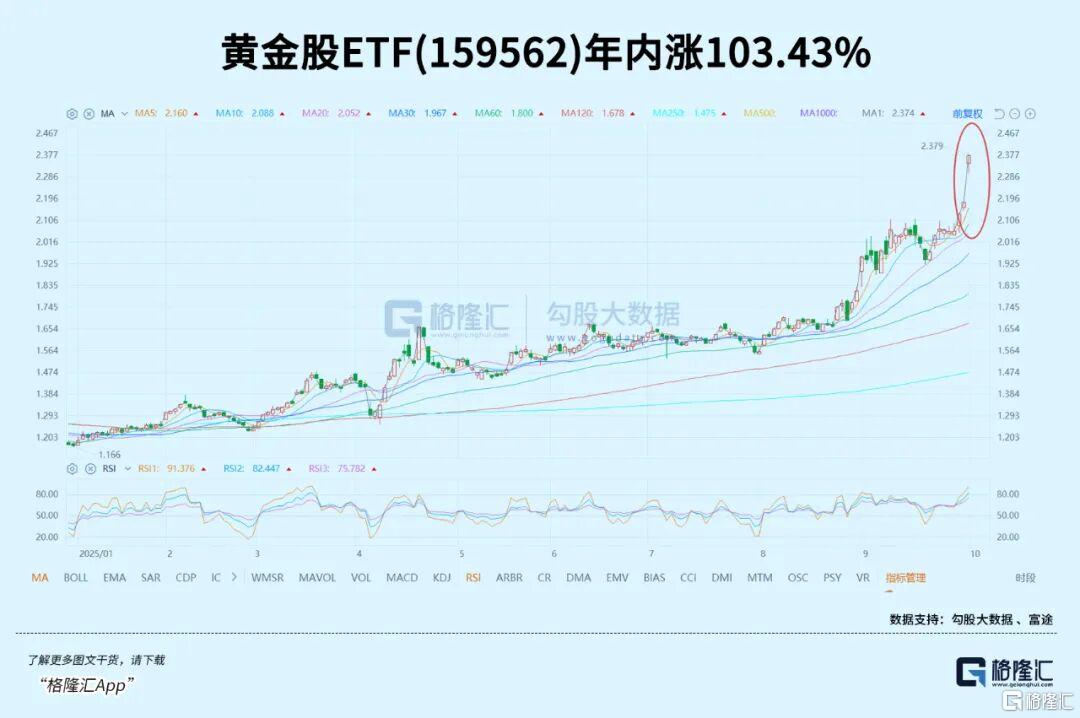
Core Viewpoint - The historical surge in gold prices, surpassing $4,000 per ounce, reflects a significant shift in global economic dynamics and highlights the increasing value of gold as a safe-haven asset amid geopolitical tensions and economic uncertainties [1][4]. Group 1: Factors Driving Gold Prices - The rise in gold prices is attributed to multiple factors creating a "perfect storm," including persistent geopolitical conflicts such as the Russia-Ukraine war and the Israel-Palestine conflict, which have heightened global geopolitical risk premiums [6][7]. - The trend of de-dollarization is gaining momentum, as the U.S. has weaponized the dollar, prompting many non-Western countries to reconsider their asset allocations for strategic security [9][10]. - The Federal Reserve's shift in monetary policy, including recent interest rate cuts, has made gold more attractive as a "no-yield" asset, with significant inflows into gold ETFs indicating strong market interest [11][14]. Group 2: Central Bank Purchases - As of August 2025, global central bank gold reserves are valued at approximately $4.5 trillion, surpassing the $3.5 trillion in U.S. Treasury holdings, marking a historic shift in reserve asset preferences [17]. - Central banks have been net buyers of gold since the 2008 financial crisis, with record purchases in recent years, including 1,082 tons in 2022 and 1,037 tons in 2023 [17][18]. - Emerging market economies, particularly China, have led the recent gold buying spree, with the People's Bank of China increasing its reserves for over 20 consecutive months [18][19]. Group 3: Investment Strategies - Ray Dalio, founder of Bridgewater Associates, suggests that investors should allocate up to 15% of their portfolios to gold, emphasizing its role as a hedge against inflation and geopolitical risks [24][26]. - Dalio compares the current economic environment to the 1970s, where high inflation and government debt levels eroded confidence in fiat currencies, reinforcing the importance of gold as a wealth preservation tool [28][32]. - The article discusses various ways for ordinary investors to participate in the gold market, including gold ETFs, futures, and physical gold, highlighting the advantages of gold ETFs for their liquidity and low fees [36][39].