人民币国际化

Search documents
蚂蚁要约收购耀才获香港证监会批准,内地企业竞逐香港金融牌照
2 1 Shi Ji Jing Ji Bao Dao· 2025-10-13 12:34
Group 1 - Ant Group's subsidiary plans to acquire a 50.55% stake in Yao Cai Securities at a premium of 17.6% over the last trading price, totaling approximately HKD 28.14 billion [1] - The acquisition will allow Ant Group to obtain multiple financial licenses from the Hong Kong Securities and Futures Commission, enhancing its capabilities in securities trading, futures consulting, and asset management [1] - Following the announcement, Yao Cai Securities' stock price surged by 34.52%, reaching a peak increase of 37.84% [1] Group 2 - The acquisition is seen as a strategic move for Ant Group to expand its international business and enhance its global wealth management services for over 3 million users in Hong Kong [2] - Other mainland companies, such as Yuexiu Group, are also pursuing financial licenses in Hong Kong, indicating a trend of mainland enterprises seeking to establish a presence in the Hong Kong financial market [3] - Dongguan Bank's Hong Kong subsidiary received a banking license and is set to commence operations, further exemplifying the trend of mainland institutions expanding into Hong Kong [4][5] Group 3 - The trend of mainland institutions acquiring financial licenses in Hong Kong is expected to accelerate, driven by the internationalization of the Renminbi and the financial development of the Guangdong-Hong Kong-Macao Greater Bay Area [5]
商务部:中方坚决采取必要措施维护自身权益;央行连续第11个月增持黄金|每周金融评论(2025.10.06-2025.10.12)
清华金融评论· 2025-10-13 11:34
Group 1: Trade Relations and Economic Policies - The Ministry of Commerce of China announced that it will take necessary measures to safeguard its rights in response to the U.S. unilateralism, including imposing special port fees on U.S. vessels [5][6] - Following the U.S. announcement of a 100% tariff on China, global financial markets experienced significant turmoil, with the Dow Jones dropping 878 points (1.90% decline) and the Nasdaq falling 3.56%, resulting in a loss of approximately $700 billion in market value within three minutes of the announcement [6][8] - China's central bank has increased its gold reserves for the 11th consecutive month, with the gold reserves reaching 7.406 million ounces by the end of September, reflecting a month-on-month increase of 4,000 ounces [6][7] Group 2: Housing and Urban Development - The Minister of Housing and Urban-Rural Development, Ni Hong, stated that efforts are underway to transform old houses into "good houses" through renovation, focusing on five key aspects: good standards, good design, good materials, good construction, and good maintenance [7][8] - The shift in housing policy indicates a strategic transition towards improving existing urban infrastructure rather than merely expanding new developments, emphasizing quality of living over quantity [8] Group 3: Manufacturing and Economic Development - A joint implementation plan for promoting service-oriented manufacturing innovation from 2025 to 2028 has been released by seven government departments, aiming to enhance the integration of advanced manufacturing and modern services [9][10] - The plan outlines a roadmap for the next four years, with goals to strengthen the role of service-oriented manufacturing in high-quality development, including the establishment of 20 standards, 50 leading brands, and 100 innovation hubs by 2028 [10] Group 4: Tax Policies and Corporate Restructuring - The Ministry of Finance and the State Taxation Administration released guidelines on tax incentives for corporate mergers and acquisitions, aimed at reducing compliance costs and clarifying applicable policies for various types of restructuring [11] - The guidelines expand the scope of applicable entities to include "public institutions" and introduce clearer execution timelines, enhancing the accessibility of tax policies for businesses undergoing restructuring [11] Group 5: Foreign Exchange Reserves - China's foreign exchange reserves reached $33,387 billion by the end of September, marking an increase of $16.5 billion (0.5%) from the end of August, the highest level since December 2015 [12]

还剩2300吨,中国公布黄金储备,特朗普直接让步,反华鹰派全慌了
Sou Hu Cai Jing· 2025-10-13 11:05
央行最新数据显示,中国黄金储备已连续11个月增长,而美债持仓却创2009年以来新低。这 场静悄悄的金融布局,正让华盛顿的权力博弈悄然生变。 10月7日,中国人民银行公布最新数据,9月末中国黄金储备为7406万盎司(约2303.53吨),环比增加4 万盎司(约1.24吨),这是中国连续第11个月增持黄金。 与此同时,美国财政部此前披露,中国在7月大幅减持257亿美元美债,持仓规模降至7307亿美元,创下 2009年以来新低。 这两条看似平淡的经济数据背后,一场中美之间的金融博弈已经悄然展开。黄金储备的增加和美债的减 持,正是中国应对国际金融风险的战略举措。 黄金储备的稳步增长 中国央行公布的数据显示,截至2025年9月底,我国黄金储备已达到2303.52吨。从历史数据看,这轮黄 金增持始于2024年11月,之后便没有停止过。 尤其引人注目的是,今年前8个月,上海黄金交易所全部黄金品种累计成交量单边21450.372吨,同比上 升3.29%;上海期货交易所全部黄金期货期权累计成交量单边91249.941吨,同比大幅上升58.19%。 减持美债的同时,中国外汇储备保持稳定增长。9月末我国外汇储备规模为33387亿美 ...

澳大利亚对中国稀土开首枪,中方叫停交易,订单清零,澳总理急了!
Sou Hu Cai Jing· 2025-10-13 10:37
值得关注的是,中方仅暂停美元结算交易,采用人民币结算的货物仍可正常清关,这一安排精准指向 "去美元化" 目标。目前巴西淡水河谷对华贸易中 28% 已采用人民币结算,非洲主要供应商也已接受这 一模式,唯有澳大利亚仍坚持美元结算。2023 年全球铁矿石人民币结算占比仅 5%,到 2025 年已跃升 至 25%,此次调整后预计 2026 年底将突破 40%。大连商品交易所铁矿石期货成交量已达新加坡市场的 23 倍,正逐步形成以人民币计价的定价参考体系。 这场结算货币调整,本质是全球资源贸易从 "澳企定价、美元结算" 向 "多元供应、多币结算" 转型的缩 影。中方以充足的资源储备与市场底气,推动贸易规则向更均衡的方向发展,既回应了不合理的地缘政 策,也为人民币国际化注入实质动力,为全球大宗商品贸易格局变革写下重要注脚。 中方矿产资源集团宣布暂停采购以美元计价的必和必拓铁矿石船货,这一贸易调整迅速引发全球市场连 锁反应:新加坡铁矿石期货价格当日波动上涨,必和必拓股价单日跌幅超 6%,市值蒸发超百亿美元, 一场围绕资源定价权与结算货币的博弈正式展开。此次举措并非偶然,而是对澳方近期政策的针对性回 应。2025 年 9 月 ...

暂停采购澳洲铁矿,中国为什么突然如此强硬了?
Sou Hu Cai Jing· 2025-10-13 10:27
导读:2025年10月11日,必和必拓与中国矿产资源集团签署协议,同意自2025年第四季度起以人民币结 算铁矿石贸易。此前,澳大利亚总理阿尔巴尼斯于10月1日对中方决定表示"失望",但中国态度坚决。 中国对澳洲铁矿采取强硬立场,绝非一时冲动,而是长期被动后的战略破局 —— 既是对澳洲矿业巨头 定价霸权的反击,更是掌握资源话语权、推进人民币国际化的主动布局。这种强硬背后,是历史教训、 产业困境与现实底气的三重叠加。 ...

构建“六位一体”离岸金融体系
Guo Ji Jin Rong Bao· 2025-10-13 10:11
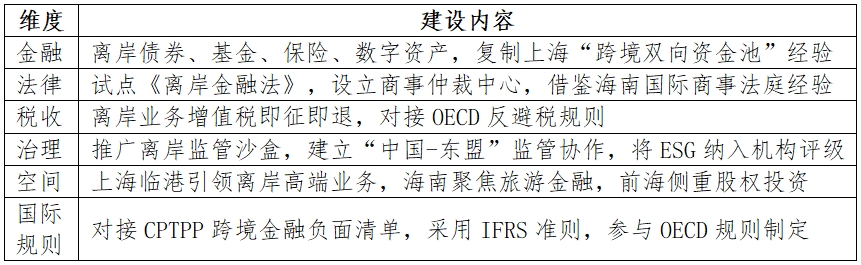
Core Viewpoint - The article emphasizes the strategic direction for the development of China's offshore financial system, aligning it with the Shanghai International Financial Center, highlighting its role in enhancing national financial competitiveness and supporting the internationalization of the Renminbi [1][22]. Summary by Relevant Sections Offshore Financial System - The offshore financial system is not merely a combination of "overseas accounts + foreign currency business," but a comprehensive institutional ecosystem that integrates five dimensions: financial, institutional, governance, spatial, and strategic [3][6]. Financial Dimension - This includes offshore accounts such as OSA (Offshore Accounts), FT (Free Trade Accounts), and NRA (Non-Resident Accounts), as well as offshore bonds, funds, banks, and insurance services [3]. Institutional Dimension - It encompasses applicable laws, judicial arbitration, regulatory rules, tax policies, and compliance standards [4]. Governance Dimension - This involves cross-border regulatory cooperation, data governance, anti-money laundering, anti-tax avoidance, and ESG (Environmental, Social, and Governance) standards [5]. Spatial Dimension - It relies on offshore financial functional zones, international financial centers, and cross-border cooperation platforms [6]. Strategic Dimension - The system aims to serve the internationalization of the Renminbi and the Belt and Road Initiative, aligning with high-standard rules such as CPTPP and DEPA, and requires pilot verification through free trade experimental zones [6]. Core Functions of the Offshore Financial System - The system's core functions are reflected in three aspects: establishing institutional pricing power for Renminbi-denominated assets, optimizing global capital efficiency, and transforming domestic regulatory experiences into international rules [7][8]. Challenges in the Current System - The current offshore financial system faces challenges such as institutional supply lagging behind strategic demand, fragmentation of regulations, and a lack of a unified legal framework [9][10][11]. Proposed Institutional Framework - A proposed "1+N+X" framework includes the establishment of an Offshore Financial Law, specialized business regulations, and local differentiated pilot programs to enhance the system's effectiveness [13][14]. Legal and Taxation Improvements - Recommendations include creating an "offshore legal applicability zone," upgrading the account system to integrate both domestic and foreign currency functions, and optimizing the tax system to attract more offshore entities [14][17]. Integrated Innovation - The article advocates for a "six-in-one" integrated innovation approach that combines finance, law, taxation, governance, spatial planning, and international rules to create a robust offshore financial ecosystem [15][18]. Future Direction - The construction of a Chinese offshore financial system should focus on institutional confidence, avoiding the mere replication of models from Hong Kong and Macau, and instead, aim to be a rule-setting entity in the global financial landscape [20][21].
美元霸权崩塌!人民币使用率暴涨,中国重塑世界经济格局
Sou Hu Cai Jing· 2025-10-13 10:10
2025年10月,俄罗斯向印度出口的一批原油完成结算,这笔本应遵循国际能源贸易惯例的交易,最终却以人民币完成支付。 这一看似偶然的商业选择,正成为全球货币格局悄然转向的生动注脚。 美元地位的弱化早已在贸易场景中显现端倪。 过去全球遭遇地缘局势紧张时,美元总能凭借避险属性吸引资金流入,但这种惯性在2025年被打破。 更关键的是,美元"被武器化"的前车之鉴让各国心生警惕,不少国家曾因制裁遭遇企业交易受限、资产被冻的困境,寻找替代结算方式逐渐成为共识。 人民币正在这些信任缺口里找到自己的位置,而且这种渗透早已超出双边贸易范畴。 俄印之间的原油结算之所以选择人民币,背后是现实需求的倒逼:印度卢比国际认可度低,俄罗斯收了也难以在全球流通;卢布受地缘局势影响波动剧 烈,长期贸易中风险过高;美元则面临被制裁的潜在风险,两家最终都将目光投向了人民币。 更重要的是,俄罗斯收来的人民币能直接采购中国的工业品,印度也能通过向中国出口农产品补充人民币储备,形成了稳定的使用闭环。 这种转变在普通企业的日常经营中更为真切。 河南信阳一家外贸家具企业负责人最近明显感受到了变化:以前总觉得人民币跨境结算门槛高、风险大,习惯用外币结算,直到银 ...
宋科:数字经济时代的人民币国际化之路
Sou Hu Cai Jing· 2025-10-13 08:47
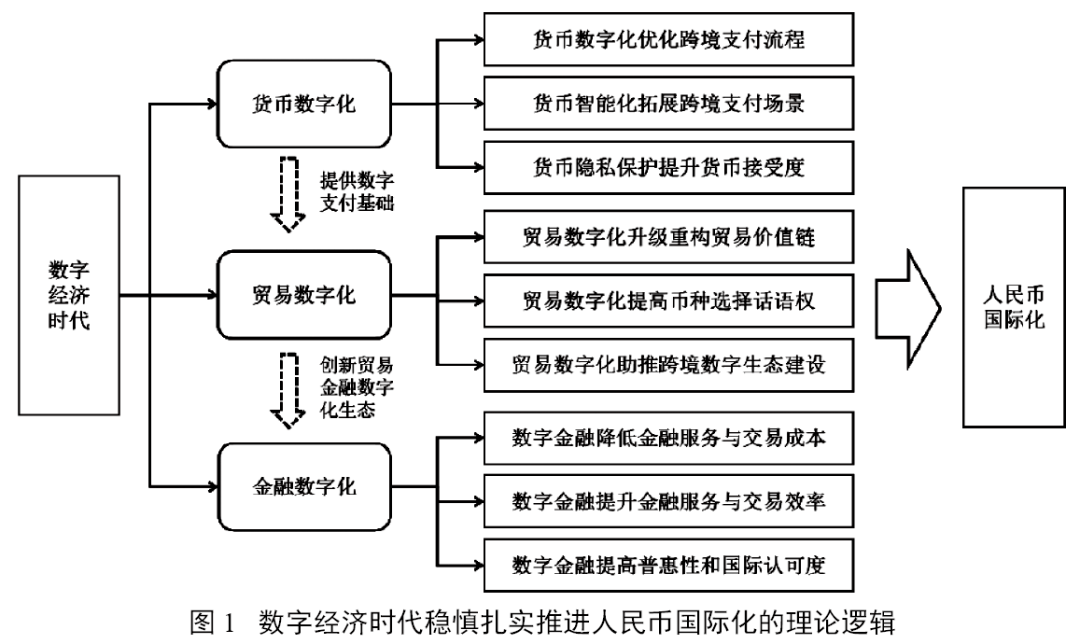
Core Viewpoint - The internationalization of the Renminbi (RMB) has progressed over 15 years, achieving significant milestones, and is now entering a new phase of cautious and steady advancement, particularly influenced by digital economy factors [1][2]. Group 1: Currency Digitalization and RMB Internationalization - Digital currency can enhance cross-border payment systems, improve payment processes, and reduce transaction costs, thereby facilitating RMB internationalization [3][6]. - The People's Bank of China is actively involved in the mBridge project, which aims to innovate cross-border payment systems and enhance the digital currency landscape [6][10]. - Central bank digital currencies (CBDCs) can streamline cross-border payment processes, integrate fund and information flows, and improve payment efficiency, positively impacting the international use of the RMB [6][9]. Group 2: Trade Digitalization and RMB Internationalization - Trade digitalization is expected to optimize trade models, reduce costs, and enhance the international competitiveness of Chinese enterprises, thereby increasing the demand for RMB in international trade [11][12]. - The shift towards digital trade allows for improved negotiation power and currency choice in trade settlements, which can further promote RMB internationalization [13][14]. - Digital trade platforms are emerging, creating a digital ecosystem that supports various cross-border payment scenarios, enhancing the RMB's international usability [15][16]. Group 3: Financial Digitalization and RMB Internationalization - Digital finance, through technological innovation, can change financial product service models, enhance market depth and breadth, and promote low-cost, high-efficiency financial services, increasing the global use of the RMB [17][18]. - The development of digital finance can lower transaction costs and improve transaction efficiency, thereby encouraging the international use of the RMB [19][20]. - Digital finance can also enhance financial inclusivity, providing more accessible financial services to underserved populations, which can expand the RMB's application scenarios [19][20].
太硬了
表舅是养基大户· 2025-10-13 07:59
Group 1 - The core point of the article is that despite nearly 70% of stocks declining, the A-share market's performance exceeded expectations, indicating resilience amid external uncertainties [1][4][6] - External factors, particularly comments from major companies like Vance and Chuanbao, have eased market sentiment, contributing to a recovery in U.S. stock futures [4][6] - The A-share market is experiencing a necessary adjustment due to high market congestion, with the top 5% of stocks accounting for 45.95% of total trading volume, indicating potential structural deterioration [12][14][15] Group 2 - The Hong Kong stock market has seen a more significant decline compared to A-shares, reflecting its higher foreign investment concentration and pricing power [7][10] - Recent data shows that September's exports increased by 8.3% year-on-year, while imports rose by 7.4%, with iron ore imports being a notable variable [34][35][36] - A significant reduction in shareholding by the chairman of Dongfang Fortune, amounting to over 5.8 billion, raises concerns about market dynamics and pricing power [29][33]

澳洲妥协!同意结算!外国网友看袋围铁矿巨头服软同意人民币结算
Sou Hu Cai Jing· 2025-10-13 07:37
根据2025年10月上旬的多篇财经报道,澳大利亚铁矿石巨头必和必拓(BHP)已同意自2025年第四季度起,在对华铁矿石现货交易中接受人民币结算。 这一事件被国内外媒体和网友广泛关注,视为中国在国际大宗商品贸易和人民币国际化进程中取得的关键突破。 印度网友:袋鼠也就这样,我感觉我们也可以要求以卢比结算铁矿山交易,毕竟印度也是铁矿进口大国 美国网友:试试就知道,谁会把印度放眼里!还真以为自己又行了 巴西网友:袋鼠的动作也太快了他们就应该坚持自己的立场,这样订单全都是我们的了 美国网友:袋鼠太不靠谱了!东大才停止进口几天铁矿就着急的服软,真有那么可怕吗 西班牙网友:袋鼠还以为自己掌握资源就硬气,铁矿石并不仅仅澳洲才有 澳洲网友:为什么服软呢!这一年要损失多少,坚持不买他们连铁都造不出了 美国网友:失去东大这样的大客户会像我们的豆农一样,濒临破产,必和拓必可不是傻子 日本网友:计谋这一块,还是没人玩得过东大,东大也不会打没有准备的仗,一定是找到了替代品 澳洲网友:好好的服务东大这样的客户吧!别让巴西给挖走了 俄罗斯网友:澳洲好好的做自己的生意吧!没必要听美国人的话,以人民币结算也不亏,要认清形势 长期以来,国际铁矿石 ...