南南合作

Search documents
构建中非命运共同体 携手实现发展权
Ren Min Ri Bao· 2025-08-24 22:40
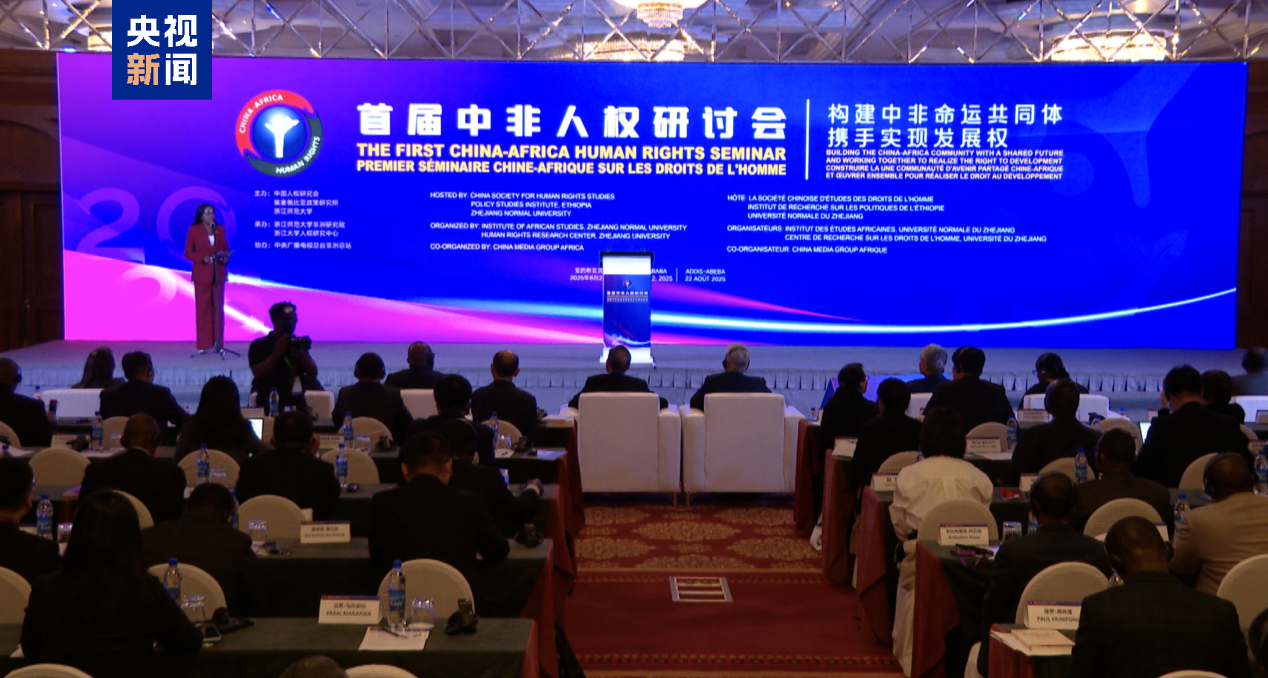
Core Points - The first China-Africa Human Rights Seminar was held in Addis Ababa, Ethiopia, focusing on building a China-Africa community and achieving development rights [1] - Over 200 representatives from China and more than 40 African countries participated, discussing the importance of development in achieving substantial human rights progress [1][2] - The seminar highlighted China's achievements in human rights and its contributions to Africa's human rights development and capacity building [1][2] Group 1 - Development is emphasized as a fundamental human right, with China prioritizing survival and development rights in its human rights approach [2] - The seminar showcased successful projects such as the Mombasa-Nairobi railway, which reduced logistics costs in Kenya by 40% and contributed over 2% to the country's GDP, creating more than 74,000 jobs [2] - African countries are increasingly adopting China's human rights development model, adapting it to local contexts to improve living standards and development [2][3] Group 2 - The seminar participants stressed the need for a fair and inclusive global human rights governance system, advocating for cooperation to promote development and human rights [3] - The relationship between Africa and China is based on mutual respect and non-interference, with ongoing practical cooperation through initiatives like the Belt and Road Initiative [3] - Future cooperation should focus on establishing a China-Africa human rights discourse, expanding cooperation areas, ensuring public safety and health, and promoting sustainable development [3]
首届中非人权研讨会在埃塞俄比亚举行—— 构建中非命运共同体 携手实现发展权
Ren Min Ri Bao· 2025-08-24 21:57
Group 1 - The first China-Africa Human Rights Seminar was held in Addis Ababa, Ethiopia, with over 200 participants from China and more than 40 African countries discussing the theme of "Building a China-Africa Community of Shared Future to Achieve Development Rights" [1] - Participants praised China's achievements in human rights and its contributions to the development of human rights in Africa, expressing a desire for China and Africa to explore human rights paths that align with their national conditions [1][2] - The "Dar es Salaam Consensus" emphasizes that the choice of development paths should be based on national conditions and local cultural characteristics, reflecting the common will of both China and Africa [1] Group 2 - Development is highlighted as a fundamental theme of human society and a primary task of the Chinese Communist Party, with a focus on survival rights and development rights as essential human rights [2] - China has successfully created a contemporary human rights perspective that combines universal principles with national realities, contributing to the global human rights discourse [2] - Examples of successful China-Africa cooperation include the Mombasa-Nairobi railway reducing logistics costs in Kenya by 40% and creating over 74,000 jobs, as well as agricultural advancements in Rwanda and Tanzania [2] Group 3 - African countries are actively learning from China's human rights development path and innovating their own human rights development models based on local realities [2] - The concept of universal human rights should not be defined or imposed by a select few, but should respect the values, interests, and choices of others [2] - The essence of South-South cooperation is reflected in China's approach, which provides a methodology for independent problem-solving rather than a standard answer [2] Group 4 - The seminar emphasized the need for China and Africa to explore human rights development paths based on their national conditions and to promote fair and inclusive global human rights governance [3] - Future cooperation should focus on building a discourse system for China-Africa human rights, expanding cooperation paths, ensuring people's safety and health, and promoting sustainable development [3]
总台记者观察丨中非携手共绘发展权新篇章
Yang Shi Xin Wen Ke Hu Duan· 2025-08-24 07:12
Core Viewpoint - The first African Human Rights Seminar held in Addis Ababa emphasized the importance of development as a key solution to all human rights issues, culminating in the release of the "Addis Ababa Consensus on Development Rights" [1][4]. Summary by Relevant Sections Development Rights - Development is highlighted as an indispensable human right, with a focus on eradicating poverty, hunger, conflict, and discrimination as foundational to human rights protection [3]. - The consensus underscores the necessity of a people-centered development approach, ensuring equitable distribution of development benefits [3]. Sustainable Development - The document advocates for sustainable and high-quality development, reinforcing the role of the UN Charter and the 2030 Sustainable Development Agenda in realizing development rights [3]. - It calls for respect for national sovereignty and the right of countries to choose their own paths for human rights development, opposing the politicization of human rights issues [3]. International Relations - The consensus firmly rejects unilateralism, hegemony, and protectionism, promoting a new type of international relations based on mutual respect and cooperation [3]. - It emphasizes the importance of collective action to ensure the implementation of development rights and the integration of these rights into the UN agenda [3]. China-Africa Cooperation - The document identifies China-Africa cooperation as an effective means to promote the realization of development rights, leveraging mechanisms like the China-Africa Cooperation Forum and the Belt and Road Initiative [3][10]. - China's experience in development is seen as valuable for African nations striving to overcome poverty and achieve sustainable development [5]. Critique of Western Approaches - African representatives expressed strong opposition to Western hegemony disguised as human rights advocacy, highlighting structural issues in Western aid models that may undermine African sovereignty [9]. - The consensus reflects a growing sentiment among African nations to define and pursue their own human rights agendas, free from external imposition [9][10]. Practical Examples of Cooperation - China has implemented various initiatives, such as the "20+20 Cooperation Plan" for higher education, which has significantly contributed to talent development in Africa [8]. - Infrastructure projects like the Mombasa-Nairobi Railway have demonstrated tangible benefits, including a 40% reduction in logistics costs and the creation of 74,000 jobs [8].

“和平的回响”人文交流活动韩国、阿联酋专场分别举行
Yang Guang Wang· 2025-08-23 00:34
Group 1 - The event "Echoes of Peace" was held in Seoul, co-hosted by China Central Radio and Television, the Seoul Chinese Cultural Center, and the Korean National Memorial Museum of the Provisional Government of the Republic of Korea [1] - The event featured screenings of Chinese anti-Japanese war films, including segments from "Nanjing Photo Studio," "Dongji Island," and "Sinking of the Lisbon," as well as other films like "Purple Sun" and "The Message" [1] - On the same day, a special event took place in Abu Dhabi, where over 60 guests from academia and media in the Middle East engaged in discussions on maintaining post-war international order and strengthening South-South cooperation, while watching documentaries including "Sinking of the Lisbon" and a promotional video for the Sino-Russian co-produced documentary "Great Victory - The Chinese Anti-Japanese War through the Lens of Soviet Photographers" [1]
遭美加征50%关税 巴西各界:不接受单边制裁,将多元发展
Sou Hu Cai Jing· 2025-08-22 01:10
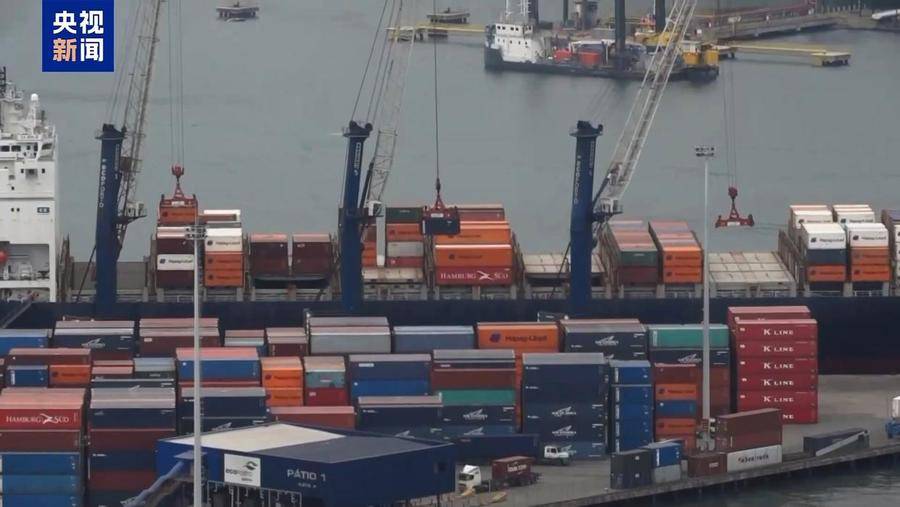
Core Points - The U.S. has increased tariffs on Brazilian goods from 10% to 50%, effective August 6, 2023, as a means of political pressure on Brazil [1][3] - Brazil's government and experts express strong dissatisfaction with the U.S. tariff policy, emphasizing a commitment to diversify trade partnerships and enhance cooperation with Global South countries [1][6] - The tariff measures are seen as politically motivated, intersecting with sensitive judicial and political issues in Brazil [4][6] Group 1 - The U.S. tariffs are being used as a tool for economic and political pressure, particularly related to the legal situation of former President Jair Bolsonaro [3] - Brazil has formally requested consultations with the World Trade Organization, claiming that U.S. measures violate multilateral trade rules [6] - The Brazilian government is actively seeking to diversify its export markets and deepen economic cooperation with Europe and other BRICS nations to reduce reliance on the U.S. market [6][7] Group 2 - The increase in tariffs has led to a temporary oversupply of Brazilian goods that were previously exported to the U.S., while American consumers face rising prices and increased living costs [7] - Economists warn that using trade as a pressure tool undermines global economic stability and erodes diplomatic trust between nations [7]
“全球南方”务实合作共御风险
Jing Ji Ri Bao· 2025-08-20 23:09
Core Viewpoint - China has approved 183 Brazilian coffee companies for a five-year export qualification, highlighting the deepening economic relationship between China and Brazil and showcasing China's commitment to high-level openness in international trade [1] Group 1: Market Opportunities - The Chinese market presents a significant strategic opportunity for Brazil's coffee industry, with coffee consumption in China growing at an average annual rate of approximately 20% over the past decade [1] - China's coffee industry is projected to exceed 313.3 billion yuan in 2024, reflecting an 18.1% year-on-year growth [1] - The approval of 183 Brazilian companies for export to China opens up a vast new market for Brazil's coffee sector and accelerates the shift of global coffee trade towards the East [1] Group 2: Supply and Demand Dynamics - The introduction of Brazilian coffee into China will provide consumers with a wider selection and effectively expand market supply [2] - China's domestic coffee production is unable to meet the entire demand, with a self-sufficiency rate of only 44% when excluding exports, indicating a significant supply gap [2] - The import of Brazilian coffee can meet the market's demand for high-cost performance coffee beans and stimulate the domestic industry to transition towards premium and differentiated products [2] Group 3: Bilateral Trade Relations - China remains Brazil's largest trading partner, with exports to China accounting for approximately 28% of Brazil's total export value in 2024 [2] - The upgrading of China's consumption structure and the acceleration of green transformation create new opportunities for Brazil in sectors such as food processing, green energy, and digital services [2] Group 4: Technological Collaboration - Deeper cooperation between China and Brazil is evident in the field of technological collaboration, aligning Brazil's "Accelerated Growth Plan" with China's new productivity development strategy [3] - Collaborative projects include the production of sustainable aviation fuel from sugarcane and the construction of the world's largest floating solar power plant in Brazil [3] - This model of "resource endowment complementarity + technological innovation collaboration" is pioneering a new paradigm for South-South cooperation [3] Group 5: Global Economic Outlook - The approval for Brazilian coffee exports reflects a bright future for an open world economy, with China and Brazil positioned at a historical high point in their relationship [3] - Both countries are encouraged to seize opportunities, enhance coordination, and create mutually beneficial cooperation outcomes, setting an example for solidarity and self-reliance among global South countries [3]
“中国对非政策的核心优势在于对非洲需求的积极响应”
人民网-国际频道 原创稿· 2025-08-19 09:27
Core Insights - The 25th anniversary of the China-Africa Cooperation Forum highlights significant achievements, including nearly $300 billion in annual trade, with expectations for the upcoming summit in September 2024 to elevate the relationship to a "new era of an all-weather China-Africa community of shared destiny" [1] Group 1: Economic Cooperation - The interest in "Made in Africa" is growing among Chinese consumers, with a need for more investment to support African enterprises as innovators in the Chinese market [2] - Chinese companies have constructed nearly 100,000 kilometers of roads and 10,000 kilometers of railways in Africa, with most funding from African governments and some from Chinese financial institutions [3] - African governments aim to build an additional 100,000 kilometers of roads by 2030 and 75,000 kilometers of railways by 2063, emphasizing the need for long-term capital and local job creation in infrastructure projects [3] Group 2: Debt and Investment - The narrative of a "debt trap" concerning African nations is deemed misleading, as the complexities of debt issues are more profound than the actions of any single creditor [3][4] - Kenya, for instance, faces high interest rates when seeking private financing from Europe, highlighting the investment gap needed to achieve sustainable development goals [3] - Investments from China in Kenya's manufacturing or tourism sectors are seen as crucial for addressing funding gaps in infrastructure development [3] Group 3: Global Challenges and Future Relations - Both Africa and China are navigating global economic challenges such as trade wars and climate crises, necessitating a resilient and transparent bilateral relationship [4] - The future of China-Africa relations is envisioned as one where African nations actively participate in shaping the partnership, rather than being passive recipients [4]
中国以实际行动引领全球绿色发展 ——访斯里兰卡林业局局长尼尚塔·埃迪里辛格
Ren Min Ri Bao· 2025-08-15 21:52
Core Viewpoint - The concept of "Green Mountains and Clear Waters are as Valuable as Mountains of Gold and Silver" has significantly influenced China's ecological civilization and development, showcasing successful practices in ecological restoration and green technology advancements [1][2]. Group 1: Green Development Practices - Cities like Shenzhen have achieved multiple benefits through greening initiatives, including improved air quality and enhanced biodiversity [2]. - The sponge city construction in Hangzhou has increased flood resilience while enhancing urban aesthetics and public health [2]. - The implementation of returning farmland to forest projects has led to ecological restoration and poverty alleviation, demonstrating a win-win scenario [2]. Group 2: Sustainable Development and International Cooperation - The "Two Mountains" concept aligns with Sri Lanka's development strategy, emphasizing the synergy between ecological protection and economic prosperity [2]. - China actively promotes South-South cooperation in areas such as desertification prevention and wetland restoration, positioning itself as a leader in global green development [2]. - Sri Lanka seeks to deepen collaboration with China in green development knowledge exchange, carbon trading mechanisms, and climate resilience projects [2].
巴西总统致电中国,中方支持巴西人民捍卫国家主权
Sou Hu Cai Jing· 2025-08-15 09:37
特朗普宣布中美"休战",不到24小时,卢拉就找上门了,巴西想要的,中方给得干脆。 近日,中美双方同时宣布将彼此的关税暂停措施再延长90天,期间仅保留10%的基础关税。这一消息传开,全球市场都松了口气。更值得关注的是,就在这 场"休战"宣布不到24小时,巴西总统卢拉紧急致电中方,而中国对巴西的诉求给出了干脆利落的回应。这一连串事件背后,藏着当今世界经贸格局的深层变 化。 就在中美达成共识后不到24小时的时间里,巴西总统卢拉的越洋电话就打了过来。这位南美大国领导人在电话里说得很实在,巴西正面临美国的关税打压, 希望中国能支支招,更希望在多边机制中加强协作。 中国的回应也很明确,支持巴西捍卫国家主权,共同应对全球性挑战,还要联合金砖国家和全球南方国家一起维护发展利益。 巴西现在的处境并不乐观,美国近期将大部分巴西输美产品的关税提高到50%,理由也是牵强得可笑,既为了支持巴西前总统博索纳罗,也为了惩罚巴西推 动金砖国家去美元化的尝试。 更过分的是,美国还对巴西联邦最高法院法官实施制裁,明目张胆干涉他国内政。在这种情况下,巴西想在对美博弈中占据主动,光有强硬态度远远不够, 还需要实实在在的支持和策略指导。 中国对巴西的 ...
中方:绝不接受并坚决反对
中国基金报· 2025-08-14 11:09
Group 1 - The Chinese Embassy in New Zealand emphasizes China's commitment to the Pacific Islands Forum and its role in regional cooperation, highlighting the importance of dialogue and support for the development of Pacific island countries [2] - China has participated in every dialogue meeting since the establishment of the dialogue mechanism and expresses a desire to continue discussions with all parties involved [2] - Climate change is identified as the greatest survival challenge for Pacific island nations, and China expresses its willingness to assist these nations in addressing this issue and achieving sustainable development [2] Group 2 - The article asserts that Taiwan is a province of China and has never been a country, reinforcing the principle of sovereignty as a cornerstone of the UN Charter [3] - It is stated that Taiwan has no qualifications or rights to participate in the Forum as a dialogue partner or observer, which aligns with the consensus of the majority of Forum members [3] - China opposes any attempts by individual countries to create issues regarding Taiwan and urges adherence to the One China commitment to focus on cooperation within the Forum [3]