多式联运

Search documents
十二万列,迈向高质量共建“一带一路”新里程
Zhong Guo Jing Ji Wang· 2025-12-01 14:35
Core Insights - The China-Europe Railway Express has surpassed 120,000 trips and has transported goods valued over $490 billion, highlighting the success of the Belt and Road Initiative [1] - The railway service connects 26 European countries and 11 Asian countries, significantly expanding its operational network to 94 scheduled routes [1] - The variety of goods transported has increased to over 53 categories, with high-value items like automotive parts, machinery, and electronics becoming primary cargo [1] Economic Impact - The railway has stimulated economic growth along its routes, with Chongqing attracting international enterprises and achieving an annual growth rate of around 30% in its export-oriented industries [2] - Xi'an has seen a shift of the electronic information industry westward, with companies like Konka and TPV establishing operations due to the railway [2] - Cities like Malaszewicze in Poland and Duisburg in Germany have become significant logistics hubs, with Duisburg attracting over 100 logistics companies and creating more than 20,000 jobs [2] Technological Advancements - The railway is enhancing operational efficiency through the application of technologies such as BeiDou satellite positioning and 5G, enabling full tracking of cargo during transport [2] - Innovations in transport organization have increased the maximum train speed to 120 km/h and the maximum train composition to 55 cars, improving capacity by 10% [2] Multimodal Transport Development - The railway has expanded international rail-sea routes through the Baltic, Caspian, and Black Seas, while seamlessly connecting with new western land-sea channels and the Yangtze River Golden Waterway [2] - The network is evolving to become more efficient and interconnected, facilitating a comprehensive transport framework across Europe and Asia [2] Future Outlook - The milestone of 120,000 trips marks both an achievement and a new beginning for the China-Europe Railway Express, which aims to continue fostering development and cooperation across the Eurasian continent [3]

重庆港:投资建设江津港现代化多式联运集疏运能力提升项目(二期改扩建工程)
Ge Long Hui· 2025-12-01 08:04
Core Viewpoint - Chongqing Port (600279.SH) has approved an investment plan for the second phase of the modernization and multi-modal transport capacity enhancement project at Jiangjin Port, aiming to establish the largest public grain and oil distribution hub in Southwest China [1] Investment Plan - The total estimated investment for the project is 299 million yuan [1] - The company is required to actively seek policy subsidies for the project and manage the loan ratio prudently [1]

重庆港拟2.99亿元投建江津港现代化多式联运集疏运能力提升项目(二期改扩建工程)
Zhi Tong Cai Jing· 2025-12-01 08:04
Core Viewpoint - The company aims to enhance the Jiangjin Port's capabilities to become the largest public grain and oil distribution hub in Southwest China, with a total investment plan of 299 million yuan for the modernization and expansion project [1] Group 1: Project Overview - The board has approved the investment plan for the Jiangjin Port modern multi-modal transport capacity enhancement project, which is crucial for addressing the development bottlenecks in the Jiangjin Port area [1] - The project is expected to significantly improve cargo throughput and multi-modal transport efficiency, addressing the logistics challenges posed by the increasing grain demand and the surge in enterprises in the Chongqing area [1] Group 2: Strategic Importance - The project will help position Jiangjin Port as a key support point in the "Thousand-Mile Light Boat" initiative, facilitating its integration into the dry and branch shipping network [1] - By leveraging its geographical advantages, the port aims to connect the Chengdu-Chongqing economic circle and the southern Sichuan region, thereby activating its potential and enhancing the company's logistics competitiveness [1] - This initiative is expected to provide strong support for the company's sustainable and high-quality development by expanding its regional market presence [1]
重庆港(600279.SH)拟2.99亿元投建江津港现代化多式联运集疏运能力提升项目(二期改扩建工程)
智通财经网· 2025-12-01 08:03
Core Viewpoint - The company aims to enhance the Jiangjin Port's capabilities to become the largest public grain and oil distribution hub in Southwest China, with a total investment of 299 million yuan for the modernization project [1] Group 1: Project Overview - The board has approved the investment plan for the Jiangjin Port modernization multi-modal transport capacity enhancement project, which is crucial for addressing development bottlenecks in the Jiangjin Port area [1] - The project is expected to significantly improve cargo throughput and multi-modal transport efficiency, addressing the logistics challenges posed by the increasing grain demand and the surge in enterprises in the Chongqing area [1] Group 2: Strategic Importance - The project will help Jiangjin Port become a key support point for the "Thousand-Mile Light Boat" initiative, facilitating its integration into the dry and branch shipping network [1] - It will leverage the geographical advantages of connecting the Chengdu-Chongqing economic circle and the southern Sichuan region, enhancing the port's potential and supporting the company's logistics competitiveness and regional market expansion [1] - This initiative is positioned as a vital measure to promote sustainable high-quality development for the listed company [1]
重庆港:投资2.99亿元建设江津港现代化多式联运集疏运能力提升项目(二期改扩建工程)
Xin Lang Cai Jing· 2025-12-01 08:03
重庆港12月1日公告,公司第九届董事会第十一次会议审议通过投资建设江津港现代化多式联运集疏运 能力提升项目(二期改扩建工程),预估项目总投资为2.99亿元,旨在满足江津港区远期发展需求,打 造西南地区规模最大的公用粮食、粮油集散中转基地。 ...
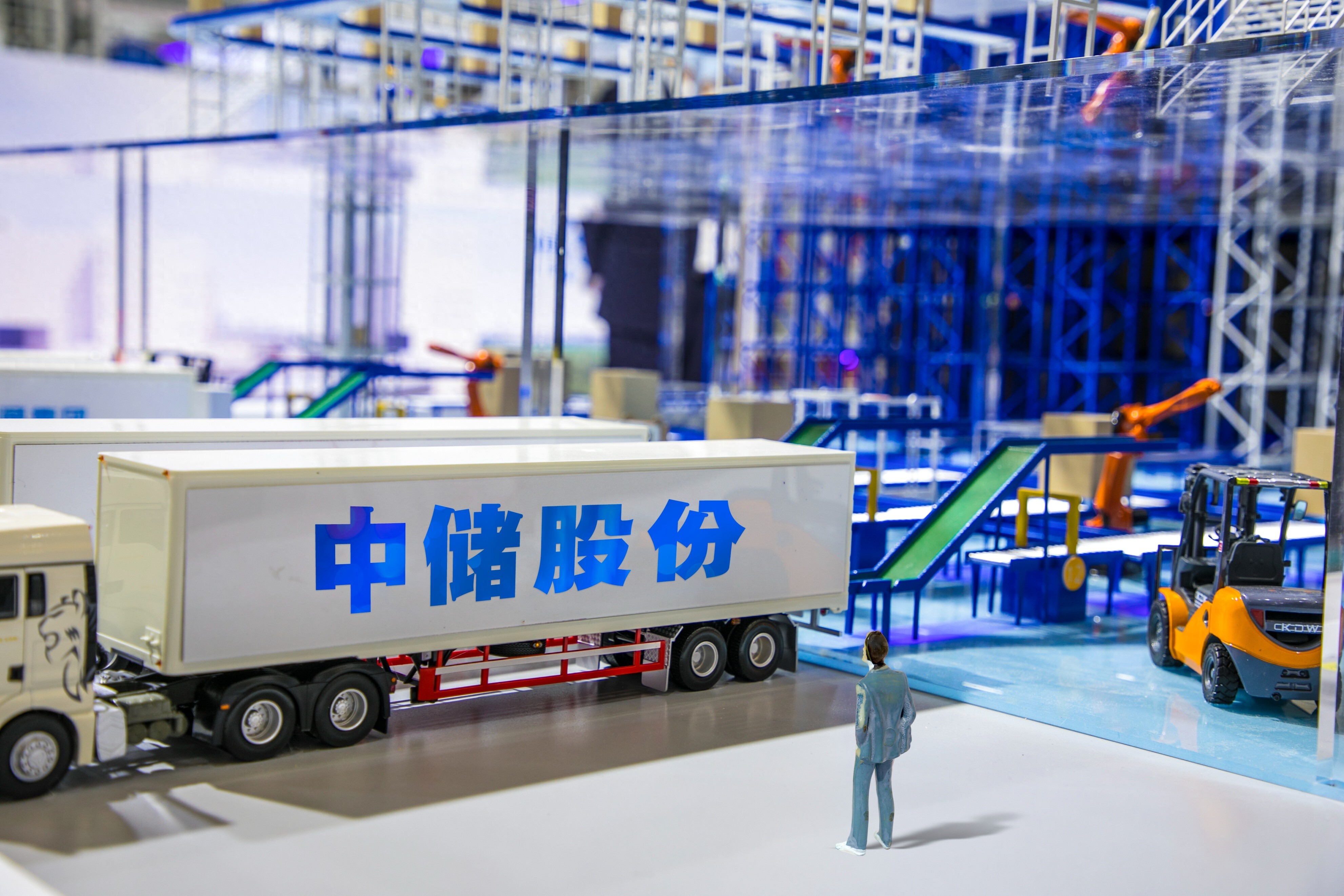
中储股份11.29亿打造华中物流枢纽 手握现金近39亿年度计划投资8.5亿
Chang Jiang Shang Bao· 2025-12-01 02:14
Core Viewpoint - 中储股份 plans to invest significantly in building a logistics hub in Central China, aiming to enhance its service capabilities and core competitiveness through the establishment of the 中储(三江港)production service hub project with a total investment of approximately 1.129 billion yuan [3][5]. Investment and Financial Overview - The total investment for the 三江港 project is estimated at 1.129 billion yuan, with 中储钢超 contributing 500 million yuan to establish the project company [5]. - 中储股份 has a planned investment of 850 million yuan for 2025, including 710 million yuan for fixed assets and 140 million yuan for equity investments [4][11]. - As of September 2025, 中储股份 reported total assets of 24.104 billion yuan, a 6.3% increase from the previous year, with a debt-to-asset ratio of 38.1% [4][12]. Project Details - The 三江港 project will cover an area of approximately 498.4 acres, with a construction period of four years and a total planned building area of 195,000 square meters [5]. - The project aims to create a competitive production service logistics hub in Central China, enhancing the company's logistics network and reducing overall logistics costs [5][8]. Operational Performance - In the first half of 2025, 中储钢超 achieved revenue of 993 million yuan and a profit of 16.95 million yuan [6]. - 中储股份 reported a total revenue of 63.144 billion yuan for 2024, a decrease of 6.13% year-on-year, with a net profit of 403 million yuan, down 48.76% [9]. - For the first three quarters of 2025, 中储股份 achieved total revenue of 47.787 billion yuan, a slight increase of 0.02% year-on-year, with a net profit of 444 million yuan, up 3.6% [10]. Strategic Importance - The 三江港 project is positioned as a key multi-modal logistics hub in the middle reaches of the Yangtze River, supporting the company's supply chain integration and multi-modal transport business [8]. - The project aligns with national industrial policies and aims to optimize transportation structures and enhance the logistics ecosystem in the region [8].


前10个月我国交通运输经济稳中有进 货运量、人员流动量持续旺盛
Yang Guang Wang· 2025-11-29 05:52
Core Insights - The transportation sector in China has shown stable growth in the first ten months of the year, with increases in freight volume and inter-regional personnel flow [1][2] - The Ministry of Transport reported a total freight volume of 482.9 billion tons, a year-on-year increase of 3.5%, and a port cargo throughput of 151.3 billion tons, up 4.3% year-on-year [1] - Investment in transportation fixed assets reached 2.95 trillion yuan, maintaining a high level throughout the year [2] Freight and Port Operations - The port container throughput reached 29 million TEUs, reflecting a year-on-year growth of 6.4%, with foreign trade container throughput increasing by 8.9% [1] - The establishment of 63 intermodal transport hubs, 76 rail-road intermodal hubs, and 43 land-air intermodal hubs has facilitated service to over 240 national industrial parks and clusters [1] Policy and Infrastructure Development - The Ministry of Transport aims to enhance the integration of transport modes and improve the efficiency of logistics by ensuring that 85% of goods can be transferred within one hour at key comprehensive freight hubs [1] - There is a focus on strengthening supply chain policies and promoting cross-regional coordination, multi-modal connections, and deep integration across sectors to improve the overall transportation logistics system [1]
沪苏通铁路张家港北站货场11月28日正式投入运营
Yang Zi Wan Bao Wang· 2025-11-28 07:07
Core Viewpoint - The opening of Zhangjiagang North Station freight yard marks a significant development in regional logistics, enhancing cost efficiency and supporting industrial transformation in the Yangtze River Delta region [1][2]. Group 1: Infrastructure and Capacity - Zhangjiagang North Station freight yard covers an area of approximately 123,000 square meters, equipped with two freight lines over 1,000 meters long, and designed to handle an annual cargo capacity of about 3 million tons [1]. - The freight yard can accommodate various types of goods, including steel, grain, building materials, and agricultural products, making it a comprehensive logistics hub [1]. Group 2: Economic Impact - The integration of the freight yard into the "railway + port" transport system is expected to reduce overall logistics costs by 18% and improve efficiency by over 20%, potentially saving nearly 1 million yuan annually in logistics expenses [2]. - The reduction in logistics costs is projected to extend the sales radius of companies from 500 kilometers to 1,200 kilometers, significantly enhancing market competitiveness [2]. Group 3: Environmental and Strategic Benefits - The shift to large-scale "rail to road" operations is anticipated to achieve an annual transport volume of 800,000 tons, resulting in a carbon reduction of over 12,000 tons per year, contributing to ecological and green development in the Yangtze River Delta [2]. - The opening of the freight yard facilitates a new efficient and economical freight channel to support the development of western regions, thereby laying a solid foundation for local economic growth [3]. Group 4: Future Developments - Future plans include deepening strategic cooperation between railway departments, local governments, and enterprises to build a rich and efficient multimodal transport system, exploring new smart logistics models, and enhancing "door-to-door" logistics product offerings [3].
散货码头成为多式联运枢纽港(新发展理念引领高质量发展·一线故事)
Ren Min Ri Bao· 2025-11-27 22:18
Core Viewpoint - The article highlights the development and significance of the Guoyuan Port in Chongqing as a key hub for multi-modal transportation, particularly in facilitating the export of vehicles and components, thereby contributing to the economic growth of the region and enhancing its connectivity with international markets [2][5][10]. Group 1: Development and Growth - Guoyuan Port has evolved from a bulk cargo terminal to China's largest inland multi-modal transport hub, connecting over 300 ports in more than 100 countries and regions, significantly boosting the open development of Chongqing and the western region [2][3]. - The port's development aligns with the "14th Five-Year Plan" which emphasizes a high-level opening-up system [2]. Group 2: Transportation and Logistics Innovations - The "Yucheng" vehicle export initiative has introduced a new smart supervision model for roll-on/roll-off transport, reducing logistics time by approximately 10 days and saving around 1500 yuan in costs per vehicle [4]. - The export of auto parts through Guoyuan Port has seen a 40% reduction in logistics costs compared to whole vehicle transport, with over 25,000 sets of auto parts shipped in the first three quarters of the year [5]. Group 3: Multi-Modal Transportation Efficiency - Guoyuan Port serves as a crucial hub in the Western Land-Sea New Corridor, facilitating efficient transport of goods from various regions, including a new stable container shipping route from Zhaotong to Guoyuan Port that saves 15 days in transit time [6][8]. - The port has established a rail-water transport network that connects multiple provinces, enhancing regional industrial collaboration [7]. Group 4: Smart Port Transformation - The implementation of smart port technologies has significantly increased operational efficiency, allowing one operator to manage multiple cranes, thus improving productivity and reducing labor needs [9][10]. - The port's smart transformation has led to a 15% increase in cargo turnover speed, resulting in over 100 million yuan in annual logistics cost savings for businesses [10].
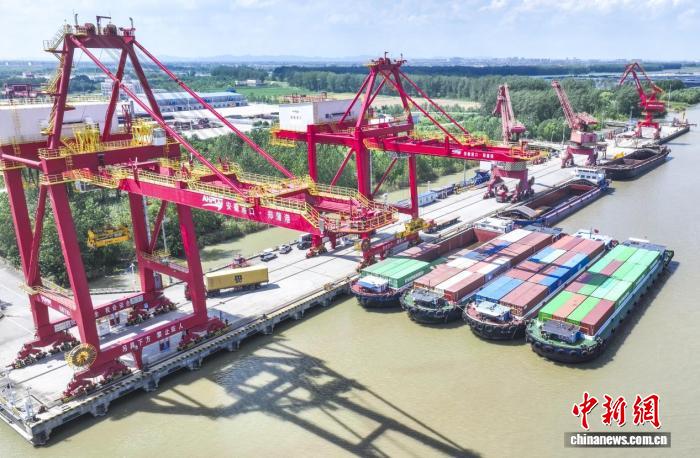
马鞍山加速打造江海联运枢纽中心
Zhong Guo Xin Wen Wang· 2025-11-27 15:40
Core Insights - The article highlights the development of the Zhengpu Port area in Ma'anshan, Anhui Province, focusing on its role as a hub for Jianghuai maritime transport and logistics, with significant improvements in port operations and foreign trade [1][3] Group 1: Port and Logistics Development - Zhengpu Port has achieved a throughput of 2.1971 million tons and a container throughput of 65,400 TEUs by the end of October, with foreign trade container throughput reaching 60,300 TEUs [1] - The region is enhancing its logistics efficiency through multi-modal transport coordination and improved customs clearance processes [1] Group 2: Cross-Border E-Commerce Growth - The booming cross-border e-commerce sector is a key growth driver for foreign trade in the Zhengpu Port area, with daily shipping volumes exceeding 2,000 orders for high-quality consumer goods [3] - The company Anhui Gangzheng Supply Chain Management Service Co., Ltd. anticipates its import trade volume to exceed 22 million USD this year, leveraging the advantages of the Ma'anshan Comprehensive Bonded Zone [3] Group 3: Future Development Plans - Zhengpu Port is accelerating the construction of multi-modal transport bases and access roads, aiming to improve cargo transfer efficiency by over 20% through collaboration with Shanghai and Ningbo ports [3] - Plans are underway to explore the establishment of a pre-positioned cargo station at Hefei Xinqiao Airport to create a comprehensive "sea-land-air" multi-modal transport network [3]