
大食物观

Search documents
农业农村部:2024年全国粮食产量首次突破1.4万亿斤 谷物基本自给、口粮绝对安全
智通财经网· 2025-09-16 05:55
Core Viewpoint - The "14th Five-Year Plan" period has seen significant achievements in agricultural and rural development in China, with a focus on ensuring food security, modernizing agriculture, and improving rural living conditions [4][5][6]. Agricultural Production - National grain production is projected to exceed 1.4 trillion jin in 2024, an increase of 74 billion jin compared to 2020, with per capita grain availability reaching 500 kg [4][5]. - The total output of livestock products reached 175 million tons by the end of last year, an increase of 27.78 million tons or 18.8% from 2020 [26]. Rural Development and Poverty Alleviation - The government has invested 10.8 trillion yuan in agricultural and rural affairs since the start of the "14th Five-Year Plan," with fixed asset investment in the primary industry reaching 5.47 trillion yuan [2][29]. - Over 6 million individuals at risk of returning to poverty have been identified and assisted, with a stable employment scale of over 30 million for the formerly impoverished population [5][6]. Agricultural Modernization - More than 100 million acres of high-standard farmland have been established, with the contribution rate of agricultural technology progress reaching 63.2% [6][7]. - The mechanization rate for crop farming exceeds 75%, and the coverage rate of high-quality seeds is over 96% [6]. Environmental Sustainability - Agricultural water usage has decreased by an average of 3.6 billion cubic meters annually, with fertilizer and pesticide usage also declining [2][43]. - The recycling rate of agricultural film reached 85%, and the comprehensive utilization rate of straw exceeded 88% [43]. Income and Economic Growth - Rural residents' per capita disposable income reached 23,119 yuan, with the urban-rural income ratio decreasing from 2.56:1 in 2020 to 2.34:1 [7]. - The revenue of large-scale agricultural processing enterprises is projected to reach 1.8 trillion yuan in 2024 [29]. Policy Support and Reform - The government has implemented a comprehensive support policy for agriculture, including subsidies, price supports, and insurance, to stabilize farmers' income [29]. - The second round of land contracts has been extended for another 30 years, ensuring stability in land use rights for farmers [31].
老百姓餐桌越来越丰富 四个方面表现“舌尖”上的幸福感
Zhong Guo Xin Wen Wang· 2025-09-16 05:24
Core Viewpoint - The Chinese government has made significant progress in diversifying food supply systems during the "14th Five-Year Plan" period, focusing on enhancing agricultural productivity and food security through various initiatives and technological advancements [1][2][3] Group 1: Modern Livestock Development - The level of modern livestock development has been significantly improved, with the total output of meat, eggs, and milk reaching 175 million tons by the end of last year, an increase of 27.78 million tons or 18.8% compared to 2020 [1] - Per capita consumption of meat and eggs in China reached 72 kg and 25 kg respectively, both exceeding the global average, while per capita milk consumption increased to 40.5 kg, up by 2.3 kg from 2020 [1] Group 2: Modern Fisheries Development - The total output of aquatic products in China reached 73.58 million tons in 2024, marking a 12.3% increase from 2020, maintaining the country's position as the world's largest producer of aquatic products for 36 consecutive years [2] - The variety and supply of aquatic products, including fish, shrimp, crab, and shellfish, have become increasingly abundant [2] Group 3: Facility Agriculture Development - During the "14th Five-Year Plan" period, facility agriculture has rapidly developed, with the area of agricultural facilities reaching 40 million acres and annual vegetable production exceeding 20 million tons, achieving year-round balanced supply [2] - The production of edible mushrooms from facility agriculture has reached over 42 million tons, accounting for 85% of global production, while the availability of facility-grown fruits like strawberries and cherries has extended their market season [2] Group 4: Expansion of Agricultural Development Space - The agricultural sector is expanding from traditional crops and livestock to a wider range of biological resources, accelerating the development of biotechnology and new food products [2] - China has achieved breakthroughs in key core technologies related to algae cultivation, with various species now available on the dining tables of the public [2] Group 5: Nutritional Improvement - The nutritional health levels of food consumed by urban and rural residents in China are approaching those of developed countries, with balanced intake of protein, fat, and carbohydrates [3] - The overall food supply not only meets the caloric needs but also enhances the quality and nutritional value of the diet for the population [3]

国新办举行新闻发布会 介绍“十四五”时期农业农村发展成就(文字实录)
2 1 Shi Ji Jing Ji Bao Dao· 2025-09-16 04:32
Core Viewpoint - The press conference highlighted the achievements of China's agricultural and rural development during the "14th Five-Year Plan" period, emphasizing food security, poverty alleviation, agricultural modernization, and rural revitalization as key areas of progress [2][3][4]. Group 1: Food Security - China's grain production reached a new high, surpassing 1.4 trillion jin in 2024, an increase of 74 billion jin compared to 2020, with per capita grain availability reaching 500 kg [2][3]. - The country has maintained a stable supply of various agricultural products, ensuring a diverse and rich diet for the population [2]. Group 2: Poverty Alleviation - The successful completion of the poverty alleviation campaign in 2020 has been followed by efforts to consolidate and expand these achievements, with over 6 million individuals identified for assistance to prevent a return to poverty [3][4]. - The income growth rate of farmers in poverty-stricken areas has outpaced the national average, with over 30 million people employed in various sectors [3]. Group 3: Agricultural Modernization - Significant advancements in agricultural modernization have been made, with over 100 million acres of high-standard farmland established and a mechanization rate exceeding 75% [4][5]. - The contribution rate of agricultural science and technology reached 63.2%, indicating a strong focus on modernizing agricultural practices [4]. Group 4: Rural Revitalization - The construction of livable and workable rural areas has progressed, with improvements in rural infrastructure and public services, including a 76% sanitation toilet coverage rate [4][5]. - The income of rural residents has seen rapid growth, with per capita disposable income reaching 23,119 yuan, and the urban-rural income gap narrowing from 2.56:1 in 2020 to 2.34:1 [5]. Group 5: Agricultural Reform and Development - The government has deepened rural reforms, extending land contracts for an additional 30 years and promoting the establishment of over 2 million farmer cooperatives [5]. - The agricultural social service system has been strengthened, with over 1.1 million operational service entities covering more than 2.29 billion acres [5]. Group 6: Agricultural Technology Innovation - The agricultural technology innovation system has been enhanced, with over 800 research institutions and 120,000 researchers contributing to advancements in agricultural practices [31][32]. - Key breakthroughs in agricultural technology have been achieved, including the development of high-yield crop varieties and advanced agricultural machinery [32][33]. Group 7: Food Safety and Quality - The national agricultural product quality safety monitoring rate has remained stable at over 97.5%, ensuring food safety for consumers [36][37]. - New regulations and monitoring systems have been implemented to enhance the safety and quality of agricultural products [36]. Group 8: Green Development - Efforts to promote green agricultural practices have led to a reduction in fertilizer and pesticide usage, with a 5% decrease in fertilizer application compared to 2020 [41][42]. - The recycling and utilization of agricultural waste have improved, with a significant increase in the rates of straw and manure recycling [42].
海外华媒宁德行:古田“小菌菇”绽放富民“大产业”
Zhong Guo Xin Wen Wang· 2025-09-15 02:39
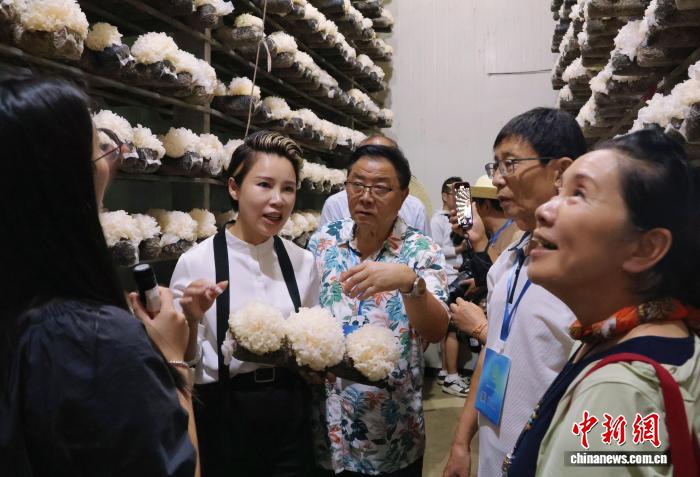
Core Viewpoint - The article highlights the development and innovation of the edible fungus industry in Gutian County, Fujian Province, particularly focusing on the achievements of Fujian Tiantian Source Biotechnology Co., Ltd. in promoting the cultivation and processing of silver ear mushrooms, which has become a significant economic driver for the region [1][5][7]. Company Overview - Fujian Tiantian Source Biotechnology Co., Ltd. integrates silver ear mushroom cultivation, factory-based planting, deep processing, leisure education, and cultural promotion [3]. - The company operates smart mushroom houses that utilize advanced technology for optimal growth conditions, significantly reducing infection rates to below 1% and minimizing labor requirements [3][5]. Production and Financial Performance - The company cultivates 10,000 bags of organic silver ear mushrooms daily, with an annual production of nearly 7 million mushroom bags and 3,960 tons of fresh mushrooms, generating an annual output value of approximately 120 million yuan [5]. - The company invests 3% to 5% of its annual sales into research and development to enhance mushroom varieties and improve processing technologies, holding 37 patents related to mushroom cultivation and processing [5][7]. Industry Impact - The edible fungus industry is a cornerstone of Gutian County's economy, with projections indicating a total production of 944,600 tons of edible fungi in 2024, contributing to a total industry chain value of 28 billion yuan [7]. - Silver ear mushroom production in Gutian County is expected to reach 416,000 tons, accounting for over 90% of the national output, with significant contributions to local agricultural income and employment [7]. Economic Contribution - Approximately 50% of agricultural funding in Gutian County is allocated to the edible fungus industry, with 60% of farmers' income derived from this sector, and 70% of the agricultural population engaged in mushroom cultivation [7]. - The region has established a new development pattern termed "56789," indicating the extensive economic impact of the edible fungus industry on local livelihoods and overall economic growth [7].

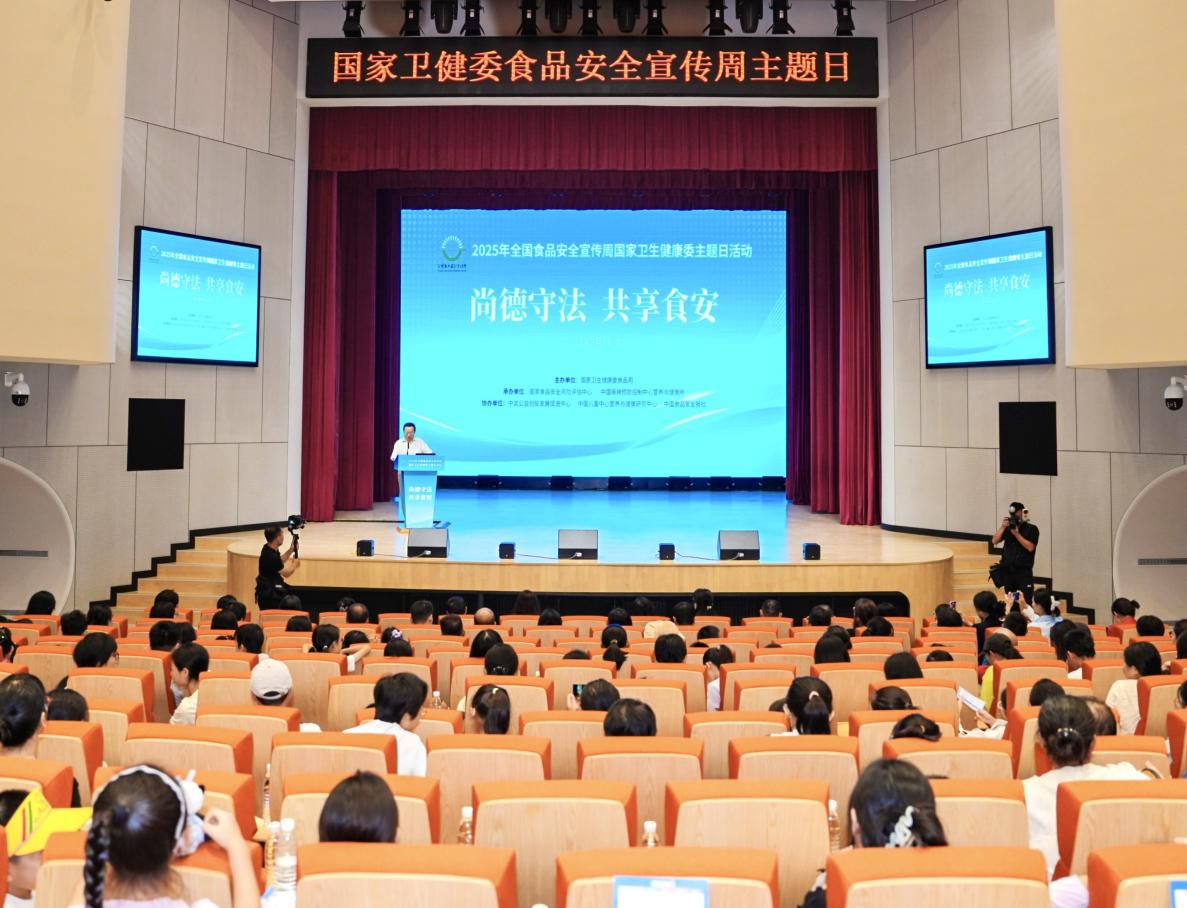
2025年全国食品安全宣传周国家卫生健康委主题日活动在京举办
Zhong Guo Jing Ji Wang· 2025-09-14 09:07
Core Viewpoint - The event themed "Integrity and Lawfulness, Shared Food Safety" aims to enhance public awareness and participation in food safety, promoting a healthier China through various educational activities and initiatives [1][3]. Group 1: Event Overview - The 2025 National Food Safety Publicity Week was held at the China Children's Center, focusing on foodborne disease prevention, national food safety standards, and promoting reasonable dietary habits [1][3]. - The event included expert lectures on food safety, interactive Q&A sessions, and engaging activities such as VR simulations and games to educate the public on food safety and nutrition [4][5]. Group 2: Government Initiatives - The National Health Commission emphasized risk management as a core strategy, aiming to build a rigorous standard system to guide healthy industry development [3]. - The promotion of digital food labels is intended to resolve consumer issues related to food label information accessibility and clarity [3]. - The commission is committed to enhancing risk monitoring capabilities and implementing a national nutrition plan to promote healthy eating habits among the public [3].
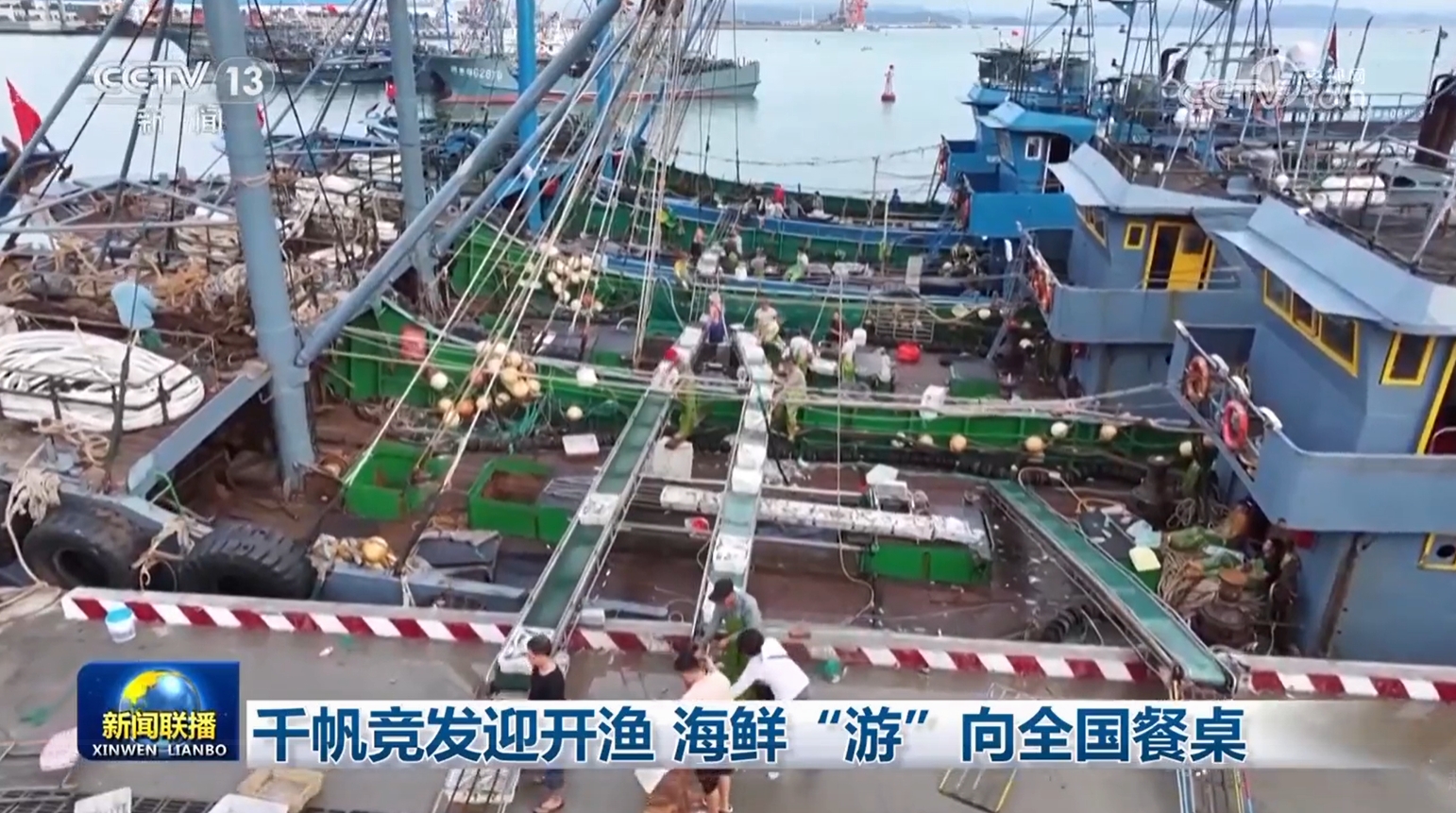
千帆竞发迎开渔 海鲜“游”向全国餐桌
Yang Shi Wang· 2025-09-11 12:43
Group 1 - The fishing season has resumed in various sea areas under China's jurisdiction, including the Bohai Sea and Yellow Sea, leading to an increase in the supply of high-quality seafood to consumers [1] - In Fujian, fishing boats are reportedly catching around 5,000 kilograms of seafood per trip, with a variety of products such as mackerel, squid, and flower crabs available [3] - In Guangdong's Zhanjiang, the seafood market is bustling with activity, featuring live crabs and shrimp as popular products [3] Group 2 - Advanced detection equipment and satellite navigation systems are being utilized on fishing boats in Shandong's Longkou, enhancing operational efficiency and accuracy in locating fishing nets [5] - In Zhejiang's Zhoushan, the peak season for crab has led to nearly 100 fishing boats unloading daily, with peak port volumes reaching 3,250 tons [7] - The Chinese government is promoting the scientific and orderly development of inland aquaculture, with regions like Xinjiang and Ningxia successfully cultivating seafood in inland areas [9] Group 3 - The overall seafood industry in China is undergoing a comprehensive upgrade, transitioning from traditional fishing to smart aquaculture and expanding sales channels from offline to online [11] - From January to July this year, China's total aquatic product output reached nearly 36 million tons, reflecting a year-on-year growth of 4.37% [11]
国盛证券:金针菇产能理性回归 双孢菇盈利能力持续
Zhi Tong Cai Jing· 2025-09-10 06:41
Group 1 - The core viewpoint is that the edible mushroom industry is experiencing a rational return of capacity due to severe losses from overcapacity, particularly in enoki mushrooms, prompting leading companies to actively reduce production [1][4][6] - In 2023, the total production of edible mushrooms in China reached 43.34 million tons, a year-on-year increase of 2.6%, with a total output value of 396.56 billion yuan, also up 2.0% year-on-year [2] - The factory production of edible mushrooms saw a significant increase, with a total output of 4.09 million tons in 2023, representing a year-on-year growth of 43.23% [2] Group 2 - The enoki mushroom sector is facing severe overcapacity, with leading companies like Xuerong Bio reducing their annual production capacity to 440,000 tons, a decrease of 4% year-on-year, and a capacity utilization rate dropping to 63.82% in Q1 2025, down 9 percentage points from 2024 [1][4] - The profitability of the button mushroom segment remains strong, with its gross margin staying above 30% in most years, despite a slight decline to below 30% from 2019 to 2022 [1][4] - The industry is witnessing a consolidation phase, with smaller companies exiting the market, allowing larger firms like Xuerong Bio and Zhongxing Mushroom to solidify their leading positions [3][4] Group 3 - The cultivation of Cordyceps sinensis is emerging as a new growth area, with companies like Zhongxing Mushroom and Xuerong Bio initiating factory cultivation projects, potentially leading to significant revenue and profit increases [5] - The industry is expected to see a reversal in performance for stable production varieties, while the initial phase of Cordyceps cultivation may open a second growth curve for edible mushroom companies [6]


食用菌:困境将解,新品蓄力
GOLDEN SUN SECURITIES· 2025-09-10 04:03
Investment Rating - Maintain "Increase" rating for the industry [5] Core Viewpoints - The edible mushroom industry is expected to benefit from the "big food concept" and "big health" initiatives, with a projected increase in demand [21][10] - The industry is experiencing a rational return of production capacity, with leading companies actively reducing capacity to stabilize production [57][52] - The winter worm summer grass industry is in its early stages of industrialization, presenting new growth opportunities for leading edible mushroom companies [4][52] Summary by Sections Edible Mushroom Production - In 2023, the national edible mushroom production reached 43.342 million tons, a year-on-year increase of 2.6%, with a total output value of 396.56 billion yuan, up 2.0% year-on-year [10][21] - The factory-produced edible mushroom output reached 4.0916 million tons in 2023, a significant increase of 43.23% year-on-year [16][10] Market Restructuring - The number of factory-produced edible mushroom enterprises surged from 47 in 2006 to 788 in 2012, leading to overcapacity and declining profits, particularly in the golden needle mushroom sector [2][24] - The industry concentration ratio (CR5) has stabilized between 33% and 36% from 2020 to 2024, indicating a stable market structure [47][20] Traditional Products - The golden needle mushroom has faced severe overcapacity, prompting leading companies like Xue Rong Biological to reduce production capacity by 4% to an annualized capacity of 440,000 tons [3][57] - The white mushroom (Agaricus bisporus) has maintained stable production levels, with a daily output of 916.7 tons in 2023, showing a slight decline of 1.6% year-on-year [67][70] Winter Worm Summer Grass - The artificial cultivation of winter worm summer grass is emerging as a new growth area, with companies like Zhongxing Mushroom Industry and Xue Rong Biological initiating factory cultivation projects [4][52] - The projected annual revenue from a fully operational winter worm summer grass project is approximately 26.22 million yuan, with a profit margin of 24.8% [4][52] Investment Recommendations - The edible mushroom industry is entering a phase of rational capacity return, with leading companies expected to reverse performance in their core business segments [52][4] - The industrialization of winter worm summer grass may open a second growth curve for edible mushroom companies, with a focus on Zhongxing Mushroom Industry and Xue Rong Biological [52][4]
世界农业科技创新大会10月在京举行
Bei Jing Qing Nian Bao· 2025-09-07 18:24
Core Points - The 2025 World Agricultural Technology Innovation Conference (WAFI) will be held from October 12 to 15, 2025, in Beijing, gathering 280 foreign guests from 94 countries and regions to discuss cutting-edge agricultural technology topics [1] - The theme of the conference is "Practicing the Big Food Concept, Building a Resilient Food Supply System," featuring a framework of "1+7+1+N" with various sessions including forums and international exchange activities [1][2] - The conference aims to achieve over 200 million online views and 30,000 offline attendees, while releasing significant documents related to agricultural development [2] Group 1 - The conference will include a series of important releases such as "Agricultural Zhongguancun 2.0" and the establishment of the "World Agricultural Universities A20 Alliance" [2] - It will attract numerous domestic and international agricultural enterprises, investment institutions, and banks to discuss transforming agricultural food systems under carbon neutrality goals [2][3] - The event will feature parallel activities, international exchanges, and closed-door meetings involving 41 organizing units, including the United Nations Food and Agriculture Organization and the Asian Development Bank [3] Group 2 - Since the first conference, significant advancements in agricultural technology have been made in Pinggu District, including the establishment of key laboratories and the construction of the National Agricultural Technology Innovation Port [4] - The conference will showcase the latest global agricultural research achievements and promote the transformation of research results from laboratories to practical applications in agriculture [4]
中水渔业:上半年实现利润总额1.4亿元 对标世界一流渔业企业
Zheng Quan Ri Bao Zhi Sheng· 2025-09-05 12:08
Core Viewpoint - Zhongshui Fisheries is focusing on high-quality development and innovation in the deep-sea fishing sector, aiming to enhance its operational efficiency and market influence in a complex international environment [1][2]. Group 1: Company Overview - Zhongshui Fisheries has maintained a core focus on deep-sea fishing since its listing, with operations covering deep-sea fishing, fishery services, and seafood processing and trade across global oceans and Antarctic waters [1]. - The company ranks among the top in asset scale within China's deep-sea fishing industry, indicating strong market influence and authority [1]. Group 2: Financial Performance - In the first half of 2025, Zhongshui Fisheries reported an operating income of 1.747 billion yuan, a decrease of 10.66% year-on-year [2]. - The total profit reached 140 million yuan, reflecting a year-on-year increase of 30.41% [2]. - The net profit attributable to shareholders was 86.31 million yuan, showing a growth of 22.12% compared to the previous year [2]. Group 3: Strategic Initiatives - The company is committed to building a modern industrial chain and enhancing its role as a leading enterprise in the deep-sea fishing sector [2]. - Zhongshui Fisheries aims to optimize the global seafood production and supply chain layout while adhering to national marine development strategies [2]. - The company is focused on transforming traditional industries and supporting national food security strategies through its operations [2].
