美国就业市场

Search documents
香港第一金:黄金多头盛宴临近尾声?非农前谨防高位回调风险
Sou Hu Cai Jing· 2025-09-04 04:38
Fundamental Overview - The number of job openings in the US unexpectedly decreased from a revised 7.36 million in June to 7.18 million in July, the lowest level in 10 months, against an expectation of 7.378 million [1] - The Federal Reserve's Beige Book reported price increases across all 12 districts, with 11 districts indicating little to no change in overall employment levels, and one district reporting a slight decline in employment. Half of the districts also noted a decrease in immigrant labor [1] - The market is anticipating potential interest rate cuts from the Federal Reserve, with expectations possibly expanding to 50 basis points or more, depending on upcoming employment data [1] Technical Analysis - Gold prices approached the first major target of 3600, with a cautionary note on potential profit-taking ahead of the non-farm payroll data [1][5] - Short-term support levels for gold are identified at 3549-52, with further attention on 3475-80 as a critical level for maintaining upward momentum [2][6] - A potential short position may be considered if gold fails to break above 53, with key short-term resistance at 64-66 [4] Trading Strategy - The current upward trend in gold is clear, but caution is advised regarding potential adjustments and the need for stop-loss measures [6][7] - The market is advised to monitor for signals to adjust positions as gold approaches the target of 3600, with a wait-and-see approach recommended until after the non-farm data release [5][6] - Key trading levels include 3562-66 as a critical resistance zone, with 3595-3600 identified as a second target for the daily timeframe [7][8]
深度丨美国就业,到底是好还是坏?【陈兴团队•财通宏观】
陈兴宏观研究· 2025-08-26 09:58
Core Viewpoints - The US labor market is cooling down, with the three-month moving average of non-farm employment showing a downward trend, potentially nearing negative growth by October 2023 [2][5][6] - The quality of employment data has been questioned due to significant downward revisions in May and June data, with a total adjustment of 258,000 jobs [9][10] - The unemployment rate is on the rise, reflecting a broader cooling in the labor market, with a decrease in active job seekers and an increase in the duration of unemployment [10][11][30] Employment Sector Analysis - The education and healthcare sectors have been the main contributors to job creation, accounting for about half of non-farm employment from January to July 2024, supported by government funding [3][18] - Cyclical industries such as manufacturing and construction are experiencing a slowdown in job growth, with high interest rates limiting business operations and hiring plans [19][23] - The tightening labor market is evident in the information and professional services sectors, where job vacancy rates have increased, likely due to rising demand for AI-related positions [24] Future Labor Market Outlook - There is potential for marginal labor to return to the job market, with an increase in young job seekers aged 19-24, which may lead to higher unemployment rates if labor demand does not improve [25][30] - Small businesses remain cautious, with no improvement in hiring plans due to uncertainties in future policies and trade negotiations [28] - The labor market is at a turning point, with supply potentially exceeding demand, leading to a continued rise in the unemployment rate [30]


美联储降息对大宗商品价格的影响分析
Qi Huo Ri Bao Wang· 2025-08-26 00:57
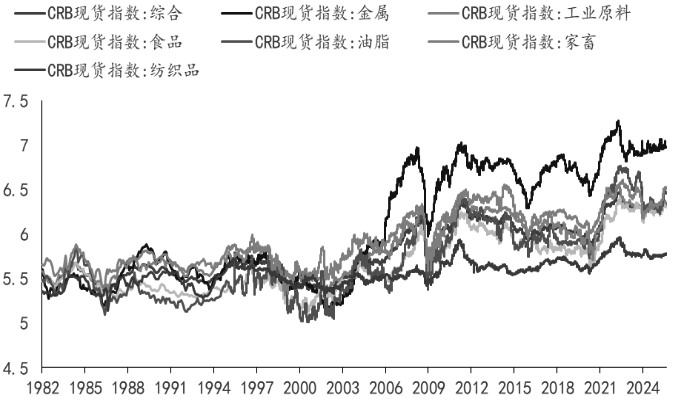
Group 1 - The article discusses the potential impact of the Federal Reserve's interest rate cuts on commodity prices, suggesting a strategy of buying on dips for commodities like copper, aluminum, and gold [1][14] - There is a divergence in market opinions regarding the effects of rate cuts on commodity prices, with some believing that rate cuts indicate economic slowdown while others argue that they can stimulate economic growth and liquidity, thus supporting commodity prices [1][3] - Historical data shows that during past rate cut cycles, commodity prices often rebound after initial declines, particularly in the context of economic recovery following rate cuts [2][3] Group 2 - Since 1982, the U.S. has experienced multiple rate cut cycles, with the current cycle beginning in September 2022, resulting in a total reduction of 100 basis points [2] - The article highlights that rate cuts are typically implemented during significant economic downturns, and the pace of cuts tends to be more aggressive compared to rate hikes [2][3] - The relationship between economic performance and commodity prices is emphasized, indicating that global economic growth is a key determinant of commodity price trends [4] Group 3 - Different commodities exhibit varying sensitivities to interest rate changes, with gold being highly sensitive to real interest rates, copper reflecting economic growth expectations, and oil being influenced by both demand and supply factors [5][6] - Statistical data supports the notion that metals and industrial raw materials are more sensitive to interest rate changes compared to agricultural commodities [6] Group 4 - The article outlines the Federal Reserve's monetary policy path, noting that inflation and employment data will significantly influence future rate decisions [9][11] - The current economic environment suggests a potential for further rate cuts, with market expectations indicating a possible reduction in the federal funds rate to between 3.3% and 3.5% in the near future [13][14] - The necessity for rate cuts is underscored by a weakening labor market and declining inflation, which may lead to increased pressure on the Federal Reserve to adjust its policies [14]
美联储降息对大宗商品价格的影响分析:铜、铝、黄金等 建议以逢低做多为主
Qi Huo Ri Bao· 2025-08-25 23:36
Group 1: Federal Reserve's Interest Rate Policy - The market is increasingly focused on the potential impact of Federal Reserve interest rate cuts on commodity prices, with differing opinions on the effects [1][5] - Since September of last year, the current rate cut cycle has seen a total reduction of 100 basis points, with rates adjusted from 5.25%-5.5% to 4.25%-4.5% [1][3] - The Fed's rate cuts typically occur in response to significant economic downturns, and the pace of rate cuts is generally more rapid compared to rate hikes [1][3] Group 2: Commodity Sensitivity to Interest Rates - Gold is highly sensitive to real interest rates, with rising real rates negatively impacting gold prices due to increased opportunity costs [2] - Copper is viewed as an economic barometer, with its prices affected by economic growth expectations and demand from key sectors [2] - Oil prices are influenced by a complex interplay of demand and supply factors, with rate cuts potentially supporting prices despite economic weakness [2] Group 3: Economic Indicators and Future Projections - The labor market in the U.S. shows signs of cooling, with non-farm employment growth slowing and unemployment remaining low, increasing the necessity for Fed rate cuts [4][7] - Inflation data indicates a moderate rebound, but overall inflation levels are expected to remain weak in the second half of the year [3][4] - Market expectations suggest that the Fed may lower rates to a range of 3.3%-3.5% in the first half of next year, indicating a potential for further cuts [4][7] Group 4: Market Reactions and Investment Strategies - The weakening labor market and ongoing inflation decline highlight the growing necessity for Fed rate cuts, which could benefit commodities sensitive to Fed policies [7][8] - The current geopolitical landscape and central bank gold purchases are expected to support gold prices in the long term, maintaining a bullish outlook [8]
华泰证券:AI发展目前不是美国就业市场放缓的最重要原因
Xin Lang Cai Jing· 2025-08-25 00:24
Core Viewpoint - The report from Huatai Securities indicates that the U.S. job market is expected to weaken rapidly in the first half of 2025, with the accelerated penetration of AI being considered an important factor contributing to this weakness [1] Group 1: Employment Market Analysis - AI is impacting certain industries and groups, but it is not currently the primary driver of the employment slowdown [1] - Key factors contributing to the employment market's weakness include tariffs, immigration policies, and the influence of cryptocurrencies like DOGE [1] - The U.S. job market is anticipated to remain weak in the third quarter, potentially creating conditions for the Federal Reserve to lower interest rates again in September [1] Group 2: Future Outlook - There is a possibility of improved hiring intentions among companies in the fourth quarter, which may lead to some recovery in the job market [1] - The rapid penetration of AI is expected to have profound effects on the employment market, macroeconomic trends, industry structures, and income distribution [1] - While AI may disrupt employment in certain sectors, it is not yet the most significant reason for the current employment slowdown [1]

综述|鲍威尔暗示降息 通胀就业难平衡
Sou Hu Cai Jing· 2025-08-23 11:45
Group 1 - Federal Reserve Chairman Jerome Powell hinted at potential interest rate cuts in the coming months despite rising inflation risks [1] - Powell indicated that the current economic outlook and risk balance may necessitate adjustments to monetary policy [1] - Market expectations for a rate cut in September surged to nearly 90% following Powell's remarks, interpreted as dovish by many institutions [1][2] Group 2 - The U.S. job market showed signs of cooling in July, with the unemployment rate rising by 0.1 percentage points to 4.2% and non-farm payrolls adding only 73,000 jobs, below the expected 110,000 [2] - Core Consumer Price Index (CPI) rose by 3.1% year-on-year in July, significantly above the Federal Reserve's 2% target, indicating persistent inflationary pressures [2] - Some Federal Reserve officials expressed skepticism about the need for rate cuts, citing ongoing inflation concerns and the need for more data before making decisions [2] Group 3 - President Trump criticized Powell's stance, arguing that there is no inflation risk and calling for immediate rate cuts, expressing dissatisfaction with the Federal Reserve's monetary policy [3] - Following Powell's speech, U.S. stock indices rose over 1%, while the dollar index fell by 0.8%, and the yield on 10-year U.S. Treasury bonds dropped by over 7.5 basis points to 4.256% [3]
【环球财经】全球市场静待鲍威尔关键发声 投行称需警惕“鹰派”信号
Xin Hua Cai Jing· 2025-08-22 08:20
Core Viewpoint - The annual Jackson Hole global central bank conference is taking place from August 21 to 23, with Federal Reserve Chairman Jerome Powell's speech being a focal point. Analysts suggest that Powell is unlikely to provide clear guidance on interest rate cuts, and if any guidance is given, it may lean towards a hawkish stance [1][2]. Group 1: Labor Market and Inflation Risks - The current monetary policy of the Federal Reserve faces a dilemma, with uncertainty regarding the labor market's deterioration and accumulating inflation risks due to tariffs increasing corporate costs [2][3]. - Powell's views on the labor market and inflation risks are crucial, as his perception of whether the labor market has "cooled to policy goals" will directly impact the necessity for rate cuts [2][3]. - The U.S. July non-farm payroll data was significantly below market expectations, leading to a market consensus that the Fed would begin cutting rates in September, with expectations of three cuts this year [2][3]. Group 2: Market Reactions and Predictions - Market sentiment appears to be preparing for hawkish signals from Powell, with the S&P 500 index declining for five consecutive trading days, particularly in the tech sector [7]. - If Powell's speech leans towards a dovish tone, confirming a potential rate cut in September, it could alleviate market concerns and boost the stock market. Conversely, a cautious or hawkish stance could trigger a new wave of selling [7]. - Historical data indicates that the S&P 500 index has averaged a 0.9% increase in the five trading days surrounding past Jackson Hole meetings, suggesting that the market often gains certainty from the Fed Chair's remarks [7]. Group 3: Dollar and Commodity Impacts - Powell's emphasis on inflation pressures could lead to a stronger dollar and higher U.S. Treasury yields, while a dovish stance might weaken the dollar [7][9]. - Gold prices are currently fluctuating with the dollar's movements, and if Powell adopts a dovish tone, gold and other safe-haven assets may strengthen in the following days [8].
徽商期货:白银或维持高位震荡以等待新的驱动
Qi Huo Ri Bao· 2025-08-22 01:04
Group 1 - Recent trade and geopolitical tensions have eased, leading to a decrease in market risk aversion [1] - The U.S. labor market is showing signs of cooling, and inflation has rebounded moderately, with the market pricing in a 25 basis point rate cut by the Federal Reserve in September [1] - The upcoming U.S. inflation and non-farm employment reports for August are critical for further clarity on Federal Reserve policy expectations [1] Group 2 - U.S. inflation has remained moderate, with July CPI increasing by 0.2% month-on-month and 2.7% year-on-year, while core CPI rose by 0.3% month-on-month and 3.1% year-on-year, indicating a mixed inflationary environment [2] - The labor market has shown resilience, but job growth has slowed, and potential immigration policies may increase downward pressure on employment [2] - The necessity for a Federal Reserve rate cut is increasing based on inflation and employment indicators [2] Group 3 - Concerns over the independence of the Federal Reserve have intensified, particularly with Trump's criticism of Chairman Powell and calls for resignation of Fed officials [3] - The market is speculating on the potential for Trump to disrupt the Federal Reserve's independent operations, which could increase market uncertainty [3] - Current expectations suggest that the Federal Reserve may lower rates to between 3.3% and 3.5% in the first half of next year, with potential cuts in September and December [3] Group 4 - The uncertainty surrounding tariffs has decreased, leading to a rebound in market risk appetite, with silver prices expected to fluctuate in the short term [4] - The financial attributes of precious metals remain supported due to the ongoing easing cycle of the Federal Reserve [4] - Monitoring of the Federal Reserve's policy direction and dovish statements will be crucial for silver price movements [4]
白银或维持高位震荡以等待新的驱动
Qi Huo Ri Bao· 2025-08-21 23:23
Group 1 - Recent trade and geopolitical tensions have eased, leading to a decrease in market risk aversion [1] - The U.S. labor market is showing signs of cooling, and inflation has rebounded moderately, with the market pricing in a 25 basis point rate cut by the Federal Reserve in September [1][2] - The upcoming U.S. inflation and non-farm employment reports for August are critical for further clarity on Federal Reserve policy expectations [1][4] Group 2 - U.S. inflation has remained moderate, with July CPI increasing by 0.2% month-on-month and 2.7% year-on-year, while core CPI rose by 0.3% month-on-month and 3.1% year-on-year, indicating a mixed inflationary environment [2] - The labor market has shown resilience, but there are concerns about potential downward pressure due to immigration policies and government layoffs, suggesting a weak employment market in Q3 [2] - Concerns over the independence of the Federal Reserve have intensified, particularly with Trump's criticism of Fed Chair Powell, which may increase market uncertainty [3] Group 3 - The uncertainty surrounding tariffs has decreased, leading to a rebound in market risk appetite, although silver prices may experience greater volatility compared to gold due to domestic macroeconomic policy disturbances [4] - The Federal Reserve remains in a loose monetary policy cycle, supporting the financial attributes of precious metals [4]
闪评丨美消费者将成关税政策“最终受害者” 就业疲软或让美联储“被迫降息”
Sou Hu Cai Jing· 2025-08-21 13:01
Core Insights - The Federal Reserve's July FOMC meeting minutes indicate that tariffs imposed on global trade partners will continue to impact U.S. consumer and service prices [1][2] - Evidence suggests that foreign exporters have only absorbed a small portion of the tariff costs, with the majority being borne by U.S. domestic businesses and consumers [2] - The Fed's assessment aligns with previous evaluations during Trump's first term, indicating that over 90% of tariff costs are ultimately passed on to U.S. consumers, contributing to inflationary pressures [2][3] Tariff Impact on Prices - Tariffs have led to upward pressure on commodity prices, with significant declines in U.S. goods and services observed in Q2 due to high tariffs [3] - The Fed anticipates that inflation will gradually rise as actual prices increase alongside tariff hikes [3] Employment and Economic Activity - The Fed's minutes reveal a notable increase in downside risks to employment, with signs of a weakening labor market as economic activity and consumer spending slow [5] - Recent data from the U.S. Bureau of Labor Statistics shows a slowdown in non-farm employment growth for July, with revisions to previous months indicating a trend of labor market weakness [6] - The combination of persistent inflation threats and a weakening labor market may compel the Fed to consider a rate cut in September, potentially by 25 basis points [6]