6G技术

Search documents
北京6G产业发展论坛在北京亦庄举办
Xin Jing Bao· 2025-11-18 03:36
Core Insights - The Beijing 6G Industry Development Forum was successfully held during the 2025 6G Development Conference, focusing on the theme "Intelligently Drawing the Future, Beijing's Colorful 6G" [1] - The forum highlighted ten significant advancements from the Beijing 6G Laboratory, including prototypes for a 256TR U6G base station and a large-scale electromagnetic lens oscillator [1] - The 256TR U6G base station prototype, led by Beijing ZTE Digital Star Cloud Technology Co., achieved a peak downlink speed of 20Gbps under the U6G frequency band, validating U6G as a potential candidate frequency for 6G [1] Industry Developments - Experts from various sectors shared insights on 6G vision, industry collaboration, and open experimental devices, discussing applications in autonomous driving, urban governance, and enterprise private networks [1] - Beijing Economic and Technological Development Zone aims to establish a leading position in the 6G industry by focusing on standard research, key technology breakthroughs, and innovative application scenarios [1] - A special support policy for 6G was released in July, proposing ten measures including funding for core product development and application demonstration rewards to build a comprehensive support system [1] Ecosystem and Collaboration - The Beijing 6G Laboratory is being constructed to support the development of four innovation laboratories focusing on intelligent connectivity, sensing, and integration of space and ground technologies [1] - The development zone is building the 6G SPACES new ecological community, leveraging partnerships with leading companies like ZTE and Hongshan Technology to create a comprehensive industrial service capability [1] - Over 80 upstream and downstream companies have already gathered in the Beijing Economic and Technological Development Zone, covering key areas such as chip devices, base station equipment, and satellite communication equipment, forming an initial 6G industry chain [1]
诺奖得主谈石墨烯产业未来:应用场景将聚焦可持续发展、医疗健康和通信
Xin Lang Cai Jing· 2025-11-18 03:04
Core Insights - The 2025 China International Graphene Innovation Conference highlighted the significant advancements in graphene technology, with China emerging as a global leader in the field [1] - Graphene technology is recognized as a sustainable development technology, currently applied in various sectors including batteries, electronics, and thermal management, while also making strides in carbon capture and hydrogen economy [1] Industry Focus Areas - Future applications of graphene are expected to concentrate on sustainable development, healthcare, and communication, with particular emphasis on emerging battery technologies and quantum communication [1] - Graphene materials are anticipated to play a crucial role in terahertz systems as 6G technology evolves, especially in antenna applications [1] Research and Development - Significant resources are being invested in Europe to explore graphene's applications in healthcare, with expectations for rapid advancements in areas such as artificial organs, clinical treatments, and new drug development [1] - The potential for future Nobel Prizes in the field of graphene remains high, with ongoing research into various types of graphene and other two-dimensional materials expected to yield surprising results [1] - Leading research centers in cities like Beijing, Nanjing, and Shenzhen are making notable contributions to graphene and new materials research [1]
解谜、突破、首次,振奋人心!中国“硬核”科技成果不断“上新”
Yang Shi Wang· 2025-11-17 02:45
Group 1: Scientific Discoveries - China's research team discovered five micro-quasars in the Milky Way that emit ultra-high-energy particle streams, providing significant insights into black holes and cosmic rays [1][5][6] - The phenomenon known as the "knee" structure in the cosmic ray energy spectrum, which has puzzled scientists for nearly 70 years, has been linked to these micro-quasars [4][5] Group 2: Lunar Research - The Chinese National Space Administration announced a breakthrough in lunar research, identifying micro-sized hematite and magnetite crystals from samples collected by the Chang'e 6 mission, revealing new mechanisms of lunar oxidation [6][9] Group 3: Military Developments - The first sea trial of China's 076 amphibious assault ship, the Sichuan, was successfully completed, demonstrating its capabilities and innovative technologies such as electromagnetic catapults [9][11][13] Group 4: Space Missions - The Shenzhou 21 manned spacecraft successfully landed, with the crew having spent 204 days in orbit, setting a new record for the longest single crew duration in space for China [15][16][18] Group 5: Renewable Energy Innovations - China's first high-altitude wind energy project, featuring the world's largest 5000 square meter wind energy capturing parachute, successfully completed its test, marking significant progress in harnessing high-altitude wind energy [21][23][25] Group 6: 6G Technology Development - China has completed the first phase of 6G technology trials, developing over 300 key technology reserves and entering the international standard research phase, with commercial deployment expected around 2030 [25]

【早报】多部门提醒!近期避免前往日本;华为将发布AI突破性技术,对标英伟达
财联社· 2025-11-16 23:10
Industry News - The China Securities Regulatory Commission held a report meeting to promote market resilience and stability, aiming for more inclusive regulations and higher quality listed companies [3] - Huawei is set to release a breakthrough technology in the AI field on November 21, which is expected to improve the utilization efficiency of computing resources from the industry average of 30%-40% to 70% [3][4] - The State Administration for Market Regulation published a draft for public consultation on "Antitrust Compliance Guidelines for Internet Platforms," addressing new monopoly risks in eight scenarios [4] - The Ministry of Commerce and other departments issued a notice to strengthen management of second-hand car exports, specifically controlling new cars being exported under the guise of second-hand vehicles [5] - China Telecom's Quantum Research Institute announced the completion of a superconducting quantum computer, which is 450 million times faster than the fastest supercomputer for specific problems [5] Company News - CITIC Securities released a report on the completion of the guidance work for the initial public offering of Yushu Technology Co., Ltd [6] - Rongbai Technology announced it will become the primary supplier of sodium battery anode materials for CATL, with a commitment to supply at least 60% of its total procurement volume annually [6] - Alibaba's Tongyi App has been renamed to Qianwen App [6] - The former deputy general manager of China Merchants Group, Li Baian, is under investigation for serious violations of discipline and law [6][7] - Meihe Holdings announced that its controlling shareholder and actual controller plan to transfer 6% of the company's shares [12]


北京首次集中发布 6G实验室十大进展
Bei Jing Shang Bao· 2025-11-16 15:49
Group 1 - The 2025 6G Development Conference in Beijing emphasized the importance of 6G as a strategic direction for digital economy development and future industry cultivation, with a focus on policy support, technology sourcing, and industry ecosystem building [1] - The Beijing 6G Laboratory announced ten major technological advancements, covering key 6G areas such as high-frequency communication, intelligent super surfaces, and integrated sensing and communication [1][2] - The ten advancements include prototypes like the "256TR U6G base station" and innovations in AI wireless technology, which enhance the 6G technology framework and lay the groundwork for practical applications [2] Group 2 - The Beijing Economic-Technological Development Area (BDA) has over 80 upstream and downstream enterprises, forming an initial 6G industry chain, with 50% of the major advancements led or deeply participated in by BDA enterprises [2] - The establishment of a 6G technology overall group and laboratory in Beijing aims to systematically layout technology research, standard studies, and enterprise cultivation, creating a collaborative development framework [3] - China has conducted 6G technology trials for four consecutive years, completing the first phase and accumulating over 300 key technology reserves, with a structured approach to further stages of development [3]
微软打造首个AI超级工厂,我国完成第一阶段6G技术实验
Tianfeng Securities· 2025-11-16 11:12
Investment Rating - Industry Rating: Outperform the market (maintained rating) [6] Core Insights - The report emphasizes a strong outlook for the computing power industry chain, particularly in overseas markets where demand for AI-related services remains high. Domestic companies like Alibaba and ByteDance are expected to continue investing in AI, contributing to sustained growth in the AI sector and related AIDC industry chain [3][23]. - The report highlights the completion of the first phase of 6G technology trials in China, which has laid the groundwork for the second phase focusing on technical solution testing. This development is expected to enhance the country's 6G research and validation capabilities [2][18]. Summary by Sections 1. Artificial Intelligence and Digital Economy - Recommended stocks include: Zhongji Xuchuang, Xinyi Sheng, Tianfu Communication, and Yuanjie Technology, with a focus on optical modules and devices [4][26]. - For switch server PCBs, recommended stocks are: Hudian Co., ZTE, and Unisplendour, with additional stocks suggested for attention [4][26]. - Low valuation and high dividend stocks include China Mobile, China Telecom, and China Unicom [4][26]. - AIDC and cooling solutions are highlighted with recommendations for Yingweike and Runze Technology [4][26]. - AIGC applications and edge computing power stocks recommended include Guohua Communication and Meige Intelligent [4][26]. 2. Offshore Wind and Submarine Cables & Intelligent Driving - Recommended stocks in the submarine cable sector include Hengtong Optic-Electric and Zhongtian Technology [5][27]. - The report suggests focusing on companies with strong offshore recovery potential, such as Huace Navigation and Weisheng Information [5][27]. - For intelligent driving, attention is drawn to module and terminal manufacturers like Guohua Communication and Meige Intelligent [5][27]. 3. Commercial Aerospace - The report notes the rapid development of low-orbit satellites and recommends stocks like Huace Navigation and Haige Communication [6][28]. - Additional stocks for consideration include Chengchang Technology and Zhenlei Technology [6][28]. 4. Market Performance Review - The communication sector experienced a decline of 4.90% in the week of November 10-14, underperforming against the CSI 300 index [29][30]. - Notable stock movements included significant gains for companies like Online Offline and Zhongfu Tong, while declines were observed in stocks like Guodun Quantum and Shiyun Circuit [31][32].


6G技术“突围”:迈出商用关键一步
Jing Ji Guan Cha Bao· 2025-11-16 06:10
Core Insights - China has completed the first phase of 6G technology trials, achieving over 300 key technology reserves after four years of continuous efforts, marking a significant milestone in the global 6G landscape [1][3] - The trials focus on core technologies such as terahertz communication, intelligent surfaces, and integrated space-ground networks, with peak transmission rates reaching terabits per second, significantly surpassing 5G capabilities [1][2] Group 1: Technological Advancements - 6G is expected to enhance transmission speeds by 10 to 100 times compared to 5G, exceeding 100 Gbps, with latency reduced to microseconds and supporting millions of devices per square kilometer [2][5] - The first phase of trials has established key technology directions, including communication-perception integration and AI-native networks, with the next phases focusing on prototype development and pre-commercial equipment testing [2][3] Group 2: Global Positioning and Standards - China leads in global 6G patent applications, holding 40.3% of the total, and is actively participating in international standard-setting efforts, with significant contributions to the 3GPP's 6G research projects [3][4] - The timeline for 6G standardization is set, with key milestones including the completion of technical research by 2027 and the first version of technical specifications by March 2029 [3][4] Group 3: Market Potential and Applications - The application prospects for 6G are vast, potentially creating a trillion-dollar market by 2040, with expected connections exceeding 5 billion globally, covering various sectors such as low-altitude economy, telemedicine, and smart factories [5] - 6G technology is anticipated to drive innovations in mobile terminals, integrating AI and enabling new forms of devices like AI smartphones and smart glasses, which will be key growth areas in the market [4][5]
共建6G技术创新生态,2025年6G发展大会在经开区举办
Xin Lang Cai Jing· 2025-11-16 05:27
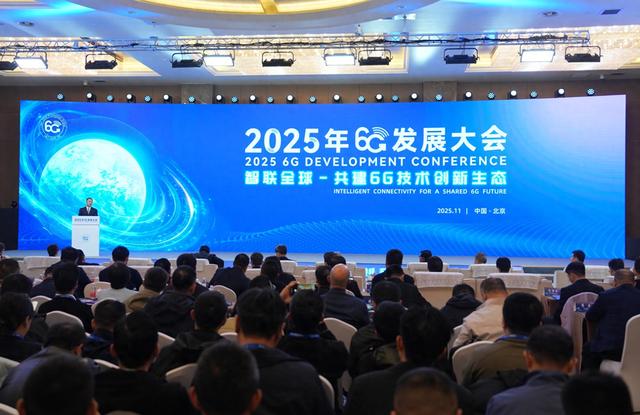
11月13日至14日,2025年6G发展大会在北京经济技术开发区举行。大会以"智联全球,共建6G技术创新 生态"为主题,邀请两院院士、国内外权威专家、国际组织代表、知名企业家等,共同探讨6G应用需 求、关键技术、国际标准、产业研发、试验验证等议题,推动6G技术及架构形成全球共识,维护全球 统一的6G国际标准和产业生态。 转自:北京日报客户端 大会期间,IMT-2030(6G)推进组宣布6G公共研发新型试验设施能力提升,基于现有6G技术试验平 台,携手业界全面提升五项能力体系,以数据为基础,构建数字孪生底座,创新通智融合、星地融合能 力,共筑一张试验网,助力6G关键技术和样机研发、支撑国际标准研制、服务创新生态应用。大会还 集中展示了超大规模天线样机、感知智能融合应用演示系统、多智能体协同演示系统、新型物联样机等 多款6G概念样机及应用演示。 京日报客户端 来源:北 大会开幕式上,工业和信息化部党组成员、副部长张云明致辞时表示,中国的6G发展正处于技术创新 加速演进、产业方向愈发清晰的关键阶段,亟需全球产学研用各方进一步集思广益、凝聚共识、紧密合 作、共促发展。 北京市政府党组成员、副市长孙硕表示,面向未来,北 ...
抖音低价茅台集体下线|首席资讯日报
首席商业评论· 2025-11-16 04:12
Group 1 - Douyin has removed low-priced links for Moutai products, indicating a commitment to regulate misleading sales practices [2] - The majority of Moutai sales links now feature official stores, with third-party low-priced listings taken down [2] - Merchants are awaiting platform assessments to determine if they can continue selling Moutai [2] Group 2 - Xiaomi plans to increase investment in 6G technology research and standardization, having showcased its AI wireless technology prototype at a recent forum [3] - The prototype supports various deployment configurations and aims to leverage AI for data transmission [3] - This move positions Xiaomi to gain a competitive edge in the emerging 6G market [3] Group 3 - Over 80% of winter wheat has been planted nationwide, with significant progress in key regions like Huang-Huai-Hai [4][5] - The recent favorable weather conditions have accelerated the planting process [5] Group 4 - Walmart's CEO Doug McMillon will step down at the end of January, amid challenges such as tariffs and changing consumer demands [6] - This unexpected leadership change comes as the retail giant faces significant industry transformations [6] Group 5 - Bilibili announced 40 new domestic animation projects, including adaptations of popular IPs [7] - The company is collaborating with Shenman Culture for the adaptation of a popular web novel [7] Group 6 - The openEuler community has released a new operating system version supporting super nodes, along with an AI solution [17] - This release marks a significant step in the community's development and collaboration with various enterprises [17] Group 7 - Tim Cook may step down as Apple's CEO as early as next year, with John Ternus seen as a potential successor [18] - The transition plan is reportedly unrelated to the company's current performance [18] Group 8 - Elon Musk stated that the perception of overpopulation is misleading, suggesting that the Earth's population could fit in a single building in New York [19] - He emphasized that much of the Earth remains sparsely populated [19] Group 9 - Shanghai police have cracked down on illegal drone activities, resulting in over 2,500 cases since the initiative began [20] - The crackdown has led to increased registration of drone operators and equipment [20] Group 10 - Musk's X platform has launched a new chat feature aimed at enhancing user communication experiences [21] - This feature integrates audio and video calling, as well as file sharing, into the platform [21]





投顾周刊:严控基金风格漂移!最新动作来了
Wind万得· 2025-11-15 22:23
Group 1 - The central bank reported that the cumulative increase in social financing for the first ten months reached 30.9 trillion yuan, which is an increase of 3.83 trillion yuan compared to the same period last year [2] - The M2 money supply increased by 8.2% year-on-year, while the social financing stock grew by 8.5% year-on-year, indicating a slight decrease in growth rates [2] - The Ministry of Industry and Information Technology announced the completion of the first phase of 6G technology testing, resulting in over 300 key technology reserves [2] Group 2 - The Ministry of Industry and Information Technology plans to develop the "14th Five-Year" plan for intelligent connected new energy vehicles and new battery industries, focusing on expanding the application of power batteries and supporting innovative battery swapping models [3] - The number of newly issued funds this year reached 1,371, the highest in nearly three years, with an average fundraising scale of 782 million yuan, indicating a shift in the public fund issuance market towards a more diversified approach [3] - The China Securities Investment Fund Association is soliciting opinions on guidelines to manage the investment style of theme investment funds, aiming to prevent style drift and ensure stability in investment direction [4][5] Group 3 - Federal Reserve official Bostic expressed a preference for maintaining the federal funds rate stability until clear evidence of inflation moving towards the 2% target is observed [7] - U.S. White House officials are discussing administrative orders to limit the influence of proxy advisers and index fund giants, indicating potential regulatory changes in the investment advisory space [7] Group 4 - Recent global stock market performance has shown divergence, with the Shanghai Composite Index down 0.18% and the Hang Seng Index up 1.26%, reflecting mixed investor sentiment [8][9] - In the bond market, the yield on 10-year Chinese government bonds rose by 1.56 basis points to 1.81%, while the yield on 10-year U.S. government bonds increased by 3.0 basis points to 4.14% [12][13] Group 5 - In the commodity market, precious metals rebounded with COMEX gold rising by 1.86% and silver by 4.69%, while international oil prices also saw an increase [15][16] - The recent week saw a significant dominance of fixed income and pure debt products in bank financing channels, contributing nearly 70% of the total number of funds and over 90% of the financing scale [19][17]