
AI算力

Search documents
英伟达GTC大会的核心看点,谁是最大受益方?
傅里叶的猫· 2026-03-17 15:08
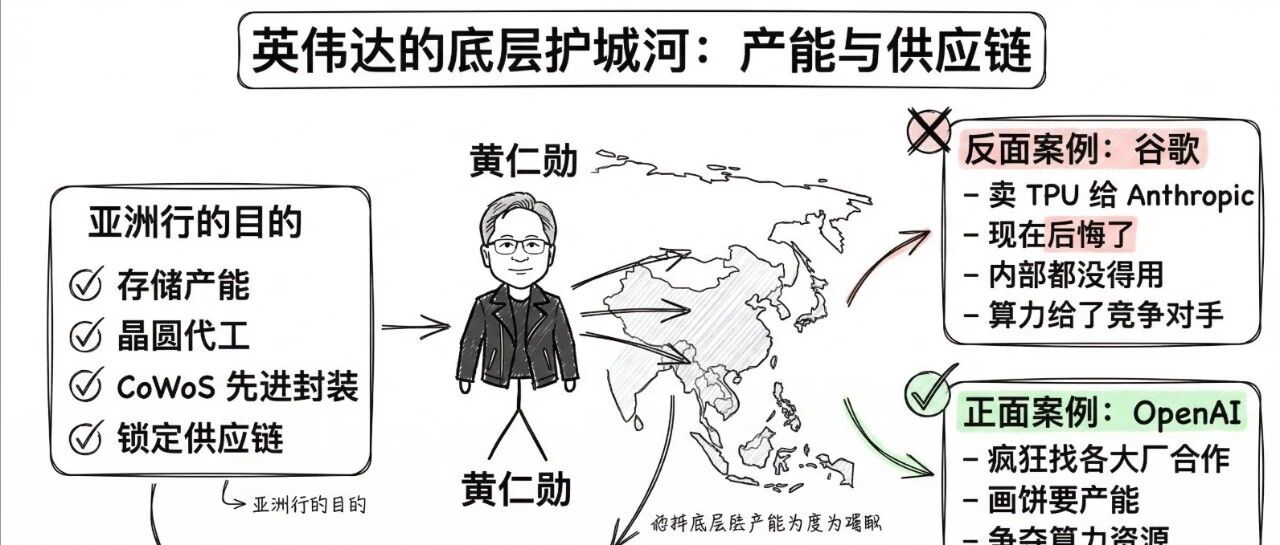
Core Insights - The article discusses the implications of NVIDIA's recent GTC event, focusing on technological shifts and potential beneficiaries in the semiconductor industry, particularly highlighting Samsung's role as a key supplier [1]. Group 1: CPX and LPU Transition - CPX has been replaced by LPU due to NVIDIA's strategic shift from prefill acceleration to inference acceleration [2][3]. Group 2: Beneficiaries of GTC - Samsung emerges as the biggest beneficiary from the GTC event, as it is the exclusive manufacturer of LPU using its N4 process technology, surpassing TSMC in overall value on Rubin [4]. Group 3: LPX Rack and FPGA Integration - The introduction of FPGA in the LPX rack allows 256 LPU to function as a single giant processor, enabling low-latency, deterministic inference acceleration [6]. Group 4: Independent CPU Cabinets - The establishment of independent CPU cabinets is aimed at supporting the autonomous operation of intelligent agents, providing a vast "sandbox" environment for testing and validation [7]. Group 5: Independent Storage Cabinets - NVIDIA's independent storage cabinets are linked to the ICMS (Inference Context Memory Storage) solution, addressing the exponential growth of KV Cache requirements in the intelligent agent era [8][11]. Group 6: Storage Architecture - NVIDIA employs a tiered storage architecture where ICMS serves as a long-term memory for AI clusters, optimizing the storage, retrieval, and sharing of massive temporary KV Cache data [13]. Group 7: Supply Chain and Capacity Control - NVIDIA's CEO emphasizes the importance of supply chain management and capacity control, frequently visiting Asia to secure storage, wafer fabrication, and advanced packaging capacities [14]. Group 8: Competitive Landscape - The article highlights a cautionary tale regarding Google's sale of TPU to Anthropic, illustrating the critical nature of controlling AI computing capacity as a determinant of competitive success in the industry [16].


AI周专题:Oracle业绩验证AI算力需求强劲
GF SECURITIES· 2026-03-17 14:23
Investment Rating - The industry investment rating is "Buy" [2] Core Insights - Oracle's Q3 FY2026 performance exceeded market expectations, validating strong demand for AI computing power and infrastructure investment logic [13][14] - The report highlights a significant increase in Oracle's cloud business revenue, which reached $8.9 billion, a 44% year-over-year growth, with cloud infrastructure service revenue growing by 84% [14][19] - The report indicates a substantial increase in remaining performance obligations (RPO) to $553 billion, reflecting a 325% year-over-year growth, driven by partnerships with major companies like OpenAI and Meta Platforms [19][21] - Oracle's AI business is currently experiencing lower profit margins, with an AI business gross margin of approximately 32%, significantly lower than the 70% margin of its cloud computing and software businesses [21][26] - The report suggests that the AI infrastructure investment is transitioning into long-term orders, although the industry is still in a high capital expenditure phase, requiring ongoing monitoring of actual delivery progress and revenue recognition [26] Summary by Sections Section 1: Oracle's Performance and AI Demand - Oracle's cloud business and AI infrastructure revenue showed strong growth, with a notable increase in cloud infrastructure service revenue [13][14] - The company is optimistic about the sustained growth in demand for cloud and AI infrastructure, raising its FY2027 revenue guidance from $85 billion to $90 billion [19] Section 2: Domestic and International AI Application Stock Performance - Recent trends show a divergence in stock performance among AI application companies, with some sectors like new cloud and cybersecurity performing well, while B2B SaaS stocks generally declined [27][31] - The report provides a detailed analysis of stock price changes relative to major indices, highlighting significant fluctuations in the AI application sector [29] Section 3: AI Data Tracking and Industry Dynamics - The report tracks AI data usage and application trends, noting a rise in demand for AI inference capabilities, which are expected to surpass training market demands [24][25] - New cloud service providers focused on AI workloads are emerging, optimizing infrastructure for data-intensive tasks [25][26]
领益智造子公司液冷产品亮相英伟达GTC 2026大会
Zhong Zheng Wang· 2026-03-17 13:49
Group 1 - Leading Technology Company Readore, a subsidiary of Lingyi Zhizao, showcased its liquid cooling products at NVIDIA's GTC 2026 conference, becoming a supplier in the NVIDIA Vera Rubin architecture ecosystem [1] - The conference highlighted the official launch of NVIDIA's Rubin all-liquid cooling architecture, emphasizing the technological development direction and market demand trends for liquid cooling core components [1] - The Inner Manifold distributor presented by Readore is designed to efficiently distribute coolant to various heat dissipation units within server cabinets, while the UQD/MQD quick connectors support pressure insertion and extraction without leakage, with each Rubin cabinet requiring 200-300 connectors [1] Group 2 - The advancement of AI computing power towards higher power density is expected to accelerate the standardization and localization of liquid cooling core components, providing significant support for the global computing infrastructure upgrade [2] - Readore has a strong technical foundation and extensive industry experience in enterprise-level server thermal management, positioning itself as a key player in the AI liquid cooling sector [2] - Readore's entry into NVIDIA's core liquid cooling supply chain demonstrates the capabilities of domestic liquid cooling companies in precision manufacturing and R&D, offering a reference path for other domestic enterprises to participate in the global computing ecosystem [2]

华尔街点评GTC:在英伟达的定义里,算力即收入,Token是新的大宗商品
Hua Er Jie Jian Wen· 2026-03-17 12:16
Core Insights - The core message from NVIDIA's annual GTC conference is that the commercial logic of AI computing power is undergoing a fundamental restructuring, with tokens becoming a new commodity and computing power equating to revenue [1] Group 1: Market Outlook - NVIDIA's management has significantly raised the visibility of data center sales from $500 billion (covering until 2026) to over $1 trillion (covering cumulative 2025 to 2027), indicating strong growth potential [1] - Morgan Stanley's report suggests that this new figure implies an upward potential of at least $50 to $70 billion compared to Wall Street's current consensus for data center revenue from 2026 to 2027 [1][2] - The high-confidence purchase orders for Blackwell and Vera Rubin systems have exceeded $1 trillion, doubling from the $500 billion reported in October 2025 [2] Group 2: Demand Structure - Demand is diversified, with approximately 60% coming from hyperscale cloud providers and the remaining 40% from CUDA cloud-native AI companies, NVIDIA cloud partners, sovereign AI, and industrial/enterprise customers [2] - The new $1 trillion outlook aligns closely with Wall Street's previous expectation of around $970 billion for the three-year data center revenue period [2] Group 3: Technological Advancements - NVIDIA emphasized the acceleration of traditional enterprise workloads, announcing collaborations with IBM, Google Cloud, and Dell, and introducing two new CUDA-X foundational libraries [3] - The integration of Groq 3 LPU with Vera Rubin is highlighted as the most important architectural release, enabling high throughput and low latency for advanced workloads [4][5] Group 4: Product Development - NVIDIA's roadmap extends to 2028, with a consistent annual architecture release schedule, including Blackwell (2024), Blackwell Ultra (2025), Rubin (2026), Rubin Ultra (2027), and Feynman (2028) [9] - The Vera CPU is projected to become a multi-billion dollar independent business, with capabilities that significantly enhance AI workloads [8] Group 5: Infrastructure Strategy - NVIDIA is pursuing both copper cable and co-packaged optics (CPO) routes simultaneously, confirming that customers can choose their preferred technology without being locked into a single option [7] - The architecture for Rubin Ultra and Feynman includes advanced features such as chip stacking and custom HBM, enhancing performance for AI workloads [9] Group 6: Market Positioning - Morgan Stanley believes NVIDIA's vertically integrated platform, spanning multiple chips and systems, is difficult to replicate and supports a more sustainable AI capital expenditure cycle than currently anticipated by the market [10]
GTC之后最大的疑问:科技巨头花掉万亿美元,回报在哪里?
美股研究社· 2026-03-17 11:22
Core Insights - The article discusses the potential of NVIDIA's AI chip revenue, projected to reach $1 trillion, which is a significant increase from the previous estimate of $500 billion, indicating strong market expectations for AI growth [2][6]. - However, the focus is shifting from how much chips can be sold to how the buyers of these chips, primarily tech giants, can generate profits from their investments in AI infrastructure [4][9]. - The current phase of the AI industry is transitioning from infrastructure investment to a verification of returns, where investors are demanding to see immediate profits rather than future promises [12][15]. Group 1: NVIDIA's Position and Market Response - NVIDIA's GTC conference aimed to reinforce market confidence in AI demand, but the actual technological breakthroughs presented were limited, primarily focusing on enhancements of existing architectures rather than groundbreaking innovations [6][14]. - The market's reaction to the conference was muted, with NVIDIA's stock experiencing only slight increases, reflecting investor skepticism about the sustainability of the projected revenue growth [7][10]. - The narrative of $1 trillion in revenue may temporarily soothe market anxieties, but it does not address the fundamental concerns regarding the profitability of AI applications [7][15]. Group 2: Challenges for Tech Giants - Major cloud providers like Microsoft, Amazon, Google, and Meta are heavily investing in AI data centers, with expected capital expenditures nearing $250 billion by 2025, but these investments have yet to yield stable commercial returns [9][10]. - The high costs associated with AI services, including computing power and infrastructure, are currently outpacing revenue growth, leading to cash flow pressures for these companies [10][12]. - If these tech giants fail to find profitable AI applications, they may reduce their capital expenditures, which would directly impact NVIDIA's order flow and overall performance [14][15]. Group 3: Future Implications - The article suggests that the AI industry is at a critical juncture where the success of NVIDIA's revenue projections hinges on the ability of its customers to monetize their AI investments [15][16]. - If tech giants can successfully develop killer applications that generate significant revenue, NVIDIA's vision of $1 trillion could materialize, leading to a golden era for the AI industry [16][17]. - Conversely, if substantial investments do not translate into profits, a contraction in the market is likely, which would not only challenge NVIDIA's stock price but also reshape the valuation logic of the entire tech sector [17][18].
AI算力新贵,光模块驱动,订单排到2026年底!
市值风云· 2026-03-17 10:11
Core Insights - The company has transformed its image from being perceived as inefficient with weak profitability to a competitive player in the optical electronics sector, achieving significant improvements in financial metrics [3][4] - The gross margin has increased to 25% and net margin is approaching 12%, indicating a strong recovery and operational efficiency [3] - The company is benefiting from the AI computing cycle and the trend towards domestic self-sufficiency, with orders for optical modules secured until the end of 2026, leading to full production capacity [3] Financial Performance - In 2021, the company reported a gross margin of only 17% and a net margin of 7.5%, which were significantly lower than leading competitors in the industry [3] - After three years of adjustments, the company has successfully raised its gross margin to 25% and net margin to nearly 12% [3] Market Perception - The market has shifted its valuation approach for the company, moving away from traditional equipment manufacturing metrics to a growth stock perspective focused on high-speed optical modules [4]
AI算力行业周报:Meta 27年底前推出四代自研AI芯片,OFC 2026大会于洛杉矶启幕-20260317
Huaxin Securities· 2026-03-17 09:29
Investment Rating - The report maintains a "Buy" rating for the companies mentioned, including 汇绿生态, 沪电股份, 天孚通信, 太辰光, while 长电科技 remains unrated [6]. Core Insights - Meta plans to launch four generations of self-developed AI chips by the end of 2027 to support its growing AI computing needs and reduce reliance on external suppliers. The chips include MTIA 300, MTIA 400, MTIA 450, and MTIA 500, with MTIA 300 already in mass production [3]. - The OFC 2026 conference in Los Angeles is expected to attract 16,000 participants and over 700 exhibitors, focusing on AI, optical innovation, and space optical networks [4]. - The report suggests focusing on companies such as 沪电股份, 长电科技, 天孚通信, 汇绿生态, and 太辰光 for potential investment opportunities [5]. Weekly Market Analysis - The electronic industry saw a decline of 1.23% from March 9 to March 13, ranking 20th among the 31 sectors, while the communication industry decreased by 0.12%, ranking 11th [12][15]. - The AI computing sector showed mixed performance, with the printed circuit board (PCB) sector increasing by 2.95%, while other power supply equipment sectors decreased by 4.61% [19]. Company Focus and Earnings Forecast - The earnings per share (EPS) forecasts for 2024, 2025E, and 2026E for the companies are as follows: - 汇绿生态: 0.08, 0.11, 0.22 with PE ratios of 540, 384, and 198.34 respectively [6] - 沪电股份: 1.35, 1.94, 2.61 with PE ratios of 60.13, 41.85, and 31.1 respectively [6] - 天孚通信: 2.43, 2.61, 4.18 with PE ratios of 133.74, 124.52, and 77.75 respectively [6] - 太辰光: 1.15, 1.83, 3.01 with PE ratios of 111.22, 70.06, and 42.49 respectively [6] - 长电科技: 0.90, 0.88, 1.19 with no rating [6]. Industry Dynamics - Tesla is advancing a large AI chip manufacturing project to support its AI and autonomous driving needs [45]. - Applied Materials and Micron are collaborating to build a semiconductor R&D center with an investment of $5 billion to develop next-generation AI storage solutions [46]. - The U.S. Department of Commerce has withdrawn a proposed rule on AI chip exports, reflecting internal disagreements on balancing national security and global competitiveness in the AI sector [47]. - Meta's announcement of new AI chips and a significant capital expenditure plan of $115 billion to $135 billion for expanding AI data center infrastructure indicates a growing trend among major tech companies to develop in-house AI capabilities [48].
“AI牛市叙事”再掀巨浪! 黄仁勋抛出万亿美元AI宏图,英伟达扬帆起航冲6万亿美元市值
Zhi Tong Cai Jing· 2026-03-17 06:12
Core Insights - Nvidia's CEO Jensen Huang presented a vision for AI computing infrastructure at the GTC conference, projecting that revenue in the AI chip sector could reach at least $1 trillion by 2027, significantly higher than the previous estimate of $500 billion by 2026 [1][13] - Analysts from firms like Goldman Sachs and Morgan Stanley are optimistic about Nvidia's stock price, predicting it could surpass $5 trillion in market capitalization again, with some estimates reaching as high as $8.8 trillion [1][10] - The shift from AI training to AI inference is emphasized, with Nvidia positioning itself as a comprehensive provider of AI infrastructure rather than just a GPU supplier [4][9] Revenue Projections - Nvidia's revenue opportunity in AI infrastructure has been revised upwards to at least $1 trillion by 2027, reflecting strong demand for its Blackwell and Vera Rubin architectures [1][13] - The average target price from Wall Street analysts suggests Nvidia's market cap could exceed $6 trillion in the next 12 months, with a bullish target of $8.8 trillion [1][10] Technological Developments - Nvidia introduced a new CPU and a set of AI inference infrastructure systems based on Groq's technology, indicating a strategic move to strengthen its position in the inference computing space [2][14] - The integration of various components such as CPU, GPU, LPU, and networking into a unified platform is a significant development, enhancing the efficiency and performance of AI operations [6][11] Market Positioning - Nvidia is transitioning from being a dominant player in AI training to becoming a key player in AI inference, focusing on metrics like cost per token and energy efficiency [4][10] - The company is redefining data centers as "AI factories," emphasizing the importance of optimizing the entire system rather than just individual components [5][11] Competitive Landscape - The competition in the AI inference market is intensifying, with Nvidia facing challenges from custom AI ASICs developed by companies like Google [2][14] - Nvidia's strategy includes leveraging its unique approach to commercializing inference, which could solidify its leadership in the AI infrastructure market [14][15] Future Outlook - The demand for AI infrastructure is expected to remain strong, with Nvidia's projections alleviating concerns about potential peaks in AI capital expenditures [10][15] - Analysts believe that Nvidia's comprehensive approach to AI infrastructure will enable it to maintain a competitive edge in the evolving landscape of AI technology [14][15]
英伟达GTC 2026:算力革命、万亿预期与中美AI芯片新格局
Tai Mei Ti A P P· 2026-03-17 04:10
Core Insights - The AI industry competition is shifting from model and algorithm development to a focus on computing power, efficiency, and commercialization [1] - NVIDIA's GTC 2026 conference highlighted the transition of AI from "training" to "inference" as the core of AI commercialization, with a projected global AI infrastructure investment increase from $500 billion to $1 trillion [2][4] - The introduction of the "AI factory" concept and "Token economics" redefines the profitability and development path of AI, emphasizing the importance of inference power [2][3] Investment Outlook - NVIDIA's CEO Huang Renxun projected that the revenue from AI chips could reach at least $1 trillion by 2027, which significantly boosted NVIDIA's stock price and market capitalization [4][5] - The demand for inference is not just a prediction but a current reality, with over 60% of AI companies' costs attributed to inference, necessitating cost reductions [5][6] - NVIDIA's ecosystem, including its CUDA platform, creates a strong barrier to entry for competitors, ensuring its dominance in the general computing power market [6][8] Technological Advancements - The release of the Rubin and Feynman architectures marks a generational leap in AI chip technology, widening the gap between the US and China in AI computing capabilities [7][8] - The advancements in manufacturing processes, such as the transition to 3nm and 1.6nm technologies, highlight the challenges faced by Chinese chip manufacturers due to supply chain restrictions [7][8] Industry Dynamics - The global AI industry is moving towards a "dual-track" model, with the US leading in high-end AI capabilities while China focuses on domestic applications [9][10] - The shift in AI commercialization will allow smaller companies to access AI technologies, promoting widespread adoption across various industries [10][11] - The competition in the AI sector is not limited to individual components but encompasses the entire industry chain, emphasizing the need for strategic adaptation in response to technological and market changes [11]
英伟达2027年数据中心订单预计达1万亿美元,通信ETF华夏(515050)连续4日吸金超1.5亿元
Mei Ri Jing Ji Xin Wen· 2026-03-17 04:01AI Processing
每日经济新闻 过去两年,全球AI计算需求呈指数级爆炸。随着大模型从"感知"、"生成"进化到"推理"与"行动 (执行任务)",算力的消耗量急剧攀升。针对市场高度关注的订单与营收天花板,本次黄仁勋给出了 极为强劲的预期,算力景气度有望延续。资金提前布局,近4个交易日,同指数规模最大通信ETF华夏 (515050)获得资金持续净流入,累计吸金超1.5亿元。 资料显示,通信ETF华夏(515050)深度聚焦电子(PCB、消费电子)+通信(光模块、服务器、 光纤光缆)算力硬件。前10大持仓股:新易盛、中际旭创、立讯精密、工业富联、兆易创新、天孚通 信、东山精密、华工科技、中兴通讯、沪电股份。场外联接(A类:008086;C类:008087)。 消息面上,2026年3月16日,英伟达GTC 2026大会正式开幕,英伟达创始人兼CEO黄仁勋发表了主 题演讲。在此次大会上披露,英伟达表示其到2027年的数据中心业务订单规模预计将达到1万亿美元。 高盛最新发布研报表示,这一明确的长期收入可见度大幅超出了华尔街的普遍预期,直接缓解了投资者 对人工智能资本支出可能在2026年触及顶峰的担忧。 【免责声明】本文仅代表作者本人观点,与 ...