
AI营销

Search documents
京东广告发布AI智能体“京小通”,以对话交互实现一站式AI智能经营
Zhong Jin Zai Xian· 2026-01-09 01:36
Core Insights - JD Advertising has launched an upgraded intelligent advertising assistant "Jing Xiaotong," marking a transition to an integrated AI-driven marketing era [1] - The new "Jing Xiaotong" combines vast marketing data, expert experience, and advanced model technology to create an AI marketing entity that evolves, thinks, and executes [1] Group 1: AI Marketing Capabilities - "Jing Xiaotong" offers a comprehensive AI solution for merchants, providing insights, creative generation, intelligent placement, and diagnostic optimization through a user-friendly natural language interface [1][3] - The platform can generate high-quality advertising creatives and visual materials in seconds based on product selling points, analyze cross-account and cross-product operational data, and perform attribution analysis automatically [3] - During the testing phase, "Jing Xiaotong" improved marketing efficiency for JD's self-branded products by 30% [3] Group 2: Future AI Business Framework - JD Advertising is building a more extensive AI business framework, focusing on key operational scenarios such as product selection, keyword selection, audience targeting, and diagnostic optimization [4] - The AI will understand merchants' natural language intentions, recommend potential best-selling products, and provide precise keywords to expand traffic [4] - The strategic upgrade of "Jing Xiaotong" signifies a shift from merely providing advertising tools to constructing an AI business ecosystem, aiming for a closed-loop decision-making process that enhances ROI and ensures sustainable growth for merchants [4]



京东广告发布AI智能体“京小通”,可为商家提供全链路营销一站式AI解决方案
Jin Rong Jie Zi Xun· 2026-01-09 01:28
Core Insights - JD Advertising has launched an upgraded intelligent advertising assistant named "Jing Xiaotong," marking a transition to an integrated AI-driven marketing era [1] - The new "Jing Xiaotong" combines vast marketing data, expert experience, and advanced model technology to create a marketing intelligent agent that can strategize, generate creative content, intelligently place ads, and optimize diagnostics [1][3] Group 1: AI Marketing Capabilities - "Jing Xiaotong" is designed to enhance efficiency for merchants by generating high-quality ad creatives and visual materials in seconds based on product selling points [3] - The platform can analyze cross-account and cross-product operational data, automatically perform attribution analysis, and allow merchants to execute automated bulk operations through dialogue, significantly improving advertising efficiency [3] - During the testing phase, "Jing Xiaotong" helped improve marketing efficiency for JD's own brand by 30% [3] Group 2: Future AI Business Framework - The upgrade serves as a starting point for building a more extensive JD Advertising AI business system, focusing on key operational scenarios such as product selection, keyword selection, audience targeting, and optimization diagnostics [7] - The AI will understand merchants' natural language intentions, recommend potential best-selling products, and provide precise keywords to expand traffic, while continuously monitoring ad performance and diagnosing issues [7] - The strategic upgrade of "Jing Xiaotong" represents a shift from merely providing advertising tools to constructing an AI-driven business ecosystem, aiming to optimize the connection between people, products, and platforms [9]

2026品牌AI营销的第一场共识
Tai Mei Ti A P P· 2026-01-08 11:25
Core Insights - The article emphasizes the rapid changes in brand marketing driven by AI technology and the need for brands to adapt to these changes by finding their unique identity and core values [2][3][6]. Group 1: Trends in Brand Marketing - The next decade will witness the fastest changes in human history, with AI technology making "change" a norm and "stability" a rarity [2]. - Brands must focus on customization and emotional value to meet the increasingly fragmented interests and needs of consumers [2][3]. - In the era of algorithm fragmentation, understanding a brand's identity is more crucial than how others perceive it [3]. Group 2: Importance of Scenarios - The significance of scenarios in brand marketing outweighs that of demographics in the AI marketing era [6]. - Brands need to define their "core scenarios" and leverage AI to reinforce their market position [6]. - The interaction between brands and consumers is increasingly mediated by AI, which can recommend products based on specific scenarios [7][30]. Group 3: AI Marketing Infrastructure - Current AI marketing infrastructure consists of AI models that enhance decision-making efficiency and AIGC tools that improve content production [7]. - AI models are changing the way consumers make pre-purchase decisions, with scenario-based inquiries becoming triggers for brand recommendations [7][8]. Group 4: Brand Strategy in AI Era - Brands must view AI marketing as a long-term strategy rather than a short-term tactic, as inconsistent messaging can lead to negative consumer perceptions [12]. - Building a "trust asset" through consistent, high-quality content will be crucial for brands to succeed in AI marketing [34]. - Brands should focus on creating a "scenario-question vocabulary" to align their products with consumer inquiries in AI systems [33]. Group 5: Competitive Landscape for Emerging Brands - Emerging brands should identify their unique positioning and continuously reinforce it to build a competitive edge against larger brands with bigger budgets [28]. - The competition will increasingly revolve around establishing a "unique mental space" in the minds of consumers, which requires proactive efforts to register this space with AI [37]. Group 6: Future of Brand Marketing - By 2026, brand marketing will enter a "dual-track" era, focusing on both human emotional engagement and AI-driven logical persuasion [38]. - Successful brands will be those that can integrate emotional storytelling with rigorous data and evidence to gain AI's trust [38].
2026年,品牌该认真对待AI GEO了
Tai Mei Ti A P P· 2026-01-08 10:32
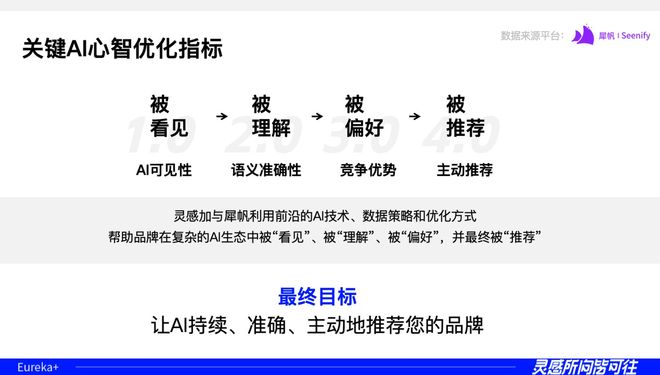
Core Insights - The article discusses the transformative impact of AI chat assistants on consumer behavior and brand marketing strategies, emphasizing a shift from passive information search to active dialogue with AI [2][3][4]. Group 1: AI's Role in Consumer Decision-Making - AI chatbots are becoming the primary advisors for consumers, with over 60% of young consumers consulting AI before making significant purchasing decisions [6][10]. - This shift indicates a fundamental change in how brands communicate their value, as AI now mediates the relationship between brands and consumers [7][18]. - The "reduction" capability of AI simplifies the decision-making process for consumers, allowing them to receive tailored recommendations quickly [14][16]. Group 2: Brand Strategy in the AI Era - Brands must redefine their value propositions to ensure they are visible, recognized, and chosen by consumers who primarily interact with AI [3][4][33]. - The concept of "intent economy" replaces the traditional "attention economy," focusing on understanding consumer needs rather than competing for attention [28][30]. - Brands need to provide specific, verifiable information that AI can easily process and relay to consumers, moving away from vague marketing language [22][23][64]. Group 3: Marketing Methodology Transformation - The marketing focus is shifting from capturing attention to understanding consumer intent, requiring brands to adapt their strategies accordingly [35][65]. - Brands must establish a clear mapping of scenarios, problems, and solutions to effectively respond to consumer inquiries through AI [61]. - The ability to compress information into impactful, context-specific messages is crucial for brands to succeed in the AI-driven marketplace [39][40]. Group 4: The Three Levels of AI Engagement - Brands must achieve three levels of engagement with AI: being seen, being recognized, and being recommended [41][46][52]. - The first level involves ensuring that brand information is indexed and understood by AI, which is essential for visibility [41][42]. - The second level requires brands to provide credible, relevant, and valuable information that AI can trust and relay to consumers [44][45]. - The final level is about being prioritized in AI recommendations, necessitating a deep understanding of specific consumer scenarios [47][48]. Group 5: Future Outlook and Strategic Preparedness - The article concludes that 2026 will mark a significant turning point for brands that adapt to these changes, emphasizing the need for ongoing dialogue with consumers and AI [66][67]. - Companies that can effectively navigate this new landscape will likely outperform those relying on traditional marketing methods [68][69].
找何炅代言蚂蚁阿福,AI 营销还有什么新故事
3 6 Ke· 2026-01-08 02:17
Group 1 - The core message of the article revolves around the marketing strategy of Ant Group's health AI application, Aifu, which has recently undergone a brand upgrade and is utilizing a traditional marketing approach to establish itself as a national-level entry point in the market [1][3][4] - Aifu, previously known as AQ, is positioned as a health AI assistant rather than a medical service, focusing on everyday health decision-making and providing intelligent answers to health-related queries [4][6] - The marketing campaign features popular host He Jiong as the global brand ambassador, leveraging his high public favorability to create a relatable and trustworthy image for Aifu [6][12] Group 2 - The marketing strategy includes extensive media exposure across various platforms, both online and offline, indicating significant financial backing for the campaign [1][7] - Aifu's approach aims to reduce user apprehension towards AI health products by emphasizing features like "no ad recommendations" and "no commercial sorting," thereby enhancing its professional image [12][16] - The competitive landscape in the AI industry is intensifying, with other applications like Doubao also gaining traction, highlighting the urgency for effective marketing strategies as product differentiation diminishes [17][18] Group 3 - Ant Group's investment in Aifu is driven by a defensive strategy to maintain its position in the healthcare ecosystem, as the rise of general AI could threaten its existing services [16] - The marketing budget for Aifu is not just for immediate visibility but also serves long-term strategic goals, such as enhancing data collection for credit assessment and insurance product innovation [16] - The article discusses the broader implications of AI marketing, noting that different companies are experimenting with various strategies to effectively communicate their AI capabilities to users [32][35]

Anker、PatPat都在做的合作伙伴营销,究竟进化到了哪一步?
36氪未来消费· 2026-01-07 08:33
Core Insights - The article discusses the shift in growth strategies for companies expanding overseas, emphasizing the transition from traditional advertising to leveraging third-party creators and communities for trust-based marketing [2][3][5]. Group 1: Changing Consumer Behavior - Consumers are increasingly relying on third-party evaluations and community feedback rather than direct advertisements when making purchasing decisions [3][7]. - The traditional linear consumer journey has become fragmented, with users seeking information from various sources such as videos, blogs, and AI tools before making a purchase [7][8]. Group 2: Evolution of Partnership Marketing - The concept of "affiliate marketing" is evolving into "partnership marketing," which encompasses a broader range of collaborators, including creators and loyal users, rather than just relying on discounts and rebates [6][8][10]. - Companies are reallocating marketing budgets towards partnership channels, with 38% of brands allocating 21%-30% of their marketing budget to these areas, and 6% investing over 50% [10][16]. Group 3: Strategic Shifts in Marketing - The focus is shifting from mere traffic acquisition to building a network of trust and influence, with 74% of brands increasing their investment in partnership marketing due to diminishing returns from traditional channels [10][16]. - Companies are recognizing the need to manage third-party relationships systematically, moving away from ad-hoc methods to a more structured approach using platforms like impact.com [18][22]. Group 4: Operational Efficiency and AI Integration - The integration of AI into partnership management is becoming essential, with 97% of brands adopting AI to streamline workflows and improve decision-making [30][34]. - Companies are transitioning from manual processes to automated systems for managing partnerships, which significantly reduces operational costs and enhances efficiency [25][26][30]. Group 5: Future Competitive Landscape - The future of global competition will hinge on the ability to manage complex partnership networks effectively, with companies needing to adapt to a more interconnected and automated marketing ecosystem [29][36]. - Brands that fail to upgrade their partnership marketing strategies risk falling behind in a rapidly evolving marketplace, where traditional methods are no longer sufficient [20][34].

AI营销新范式GEO-广告营销行业的新机遇
2026-01-07 03:05
Summary of the Conference Call on Generative Optimization (GO) in the Advertising Industry Industry Overview - The conference discusses the advertising marketing industry, specifically focusing on Generative Optimization (GO) as a new paradigm in AI marketing [1][2]. Core Insights and Arguments - **Generative Optimization (GO)** aims to enhance brand visibility in AI search results by ensuring that brand-related content is actively mentioned in AI responses, contrasting with traditional SEO which focuses on click-through rates [2]. - The demand for GO arises from the rapid growth of chatbots and AI search engines, with advertisers eager to have their brands featured in these platforms [3][4]. - GO services are expected to cover mainstream AI platforms and require a deep understanding of content preferences, presenting a high technical barrier compared to traditional advertising [8][9]. - The GO market is in its early stages, with a potential market size reaching tens of billions of dollars, partially replacing SEO but not entirely [10][11]. Key Metrics and Effectiveness - The effectiveness of GO services is measured by AI recommendation rates, which reflect brand visibility in AI applications [7]. - If these metrics show significant improvement post-GO service implementation, it indicates service effectiveness; otherwise, strategies need to be adjusted [7]. Challenges and Technical Barriers - Providing GO services necessitates continuous tracking of model changes and understanding content preferences across various AI platforms, making it a technically demanding service [8]. - Current GO methods are often rudimentary, relying on keyword stacking, but as AI platforms become more sophisticated, these methods will be phased out [12]. Competitive Landscape - The GO market is expected to see increased concentration as the technical barriers are higher compared to the SEO market, which is currently fragmented with many low-quality service providers [13]. - Companies with both technical and marketing capabilities are more likely to succeed in the GO space, with examples including Profound and Semrush, which are actively developing GO services [13][17]. Investment Trends - Currently, advertisers are spending thousands of dollars monthly on GO services, with small businesses favoring subscription models and larger enterprises opting for customized projects [14]. - The annual recurring revenue (ARR) for AI products has shown rapid growth, indicating a burgeoning market despite still being in its early stages [16]. Future Outlook - The GO market is anticipated to grow significantly, driven by the increasing traffic from AI searches, which could provide a new source of incremental profit for advertising companies [18]. - Companies that can combine SEO and GO services into integrated marketing tools are likely to gain a competitive edge, as traditional search will not be entirely replaced by AI search [15]. Conclusion - The commercial viability of AI applications, particularly through advertising monetization, presents new opportunities for advertising agencies, as they will continue to play a crucial role in connecting clients with AI platforms [21].
2026年3大营销洞察:当品牌离开舞台中央
3 6 Ke· 2026-01-07 02:55
Core Insights - In 2025, brand marketing is experiencing a significant transformation, characterized by diverse expressions and increased engagement, largely driven by the widespread adoption of AI technology in marketing strategies [1][2] - The rise of nostalgia-driven campaigns is notable, with brands like McDonald's and Gap successfully launching retro-themed marketing initiatives that resonate well on social media [1] - Brands are shifting towards decentralized narratives, as seen in Nike's "So Win" series, which emphasizes individual athlete stories rather than a singular competitive focus [1] Group 1: AI in Brand Marketing - AI has become a default element in brand marketing strategies, enhancing efficiency in content creation, user insights, and ad optimization [2][3] - However, this reliance on AI has sparked a trust crisis among consumers, who are increasingly questioning the authenticity of brand messages and whether they are generated by real individuals [3][5] - The shift towards AI-generated content has led to a perception that brands are merely content publishers rather than authoritative voices [5][6] Group 2: Emotional Marketing - The proliferation of AI in content production has transformed emotional marketing, making it easier for brands to generate content but also diluting the authenticity of emotional expressions [7][10] - Brands are now faced with the challenge of maintaining genuine emotional connections with consumers in an environment where emotional expressions can quickly become superficial [10][11] - Successful emotional marketing hinges on the authenticity of the emotions conveyed and their relevance to the consumer's real-life experiences [11] Group 3: Endorsement Marketing - The role of celebrity endorsements is evolving, with brands increasingly distancing themselves from traditional celebrity-driven narratives [12][13] - Celebrities are now positioned more as facilitators of brand expression rather than central figures, allowing brands to maintain a clearer identity [13][15] - This shift reflects a broader trend of brands recalibrating their authority and narrative control in response to the unpredictable nature of public figures [16][17] Conclusion - In a landscape where expression is abundant, the focus for brands is shifting towards exercising judgment and restraint rather than merely amplifying their voices [17][18] - The challenge lies in ensuring that brands remain relevant and credible, even as the dynamics of communication and consumer engagement evolve [18]
定义品类、筑牢底座、AI驱动,探寻2026出海「新增长极」
36氪· 2026-01-07 00:33
Core Insights - The article emphasizes a fundamental shift in Chinese brands going global, moving from geographical expansion and traffic monetization to defining categories and standards [1][2] - Companies are encouraged to leverage technology, cultural innovation, and AI to adapt to new market dynamics and consumer needs [2][19] Group 1: Great Direction - The focus has shifted from geographical expansion to becoming category standard definers, indicating a significant change in growth strategies for Chinese enterprises [5] - Understanding consumer needs and effectively responding through technology is crucial for success in the new phase of international expansion [7] Group 2: Underlying Risks - Efficiency alone is no longer sufficient; a comprehensive understanding of supply chains, including compliance, funding, and localization, is essential for navigating risks in international markets [11] - The article highlights the importance of building a robust supply chain to mitigate risks associated with regional conflicts and compliance issues [10][11] Group 3: Resilient Growth - Brand strength and AI are identified as critical pillars for long-term success, with brand power addressing pricing and cyclical challenges, while AI enhances efficiency and scalability [14][16] - The integration of brand strength and market insights is essential for navigating the complexities of global markets [9][19]
浙文互联:公司数字文化、数字营销均服务于消费市场的发展
Zheng Quan Ri Bao Wang· 2026-01-06 12:13
Core Viewpoint - Zhejiang Wenlian (600986) emphasizes its focus on digital culture and digital marketing to support the development of the consumer market, particularly through AI marketing and cultural services [1] Group 1: Digital Marketing - The company’s AI marketing initiative, HochiGEO, focuses on "AI search" to enhance search engine optimization in the era of large models [1] - This initiative aims to help brands accurately reach target users, fulfilling their consumption needs more effectively [1] - The application of this technology is particularly notable in the automotive and fast-moving consumer goods sectors [1] Group 2: Digital Culture - The company’s subsidiary, Xingchao Network, is dedicated to promoting gaming and e-sports culture internationally [1] - This effort is part of a broader strategy to explore avenues for enhancing the value of Chinese culture and its global outreach through various forms, including cultural, e-sports, new consumption, and cultural heritage [1]
