
人工智能(AI)

Search documents
快讯|对话纳斯达克副主席:中企仍有赴美上市意愿,期待迎接更多AI企业
Sou Hu Cai Jing· 2025-11-18 08:40
值得一提的是,近期关于OpenAI可能在未来两年寻求上市的传闻不绝于耳。麦库伊也称,纳斯达克是最佳 的上市地,未来愿意欢迎更多人工智能(AI)企业上市。 近期,全球IPO复苏进程引发关注,纳斯达克交易所无疑在聚光灯下。今年9月,纳斯达克拟修改规则,提 高上市企业的最低募资要求。 11月9日,纳斯达克副董事长兼全球资本主管鲍勃·麦库伊(Bob McCooney)在全美华人金融协会 (TCFA)年会期间接受了第一财经的采访。 麦库伊表示,今年IPO市场的复苏由多层因素推动。从地区分布来看,亚洲继续成为国际业务最主要的增 长动力,"今年以来仍有66家中国企业在纳斯达克IPO,虽规模多集中在600万~700万美元,但作为全球第 二大经济体,中国企业的上市需求仍将持续。" ...


日经平均指数三连跌,破4万9000点关口
日经中文网· 2025-11-18 08:00
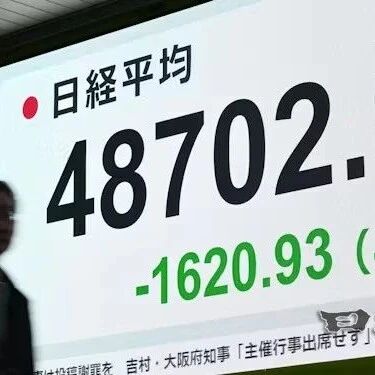
版权声明:日本经济新闻社版权所有,未经授权不得转载或部分复制,违者必究。 11月18日,日本东京股票市场的日经平均指数连续三个交易日下跌,收盘报4万8702点,较上一交易日 下跌1620日元(跌幅3.22%)。这是自10月23日以来,日经平均指数首次在收盘时跌破4万9000点关 口。由于日本时间20日清晨美国英伟达(NVIDIA)将公布财报,同日还将公布美国9月就业数据,市 场对过热感较强的人工智能(AI)及半导体相关个股保持警惕,卖压显著增加。日经平均也跌破被视 作"下档支撑线"的25日的移动均线,投资者的警觉情绪在加强。 17日的美国股市方面,道琼斯工业平均指数较上周末下跌1.18%,科技股权重较高的纳斯达克综合指数 下跌0.84%。美国联邦储备委员会(FRB)官员持续发表对进一步降息保持谨慎的讲话,加之有消息 称,美国数据分析软件企业 Palantir Technologies 的联合创始人彼得·蒂尔(Peter Thiel)在7~9月期间已 将其所持的英伟达股票全部抛售,这些消息进一步推动了以AI相关股票为主的持仓调整。 上述风险规避情绪也扩散至日本股市。18日,软银集团(SBG)大跌7.47%,TO ...
加密货币市场“极度恐惧”!过去6个月入市亏损严重,加剧抛售
Sou Hu Cai Jing· 2025-11-18 07:47
Group 1 - The core viewpoint of the articles indicates that Bitcoin (BTC) is experiencing a significant decline, dropping to a low of $89,253 per coin, with traders betting on further decreases to $85,000 and even $80,000, suggesting over a 10% potential drop from current prices [1] - Concerns over an artificial intelligence (AI) bubble are leading investors to sell off riskier assets, including tech stocks and cryptocurrencies, compounded by a cooling expectation for a Federal Reserve rate cut in December, which intensifies pressure on the cryptocurrency market [1] - The Crypto Fear and Greed Index currently stands at 15, indicating that market participants are in a state of "extreme fear," reflecting the overall sentiment in the cryptocurrency market [1] Group 2 - Research analyst Adam McCarthy from Kaiko identifies the Federal Reserve's policies and discussions around the AI bubble as the two main obstacles facing cryptocurrencies and risk assets before the end of the year [1] - Chris Newhouse, director of research at Ergonia, notes that buyers who accumulated positions over the past six months are now facing significant losses and are forced to sell assets to prevent further losses, contributing to the current wave of sell-offs [1]

钱凯港解决拉美“电车难”,中国品牌抢占先机,销量飙升
Guan Cha Zhe Wang· 2025-11-18 06:24
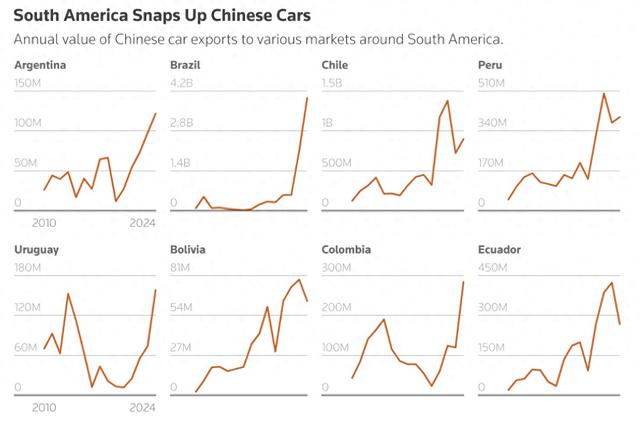
【文/观察者网 阮佳琪】 2019年,秘鲁绿色能源企业家路易斯·兹维巴赫(Luis Zwiebach)想买一辆电动汽车,专程飞往4000英 里外的美国加利福尼亚州,试驾美国电动汽车品牌特斯拉的Model 3。但当时,特斯拉在秘鲁没有官方 进口商,他也无法绕开秘鲁复杂的汽车进口流程。 最终好不容易从一名私人进口商手中买下了车,兹维巴赫又遭遇了棘手的充电难题。"因为没有接地装 置,车充不了电," 他说,"我们找了一把叉子插进土里做接地,这才充上电。" 如今,在秘鲁入手电动汽车已不再困难。据路透社17日报道,随着首都利马北部由中国建造的钱凯港启 用,跨太平洋运输时间被缩短一半,比亚迪、吉利、长城汽车等中国品牌车型大量涌入,销量持续攀 升。 其中,集电动汽车、插电式混合动力汽车和燃油车生产于一体的比亚迪,计划年底前在利马开设第四家 经销商;奇瑞和吉利在秘鲁的经销商总数则已超过12家。而特斯拉仍然缺席,迄今仍未在当地开设展 厅。 "电动汽车在这儿卖得很好,每天能卖出两辆以上,"兹维巴赫在利马告诉路透社。需求增长也帮助他扩 大了可再生能源业务,除了太阳能电池板和再生电梯,他现在还为利马、阿雷基帕的房地产开发商、大 学、购 ...

这类芯片,新大门开启
半导体行业观察· 2025-11-18 01:40
Core Viewpoint - The article discusses the ongoing challenges and dynamics in the RAN (Radio Access Network) chip market, highlighting the reliance on a few major suppliers and the implications of geopolitical factors on market competition [2][3]. Group 1: Market Dynamics - The RAN chip market is dominated by a few players, specifically Ericsson, Nokia, and Samsung, which limits competition for telecom operators [3]. - The revenue for RAN products was approximately $45 billion in 2022, projected to decline to $35 billion by 2024, indicating a shrinking market [3]. - The introduction of Open RAN has not significantly increased chip diversity, leading to a reliance on a limited number of manufacturers [3]. Group 2: Technological Shifts - Virtual RAN (vRAN) is gaining traction, with its share expected to double from 10% in 2023 to over 20% by 2028, potentially impacting the custom chip market [5]. - Ericsson continues to invest heavily in ASIC (Application-Specific Integrated Circuit) development, but the shift towards vRAN may affect the returns on this investment [6][7]. - Samsung is rapidly moving towards vRAN solutions, with its products showing improved performance and reduced costs compared to traditional RAN [7]. Group 3: Competitive Landscape - Intel remains a key partner for both Ericsson and Samsung, while Nokia relies on Marvell for its RAN products [3][7]. - AMD is positioned as a potential alternative to Intel, with its financial performance significantly better than Intel's, but challenges remain regarding hardware integration [9]. - Nvidia's recent investment in Nokia indicates a strategic move to support RAN software development, although there are concerns about the cost and energy efficiency of Nvidia's GPUs [12][13].


大摩闭门会:邢自强、Laura Wang:2026经济与市场展望 _ 纪要
2025-11-18 01:15
Summary of Key Points from Conference Call Records Industry or Company Involved - The conference call primarily discusses the macroeconomic outlook for the United States and China, along with insights into the Asian technology sector and investment opportunities. Core Insights and Arguments U.S. Economic Outlook - The U.S. economy may experience a slight slowdown in the first half of 2026, but AI investments are expected to provide support, leading to gradual recovery in the second half of the year [1][3][5] - The Federal Reserve is likely to adopt a dovish stance, with interest rates expected to be lowered to 3%-3.25% before entering a wait-and-see phase [1][3] - The U.S. government is implementing a high-growth, high-inflation strategy to address rising debt, similar to post-World War II approaches [1][5] - The S&P 500 index is projected to reach 7,800 points by the end of 2026, with an annualized earnings growth of 15% [1][9] Chinese Economic Outlook - China is expected to transition from deflation to low inflation between 2026 and 2027, with fiscal policies likely to be strengthened in response to real estate challenges [1][4][6] - The introduction of a "Chinese version" of mortgage rates through fiscal subsidies is anticipated to stimulate consumption and maintain financial stability [1][8] - The nominal GDP growth for China is projected to remain just above 4% for the third consecutive year, with a real growth rate of 4.8% in 2026 [1][4] Asian Technology Sector - The outlook for Asian technology exports remains optimistic, with growth expected to extend beyond the tech sector into investment and consumption [2][23] - Countries such as India, Japan, Malaysia, Singapore, and South Korea are highlighted as having strong growth potential due to non-tech export recovery [2][26] Investment Recommendations - Investors are advised to favor U.S. equities, followed by Japanese and European stocks, while maintaining a lower allocation to emerging markets [1][9] - The Chinese stock market is expected to maintain a price-to-earnings ratio of around 13, with a projected earnings growth of 6% for the Minsheng China Index in 2026 [1][10][12] Other Important but Possibly Overlooked Content - The potential for a significant wealth effect from the stock market recovery is noted, but the overall impact on consumer spending is limited due to the high proportion of wealth tied to real estate [1][18] - The challenges facing local government finances are highlighted as a key factor affecting overall investment levels in China [1][20] - The anticipated recovery in the Asian economy is expected to be gradual, with GDP growth projected to rise from 4.3% in Q4 2025 to 4.7% in Q4 2026 [2][25] This summary encapsulates the key points discussed in the conference call, providing a comprehensive overview of the economic outlook and investment strategies for the U.S., China, and the broader Asian region.
英伟达跌1.8%,苹果跌1.8%,微软跌0.5%,谷歌涨3.1%,亚马逊跌0.78%,Meta跌1.2%,特斯拉涨1.1%
财联社· 2025-11-18 00:59
(三大指数日内走势图,来源:TradingView) 截至收盘,道琼斯指数跌1.18%,报46,590.24点;标普500指数跌0.92%,报6,672.41点;纳斯达克指数跌0.84%,报22,708.07点。 随着周一的走势,标普500指数11月迄今已下跌逾2%,此前该指数已连续六个月上涨。标普500指数目前较历史高点回落逾3%,而科技权 重更高的纳指跌幅更大,较纪录高点回落逾5%。 华尔街正在更加深入地审视人工智能(AI)热潮的基本面。近几周来,对于科技股估值过高的担忧情绪一直主导着市场。 美东时间周一,随着投资者再度抛售科技股,美股三大指数集体下跌,道指领跌,下跌约1.2%。 热门股表现 AI风向标英伟达将于本周三盘后公布财报,英伟达和其他AI概念股近期成为市场压力来源。 Baird投资策略师Ross Mayfield表示:"一方面,英伟达需要证实需求仍然强劲,没有出现放缓迹象。但除非他们更进一步说明,否则另一 个问题会更悬而未决,那就是'我们知道计算需求很强,但购买这些芯片的企业,其投资回报率到底如何?'" Mayfield警告道:"如果他们对芯片需求给出任何哪怕稍显温和的指引或预测,市场都会作出负 ...






巴菲特“弥补”遗憾,谷歌今年“火”了
Di Yi Cai Jing Zi Xun· 2025-11-18 00:18
Core Insights - Berkshire Hathaway has made a significant investment in Google, acquiring nearly 18 million shares, marking a notable shift in its investment strategy towards technology [3][4] - This investment comes as Berkshire's cash reserves reach a record high of $381.7 billion, reflecting a cautious approach in its overall investment portfolio [3] - The market has reacted positively to this news, with Google's stock rising over 5%, indicating renewed investor confidence in the company's AI capabilities and cloud business [6][7] Investment Strategy - Berkshire Hathaway's third-quarter report shows a continued reduction in holdings of major stocks like Apple and Bank of America, while reallocating investments in companies like Domino's Pizza and Chubb [3][4] - The decision to invest in Google is seen as a potential expansion of Berkshire's investment "circle of competence" into more technology sectors, driven by the influence of Buffett's successors [5] Market Reaction - The anticipation surrounding the upcoming release of Gemini 3.0, Google's new AI model, has contributed to the stock's upward momentum, with a 92% probability of release before November 22 [6][7] - Analysts believe that Gemini 3.0 could enhance Google's position in generative AI, addressing earlier concerns about competition from ChatGPT and reaffirming investor trust in Google's search and AI capabilities [7] Valuation Insights - Google's current valuation is considered attractive, with a projected P/E ratio of 25.5 for next year, compared to higher ratios for competitors like Microsoft and Nvidia [5] - The strong free cash flow potential of Google's core business is a key factor in Berkshire's willingness to invest, as it aligns with the company's cautious yet strategic investment philosophy [5]

敏感时期重创市场,亚马逊发债150亿美元,“四大厂”两个月发债超800亿,美银称“明年最佳交易是做空云大厂债券”
Hua Er Jie Jian Wen· 2025-11-18 00:12
Core Insights - The tech giants are engaged in an unprecedented "arms race" for AI infrastructure, leading to a significant surge in bond issuance to fund their capital expenditures [1][3] - Amazon has initiated its first dollar bond issuance in three years, raising $15 billion, exceeding initial estimates by $3 billion, indicating strong market demand [1][2] - The total bond issuance by major tech companies for AI-related infrastructure has surpassed $200 billion this year, with significant contributions from Alphabet, Meta, and Oracle [3] Group 1: Amazon's Investment and Bond Issuance - Amazon's bond issuance proceeds will support business investments, future capital expenditures, and repay maturing debt [2] - Amazon's capital expenditures are projected to reach $147 billion next year, nearly three times the 2023 level, with a 61% year-over-year increase expected by Q3 2025 [2] - The company has doubled its data center computing power since 2022 and plans to double it again by 2027 [2] Group 2: Market Impact and Debt Trends - The surge in bond issuance is reshaping the supply-demand dynamics in the corporate bond market, with analysts warning of potential risks for credit investors [3][5] - Goldman Sachs estimates that tech giants' bond sales account for over a quarter of the net supply of corporate bonds in the U.S. this year [3] - The anticipated increase in bond supply may significantly raise long-term bond yields, with projections of a record $1.8 trillion in corporate bond issuance next year [3] Group 3: Financial Conditions and Risks - Analysts caution that the current financial environment, characterized by a reduction in interest rate cuts, may pose risks to the sustainability of AI-related debt [5] - The widening credit spreads and credit default swaps (CDS) for tech companies indicate increasing credit risk, with Oracle's CDS recently exceeding 100 basis points [5] - The potential need for central bank intervention in the credit risk of these companies is highlighted, suggesting a shift in financial conditions [5]
谷歌成今年最火科技七巨头
Xin Lang Cai Jing· 2025-11-17 23:54
Core Viewpoint - Google has emerged as the most popular tech giant this year, experiencing a significant stock price increase following Berkshire Hathaway's first investment in the company, highlighting investor confidence in its AI and cloud computing growth [1] Group 1: Stock Performance - Google shares rose over 5% in pre-market trading, reflecting strong market interest and confidence [1] - The year-to-date performance of Google has outpaced other tech giants, indicating a leading position in the market [1] Group 2: Investment and Market Sentiment - Berkshire Hathaway's new investment in Google, disclosed in a recent securities filing, marks a significant shift as the company enters a new era [1] - The market is focused on the potential release of new models from Google, which could further enhance its competitive edge [1] Group 3: Business Growth Drivers - Investor recognition of Google's accelerated AI business development has contributed to its stock performance [1] - Google Cloud, which previously hindered overall profit margins, is now a core driver of revenue growth for the company [1]