
AI技术

Search documents
中信建投:高端被动元件需求增长,上游原材料行业迎发展良机
Mei Ri Jing Ji Xin Wen· 2025-11-25 00:10
Group 1 - The rapid development of AI technology is having a profound impact on the passive component industry [1] - High-end MLCC, chip inductors, tantalum capacitors, and packaging materials are expected to experience rapid growth due to AI advancements [1] - The upstream raw materials sector, including nickel powder, carbonyl iron powder, metal soft magnetic powder (core), and thermal materials, is also anticipated to grow quickly [1] Group 2 - Material performance is crucial in determining device performance, highlighting the advantages of upstream raw materials and supporting enterprises in the industry [1]

青木科技拟2.12亿并购布局大健康 合作全球优质品牌毛利率56.33%
Chang Jiang Shang Bao· 2025-11-25 00:08
Core Viewpoint - Qingmu Technology, a leading domestic internet e-commerce service provider, is enhancing its market competitiveness through a significant acquisition in the health sector by acquiring 65.83% of Vitalis Pharma AS for 2.12 billion RMB [2][3]. Acquisition Details - The acquisition will be executed by Qingmu's wholly-owned subsidiary, Qingmu PTE. LTD., in two steps: purchasing 49.0662% of Vitalis for approximately 1.06 billion RMB and subscribing to 32.9157% of newly issued shares for the same amount [3]. - Vitalis, established in 2005 in Oslo, Norway, specializes in high-end dietary supplements, including products like seal oil, fish oil, astaxanthin, and coenzyme Q10 [3]. Financial Performance of Vitalis - Vitalis reported revenues of 151.43 million NOK and 97.94 million NOK for 2024 and the first half of 2025, respectively, with net profits of 28.55 million NOK and 23.31 million NOK [4]. - The profit target for Vitalis in 2025 is set at no less than 31 million NOK [4]. Performance Commitments - The acquisition includes performance commitments, requiring Vitalis to achieve a net profit of at least 41.85 million NOK by 2027 and 56.50 million NOK by 2028, representing a growth of no less than 35% year-over-year [5]. - The acquisition price of 300 million NOK is expected to create significant goodwill, which carries a risk of impairment [5]. Strategic Goals - The acquisition aims to implement the company's brand incubation and management strategy, enhancing its capabilities in brand management, product development, and supply chain management in the health sector [5]. - Qingmu Technology plans to increase investments in brand incubation and management, focusing on health consumer products through various strategies, including joint ventures and acquisitions of overseas brands [5]. Revenue Growth - In the first half of 2025, Qingmu's brand incubation and management business generated approximately 230 million RMB, marking an 86.5% year-over-year increase, with its contribution to overall revenue rising from 22.9% to 34.8% [6]. - The brands Cumlaude Lab and ZUCCARI significantly contributed to this revenue growth, achieving over 70% and 95% year-over-year increases, respectively [6]. Overall Company Performance - For the first three quarters of 2025, Qingmu Technology reported revenues of 1.021 billion RMB, a 26.34% increase year-over-year, and a net profit of 79.62 million RMB, up 10.22% [7]. - The company's gross margin has improved significantly, reaching 56.33% in the first three quarters of 2025, up 5.25 percentage points from the same period in 2024 [8].

中信建投金属新材料2026年机遇:高端被动元件需求增长,上游原材料行业迎发展良机
Xin Lang Cai Jing· 2025-11-24 23:48
Core Viewpoint - The rapid development of AI technology is having a profound impact on the passive component industry, driving the growth of high-end MLCC, chip inductors, tantalum capacitors, and packaging materials [1] Group 1: Industry Impact - The advancement of AI technology is expected to accelerate the development of high-end passive components such as MLCC, chip inductors, and tantalum capacitors [1] - The growth in the passive component sector will also stimulate the rapid development of upstream raw materials including nickel powder, carbonyl iron powder, metal soft magnetic powder, and thermal materials [1] Group 2: Material Performance - The performance of materials is crucial in determining the performance of devices, indicating that companies in the upstream raw materials sector and those in related industries will have competitive advantages [1]
诗教传薪 文心永续:中华诗教以“师道”续“诗脉”
Zhong Guo Xin Wen Wang· 2025-11-24 23:20
Core Viewpoint - The event commemorating the first anniversary of Ye Jiaying's passing highlights the importance of Chinese poetry education as a means of cultural transmission and personal development, emphasizing the role of teachers in this process [1][2]. Group 1: Significance of Chinese Poetry Education - Chinese poetry is described as the "stem cell" of Chinese civilization, reflecting deep insights into human nature and life [2]. - Ye Jiaying's contributions include establishing the Chinese Poetry Education and Classical Culture Research Institute and creating educational materials that have reached millions of children, promoting the beauty of poetry in everyday life [2]. - The initiative "Four Seas Have Poetry: Chinese Poetry Education Transmission Action (2026)" was launched to further this mission [1]. Group 2: Social Practices and Community Engagement - Various innovative practices have emerged, such as the "Jialing Cup" Chinese Poetry Conference, which utilizes short videos to engage poetry enthusiasts and promote classical poetry [3]. - Local initiatives like "Poetry Education Enriching Rural Areas" aim to integrate quality poetry resources into rural revitalization efforts [3]. - The promotion of poetry education has led to positive social outcomes, including a zero rate of social bullying in certain communities [3]. Group 3: Digital Transformation and Modernization - The digitalization of over 1,600 hours of Ye Jiaying's teaching materials allows students to access her teachings online, fostering cultural sharing across distances [4]. - AI technology is seen as a tool to democratize poetry education, providing personalized learning experiences and expanding access to classical poetry [4]. - The modernization of Chinese poetry education is characterized by a blend of traditional values and contemporary methods, ensuring its relevance in today's society [4]. Group 4: Global Outreach and Cultural Exchange - Ye Jiaying's efforts in promoting Chinese poetry internationally have established her as a cultural ambassador, facilitating the global appreciation of Chinese poetry [5]. - The "Chinese Poetry Education Transmission Plan" aims to extend the reach of Chinese poetry to more countries, fostering cultural connections and mutual understanding [5]. - International academic exchanges and translations of classical poetry are crucial for enhancing the global presence of Chinese poetry [6]. Group 5: Legacy and Future Directions - The ongoing commitment to Chinese poetry education is viewed as a way to honor Ye Jiaying's legacy, with a focus on nurturing future generations of poetry educators [6]. - The integration of poetry into personal and societal development is emphasized as a means to cultivate moral values and cultural identity [3][5].
干细胞治疗产业链加速实现技术与成本突围
Zheng Quan Ri Bao· 2025-11-24 16:29
Core Insights - Stem cell therapy has become a global research hotspot due to its potential for self-renewal and multi-directional differentiation, with China's first stem cell therapy drug, Aimi Maitosai injection, marking the commercialization phase of stem cell drugs in January this year [1] - 2025 is anticipated to be a pivotal year for stem cell applications in China, with the first stem cell new drug expected to be launched, alongside various policies promoting cell and gene therapy [1][8] - The clinical trial scale for stem cell therapy is expected to expand, with an increasing number of new drugs and a broader range of indications [1][2] Industry Development - Stem cell therapy aims to repair, replace, or regenerate damaged cells, tissues, and organs, addressing various medical challenges such as Alzheimer's disease and tissue damage from aging [2] - Over the past 30 years, significant breakthroughs in stem cell technology have been achieved, including nuclear transfer and gene editing, which have advanced the field [2] - As of January 2025, over 120 stem cell drugs have been approved for clinical trials in China, covering various systems including hematological, respiratory, cardiovascular, and autoimmune diseases [2] Clinical Applications - In orthopedics, stem cell therapy shows promise, particularly for osteoarthritis and cartilage issues, with a dual-track system for clinical research in place [3] - The emergence of stem cell treatment centers and anti-aging clinics indicates a growing market, especially in regions like Hainan Boao and the Guangdong-Hong Kong-Macao Greater Bay Area [3] Challenges and Innovations - The stem cell therapy industry faces challenges such as regulatory scrutiny and the need for cost-effective, quality-controlled production methods [4][5] - Current approved mesenchymal cell drugs focus on immune modulation rather than direct differentiation, while pluripotent stem cells are seen as the future but face safety concerns [4] - Innovations in production processes, such as the 3D biodegradable microcarrier technology developed by Huakan Biotechnology, have significantly reduced production costs and improved scalability [6][7] Policy and Market Environment - A comprehensive policy support system covering research, approval, and payment is being established to facilitate the development of the stem cell industry in China [8][9] - Recent regulations and pilot programs aim to create a standardized and efficient environment for stem cell therapy, promoting both domestic and foreign investment [9][10] - The market for stem cell therapy in China is projected to exceed 200 billion yuan by 2029, with a growing share in the global market [10]
电商“见顶”,零售变阵 | 《财经》封面
Sou Hu Cai Jing· 2025-11-24 12:05
Core Insights - The era of rapid growth driven by traffic dividends in the e-commerce sector has ended, transitioning to a phase where efficiency and consumer engagement are paramount [5][6][48] - The focus has shifted from sheer volume to understanding consumer emotions and experiences, marking a transition from a "goods society" to a "service society" [4][48] Group 1: E-commerce Growth Trends - The online retail growth rate for physical goods has significantly slowed, nearing zero growth, indicating a shift from high-speed expansion to stock competition [10][11] - The proportion of online retail sales of physical goods in total retail sales has peaked and is now declining, reflecting a maturing consumer market [13][11] - In contrast, express delivery volumes are experiencing rapid growth, highlighting a new normal characterized by fragmented consumption and high return rates [15][19] Group 2: Changing Competitive Landscape - The competition has shifted from long-distance e-commerce to instant retail, with major players like Alibaba, Meituan, and JD.com investing heavily in "30-minute delivery" models [4][26] - AI technology is being deeply integrated to enhance efficiency across the supply chain, marking the entry of e-commerce into a "computational power era" [4][40] - The new competitive logic emphasizes understanding consumer scenarios and needs rather than merely focusing on product distribution [40][46] Group 3: Consumer Behavior and Preferences - Consumers are increasingly engaging in high-frequency, low-value purchases, leading to a rise in order volumes despite lower individual transaction values [19][20] - The rise of the "emotional economy" indicates a shift towards service consumption, with emotional value and experiences becoming key drivers of consumer behavior [48][49] - The growth of non-physical consumption, such as emotional healing and digital services, is outpacing traditional physical goods sales [49][50] Group 4: Strategic Adjustments by Platforms - E-commerce platforms are evolving their strategies to integrate both online and offline services, focusing on creating seamless consumer experiences [40][46] - Companies are adopting a multi-platform approach, leveraging different channels for distinct roles, such as content-driven engagement and direct sales [24][37] - The competition is increasingly about defining user life scenarios and providing tailored solutions rather than just selling products [40][46] Group 5: Future Outlook - The future of e-commerce lies in the ability to adapt to changing consumer needs and preferences, moving towards a more mature and segmented consumption society [48][56] - Platforms must navigate the complexities of integrating services into their offerings while maintaining quality and consumer trust [46][56] - The emphasis on emotional value and personalized experiences will shape the next phase of growth in the retail landscape [48][50]

亏损的爱奇艺
YOUNG财经 漾财经· 2025-11-24 10:30
Core Viewpoint - iQIYI reported a net loss in Q3 2025, with a decline in membership service revenue, while the "21 regulations" from the broadcasting authority are seen as a positive signal for the industry [2][8]. Financial Performance - iQIYI's total revenue for Q3 2025 was 6.682 billion RMB, a year-on-year decrease of approximately 8% but a quarter-on-quarter increase of 1% [2][3]. - The net loss attributable to iQIYI was 1.482 billion RMB, compared to a net profit of 4.798 billion RMB in the same period last year [2][3]. - Membership service revenue was 4.212 billion RMB, down 4% year-on-year but up 3% quarter-on-quarter [5][6]. - Online advertising service revenue was 1.240 billion RMB, a year-on-year decline of 7% and a quarter-on-quarter decrease of 2% [4][5]. - Content distribution revenue was 644 million RMB, down 21% year-on-year but up 48% quarter-on-quarter [5][6]. - Other revenue was 585 million RMB, a decline of 20% year-on-year and 29% quarter-on-quarter [6]. Content and Innovation - iQIYI's popular content in Q3 included various dramas and shows, with significant growth in micro-drama viewership and member acquisition [7]. - The company is optimistic about its membership business, citing the introduction of quality content and enhanced member services as key drivers for future growth [6]. Regulatory Environment - The "21 regulations" from the National Radio and Television Administration are expected to promote healthy development in the film and television industry, with iQIYI planning to innovate in content production and broadcasting [8]. - The regulations emphasize enhancing content quality and diversity, improving management policies for TV series, and encouraging the production of high-quality documentaries and animations [8]. Growth Opportunities - iQIYI's overseas business is viewed as a second growth curve, with significant revenue growth and a record high in daily international membership numbers [9]. - The company plans to increase the production of original Thai and Indonesian dramas to capitalize on international market potential [9]. - iQIYI's IP consumer products and offline parks are also expanding, with a reported revenue growth of over 100% in IP consumer products [10].

社服零售行业周报:百胜中国启动RGM3.0战略,确立未来三年财务目标-20251124
HUAXI Securities· 2025-11-24 08:08
Investment Rating - Industry rating: Recommended [5] Core Views - Yum China has launched the RGM3.0 strategy, establishing financial targets for the next three years, with an operating profit margin of 10.8%-10.9% for 2025, and restaurant profit margins of approximately 16.2%-16.3% for Yum China, 17.3% for KFC, and 12.7% for Pizza Hut [1][2] - The company aims for a compound annual growth rate in same-store sales index of 100-102 from 2026 to 2028, with system sales growth in the high single digits and double-digit growth in diluted earnings per share and free cash flow per share [2][33] - By 2026, the total number of stores is expected to reach 20,000, increasing to over 25,000 by 2028, and striving to exceed 30,000 by 2030 [2][33] - Average annual capital expenditure is projected to be around $600-700 million, with plans to return approximately 100% of free cash flow to shareholders starting in 2027 [2][33] Summary by Sections Industry & Company Dynamics - The consumer services index and retail index underperformed the CSI 300 index by 2.76 percentage points and 2.58 percentage points, respectively [13] - In October, the total retail sales amounted to 4.63 trillion yuan, with a year-on-year growth of 2.9% [39] - The retail sales of consumer goods excluding automobiles increased by 4.0% year-on-year, with significant growth in jewelry and cosmetics categories [39][56] Investment Recommendations - Five investment themes are suggested: 1) Continuous upgrades in AI technology with beneficiaries including Core International and Focus Technology [4] 2) Enhanced consumer willingness to pay for emotional value, benefiting high-growth new retail sectors like Miniso and Pop Mart [4] 3) Recovery of cyclical sectors under the backdrop of domestic demand stimulation, with beneficiaries including Haidilao and Yum China [4] 4) Broad prospects for overseas consumption, with support for domestic brands going abroad [4] 5) Return of offline traffic, revitalizing traditional formats with beneficiaries like Yonghui Supermarket and百联股份 [4]
科技智慧时代 轻松健康集团AI助力用户服务升级|聚焦2025华夏大健康
Sou Hu Cai Jing· 2025-11-24 07:40
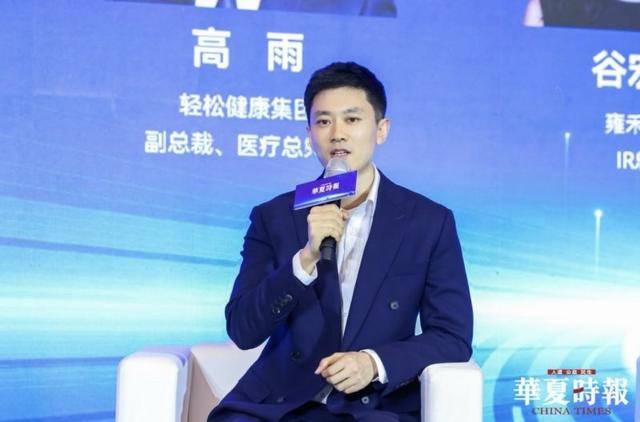
Group 1 - The industry has shifted from a sales-driven model to a service-driven model, emphasizing the importance of providing effective, valuable, and precise services to users [2] - At the 2025 Huaxia Health Industry Development and Rehabilitation Service Conference, discussions focused on the integration of industries and value reconstruction under the new economy [2] - Users are increasingly demanding higher quality and timely health services, preferring to seek information online when experiencing discomfort, which is driven by big data technology [2] Group 2 - The company has developed systematic capabilities in data management, user operations, and AI technology integration over ten years, allowing for more precise identification and fulfillment of patient needs [3] - Looking ahead, the company aims to utilize big data and intelligent technology for more accurate medical science popularization in disease prevention and targeted treatment plans during the treatment phase [3] - The integration of technology into the medical and health industry is expected to enhance the efficient allocation of medical resources, ultimately benefiting patients [3]
大行评级丨高盛:维持小米“买入”评级 预期AI技术将推动人车家全生态差异化发展
Ge Long Hui· 2025-11-24 07:36
Core Insights - Goldman Sachs reports that Xiaomi has announced the full open-sourcing of its embodied AI model MiMo-Embodied, which integrates autonomous driving and embodied intelligence technologies for efficient operation in dynamic physical environments [1] - Xiaomi has also launched an upgraded version of its end-to-end assisted driving system, Super Autonomous Driving (HAD), which currently has approximately 473,000 active users and has accumulated 300 million kilometers of assisted driving mileage [1] - The upgrade of the HAD version reflects the continuous evolution of Xiaomi's autonomous driving technology, progressing from initial high-precision mapping solutions to a current end-to-end architecture that integrates world models and reinforcement learning, enhancing decision-making capabilities [1] - Xiaomi plans to invest over 7 billion yuan in AI research and development by 2025, with Goldman Sachs expecting the company to disclose more AI technology achievements and advancements in applying AI within the Xiaomi ecosystem in the coming quarters [1] - Goldman Sachs maintains a "Buy" rating on Xiaomi with a target price of HKD 53.5, indicating that the risk-reward profile remains attractive [1]
