资产配置

Search documents
国联民生证券总裁葛小波:通过专业的资产配置与服务能力,让“长钱”真正实现“长投”
Zheng Quan Shi Bao Wang· 2025-09-24 07:06
Group 1 - The core mission of wealth management institutions is to help investors achieve sustainable returns through professional asset allocation and service capabilities [1] - Major factors influencing clients' long-term investment mindset include significant drawdowns and unrealistic expectations [1] - The key lies in bridging the gap between allocation capabilities and client service, with technology empowerment expected to optimize and accelerate this process [1]

降息“靴子”落地,白银为何率先领涨?
Mei Ri Jing Ji Xin Wen· 2025-09-24 06:45
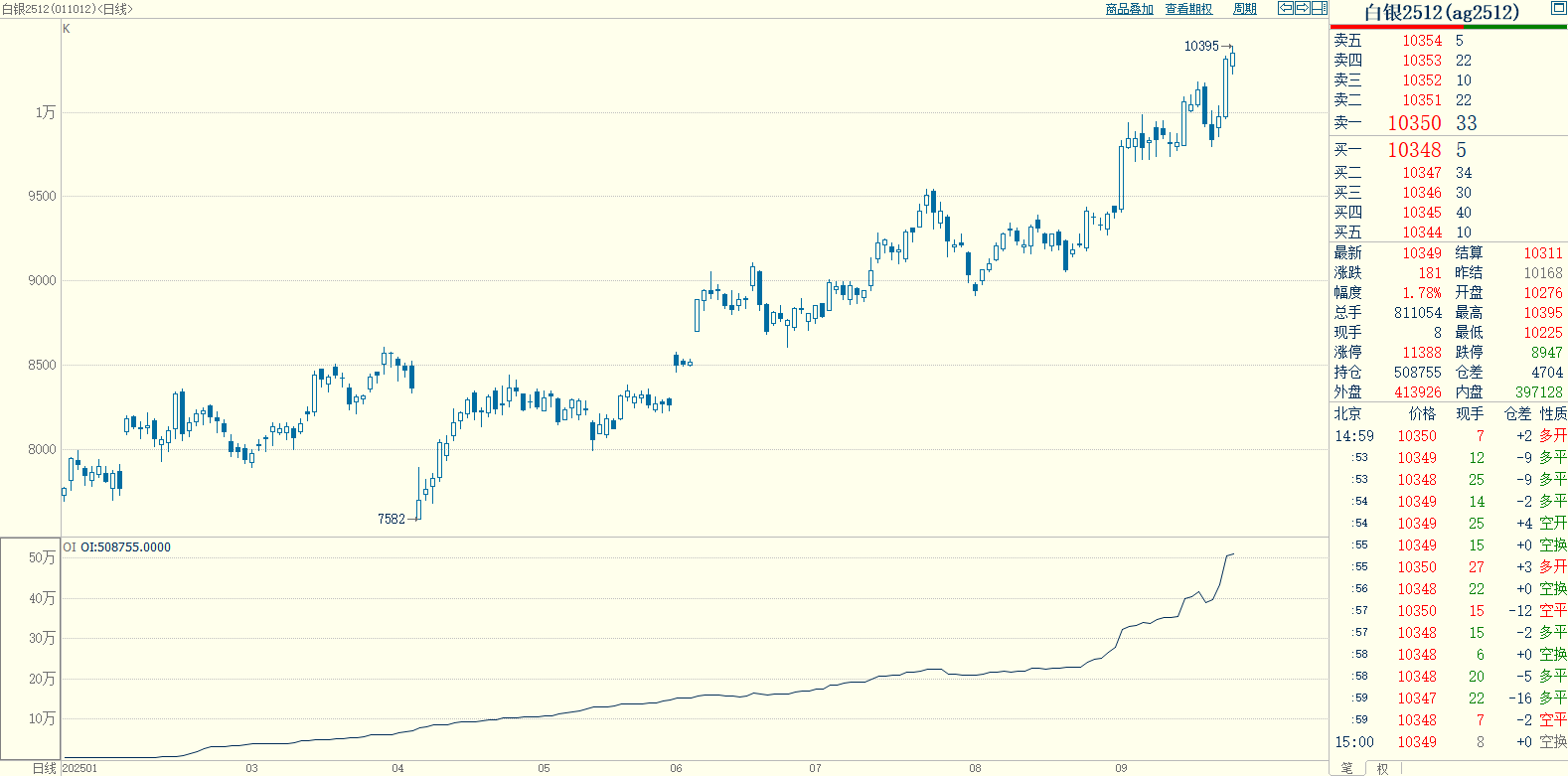
Group 1 - The Federal Reserve lowered interest rates by 25 basis points on September 18, marking the beginning of a monetary easing cycle, which has led to increased demand for safe-haven assets like silver, with the main silver futures contract rising nearly 5% since September 19 [1][3] - The easing of liquidity is expected to enhance the appeal of precious metals, and the rise in silver prices may just be the beginning, as industrial commodity prices typically experience greater volatility and opportunities in a rate-cutting environment [3] - The futures market offers T+0 trading, margin systems, and the ability to operate in both directions, allowing for flexible capture of market movements across over 140 futures and options products, including financials, precious metals, and agricultural products [3] Group 2 - A competition titled "Economic Grain Cup - National Futures Simulation Championship" is being organized in collaboration with COFCO Futures, aimed at helping participants optimize asset allocation and seize market fluctuations during the easing cycle [3] - Participants can register for the competition to receive 1 million simulated capital, with a dual evaluation mechanism for weekly and monthly competitions, offering multiple rewards [5] - The competition is positioned as a crucial opportunity for traders to learn derivative tools, especially during a critical period of high volatility in the A-share market [5]

金价再创新高!年内已涨近43%
Sou Hu Cai Jing· 2025-09-24 04:49
Group 1 - Gold prices have reached new historical highs, with London gold spot prices hitting $3748.88 per ounce and New York futures surpassing $3770 per ounce on September 22, 2023 [2] - As of September 23, 2023, gold prices continued to rise, with London gold reaching $3759.16 per ounce and Shanghai gold trading at 850 yuan per gram [2] - Since 2025, international gold prices have increased by nearly 43%, while domestic gold prices have risen approximately 38% [3] Group 2 - The primary driver of rising gold prices is the Federal Reserve's shift to a rate-cutting cycle, leading to a weaker dollar and a potential upward trend in gold prices [6][7] - Geopolitical conflicts, such as the Russia-Ukraine war and Middle Eastern tensions, have increased demand for gold as a safe-haven asset [8] - Central banks around the world have significantly increased their gold reserves, with global central bank purchases exceeding 1000 tons annually over the past three years, nearly double the previous decade's average [11] Group 3 - The current economic environment, characterized by a weak U.S. labor market and ongoing geopolitical tensions, supports a favorable outlook for gold prices [14] - Investment strategies for ordinary investors include diversifying into gold through paper gold or gold ETFs, rather than purchasing physical gold due to high storage and transaction costs [18][20] - Silver prices have also reached a near 14-year high, with prices hitting $43.788 per ounce on September 22, 2023 [23]

“9·24”一周年:投资者需求升级,券商财富管理如何应对?
Zheng Quan Shi Bao· 2025-09-24 01:29
Core Insights - The wealth management business of brokerage firms has undergone significant changes over the past year, driven by a more rational investment approach from a new generation of investors and a shift from "scale expansion" to "value creation" [1][3][8] Group 1: Market Trends - The A-share market has seen a recovery since the implementation of the "9·24" financial policy, with daily trading volume stabilizing above 2 trillion yuan [1] - Investors are increasingly favoring ETFs (Exchange-Traded Funds) for their low costs and risk diversification, with a notable increase in participation among individual investors [3][4] - The proportion of new investors under 30 years old has risen by 10 percentage points to nearly 30%, with over 25% of new investors engaging in ETF trading, which is 10 percentage points higher than older investors [4] Group 2: Investor Behavior - Investors are transitioning from a "chasing gains" mentality to a more structured "asset allocation" approach, characterized by "indexing," "institutionalization," and "configuration" [3] - New investors exhibit a stronger awareness of financial planning, with a higher allocation to fixed-income products compared to older clients, indicating a focus on stability and diversification [4] Group 3: Service Model Challenges - The growth in investor numbers presents challenges for brokerage firms in terms of meeting diverse and evolving client needs, necessitating a shift towards more intelligent, personalized, and scenario-based services [6][7] - Social media has raised client expectations for service, requiring firms to balance online convenience with offline trust-building [6] Group 4: Business Transformation - Many brokerage firms are transitioning to a buyer advisory model, focusing on asset allocation and comprehensive wealth management throughout the client lifecycle [7][8] - The industry faces intense competition and service homogenization, leading to a reliance on price competition, which pressures profit margins [7][8] Group 5: Future Growth Opportunities - Future growth points for brokerage firms are expected to arise from five areas: scaling the buyer advisory model, refined client segmentation, comprehensive services for corporate finance and family trusts, ecological planning for retirement finance, and cross-border wealth services [9]


“9·24”一周年!投资者需求升级,券商财富管理如何应对?
券商中国· 2025-09-24 01:14
Core Viewpoint - The wealth management business of brokerages has undergone significant changes over the past year, driven by a shift in investor behavior towards more rational asset allocation and the increasing popularity of ETFs as investment tools [1][2]. Group 1: Changes in Investor Behavior - Investors have shown a marked increase in enthusiasm for equity asset allocation, transitioning from a "chasing gains" mentality to a more structured "asset allocation" approach [2]. - The proportion of new investors under 30 years old has increased by 10 percentage points compared to the previous year, with over 25% of new investors participating in ETF trading, which is 10 percentage points higher than older investors [3]. - New investors are more focused on financial planning, with a higher allocation to fixed-income products compared to older clients, indicating a preference for stability and diversification in asset structure [3]. Group 2: Evolving Service Models - The growth in investor numbers has posed challenges for brokerages in terms of meeting diverse and sophisticated service demands, necessitating a shift towards more intelligent, personalized, and scenario-based services [4]. - Social media has raised client expectations for service, leading to a demand for both convenient online services and deeper offline trust relationships [5]. - Brokerages are transitioning from merely providing product sales to offering comprehensive advisory services that include asset selection and long-term client engagement [5][6]. Group 3: New Growth Opportunities - Brokerages are exploring new profit growth points by focusing on client service and engagement, moving away from reliance on commission income [6][7]. - Future growth areas are identified as including the scaling of buy-side advisory models, refined client segmentation, comprehensive services for corporate finance and family trusts, ecological layouts for retirement finance, and cross-border wealth services [7].

投资者需求“迭代” 券商财富管理多维破局寻增长
Zheng Quan Shi Bao· 2025-09-23 18:15
Core Insights - The A-share market has shown signs of recovery since the implementation of the "9·24" financial policy, with daily trading volume stabilizing above 2 trillion yuan [1] - New generation investors are entering the market with a more rational approach, favoring tools like ETFs for investment rather than blindly chasing leading stocks or star fund managers [1][2] - The wealth management business of brokerages faces both opportunities and challenges, necessitating a shift from "scale expansion" to "value creation" [1] Investment Behavior Changes - There has been a significant increase in investor enthusiasm for equity assets, with a clear shift towards "indexing," "institutionalization," and "allocation" in investment behavior [2] - ETFs have gained popularity as a preferred investment tool, with a notable increase in participation among individual investors, particularly in broad-based and thematic ETFs [2] - The number of clients participating in non-cash ETFs at Xinyi Securities increased by 11 times during the same period [2] Demographics of New Investors - The new investor demographic is becoming younger, with those under 30 years old increasing their share of new accounts by 10 percentage points compared to the previous year [3] - Over 25% of new investors are engaging in ETF trading, which is 10 percentage points higher than older investors [3] - New clients show a higher allocation to wealth management products, particularly fixed-income products, indicating a preference for stability and diversification in asset structure [3] Evolving Service Models - As the market matures, brokerages face challenges in meeting increasingly diverse and sophisticated investor demands [4] - Investors are seeking more intelligent, personalized, and scenario-based comprehensive services, pushing brokerages to adapt their service models [4] - Many brokerages are transitioning to a buyer advisory model, focusing on asset allocation and long-term client relationships [4][6] Competitive Landscape - The industry is experiencing intense competition, leading to price wars as service differentiation becomes challenging [5] - Traditional commission rates and margin financing fees are declining, impacting brokerage profit margins despite increased business volume [5] - Brokerages are urged to develop differentiated service offerings and marketing strategies to maintain profitability [6] New Growth Opportunities - Brokerages are exploring new growth points by focusing on client development and enhancing service offerings [6] - The shift from seller-driven sales to buyer advisory services is seen as a key area for growth, leveraging financial technology to improve service efficiency [7] - Future growth is expected to come from five areas: scaling buyer advisory models, refined client segmentation, comprehensive services for corporate finance and family trusts, ecological planning for retirement finance, and cross-border wealth services [7]

关税战后,全球富豪押注哪些资产?
Hu Xiu· 2025-09-23 10:06
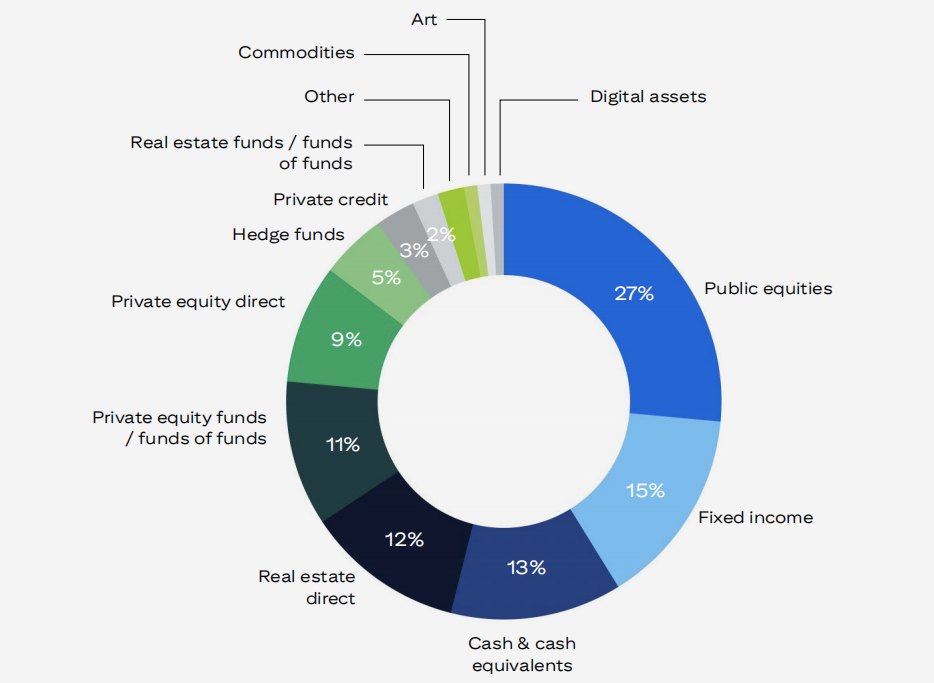
Core Insights - The report reveals the investment sentiment and strategies of family offices in the context of trade policy uncertainty, geopolitical tensions, and technological changes [1][2]. Group 1: Key Findings - Asset allocation among family offices remains stable, with half of the respondents maintaining fixed income holdings and two-thirds keeping real estate allocations unchanged. Private equity shows the most optimistic trend, with a net increase of 26% in allocations [5][6]. - Despite uncertainties surrounding tariffs, family offices express a positive outlook for portfolio returns over the next twelve months, with 30% expecting returns between 10%-15% and 8% anticipating returns exceeding 15% [8][9]. - Nearly two-thirds of family offices took action to enhance portfolio resilience following the U.S. tariff announcement, with 39% opting for active management [10][11]. Group 2: Investment Strategies and Sentiment - 70% of respondents are engaged in direct investments, with 40% increasing their activities in the past year, reflecting confidence in selecting profitable transactions [13][14]. - Trade tensions have become the primary concern for family offices this year, with 60% citing it as their top worry, while interest rates have dropped to fourth place [15][16]. - Family offices report effective management of investment risks, with 83% believing their investment risks are well managed, although confidence in managing cybersecurity and geopolitical risks is lacking [18][19]. Group 3: Asset Allocation and Market Outlook - Family offices' asset allocation for 2025 remains consistent with 2024, with public equities averaging 27%, fixed income at 15%, and alternative assets at 40% [30][31]. - The sentiment towards asset classes is predominantly neutral, with developed market equities showing the highest net positive sentiment at +17% [44][45]. - Regional sentiment varies, with the Americas showing net bullish sentiment for private equity direct investments at +21%, while the Asia-Pacific region shows a much lower sentiment at +1% [48][49].
投资有Young开学第一课 嘉实基金等多家北京公募基金走进对外经贸大学
Xin Lang Ji Jin· 2025-09-23 09:19
Group 1 - The event "Investment has Young" aims to bridge the gap between public funds and young investors, promoting financial literacy and rational investment among university students [1][9] - The activity featured interactive sessions where fund managers shared their investment experiences and explained complex financial concepts in relatable terms, enhancing students' understanding of public fund operations and A-share market risks [3][5] - A financial literacy interactive experience was included, allowing students to reflect on their risk preferences through scenario-based questions, with fund managers providing real-time feedback to encourage rational investment thinking [7] Group 2 - The event was organized by Jiashi Fund in collaboration with several other funds, emphasizing the importance of high-quality development in public funds as part of a broader initiative [1][9] - The initiative is part of a larger action plan to promote the high-quality development of public funds, aligning with the goals of the "New Era, New Fund, New Value" campaign [1] - Jiashi Fund plans to continue engaging with universities and industry partners to spread the message of rational investment and support young individuals in their wealth management and career planning journeys [9]

光控资本:黄金又疯了!央行狂买800吨,散户该如何抓住这波行情?
Sou Hu Cai Jing· 2025-09-23 08:41
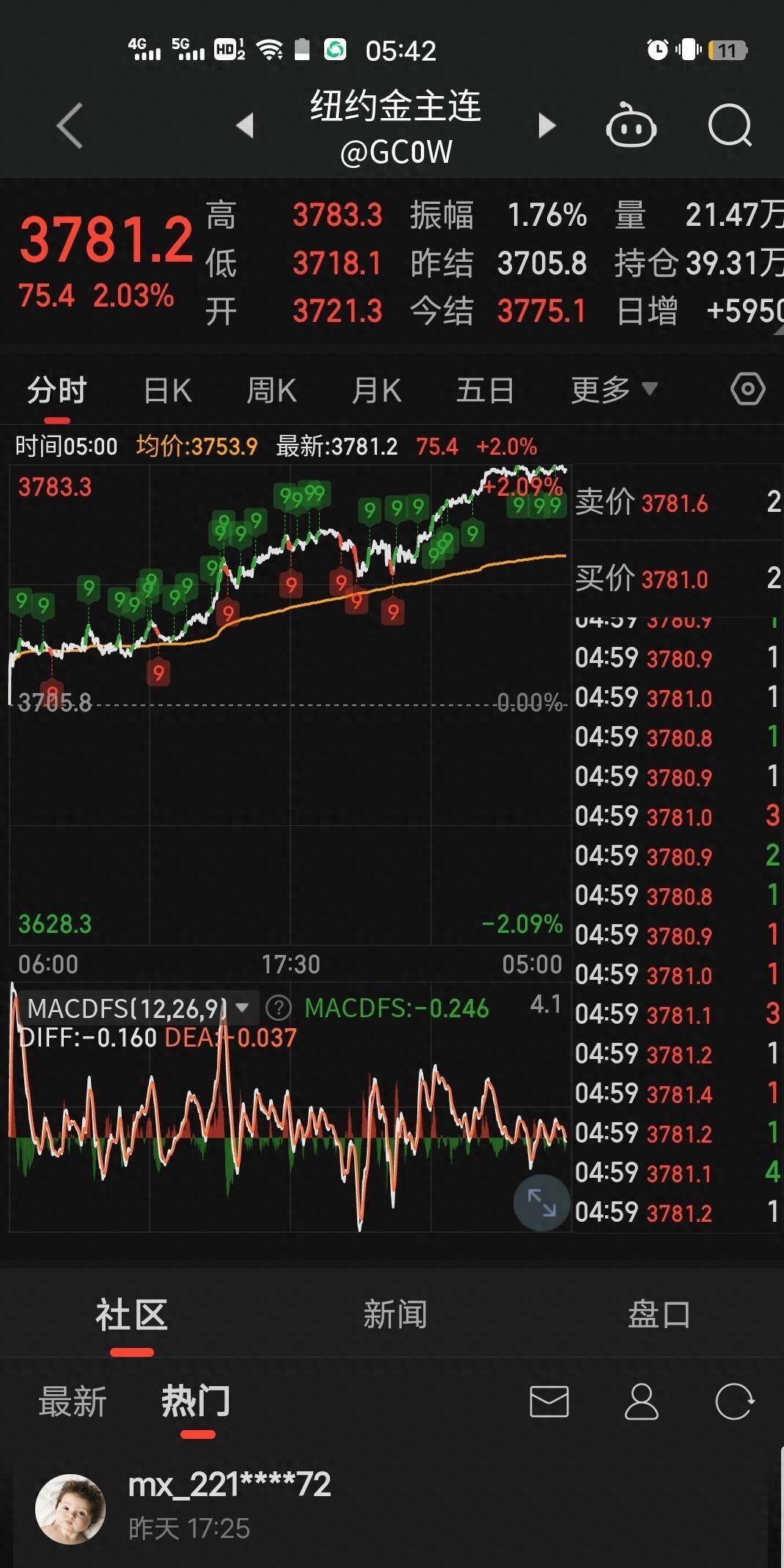
Core Viewpoint - The recent surge in gold prices, driven by global economic uncertainties and geopolitical risks, has attracted significant investor interest in gold as a safe-haven asset [4]. Group 1: Market Dynamics - Gold prices increased by 2.03% in the night trading session on September 22, 2025, breaking key resistance levels, leading to a strong opening for gold-related stocks, with many rising over 7% [1]. - The decline of the US dollar, which has fallen approximately 5% in recent months, has made gold cheaper for investors using other currencies, further boosting demand [4]. - Central banks globally have significantly increased gold purchases, with net purchases exceeding 800 tons in 2024, marking a historical high, primarily driven by emerging market central banks [4]. Group 2: Investment Strategies - Various methods for investing in gold exist, each with unique advantages and risks, including physical gold, gold ETFs, paper gold, and gold mining stocks [4]. - Convertible bonds linked to gold stocks are highlighted as a favorable option, allowing investors to benefit from stock price increases while enjoying T+0 trading mechanisms [5]. - Gold ETFs, such as the one tracking Shanghai gold spot prices, have shown a cumulative increase of 34.61% since the beginning of the year, with low management fees [5]. Group 3: Risk Management - The market is currently showing overbought signals, indicating potential for price corrections, and investors are advised to remain cautious and avoid chasing prices [6]. - A survey indicates that 71% of central banks plan to maintain or reduce their gold holdings, which could weaken demand and impact gold prices [6]. - Investors are encouraged to set clear stop-loss points and target profit levels, maintaining discipline in their investment strategies [7]. Group 4: Market Sentiment - The early trading session showed a strong market sentiment with gold-related stocks initially rising over 7% but later retracting to around 4%, signaling caution against blind chasing of prices [8]. - The market is experiencing increased differentiation, and investors are advised to focus on high liquidity products while controlling their positions [8].
谢治宇最新也发声了!
Sou Hu Cai Jing· 2025-09-23 08:08
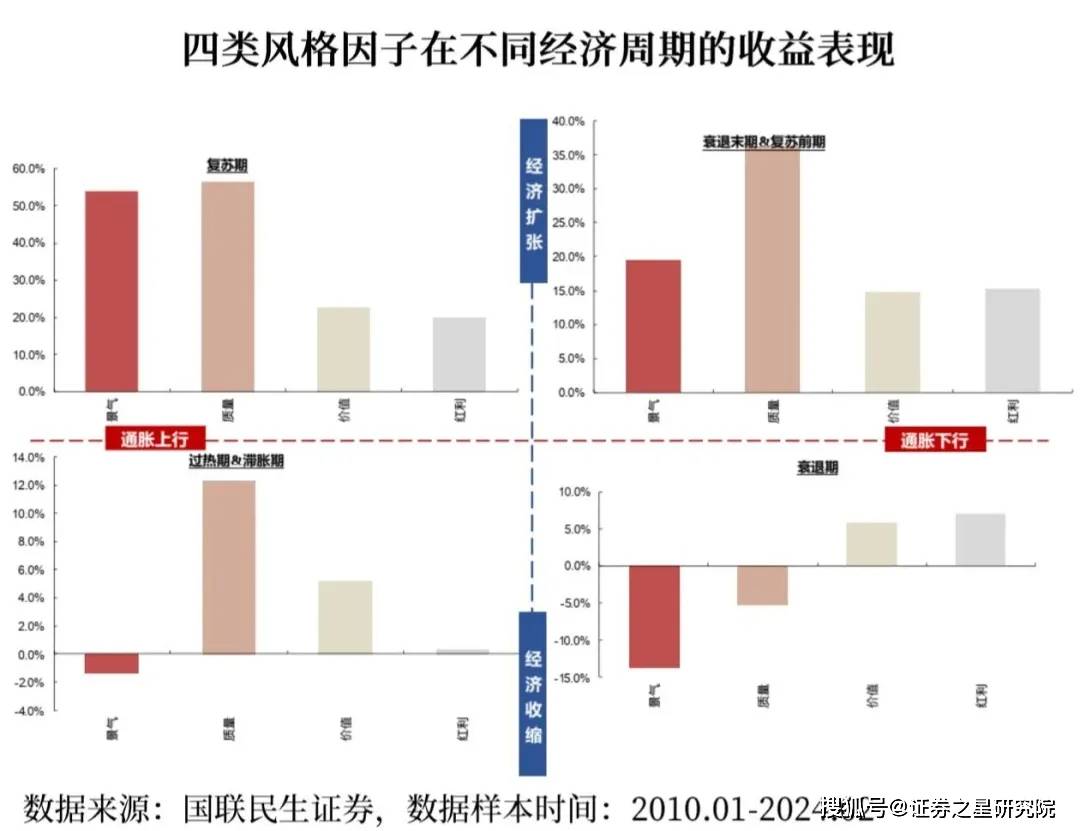
Group 1: Asset Allocation Insights - The first principle of asset allocation is that all returns are compensation for risk [4] - Investors' funding goals determine the types and levels of risk exposure needed [5] - The purpose of allocation is to optimize the risk-adjusted returns of individual asset classes, focusing on the correlation between different assets [5][6] Group 2: Stock Selection Strategies - Understanding macro variables and overall asset structure can help gauge stock volatility not driven by fundamentals [6] - The gold-to-copper ratio can indicate economic cycles, with a declining ratio suggesting stagflation and an increasing ratio indicating recession [7] - The Merrill Lynch Clock illustrates that different economic growth and inflation levels correspond to optimal asset performance in various stages [10] Group 3: Investment Strategies for Cyclical Stocks - Three strategies for investing in cyclical stocks include speculative trading based on futures prices, top-down allocation considering demand expansion, and value trading focusing on low valuations of high-quality companies [10][11] - Key indicators for assessing demand expansion include capital expenditure ratios, PE and PB ratios, and observing macroeconomic leading indicators [11] Group 4: Views on Major Asset Classes - Short-term prospects for the US dollar show potential for a rebound due to interest rate cuts and fiscal stimulus, while long-term attractiveness may be diminished by rising credit risks [12] - The Chinese yuan faces short-term appreciation pressure due to improving growth momentum and foreign capital inflows, with long-term appreciation trends expected [12] - US Treasury yields are influenced by Fed policies, with long-term rates affected by economic conditions and rising deficits [13] - Oil prices are expected to fluctuate within a certain range, while gold serves as a good tool for hedging portfolio risks due to its low correlation with the dollar [13][14] - Copper demand is positively influenced by sectors like renewable energy and AI, positioning it favorably among cyclical commodities [14]