人工智能(AI)

Search documents
巴菲特看上谷歌什么了?谷歌国内供应商梳理
傅里叶的猫· 2025-11-15 05:43
Core Insights - Warren Buffett's Berkshire Hathaway has made a rare investment in Google, increasing its stake by $4.3 billion while reducing holdings in Apple and eliminating DHI [1][2] - Google is investing $40 billion in Texas to build three new data centers, indicating strong confidence in its cash flow and AI capabilities [3][4] Group 1: Google AI Development - Google is one of the few companies with a clear plan to monetize AI, possessing data, proprietary chips, and models, making it a unique player in the AI landscape [4] - The AI-driven search revolution is expected to lead to gradual growth, with Google projecting search revenue growth of approximately 12% and 9% for 2025 and 2026, respectively [7] - Google's search business faces challenges from competitors like OpenAI's GPT series, raising concerns about the retention of commercial queries and long-term revenue [8] Group 2: Cloud Services and Growth Potential - Google Cloud Platform (GCP) is seen as an undervalued asset, with the potential for accelerated growth driven by innovations like the Gemini model and TPU [9] - GCP is projected to grow by approximately 31% to 36% by 2026, with optimistic scenarios suggesting even higher growth if TPU deployment exceeds expectations [10] - The adoption of Gemini has seen significant growth, with 9 million developers utilizing the platform and a notable increase in monthly active users [12] Group 3: Strategic Partnerships - Google has formed significant partnerships, including an $80 billion deal with Anthropic for AI chips, which is expected to generate incremental revenue for Google Cloud [15] - A collaboration with OpenAI allows OpenAI to utilize Google Cloud for model training, diversifying its infrastructure dependencies [15] - The partnership with Oracle enhances access to advanced models like Gemini 2.5, supporting digital transformation across various industries [16] Group 4: Supply Chain and Hardware Developments - Key suppliers for Google include Inveck for liquid cooling solutions and Zhongji Xuchuang for optical modules, both of which are critical for Google's data center operations [18][21] - Google is expected to significantly increase its OCS (Optical Circuit Switch) equipment shipments, with suppliers like Tengjing Technology providing essential optical components [23] - The company is also working with PCB suppliers like SNDL and HDGF to support the production of high-layer PCBs for TPU chips [24]


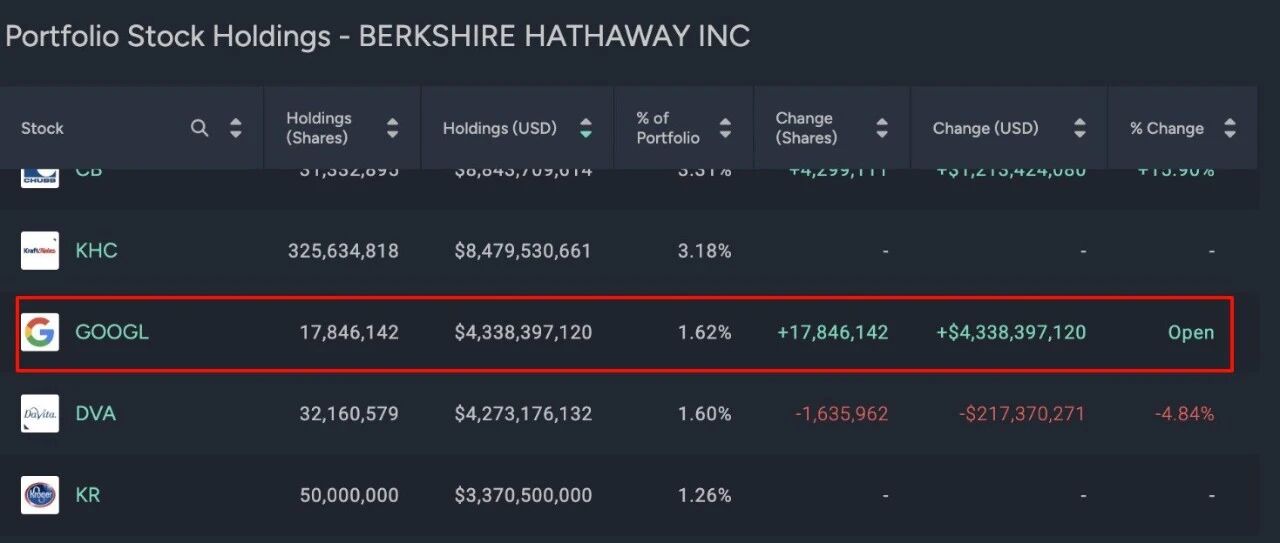
美股“反转”背后:重磅经济数据发布时间确定,12月降息概率跌破50%;孙正义的“OpenAI 炼金术”;巴菲特首次买入谷歌,持仓市值达49亿美元 | 一...
Mei Ri Jing Ji Xin Wen· 2025-11-15 05:40
Group 1 - The U.S. stock market experienced a "V-shaped reversal" on November 14, with significant movements influenced by the upcoming release of key economic data, including the non-farm payroll report and GDP revision [4][8][9] - SoftBank Group reported a net profit of $16.6 billion for the second fiscal quarter, largely attributed to a $14.6 billion increase in OpenAI's valuation, despite the fact that $8 billion of this profit was based on a future investment commitment rather than actual cash outflow [4][13][17] - SoftBank's stock price fell 12.8% over three days following the earnings report, resulting in a market capitalization loss of approximately $26.9 billion [15][17] Group 2 - Warren Buffett's Berkshire Hathaway made its first investment in Google, acquiring nearly 17.85 million shares, which now have a market value of approximately $4.93 billion, making Google the tenth largest holding in the portfolio [31][32] - Bridgewater Associates significantly reduced its holdings in Nvidia by approximately 65.3%, indicating a cautious outlook on the stock's future performance [33] - The overall market sentiment is shifting, with major investment firms adjusting their positions in high-growth tech stocks amid concerns over valuation and economic conditions [33][41] Group 3 - SoftBank's strategy to divest from Nvidia to fund its investment in OpenAI reflects a broader trend of reallocating resources within the tech sector, as companies seek to capitalize on AI opportunities [14][25] - The financial maneuvers involving OpenAI highlight a potential risk of overcommitment, with analysts estimating a funding gap of up to $54.5 billion for SoftBank due to its ambitious investment plans [28][29] - The AI sector is experiencing a cycle of inflated valuations driven by inter-company agreements, which may not translate into actual cash flow, raising concerns about the sustainability of these valuations [24][26]

宇树科技IPO辅导完成,拟境内首次公开发行股票并上市
Sou Hu Cai Jing· 2025-11-15 02:28
Core Insights - Yushu Technology is preparing for an IPO in China, with the potential to become one of the largest and most recognized domestic tech company listings in recent years [2][3] - The company specializes in consumer robotics, with a revenue structure that includes quadruped robots (approximately 65%), humanoid robots (about 30%), and components (around 5%) [4] - The recent launch of the humanoid robot Unitree H2 marks a significant advancement in the company's product line, featuring 31 degrees of freedom, a 63% increase from its predecessor [6] Company Overview - Yushu Technology focuses on high-performance general-purpose robots for various civilian applications, with a commitment to ethical practices and compliance with capital market regulations [2][4] - The company has established a strong governance structure and internal controls, ensuring that key stakeholders are well-informed about their responsibilities in the capital market [2] Product Development - The Unitree H2 humanoid robot is designed to transition from being merely functional to becoming a "usable partner," emphasizing safety and friendliness [6] - The founder, Wang Xingxing, highlighted the growing demand for humanoid robots by 2025, indicating a positive market outlook for the company's products [6] Industry Trends - The development of AI technology is expected to reduce the dependency on hardware performance in robotics, as advanced algorithms can compensate for hardware limitations [8] - The industry is witnessing a shift where modern AI algorithms show greater tolerance for hardware inconsistencies, suggesting a future where high-performance hardware may not be as critical [8]
日股“缺乏过热迹象”,8成存上涨空间
日经中文网· 2025-11-15 00:33
Core Viewpoint - The Nikkei average index has recently stagnated after surpassing the unprecedented 50,000 points, with caution regarding short-term adjustments. However, Japanese stocks are still considered "undervalued" compared to the U.S. market, and there is potential for a continued upward trend in the long term [2][8]. Group 1: Market Performance - The Nikkei average index has experienced a rapid increase over the past six months, surpassing the growth rate seen during the bubble economy of the late 1980s, leading to concerns about short-term corrections. Despite this, approximately 80% of Japanese stocks still have room for growth [2][5]. - The index reached its lowest point of the year at 31,136 points on April 7, following the impact of Trump's tariffs, and surged to 52,411 points by the end of October, reflecting a monthly increase of over 10% [4][5]. - Historical comparisons show that the current monthly average increase of over 10% is unprecedented, with previous significant periods like the post-black Monday recovery averaging only 3% [5][6]. Group 2: Technical Analysis - Yoshino, a senior technical analyst, has had to revise his predictions for the Nikkei index's peak multiple times this year, noting that such consistent surpassing of expectations is unprecedented [4]. - The Nikkei index's deviation from its 200-day average exceeded 30% at the end of October, while the broader TOPIX index showed a deviation of only 16%, indicating potential overvaluation in the Nikkei [7]. Group 3: Investment Opportunities - Despite the Nikkei index reaching 50,000 points, there are still interesting investment opportunities for contrarian investors, as many stocks are not overbought, with only about 20% exceeding their target prices [6][8]. - The TOPIX index's expected price-to-earnings ratio (PER) is 16 times, slightly above its 10-year median of nearly 14 times, while the U.S. S&P 500 index's expected PER is 23 times, highlighting the relative undervaluation of Japanese stocks [8]. - Analysts suggest that Japan's stock market is in the "third phase of a long-term upward trend," with historical phases indicating that the current period is still in its mid-term stage [8].

美股动荡未完?联邦政府停摆“后遗症” 或逐步显现
Di Yi Cai Jing· 2025-11-15 00:13
年末行情将如何演绎。 在美国总统特朗普签署法案结束停摆后,美股开始了新一轮波动行情。 投资者担忧,经济数据的缺失可能会推迟甚至阻碍美联储的降息行动,这也加剧了对人工智能(AI) 类股票高估值的担忧,给企业的股票和债券带来了新的压力。在流动性面临潜在考验的背景下,获利了 结和杠杆资金的避险动作可能成为动荡的加速器。 利率与流动性 对利率敏感的纳斯达克指数在周四重挫超2%,11月刚过一半,日内最大跌幅达到这一水平的交易日升 至4天。今年以来,得益于AI类股票的火爆上涨,纳指一度大幅走高,但目前已较10月的峰值下跌了约 5%。 美联储主席鲍威尔已将当前局面比作 "在迷雾中行驶",并指出在9月和10月连续两次降息后,政策制定 者可能会维持当前利率不变,而非继续降息。 "我们此前之所以能看到9月和10月的降息,是因为美联储对通胀的走势方向有足够信心……但在数据缺 失的情况下,他们在12月的会议上还会有这样的信心吗?"奇尔顿信托公司(Chilton Trust)固定收益首 席投资官霍兰(Tim Holland)表示。 根据芝加哥商品交易所(CME)的 "美联储观察工具"(FedWatch Tool),一个月前被视为 "板 ...
分析了1.8亿个岗位后,我发现应届生们好像被AI堵在了门外
虎嗅APP· 2025-11-14 14:21
Core Insights - The article discusses the impact of AI on job markets, particularly focusing on the decline of entry-level positions and the rise of management roles, indicating a shift in employment dynamics due to AI advancements [5][10][11]. Employment Trends - A baseline is established showing that global job postings are expected to decrease by 8% from 2024 to 2025, indicating a contraction in the job market [11][12]. - The top ten job roles experiencing the largest declines include CG artists, compliance officers, photographers, and writers, with creative positions being particularly affected [14][16]. - Conversely, roles such as software engineering directors and machine learning engineers are seeing significant growth, with machine learning engineers increasing by 39.62% [24][25]. Management vs. Entry-Level Positions - Senior leadership roles have only decreased by 1.7%, while management positions have dropped by 5.7%, indicating that higher-level roles are more resilient to market changes [30][31]. - Entry-level positions have seen a decline of 9%, which is below the overall market contraction, highlighting a troubling trend for new graduates [32][35]. Implications for New Graduates - The article highlights the struggles of recent graduates in securing entry-level jobs, with many positions disappearing and the job market becoming increasingly competitive [43][44]. - The narrative of a recent computer science graduate illustrates the disconnect between qualifications and job availability, emphasizing the challenges faced by young professionals [40][41]. Cultural and Educational Impact - The traditional apprenticeship model, which has been crucial for skill development, is being undermined by AI's efficiency, leading to a potential loss of mentorship and experiential learning opportunities [56][60]. - The story of a carpenter's apprentice serves as a metaphor for the loss of hands-on experience and the nuanced understanding that comes from years of practice, which AI cannot replicate [64][68]. Future Outlook - The article warns that as AI continues to replace entry-level roles, the pathway for young professionals to ascend to management positions may become increasingly obstructed, leading to a homogenized workforce lacking diversity in experience and innovation [92][93]. - The potential for a future where experienced professionals find themselves without successors is highlighted, raising concerns about the sustainability of knowledge transfer and innovation in the industry [94][96].

G20国家受关税影响贸易额创WTO观测史上最大增幅,后续会怎样?
第一财经· 2025-11-14 14:17
Core Insights - The WTO reported that the trade volume affected by tariffs among G20 countries increased approximately fourfold from the previous reporting period, marking the largest increase in WTO trade monitoring history [3][8] - Despite the rise in tariffs, G20 countries implemented a significant number of trade facilitation measures, doubling the value of such measures compared to the previous report [4][9] Group 1: Tariff Impact - From mid-October 2024 to mid-October 2025, 14.3% of imported goods in G20 countries (approximately $25.99 trillion) were affected by tariffs and other measures, a significant increase from the previous $5.99 trillion [8] - The average actual tariff rate faced by U.S. consumers reached 18.0%, the highest level in over 90 years, indicating ongoing concerns about tariffs [4][12] Group 2: Trade Facilitation Measures - G20 countries introduced 184 new trade facilitation measures covering approximately $2.055 trillion in trade, nearly double the previous report's $1.07 trillion [9] - In the service trade sector, 52 new measures were introduced, with over two-thirds aimed at promoting trade [9] Group 3: Trade Growth Projections - The WTO forecasts a global goods trade growth rate of 2.4% for 2025, but this is expected to drop significantly to 0.5% in 2026 [11] - Oxford Economics predicts a slowdown in global trade growth from 4% in 2025 to 1% in 2026, highlighting the negative impact of rising tariffs [12] Group 4: Trade Policy Uncertainty - Trade policy uncertainty remains a critical factor affecting investment, with the U.S. experiencing over 40 modifications to tariff-related regulations within a year [13] - The fluctuation in U.S. trade policies, including recent increases in heavy truck tariffs and ongoing legal uncertainties regarding tariff legality, contribute to this uncertainty [12]

每日机构分析:11月14日
Xin Hua Cai Jing· 2025-11-14 12:06
Group 1 - Goldman Sachs suggests that the Federal Reserve may soon announce "reserve management purchases," injecting liquidity into the market by buying short-term government bonds, which the market interprets as a signal for a new round of quantitative easing (QE) [1][3] - JPMorgan's CEO emphasizes that the current AI investment wave is not a market bubble but the beginning of a significant transformation in corporate operations, indicating that the market's expectations for AI's value exceed its current realizations, suggesting substantial potential [1] - Citi notes an improvement in credit outlook for peripheral Eurozone countries, with Italy, Spain, Portugal, Greece, and Ireland likely to receive credit rating upgrades by 2026 due to fiscal consolidation and resilient economic growth [1] Group 2 - Guggenheim's Chief Investment Officer indicates that the economic slowdown reflected in the Beige Book, along with pressures on low-income groups and small businesses, suggests a "dual-speed economy," leading the Fed to likely cut rates again in December [2] - Blackhawk Analytics reports that initial jobless claims in the U.S. slightly decreased to 227,500, indicating a stable labor market, which may support the Fed's decision to hold rates steady in December [2] - Morgan Stanley's economists assert that the current level of initial jobless claims is consistent with recent years, showing no signs of an escalating layoff trend, and that the government shutdown may have distorted data reporting [2]


专访沙特交易所CEO:中国在AI等领域吸引了全球资本
Zheng Quan Shi Bao· 2025-11-14 11:19
Core Insights - The Saudi Stock Exchange (Tadawul) is actively inviting Chinese investment institutions to participate in its capital market, highlighting the increasing bilateral interaction between China and Saudi Arabia's capital markets [1][2][3] - The collaboration has progressed to practical stages, including the launch of cross-border ETF products and ongoing discussions about dual listings and cross-listing of companies [1][3][5] - The CEO of Tadawul emphasized the importance of China's economic characteristics and its leading position in high-tech industries as focal points for collaboration [2][3] Group 1: Market Collaboration - The Saudi Stock Exchange has signed memorandums of understanding with both the Shanghai and Shenzhen stock exchanges, as well as the Hong Kong Stock Exchange, to explore joint listings and fintech cooperation [1][3] - The market capitalization of the Saudi Stock Exchange has reached $2.6 trillion, with over $100 billion of investments coming from international investors [3] - There has been a notable increase in interest from top Chinese asset management companies regarding the Saudi capital market [3][5] Group 2: ETF and Cross-Listing Developments - The Saudi Stock Exchange has introduced several ETFs linked to Saudi securities, with one becoming the largest ETF product in Saudi Arabia [3][5] - Recent regulatory approvals for Saudi Depositary Receipts (SDRs) have opened doors for Chinese companies to pursue cross-listing in Saudi Arabia [5] - The exchange is working on launching more ETFs that cover various dimensions of the China-Saudi capital markets [3][5] Group 3: Future Cooperation and Industry Focus - The CEO of Tadawul expressed optimism about future cooperation, particularly in the areas of artificial intelligence (AI) and complementary industries [6] - There is a strong focus on aligning the development strategies of companies seeking to cross-list in Saudi Arabia with the Saudi Vision 2030 [5] - Ongoing discussions with various Chinese exchanges aim to expand cooperation and facilitate bilateral investments [6]
专访沙特交易所CEO:中国在AI等领域吸引了全球资本
证券时报· 2025-11-14 11:10
Core Viewpoint - The article emphasizes the growing collaboration between China and Saudi Arabia in capital markets, particularly in high-tech sectors and financial technology, with a focus on cross-listing and ETF products [1][2][5]. Group 1: Capital Market Cooperation - The Saudi Stock Exchange (Tadawul) has signed memorandums of understanding with both Shanghai and Shenzhen stock exchanges, as well as the Hong Kong Stock Exchange, to explore joint listings and fintech collaborations [2][6]. - There has been significant progress in cross-border ETF products, with multiple ETFs launched that link the two markets, indicating a solid foundation for future cooperation [6][8]. - The market capitalization of the Saudi Stock Exchange has reached $2.6 trillion, with over $100 billion in investments from international investors, highlighting its attractiveness to foreign capital [5][6]. Group 2: Investment Opportunities - Saudi Arabia's Vision 2030 is a key driver for attracting Chinese investment, with the country positioning itself as a prime investment destination [5][7]. - The introduction of regulations for Saudi Depositary Receipts (SDRs) has opened doors for Chinese companies to consider cross-listing in Saudi Arabia, aligning with the Vision 2030 goals [8][9]. - The article mentions that there is a growing interest from top Chinese asset management firms in the Saudi capital market, indicating a potential increase in bilateral investments [5][6]. Group 3: Future Prospects - The future collaboration between China and Saudi Arabia is expected to expand into more ETF products and further open investment channels between the two markets [9]. - There is a strong focus on artificial intelligence (AI) as a complementary industry for collaboration, with both countries recognizing its potential for growth and investment [9]. - The Saudi Stock Exchange is actively engaging with Chinese exchanges to explore further cooperation, with potential agreements on the horizon [9].