人民币国际化

Search documents
必和必拓作出妥协,宣布第四季度部分业务采用人民币计价!
Sou Hu Cai Jing· 2025-10-09 09:08
Group 1 - China, as the world's largest iron ore importer, has previously overpaid due to the influence of international miners setting the Platts price [1] - In 2024, the landed price of Australian ore is expected to be several dozen dollars per ton higher than West African ore, with dollar settlements exposing steel companies to unnecessary exchange rate risks [1] - Hebei Steel Group's iron ore payments in RMB exceeded 2.4 billion yuan in 2024, a year-on-year increase of 25%, highlighting the advantages of RMB settlements [1] Group 2 - China and Australia have completed the integration of the RMB settlement system for wool and barley trade, with the first batch of 20,000 tons of barley shipped using RMB payments [3] - The internationalization of the RMB is steadily advancing, and more trade is expected to adopt RMB settlements in the future [3] Group 3 - Confidence in achieving goals is emphasized, with expectations that more countries and international enterprises will join the use of RMB settlements [6] - The internationalization of the RMB will continue to progress, enhancing its importance on the global stage and establishing it as a significant currency for global trade settlements [6]


不要卢比,连美元都不收了,俄罗斯给印度下通知,人民币成大赢家
Sou Hu Cai Jing· 2025-10-09 07:43
一笔看似普通的石油交易,正在悄然改变全球贸易的规则。最近,路透社披露的一条独家消息引起了国际市场的广泛关注:俄罗斯的石油商已经正式要求印 度的国有炼油厂,使用人民币支付石油货款。甚至有消息透露,印度石油公司已经用人民币支付了至少两批俄罗斯石油。 这不仅仅是支付方式的简单变化,更意味着全球贸易格局正在发生深刻的转变。当俄罗斯放弃了卢比,减少了对美元的依赖,而印度在西方的压力下依然接 受人民币支付,我们实际上看到的是全球政治经济格局加速重构的信号。 虽然这一变动看似不大,但其潜在影响却可能引发一场波及全球的风暴,涉及能源贸易、货币体系乃至大国关系。石油贸易中,货币的选择向来是权力的象 征。俄罗斯的这一决策,实际上是在挑战传统的能源交易结算规则。新的游戏规则正在浮现——石油定价依然以美元为基础,但结算却选择了人民币。 这种"美元定价、人民币结算"的模式,既巧妙避开了西方对能源价格设定的限制,又在实质上削弱了美元的主导地位。如果更多国家效仿这一做法,全球能 源市场将迎来根本性变化。未来,石油交易可能会进入一个多货币并存的时代,美元、人民币,甚至其他货币将各占一席,而不再由美元独占鳌头。 更重要的是,这一变动可能促成一 ...
美国耍横!贸易战打不赢,就坑中国收10倍港口费,中国绝不让步
Sou Hu Cai Jing· 2025-10-09 07:15
Group 1 - The United States will impose additional fees on all Chinese bulk carriers entering U.S. ports starting October 14, 2025, with fees reaching up to $10 million per ship [1] - This policy targets not only ships operated by Chinese companies but also those manufactured in Chinese shipyards, affecting a broader range of vessels [4] - The fee structure is set to increase annually, potentially doubling by 2028, indicating a long-term strategy to economically pressure China [7] Group 2 - The U.S. aims to increase operational costs for Chinese foreign trade enterprises, which could severely impact many companies given the low profit margins in Chinese manufacturing [6] - The U.S. strategy also seeks to undermine China's shipbuilding industry, which currently holds over half of the global new ship orders [6][8] - Despite U.S. tariffs, China's trade surplus remains strong, with a significant increase in exports in sectors like electric vehicles, indicating the ineffectiveness of U.S. trade policies [8] Group 3 - In response to U.S. actions, China has revised its international shipping regulations to allow for reciprocal measures against discriminatory policies [9] - China is also promoting the internationalization of the yuan to reduce reliance on the U.S. dollar, particularly in commodity trade [9] - Chinese companies are enhancing their technological capabilities, making it increasingly difficult for the U.S. to maintain its technological dominance [13] Group 4 - The U.S. strategy may inadvertently affect its own logistics and trade sectors, as China is a crucial player in global trade [15] - If the U.S. continues its confrontational approach, it risks self-imposed limitations while China progresses in its development and global influence [17]

金价上涨的秘密
投资界· 2025-10-09 06:36
Core Viewpoint - The article discusses the significant rise of gold prices and the implications for the global monetary order, particularly focusing on the increasing role of the Chinese yuan as a potential alternative to the US dollar in international trade and finance [3][4][5]. Group 1: Gold Price Surge - On October 7, 2025, gold prices reached a historic high of $4000 per ounce, marking an increase of over 50% within the year [3]. - This surge is attributed to the Federal Reserve's decision to restart interest rate cuts and a notable decline in the US dollar index, which has dropped nearly 10% this year [3]. - The rise in gold prices reflects a broader market sentiment seeking alternatives to the dollar amid geopolitical tensions and economic uncertainties [3][4]. Group 2: Yuan's Internationalization - As of Q1 2025, the yuan accounted for 2.12% of global foreign reserves, ranking sixth, significantly lower than the dollar (57.74%) and euro (20.06) [4]. - Despite China's growing economic influence, the yuan's international status does not yet match this influence, indicating a need for a multi-faceted approach to enhance its global role [4][5]. - A notable shift is occurring, with an increasing number of enterprises opting for yuan settlements in cross-border transactions, surpassing dollar settlements for the first time in Q2 2025 [5][6]. Group 3: Market Dynamics - A survey conducted by Renmin University revealed that 68% of enterprises used yuan for cross-border trade settlements in Q4 2024, with 71% citing asset security as the primary reason [6][9]. - The yuan's appeal is growing due to its perceived stability and usability, as companies seek to avoid reliance on the dollar [9][10]. - The influx of foreign capital into Chinese assets, particularly after the Fed's interest rate cuts, indicates a shift in investor sentiment towards the yuan [9][10]. Group 4: Infrastructure Development - The establishment of the Digital Yuan International Operation Center in Shanghai aims to enhance the yuan's usability in cross-border transactions, supporting a more integrated financial infrastructure [12][14]. - The center's launch is part of a broader strategy to create a transaction-driven infrastructure for the yuan, moving from policy-driven to market-driven adoption [12][15]. - The digital yuan's infrastructure is designed to facilitate seamless transactions, ensuring compatibility with existing systems while enhancing liquidity and efficiency [14][15]. Group 5: Future Prospects - The article emphasizes the need for a dual-driven model of "yuan + digital currency" to enhance the yuan's role in global trade and finance [18]. - The transition of the yuan from a "optional" asset to a "must-have" currency in global markets requires comprehensive financial reforms and international collaboration [18][19]. - The evolving global monetary landscape suggests that the yuan is positioned to play a significant role in reshaping future financial systems, driven by market choices rather than mere policy directives [19].

俄罗斯再次力挺我国!关键时刻,俄石油贸易商对印度提出要求,想再买石油可以,但得用人民币支付
Sou Hu Cai Jing· 2025-10-09 06:31
新德里电视台的一则消息悄然搅动了全球能源市场的棋盘。路透社独家披露,俄罗斯石油贸易商近期正式 向印度国有炼油厂提出要求——后续石油交易需使用人民币结算。印度最大炼油商印度石油公司已默默用 人民币支付了两到三批俄油货款。这一动作看似是贸易结算的技术性调整,背后却牵扯出三重博弈:美西 方对俄制裁的围堵、印度"战略自主"的尴尬裂痕,以及人民币国际化迈出的关键一步。 一、能源命门与货币抉择 俄乌冲突后,美西方对俄罗斯石油实施价格上限和交易禁令,反而催生了全球能源流向的剧烈重组。印度 凭借中立立场大量购入折扣俄油,日均进口量飙升至180万桶,占其总需求40%。廉价石油不仅压低了印度 能源账单,更让炼油商赚取转口贸易的丰厚利润。然而,这种"左右逢源"的甜蜜期正面临终结。 印度私营炼油商早已悄悄沿用人民币支付,而国有企业的跟进说明新德里不得不向现实低头。尽管中印关 系时有摩擦,但能源安全压倒地缘政治情绪——印度需要廉价石油维持经济运转,俄罗斯需要可靠货币规 避制裁,人民币恰好成为双方利益的交汇点。 这种基于实用主义的合作,反而比政治宣言更有力地推动货 币格局重塑。 四、大国博弈中的"中间地带"困境 特朗普政府近期威胁对印度 ...

人民币国际化关键一步,一文读懂央行本币互换协议
Hu Xiu· 2025-10-09 05:06
Core Insights - Central banks around the world have shown a lack of trust in the US dollar by increasing their gold reserves while reducing their holdings of US Treasury bonds [1] - The article raises questions about the attitude of central banks towards the Chinese yuan and whether the internationalization of the yuan has progressed amid the dollar's declining trust [1] Summary by Categories - **Central Bank Actions** - Central banks are continuously increasing their gold holdings [1] - There is a notable reduction in the holdings of US Treasury bonds by these banks [1] - **Chinese Yuan Internationalization** - The article suggests that the internationalization of the yuan may have advanced, especially in the context of the dollar losing credibility [1] - A specific news item from September is mentioned as potentially revealing insights into the yuan's status [1]
中信建投:AI产业将继续带动A股港股科技板块上涨
Xin Lang Cai Jing· 2025-10-09 04:48
Core Viewpoint - Gold prices are expected to continue rising due to a weak US dollar, interest rate cuts by the Federal Reserve, and ongoing liquidity support for US stocks [1] Group 1: Economic Indicators - The US dollar index is anticipated to remain weak, which will support gold prices [1] - Federal Reserve interest rate cuts are projected to drive down US Treasury yields [1] - The Chinese yuan is expected to appreciate slightly against the US dollar [1] Group 2: Market Trends - A-shares and Hong Kong stocks are expected to continue their upward trend, supported by liquidity and stability [1] - The "new four bulls" in the market will contribute to a steady and positive outlook [1] Group 3: Sector Developments - The internationalization of the yuan, AI infrastructure development, and AI international trade are expected to accelerate and mutually promote each other, leading to a reshaping of the economic landscape [1] - The AI industry is projected to continue driving rapid development in related technology sectors in China, positively impacting A-shares and Hong Kong technology stocks [1]

美元霸权遭截击!中矿集团停购必和必拓,人民币结算要破局?
Sou Hu Cai Jing· 2025-10-09 04:45
Core Viewpoint - The recent notification from China Mineral Resources Group to domestic buyers to suspend purchases of BHP's dollar-denominated iron ore shipments signifies a shift in iron ore pricing dynamics and China's intention to assert its influence in global commodity pricing [1][4][14]. Group 1: Company Overview - China Mineral Resources Group, established in 2022, acts as an "import coordinator" for Chinese companies, focusing on iron ore import pricing authority [4][5]. - The company aims to address the long-standing issue where China, despite being the largest buyer of iron ore globally, lacks pricing power, which has traditionally been held by sellers [4][5]. Group 2: Pricing Dynamics - The current international iron ore pricing is heavily influenced by the Platts Index, which tends to favor seller-friendly data from Australian and Brazilian mines, leading to unfavorable pricing for Chinese buyers [5][6]. - The suspension of purchases from BHP is not merely a punitive measure but a strategic move to encourage compliance with China's preferred pricing mechanisms, including a shift towards RMB settlements [5][11]. Group 3: Domestic Supply and Strategy - China has been increasing domestic iron ore production and enhancing scrap steel recycling, which can mitigate the impact of reduced imports from BHP [6][8]. - The strategy reflects a broader goal of reducing dependency on foreign suppliers and asserting control over pricing and supply chains [8][14]. Group 4: Broader Implications - This action is part of a larger strategy to challenge the dominance of the US dollar in global commodity transactions, particularly in iron ore and oil [10][11]. - By establishing pricing authority, China aims to pave the way for the internationalization of the RMB and reduce the dollar's monopoly in commodity settlements [11][14]. Group 5: Future Outlook - The emergence of more institutions like China Mineral Resources Group is anticipated, which will support Chinese enterprises and protect national economic interests [12][14]. - The approach signifies a shift from passive acceptance to active negotiation in global trade, asserting China's rightful place in the international economic landscape [14].

铁矿石风波让澳洲人慌了?澳媒喊话,情况变了,美元地位有待观察
Sou Hu Cai Jing· 2025-10-09 04:15
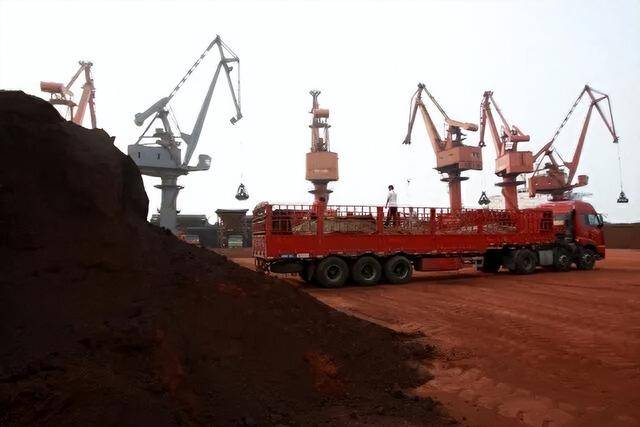
Core Viewpoint - The article discusses the changing dynamics of Australia's trade relationships, particularly with China, and the implications for its key exports like iron ore and gold, amidst geopolitical tensions and shifts in global currency usage [1][3][5]. Group 1: Trade Relations and Exports - Since Albanese took office, Australia has restored normal trade relations with China, which is crucial for its economy that heavily relies on exports like iron ore and wine [1]. - Iron ore remains Australia's most significant export, but recent developments have raised concerns about its future, especially with the rise of Russia as a key supplier to China [10][15]. - By June 2026, gold is expected to become Australia's second-largest export, benefiting from increased production and rising prices, while liquefied natural gas will lose its position as the second-largest export [8]. Group 2: Currency and Economic Implications - The U.S. is particularly concerned about the potential decline of the dollar's global status due to Australia's iron ore exports and China's increasing use of the yuan in international trade [3][5]. - Australia's media warns that refusing to accept yuan for iron ore transactions could lead to significant economic losses, while accepting it may strain relations with the U.S. [13][17]. - By the 2025-2026 fiscal year, iron ore revenue is projected to decrease to 113 billion AUD, a drop of 3.9 billion AUD from previous estimates, indicating a challenging outlook for this key export [11].
俄印石油贸易变天,俄罗斯:只收人民币;印度:安排
Sou Hu Cai Jing· 2025-10-09 03:45
俄罗斯石油交易中的人民币崛起:印度的"妥协" 根据路透社10月7日的独家报道,俄罗斯的石油贸易商近期要求印度的国有炼油厂使用人民币进行支付。这一变化,标志着人民币在国际贸易中日益增长 的影响力,尤其是在能源领域。 印度为何选择人民币? 印度对俄罗斯石油的依赖,源自其极具吸引力的价格。2025年上半年,俄罗斯每天向印度供应约175万到180万桶原油,占印度原油进口的35%到40%。 2024年,印度全年从俄罗斯进口的石油价值超过470亿美元,几乎占据了印度原油进口的三分之一。相比之下,俄罗斯的原油价格比沙特便宜近10美元/ 桶,比美国便宜5美元以上。这个差价对于印度来说,具有不可忽视的经济吸引力。 印度的炼油厂通过将俄罗斯的原油转手卖给欧洲,获得了巨大的利润。仅凭这些差价,印度每年可以节省近170亿美元,这对于印度的经济来说无疑是"救 命钱"。 结算的混乱与困境 曾经,印度在石油结算时,常常使用美元、迪拉姆和人民币三种货币。但印度一直想避开人民币,选择使用迪拉姆作为"替代",试图躲避美国的制裁,同 时避免与人民币过多接触。然而,俄罗斯并不接受这种安排。俄罗斯要求,所有的交易最终都要用人民币结算,因为只有人民币才 ...