人民币国际化

Search documents
手握七成需求拒购美元矿,中国争夺铁矿石定价权
Sou Hu Cai Jing· 2025-10-08 13:56
Core Viewpoint - The global commodity market reacted sharply to a notice from China Mineral Resources Group, which announced a halt on purchasing iron ore from BHP in USD, leading to a significant drop in BHP's stock price. This move signifies China's transition from being a passive buyer to a rule-maker in resource trade [1] Group 1: Market Dynamics - For decades, the iron ore market has been dominated by BHP, Rio Tinto, and Vale, leaving buyers, particularly China, constrained in their purchasing power [3] - The establishment of China Mineral Resources Group in 2022 centralized procurement for domestic steel mills, shifting from a fragmented purchasing approach to unified negotiations [3] Group 2: Import Trends - By the first eight months of 2025, China's imports of iron ore from Australia decreased by 12%, indicating a significant diversification in iron ore sourcing [4] - China consumes approximately 75% of the global seaborne iron ore, importing around 1.2 billion tons in 2023, with about 700 million tons from Australia, accounting for approximately 63% [6] Group 3: Pricing and Currency Issues - The immediate cause for halting purchases from BHP was a pricing disagreement, with BHP insisting on a 15% increase for 2025, leading to a price difference of about $30 per ton compared to current spot prices [7] - China has made it clear that future transactions must be settled in RMB, challenging the dominance of the USD in commodity pricing [8] Group 4: Supply Network Development - China's strong stance in iron ore trade is supported by a diversified supply network, including significant projects in Guinea and increased imports from Brazil and Russia [9][10] - The domestic recycling of scrap steel is also maturing, with projections indicating that by 2025, electric arc furnace steelmaking will account for 25% of production, reducing the demand for primary iron ore by approximately 40 million tons annually [11] Group 5: Rise of RMB Settlement - The push for RMB settlement in iron ore trade represents a challenge to USD hegemony, with increasing cross-border transactions in RMB [12] - In 2024, Hebei Steel Group procured 3.06 million tons of iron ore through RMB settlement, marking a 25% increase year-on-year [13] - The proportion of metal trade using RMB for settlement rose to 9.2% in Q3 2023, a significant increase from 2.1% in 2020 [14] Group 6: Global Trade Order Changes - The implications of this iron ore trade dispute extend beyond China and Australia, with Brazil and Russia also adapting to RMB settlement, thereby increasing their market share [15][16] - Southeast Asian steel mills are beginning to inquire about RMB usage, raising concerns about potential shifts in settlement methods for other commodities like copper and aluminum [18] - The global resource landscape is being reshaped, with Australia potentially losing market share to more cooperative suppliers like Brazil and Guinea if it remains inflexible [19]


经济压力大、人民不赚钱!为何越来越多的人,选择看好中国经济?
Sou Hu Cai Jing· 2025-10-08 13:19
Core Viewpoint - Despite economic pressures and challenges, there is optimism regarding China's economic resilience and potential for recovery in the second half of 2025 [1][3]. Economic Transition - China's economy has undergone significant transformations over the past decades, evolving from an agricultural base to an industrialized and now a high-tech and service-oriented economy [3]. - The current economic transition aims to reduce reliance on real estate and infrastructure, focusing instead on technological innovation and industrial upgrades [9][11]. Government Response - In response to a severe tariff shock in April 2023, the Chinese government acted swiftly to stabilize market confidence, contrasting with the slower response seen in the U.S. [5][7]. - The government's measures included supporting the Hong Kong stock market and implementing policies to stabilize the A-share market, demonstrating flexibility and effectiveness [5][7]. Supply Chain and Global Positioning - China's supply chain is evolving from being the "world's factory" to a "global cooperation link," emphasizing domestic and international market interactions [15]. - Initiatives like the Belt and Road Initiative are enhancing infrastructure, energy cooperation, and cultural exchanges, contributing to China's economic stability and global influence [15]. Financial Policy Adjustments - The Chinese government is shifting financial resources towards technology innovation and emerging industries, moving away from traditional reliance on real estate and infrastructure [22][24]. - Policies will focus on providing low-cost financing options for small and medium enterprises and tech startups, fostering a transition to high-value innovation [24]. Real Estate Market Focus - The government aims to ensure a healthy development of the real estate market by avoiding excessive stimulus and focusing on policies that support housing stability [19][21]. - Emphasis will be placed on affordable housing and policies that assist young and low-income groups in addressing housing challenges [21]. Employment and Skills Development - The economic transition presents both challenges and opportunities for the workforce, with traditional jobs declining while new industries emerge [26][28]. - Individuals are encouraged to adapt by enhancing their skills in emerging fields such as AI, digitalization, and green energy to seize new opportunities [28]. Market Volatility and Investment Strategy - The rebound of the A-share market after a significant drop illustrates the importance of maintaining a calm perspective during market fluctuations [30]. - Investors are advised to develop economic judgment and view market changes from a broader perspective rather than reacting impulsively to short-term volatility [30]. Conclusion on Economic Opportunities - China's current economic transition, while challenging, is also a period of significant opportunity, particularly for those who can adapt and respond to the evolving landscape [33].

莫迪最担心的一幕已出现,俄要求用人民币结算石油,连美元都不收
Sou Hu Cai Jing· 2025-10-08 12:11
Core Viewpoint - The shift in currency for oil transactions from USD and INR to RMB by Russia represents a significant change in the global energy settlement landscape, forcing India to adapt to this new reality rather than making a strategic choice [1][4][19]. Group 1: Currency Shift and Implications - Russia has mandated that India must use RMB for oil purchases, rejecting both USD and INR, which highlights a shift in the global energy settlement system [1][4]. - The transition from a potential multi-currency approach to a singular reliance on RMB indicates that India is being compelled to align with Russia's demands due to geopolitical pressures [4][8]. - The accumulation of over $40 billion in INR by Russian enterprises, which cannot be effectively utilized, further emphasizes the necessity for India to adopt RMB for transactions [6]. Group 2: Economic Considerations - The price advantage of Russian oil, which is expected to be $2 to $3 cheaper per barrel than market rates in 2025, incentivizes India to comply with the RMB requirement, potentially saving nearly $170 million annually [11]. - India's dependency on oil imports, with 90% sourced externally, necessitates a focus on securing stable and affordable energy supplies, regardless of political affiliations [11][19]. - The potential for India to re-export processed Russian oil to Europe for profit underscores the economic rationale behind the shift to RMB [11]. Group 3: Geopolitical Dynamics - The evolving relationship between India and Russia, marked by the acceptance of RMB, reflects a broader trend of countries seeking alternatives to the USD in international trade, driven by geopolitical tensions [15][17]. - The situation illustrates India's struggle to balance its relationships with both Russia and the United States, as it attempts to maintain energy security while navigating complex international dynamics [19][21]. - The acceptance of RMB for oil transactions is not a definitive political alignment with China but rather a pragmatic response to energy needs and market realities [19][21].
金价疯涨、央行连续11个月增持黄金,释放哪些信号?
Huan Qiu Wang· 2025-10-08 11:24
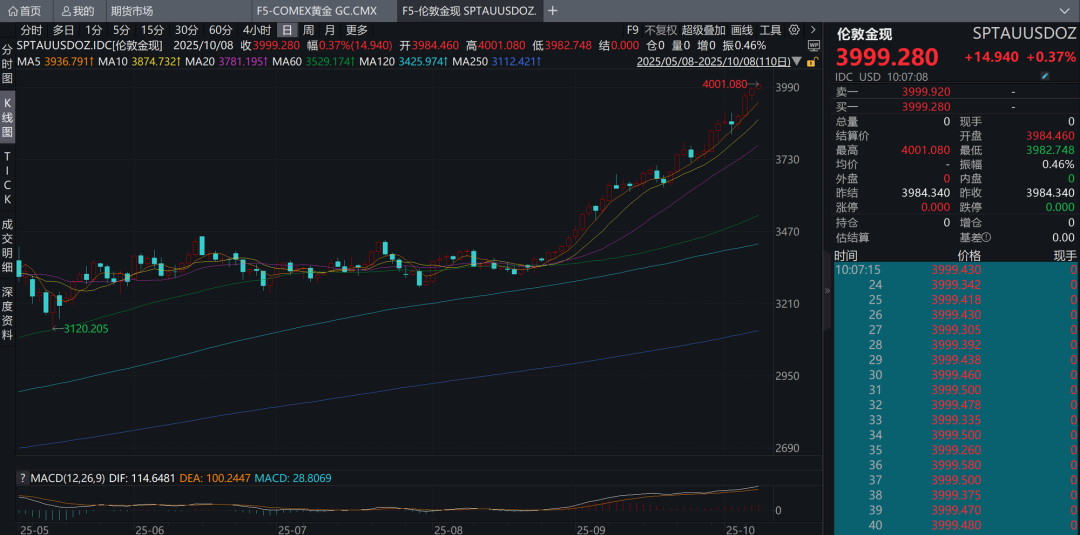
10月7日,央行公布最新的官方储备资产情况,截至9月末,央行已连续11个月增持黄金。从市场表现来看,9月份,国际金价累计涨超10%,进入10月 后,在避险情绪升温助推下,国际黄金期货和现货价格近两日先后升破4000美元/盎司大关。 央行连续11个月增持黄金 最新的官方储备资产数据显示,9月末,央行持有黄金7406万盎司,较上月末增加4万盎司。这是自2024年11月以来,央行连续第11个月增持黄金。 对此,东方金诚首席宏观分析师王青对央广网记者表示:"近期央行继续增持黄金,主要原因是美国新政府上台后,全球政治、经济形势出现新变化,国 际金价有可能在相当长一段时间内易涨难跌。这意味着从控制成本角度出发暂停增持黄金的必要性下降,而从优化国际储备结构角度增持黄金的需求上 升。" 根据央行公布的数据,官方黄金储备虽连续第11个月增加,但增量环比有所下降。王青指出,这一情况符合市场预期。"9月份美联储重启降息,美国政府 持续对美联储货币政策独立性施加压力,加之国际地缘政治风险居高不下,带动当月国际金价涨幅明显扩大。由此,9月央行增持黄金规模降至2024年11 月恢复增持以来的最低水平。" 王青进一步指出,近期央行在国际金 ...
中国连11个月买黄金, 应对美元风险,筑牢人民币硬信用
Sou Hu Cai Jing· 2025-10-08 09:13
Core Viewpoint - The central theme of the articles is the continuous increase in gold reserves by the central bank, reflecting a strategic shift in response to global financial changes and a desire to enhance the safety and stability of foreign exchange reserves [1][21]. Group 1: Gold Reserves and Strategy - As of the end of September, the central bank's gold reserves reached 74.06 million ounces, an increase of 40,000 ounces from August, marking 11 consecutive months of gold purchases [1][21]. - Gold currently constitutes approximately 3.8% of the total foreign exchange reserves, which is significantly lower compared to developed countries like Germany and the U.S., where gold makes up over 60% [5][6]. - The official gold reserves amount to 1,948 tons, ranking sixth globally, but still far behind the U.S. reserves of 8,133 tons [6]. Group 2: Shift in Investment Strategy - Historically, the focus was on maintaining liquidity through U.S. Treasury bonds, but recent instability in the dollar has prompted a reevaluation of this strategy [8][10]. - The gradual increase in gold purchases is seen as a smart move to enhance safety without abruptly selling off U.S. debt, which could destabilize markets [10][21]. - This trend is not isolated; global central banks have been net buyers of gold since 2010, with 2023 potentially seeing record purchases [11][21]. Group 3: Global Context and Implications - Countries like Russia and Turkey are also diversifying their reserves by reducing dollar assets and increasing gold holdings, indicating a broader trend of seeking stability outside of single-currency reliance [13][15]. - The shift towards gold is viewed as a response to the risks associated with relying solely on credit currencies, with gold providing a hedge against geopolitical and economic uncertainties [15][21]. - The central bank's strategy is aligned with global financial governance, aiming to bolster the international credibility of the renminbi by enhancing its backing with gold [17][19].

莫迪宁可得罪美国,也要用人民币购买俄罗斯石油,两年来第一次
Sou Hu Cai Jing· 2025-10-08 09:12
Core Viewpoint - The decision by Indian state-owned refineries to resume purchasing Russian oil in RMB is not merely a trial but a necessity driven by geopolitical and economic realities, marking a significant shift in global energy trade dynamics [3][18]. Group 1: Geopolitical Context - The ongoing Russia-Ukraine conflict and Western financial sanctions have effectively excluded Russia from mainstream financial systems, making traditional currencies like USD and EUR unusable for Russian oil transactions [6][16]. - India's previous attempts to use RMB for oil purchases were hindered by strained Sino-Indian relations, but private refineries continued to utilize this payment method [8][10]. Group 2: Economic Implications - The price advantage of Russian oil has diminished, with discounts shrinking from $10-20 per barrel in 2022 to just $2-3 by 2025, yet the diversification of payment methods remains crucial for energy security [10][12]. - The shift towards RMB payments is part of a broader trend of "de-dollarization," with over 90% of Sino-Russian trade now conducted in local currencies, indicating a move towards a financial ecosystem less reliant on the USD [12][16]. Group 3: Future Outlook - The issuance of RMB-denominated "panda bonds" by Russian energy companies and the increasing interest from other nations in local currency settlements suggest a growing trend towards financial independence from the USD [14][16]. - The evolving global trade landscape presents opportunities for emerging markets to assert more control over their economic transactions, with RMB internationalization being a key aspect of this shift [16][18].
人民币结算令,既是对澳大利亚的最后通牒,又是对美国的深远打击
Sou Hu Cai Jing· 2025-10-08 07:46
中国近期宣布将停止采购必和必拓等澳大利亚铁矿商以美元结算的海运铁矿石,并要求以人民币结算。这一政策令澳大利亚矿业巨头深感压力,表面上看 似只是中国与澳大利亚之间的贸易争端,实则影响深远,既是对澳大利亚经济的精准反击,也是对美国金融霸权的一次重击。 全球大宗商品贸易的结算货币问题,早已超越了经济领域,成为国际政治博弈的重要一环。中国作为全球最大钢铁生产国,每年消费全球约七成的铁矿 石,而澳大利亚是世界上最大的铁矿石供应国,两国的经济联系原本应互惠互利。然而,长久以来,澳大利亚矿企凭借市场垄断地位,操控铁矿石定价 权,使得中国每年为铁矿石支付的成本居高不下。尽管铁矿石的开采成本仅为每吨16到18美元,但澳大利亚却将其售价抬高至每吨80到100美元。更不合 理的是,澳大利亚矿企即便在现货价格已经大幅下降的情况下,依旧在长协谈判中要求价格上涨。这种"买得越多,价格越高"的定价方式让中国钢铁企业 每年多支付数百亿美元的额外成本。 中国此次推行铁矿石人民币结算政策,背后是经过深思熟虑的战略布局。此次决策主要集中在三个核心目标上:第一,争夺铁矿石定价权,避免长期承受 不公平的"溢价"困境。中国作为全球最大铁矿石买家,却长期 ...
掀桌子!中国开始清算澳洲铁矿石的“二十年血债” 大人,世界变了
Sou Hu Cai Jing· 2025-10-08 03:26
Core Viewpoint - The global commodity market is experiencing unprecedented turbulence due to China's sudden shift in iron ore procurement strategies, signaling a significant transformation in the resource game and altering the balance of power in global trade [1][14]. Group 1: Historical Context - For two decades, the pricing power in iron ore trade has been dominated by three major mining groups, leaving China, the largest importer, in a passive position during negotiations [3][5]. - China's massive procurement volume has not translated into pricing power, leading to compressed profits for steel mills and increased cost pressures due to currency fluctuations [3][5]. Group 2: Changes in Pricing Mechanism - The shift from long-term contracts to index-based pricing has introduced volatility and speculation in iron ore prices, complicating China's ability to unify its purchasing strategy [5][11]. - The establishment of the China Mineral Resources Group in 2022 marks a pivotal change, allowing Chinese steel companies to consolidate their purchasing power and begin to challenge the pricing dominance of sellers [5][11]. Group 3: Strategic Developments - The upcoming production of the Simandou iron ore mine in Guinea is a crucial part of China's overseas resource strategy, providing a stable supply of high-grade iron ore [7][11]. - The push for transactions in RMB instead of USD represents a direct challenge to the existing global commodity settlement system, enhancing China's financial sovereignty and elevating the RMB's status in international markets [7][14]. Group 4: Market Reactions - The suspension of purchases from BHP by the China Mineral Resources Group has led to a freeze in new contracts among domestic steel mills and traders, causing significant disruptions in the global market [9][11]. - Australia's economy, heavily reliant on iron ore exports, faces severe challenges as it struggles to pivot to alternative markets amid declining demand [9][16]. Group 5: Broader Implications - The shift in China's procurement strategy is not merely a commercial negotiation but a fundamental reshaping of the global resource landscape, challenging the long-standing seller-dominated market [14][18]. - The emergence of buyer alliances is expected to drive changes in pricing power across various sectors, indicating a critical moment for rewriting international trade and financial rules [16][18].

中国为啥暂停部分澳矿采购?铁矿石定价权博弈,到了一个关键时刻
Sou Hu Cai Jing· 2025-10-08 02:46
Core Insights - China's suspension of iron ore purchases from BHP Billiton marks a significant shift in the global iron ore market, highlighting China's growing assertiveness in negotiating pricing and settlement methods [1][7] - The disparity in profitability between BHP Billiton and China's steel industry underscores the long-standing issue of pricing power in the iron ore market, with BHP's EBITDA for iron ore reaching $26 billion and a profit margin of 53%, while China's steel industry reported a total profit of only 40 million [3][4] - The shift from long-term contracts to the Platts pricing index has led to increased costs for Chinese steelmakers, with iron ore prices rising from $60 per ton in 2009 to $110 per ton, resulting in an additional cost burden of 400 billion RMB [5][4] Industry Dynamics - The iron ore pricing mechanism has evolved from long-term agreements to a more volatile index-based pricing system, which has been criticized for its lack of transparency and potential for manipulation [4][5] - China's steel industry has faced significant challenges, with average profit margins below 1% and nearly half of the industry reporting losses in 2024, contrasting sharply with the high profit margins enjoyed by Australian miners [3][5] - The average monthly salary for Australian miners is approximately 80,000 RMB, while Chinese steelworkers earn less than 4,000 RMB, highlighting the stark income disparity driven by the current pricing structure [3] Strategic Moves - China's recent negotiations with BHP Billiton for long-term contracts have focused on two main demands: settlement in RMB and a base price aligned with current spot prices, reflecting a strategic shift towards greater control over pricing [5][7] - The development of the Simandou iron ore project in Guinea, led by Chinese enterprises, is set to produce high-grade iron ore and is part of China's strategy to diversify its supply sources [6][9] - China's efforts to reduce reliance on Australian iron ore have been successful, with dependence dropping from 62% in 2020 to 53.1% in 2024, aided by increased imports from Brazil and Russia [9][11] Financial Implications - The push for RMB settlement in iron ore transactions aims to reduce the cost of currency exchange and mitigate risks associated with exchange rate fluctuations, which currently exceed $100 billion annually for commodity imports [11] - The establishment of the "Beijing Iron Ore Index," which focuses on RMB-denominated pricing, is part of China's broader strategy to create a pricing benchmark that reflects domestic supply and demand [11]
中国叫停美元铁矿订单,澳洲慌了,规则变了谁还认旧账?
Sou Hu Cai Jing· 2025-10-07 20:26
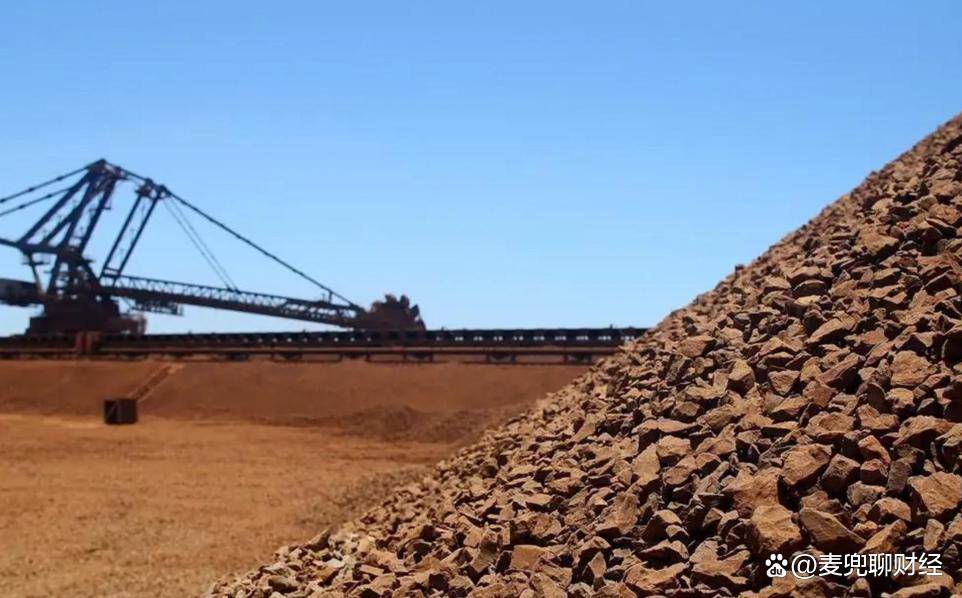
Core Viewpoint - The strategic move by China Mineral Resources Group to halt the purchase of iron ore priced in USD from BHP has sent shockwaves through the global iron ore market, significantly impacting Australia's economy and the iron ore trade dynamics [1][3]. Group 1: Market Impact - Following the announcement, BHP's stock price plummeted by 3.4%, resulting in a market capitalization loss exceeding 12 billion AUD (approximately 60 billion RMB) [3]. - Australia's Treasury estimates that if the supply halt continues until 2026, iron ore export revenues could decline by 11 billion AUD, potentially dragging down the national GDP growth by 0.3 to 0.8 percentage points [7]. Group 2: Pricing Dynamics - China, holding a 75% market share in global seaborne iron ore, has historically lacked pricing power despite being the largest buyer [5]. - In 2024, BHP generated a staggering profit of 224 billion RMB from the Chinese market, averaging 620 million RMB in daily revenue, highlighting the significant profit margin disparity [5]. Group 3: Strategic Developments - China's ability to assertively halt USD-denominated transactions is supported by its diversified supply network, including the Simandou project in Guinea, which is expected to produce 60 million tons annually starting in late 2025 [9]. - China has also signed a long-term procurement agreement with Vale for 50 million tons annually, with imports from Brazil rising to 27.8% in 2024 [9]. Group 4: Currency and Trade Relations - The directive to pause USD transactions, while allowing RMB-denominated trades, reflects a strategic intent to promote the internationalization of the RMB, aiming to establish a closed-loop settlement system in the iron ore market [11]. - The proportion of RMB settlements in Australia's iron ore exports reached 60% in 2024, indicating a shift towards local currency transactions [11]. Group 5: Industry Challenges - The steel industry in China has been under pressure from high iron ore prices, with iron ore accounting for 54% of the cost of iron production in the first half of 2024, leading to an average profit margin of only 1.1% for major steel companies [13]. - The establishment of the "China Mineral National Chain" platform aims to eliminate intermediaries and curb speculation, while the construction of a national iron ore spot trading center will enhance price transparency [13].