资产配置

Search documents
中国新富人群加大金融市场参与度
Guo Ji Jin Rong Bao· 2025-09-17 11:50
Core Insights - The Chinese capital market has undergone significant reforms over the past year, leading to renewed vitality in the wealth management industry [1] - New affluent individuals are increasingly shifting from traditional savings and real estate investments to diversified financial asset allocations, particularly in response to declining risk-free interest rates [2] - There is a growing emphasis on retirement planning among new affluent individuals, with a notable shift towards purchasing retirement insurance as a primary means of preparation [1][2] Group 1: Wealth Management Trends - The report indicates that the average proportion of funds in the investment portfolios of new affluent individuals has reached a five-year high, with a significant increase in fund investments [2] - Exchange-Traded Funds (ETFs) are gaining popularity due to their high transparency, risk diversification, and adaptability to various investment strategies [2] - Despite a desire for higher returns, over 60% of new affluent individuals are unwilling to accept losses exceeding 10%, indicating a mismatch between investment behavior and risk tolerance [2] Group 2: Emerging Investor Demographics - The "new generation investors," defined as those who began financial investments after September 24 of the previous year, constitute 13.1% of the new affluent population, with an average age of 30.7 years [3] - Young affluent individuals aged 18-24 show a high acceptance of financial planning, with 71.8% expressing interest, yet they frequently engage in short-term trading behaviors [3] - The industry faces new opportunities and challenges in enhancing financial literacy among these emerging groups [3] Group 3: Technology and Wealth Management - The integration of generative AI in wealth management is rapidly increasing, with new affluent individuals in China showing higher trust in AI-generated investment advice compared to their overseas counterparts [3] - Personal risk tolerance and investment experience are key factors influencing the trust in AI among new affluent individuals [3] - The demand for humanized service remains strong, suggesting that the optimal future path for wealth management may lie in a "human-machine collaboration" model [3]
投资稳进派,为何偏好固收+?
中国基金报· 2025-09-17 09:50
低利率如同一把双刃剑,开辟了一片理财新场景。 随着一年期定期存款利率下破1%、10年期国债收益率来到1.75%附近、纯债资产收益中枢下滑、股 票市场回暖……很多偏好稳中求进的投资者在热衷攒"新三金"(货币基金、债券基金和黄金基金)的 基础上,开始进一步寻求收益"加"法,旺盛的需求令"固收+"基金重回C位。 "最后一笔高息定期存款到期之后,我基本上不买纯固定收益类产品了,现在除了留一部分活期,其 他都转到了债基和固收+产品,未来几年我需要安家置业,投资决策奔着这个目标去。"一位90后投 资者"十二月"表示。 投资稳进派求稳求进,如何"+"才能靠得住?理财新"+"法正在成为新赛道。围绕新环境下的稳进投 资求解之道,嘉实基金近期举办了一场"固收+"投资策略分享会,联动多位基金经理、财经大V、稳 进派投资者展开分享和交流。 01 稳进投资者转身,固收+产品需求激增 作为稳进投资派的一员,"十二月"在经历市场几轮牛熊后深刻意识到,个人想实现精准择时、资产动 态搭配难度不小,固收+基金成为她追求收益和平衡风险的省心之选。 像"十二月"这样的投资者正越来越多。Wind数据显示,截至今年上半年,全市场固收+产品规模已突 破1 ...


安本投资:美联储降息周期下小盘股迎新机遇
Xin Hua Cai Jing· 2025-09-17 08:01
Group 1 - The Federal Reserve is expected to initiate a new round of interest rate cuts, which may lead to a reallocation of international funds, particularly towards emerging markets like China [1] - The Chinese stock market has shown an upward trend, with various indices reaching new highs for the year [1] - Kirsty Desson, head of global small-cap stock investment at Aberdeen Investment, believes that the weak dollar cycle will benefit RMB assets, highlighting potential global investment targets in sectors like biotechnology, consumer applications, and AI in healthcare [1] Group 2 - Since 2025, small-cap stocks have outperformed large-cap stocks, with the Russell 2000 index rising 4.83% in the past month, compared to the S&P 500's 2.1% increase [2] - The MSCI global small-cap index has seen a cumulative increase of 3.67% over the past month and over 11% in three months [2] - Small-cap stocks represent about 15% of the global market capitalization but account for approximately 70% of the total number of listed companies globally [2] Group 3 - The large number of small-cap stocks across various industries provides abundant opportunities for global investors, but selecting quality stocks remains a challenge [3] - The investment philosophy focuses on three key aspects: quality, growth, and momentum [3] - High-quality small-cap stocks can be assessed based on competitive advantages, management capabilities, and financial stability [3] Group 4 - Small-cap stocks are generally more sensitive to interest rate changes, with historical data indicating that they tend to outperform large-cap stocks during the early stages of a rate-cutting cycle [4] Group 5 - There has been a continuous increase in net inflows into emerging market equity funds this year, with a significant rise in funds allocated to Chinese stocks [5] - The A-share market has shown a strong upward trend, with high trading volumes and record inflows from foreign investors [5] Group 6 - The current scale of the Chinese market is relatively small, and many foreign investors are still unfamiliar with it [6] - The shift in global investment patterns from dollar-dominated assets to emerging markets, particularly China, is expected to continue [6] - The "Shanghai-Hong Kong Stock Connect" and "Shenzhen-Hong Kong Stock Connect" have provided effective platforms for foreign investors, enhancing their understanding of the Asian market [6] Group 7 - External factors such as the weakening dollar and geopolitical tensions are prompting investors to reassess their asset allocation strategies [7] - Internal factors like policy adjustments, liquidity improvements, and stronger economic fundamentals are expected to support the Chinese market [7] - The valuation of the A-share market remains attractive, with the CSI 300 index's price-to-earnings ratio around 14 times, still below its five-year average [7] Group 8 - The Chinese capital market is witnessing a revaluation in sectors such as biotechnology, consumer applications, and AI in healthcare [7] - The focus on domestic demand and self-sufficiency is becoming increasingly clear, with innovative Chinese companies, including promising small-cap firms, emerging in the capital market [7] Group 9 - There is an expectation for further favorable policies that will provide more signals regarding growth priorities and consumer orientation, which will bolster market confidence and predictability of corporate earnings [8]
我为什么要坚持全天候投资
雪球· 2025-09-17 07:57
Core Viewpoint - Investment is a competitive game that only a few can profit from, and most participants are at a disadvantage compared to the most skilled and resourceful investors [3][4][5]. Group 1: Asset Allocation Strategy - Personal investors can achieve a favorable position through an all-weather asset allocation strategy proposed by Ray Dalio, which allows for profit across various market conditions [6][7]. - Each asset class can generate returns over the long term, but significant volatility and drawdowns can hinder many investors from realizing these gains [7]. - The correlation between different asset classes is low, which supports the concept of "anti-fragility" in investment [10][12]. Group 2: Importance of Reducing Volatility - The concepts of anti-fragility, asset allocation, and diversification are not original to Dalio but have been developed by various investment masters [12]. - The two key principles of asset allocation are to invest in long-term appreciating risk assets and to buy uncorrelated assets to reduce volatility [12]. - Maintaining a diversified portfolio is crucial as it helps smooth out returns and allows for flexibility in capital allocation [14][15]. Group 3: All-Weather Portfolio Practice - A proposed all-weather portfolio consists of 20% stocks, 15% gold, 15% commodities, and 50% long-term bonds, aiming for an annualized return of 10% [16]. - Historical performance data shows that even during market downturns, such as the 2008 financial crisis, the all-weather portfolio experienced significantly lower losses compared to individual asset classes [17]. Group 4: Conclusion - The all-weather strategy provides a robust investment framework for ordinary investors, enabling them to outperform many professional investors through a systematic approach [19][20].

天然钻石凭数据优势领跑双轨钻石市场
Sou Hu Cai Jing· 2025-09-17 04:48
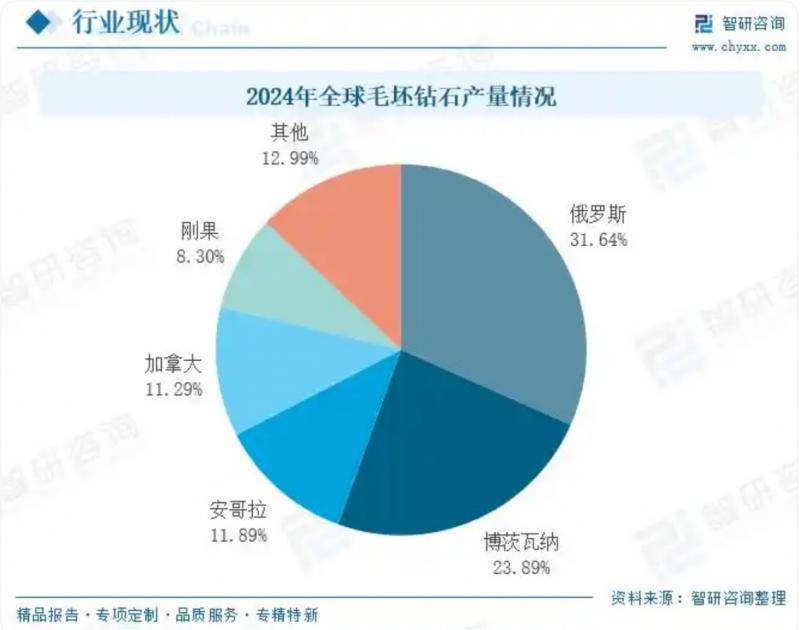
Core Insights - The Chinese diamond market has entered a new phase where natural diamonds and lab-grown diamonds coexist, with natural diamonds maintaining a core position due to their irreplaceable scarcity and high-end attributes [1][3][6] Industry Development - The establishment of the Shanghai Diamond Exchange in 1982 marked a key starting point for the industry, leading to standardized diamond trading and laying the foundation for future growth [3] - By 2003, China became the world's second-largest diamond consumer, with diamond jewelry transitioning from a luxury item to a staple in the wedding market [3] - Despite a slowdown in market growth and increased homogenization since 2013, natural diamonds have shown resilience due to their unique advantages [3] Market Dynamics - The global production of natural diamonds is projected to decline to 115 million carats by 2025, a year-on-year decrease of 2.1%, highlighting the increasing scarcity of resources [3] - Emerging markets like China and India are experiencing a rebound in demand, which is driving a steady increase in natural diamond prices [3] - High-end segments, particularly large fancy-shaped diamonds, are commanding premiums exceeding 30%, reinforcing their status as "hard currency" in the market [3] Consumer Trends - Natural diamonds continue to dominate high-end demand, particularly in wedding, self-purchase, and gifting scenarios, due to their emotional significance [5] - Lab-grown diamonds, while benefiting from technological advancements and cost advantages (70%-80% cheaper than natural diamonds), primarily cater to the light luxury market and industrial applications [5] - The emotional and collectible value of natural diamonds, tied to decades of industry heritage, remains unmatched by lab-grown alternatives [5] Policy Environment - Supportive policies, such as the tax rate adjustment to 5% on retail for natural diamonds, have facilitated market standardization and maturity [5] - While lab-grown diamonds have made inroads in the mid-to-low-end market, they face challenges from homogenization and stricter environmental regulations [5] Future Outlook - The current stratified landscape of the Chinese diamond industry is characterized by high-end natural diamonds, mass-market lab-grown diamonds, and industrial applications [6] - As demand from emerging markets continues to grow and high-end consumer segments expand, natural diamonds are expected to lead the dual-track development of the industry [6]
市场参与主体资金流向变化研究(三):2025年中报新变化
Ping An Securities· 2025-09-17 03:36
Group 1 - The core viewpoint of the report indicates that the funding flow of market participants has changed, with a notable increase in equity investments from long-term institutional investors such as the national team and insurance companies, while passive products, especially ETFs, continue to grow [6][7][11] - As of the end of Q2 2025, the national team held approximately 4.10 trillion yuan in stocks, accounting for about 4.52% of the A-share market value, and had an ETF holding scale of about 1.30 trillion yuan [11][12] - Insurance institutions have increased their allocation to the stock market, with their equity investment structure shifting towards high-dividend stocks and diversified ETFs, holding approximately 5.21% of the total A-share market value as of mid-2025 [18][19][24] Group 2 - In the first half of 2025, the national team increased its holdings in bank stocks and core ETFs such as the CSI 1000, CSI 500, and Sci-Tech 50 ETFs, with significant increases in their market values [12][14][15] - Insurance institutions have significantly increased their allocation to Hong Kong stocks, with their holdings in Hong Kong ETFs growing by 25% compared to the end of 2024, reflecting a strategic shift towards high-dividend and technology sectors [21][25] - Private equity funds have shown flexibility in their operations, reducing exposure to pharmaceutical stocks while increasing investments in technology stocks, indicating a shift in focus towards sectors with higher growth potential [35][39] Group 3 - Foreign capital has maintained a stable share of the A-share market, with a preference for core assets in China's advantageous industries, while also increasing their allocation to US stock ETFs in the first half of 2025 [43][44] - The bond market remains dominated by banks and insurance companies, with commercial banks holding approximately 93.46 trillion yuan in bonds as of the end of Q2 2025, reflecting a growth of about 3.29% from the previous quarter [9][10] - Bank wealth management products have diversified significantly, with total investment assets reaching 32.97 trillion yuan by mid-2025, and a notable increase in their holdings of various ETFs across different asset classes [48][49]
金价高位震荡,黄金股ETF(159562)跌超2%,九月以来吸金超11.43亿
Sou Hu Cai Jing· 2025-09-17 02:09
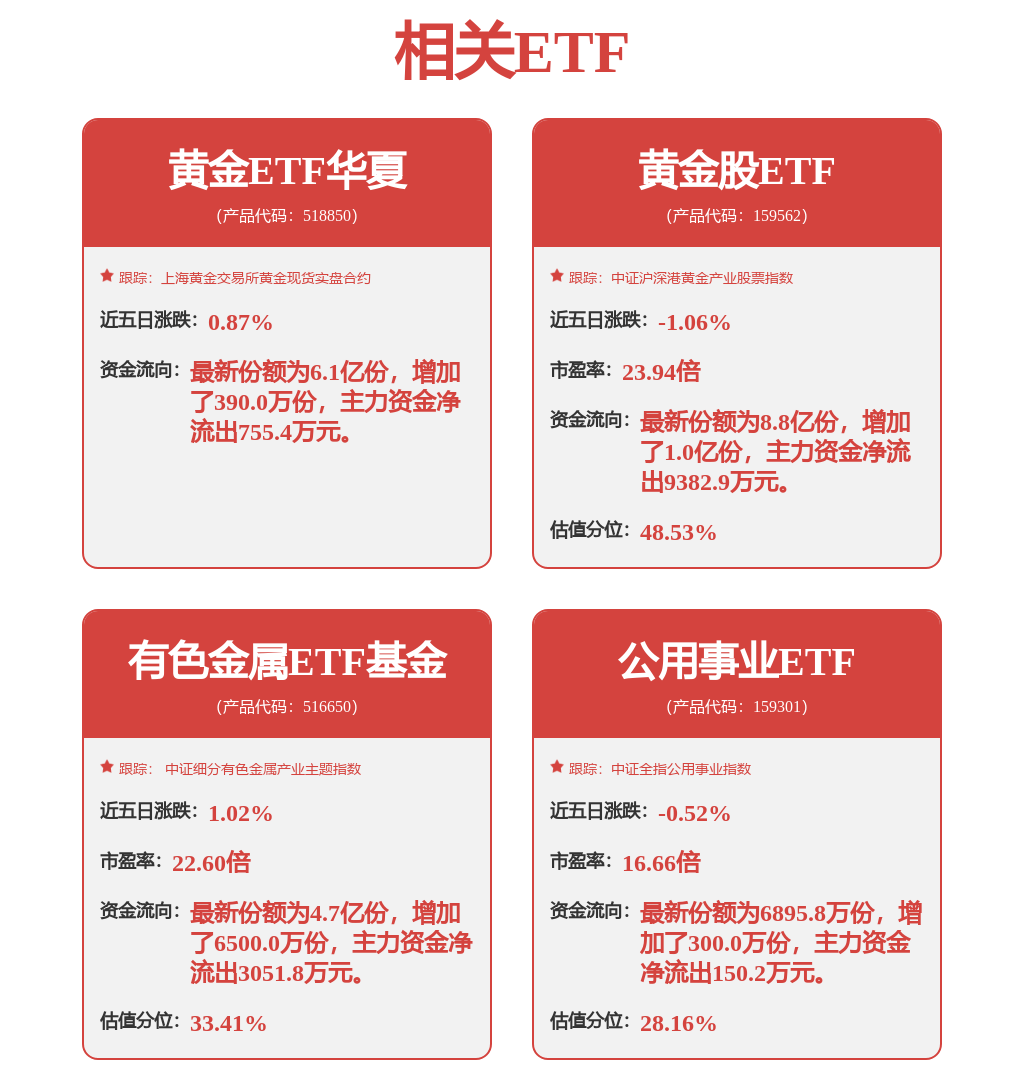
Core Viewpoint - COMEX gold futures prices experienced a slight drop in early trading on September 17, with various gold-related products declining, indicating a potential shift in market sentiment and investment strategies [1] Group 1: Market Performance - As of 9:50 AM, the gold ETF Huaxia (518850) fell by 0.63%, the non-ferrous metals ETF (516650) decreased by 1.55%, and the gold stock ETF (159562) dropped by 2.3% [1] - In September, over 12 trading days, the market attracted 1.143 billion in capital, suggesting ongoing interest despite the recent price declines [1] Group 2: Currency and Economic Indicators - The US dollar index fell below 97, reaching a low of 96.54, the lowest since July 1, indicating a weakening dollar [1] - The softening of the dollar makes gold cheaper for holders of other currencies, potentially increasing global buying demand [1] - The dollar's weakness reflects market expectations of Federal Reserve interest rate cuts and investor concerns regarding the US economic outlook, despite stronger-than-expected retail data in August [1] Group 3: Investment Strategy - Analysts advise caution for investors in the gold market, emphasizing the importance of monitoring Federal Reserve meetings, economic data changes, and geopolitical developments [1] - A diversified asset allocation strategy may be an effective way to mitigate risks and achieve stable asset growth in the current volatile market environment [1]
美联储明年或降息7次,漫天大水要来了?普通人如何守护钱袋子?
Sou Hu Cai Jing· 2025-09-16 15:37
Core Viewpoint - The Federal Reserve may lower interest rates seven times next year, leading to a significant wealth redistribution process, where individuals must strategize to protect their financial assets [1][3]. Economic Context - China's housing market has been in a downward trend since 2021, with property values in many cities halved, impacting the majority of Chinese households whose assets are heavily tied to real estate [3]. - The U.S. job market shows signs of weakness, with only 22,000 new non-farm jobs added in September, and an unemployment rate of 4.3%, indicating potential economic issues that may necessitate interest rate cuts by the Federal Reserve [3][5]. Interest Rate Predictions - Multiple institutions predict that the Federal Reserve will reduce the benchmark interest rate to between 2.5% and 2.75% by 2026, which will likely lead to lower interest rates in China as well [5][12]. Investment Strategies - With bank deposit interest rates dropping below 2%, individuals are encouraged to shift their funds from banks to capital markets or real industries to avoid wasting their savings [5]. - Caution is advised for first-time homebuyers, as the current low prices may still require significant financial commitment, and the housing market is unlikely to recover in the short term [7][10]. - The bond market is expected to see increased investment as interest rates decline, pushing bond prices higher, although current prices may already reflect anticipated rate cuts [9][12]. - The stock market is experiencing a bifurcation, with capital flowing into high-tech and innovative sectors, while traditional sectors lag behind, suggesting a need for strategic stock selection [10]. - Gold is viewed as a stable investment option amid the anticipated interest rate cuts, with historical trends indicating that gold prices rise during economic downturns and Fed rate reductions [12].

定投指数却“越买越亏”,让我发现适合自己的才是最香的
雪球· 2025-09-16 13:00
Core Viewpoint - The article narrates the investment journey of an individual who transitioned from a novice to a more knowledgeable investor through learning and adopting a structured asset allocation strategy known as the "Three-Fund Method" [2][3][4]. Investment Journey - The individual began investing in 2019 by purchasing a healthcare index fund through a bank's financial advisor, which resulted in a significant loss of 45% on an initial investment of 120,000 yuan by July 2022 [5][6]. - This experience highlighted the risks associated with single-asset investments and prompted a search for a more balanced and stable investment approach [5]. Introduction to Three-Fund Method - The individual discovered the "Three-Fund Method" during a period of confusion, which emphasizes the importance of asset allocation and risk diversification [7]. - The method categorizes assets into three main classes: stocks, bonds, and commodities, allowing for effective risk management and stable returns [7][8]. Asset Allocation Strategy - The individual developed a personal asset allocation strategy, termed the "Stable 5 Portfolio," consisting of 80% bonds, 10% stocks, and 10% commodities, aimed at achieving over 5% annual returns while limiting drawdowns to within 2% [9][10]. - This allocation strategy focuses on stability, with bonds providing a steady income, stocks offering growth potential, and commodities serving as a hedge against inflation [9][10]. Family Support and Trust - As the individual's investment philosophy matured, the positive results began to influence family financial decisions, leading to increased trust and support from family members regarding investment strategies [11]. - The individual emphasizes the importance of patience and consistent investment practices, which have contributed to a growing investment portfolio exceeding one million yuan [11]. Key Insights - The individual stresses the importance of understanding one's own financial situation and risk tolerance before making investment decisions, advocating for a cautious approach to investing [14][15]. - The article concludes with a reminder that investing is a long-term endeavor, and the essence of investment lies in transferring current resources to future value [17].

FOF中报曝光配置底牌:狂买黄金ETF,猛攻港股科技,小众豆粕、短融ETF成新宠
市值风云· 2025-09-16 10:09
Group 1 - The core viewpoint of the article emphasizes that asset allocation is the only free lunch in the investment market, highlighting the importance of strategic investment choices [1] - The FOF market has shown a strong rebound in the first half of 2025, with the number of FOF products reaching 517 and total net assets amounting to 165.67 billion yuan, a growth of 24.4% from the beginning of the year [4][6] - The largest holding type in FOF funds remains the mixed bond FOF, with a total holding size of 77.22 billion yuan, accounting for 46.6% of the total [6] Group 2 - FOF funds are increasingly adopting an index-based approach, with ETFs becoming the core allocation tool, as evidenced by 15 out of the top 20 held funds being ETFs [8] - The most favored product among FOFs is the Gold ETF, held by 227 FOFs, reflecting a strong demand for safe-haven assets [9][12] - The performance of FOFs varies, with stock-type FOFs rising by 23.1% year-to-date, while bond-type FOFs have only increased by 1.5% [6][10] Group 3 - The preference for ETFs among FOFs is driven by market conditions, investor demand, and product characteristics, with a focus on both stability and growth [11] - The popularity of the Hang Seng Technology Index ETF indicates FOFs' optimism towards the Hong Kong technology sector, which is seen as undervalued after significant corrections [18][19] - Short-term bond ETFs and soybean meal ETFs are gaining traction among FOFs, showcasing the managers' unique insights into niche asset allocations [22][28] Group 4 - The short-term bond ETF offers low credit risk and high liquidity, with returns significantly higher than traditional savings rates, reflecting a focus on stability in uncertain environments [24][26] - The soybean meal ETF, as a representative of commodity futures, provides unique risk-return characteristics and is included in FOFs for its inflation-hedging properties [27][28] - Overall, the changes in FOF holdings illustrate the core value and unique appeal of ETF products in asset allocation, with a multi-dimensional approach to risk management and growth opportunities [29]