
AI大模型

Search documents
给包凡的信 | Findme
投中网· 2025-08-14 09:37
Core Viewpoint - The article reflects on the return of a prominent figure in the investment banking industry, expressing a sense of anticipation and curiosity about the changes that have occurred during their absence, particularly in the context of evolving relationships and market dynamics [3][4]. Group 1: Industry Trends - The rise of generative AI has become a significant trend in the investment landscape, with major players like ChatGPT and xAI gaining attention and funding in 2023 [4][5]. - The "Big Model Six Dragons" emerged as key players in the AI sector, with numerous companies entering the market, indicating a rapid expansion and competition in AI technologies [6]. - New consumer companies, referred to as the "three sisters" in the Hong Kong stock market, have shown strong performance, suggesting emerging investment opportunities in the consumer sector [7]. Group 2: Personal Reflections and Relationships - The article discusses the evolution of personal relationships within the industry, questioning whether past friendships have changed and how perceptions of individuals have shifted over time [5][6]. - It highlights the importance of long-term relationships and the value of giving without immediate returns, reflecting a philosophy of trust and future potential [5]. - The narrative includes observations about various industry figures, noting their changing roles and public perceptions, which may influence future collaborations and opportunities [8][9]. Group 3: Company Dynamics - The article mentions the operational changes within a prominent investment firm, indicating a shift towards a more decentralized management structure, allowing for personal privacy and autonomy for key figures [10]. - It emphasizes the firm's successful fundraising efforts and the strategic decisions made in response to market conditions, showcasing adaptability in a fluctuating environment [10]. - The discussion includes the firm's historical context and its evolution over the past two decades, reflecting on its growth and the challenges faced [10][11].


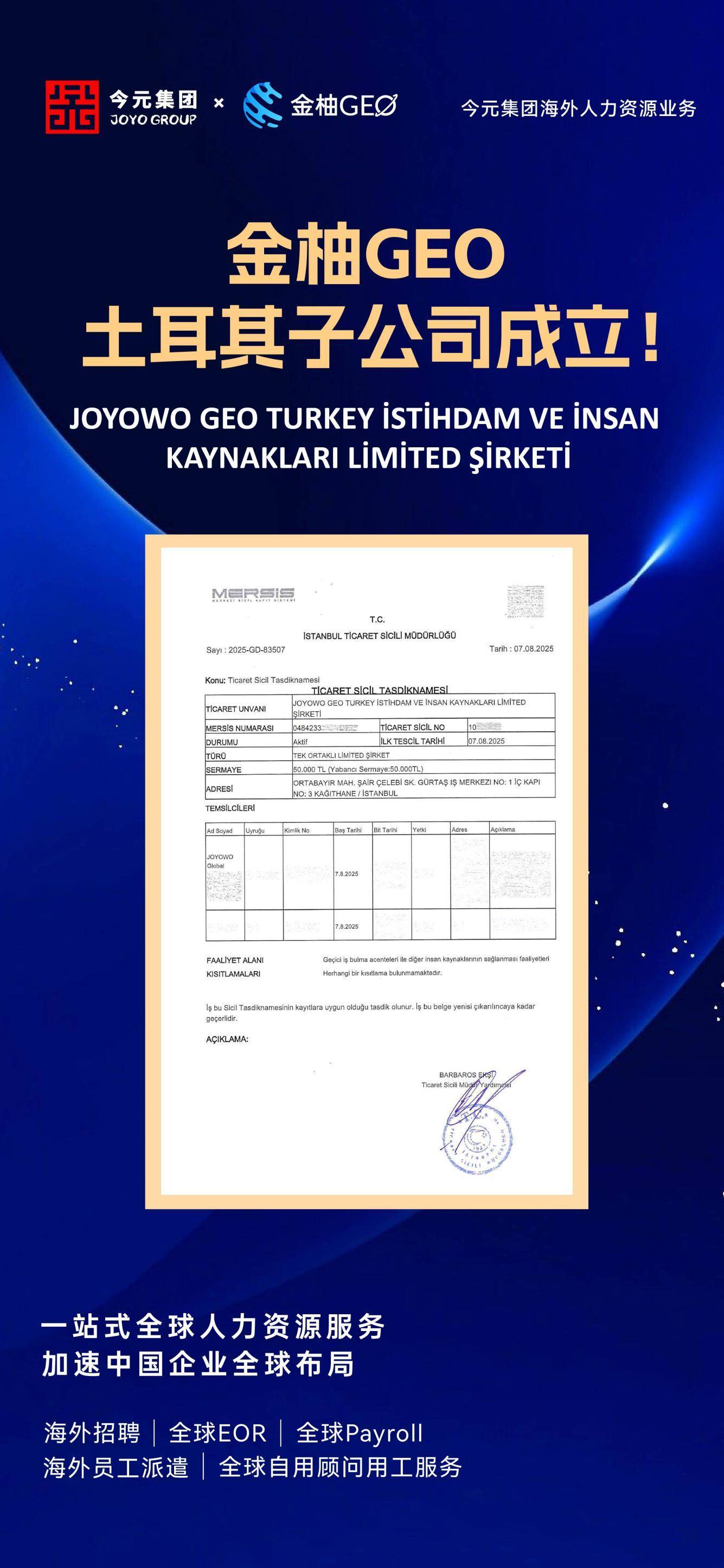
今元集团土耳其公司持证经营,强化区域网络助中企拓展全球市场
Sou Hu Cai Jing· 2025-08-14 09:26
近日,今元集团旗下海外人力资源业务品牌"金柚GEO"在土耳其成立自营公司。此举标志着继中国香港、新加坡、印尼、越南、马来西亚、澳大利亚等关键 节点布局后,今元集团在"一带一路"中东-欧洲走廊核心区完成战略性纵深部署,实现本地化服务网络的能级跃升。通过构建覆盖战略规划、合规准入、人 力资源配置及长效运营的全链路支撑体系,集团正系统性赋能中国企业以土耳其为支点,撬动欧亚非三大陆的万亿级市场机遇。 | | | I CARE SIGIL IASDIKNAMESI | | | --- | --- | --- | --- | | TICARET UNVANI | JOYOWO GEO TURKEY İSTİHDAM VE İNSAN KAYNAKLARI LİMİTED | | | | | SIRKETI | | | | MERSİS NUMARASI | TICARET SICIL NO 0484233 -------- | | | | DURUMU | ILK TESCIL TARIHI Aktif | | 07.08.2025 | | TÜRÜ | TEK ORTAKLI LİMİTED ŞİRKET | | | ...
混合数学编程逻辑数据,一次性提升AI多领域强化学习能力
3 6 Ke· 2025-08-14 08:05
Core Insights - The article discusses significant breakthroughs in AI large models, particularly in reasoning capabilities across mathematics, logic puzzles, and code generation, highlighting the potential of Reinforcement Learning with Verified Reinforcement (RLVR) technology [1][3]. Group 1: Research Findings - The OpenDataLab team constructed a multi-domain evaluation framework encompassing three categories: Math, Code, and Puzzle, with customized reward strategies for different training data [3][7]. - Experiments using the Qwen2.5-7B series model achieved an overall average performance of 56.57, significantly outperforming any dual-domain combinations [3][24]. - Key findings include the inter-support between Puzzle and Math data, the cross-domain mixing effects of Code reasoning, and the importance of reward design tailored to task difficulty [6][12][26]. Group 2: Performance Metrics - In single-domain training, the Base model showed a 75 percentage point accuracy improvement on the CountDown task, while enhancing its ability to solve logic puzzles [10]. - The Instruct model demonstrated superior performance in programming tasks, maintaining or improving performance across most out-of-domain tasks [12]. - The accuracy of the Instruct model reached 99.14 on the KK dataset, with significant improvements in the Zebra task [15]. Group 3: Training Strategies - The research emphasizes the necessity of template consistency during training and evaluation, as mismatched templates can lead to drastic performance drops [21][24]. - Curriculum learning strategies, including the "Policy Refresh" approach, were shown to enhance model performance by gradually increasing task difficulty [23][29]. - Reward design was found to be critical, with different strategies yielding varying results based on task complexity and data sparsity [26]. Group 4: Future Directions - The team calls for the expansion of data categories into new fields such as Science and General Reasoning, and the exploration of model adaptability with Llama and DeepSeek [28].

佳讯飞鸿:灾害监测系统已成功通过CRCC认证
Jin Rong Jie· 2025-08-14 04:39
Core Viewpoint - The company has developed a disaster monitoring system that utilizes new ICT technologies to enhance railway safety and emergency response capabilities in the face of natural disasters such as tsunamis and earthquakes [1] Group 1: Disaster Monitoring System - The disaster monitoring system leverages big data, IoT sensing, and edge computing to provide real-time alerts for disaster information that may impact railway safety [1] - The system effectively monitors and alerts for natural disasters like wind, rain, snow, and sudden incidents that threaten high-speed railway operations, significantly improving disaster prevention capabilities [1] - The system has successfully passed certification from the China Railway Construction Corporation (CRCC) [1] Group 2: Emergency Communication System - The company has independently developed an emergency communication system that integrates various ICT technologies, including GIS, Beidou positioning, and emergency big data, based on an IMS architecture [1] - The system supports rapid access to 4G/5G public networks, high-throughput satellites, self-organizing networks, and railway private networks, utilizing lightweight and portable emergency equipment [1] - The emergency communication system has been implemented in several railway bureaus, including Zhengzhou, Nanning, Kunming, Wuhan, Nanchang, Hohhot, and Qinghai-Tibet, enhancing communication support and rapid response capabilities during railway emergencies [1]

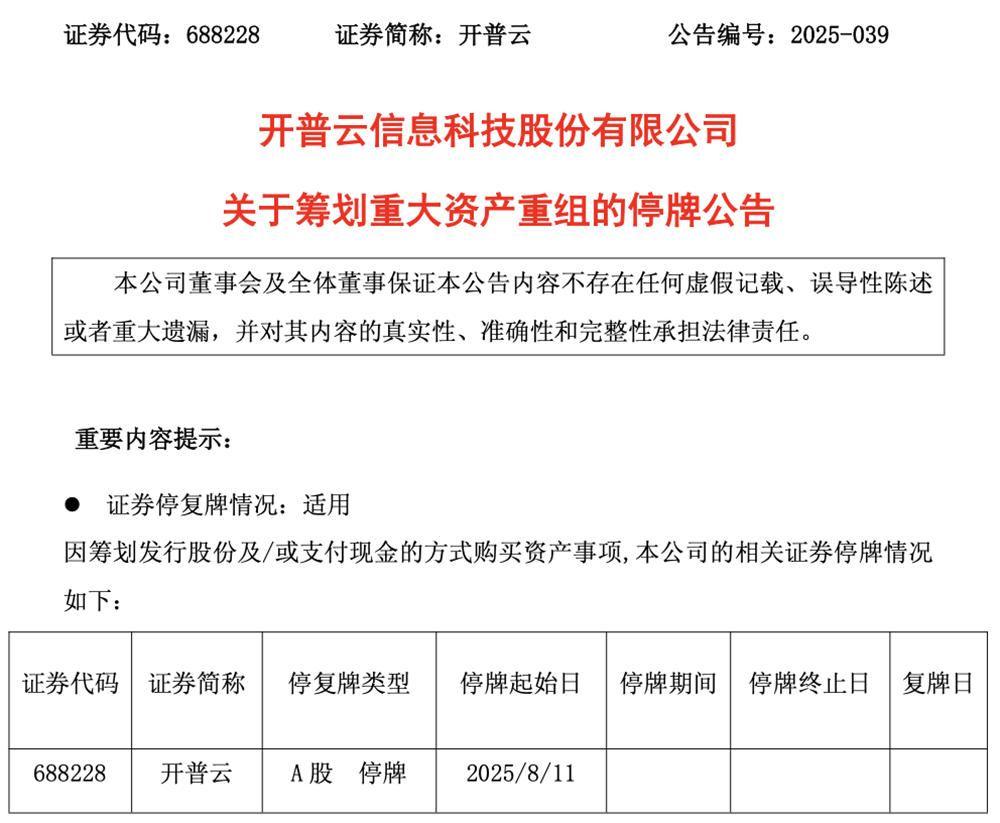
深圳半导体存储企业卖身,AI大模型公司出手
3 6 Ke· 2025-08-14 02:44
Core Viewpoint - The company Kaipu Cloud is planning a significant asset restructuring by acquiring control of Shenzhen Kimtigo Semiconductor Co., Ltd. or its storage business assets through share issuance and/or cash payment [1][9]. Group 1: Company Overview - Kaipu Cloud, founded in 2000 and listed on the Science and Technology Innovation Board in March 2020, is positioned as a full-stack AI product service provider in the AGI era [3][7]. - The company focuses on "AI computing power + intelligent agents + smart applications" and has developed various products, including the Kaiwu industry large model and the Kaiwu large model operation management system (LLMOps) [3][5]. - As of August 11, 2023, Kaipu Cloud's market capitalization is 4.4 billion yuan [7]. Group 2: Target Company Overview - Shenzhen Kimtigo Semiconductor Co., Ltd., established on December 21, 2012, has a registered capital of 82.495 million yuan and is led by its chairman and general manager, Li Chuangfeng [8]. - The company specializes in high-end storage products and has established strategic partnerships with international manufacturers such as Samsung and SK Hynix [3][7]. - Kimtigo has accumulated over 200 independent intellectual property rights and has developed a unique competitive advantage in semiconductor data storage product design and manufacturing [7][8]. Group 3: Transaction Details - The transaction is expected to be classified as a significant asset restructuring under the regulations of the Management Measures for Major Asset Restructuring of Listed Companies [8]. - The final transaction counterparties will be disclosed in subsequent announcements by Kaipu Cloud, with no change in the actual controller of the company anticipated [8].

2025世界机器人大会丨一目科技李智强博士解析触觉技术如何增强具身智能
Zhong Guo Chan Ye Jing Ji Xin Xi Wang· 2025-08-14 02:30
多传感器融合:从"看"到"触"的操作闭环 8月8日,2025世界机器人大会在北京经济技术开发区开幕。其间,一目科技创始人兼CEO李智强博士参 与人工智能大模型赋能机器人与具身智能产业新范式论坛,发表《触觉增强的世界模型》主题演讲并发 布一目视触觉传感器。 据了解,安装该传感器相当于给机器人装上了"能看见触感"的眼睛——它用摄像头拍下弹性材料接触物 体时的细微形变,再把这些变化转化成高清的"触觉照片"。比起传统只能感知单一压力传感器,它能同 时"感受"物体的软硬、纹理甚至滑动趋势。这种高保真的触觉信息,能帮机器人更精准地"理解"物体特 性,像人类一样完成精细操作。 AI大模型筑基具身智能:需补上"触觉感知"课 "对比文本、视觉类大模型,具身智能在物理世界感知能力上仍有明显不足——温度、材质、光滑度等 触觉数据的缺失,制约着其技术瓶颈突破。"李智强博士在采访中直指核心问题。 他认为,AI大模型要为具身智能筑基,需先解决两大难题:一是数据采集,需通过高保真触觉感知技 术,还原人类指尖的多维力学感知能力,收集物理世界的"触觉语言";二是数据量不足,"大模型需要 海量数据(603138)才能收敛泛化,我们提出'以真实触 ...

A股三大指数开盘集体上涨,沪指高开0.06%
Feng Huang Wang Cai Jing· 2025-08-14 01:31
Group 1 - A-shares opened collectively higher on August 14, with the Shanghai Composite Index rising by 0.06%, the Shenzhen Component Index by 0.05%, and the ChiNext Index by 0.01% [1] - Sectors such as forestry, gas, and batteries showed significant gains [1] Group 2 - CITIC Securities highlights that competition and iteration in AI large models continue, indicating sustained high levels of investment in computing power [2] - The performance forecast from computing power chain companies shows rapid growth, confirming the high prosperity of the AI-driven computing power industry [2] - Recommendations include focusing on North American computing power chain core stocks with sustained high growth and low historical valuations, companies likely to benefit from external demand, and upstream segments facing shortages [2] Group 3 - Tianfeng Securities notes that the demand for spandex has been growing rapidly, with current prices at relatively low levels [3] - The industry is experiencing an average loss, with profitability at historical lows, while new capacity investments are being delayed or reduced [3] - From 2005 to 2024, spandex consumption in China is projected to grow from 121,000 tons to 1,027,000 tons, with a CAGR of 11.9% [3] Group 4 - Huatai Securities emphasizes positive policy expectations, particularly regarding the implementation of personal consumption loan interest subsidy policies [4] - The subsidy policy involves a 1% annual interest subsidy, with central and provincial finances covering 90% and 10% of the subsidy funds, respectively [4] - Major banks are actively responding to the personal consumption loan subsidy policy, which is expected to enhance interest margins and stimulate credit issuance [4]
A股算力板块全面爆发
2 1 Shi Ji Jing Ji Bao Dao· 2025-08-14 00:36
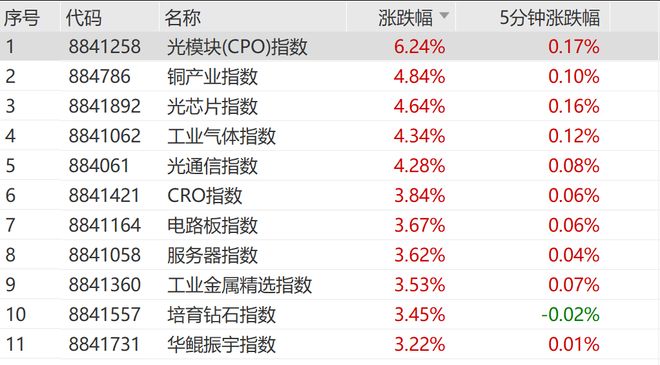
Core Viewpoint - The computing power sector has experienced a significant surge, becoming one of the most attractive investment themes in the A-share market, particularly driven by AI chips, AI servers, optical modules, and liquid cooling technologies [1][4]. Group 1: Market Performance - The computing power sector saw multiple stocks with market capitalizations exceeding 100 billion reach new highs, including Cambricon, Industrial Fulian, and leading optical module companies like Zhongji Xuchuang and Xinyi Sheng [1]. - On August 13, the optical module index rose by 6.24%, while the copper industry index increased by 4.84%, indicating strong market interest in these sectors [2]. - Cambricon's stock price reached a peak of 868 CNY, closing at 860 CNY with a market cap of 359.8 billion CNY, reflecting investor enthusiasm despite rumors being denied [4]. Group 2: Key Drivers - Four main factors are driving the surge in the computing power sector: 1. Nvidia's potential easing of sales policies to China, which has injected confidence into the sector [7]. 2. Explosive growth in capital expenditures from North American cloud providers, with a total of 159.384 billion USD expected in the first half of 2025, a 24.4% year-on-year increase [8]. 3. The release of major AI models, such as OpenAI's GPT-5, which has significantly increased demand for computing power [8][9]. 4. Breakthroughs in the domestic computing power supply chain, with companies like Huawei and domestic liquid cooling firms achieving significant technological advancements [9]. Group 3: Sector Trends - The liquid cooling market is projected to exceed 200 billion CNY by 2025, with a current global market size surpassing 50 billion CNY, and China accounting for 35% of this market [6]. - The shift from air cooling to liquid cooling systems is becoming increasingly clear, driven by the need for efficient cooling solutions for high-power chips [6]. - Analysts predict substantial growth in earnings for several companies in the computing power hardware sector, with projected profit increases of up to 1479% for Huafeng Technology and 897% for Hailanxin [9].
券商晨会精华 | AI大模型的竞争与迭代仍在持续 算力投资大概率维持较高强度
智通财经网· 2025-08-14 00:25
Market Overview - The Shanghai Composite Index broke through the high point from October 8 last year, reaching a nearly four-year high, with a closing increase of 0.48% [1] - The total trading volume in the Shanghai and Shenzhen markets was 2.15 trillion yuan, an increase of 269.4 billion yuan compared to the previous trading day, marking a return to above 2 trillion yuan after 114 trading days [1] - The sectors that performed well included non-ferrous metals, PEEK materials, CPO, and photolithography machines, while coal, banking, ports, and logistics sectors saw declines [1] - The Shenzhen Component Index rose by 1.76%, and the ChiNext Index increased by 3.62% [1] AI Computing Power Sector - CITIC Securities noted that the competition and iteration of AI large models are ongoing, indicating that investment in computing power is likely to remain strong [2] - Companies in the computing power chain have reported rapid growth, confirming the high prosperity of the AI-driven computing power industry [2] - Recommendations include focusing on North American computing power chain core targets with sustained high growth and low historical valuations, companies likely to benefit from external demand, and upstream segments facing shortages [2] - Attention is also drawn to the 1.6T optical module and CPO industry chain as GB300 begins mass shipments, and the introduction of new GPUs by NV in China as H20 supply recovers [2] Spandex Industry - Tianfeng Securities highlighted that the spandex supply in China is highly concentrated, with current prices at relatively low levels [3] - The industry is experiencing an average loss, with profitability at historical lows, and new capacity investments are being delayed or reduced [3] - Spandex demand has been growing rapidly, with consumption projected to increase from 121,000 tons in 2005 to 1,027,000 tons by 2024, reflecting a CAGR of 11.9% from 2005 to 2024 [3] - Companies positioned on the left side of the cost curve are recommended for focus amid the "anti-involution" trend [3] Banking Sector - Huatai Securities pointed out that recent policies from the Ministry of Finance, the People's Bank of China, and financial regulators aim to support personal consumption loans with a subsidy policy [4] - The annual subsidy rate is set at 1%, with the central and provincial finances covering 90% and 10% of the subsidy funds, respectively, which helps protect interest margins and stimulate credit issuance [4] - Major banks such as ICBC, ABC, CCB, and BOC have actively responded to the personal consumption loan subsidy policy since August [4] - The positive policy outlook suggests structural opportunities within the banking sector [4]
中金公司:AI大模型的竞争与迭代仍在持续,算力投资大概率依然维持较高强度
Mei Ri Jing Ji Xin Wen· 2025-08-14 00:16
Core Viewpoint - The company reports that the computing power chain sector is experiencing rapid growth, driven by the ongoing demand from AI, indicating a high level of industry prosperity [1] Group 1: Performance and Growth - The computing power chain company has released a performance forecast showing significant growth [1] - The AI-driven computing power industry continues to demonstrate strong demand, suggesting sustained investment opportunities [1] Group 2: Investment Recommendations - The company recommends focusing on North American computing power chain core stocks that are experiencing continuous high growth while still being valued at historically low levels [1] - Companies that are likely to benefit from spillover demand and achieve customer or market share breakthroughs are highlighted as potential investment opportunities [1] - Attention is drawn to upstream segments that are currently in short supply, indicating potential for growth [1] Group 3: Product and Supply Chain Focus - With the bulk shipment of GB300, there is a recommendation to closely monitor the 1.6T optical module and CPO industry chain [1] - As H20 supply recovers, the introduction of new GPUs by NV to the Chinese market is noted, suggesting a focus on domestic computing power chains [1]
