创新驱动

Search documents
迈向“十五五”的美丽图景·一线见闻丨甘肃兰州新区:“微米”间的创新动能
Yang Guang Wang· 2026-01-16 03:57
Core Insights - The central economic work conference emphasizes the need for innovation-driven growth and the cultivation of new economic drivers, with Gansu Lanzhou New Area focusing on building a trillion-level new energy materials industry cluster [1] Group 1: Industry Development - Gansu Lanzhou New Area is enhancing its "soft power" in scientific innovation to strengthen the "hard support" for its industries, particularly in new energy materials [1] - The area has introduced 136 projects in the new energy materials sector with a total investment of 82 billion yuan, indicating robust growth and interest in this industry [3] Group 2: Technological Advancements - A local company has developed high-performance copper foil, a critical material for lithium-ion batteries, achieving a strength of 800 MPa, comparable to ordinary steel, through innovative additive systems and refined control techniques [2] - The thickness of the new copper foil is only 6 micrometers, significantly enhancing its performance compared to traditional materials [2] Group 3: Talent and Education - The local government is facilitating deep collaborations between enterprises and universities to build industry research institutes and talent development programs, aiming to cultivate a high-level research talent pool [2] - By 2030, the region plans to increase the total number of scientific and technological talents to over 13,000, implementing an "order-based" talent training system [2] Group 4: Infrastructure and Support - The new materials industrial park in Lanzhou New Area is rapidly developing, with advanced infrastructure and public service platforms to support project implementation and enhance the park's overall capacity [3] - The region is focusing on developing a complete new energy industry chain, including copper foil, batteries, and vehicles, to promote systematic and clustered industrial growth [3]
创新突围看县域(人民眼·县域经济)
Ren Min Ri Bao· 2026-01-15 23:58
Core Viewpoint - The article emphasizes the importance of county-level economies in China's overall economic development, highlighting their contribution to employment, domestic demand, and innovation. It showcases successful examples of counties that have achieved high-quality economic growth through innovation and collaboration. Group 1: County Economic Development - County economies are fundamental units of the national economy, providing employment for over half of the population and enhancing living standards [10] - As of 2024, the total economic output of county economies reached 54 trillion yuan, accounting for nearly 40% of the national GDP [10] - The "14th Five-Year Plan" suggests developing distinctive county economies, with a focus on innovation-driven growth [14] Group 2: Innovation and Technology - Fujian Fuyou Group has developed transparent antenna glass for smart vehicles, addressing the need for multiple antennas in modern cars [15][17] - The company collaborated with universities and technology firms to overcome technical challenges in the production of this innovative product [16] - The glass industry in Fuzhou is projected to achieve an output value of 8.8 billion yuan by 2025, with a 9% year-on-year growth [17] Group 3: Talent Development - Cixi has implemented targeted talent recruitment strategies, attracting high-level professionals to foster local entrepreneurship [21][23] - The city has established partnerships with universities to cultivate talent that aligns with local industrial needs, resulting in the establishment of 17 large-scale talent enterprises [23][24] Group 4: Collaborative Development - Jiangyin and Jingjiang have reduced their GDP per capita gap from 2.99 times to 1.35 times over 20 years, showcasing successful regional collaboration [31] - The Jiangyin-Jingjiang Industrial Park facilitates the transfer of industrial capacity and resources between the two cities, enhancing competitiveness [33][34] - The park has attracted over 1,700 enterprises with a registered investment exceeding 200 billion yuan, creating over 660,000 jobs [35]


约三成专精特新“小巨人”企业分布在县域产业集群 创新突围看县域——县域经济高质量发展观察之一(人民眼·县域经济)
Ren Min Ri Bao· 2026-01-15 22:16
Core Viewpoint - The article emphasizes the importance of county-level economies in China's overall economic development, highlighting their role in employment, quality of life, and macroeconomic functions. The central government aims to promote high-quality development in these areas, with significant contributions to GDP and innovation [1][7]. Economic Contribution - As of 2024, the total output of county-level economies in China reached 54 trillion yuan, accounting for nearly 40% of the national GDP [1]. - The "14th Five-Year Plan" suggests developing distinctive county economies, showcasing various successful examples across the country [1]. Innovation and Development - Jiangyin, Jiangsu, has 204 enterprises with leading products holding top market shares, with 96 ranking first in their categories [3]. - Cixi, Zhejiang, boasts 13 national manufacturing champions, with 9 recognized during the "14th Five-Year Plan" period [4]. - Fuzhou, Fujian, despite lacking natural silica sand resources, produces about one-third of the global automotive glass market share [5]. - Liuyang, Hunan, projects a total output of 50.58 billion yuan for its fireworks industry by 2025, capturing nearly 60% of the domestic market and 70% of exports [6][13]. Innovation Strategies - The article discusses the innovation-driven development strategy, focusing on intelligent, green, and integrated approaches. For instance, Fuyao Group in Fuzhou developed transparent antenna glass for smart vehicles, overcoming significant technical challenges [8][10]. - Liuyang's fireworks industry is adapting to environmental regulations by developing new technologies to enhance safety and reduce pollution [11]. Talent Development - Cixi has implemented targeted talent recruitment strategies, attracting high-level professionals to foster local entrepreneurship and innovation [14][16]. - The city has established partnerships with research institutions to convert innovative talent into technology entrepreneurs, enhancing local industry capabilities [17][19]. Demand and Supply Optimization - The article highlights the importance of aligning supply-side services with enterprise needs, exemplified by Ningbo Qixi Electric Co., which secured a 10 million yuan loan backed by data assets [20][21]. - The establishment of the "Global Smart Home Appliance Innovation Center" in Cixi aims to support local enterprises in design and innovation, addressing the industry's challenges [22][23]. Collaborative Development - The collaboration between Jiangyin and Jingjiang demonstrates how regional partnerships can enhance industrial capabilities, with Jiangyin supplying advanced materials for Jingjiang's processing needs [24][26]. - The Jiangyin-Jingjiang Industrial Park serves as a model for resource sharing and collaborative growth, benefiting both regions and fostering employment [27][28].
定州体育产业转型升级
Xin Lang Cai Jing· 2026-01-15 18:26
Core Insights - The sports equipment industry cluster in Dingzhou, Hebei, has grown into a national sports industry demonstration base, with over 700 enterprises and a market share exceeding 15% in outdoor fitness equipment and 25% in strength equipment internationally [1][3] - The local government plays a proactive role in supporting enterprises through policy, finance, technology, and talent, facilitating a collaborative and innovative development path [1][2] Policy Support and Innovation - The implementation of the new national standard GB19272-2024 has created anxiety among small and medium-sized enterprises, prompting the local government to provide direct support and guidance [2] - Continuous financial support for innovation has been established, with annual funding exceeding 10 million yuan, representing over 2% of public financial expenditure, enabling enterprises to pursue high-level innovations [2][3] Industry Recognition and Growth - The industry cluster has seen the emergence of 15 high-tech enterprises and 26 innovative SMEs, with several companies achieving provincial and national recognition [3][6] - Dingzhou has received multiple accolades, including being named a "National Sports Industry Demonstration Base," enhancing its platform and influence in the industry [3][8] Collaborative Innovation Platforms - The local government has established a collaborative framework that integrates various stakeholders, facilitating efficient resource flow and innovation within the industry [4][5] - Partnerships with local universities have led to targeted technological support for enterprises, enhancing their innovation capabilities [5] Brand Development and Market Expansion - The government is actively promoting Dingzhou's products beyond local markets, establishing a "Dingzhou Reception Hall" in Tianjin to showcase local brands [7][8] - The rise in brand influence is evidenced by local companies winning bids for major national events, further solidifying the reputation of "Dingzhou quality" [8] Future Development Goals - Dingzhou aims to transition into a global hub for intelligent sports equipment manufacturing and a center for sports technology innovation, supported by a strong government-market collaboration [8]
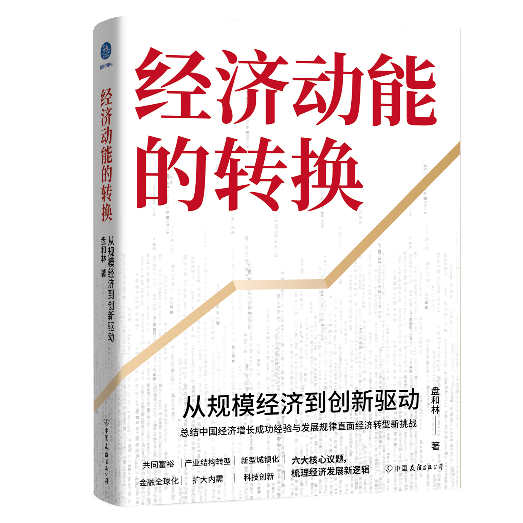
解码中国经济转型的底层逻辑《经济动能的转换:从规模经济到创新驱动》| 商业高研院
Xin Lang Cai Jing· 2026-01-15 13:17
Core Viewpoint - The book "Economic Dynamics Transformation: From Scale Economy to Innovation-Driven" by Professor Pan Helin provides a comprehensive analysis of China's economic evolution over 47 years, utilizing a three-dimensional framework of "Old Logic - New Challenges - New Logic" to dissect the transition from a weak economy to a global powerhouse [2][6]. Group 1: Old Economic Logic - The first part of the book reviews the old logic of China's economic growth, identifying six interrelated factors: distribution system reform, scale economy, land finance, financial leverage, globalization, and the internet economy, which collectively fueled rapid growth over the past four decades [2][3]. Group 2: New Challenges - The middle section highlights the deep-seated contradictions that have emerged alongside the growth miracle, such as the imbalance in the distribution system, urbanization bottlenecks, and external pressures from de-globalization and intensified technological competition, which pose significant challenges to economic transformation [2][3][4]. Group 3: New Economic Logic - The final part introduces six new logics for future economic development, emphasizing that the transformation of economic dynamics is not a complete rejection of the old logic but an iterative upgrade based on historical lessons. Key proposals include optimizing the redistribution system to address wealth disparity and enhancing labor compensation through industrial upgrades and vocational education [3][4]. Group 4: Practical Solutions - The book suggests practical solutions to structural contradictions, such as establishing labor-capital negotiation mechanisms through industry associations to combat irrational competition and promoting a "city cluster + unified market" approach for urbanization [4][5]. Group 5: Financial Globalization and Innovation - It advocates for a shift in China's financial sector from a focus on "monetization and capitalization" to "global capital competition," enhancing the influence of the RMB in global distribution systems. Additionally, it emphasizes the importance of a dual mechanism of market-driven incentives and government guidance to foster innovation [4][5]. Group 6: Overall Significance - The book is noted for its clear logical structure and rigorous economic analysis, making it a valuable resource for understanding China's economic transformation. It balances historical depth with practical relevance, providing insights for policymakers, entrepreneurs, and investors [5][6][7].
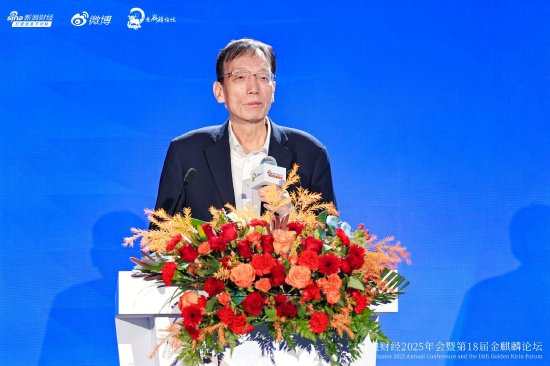
吴其伦:中国经济正从传统要素驱动全面转向创新驱动、技术驱动与绿色驱动
Xin Lang Cai Jing· 2026-01-15 12:11
Core Insights - The 2025 China economy is projected to show strong resilience and risk management capabilities, with GDP growth exceeding 5.2%, equivalent to the annual total of a medium-sized economy, positioning it among the leading global economies [3][9] - The contribution of final consumption expenditure to economic growth has risen to 53.5%, indicating a solidifying role of domestic demand as the main engine of growth [3][9] - The macroeconomic indicators are improving, with the urban unemployment rate stabilizing at 5.2%, core CPI showing continuous growth, and foreign exchange reserves maintaining at $3.3 trillion, reflecting China's strong position in the global supply chain [3][9] Economic Transformation - The structure of growth drivers has undergone a historic transformation, with a significant shift towards innovation-driven, technology-driven, and green-driven development, moving away from traditional factor-driven growth [4][11] - China is expected to enter the top ten of the global innovation index in 2025, with innovation clusters in Shenzhen, Hong Kong, and Guangzhou leading globally, indicating a leap in the overall effectiveness of the innovation system [4][10] - The modern industrial system, centered on new productive forces, is rapidly taking shape, with strong exports in new energy vehicles, lithium batteries, and photovoltaic products, alongside accelerated development in strategic emerging fields like AI and biomanufacturing [4][10][11] Domestic and International Market Dynamics - Domestic demand is increasingly foundational to economic growth, supported by government initiatives to boost consumption and a new income increase plan for urban and rural residents, aimed at enhancing social security and increasing disposable income [4][11] - China is transitioning into a new phase of institutional openness, extending the dimensions of openness from the flow of goods and factors to deeper aspects such as rules, regulations, and standards, thereby creating a market-oriented, rule-of-law, and international business environment [5][11] - Despite global uncertainties, China maintains a strong attraction for global resources, positioning itself confidently within the global economic system and contributing to the improvement of global governance structures [6][11] Confidence in Economic Outlook - The optimistic view of the Chinese economy is based on solid data, clear industrial logic, and strategic planning, reflecting a rational confidence rather than blind optimism [6][12] - This confidence is rooted in the innovation of enterprises and the hard work of laborers, emphasizing the importance of collaboration among government, market, and enterprises to navigate the evolving economic landscape [6][12]
利好政策延续!外资投资境内债券利息收入继续免征所得税和增值税
Xin Lang Cai Jing· 2026-01-15 10:11
Group 1 - The Ministry of Finance and the State Taxation Administration announced a temporary exemption from corporate income tax and value-added tax on interest income from bonds obtained by foreign institutions investing in the domestic bond market from January 1, 2026, to December 31, 2027 [1] - The exemption does not apply to interest income from bonds related to institutions or places established by foreign entities within China [1] - Recent activities include the issuance of 1.5 billion yuan panda bonds by Henkel Group in the interbank bond market, and Barclays Bank initiating a 4 billion yuan panda bond issuance, indicating foreign capital's recognition of RMB bond assets [1] Group 2 - Foreign institutional investors are collectively optimistic about Chinese assets, with Goldman Sachs projecting a 4.8% growth in China's real GDP for 2026, surpassing the market consensus of 4.5% [2] - The MSCI China Index and the CSI 300 Index are expected to rise by 20% and 12% respectively within the year, with a potential 38% increase in the Chinese stock market by the end of 2027 [2] - UBS forecasts an increase in A-share earnings growth from 6% in 2025 to 8% in 2026, driven by nominal GDP growth, corporate revenue increases, supportive policies, and the promotion of "anti-involution" policies [2] Group 3 - China is intensifying efforts to stabilize foreign investment, with a national foreign investment work conference held on January 14-15, 2026, emphasizing the promotion of foreign investment and the creation of an "Invest in China" brand [3] - The "Encouragement of Foreign Investment Industry Catalog (2025 Edition)" will expand to 1,679 items, guiding foreign investment towards advanced manufacturing, modern services, and high-tech sectors, particularly in central and western regions, Northeast China, and Hainan [3] - Investments in these areas will benefit from incentives related to tariffs, land use, and taxes [3]
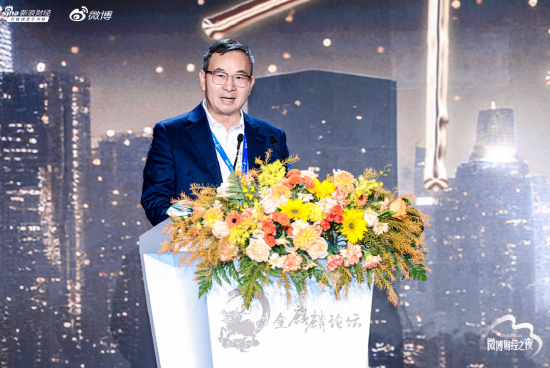
刘尚希:AI“抢饭碗”或成现实?社会必须为每个人的基本生活“兜底”!
新浪财经· 2026-01-15 09:32
Core Viewpoint - The article emphasizes the concept of "common prosperity" as a new development paradigm for China, highlighting the need for a shift from material wealth distribution to human development and capability enhancement [3][4][6]. Group 1: Common Prosperity as a New Paradigm - Common prosperity is framed as a theoretical challenge that requires a transformation in development paradigms, focusing on human capabilities rather than just material wealth [3][6]. - The article argues that reducing income disparity is essential for expanding domestic demand, linking it to the enhancement of individual capabilities and opportunities [3][4]. Group 2: Human-Centric Development - The central government has shifted its focus towards investing in people alongside material investments, reflecting a deeper understanding of development that prioritizes human needs [4][6]. - The article stresses that addressing disparities in knowledge, skills, and opportunities is crucial for achieving common prosperity, as these disparities are often systemic and not merely individual [3][6]. Group 3: Efficiency and Fairness - The relationship between efficiency and fairness is re-evaluated, proposing a "fusion theory" that suggests enhancing human capabilities can simultaneously improve efficiency and promote fairness [7][8]. - The article highlights the importance of setting fair expectations for distribution, emphasizing that perceived opportunities for wealth distribution are as significant as actual outcomes [8][9]. Group 4: Ensuring Basic Fairness - To ensure basic fairness, the article identifies four essential areas: nutrition, education, health, and housing, which need to be addressed to prevent widening disparities [9][10]. - It argues that while acknowledging existing disparities, the focus should be on encouraging innovation and rewarding creative contributions rather than merely labor [9][10]. Group 5: Challenges in Achieving Common Prosperity - The article outlines three major challenges in addressing the farmer issue, which is pivotal for achieving common prosperity: the dual market economy, social identity barriers, and the dual ownership system [10][11]. - It emphasizes the need for a paradigm shift from wealth accumulation to knowledge accumulation, advocating for a combination of investments in both material and human capital [11][12].
创新改革双轮驱动 山西晋城多点发力破局突围
Zhong Guo Xin Wen Wang· 2026-01-15 06:02
Group 1: Innovation-Driven Development - Jin City is focusing on innovation as a key driver for industrial upgrading, establishing the "Jinchuan Valley" to enhance its innovation capabilities, with 103 startups and 31 patent authorizations [2] - R&D expenditure in Jin City increased from 30.5 billion to 33.9 billion, with R&D intensity rising from 1.29% to 1.41%, ranking second in the province for two consecutive years [2] - By 2026, Jin City aims to strengthen technological innovation supply and promote deep integration of the "four chains" to generate more original achievements [2] Group 2: Reform Initiatives - Jin City is implementing a "city-county same rights" reform pilot, allowing 95 administrative approval items to be processed at the county level, improving efficiency for local businesses [4] - The city plans to advance 15 key reforms and 13 pilot reforms by 2025, focusing on optimizing resource allocation and enhancing systemic reform thinking [4] - Efforts will include low-efficiency land redevelopment trials and public utility price reforms, alongside fiscal system and zero-based budgeting reforms [4] Group 3: Strengthening Enterprises - Jin City's state-owned enterprises have total assets of 256.47 billion, ranking second in the province, with annual revenue of 66.55 billion and profit of 4.62 billion, reflecting a 45% and 52% increase respectively since reforms [5] - The private sector is also thriving, with 231,000 private business entities constituting 97.2% of the total market entities in Jin City [6] - The city has established a joint meeting system to promote private economic development, implementing 185 policies to support businesses and resolving 437 issues, facilitating 2.27 billion in financing [6]
全文|刘世锦谈经济增长:以投资出口为主转向以创新和消费为主
Xin Lang Cai Jing· 2026-01-15 03:17
Core Viewpoint - The conference emphasizes the need to reshape the growth paradigm in China, transitioning from an investment and export-driven economy to one focused on innovation and consumption during the 14th Five-Year Plan period [5][54]. Consumption Structure - China is not yet a consumption powerhouse, with consumption accounting for approximately 20 percentage points less of GDP compared to the global average [9][55]. - To become a consumption-driven economy, China must address this structural gap and enhance both domestic and international consumption [11][58]. - The focus on consumption is shifting from investment-driven growth to consumption-driven growth, particularly in sectors like education, healthcare, and cultural services, which also contribute to human capital investment [11][58]. Industrial Structure - The manufacturing sector's share of GDP may decline, but this does not indicate a lack of transformation; rather, it highlights a shift towards high-tech, knowledge-intensive service industries [12][59]. - The transition will require a focus on developing related productive service industries to support manufacturing upgrades [12][59]. - The complexity of industrial structure transformation necessitates a fair competitive environment, as traditional government policies may become less effective [15][61]. Foreign Trade - Despite a challenging international environment, China's exports have remained strong, reflecting improvements in technological and industrial competitiveness [16][63]. - A significant trade deficit indicates reduced domestic consumption, which is unsustainable in the long term; thus, a balanced import-export strategy is essential [16][65]. - The shift towards using the Renminbi for international trade settlements is crucial for enhancing its global liquidity and status [21][68]. Financial Structure - The evolution of the financial system is accelerating, with a growing importance of capital markets as the economy transitions [22][70]. - The capital market should support the development of innovative enterprises and increase the participation of institutional investors to bolster social security systems [26][72]. Urban-Rural Structure - Urbanization is slowing as the population approaches 70%, leading to more internal migration within urban areas rather than rural to urban shifts [27][75]. - Addressing disparities in public services between urban and rural populations is critical for achieving balanced development [31][78]. - Reforms in land management and local governance are necessary to facilitate the free flow of resources and optimize urban-rural integration [32][79]. Income Distribution - Learning from successful economies, China aims to reduce its Gini coefficient to around 0.4 to avoid the middle-income trap and double the middle-income population from 400 million to 800-900 million [33][84]. - Policies should focus on increasing labor compensation's share of GDP and improving social security for low- and middle-income groups [37][84]. - A shift from indirect to direct taxation is proposed to enhance government revenue from high-income earners while ensuring property rights protection [39][86]. Macroeconomic Policy - While macroeconomic policies are currently focused on short-term stabilization, they cannot provide the foundational growth momentum needed for the economy [40][87]. - Structural reforms are essential to address deep-rooted issues, and reliance on macroeconomic policies should be carefully managed to avoid dependency [42][89]. - The transition to a new growth framework requires overcoming path dependencies and encouraging innovation and reform at various levels [44][94].