
多元资产配置

Search documents
交银理财董事长李豪:试点开展股票直投业务 逐步夯实权益投研能力
Shang Hai Zheng Quan Bao· 2025-10-21 14:01
Core Viewpoint - The chairman of China Merchants Bank Wealth Management, Li Hao, emphasized that amidst global recession and uncertainty, China offers a rare "certainty" through its large market, complete industrial ecosystem, and innovation-driven strategy, which should be transformed into tangible benefits for families and reflected in product net values [1] Group 1: Economic Outlook - China's economy is expected to continue improving, opening new strategic opportunities for the asset management industry [1] - The total savings of Chinese residents increased from 93 trillion yuan at the end of 2020 to 162 trillion yuan by June 2025, with per capita savings surpassing 115,000 yuan [1] - The proportion of real estate in household wealth decreased from 54.6% in 2020 to 48.7% in 2024, while financial assets' share rose to 47.6% in 2024, indicating significant growth potential for asset management products [1] Group 2: Investment Strategies - The wealth management industry should enhance capabilities in three key areas: 1. Deepening bond investments into the forefront of industries to capture excess returns, as traditional methods are becoming less effective [2] 2. Emphasizing cross-sector diversified asset allocation, expanding asset types to include gold, options, REITs, and cross-border assets to reduce product net value volatility [2] 3. Introducing innovative assets, with a focus on equity and alternative asset investments, including REITs and securities backed by real estate [3]
交银理财董事长李豪:理财行业亟须提升三方面能力
Zhong Guo Jing Ying Bao· 2025-10-21 02:17
Core Insights - The total savings of Chinese residents increased from 93 trillion yuan at the end of 2020 to 162 trillion yuan by the end of June 2025, with per capita savings exceeding 115,000 yuan [1] - The proportion of real estate in residents' wealth decreased from 54.6% in 2020 to 48.7% in 2024, while financial assets' share rose to 47.6% in 2024, indicating a growing space for asset management products [1] Group 1: Investment Strategies - The wealth management industry needs to enhance capabilities in three areas: 1. Bond investments must delve into industry frontiers, as current credit bond yields have fallen below 2%, necessitating a focus on technology to capture excess returns [2] 2. A diversified asset allocation strategy is essential, expanding asset types to include gold, options, REITs, and cross-border assets to mitigate product value fluctuations and achieve absolute returns [2][3] 3. Innovative asset introduction is crucial, with a focus on equity and alternative asset investments, including REITs and real estate-backed securities to enhance returns [3] Group 2: Specific Initiatives - The company has initiated investments in technology innovation bonds, targeting sectors like integrated circuits and high-end manufacturing, and has launched index-linked products to allow investors to benefit from hard technology dividends [2] - The company is also exploring direct stock investment to strengthen equity research capabilities and develop a clear strategy for flagship products [2]
稳健投资,多元配置是“必修课”
Sou Hu Cai Jing· 2025-10-21 01:01
Core Insights - The demand for low-energy and stable investment options is increasing among young investors, who prefer steady returns over high-risk strategies [2] - High-net-worth individuals are shifting their focus from chasing high returns to seeking stable growth and safety in their investments [2] - FOF (Fund of Funds) is emerging as a favorable choice for investors looking for diversified asset allocation and risk management [2][3] Group 1: FOF Fund Characteristics - FOF funds are constructed by professional fund managers, providing a diversified investment portfolio that mitigates risks associated with single assets or fund managers [3] - The management teams of FOF funds conduct in-depth research on over 10,000 funds to select high-quality options for their portfolios, reducing "selection anxiety" for investors [3] - FOF funds can dynamically adjust their asset allocation based on macroeconomic conditions, aiming to optimize returns while controlling risks [3] Group 2: Growth and Performance of FOF Funds - As of June 30, the number of public FOFs in China reached 519, with a total management scale of 165.1 billion, marking a nearly 12-fold increase since the first FOFs were issued in 2017 [5] - FOF funds have shown resilience through market cycles, with data indicating that they achieved positive returns in three out of five years from 2021 to 2024 [7] - Compared to major indices like the CSI 300 and S&P 500, FOF funds have demonstrated relatively stable performance with lower volatility [8] Group 3: Investment Strategies and Target Audience - FOF funds are categorized into ordinary FOFs and pension FOFs, each serving different investment goals and risk profiles [10] - Ordinary FOFs are more flexible and cater to a broader range of investors, while pension FOFs focus on retirement goals with stricter asset allocation limits [11] - The "工银价值稳健6个月持有混合(FOF)" fund exemplifies a middle-risk "fixed income+" FOF, showing strong performance and effective risk management [12]


富国智悦稳健FOF今日首发 以多元资产配置把握投资机遇
Shang Hai Zheng Quan Bao· 2025-10-20 03:03
Core Viewpoint - Investors are facing challenges in asset allocation due to low returns in the bond market, high volatility in the stock market, and difficulties in timing investments in commodities like gold. In this context, a bond-based mixed-asset FOF (Fund of Funds) is gaining popularity for its better risk-return profile [1] Group 1: Product Launch - The FOF product, 富国智悦稳健90天持有期混合 (A类: 025509, C类: 025510), is officially launched to meet investor needs, managed by Zhang Ziyan, focusing on quality pure bond funds and diversified asset allocation to enhance returns while controlling risk [1][5] Group 2: Bond Investment Strategy - 富国智悦稳健 primarily invests in short to medium duration, medium to high credit quality bonds, aiming to secure bond coupon income while minimizing reliance on capital gains [2] - Zhang Ziyan employs a systematic methodology for selecting underlying bond funds, focusing on key indicators such as management team, product scale, fee structure, and liquidity, which directly impact long-term performance [2] - Emphasis is placed on controlling volatility and drawdown, as significant fluctuations in pure bond funds can be challenging to recover from in the short term [2] Group 3: Multi-Asset Strategy for Yield Enhancement - The fund captures diverse market opportunities through allocations in equities, commodities, and cross-border assets, adhering to a "core-satellite" strategy for fund selection [3] - In equity fund selection, a "high win rate" standard is applied, ensuring selected funds can generate stable excess returns while tracking equity indices [3] - The fund can allocate up to 10% in commodity funds and 20% in cross-border assets, with a focus on gold as a long-term investment due to potential economic conditions supporting its price [3] Group 4: Professional Management and Research Support - Zhang Ziyan has extensive experience in the FOF sector, with a proven track record of outperforming benchmarks, particularly during market downturns [4] - The macroeconomic environment is conducive to multi-asset allocation, with supportive fiscal and monetary policies fostering a relatively loose liquidity environment [4] - 富国基金, as a well-established public fund company, provides comprehensive research support across active equity, fixed income, and quantitative investment areas to enhance FOF operations [4]
长城基金杨光:资产定价新范式与多元配置新视野
Xin Lang Ji Jin· 2025-10-17 08:17
Group 1 - The core viewpoint is that the asset pricing paradigm is undergoing a profound transformation, shifting from a static world based on certainty to a dynamic ecosystem based on uncertainty [1][2] - The financial market is transitioning from a Newtonian mechanical worldview to a quantum characteristic market, where asset prices exhibit both "particle" (real value based on cash flow) and "wave" (narrative value based on consensus) properties [2][3] - The new pricing paradigm emphasizes the importance of technology, new productivity, and collective consensus as key factors in asset valuation [12][16] Group 2 - The three pillars of asset pricing are changing: the curvature of pricing in time and space has been altered, the definition of value is expanding from "atomic value" to "bit value," and the traditional risk-return equation is being rewritten [2][3][10] - Investors need to transition from being "valuation accountants" to "paradigm geographers," utilizing tools beyond financial statements and discount models to include technology roadmaps and narrative networks [4][5] - Traditional valuation models like DCF and DDM are losing their explanatory power due to high uncertainty and sensitivity to assumptions, making them less applicable to high-growth or volatile companies [6][7][8] Group 3 - The classic economic cycle models, such as the Merrill Lynch Clock, have become ineffective due to structural changes in the macroeconomic environment, requiring a shift in asset allocation strategies [8][9] - The concept of "safe assets" is diminishing as traditional safe havens like government bonds face challenges from fiscal credit erosion and the politicization of monetary policy [10][11] - The definition of safety is evolving from unconditional trust in sovereign credit to seeking systemic resilience in extreme situations, with gold and cryptocurrencies emerging as new forms of value storage [10][12] Group 4 - The new asset pricing paradigm should focus on the sources of value creation in the digital economy, including technological advancements, new productivity, and collective consensus [12][13][14] - The A-share market is becoming a battleground for new productivity and valuation reassessment, moving away from traditional macroeconomic cycles towards sectors aligned with national strategic intentions [16] - The U.S. stock market is evolving into a core pricing arena for global technological innovation, with tech giants being valued not just on current cash flows but also on their potential as platform-based options for future infrastructure [16][17] Group 5 - Gold's role is shifting from a simple inflation hedge to a decentralized consensus vehicle, reflecting global capital's distrust in fiat currency systems [17] - Cryptocurrencies represent an extreme experiment in asset pricing, relying on technology architecture and global consensus rather than traditional fundamentals [18] - The asset allocation strategy must evolve from passive tracking of economic cycles to proactive identification of key sectors representing technological progress and new productivity [18][19]
穿越牛熊市场 兴银理财“兴合汇景1号”断层第一丨机警理财日报
2 1 Shi Ji Jing Ji Bao Dao· 2025-10-14 17:39
Core Insights - The article highlights the strong performance of mixed-asset wealth management products, particularly the "Xinghe Huijing No. 1" from Xingyin Wealth Management, which has outperformed traditional fixed-income products in a challenging market environment [2][3]. Performance Summary - Mixed-asset wealth management products have shown significant advantages this year, with an average net value increase of 3.36% in the first eight months, compared to only 1.68% for fixed-income products [2]. - The "Xinghe Huijing No. 1" product achieved a net value growth rate of 12.02% over the past six months, significantly outperforming the benchmark [2][4]. - The product has demonstrated strong risk-return balance, with a maximum drawdown lower than that of the CSI 300 index during the same period [2]. Investment Strategy - The "Xinghe Huijing No. 1" is a medium-high risk mixed product that operates on an open-ended net value model, with a performance benchmark linked to a combination of the CSI 300 index and a short-term bond index [3]. - The investment strategy includes a focus on equity investments managed by a specific asset management plan, while the fixed-income portion is managed by Xingyin Wealth Management [3]. - The product has shown resilience during market downturns, effectively controlling net value fluctuations and drawdowns [3]. Recent Performance Metrics - Since its inception, the "Xinghe Huijing No. 1" has achieved a net value growth rate of 22.13%, significantly outperforming its benchmark, which has seen a decline of 2.24% [4]. - The product recorded an annualized return of 46.93% over the past three months and an impressive 84.03% annualized return in the last month [4]. Portfolio Composition - The product's performance is largely attributed to individual stock selections, such as Pop Mart, which has seen a price increase of over 200% this year [5]. - The portfolio has also increased its holdings in gold stocks, with significant contributions from Zijin Mining and Hunan Gold, both of which have risen over 70% this year [5]. Strategic Advantages - The product's performance benefits from a recovering equity market, with a focus on bottom-up stock selection to capture alpha returns [6]. - It emphasizes diversified asset allocation, balancing stable bond income with opportunities in equity markets [6]. - The six-month open-ended structure allows for liquidity while enabling the management team to seize medium to long-term investment opportunities [6].
市场黑天鹅频发,普通人如何用两个方法,避开下一个让你血本无归的坑?
雪球· 2025-10-11 13:01
Core Viewpoint - The article emphasizes the effectiveness of timing strategies in the A-share market compared to the U.S. stock market, where a buy-and-hold strategy has proven to be successful over the long term [4]. Group 1: Investment Strategies - Historical data shows that buying the CSI 300 index during undervalued phases results in a 100% chance of achieving positive returns over five years, with a 37.56% probability of achieving an annualized return of 10% or more [5]. - In contrast, buying during overvalued phases guarantees losses over the same period, highlighting the importance of valuation in investment decisions [5]. - For the S&P 500, the data indicates that regardless of the valuation phase, there is a high probability of achieving positive returns, with 98.05% success in undervalued phases and 81.45% in overvalued phases [6]. Group 2: Asset Allocation - The article discusses the complexity of multi-asset allocation strategies, emphasizing the need for a portfolio that can withstand extreme market conditions while achieving long-term investment goals [7]. - It suggests two approaches to improve investment outcomes: increasing the win rate through diversification of uncorrelated assets and engaging in more investment opportunities to approach statistical results [8]. Group 3: Market Indicators - Current market strength indicators show a short-term strength at 52, indicating a mid-range state, while the long-term strength is at 90, suggesting that most stocks are in a long-term upward trend [10]. - The overall market sentiment is described as not overly aggressive, following some recent adjustments, which supports a strategy of stable holding [11].

存款利率走低,买黄金养老靠谱吗?
Sou Hu Cai Jing· 2025-10-10 10:10
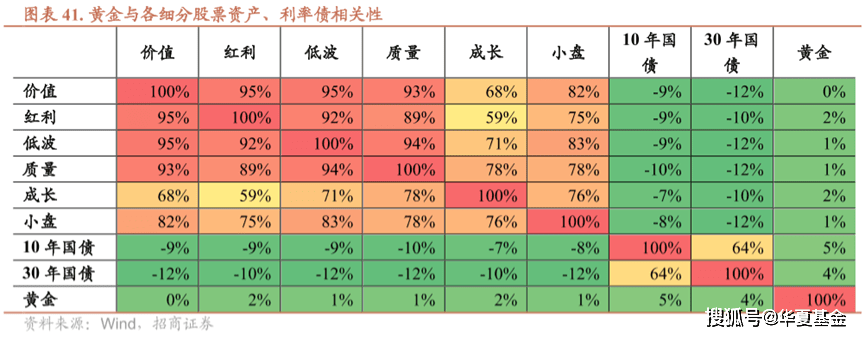
Core Viewpoint - The article discusses the role of gold in retirement investment, emphasizing that while gold can serve as a stabilizing asset, it should not be the primary investment for retirement funds due to its lack of cash flow and high volatility [1][2][4]. Group 1: Role of Gold in Retirement Investment - Gold acts as a "ballast" rather than a "main force" in retirement portfolios, providing a hedge against market volatility due to its low correlation with traditional assets like stocks and bonds [2]. - In 2023, while the overall equity market, represented by the CSI 300 index, fell by 11%, gold prices increased by 16%, showcasing its ability to generate returns during market turmoil [3]. - Gold does not generate interest or dividends, making it less suitable for providing the stable cash flow needed for retirement expenses compared to dividend-paying index funds and government bonds [4][6]. Group 2: Limitations of Gold - Gold's inherent volatility is a significant drawback for retirement investments, as it may lead to forced selling during market downturns, disrupting long-term retirement plans [4][6]. - Historical data shows that the annualized volatility of the Nanhua Gold Index is 16%, significantly higher than the 1.6% of the China Bond Index, indicating that gold is more volatile than bonds but less so than stocks [6]. - The maximum drawdown for gold in the past two decades reached 48%, highlighting the risks associated with heavy allocations to gold in retirement portfolios [6]. Group 3: Recommended Asset Allocation for Retirement - A diversified asset allocation strategy is recommended for retirement, focusing on a "core-satellite" approach that balances stability and growth [7][8]. - Core assets should provide stable returns and cash flow, such as dividend-focused index funds and broad market indices, while satellite assets can enhance long-term returns and hedge specific risks [8]. - Gold can be included as a satellite asset, with a suggested allocation of 5%-10% to mitigate risks and provide additional stability without replacing income-generating assets [6][11].
科技、黄金、日经…在应接不暇里想起了FOF
Sou Hu Cai Jing· 2025-10-10 01:57
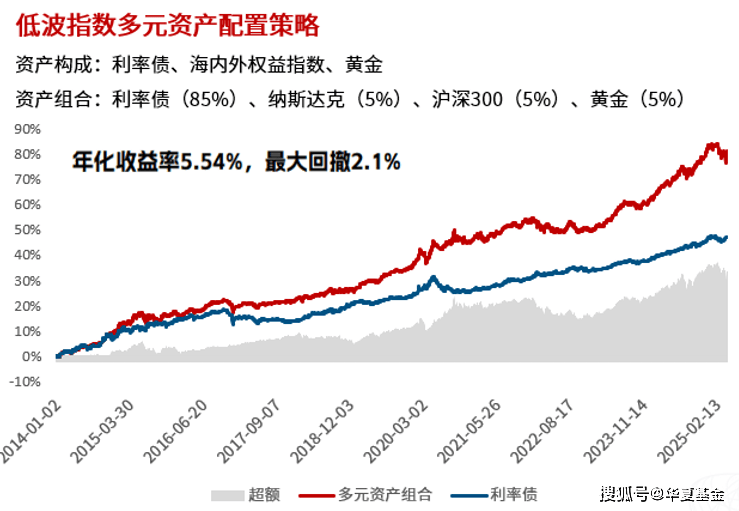
Core Insights - The article discusses the current investment landscape, highlighting the excitement in the stock market following a holiday period, with significant gains in various sectors such as technology and precious metals [2][3][4] - It emphasizes the importance of diversified asset allocation in the current market environment, suggesting that investors should avoid blindly betting on market directions and instead focus on building a diversified portfolio [7][8][14] Group 1: Market Trends - A-shares opened strong post-holiday, with the Shanghai Composite Index surpassing 3900 points and the Sci-Tech 50 Index rising over 5%, indicating a robust market sentiment [2] - The U.S. government shutdown, typically a negative event, has not caused panic in the markets; instead, it has led to increased bets on interest rate cuts by the Federal Reserve, boosting both stock and gold prices [4] - Japan's stock market saw a significant rise, with the Nikkei 225 Index increasing by 6.7%, driven by political changes and expectations of expansive economic policies [5] Group 2: Investment Strategies - The article advocates for a multi-asset allocation strategy, suggesting that investors should construct portfolios that include various asset classes to mitigate risks and enhance returns [7][8][14] - Specific recommendations include increasing exposure to gold and technology stocks, as these sectors are expected to perform well in the current economic climate [9][10] - The importance of flexible investment solutions, such as FOF (Fund of Funds), is highlighted, as they allow for dynamic adjustments based on market conditions [16][17]
市场回暖 多元配置的ETF-FOF值得关注
Jin Rong Jie· 2025-10-09 06:16
Group 1 - The core viewpoint of the articles highlights the increasing recognition and acceptance of FOF (Fund of Funds) and ETF-FOF (Exchange-Traded Fund of Funds) in the capital market as it warms up, with many investors transitioning from stock to fund investments [1][2] - As of the end of Q2, over 90% of FOFs have achieved positive returns this year, and the total scale of ETFs in China has surpassed 5 trillion yuan, indicating a growing enthusiasm for index-based investments [2] - There has been a surge in the number of ETF-FOF products being submitted for approval, with 20 products reported this year, 14 of which were submitted since July, reflecting a trend towards innovative asset allocation tools [2] Group 2 - ETF-FOF products primarily focus on passive index investments, allocating over 80% of non-cash underlying assets to ETFs, combining the advantages of both ETFs and FOFs [2] - The first ETF-FOF products were trialed in August 2021, with notable performance from products like the 工银睿智进取股票, which achieved a 31.62% return over the past year [3][4] - The fund manager of 工银睿智进取股票, Zhou Yan, has over 12 years of experience and employs a diversified investment strategy, focusing on both aggressive and defensive assets [5] Group 3 - 工银瑞信 has established a comprehensive pension investment system, managing over 332.5 billion yuan in enterprise annuity funds, positioning itself as a leader in the public fund industry [9] - The company offers a range of FOF products tailored to different age groups and risk preferences, aiming to meet the diverse pension needs of the population [9] - The introduction of new index funds aligns with the long-term accumulation needs of pension investments, providing efficient and convenient allocation options for personal pensions [10]
