
银发经济

Search documents
平台报税搅动消费出海,小米17首销超预期,3D打印新品频发
SINOLINK SECURITIES· 2025-10-19 11:26
Investment Rating - The report does not explicitly state an investment rating for the industry Core Insights - The two-wheeler industry is experiencing a favorable peak season, with manageable inventory levels and a positive impact from new national standards, although a critical test is expected in Q1 2026 [14] - Xiaomi's 17 series smartphones achieved over 1 million units sold within five days of launch, with the Pro Max model accounting for over 50% of sales, but rising memory prices could pressure profit margins [15][16] - The pet industry is seeing mixed performance, with a successful pet products exhibition highlighting growth opportunities, particularly in premium and health-focused products [17][19] - The silver economy is supported by new government subsidies for elderly care services, with significant funding allocated to assist those with moderate to severe disabilities [20] - AI-driven innovations in 3D printing and mattress technology are emerging, with new products enhancing user experience and market penetration [21] - The insulated cup market shows stable demand, with Stanley leading in sales across various regions [26] Segment Summaries 1. Two-Wheeler Industry - The two-wheeler sector is benefiting from a strong peak season, with positive inventory levels and manageable fluctuations due to new regulations [14] - New models from major brands like Yadi and Aima are being introduced, aligning with updated national standards [11][12] 2. Xiaomi Group - The Xiaomi 17 series smartphones launched successfully, breaking sales records shortly after release, but rising LPDDR4X memory prices pose a risk to profit margins [15][16] 3. Pet Food Industry - The recent pet products exhibition showcased over 4,000 brands, indicating a robust market with opportunities in premium and health-oriented products [17][19] - Pet food sales in September reached 2.3 billion yuan, with a year-on-year growth of 3% [51] 4. Silver Economy - A nationwide subsidy program for elderly care services has been initiated, with 1.16 billion yuan allocated to support the elderly with disabilities [20] 5. AI and 3D Printing - New 3D printers from companies like拓竹科技 are enhancing user experience and market penetration, indicating growth in the consumer-grade 3D printing market [21] 6. Insulated Cup Market - Stanley continues to lead in sales across various Amazon platforms, with a notable increase in the UK market [26]
一双围剿乡村老年人的智能鞋
虎嗅APP· 2025-10-19 02:36
Core Viewpoint - The article discusses the rise of a controversial product called "某力宝," a so-called smart shoe marketed primarily to elderly individuals, highlighting its questionable health claims and the business model resembling a pyramid scheme [5][14][31]. Group 1: Product Overview - "某力宝" shoes are marketed as smart footwear with claims of health benefits, including features like bioelectricity and 5G chips, priced starting at 398 yuan [5][11]. - The product has gained traction in lower-tier markets, particularly among middle-aged and elderly individuals, with over 100 people pooling 5 million yuan to open stores [5][10]. Group 2: Business Model - The business model involves individuals becoming shareholders by purchasing a minimum number of shoes, with higher investments leading to greater profit margins [10][11]. - Earnings are derived from two main sources: selling shoes directly and recruiting others to buy in, creating a multi-level marketing structure [11][12]. Group 3: Market Dynamics - The elderly shoe retail market in China has expanded significantly, surpassing 800 billion yuan in 2023, accounting for about 17% of the entire industry [16]. - Established brands like 足力健 and 回力 are also entering the elderly shoe market, indicating a competitive landscape [17]. Group 4: Marketing Strategies - The marketing strategies employed by "某力宝" differ from traditional shoe retailers, focusing on high-pressure sales tactics and creating a sense of urgency among potential buyers [20][21]. - The product's perceived value is enhanced through demonstrations of its supposed technological features, despite evidence suggesting these claims may be exaggerated or misleading [21][24]. Group 5: Consumer Behavior - Many elderly consumers are drawn to the product due to its purported health benefits and the allure of becoming part of a business opportunity, often influenced by family and friends [27][29]. - The article highlights the psychological manipulation involved, where consumers are led to believe in the product's efficacy through repeated exposure to marketing messages [33]. Group 6: Regulatory and Ethical Concerns - The article raises concerns about the ethical implications of the business model, likening it to a pyramid scheme, where profits are primarily generated through recruitment rather than actual product sales [14][31]. - The company behind "某力宝" has changed its name multiple times to evade scrutiny, indicating potential fraudulent practices [31][32].

从养老到“享老”,一份写满幸福的“温暖答卷”
Yang Shi Xin Wen Ke Hu Duan· 2025-10-19 01:41
Core Insights - The aging population is a significant global issue, with China's population aged 60 and above exceeding 300 million, prompting the need for a robust elderly care system [1][2] - The "14th Five-Year Plan" emphasizes the development of a coordinated elderly care service system that integrates home, community, and institutional care, along with medical and health services [1] Group 1: Policy and Infrastructure Development - By the end of 2024, the number of elderly care institutions and facilities in China is expected to reach 406,000, with the proportion of nursing care beds increasing from 48% in 2020 to 65.7% [1] - The expansion of long-term care insurance pilot cities to 49, benefiting a cumulative total of 2.6 million disabled elderly individuals [1] - Nationwide implementation of elderly care service consumption subsidies for all elderly individuals with moderate to severe disabilities [1] Group 2: Community and Social Environment - A total of 2,990 demonstration elderly-friendly communities have been established, with Shanghai achieving full coverage of a 15-minute elderly service circle [2] - Over 8,500 community home care service centers have been set up in Hunan, serving over 3 million elderly individuals daily at dining points [2] Group 3: Workforce and Service Quality - The establishment of a national vocational skill level system for elderly care workers, with the total number of skilled personnel exceeding 5 million [2] - The transition from traditional elderly care to a more diversified "silver economy," including services like senior travel and wellness retreats [2] Group 4: Future Outlook - The average life expectancy in China has reached 79 years, surpassing the "14th Five-Year Plan" goal of increasing it by one year [2] - The future direction of China's elderly care system will focus on inclusivity, high quality, and smart services to enhance the well-being of the elderly population [2]
“十四五”成绩单丨从养老到“享老”,一份写满幸福的“温暖答卷”
Yang Shi Xin Wen Ke Hu Duan· 2025-10-19 00:17
Core Insights - The aging population is a significant global issue, with China's population aged 60 and above exceeding 300 million, prompting the need for a robust elderly care system that ensures a happy and healthy life for seniors [1][3] Group 1: Policy and Strategic Development - The "14th Five-Year Plan" emphasizes the implementation of a national strategy to actively address population aging, promoting the coordinated development of elderly care services and industries [1] - By the end of 2024, the number of elderly care institutions and facilities in China is expected to reach 406,000, with the proportion of nursing care beds increasing from 48% in 2020 to 65.7% [3] Group 2: Financial Support and Community Development - During the "14th Five-Year" period, the number of pilot cities for long-term care insurance has expanded to 49, benefiting a cumulative total of 2.6 million disabled elderly individuals [5] - A friendly social environment for the elderly is being rapidly constructed, with 2,990 model elderly-friendly communities established and over 8,500 community home care service centers in Hunan [5] Group 3: Quality Improvement and Talent Development - The quality of elderly care services is being enhanced, with the establishment of a national vocational skill level sequence for elderly care workers, resulting in over 5 million skilled personnel in the sector [7] - The "silver economy" is thriving, with diverse services such as senior travel and wellness tourism expanding [7] Group 4: Future Outlook - The average life expectancy in China has reached 79 years, surpassing the "14th Five-Year Plan" goal of increasing it by one year, indicating a positive trend for the future of elderly care services [9]

“十四五”成绩单|中国式养老绘就最美“夕阳红”
Yang Shi Wang· 2025-10-18 19:39
Core Viewpoint - The aging population is a significant global issue, with China's population aged 60 and above exceeding 300 million, prompting the need for a robust elderly care system that ensures a happy and healthy life for seniors [1] Group 1: National Strategy and Policy - The "14th Five-Year Plan" outlines a national strategy to actively address population aging, promoting the coordinated development of elderly care services and industries, and establishing a service system that integrates home, community, and institutional care [3] - By the end of 2024, the number of elderly care institutions and facilities in China is expected to reach 406,000, with the proportion of nursing care beds increasing from 48% in 2020 to 65.7% [5] Group 2: Long-term Care and Support - The number of pilot cities for long-term care insurance has expanded to 49, benefiting a cumulative total of 2.6 million disabled elderly individuals, with nationwide subsidies for elderly care services introduced for those with moderate to severe disabilities [7] - A total of 2,990 elderly-friendly communities have been established, with Shanghai achieving full coverage of a 15-minute elderly care service radius, and over 8,500 community home care service centers in Hunan [9] Group 3: Quality Improvement and Workforce Development - The quality of elderly care services is being enhanced, with the establishment of a national vocational skill ranking system for elderly care workers, resulting in a total of over 5 million skilled personnel in the sector [11] - The "silver economy" is thriving, with diverse service offerings expanding, including travel and wellness services tailored for the elderly [11] Group 4: Future Outlook - The average life expectancy in China has reached 79 years, surpassing the "14th Five-Year Plan" goal of increasing it by one year, with the elderly care system expected to continue evolving towards inclusivity, high quality, and smart services in the "15th Five-Year Plan" [13]

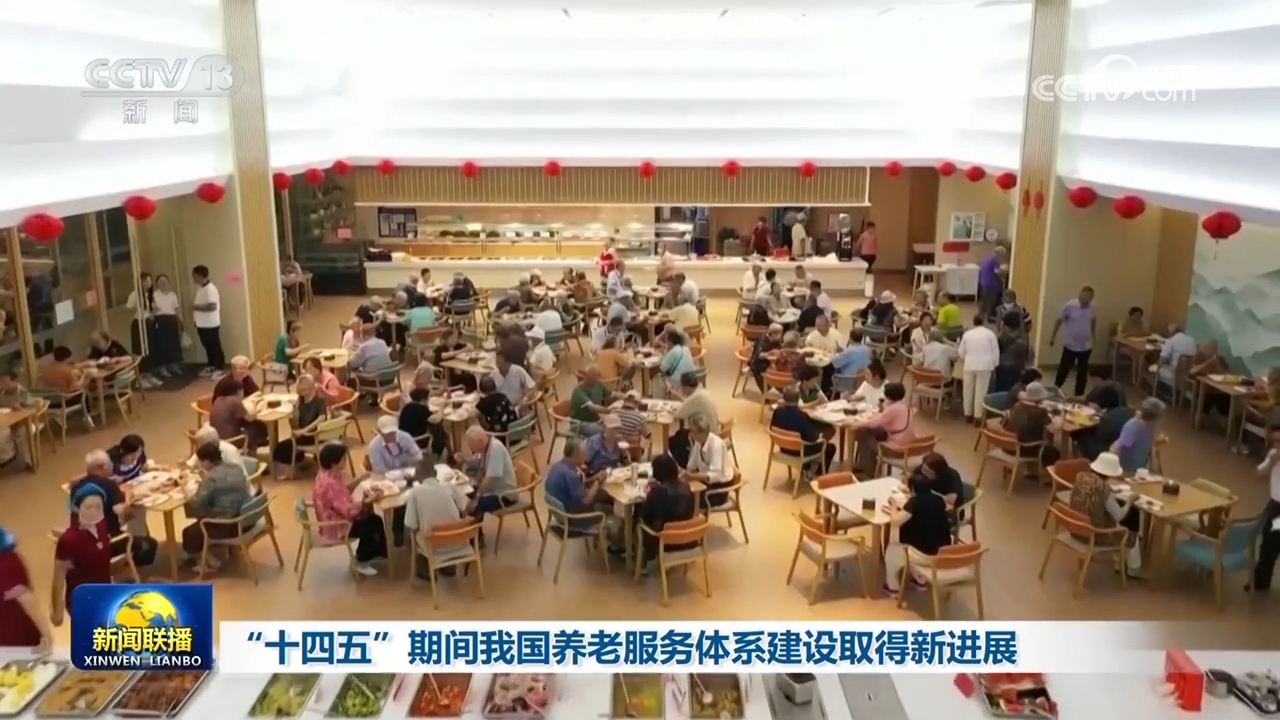
“十四五”期间我国养老服务体系建设取得新进展
Yang Shi Wang· 2025-10-18 12:12
Group 1 - The core message emphasizes the establishment of a comprehensive national basic elderly care service system during the "14th Five-Year Plan" period, enhancing the welfare level for the elderly and promoting an elderly-friendly social environment [1][5] Group 2 - There are currently 86,000 elderly meal assistance points across the country, addressing dining difficulties for elderly individuals, particularly those who are elderly or living alone [3] - The government is providing consumption subsidies to families of millions of elderly individuals with moderate to severe disabilities, ensuring their care needs are met [3] - The elderly economy is rapidly developing, creating a trillion-level market as the country strengthens its urban and rural three-tier elderly care service network [3] Group 3 - The basic pension insurance coverage has exceeded 1.07 billion people, and 2.24 million households of elderly individuals with special difficulties have undergone home modifications to be more age-friendly [5] - The number of elderly care institutions and facilities has reached 406,000, with nursing care beds accounting for 64.6%, surpassing the 55% target set for the "14th Five-Year Plan" [5] - Services such as meal assistance, bathing, and medical care are increasingly accessible to the elderly at home, integrating institutional care with community and home services [5] Group 4 - The system for promoting elderly social participation is being continuously improved, with public cultural facilities, sports venues, and tourist attractions becoming more age-friendly and offering free or discounted access to the elderly [7] - Over 68,000 elderly education learning points have been established, making it easier for the elderly to engage in lifelong learning [7] - A national "Silver Age Action" information service platform has been created to support the elderly in contributing to society [7]
日本银发经济,涌现出哪些一骑绝尘的大品牌?
创业家· 2025-10-18 10:58
Core Insights - Japan has entered a super-aged society, necessitating all businesses to address the needs of the elderly, even those traditionally focused on younger demographics [2][10] - Successful examples in the silver economy include products like Yakult Y1000, which cater specifically to the health and wellness needs of older consumers [2][5] - The concept of a distinct "silver economy" is challenged; instead, businesses are innovating within their existing product lines to adapt to an aging population [8][9] Industry Trends - The food industry in Japan is increasingly focusing on the demands of older consumers, with companies like Suntory developing health foods alongside their traditional alcoholic beverages [5][10] - There is a common need among the elderly for better sleep, which has led to the popularity of products with sleep-enhancing properties [5] - Companies like Ajinomoto are also launching numerous products aimed at the elderly demographic, indicating a broader trend across various sectors [7] Business Strategies - Businesses are encouraged to prepare for and innovate in response to demographic changes, particularly in markets like China that are also aging [10] - Successful Japanese brands have thrived during low-growth periods by focusing on customer experience and making incremental innovations rather than pursuing disruptive changes [14][15] - The approach of understanding consumer needs through direct engagement and data sharing is emphasized, as seen in the operations of 7-11 and Kobe Bussan [15][16] Case Studies - Kobe Bussan has established a strong supply chain and product development strategy, with a significant portion of its offerings being private label products [16] - Workman has successfully transitioned from B2B to B2C by addressing the specific needs of blue-collar workers, filling market gaps rather than following trends [17] - Kikkoman focuses on adapting its products based on extensive consumer feedback, demonstrating a commitment to meeting diverse culinary needs [17] Conclusion - The insights from Japan's aging society and the strategies employed by successful companies provide valuable lessons for businesses in other markets facing similar demographic shifts [10][14]

0.5元与6元并存,看纸尿裤的消费分层与品牌法则
Sou Hu Cai Jing· 2025-10-17 12:36
Core Insights - The diaper industry is experiencing significant pressure, with many well-known brands reporting declining performance in their half-year financial reports [1][2][3] - The market is characterized by polarization, the rise of domestic brands, growth in niche markets, and an increase in online sales channels, while facing long-term challenges such as cost pressures and a decrease in newborn numbers [1][4] Financial Performance - Domestic brands such as Hengan International and Baiya Co. have seen substantial declines, with Hengan's hygiene products revenue dropping approximately 14.4% year-on-year to 3.304 billion yuan, and Baiya's diaper revenue falling by 34.03% [2][3] - Foreign brands like Daio Paper and Unicharm are also under pressure, with Daio's overall sales slightly decreasing by 0.4% and Unicharm's sales declining by 4.8% [2][3] Market Dynamics - The diaper market is witnessing a shift as domestic brands gain market share, with their share rising to 86.67% among the top 30 brands on major e-commerce platforms by mid-2025 [5] - Japanese brands are struggling, with companies like Kao and Daio adjusting their strategies, including selling production facilities in China and focusing on emerging markets [4][5] Consumer Trends - The market is showing a dual trend of high-end and cost-effective products growing simultaneously, with high-end diaper sales increasing for brands like Hengan and Baiya [7][8] - The rise of online sales channels is significant, with online sales for baby diapers reaching 2.47 billion yuan in the first half of 2024, a year-on-year increase of 284.4% [13][14] Adult Diaper Market - The adult diaper market is projected to grow significantly, with global sales expected to rise from $10.75 billion in 2024 to $14.44 billion by 2031, driven by an aging population and increasing health awareness [9][10] - Companies like Hengan International and Reliable Care are capitalizing on this trend, with Reliable Care reporting a 4.62% year-on-year increase in adult incontinence product revenue [9][10] Niche Market Opportunities - Brands are increasingly focusing on niche markets, developing products that address specific consumer needs such as sensitive skin and medical-grade diapers [11][12] - The introduction of specialized products is seen as a key strategy for brands to differentiate themselves in a competitive landscape [11][12] Competitive Landscape - The diaper industry is highly competitive, with both established international brands and emerging domestic brands vying for market share [15][16] - The influx of new brands has intensified competition, leading to potential challenges such as homogenization and increased survival pressure for some brands [15][16] Future Outlook - The industry is expected to continue evolving, with a focus on differentiation, supply chain efficiency, and consumer insights becoming critical for brands to maintain competitiveness [17]

金融助力老有所养 “金融+”养老服务生态体系:破题资源配置不足
Zhong Guo Jing Ying Bao· 2025-10-17 09:19
Core Viewpoint - The development of pension finance is a significant opportunity for commercial banks and a social responsibility, as highlighted by the government's push for a comprehensive pension ecosystem and the aging population [1][12]. Group 1: Development of Pension Finance - The government aims to accelerate the development of the third pillar of pension insurance and implement a personal pension system to address the challenges of an aging population [1][11]. - The banking sector is transitioning from isolated efforts to collaborative approaches in pension finance services, focusing on building an integrated "financial + pension" service ecosystem [2][12]. Group 2: Collaborative Partnerships - Banks are encouraged to collaborate with government and policy institutions to provide financial services under supportive policies, such as pension funds and reverse mortgage loans [2][3]. - Partnerships with community service organizations are essential for offering basic financial services at community centers, enhancing the financial experience for the elderly [2][3]. - Collaborations with medical institutions aim to improve healthcare payment services and health management for the elderly [2][3]. Group 3: Financial Product Innovation - Banks should develop tailored financial products for the elderly, including health insurance and long-term care insurance, to meet their specific needs [3][5]. - The introduction of specialized insurance products and pension annuities is crucial for helping the elderly with long-term financial planning [3][5]. Group 4: Organizational Structure and Talent Development - The establishment of dedicated pension finance departments within banks is recommended to enhance service quality and efficiency [7][8]. - A multi-tiered training system for pension finance professionals is necessary to equip staff with the required knowledge and skills [8][10]. - Banks should focus on attracting and nurturing talent with diverse backgrounds in finance, insurance, and healthcare to strengthen their pension finance capabilities [9][10]. Group 5: Market Potential and Economic Impact - The pension industry in China is rapidly growing, with market size reaching 12 trillion yuan in 2023, and is expected to exceed 20 trillion yuan by 2030 [12][13]. - The aging population presents significant market potential for banks, necessitating a focus on customer needs and product innovation to capture opportunities in the pension finance sector [12][13].

我省2025年敬老月暨“养老服务消费季”活动启动 多项福利惠及全川老年人
Si Chuan Ri Bao· 2025-10-17 07:02
Core Points - The event themed "Respecting the Elderly" aims to enhance the sense of gain, happiness, and security among the elderly in Sichuan Province [1] - The activities will run until December and include various programs such as national education, visits, health promotion, and cultural sports [1] Group 1: Policy Initiatives - The "Home Adaptation for the Elderly" project offers a subsidy of 30% of the final sale price (after discounts) for five categories of products, with a maximum subsidy of 3000 yuan per household [1] - The "Subsidy for Elderly Care Services for Moderately Disabled Seniors" provides monthly electronic vouchers for eligible seniors, covering home, community, and institutional care services [2] Group 2: Financial Details - The subsidy for home and community care services can reach up to 500 yuan, while institutional care services can receive a maximum of 800 yuan [2] - The electronic vouchers can offset 30% to 60% of the eligible elderly care service expenses [2]