
稳定币

Search documents
花旗首席执行官:花旗正在探索发行稳定币的可能性
news flash· 2025-07-15 15:57
Core Viewpoint - Citigroup's CEO stated that the company is exploring the possibility of issuing a stablecoin [1] Group 1 - The exploration of stablecoin issuance indicates Citigroup's interest in digital currencies and blockchain technology [1]

摩根大通(JPM.N)CEO戴蒙:我们将参与稳定币和摩根大通存款币的相关业务。
news flash· 2025-07-15 12:54
摩根大通(JPM.N)CEO戴蒙:我们将参与稳定币和摩根大通存款币的相关业务。 ...

ETF日报:随着ASIC+以太网模式的兴起,光模块在算力投资中的占比有望进一步提高,可关注通信ETF
Xin Lang Ji Jin· 2025-07-15 12:49
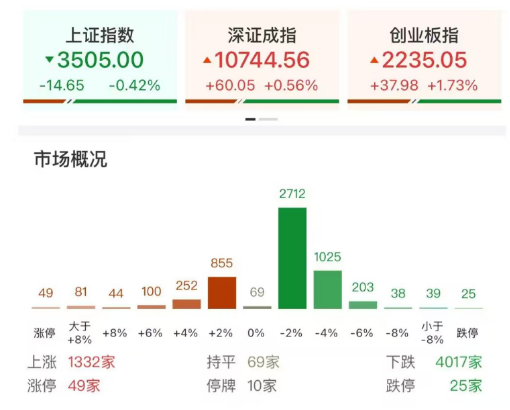
Market Overview - The market experienced fluctuations with mixed index performances, where the Shanghai Composite Index fell by 0.42%, while the Shenzhen Component Index rose by 0.56% and the ChiNext Index increased by 1.73% [1] - The total trading volume in the Shanghai and Shenzhen markets reached 1.61 trillion yuan, an increase of 153.3 billion yuan compared to the previous trading day [1] AI Sector Performance - AI-related stocks, including optical modules, liquid-cooled servers, and AI applications, led the market gains [1] - The China Securities Index reported that the AI-focused ETF from Guotai (159388) surged by 6.97%, and the communication ETF (515880) rose by 6.14%, both reaching historical highs [3] Nvidia's Market Impact - Nvidia announced it received permission from the Trump administration to resume sales of the "special version" H20 chips to China, following a meeting between CEO Jensen Huang and President Trump [5] - The introduction of a new GPU based on the Blackwell architecture, compliant with U.S. export regulations, is expected to enhance investments in AI infrastructure [5][7] - The easing of U.S.-China trade tensions since June has alleviated concerns over chip shortages in China, benefiting AI data centers and related sectors [5][6] Optical Module Sector Growth - New Yi Sheng, a leader in optical modules, projected a significant profit increase for the first half of 2025, estimating a net profit of 3.7 billion to 4.2 billion yuan, representing a year-on-year growth of 327.68% to 385.47% [6] - The North American cloud service providers' capital expenditure reached 77.1 billion USD in Q1 2025, a 59% increase, indicating a strong demand for optical modules [6] Innovation Drug Sector Developments - The innovation drug ETF from Guotai (517110) rose by 1.74%, supported by favorable policies from the National Healthcare Security Administration and the National Health Commission [9] - The domestic innovation drug market is expected to see significant growth, with a projected increase in the number of innovative drugs entering clinical trials [9][10] - AI is anticipated to enhance the pharmaceutical industry across various stages, including drug development and production [10]


河南发布风险提示 谨防以稳定币名义实施非法集资
news flash· 2025-07-15 12:05
河南省防范和打击非法金融活动工作机制办公室提示,近期有不法机构利用"稳定币"进行非法集资、赌 博、诈骗等非法活动。稳定币并不是投资或投机的工具,参与非法集资受到的损失由集资参与人自行承 担。请广大群众增强理性投资意识,提高风险意识,避免上当受骗。若发现相关机构以投资稳定币等名 义从事非法集资行为,请及时向各地处非牵头部门或公安部门举报。(河南发布) ...
景顺:主权投资者对中国市场兴趣升温
Guo Ji Jin Rong Bao· 2025-07-15 10:37
Core Insights - Political factors and policy decisions have become the core drivers of investment strategies for sovereign investors, leading to a fundamental reassessment of portfolio construction and risk management [1] - Sovereign wealth funds and central banks are increasingly concerned about geopolitical tensions and inflation pressures, with 88% and 64% of respondents identifying these as major short-term risks respectively [1] - A significant shift towards active investment strategies is observed, with over 70% of sovereign wealth funds adopting active strategies in fixed income and equities [2] Group 1: Investment Strategies - 59% of respondents express heightened concerns about excessive volatility in financial markets, a significant increase from 28% in 2024 [1] - 52% of sovereign wealth funds plan to increase their active equity holdings in the next two years, while 47% intend to boost active fixed income positions [2] - Among sovereign wealth funds with over $100 billion in assets, 75% have shifted towards more active equity strategies in the past two years [2] Group 2: Focus on Emerging Markets - 59% of respondents prioritize China as a key emerging market, marking a significant shift since 2024 [3] - 71% of respondents cite attractive local returns as a driving factor for increasing allocations to Chinese assets, with 88% of Asia-Pacific sovereign funds planning to do so [3] - The most attractive sectors for investment in China include digital technology and software (89%), advanced manufacturing and automation (70%), and clean energy and green technology (70%) [3] Group 3: Central Bank Strategies - 64% of central banks plan to increase their reserves in the next two years, up from 53% in 2024 [4] - 47% of central banks expect to increase their gold allocations over the next three years, viewing gold as a strategic hedge against geopolitical and financial uncertainties [5] - Interest in digital assets is growing, with 11% of sovereign wealth funds investing directly in digital assets, a slight increase from 7% in 2022 [5]
管涛:稳定币发展前景研究的问题与建议 | 立方大家谈
Sou Hu Cai Jing· 2025-07-15 10:24
Core Viewpoint - The report from the Bank for International Settlements (BIS) indicates that while stablecoins show potential in tokenization, they fail to meet the key requirements of the international monetary system, specifically in terms of singularity, elasticity, and integrity. Therefore, the future role of stablecoins in the monetary system remains uncertain, and they are likely to play only a supplementary role [1]. Group 1: Stablecoin Characteristics - Stablecoins consist of two components: tokenization and the token itself, with tokenization referring to the process of recording claims on physical or financial assets on a programmable platform [2]. - The emergence of stablecoins was influenced by the 2008 financial crisis, which led to a questioning of the credibility of central banks and the financial system, paving the way for decentralized and programmable currencies like Bitcoin [2][3]. - Stablecoins differ from Bitcoin in that they exhibit lower price volatility, making them more suitable for payment and settlement functions [3]. Group 2: Regulatory Environment and Market Dynamics - Prior to regulation, stablecoins were linked to various assets, including fiat currencies and commodities, but post-regulation, they are primarily expected to be pegged 1:1 to fiat currencies [4]. - The compliance costs associated with regulation are expected to increase, potentially leading to the exit of 80% of existing stablecoins from the market [5]. - The market value of stablecoins, initially projected to reach $1 trillion by 2028, may now only reach $500 billion due to regulatory impacts [5]. Group 3: Cross-Border Payment Innovations - China has made significant advancements in third-party payment systems, achieving a near cashless society with platforms like WeChat Pay and Alipay [6]. - The People's Bank of China has been piloting a digital currency, with significant transaction volumes indicating a strong focus on enhancing cross-border payment efficiency [7]. - The digital currency initiative aims to improve cross-border payment experiences, with the potential to reduce transaction times significantly compared to traditional methods [8]. Group 4: The Future of Stablecoins and Digital Currencies - The BIS report suggests that the current trend of private stablecoin issuance may lead to financial instability and increased regulatory burdens [5]. - The debate continues on whether the decentralized and anonymous features of stablecoins are essential, especially as traditional payment systems evolve [8][9]. - The distinction between stablecoins and traditional currencies raises questions about the true internationalization of currencies, particularly regarding the role of the US dollar in stablecoin transactions [12].
一口气了解稳定币
小Lin说· 2025-07-15 09:58
Stablecoin Market Overview - Stablecoins are cryptocurrencies pegged to a stable asset, primarily the US dollar, with a 1:1 ratio, and are issued by private companies [1] - The two largest stablecoins are Tether (USDT), accounting for approximately 60% of the market, and USD Coin (USDC), issued by Circle, holding about 24% [1] - Stablecoin transaction volume in 2024 reached $276 trillion, surpassing the combined payment volume of Visa and Mastercard in 2024 [1] Regulatory Landscape - The US Senate passed the "GENIUS Act," a legislative proposal for stablecoins, though it is still a draft [1] - Hong Kong introduced the "Stablecoin Ordinance Bill" which will take effect on August 1st, focusing on Hong Kong dollar stablecoins and piloting offshore Renminbi stablecoins [1] - Various countries are adopting different approaches: Singapore, Hong Kong, and the UAE are actively open; the US and EU are cautiously inclusive; and China mainland is explicitly restrictive [1] Key Drivers and Applications - Stablecoins offer benefits such as convenience, speed, and privacy, particularly in cross-border payments, with monthly cross-border payment applications reaching approximately $50 billion and growing at 20%-30% per month [1] - Stablecoins are used in countries with high inflation as a digital dollar alternative, such as Argentina, Nigeria, and Brazil [1] - The rise of stablecoins and decentralized finance represents "financial disintermediation," potentially impacting banks and payment companies [1] Company Strategies and Market Dynamics - Tether's profit in the past year was $13 billion with only 100+ employees, due to interest earned from investing the dollar reserves backing USDT [1] - Circle's growth is heavily reliant on exchanges, with over $1 billion of its $168 billion in interest income in 2024 being distributed to exchanges as incentives [1] - OKX paid $84 million in fines and forfeited $42 billion in revenue to comply with regulations, demonstrating the importance of regulatory compliance for cryptocurrency exchanges [1] US Strategy and Geopolitical Implications - The US aims to maintain and strengthen the dollar's dominance by promoting dollar-backed stablecoins [1] - The US government views stablecoins as a way to increase demand for US Treasury bonds, although the impact is primarily on short-term bonds [1] - The US seeks to secure its position in the cryptocurrency world by enacting legislation and promoting the standardization of stablecoins [1]
钱多项目少,投资人在投什么?2025年Q2风投市场全解析 | Jinqiu Select
锦秋集· 2025-07-15 09:31
Core Insights - The global venture capital market reached $94.6 billion in Q2 2025, marking the second-highest level in recent years, despite a significant drop in the number of deals to an eight-year low [2][9][14] - The current investment landscape is characterized by a "winner-takes-all" mentality, with funds increasingly concentrated on top-tier projects, making it crucial for entrepreneurs to understand the new rules of the game [4][3] Investment Trends - AI continues to dominate, attracting half of the total investment funds, with AI-tagged companies enjoying a median financing amount of $4.6 million, significantly higher than the market average [5][7][24] - Hard technology is on the rise, with six out of the top ten financing cases in Q2 2025 directed towards this sector, driven by factors such as the resurgence of U.S. manufacturing and advancements in clean energy [16][21] - Corporate venture capital (CVC) investments have decreased to a seven-year low, but the average deal size has reached its highest level since 2021, indicating a shift towards fewer, larger investments [39][42] Sector-Specific Insights - Defense technology is becoming a hotbed for investment, with a median revenue multiple of 17.4, slightly higher than AI companies, reflecting strong investor confidence [20] - The quantum computing sector saw $2.2 billion in investments in the first half of 2025, a 69% increase from the previous year, as major tech companies make significant breakthroughs [57][61] - The nuclear energy sector is experiencing a revival, with projected investments reaching $5 billion in 2025, driven by the energy demands of the AI industry [63][71] Future Investment Opportunities - The stablecoin market is expected to see explosive growth, with projected funding reaching $10.2 billion in 2025, fueled by improved regulatory conditions [46][49] - The defense technology sector is anticipated to attract more investors, with the number of participating institutions expected to grow by 34% from 2024 to 2025 [54] - The nuclear energy sector is positioned to become a critical infrastructure component in the AI era, as companies seek reliable energy sources to support their operations [71]
读研报 | “牛市旗手”再闪耀,但这次理由不只是行情
中泰证券资管· 2025-07-15 09:30
Core Viewpoint - The recent surge in half-year performance forecasts from brokerage firms has made the brokerage industry a focal point in the market, with significant profit increases reported for the first half of 2025 [2] Group 1: Market Performance and Trends - As of July 14, 2025, at least 15 listed brokerages have announced substantial profit increases for the first half of the year, reflecting a strong correlation between brokerage performance and market activity [2] - The average daily trading volume in the A-share market reached 13,891 billion yuan, a year-on-year increase of 62%, while the H-share market saw a daily trading volume of 2,401 billion Hong Kong dollars, up 118% year-on-year [2] - The average daily financing balance in the A-share market was 18,347 billion yuan, an increase of 23% year-on-year, indicating active leverage in the market [2] - The scale of equity financing in the A-share market has significantly increased, with IPOs and refinancing reaching 37.4 billion yuan and 723.7 billion yuan, respectively, representing year-on-year growth of 15% and 507% [2] - The bond underwriting scale for securities companies reached 75 trillion yuan, a year-on-year increase of 22%, while the Hong Kong IPO market saw a significant recovery with a total of 1,067 billion Hong Kong dollars in IPOs, up 689% year-on-year [2] Group 2: Investment Opportunities and Valuation - The brokerage sector is currently underweighted by actively managed public funds, with a reported allocation of only 0.42% in Q1 2025, which is 6.24% lower than the CSI 300 index [3] - The current price-to-book (PB) and price-to-earnings (PE) ratios for the brokerage sector are 1.44 and 20.75, respectively, indicating that valuations remain low despite a favorable outlook for the year [3] Group 3: Regulatory Developments and Market Dynamics - The passage of the U.S. "GENIUS Act" and Hong Kong's "Stablecoin Regulation" has created a favorable environment for brokerages to engage in virtual asset trading, with expectations for more brokerages to upgrade their licenses for virtual asset services [5] - The approval of institutions to operate virtual assets demonstrates the capability of leading Chinese brokerages to manage compliant operations, paving the way for others in the industry [6] - The focus of competition in the brokerage industry is shifting from low-value homogenized services to building core capabilities in "cross-border digital financial infrastructure," which includes efficient processing of cross-border payments and the tokenization of real assets [7]



数字货币攻防战:警惕骗局披上“稳定币”马甲
Sou Hu Cai Jing· 2025-07-15 08:21
Core Viewpoint - The rise of stablecoins as a new digital financial tool is leading to a trend of regulatory development, but it also brings significant risks of fraud and illegal activities, necessitating a balance between supporting innovation and enforcing regulation [1][2][10]. Group 1: Regulatory Responses - Various regions in China, including Shanghai and Wuxi, are conducting research to explore the regulatory application of stablecoins, while cities like Beijing and Shenzhen have issued warnings about potential fraud risks [1][2]. - The Financial Action Task Force (FATF) has issued global alerts regarding the illegal use of stablecoins, indicating a persistent battle between regulatory bodies and criminal activities [2][9]. Group 2: Criminal Activities - Criminals are increasingly using stablecoins to facilitate fraud, money laundering, and other illegal activities, leveraging their characteristics such as price stability and cross-border transferability [3][4]. - Reports indicate that in 2024, the amount of on-chain illegal activities related to fraud could reach approximately $51 billion, with stablecoin transaction volumes exceeding $30 trillion during the same period [3][9]. Group 3: Case Studies - The "DGCX Xin Kang Jia" platform exemplifies a Ponzi scheme that promised unrealistic returns, using USDT as a medium for transactions, ultimately leading to significant financial losses for investors [4][5]. - The "WO Token" case involved a similar fraudulent structure, attracting over 715,000 members and accumulating approximately 286 million USDT, valued at over 7.769 billion yuan at the time of the incident [6][7]. Group 4: Warning Signals - Regulatory bodies have raised alarms about the use of stablecoins in illegal fundraising activities, highlighting the lack of legitimate qualifications among many entities promoting high-return investment schemes [7][8]. - The prevalence of scams utilizing stablecoins is prompting calls for increased public awareness and caution regarding high-return promises and the legitimacy of investment opportunities [8][9]. Group 5: Future Trends - The evolution of stablecoin-related crimes is expected to become more sophisticated, with trends indicating a shift towards integrated fraud and money laundering schemes, as well as the use of decentralized finance (DeFi) protocols [13][15]. - Regulatory agencies are urged to enhance international cooperation and develop comprehensive frameworks to address the challenges posed by stablecoin-related criminal activities [15].