
即时零售

Search documents
QuestMobile2025 中国移动互联网半年大报告:产业韧性增长已现,一二梯队格局成型但核心玩家战火再燃!
Sou Hu Wang· 2025-07-29 09:16
Group 1: Internet User Growth and Engagement - As of June 2025, the total number of monthly active users across the internet reached 1.267 billion, marking a year-on-year growth of 2.5% [1][6] - The average daily usage time per user was 7.97 hours, with an average of 117.9 sessions per day, reflecting increases of 7.8% and 2.6% respectively compared to the previous year [1][8] - The growth in user engagement is primarily driven by younger and older demographics, with a notable shift towards first-tier cities [10][12] Group 2: Competitive Landscape Among Internet Giants - The top 15 internet companies have a combined unique user base exceeding 400 million, with Tencent, Alibaba, Douyin Group, and Baidu leading the first tier [1][14] - JD.com and Douyin Group saw user growth rates of 13% and 12% respectively, while Pinduoduo and Baidu experienced minimal growth of 0.2% and 1.3% [1][14] - The competition among major players has intensified, particularly in the AIGC, instant retail, and online travel sectors [1][18] Group 3: AI Application Growth - By June 2025, 66.7% of the top 30 AI applications originated from the leading four internet companies, indicating fierce competition in the AI space [2][35] - The user overlap among Taobao, JD.com, and Meituan reached 388 million, a year-on-year increase of 22.8% [2][15] - The growth of AI applications is evident, with significant increases in user numbers for AI native apps and plugins, particularly in the search engine sector [2][28][30] Group 4: Advertising and Marketing Trends - The internet advertising market in China surpassed 200 billion yuan in Q2 2025, reflecting a year-on-year growth of 6.8% [39][47] - Approximately 36.3% of brands with internet advertising spent over 10 million yuan, an increase of 3.6 percentage points from the previous year [47][49] - The 618 shopping festival remained a key marketing event, with traditional industry advertisers accounting for 17.6% of total ad spending in the first half of 2025 [51][53] Group 5: Online Retail and Consumer Behavior - The online shopping sector continues to thrive, with significant growth observed in JD.com and Xianyu, particularly during the 618 shopping festival [127][129] - Instant retail has emerged as a new growth area, with Meituan actively participating in driving offline consumption [134][136] - The demand for personalized and experiential travel services is increasing, with online travel platforms integrating various services to enhance user experience [100][106]




9.9元一束的绣球花,拿捏“精致抠”
3 6 Ke· 2025-07-29 09:00
Core Insights - The article discusses the evolution of flower consumption in China, highlighting a shift from luxury imports to affordable everyday flowers, reflecting changing consumer attitudes towards floral purchases [1][13][18] Group 1: Market Trends - Ecuadorian roses gained popularity in 2013, with import volumes increasing by 300% and prices ranging from 80 to 150 RMB per stem [4][5] - The perception of flowers has transformed from luxury items to everyday emotional support, with consumers now prioritizing affordable options [17][18] - The rise of "super flowers" like hydrangeas and peonies, which are now available at prices as low as 9.9 RMB, indicates a democratization of flower consumption [18][20] Group 2: Consumer Behavior - Consumers are increasingly purchasing flowers for personal enjoyment rather than for gifting, with 63% of women citing mood regulation as their primary motivation [17][18] - The phenomenon of "Monday flowers" reflects a trend among young professionals who seek to enhance their daily lives with affordable floral arrangements [16][18] - The shift in consumer behavior is evident as individuals like Lin Na transition from extravagant purchases to more budget-conscious choices [14][15] Group 3: Supply Chain Innovations - The introduction of order agriculture has revolutionized the flower industry, allowing for price reductions and increased sales volumes [29][30] - The collaboration between flower growers and retailers has led to a more efficient supply chain, with farmers experiencing a 50% increase in income while providing stable low prices to consumers [30][31] - Instant retail has transformed the purchasing process, enabling consumers to buy flowers on impulse rather than through pre-orders [31][32] Group 4: Future Outlook - The flower market in China is projected to continue evolving, with a focus on personalized and customized offerings driven by AI technology [32][33] - The competitive landscape of the 220 billion RMB flower market is expected to intensify as companies explore innovative solutions and consumer preferences shift [33]

冰杯市场迎来农夫山泉、伊利、蒙牛等多方巨头,这个夏天又卖爆了
Xi Niu Cai Jing· 2025-07-29 06:42
Core Insights - The ice cup market is experiencing intense competition with numerous brands entering the space, including Yuanqi Forest, Yili, Mengniu, and others, all of which have found success in this segment [2] - The price of ice cups has increased significantly, with some products priced at nearly three times the cost of the water used to make them, indicating a shift in consumer willingness to pay for convenience and novelty [2] - Consumer habits are evolving, with ice cups becoming a popular choice for refreshing drinks during summer, leading brands to capitalize on this trend by enhancing their ice cup offerings [3] Market Dynamics - The ice cup market has seen a dramatic increase in sales, with a reported growth rate exceeding 300% over the past two years, particularly in first-tier cities where the average annual consumption is 48 cups per person [3] - The future growth of ice products in instant retail channels is projected to reach 39% over the next three years, significantly outpacing the overall channel growth of 8% [3] - Despite the current dominance of plain water ice cups, there is potential for flavor diversification, which could become a key competitive factor in the market [3] Consumer Behavior - Ice cups are increasingly viewed as a solution for consumers seeking convenience, especially in scenarios where traditional ice acquisition is difficult, thus enhancing the appeal of these products [3] - The emotional value and experiential aspect of ice cups are driving consumer interest, as they cater to modern consumers' desires for personalized and immediate consumption experiences [4] - The seasonal nature of ice cups presents challenges, with potential sales peaks followed by periods of low demand, indicating a need for brands to innovate and maintain consumer engagement year-round [3][4]


9.9元的超级花卉,拿捏“精致抠”
Hu Xiu· 2025-07-29 05:09
Core Insights - The article discusses the evolution of flower consumption in China, highlighting a shift from luxury imported flowers to affordable, everyday options that cater to emotional well-being [1][18][22] Group 1: Market Trends - Ecuadorian roses gained popularity in 2013, with import volumes increasing by 300% and prices ranging from 80 to 150 yuan per stem [6] - The perception of flowers has transformed from luxury items to affordable emotional support, with consumers now prioritizing daily enjoyment over special occasions [21][22] - The price of common flowers has significantly decreased, with hydrangeas available for as low as 9.9 yuan, making them more accessible to a broader audience [23][24] Group 2: Consumer Behavior - Consumers are increasingly purchasing flowers for personal enjoyment rather than as gifts, with 63% of women citing mood regulation as their primary motivation for buying flowers [22] - The phenomenon of "Monday flowers" reflects a growing trend among young professionals in urban areas, who seek to enhance their daily lives with floral arrangements [21][22] - The shift in consumer behavior is evident in the rise of "affordable luxury" flowers, which are now seen as a means to cultivate personal style and emotional well-being [17][23] Group 3: Supply Chain Innovations - The flower industry has undergone significant changes through order-based agriculture, allowing for better supply chain management and price stabilization [34][39] - For example, the price of hydrangeas has dropped from 30-50 yuan to 9.9 yuan due to partnerships with supermarkets and improved agricultural practices [36][39] - The introduction of instant retail has transformed flower purchasing into an impulsive, everyday activity, with 70% of orders being spontaneous [42][43] Group 4: Future Outlook - The flower market is expected to continue evolving, with personalized customization becoming a key focus, driven by AI technology [46] - The industry is exploring sustainable practices in response to increasing price competition and environmental concerns [45] - The potential for growth in the 220 billion yuan Chinese flower market remains significant, with ongoing innovations and consumer engagement shaping its future [47]

抖音整合即时零售业务,抖音超市合并至小时达|独家
36氪未来消费· 2025-07-29 03:21
Core Viewpoint - Douyin Supermarket is being merged into Douyin Xiaoshida to enhance the efficiency of instant retail business [3][10]. Summary by Sections Douyin Supermarket Launch and Initial Strategy - Douyin Supermarket was launched in the first week after the 2023 Spring Festival, aiming to provide an online self-operated business similar to JD Supermarket [4]. - The initiative was intended to meet user demands for e-commerce purchasing experiences, particularly in service and logistics efficiency [4]. - The supermarket underwent a year of preparation and piloting in cities like Guangzhou, Shenzhen, and Hangzhou before its official launch [4]. Operational Model and Challenges - Douyin Supermarket adopted a mixed operational model combining consignment and self-operated sales, unlike JD Supermarket's fully self-operated approach [4]. - The fulfillment capability of Douyin Supermarket has been criticized, with many products taking several days for delivery, while only a few can achieve next-day delivery [4]. Instant Retail Competition - Instant retail has become a competitive focus among major companies, with Douyin Xiaoshida gaining prominence alongside Douyin Supermarket [6]. - Xiaoshida offers a one-hour delivery service for various products, including fresh produce and daily necessities, and has been integrated into the Douyin Supermarket interface [5][7]. Market Positioning and Future Directions - The integration of Douyin Supermarket and Xiaoshida reflects a strategic shift towards prioritizing instant retail, as the advantages of online supermarkets diminish [10]. - The industry has seen a growing acceptance of instant retail services, making it a more favorable option for Douyin at this time [10]. - Douyin's previous attempts in the food delivery sector faced challenges, leading to a renewed focus on Xiaoshida as the primary instant retail service [8][9].

QuestMobile2025 中国移动互联网半年大报告:产业韧性增长已现,一二梯队格局成型但核心玩家战火再燃!
QuestMobile· 2025-07-29 02:00
Core Insights - The article highlights the robust growth of China's mobile internet sector, with a total of 1.267 billion monthly active users as of June 2025, reflecting a year-on-year increase of 2.5% [3][11]. - User engagement metrics show an increase in average daily usage time to 7.97 hours and frequency of use to 117.9 times per day, representing growth of 7.8% and 2.6% respectively [3][13]. - The competitive landscape among top internet companies is intensifying, with significant user growth for JD and Douyin at 13% and 12% year-on-year, while Pinduoduo and Baidu show minimal growth [3][18]. Group 1: Mobile Internet Growth - The overall economic environment in China is stabilizing, with digital economy policies boosting consumer confidence and market activity [9][15]. - The mobile internet user base continues to grow steadily, maintaining an increase of over 2% in the first half of 2025 [11]. - The increase in user engagement is primarily driven by younger and elderly demographics, with a notable shift of users towards first-tier cities [15][17]. Group 2: AI Applications - The AI application market is experiencing fierce competition, with 66.7% of the top 30 AI applications coming from the leading internet companies [4][22]. - The growth of AI applications is evident across various sectors, with significant user increases in AI native apps and plugins [4][26]. - The AI search engine segment has shown the largest growth, indicating a shift in user preferences towards AI-integrated solutions [4][32]. Group 3: Advertising and Marketing - The online advertising market in China surpassed 200 billion yuan in the second quarter of 2025, with a year-on-year growth rate of 6.8% [45][53]. - Brands are increasingly investing in marketing to enhance brand image, with a notable rise in advertising expenditure among beauty brands [59][61]. - The "618" shopping festival remains a critical marketing period, significantly impacting advertising spend and consumer engagement [57][63]. Group 4: Industry Insights - The short video industry continues to consolidate around platforms like Douyin and Kuaishou, with Douyin reaching 900 million users [76][78]. - The online travel sector has seen a 4.4% year-on-year increase in user numbers, reaching 156 million users by June 2025 [107][109]. - The integration of technology in the travel sector is enhancing user experiences, with AI and AR applications becoming more prevalent [111][113]. Group 5: Consumer Behavior Trends - The trend of "lightweight travel" is growing, with consumers favoring immediate purchase options and personalized experiences [116][118]. - The rise of "pet-friendly" services in the travel industry reflects changing consumer preferences, particularly among younger demographics [120][122]. - The demand for experiential consumption is driving innovation in the hospitality sector, with hotels offering unique service combinations [114][116].



不搞外卖大战的抖音,该如何站稳本地生活?
3 6 Ke· 2025-07-28 23:22
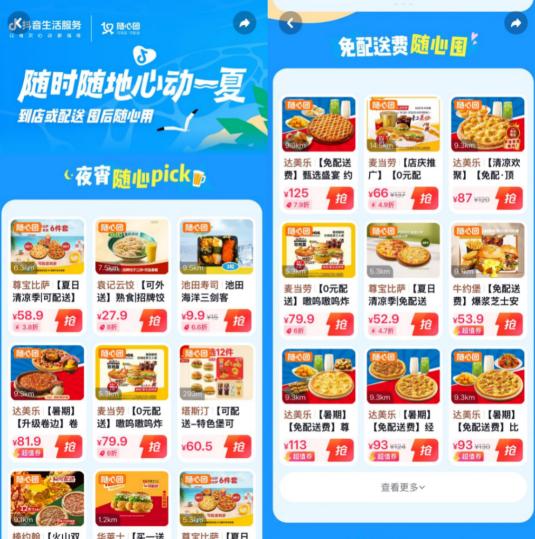
Core Viewpoint - The article discusses the competitive landscape of China's food delivery market in 2025, highlighting Douyin's strategic maneuvers in the local lifestyle sector, particularly its "随心团" (Sui Xin Tuan) initiative, which aims to strengthen its position without directly entering the food delivery business [1][2][3]. Group 1: Douyin's Strategy - Douyin has shifted its focus from food delivery to enhancing its local lifestyle services, emphasizing partnerships with quality merchants rather than building its own delivery system [2][3][4]. - The "随心团" initiative allows users to purchase group coupons for both in-store dining and delivery, catering to diverse consumer needs [4][5]. - Douyin's approach involves tightening entry requirements for merchants to ensure quality and reliability, leveraging its vast user base and content ecosystem to attract and retain customers [7][9][10]. Group 2: Market Dynamics - The food delivery market is highly competitive, with major players like Meituan, Ele.me, and JD.com aggressively vying for market share, each employing unique strategies to attract brands [8][10]. - Douyin's core logic for "随心团" is not centered on food delivery itself but on creating efficient connections between merchants and customers through short video content and traffic [9][10]. - The local lifestyle market is evolving, with Douyin aiming to capitalize on high-frequency dining services while also expanding into the hotel and travel sectors, which are seen as lucrative opportunities [11][14][15]. Group 3: Growth and Challenges - Douyin's local lifestyle business has seen significant growth, from a scale of 100 billion in 2021 to over 400 billion in 2024, indicating a strong upward trajectory [19][21]. - Despite its growth, Douyin faces challenges in maintaining its momentum in a fiercely competitive environment where efficiency, service, and ecosystem integration are becoming critical [20][21]. - The company must continue to refine its strategies and operations to adapt to the evolving landscape of local lifestyle services, ensuring it remains relevant and competitive [20][21].
对飙盒马、京东,美团再出招
3 6 Ke· 2025-07-28 10:57
Core Viewpoint - The article discusses the competitive landscape of offline retail in China, focusing on Meituan's new discount supermarket project "Happy Monkey" as it aims to penetrate the lower-tier market, contrasting its strategy with Alibaba's Hema NB and highlighting the challenges and opportunities in the sector [1][2][3]. Group 1: Meituan's Strategy and Market Position - Meituan is launching "Happy Monkey" in Hangzhou, with plans for a flagship store in Beijing, targeting the lower-tier market from the outset [1][2]. - The leadership team for "Happy Monkey" is primarily composed of members from the previously downsized Meituan Youxuan, indicating a strategic shift within the company [1]. - Meituan's CEO Wang Xing has identified "food and grocery retail" as a top priority for the company's future, marking a significant strategic pivot towards offline retail [3][4]. Group 2: Competitive Landscape - Hema NB has rapidly expanded to over 300 stores since its launch, positioning itself as a key player in the offline retail space, which Meituan is now entering with "Happy Monkey" [2]. - The competition in the lower-tier market is intensifying, with "Happy Monkey" facing rivals like Hema NB and Aoleqi, highlighting the need for differentiation in product offerings and pricing strategies [11][12]. Group 3: Operational Challenges and Opportunities - Meituan's previous attempt at offline retail with "Little Elephant Fresh" failed due to high operational costs and a lack of expertise in supply chain management, which the company aims to address with its new approach [5][7]. - The "Happy Monkey" model focuses on hard discounting and high private label ratios, catering to price-sensitive consumers in lower-tier cities, which is a shift from previous high-end strategies [8][9]. - The integration of "Happy Monkey" with Meituan's existing flash purchase service could enhance product quality and supply chain efficiency, addressing past challenges faced by the flash purchase platform [10]. Group 4: Future Expansion Plans - Meituan has set an ambitious target of opening 1,000 "Happy Monkey" stores, indicating a strong commitment to scaling its offline retail presence [11]. - The company is leveraging its extensive logistics network and rider workforce to optimize resource allocation and improve operational efficiency in its new stores [13][14]. - "Happy Monkey" is part of a broader strategy that includes the development of "Little Elephant Supermarket," which targets higher-end markets, showcasing a dual approach to market segmentation [14].

成交额今年将增至15亿、开店超千家,美团闪购成为青岛啤酒最大线上渠道之一
Cai Jing Wang· 2025-07-28 04:41
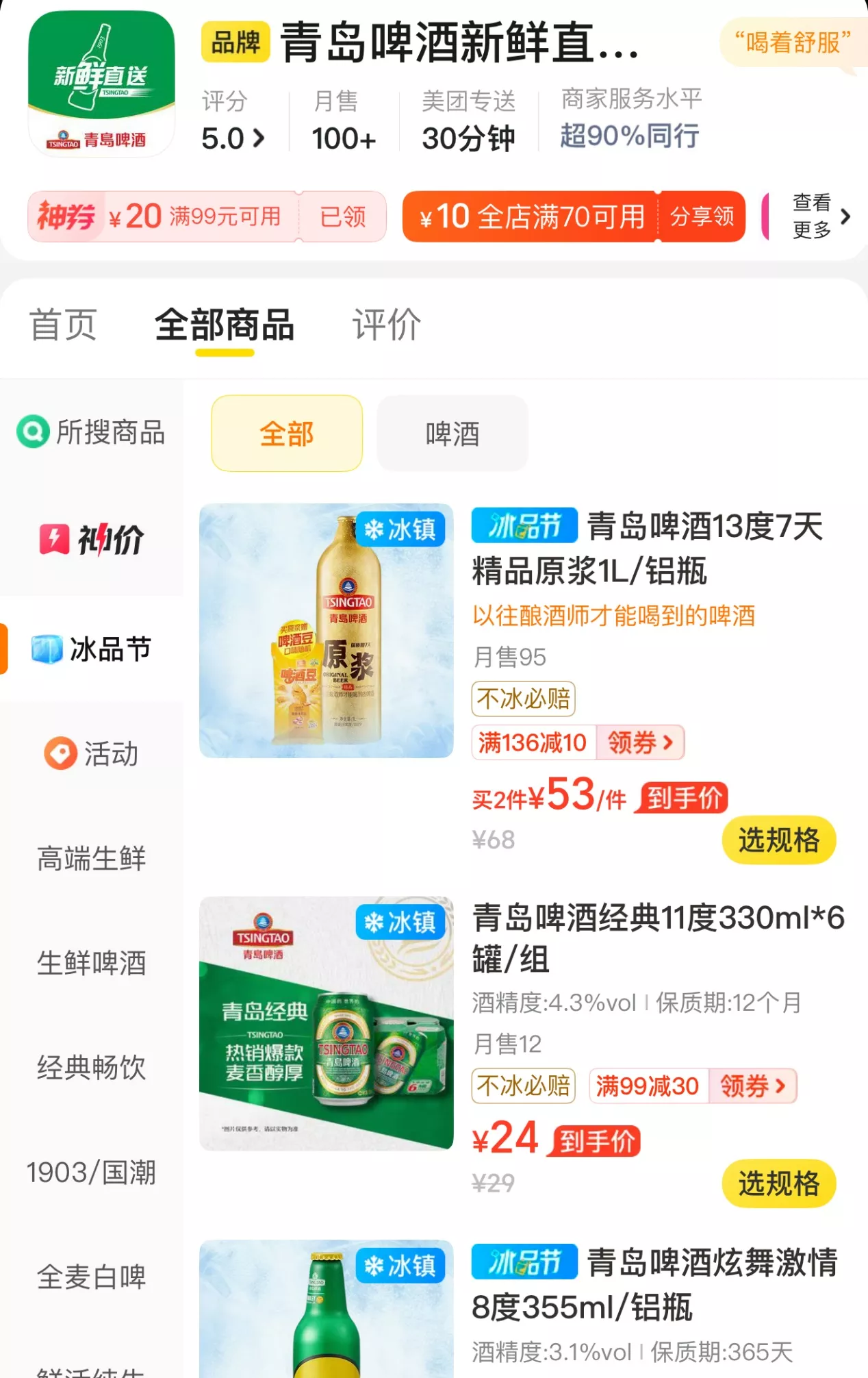
Core Insights - Qingdao Beer is expected to achieve over 1.5 billion yuan in transaction volume on Meituan Flash Purchase by 2025, making it one of the largest online sales channels for the brand [1] - In 2024, Qingdao Beer surpassed 1 billion yuan in transaction volume on Meituan Flash Purchase for the first time, driven by the rapid growth of key products [1] - The partnership has led to a nearly 60% year-on-year increase in sales volume for Qingdao Beer on Meituan Flash Purchase in the first half of this year [1] Group 1 - Qingdao Beer launched the "Night Owl" series of new products on Meituan Flash Purchase, marking a significant breakthrough in the industry for high-end products to quickly penetrate core urban markets [2] - The collaboration has enabled Qingdao Beer to significantly reduce the product launch cycle through flagship stores and lightning warehouses [2] - Meituan Flash Purchase is helping Qingdao Beer optimize product design and expand new product sales momentum through data insights and efficient fulfillment capabilities [2] Group 2 - Based on previous successful cooperation, both parties have decided to deepen collaboration by expanding store numbers and launching new products [5] - By 2025, the number of Qingdao Beer flagship stores on Meituan Flash Purchase is expected to exceed 1,000 [5] - Meituan Flash Purchase will continue to enhance unique services like "No Ice, No Pay" to meet the increasing demand for chilled beverages during summer and sports events [5]
商贸零售行业周报:市场监管发声促平台降温,外卖行业转向理性竞争-20250727
Shenwan Hongyuan Securities· 2025-07-27 14:22
Investment Rating - The report maintains a positive outlook on the industry, indicating a transition towards rational competition among major platforms [6][9]. Core Insights - The market regulatory authority's recent discussions with major platforms signal a shift from aggressive subsidy strategies to more sustainable competition, particularly in the food delivery sector [9][12]. - Major platforms like Meituan, Alibaba, and JD are adapting their strategies in response to regulatory pressures, focusing on enhancing operational efficiency and product quality rather than merely increasing order volumes [12][15][17]. - The report highlights the emergence of differentiated competition strategies among platforms, with each leveraging its core strengths to align with long-term strategic goals [6][9]. Summary by Sections Market Overview - From July 21 to July 25, 2025, the social service index rose by 2.30%, outperforming the CSI 300 by 0.61 percentage points, ranking 17th among Shenwan's primary industries. The commercial retail index increased by 2.65%, surpassing the CSI 300 by 0.96 percentage points, ranking 14th [20][21]. Company Strategies - Meituan has shifted its focus from sheer order volume to structural efficiency improvements, launching initiatives like the "Wan Jia Brand Plan" to enhance service quality and stabilize supply [12][14]. - Alibaba has responded to regulatory demands by promoting compliance and launching the "Explosion Group" model to attract price-sensitive consumers while maintaining subsidy levels [15][16]. - JD has positioned itself in the quality segment by launching the "Seven Fresh Kitchen" project, emphasizing user experience and supply chain capabilities, with plans to open 10,000 locations within three years [17][18]. Investment Recommendations - The report suggests focusing on e-commerce sectors that emphasize core business strengths and AI investments, including Alibaba, JD, Meituan, and Pinduoduo. It also highlights opportunities in premium jewelry brands and comprehensive trade service providers that are advancing digital transformation [6][9].
