国潮

Search documents
千年美学遇科技美肤,完美×敦煌IP联名启幕
Bei Ke Cai Jing· 2025-11-17 11:53
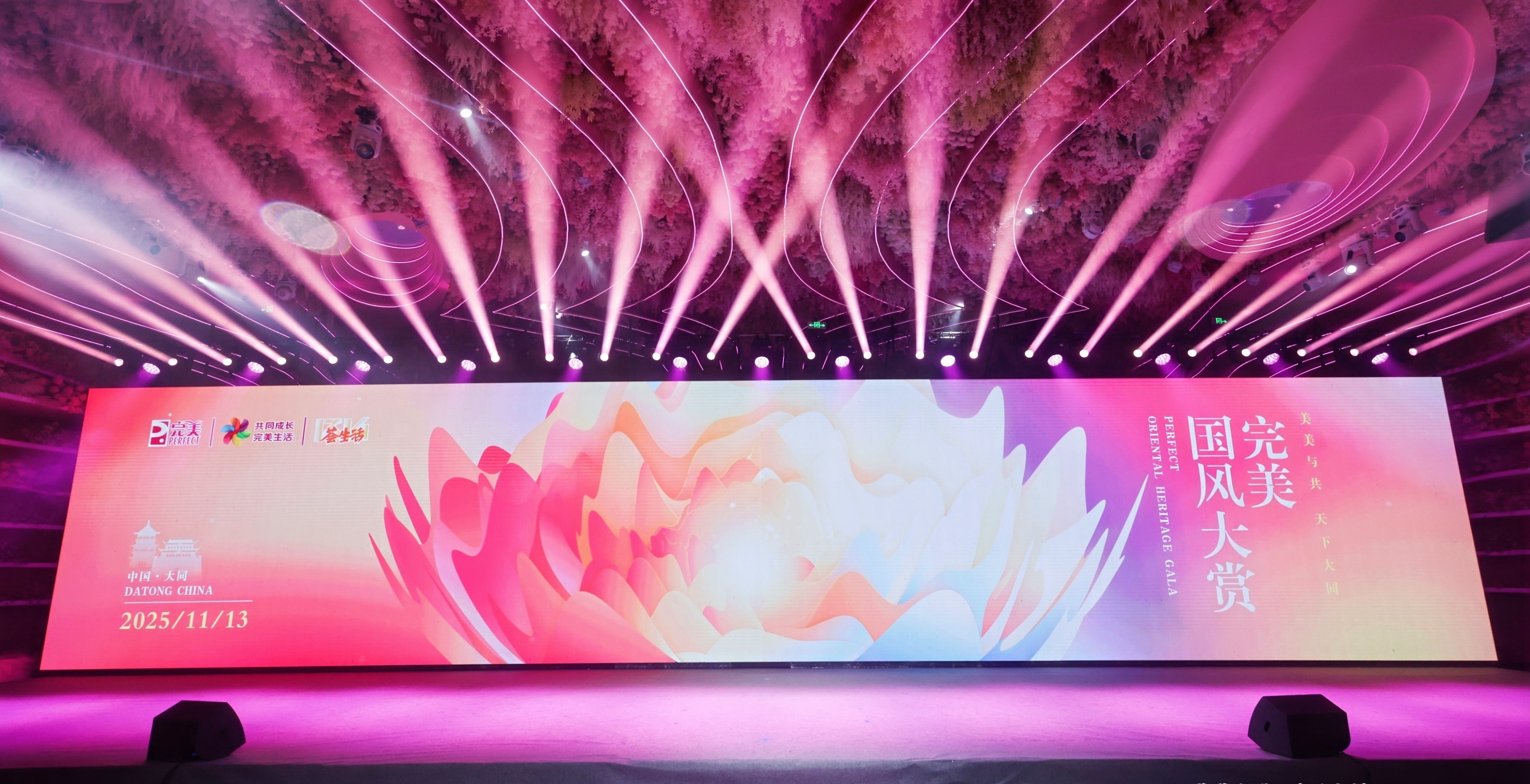
Core Viewpoint - The event "Perfect Harmony, Great Unity" marks the launch of a cultural dialogue and showcases the integration of traditional herbal wisdom with modern technology by Perfect (China) Co., Ltd. in Datong, Shanxi [1] Group 1: Event Highlights - Perfect Company unveiled its latest technological achievement, the Memory Flower Essence Oil, promoting a new paradigm of skin care through oil [4] - The company announced a collaboration with the Dunhuang Academy to create a series of cultural products that blend traditional aesthetics with modern life [4][10] Group 2: Leadership Insights - Chairman Gu Runjin emphasized the company's growth in China since the reform and opening-up, highlighting the importance of cultural heritage and social responsibility [7] - CEO Peng Zhihong noted the shift in consumer preferences towards a "heart-price" model, indicating a dual upgrade in cultural confidence and health needs [8] Group 3: Product Innovation - The Memory Flower Essence Oil focuses on skin barrier repair and aligns with the concept of "nurturing body and mind" through its innovative formulation [15] - The product features a "4+4 Youth Dual Protection System" that combines high-affinity plant lipids with rare flower extracts, aiming to meet both skin barrier repair and rejuvenation needs [15] Group 4: Market Strategy - Perfect Company is implementing a dual-driven strategy of "Community Growth" and "Perfect Life" to lead healthy lifestyles and create low-threshold entrepreneurial platforms [8] - The company has invested 1.4 billion in research and innovation, establishing a comprehensive product and service system to provide holistic health and beauty solutions [8] Group 5: Cultural Integration - The collaboration with the Dunhuang Academy aims to bring ancient art into daily life through various products, ensuring the continuity of cultural heritage [12] - The event highlighted the importance of integrating traditional aesthetics with modern consumer needs, showcasing the potential of cultural products in the beauty industry [12][18]

新股前瞻|年营收超5亿,铜制文创“龙头”铜师傅该如何打破天花板“低”质疑?
智通财经网· 2025-11-16 14:07
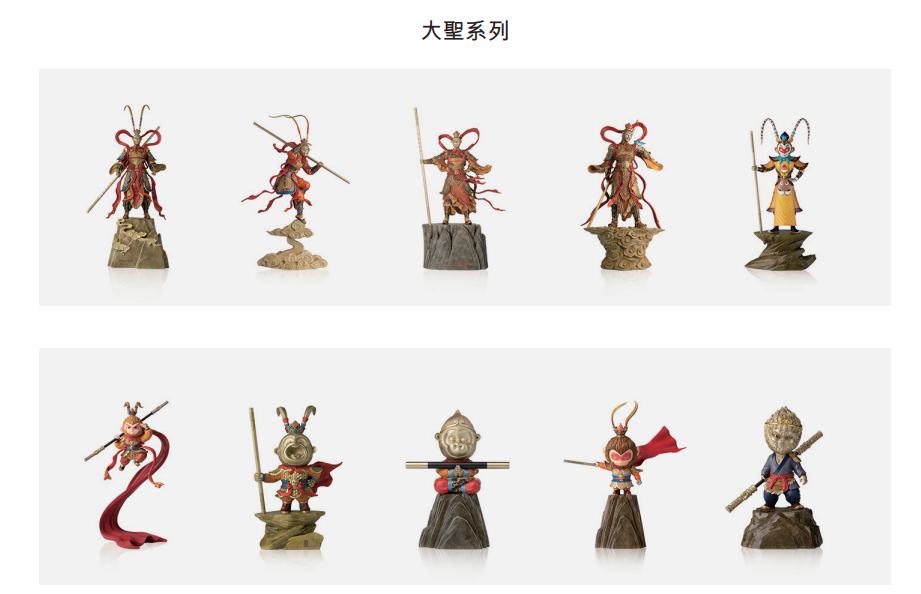
Core Insights - The rise of "Guochao" (national trend) reflects a growing interest among young consumers in traditional Chinese culture, leading to a significant impact on the consumer market [1] - Tong Shifu, a leading cultural and creative brand, is seeking to go public in Hong Kong, highlighting its role in the Guochao movement and its challenges in a competitive market [1][5] Company Overview - Tong Shifu was founded in 2013 and focuses on copper-based cultural and creative products, with copper products accounting for over 95% of its revenue from 2022 to 2024 [1][5] - The company has achieved significant market presence, ranking first in the Chinese copper cultural product market with a market share of 35% as of 2024 [2] Financial Performance - Revenue figures for Tong Shifu from 2022 to 2024 were 503 million, 506 million, and 571 million CNY, respectively, with net profits of 56.9 million, 44.1 million, and 78.0 million CNY [5] - Despite a revenue increase of 8.8% in the first half of 2025, net profit declined by 24%, indicating challenges in maintaining profitability amid rising costs [5][6] Market Dynamics - The copper cultural product market is relatively small, with a projected size of only 1.6 billion CNY in 2024, which poses limitations on growth potential [7][10] - The company faces challenges in expanding its customer base beyond its current niche market and must navigate risks associated with product diversification and reliance on external IP [10][11] Strategic Direction - Tong Shifu aims to enhance its brand value and cultural significance while diversifying its product offerings to reach a broader audience [11][12] - The company is leveraging modern design and online marketing to position itself as a symbol of cultural confidence and quality living [11][12]
2025闲鱼谷子趋势报告
Sou Hu Cai Jing· 2025-11-16 09:10
Core Insights - The report highlights the rise of domestic cultural IPs and the structural transformation of the "Guzi" (goods) market, driven by national style elements and domestic game IPs, with young women and post-2005 consumers becoming the main consumer groups [1][2][3] Market Overview - The "Guzi" market, which refers to lightweight merchandise derived from anime, games, and other media, has seen a significant shift from Japanese IPs to domestic IPs, with domestic transaction volumes surpassing Japanese ones for the first time in Q1 2025, reflecting a 105% year-on-year increase [1][2][10] - The overall market is experiencing rapid growth, with the first quarter of 2025 achieving historical peak transaction volumes [1][12] IP Performance - Domestic game IPs have emerged as the biggest winners, with titles like "Love and Deep Space" and "Identity V" topping sales charts, outperforming traditional Japanese IPs [2][16] - The sales of national style "Guzi" surged by 167% year-on-year in Q1 2025, with the "Nezha" IP seeing a staggering 2346.2% increase due to the release of the movie "Nezha 2" [2][19] Consumer Demographics - The proportion of female consumers in the "Guzi" market increased from 67% in 2023 to 78% in Q1 2025, indicating a strong female dominance in purchasing [3][26] - The post-2005 generation is the fastest-growing demographic, with these young consumers averaging 2.9 purchases per month, spending over 100 yuan per transaction [3][31] Product Categories - "Baji" (badges) continue to dominate sales, accounting for over 60% of total "Guzi" sales, while paper products like postcards and colored paper have seen a notable rise, making up 19% of transactions in Q1 2025 [2][22] - The demand for products that combine utility and emotional value is evident, as consumers seek items that serve both practical and sentimental purposes [2][3]

国货消费何以澎湃成潮
Zhong Guo Zhi Liang Xin Wen Wang· 2025-11-14 06:36
Core Insights - The "Double 11" shopping festival serves as a significant window to observe new consumer trends, showcasing the rise of domestic brands in the e-commerce sector, particularly in beauty and fashion categories [1][2]. Group 1: Rise of Domestic Brands - Domestic brands are increasingly dominating sales on e-commerce platforms, with brands like Proya leading in beauty sales and nine out of the top ten clothing brands being Chinese [1]. - The success of domestic brands is attributed to a cultural and economic shift, reflecting national confidence and a transformation from "made in China" to "created in China" [2]. Group 2: Innovation and Quality Revolution - The rise of domestic consumption is linked to supply-side innovations and a quality revolution, moving away from the stereotype of low-quality products [2]. - Brands like Proya and Bosideng exemplify this shift, with Proya focusing on R&D and quality, while Bosideng combines technical expertise with fashionable design [2]. Group 3: Cultural Confidence and Consumer Identity - The resurgence of domestic brands is driven by a collective awakening of cultural confidence among younger consumers, particularly Generation Z, who are increasingly valuing local culture over Western brands [2][3]. - Brands such as Chi Xia and Sanji Heihua have rapidly grown, reflecting a desire among young consumers to connect with traditional Chinese culture [2]. Group 4: Understanding Consumer Needs - Domestic brands excel in understanding and innovatively expressing consumer needs, capturing subtle changes in local aesthetic preferences [3]. - Successful cases include the popularity of Palace Museum cultural products and the rise of brands like Li Ning and White Elephant Foods, which resonate emotionally with consumers [3]. Group 5: Supply Chain and Digital Marketing - The robust industrial system and efficient supply chain in China enable domestic brands to respond quickly to market changes, facilitating flexible production [3]. - Innovations in digital marketing, such as live-streaming and social media engagement, allow domestic brands to connect directly with consumers, enhancing brand narratives [3]. Group 6: Challenges Ahead - Despite rapid growth, domestic brands face challenges such as avoiding homogenization, transitioning from "hit products" to sustainable success, and building brand resilience [4]. - Continuous investment in R&D, deeper cultural understanding, and improved service systems are essential for domestic brands to maintain their market position [4]. Group 7: New Consumer Paradigm - The rise of domestic consumption reflects a shift in consumer behavior, where quality, design, cultural significance, and emotional value are prioritized over price [4]. - This transformation is reshaping market competition and driving the upgrade of Chinese manufacturing and cultural expression [4].


Rokid乐奇推出“风林火山”国潮系列,定价从4599元起
Feng Huang Wang· 2025-11-13 15:18
Core Viewpoint - Rokid and BOLON jointly launched new smart glasses, integrating traditional craftsmanship with modern technology, targeting both consumer and business markets [1] Group 1: Product Launch - Rokid introduced a national trend series of smart glasses themed "Wind, Forest, Fire, Mountain," priced between 4599 yuan and 9688 yuan, incorporating traditional crafts like Hangzhou embroidery and wood carving [1] - BOLON launched AI smart glasses featuring Qualcomm AR1 processor and a 12-megapixel Sony camera, priced at 2199 yuan, emphasizing stylish design and advanced functionalities such as AI object recognition, navigation, and translation [1] Group 2: Ecosystem and Partnerships - Rokid is expanding its ecosystem by collaborating with platforms like Amap, Alipay, QQ Music, JD Technology, and Flight Manager, covering various life scenarios including navigation, payment, music, shopping, and travel [1] Group 3: Business Applications - Rokid's smart glasses have been applied in sectors such as transportation, real estate, vehicle control, and healthcare, enhancing industry efficiency [1] - To boost user confidence, Rokid introduced the "Rokid Care" service, offering screen breakage and water damage coverage starting at an annual fee of 199 yuan [1]
上新品、拓渠道 京郊老字号加码创新走近消费者
Bei Jing Shang Bao· 2025-11-13 08:22
Core Insights - The article highlights the ongoing innovation and consumer integration efforts of traditional brands in Beijing, particularly focusing on the activities of Sanyuan Foods and other local enterprises [1][6]. Group 1: Sanyuan Foods - Sanyuan Foods has launched over 30 new products this year, demonstrating its commitment to innovation in the market [1]. - The "Sanyuan Beijing Fresh Milk" product exemplifies the company's strategy to focus on the low-temperature fresh milk segment, aiming to strengthen brand recognition in a competitive market [3]. - Sanyuan Foods has a daily processing capacity of 1,200 tons of fresh milk and is expanding its store presence while also reopening the "Beijing Milk Company" and launching tea beverage stores to attract younger consumers [3]. Group 2: Other Traditional Brands - Hongxing Collective Farm, with over 70 years of history, integrates agriculture, red culture, and green ecology, offering diverse experiences such as fruit picking and camping [5]. - Nanyushao, a representative of Beijing's sauce liquor culture, preserves traditional brewing techniques and has introduced smaller bottle sizes and flavored sets to appeal to younger consumers [5]. - Beijing Rural Commercial Bank has been innovating its service mechanisms to support local agricultural industries, launching the "You Nong Quick Loan" series to address financing challenges for various regional agricultural products [5]. Group 3: Government and Market Trends - The Beijing Municipal Bureau of Commerce is encouraging traditional brands to create new consumer experiences, including the establishment of museums and innovation stores for old brands [6]. - The rise of national trends is driven by cultural confidence and consumer demand for high-quality, culturally rich products, presenting unprecedented opportunities for traditional brands [6].

“双十一”的消费进化论
Xin Lang Zheng Quan· 2025-11-11 08:25
Group 1 - The "Double Eleven" shopping festival has started earlier this year, with major platforms like Tmall reporting significant sales figures, including 80 brands exceeding 100 million yuan in sales within the first hour [1] - New entrants like Xiaohongshu have also shown strong performance, with a 77% year-on-year increase in purchasing users and a 73% increase in transaction orders on the first day [1] Group 2 - The early start of promotions has led to a decrease in discussion around "Double Eleven" on November 11, with the consumer market showing mixed performance [2] - The food and beverage sector saw a notable increase of 3.22% on November 10, while traditional consumer sectors have been relatively quiet [2] Group 3 - The consumer sector has adjusted valuations, providing a safety margin for investors, with the food and beverage index currently at a price-to-earnings ratio of 21.29, which is low compared to the past decade [3] - The domestic consumer market shows resilience, supported by a large population and ongoing improvements in living standards, leading to a diverse demand landscape [3] Group 4 - Structural opportunities within the consumer sector are emerging, with new trends like emotional consumption and the silver economy driving growth [4] - The integration of technology in the consumer space is transforming the market, with companies like Tmall and JD.com emphasizing the role of AI in enhancing consumer experiences [4] Group 5 - After recent adjustments, valuations in traditional sectors have compressed, but leading companies maintain strong positions with robust cash flows and attractive dividend yields [5] - In the new consumption sector, despite high overall sentiment, there is significant valuation differentiation, necessitating careful selection of companies with strong brand and channel advantages [6]

中经评论:全球最大消费市场该是啥样
Jing Ji Ri Bao· 2025-11-11 00:10
Core Insights - The eighth China International Import Expo showcased the growing vitality and attractiveness of the Chinese market, emphasizing the need for a balance between economic strength and external responsibilities to become a core engine of global economic growth [1] Group 1: Market Size and Structure - The U.S. personal consumption expenditure is projected to reach approximately $19.8 trillion in 2024, making it the largest in the world; however, its high service consumption ratio, nearly 70%, particularly in healthcare and finance, poses burdens on the public [1] - A truly influential consumer market requires a synergistic development of goods and services to meet diverse consumer needs and reflect a balanced economic operation [1] Group 2: Openness and Global Integration - The U.S. has been a net importer, significantly impacting global supply chains; however, unilateral protectionist policies, such as increased tariffs, challenge global economic growth and deviate from the responsibilities of a major consumer market [2] - In contrast, China is expanding its openness, providing opportunities for global enterprises, with a cumulative import of consumer goods amounting to 7.4 trillion yuan from 2021 to 2024, and a projected inbound tourist spending of $94.2 billion in 2024, a 77.8% increase [2] Group 3: Innovation and Sustainability - Innovation is a key driver for maintaining market leadership, with China leading in digital consumption, projected online retail sales reaching 15.5 trillion yuan in 2024, and mobile payment transactions remaining globally dominant [3] - The "National Trend" phenomenon reflects cultural confidence, enhancing the local market's appeal and combining cultural self-assurance with commercial innovation [3] - The largest consumer market must guide sustainable consumption, promoting green and circular consumption models, as seen in China's trade-in policies that stimulate consumption while advancing environmental goals [3] Group 4: Future Market Dynamics - With a population exceeding 1.4 billion, China is poised to become the largest consumer market globally, but the competition will focus on development quality rather than just scale [4] - The largest consumer market must balance openness and protection, innovation and regulation, and growth and sustainability to ensure stable expectations for global consumers, enabling them to not only "buy" but also "buy well" [4]
沈阳策划12个“篇章”掀起冬季消费热潮
Zhong Guo Xin Wen Wang· 2025-11-08 12:39
Core Points - The "Cold Winter, Not Cold, Just Buy GO" consumption promotion event was launched in Shenyang, aiming to stimulate winter consumption from November 2025 to February 2026, coinciding with major shopping events like "Double 11" and "Double 12" [1] - The event includes 12 thematic chapters focusing on various consumer experiences, such as shopping districts, e-commerce, and cultural products, enhancing the quality of consumer engagement [1] - Shenyang plans to attract at least 40 new domestic and international flagship stores and host over 20 events related to product launches and exhibitions during the promotion period [1] Thematic Summaries National Trend Chapter - The focus is on exploring traditional Chinese culture through food, craftsmanship, and creative products, with activities like "Taste of National Trend Cuisine" and "Cultural Heritage Experience" [2] Bathing Chapter - Shenyang aims to enhance its reputation as a "Bathing Leisure Capital" by hosting the second Bathing Leisure Consumption Season, inviting 260 industry experts and releasing the "2026 Bathing Guide" [2] - By the end of February 2026, the city targets to have 55 bathing establishments over 5,000 square meters, boosting tourism and consumption [2] Ice and Snow Chapter - Utilizing local ski resources, Shenyang will promote winter sports through events like the "Dream of Winter" campaign and the International Snowboard World Cup, encouraging innovative ice and snow-themed consumer experiences [2]
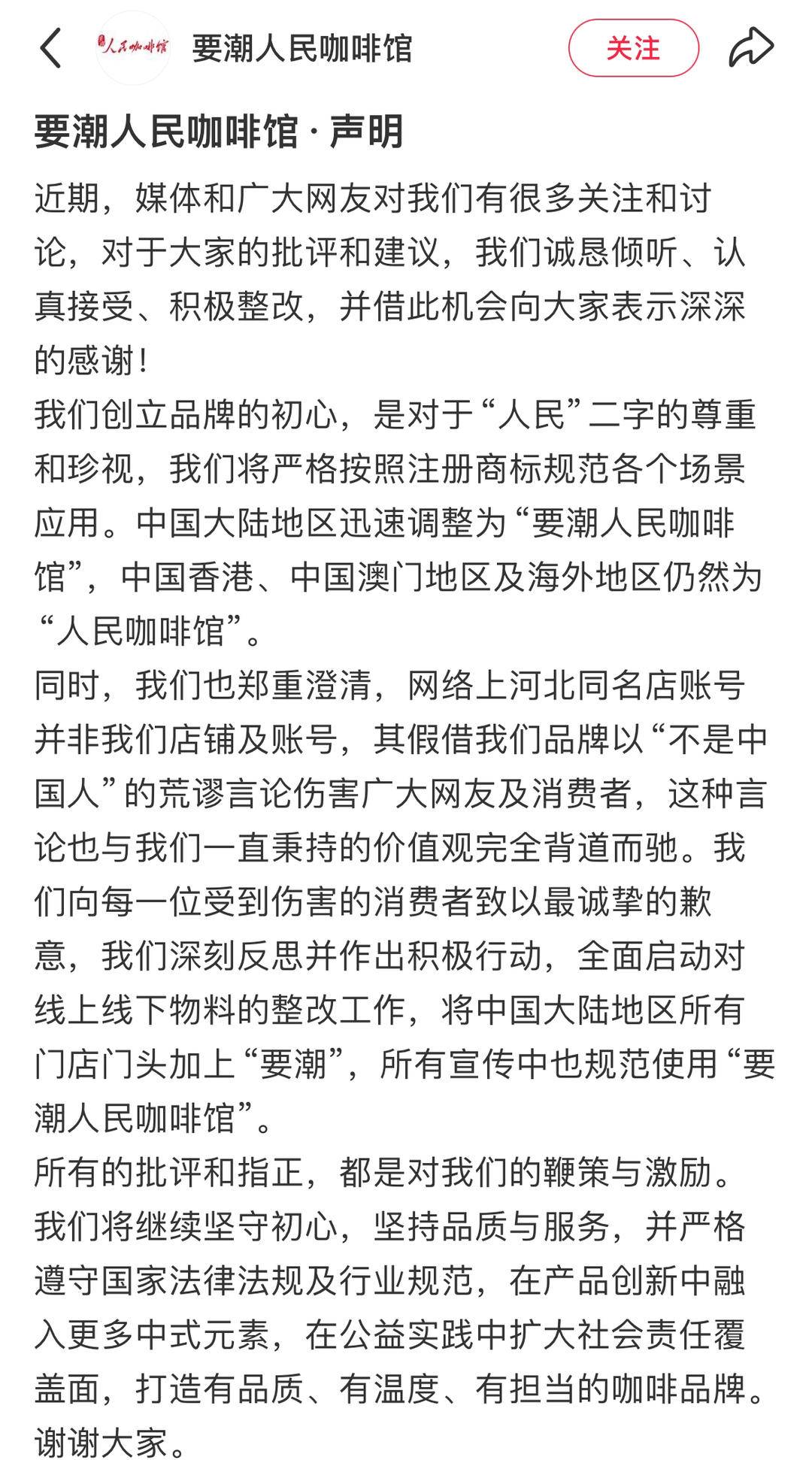
“人民咖啡馆”更名风波:国潮营销,敬畏之心不可失
Yang Zi Wan Bao Wang· 2025-11-08 09:39
Core Viewpoint - The "People's Coffee Shop" has faced significant public scrutiny due to its name, leading to a rebranding as "Yaochao People's Coffee Shop" in mainland China while retaining the original name in Hong Kong, Macau, and overseas markets [2][3]. Company Response - The company has acknowledged the criticism and suggestions from the public, committing to a thorough rectification process and expressing gratitude for the feedback received [2][3]. - The company clarified that a similarly named establishment in Hebei is not affiliated with them and condemned the inappropriate remarks associated with that account [2]. Brand and Trademark Issues - The brand "People's Coffee Shop" has opened nearly 30 stores across 20 cities in 18 provinces, gaining substantial popularity [3]. - The parent company, Yaochao (Shanghai) Cultural Communication Co., Ltd., has faced trademark challenges, with multiple applications for the "People's Coffee Shop" trademark being rejected [3]. Cultural Sensitivity and Market Trends - The incident highlights the importance of respecting cultural and political connotations associated with the term "People," which carries significant public sentiment and should not be misused [3][4]. - The rise of "Guochao" (national trend) in business emphasizes the need for companies to integrate cultural values with modern aesthetics and quality, rather than merely exploiting cultural symbols for marketing [4]. - The situation serves as a cautionary tale for businesses engaged in "Guochao" marketing, stressing the necessity of genuine respect for cultural sentiments to achieve sustainable commercial success [4].