油价波动

Search documents
同业盈利纷纷下滑 托克集团逆势靠资产投资支撑石油业务
智通财经网· 2025-09-12 07:05
Core Viewpoint - Trafigura Group's oil business is supported by recent investments in refining and distribution assets, despite declining profitability among competitors [1][2]. Group 1: Company Performance - Trafigura's oil trading volume is sufficient to meet three times France's demand, and it is also the largest metal trader globally [2]. - The company restructured its crude oil and petroleum products teams last year, with Dan Woodbridge leading crude operations and Tom Farrant overseeing global gasoline [2]. - The establishment of a new asset management department has had a significantly positive impact on the company's operations [3]. Group 2: Market Conditions - Major energy companies are experiencing reduced earnings due to volatile oil prices driven by geopolitical events, contrasting with a previous period of record profits [1]. - Refining margins have increased due to strong fuel demand, while attacks on Russian production facilities have limited oil product supply [1]. - Despite concerns over oversupply and slowing global economic growth, Brent crude prices have remained above $65 per barrel [4][5]. Group 3: Price Valuation - The fair value of oil is estimated to be around $55 per barrel based on supply and demand fundamentals, but current prices reflect various risk factors [5][6]. - Factors such as sanctions, tariffs, Middle East tensions, and the Ukraine crisis are influencing oil pricing, preventing it from reaching the estimated fair value [5].
燃料油日报2025-09-10:8月低硫燃料油国产量小幅增加-20250910
Hua Tai Qi Huo· 2025-09-10 07:55
Group 1: Report Industry Investment Rating - High - sulfur fuel oil: Short - term neutral, medium - term downward [3] - Low - sulfur fuel oil: Short - term neutral, medium - term downward [3] - Cross - variety: None [3] - Cross - period: None [3] - Spot - futures: None [3] - Options: None [3] Group 2: Core View of the Report - The market sentiment has slightly recovered from the news of OPEC's production increase, and oil prices have stabilized. However, due to the unclear situation of the Russia - Ukraine conflict and US sanctions, oil prices may fluctuate repeatedly, providing limited guidance for the unilateral price direction of downstream fuel oil [1] - High - sulfur fuel oil is in a stage of market adjustment and re - balancing, with both long and short factors intertwined. Supply is tightening due to sanctions on Russia and Iran and attacks on Russian refineries, and downstream bunker demand is fair. But Middle East fuel oil exports are increasing, and Singapore's inventory is high [1] - Low - sulfur fuel oil currently has limited market pressure. Domestic production has slightly rebounded but remains at a relatively low level. In the medium - term, it faces the contradiction of demand share being replaced and having more surplus capacity, with upward resistance despite some support at the lower valuation [2] Group 3: Summary by Related Content Market Analysis - The main contract of SHFE fuel oil futures closed up 1.13% at 2,764 yuan/ton, and the main contract of INE low - sulfur fuel oil futures closed up 0.68% at 3,385 yuan/ton [1] - Although OPEC has lifted the second - layer production limit, the increase in quotas does not necessarily mean an increase in actual production, and the short - term pressure on the market is limited [1] - High - sulfur fuel oil: Supply is affected by sanctions and attacks on refineries, while Middle East exports are expected to increase, and Singapore's inventory is high [1] - Low - sulfur fuel oil: Domestic production in August was 1.06 million tons, a month - on - month increase of 46,000 tons or 4.51%. There are no obvious signs of increased production in September, and the production trend this year is expected to be more stable than last year. The supply of arbitrage cargoes from the Western region is expected to decrease in September [2] Strategy - High - sulfur: Short - term neutral, medium - term downward [3] - Low - sulfur: Short - term neutral, medium - term downward [3] - Cross - variety: None [3] - Cross - period: None [3] - Spot - futures: None [3] - Options: None [3]
突然爆发!刚刚,两大重磅利好传来!
天天基金网· 2025-09-10 05:20
Core Viewpoint - The oil and gas exploration sector is experiencing a significant surge driven by dual catalysts: major breakthroughs in resource discovery and geopolitical tensions affecting oil prices [3][4][7]. Group 1: Market Performance - On September 10, the oil and gas exploration sector saw substantial gains, with companies like Tongyuan Petroleum rising over 16% and Keli Co. increasing by more than 15% [3][5]. - Major players such as China National Petroleum and China National Offshore Oil Corporation also exhibited upward movements in their stock prices [6]. Group 2: Catalysts for Growth - The first catalyst is the announcement from Xu Dachun, Deputy Minister of Natural Resources, regarding significant breakthroughs in oil, gas, and uranium mining in China, which is expected to support stable oil production of 200 million tons and natural gas output exceeding 240 billion cubic meters [4][7]. - The second catalyst is the impact of geopolitical events, particularly the escalating tensions in the Middle East, which have led to a rise in international oil prices [4][7]. Group 3: International Oil Price Dynamics - Reports indicate that after OPEC+ approved an increase in supply quotas, Goldman Sachs maintained its bearish outlook on oil prices, predicting Brent crude to reach $64 per barrel in Q4 and an average of $56 per barrel in 2026 [8]. - The anticipated surplus in the global oil market, estimated at 1.9 million barrels per day next year, adds to the downward pressure on prices [8][9]. Group 4: Industry Trends - The oil and gas exploration sector has shown significant growth since 2022, while the oil service engineering sector has lagged behind [9]. - Recent layoffs in major oil companies, including Chevron and BP, signal potential challenges within the industry, raising concerns about the overall health of the oil and gas sector [8].






民生证券-石化行业周报:市场担忧OPEC+继续增产,油价收跌-250906
Xin Lang Cai Jing· 2025-09-06 13:16
Group 1 - OPEC+ is considering increasing oil production to regain market share, which raises concerns about oversupply in the oil market [1] - As of September 5, Brent crude oil futures settled at $65.50 per barrel, down 3.85% week-on-week, while WTI futures settled at $61.87 per barrel, down 3.34% week-on-week [2] - U.S. crude oil production decreased to 13.42 million barrels per day, down 20,000 barrels per day week-on-week, and refinery throughput also declined to 16.87 million barrels per day, down 10,000 barrels per day week-on-week [2] Group 2 - U.S. crude oil inventories increased, with strategic reserves at 404.71 million barrels, up 510,000 barrels week-on-week, and commercial inventories at 420.71 million barrels, up 2.42 million barrels week-on-week [3] - The price spread for gasoline narrowed, while the price spread for polyester filament expanded, indicating market dynamics in refining and chemical sectors [3] - Investment recommendations include focusing on stable, high-dividend companies like China National Petroleum and Sinopec, as well as companies with low production costs like CNOOC, and those in the growth phase like New Natural Gas and Man Oil [3]
宏源期货品种策略日报:油脂油料-20250904
Hong Yuan Qi Huo· 2025-09-04 01:23
Report Industry Investment Rating - No specific industry investment rating is provided in the report. Core Viewpoints - Geopolitical tensions drive up oil prices, but macro - level financial market shocks cause wide - range oil price fluctuations. PX prices return to normal after the hype of domestic PX device maintenance news. With low PX inventory, the price has strong bottom support, and its future performance depends on unexpected factors. PX is in an advantageous position in the industrial chain due to the rigid demand of new PTA production devices. As the downstream demand peak season approaches, polyester start - up is gradually increasing [2]. - Crude oil is weakly oscillating. PTA has sufficient spot supply, and its spot average price drops while the spot basis weakens. PTA processing fees are in a low - level range, and unplanned device maintenance can't continuously boost prices. As the traditional peak season approaches, the polyester start - up load may increase, and the de - stocking volume is expected to expand. The downstream polyester factories' procurement enthusiasm for PTA spot is low, and the polyester inventory is transferred downward, but the equity inventory is expected to change little. The overall sales of downstream polyester products are dull, and there is no clear signal for the start of the demand peak season. PTA will move in an oscillating manner, with cost as the dominant factor [2]. - The mainstream negotiation price of polyester bottle - chips in the Jiangsu and Zhejiang markets remains stable. Polyester raw materials and bottle - chip futures fluctuate slightly. The supply - side quotes of bottle - chips are mostly stable, and downstream terminals follow up cautiously with a light trading atmosphere. The supply - side start - up of bottle - chips is stable, with sufficient market spot supply, and market demand is weakening [2]. - With the weakening of cost support, TA2601, PX2511, and PR2511 contracts all closed lower. OPEC and its production - limiting allies are expected to dominate the overnight crude oil market. As the downstream peak season has not started, PX, PTA, and PR are expected to run weakly [2]. Summary by Related Catalogs Price Information - **Crude Oil**: On September 3, 2025, the futures settlement price (continuous) of WTI crude oil was $63.97 per barrel, down 2.47% from the previous value; the futures settlement price (continuous) of Brent crude oil was $67.60 per barrel, down 2.23% [1]. - **Upstream Products**: The spot price (mid - price) of naphtha (CFR Japan) was $605.00 per ton, up 0.75%; the spot price (mid - price) of xylene (isomeric grade, FOB Korea) was $687.00 per ton, up 0.37%; the spot price of p - xylene (PX, CFR China Main Port) was $843.00 per ton, down 0.35% [1]. - **PTA**: The closing price of the CZCE TA main contract was 4,732 yuan per ton, down 0.50%; the settlement price was 4,754 yuan per ton, down 0.46%. The closing price of the CZCE TA near - month contract was 4,660 yuan per ton, down 0.94%; the settlement price was 4,692 yuan per ton, down 0.47%. The domestic PTA spot price was 4,720 yuan per ton, down 0.17%. The CCFEI price index of domestic PTA was 4,700 yuan per ton, down 0.57%; the CCFEI price index of external PTA was $632.00 per ton, down 0.16% [1]. - **PX**: The closing price of the CZCE PX main contract was 6,810 yuan per ton, down 0.35%; the settlement price was 6,834 yuan per ton, down 0.47%. The closing price and settlement price of the CZCE PX near - month contract were both 6,714 yuan per ton, with no change. The domestic PX spot price was 6,742 yuan per ton, with no change. The spot price (mid - price) of PX (CFR China Taiwan) was $844.00 per ton, down 0.35%; the spot price (mid - price) of PX (FOB Korea) was $819.00 per ton, down 0.36% [1]. - **PR**: The closing price of the CZCE PR main contract was 5,892 yuan per ton, down 0.30%; the settlement price was 5,924 yuan per ton, down 0.17%. The closing price and settlement price of the CZCE PR near - month contract were both 5,818 yuan per ton, with no change. The market price (mainstream price) of polyester bottle - chips in the East China market was 5,860 yuan per ton, down 0.34%; in the South China market, it was 5,940 yuan per ton, down 0.17% [1]. - **Downstream Products**: The CCFEI price index of polyester DTY, POY, FDY68D, FDY150D, and polyester chips remained unchanged on September 3, 2025. The CCFEI price index of polyester staple fiber was 6,510 yuan per ton, down 0.15%; the CCFEI price index of bottle - grade chips was 5,860 yuan per ton, down 0.34% [2]. Production and Sales Information - **开工率**: On September 3, 2025, the start - up rate of the PX in the polyester industrial chain was 82.59%, with no change; the PTA industrial chain load rate of PTA factories was 74.26%, with no change; the PTA industrial chain load rate of polyester factories was 87.99%, with no change; the PTA industrial chain load rate of bottle - chip factories was 73.27%, with no change; the PTA industrial chain load rate of Jiangsu and Zhejiang looms was 62.03%, with no change [1]. - **产销率**: The sales rate of polyester filament was 50.83%, up 12.80 percentage points; the sales rate of polyester staple fiber was 41.19%, down 1.06 percentage points; the sales rate of polyester chips was 45.48%, down 15.56 percentage points [1]. Device Information - A 2.2 - million - ton PTA device of Jiaxing Petrochemical restarted on August 22, 2025. Two 5 - million - ton PTA devices of Hengli Huizhou unexpectedly shut down from August 21 to August 23, and the restart time is to be determined [2].
联合能源集团(00467.HK)上半年拥有人应占溢利约7.4亿港元 同比下降26.7%
Ge Long Hui· 2025-08-29 04:25
Core Viewpoint - United Energy Group (00467.HK) reported a revenue of approximately HKD 8.08 billion for the first half of 2025, representing a 4.2% decrease compared to the same period last year, with a profit attributable to shareholders of about HKD 740 million, down 26.7% year-on-year [1] Revenue Performance - The decline in revenue is primarily attributed to the decrease in average realized prices for crude oil and condensate [1] - The trading business and new clean energy initiatives partially offset the negative impact on revenue [1] Oil Price Trends - Oil prices fluctuated between USD 60 and USD 83 per barrel during the reporting period [1] - The average price of Brent crude oil for the first half of 2025 was USD 72.03 per barrel, which is approximately 14.04% lower than the average price of USD 83.79 per barrel in the same period of 2024 [1]
中国石油(601857):天然气量价齐升,抵抗油价波动
Tianfeng Securities· 2025-08-29 02:16
Investment Rating - The investment rating for the company is "Buy" with a target price not specified [8] Core Views - The company has shown resilience against oil price fluctuations, with natural gas volume and price both increasing [1] - The upstream performance has significantly outperformed oil price volatility, with domestic crude oil production up 0.6% year-on-year and natural gas production up 4.7% [2] - The refining and sales segment is actively optimizing its structure due to the peak issue of refined oil products, with gasoline and diesel production down 4.3% and 0.7% respectively, while ethylene production increased by 5.3% [3] - The natural gas sales segment reported a profit increase, with sales volume reaching 1,515 billion cubic meters, up 2.9% year-on-year [4] - Capital expenditures have decreased to 642 billion, down 147 billion year-on-year, primarily from oil and gas and new energy sectors [5] Financial Data and Forecast - The forecast for net profit attributable to the parent company is adjusted to 150.9 billion for 2025, with 2026 and 2027 maintained at 169.2 billion and 174.1 billion respectively [5] - The corresponding P/E ratios for A-shares are projected at 10.5, 9.3, and 9.1 for 2025, 2026, and 2027 respectively, while H-shares are at 7.5, 6.7, and 6.5 [5] - The company is expected to maintain a dividend payout ratio of 52%, resulting in a dividend yield of 5% for A-shares and 7% for H-shares [5] Financial Metrics - The company's revenue for 2025 is projected at 3,011,012 million, with a growth rate of -5.54% [6] - The EBITDA for 2025 is estimated at 463,092.51 million, with a decline from previous years [6] - The net profit attributable to the parent company for 2025 is forecasted at 150,854.99 million, reflecting an 8.39% decrease [6] - The earnings per share (EPS) for 2025 is expected to be 0.82 [6] - The company’s asset-liability ratio is projected to decrease to 36.23% by 2025 [12]

中海油田服务(02883) - 2025 Q2 - 业绩电话会
2025-08-27 03:02
Financial Data and Key Metrics Changes - The company reported a net profit growth of over 20% year on year for H1 2025, indicating strong financial performance [2][4]. Business Line Data and Key Metrics Changes - The Drilling Services segment experienced growth in both volume and price, with a 28% year-on-year increase in daily rates for jackup drilling rigs [5][8]. - The Well Services segment saw a decline in revenue by approximately $400 million and a profit decrease of about $110 million to $130 million, attributed to a reduced customer base and increased competition [6][14]. Market Data and Key Metrics Changes - The company operates 13 drilling rigs overseas, with contracts secured until 2029 or 2030 in regions like Norway and the Middle East, suggesting stability in overseas operations [5][11]. - The oil price is forecasted to remain stable at around USD 65 to USD 70, which is considered a reasonable level for the industry [5][10]. Company Strategy and Development Direction - The company aims to become an internationally first-rate oilfield service provider, focusing on technological leadership and innovation [33][34]. - There is a clear goal to broaden the customer base and enhance innovation capabilities, with significant investments in technology [35][36]. Management's Comments on Operating Environment and Future Outlook - Management expressed confidence in maintaining daily rates due to secured contracts and a stable operational environment despite macroeconomic uncertainties [12][20]. - The company plans to control costs and increase revenue, emphasizing the importance of operational efficiency [17][20]. Other Important Information - The company completed a loan repayment of $1 billion, utilizing both self-owned capital and borrowed funds to optimize its debt structure [15][16]. - The company is focusing on developing made-in-China drilling rigs, which are expected to provide cost-effective solutions in a low to medium oil price environment [26][27]. Q&A Session Summary Question: Concerns about Drilling Services segment and daily rate stability - Management indicated that the daily rates for drilling services are expected to remain stable due to secured contracts and a favorable market outlook [5][10]. Question: Reasons for decline in Well Services segment - The decline was attributed to a reduced customer base in China and increased competition, leading to changes in the charging model [6][14]. Question: CapEx adjustments and fund utilization - Management confirmed that the decline in revenue was more pronounced overseas, particularly in Southeast Asia, and discussed the repayment of debts using self-owned capital [13][15]. Question: Future plans for old and new vessels - The company is optimizing its vessel fleet and has made progress in this area, focusing on both the disposal of older vessels and the development of new ones [25][30].

定了,今晚调整!转告周知→
Sou Hu Cai Jing· 2025-08-26 13:08
Core Viewpoint - The new round of fuel price adjustments in China will take effect on August 26, with gasoline and diesel prices decreasing by 180 yuan/ton and 175 yuan/ton respectively, reflecting fluctuations in international oil prices during the adjustment period [1][2]. Group 1: Price Adjustments - From August 26, the price of 92 gasoline will decrease by 0.14 yuan per liter, saving consumers approximately 7 yuan for a full tank of 50 liters [1][4]. - The price of 95 gasoline will decrease by 0.15 yuan per liter, and the price of 0 diesel will also decrease by 0.15 yuan per liter [4]. Group 2: International Oil Price Trends - During the adjustment period from August 12 to August 25, international oil prices experienced a decline followed by an increase, with the average price level being lower than the previous adjustment cycle [2]. - The International Energy Agency has revised down its global oil demand growth forecast for 2025 while significantly raising the global oil supply growth forecast by 400,000 barrels per day to 2.5 million barrels per day [2]. - The U.S. Energy Information Administration anticipates that U.S. crude oil production will reach a record high of 13.41 million barrels per day in 2025, with a substantial increase in U.S. crude oil inventories expected in the fourth quarter [2]. Group 3: Market Dynamics - Geopolitical tensions, particularly between the U.S. and Russia regarding the Ukraine conflict, have contributed to fluctuations in oil prices, with market sentiment shifting from optimism to a stalemate [2]. - As the summer driving season comes to an end, oil demand is expected to gradually decline, compounded by increased production from OPEC+ and rising U.S. oil output, leading to a continued oversupply in the global oil market [2].
8月19日油价新动态!汽柴油新价创五年最低!
Sou Hu Cai Jing· 2025-08-19 22:03
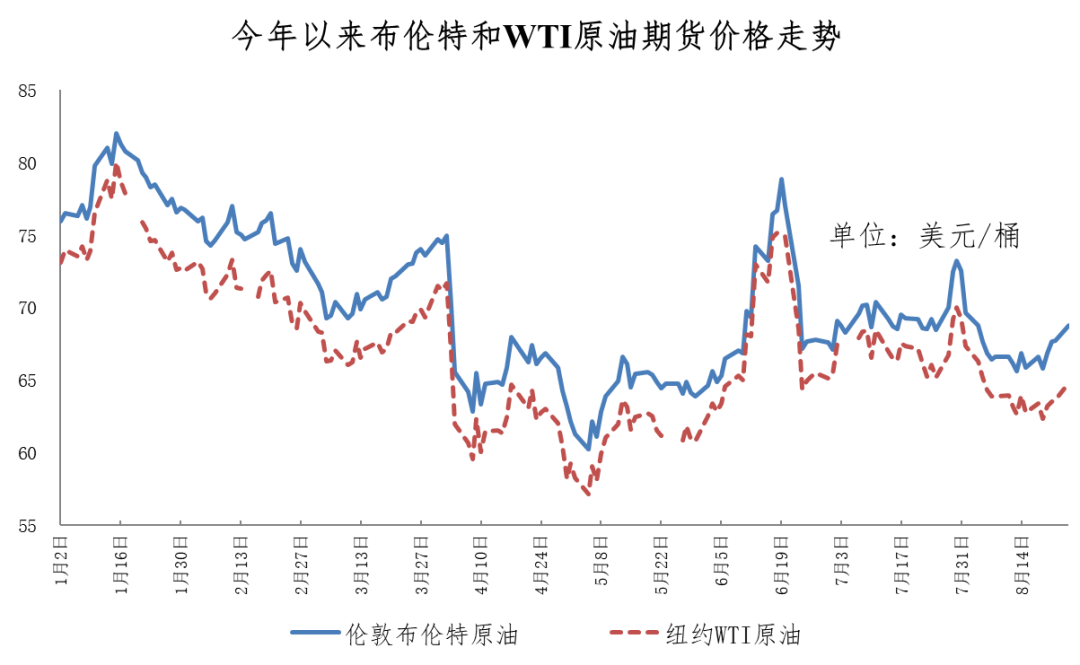
Core Viewpoint - The article discusses the recent fluctuations in domestic fuel prices in China, highlighting a significant drop in prices and the factors influencing these changes in the international oil market. Group 1: Price Fluctuations - In early 2025, the domestic refined oil price adjustment window opened 16 times, with 6 instances of price drops and 6 instances of increases, reflecting a volatile market [1] - A notable price drop occurred on March 19, where prices decreased by 0.23 CNY per liter, leading to long queues at gas stations as consumers rushed to take advantage of the lower prices [1] - By August, prices stagnated around 7.25 CNY per liter, but a new round of price reductions was anticipated due to declining international oil prices [1] Group 2: Regional Price Variations - Gasoline prices vary significantly across regions, with 98-octane gasoline reaching 10.06 CNY per liter in Hainan and 9.71 CNY in Jiangsu, while prices in Tibet and Shaanxi also remained high [2] - The recent drop in international oil prices has triggered expectations for a reduction of at least 0.19 CNY per liter for 92-octane gasoline, potentially saving consumers nearly 10 CNY for a full tank [2] Group 3: Market Dynamics - The fluctuations in oil prices are influenced by various factors, including speculation on Federal Reserve interest rate cuts and OPEC's plans to increase production by 547,000 barrels per day [4] - Predictions suggest that the current price drop could lead to a reduction of up to 300 CNY per ton, potentially bringing 92-octane gasoline prices back to the 6 CNY range, marking the largest single drop since 2025 [4] Group 4: Cautionary Notes - Despite the current price drop, the international oil market remains unpredictable, and the sustainability of this trend is uncertain due to various influencing factors [6]