生成式AI

Search documents
从登月计划到工业落地:谷歌机器人战略的收缩与反击
美股研究社· 2026-02-26 12:34
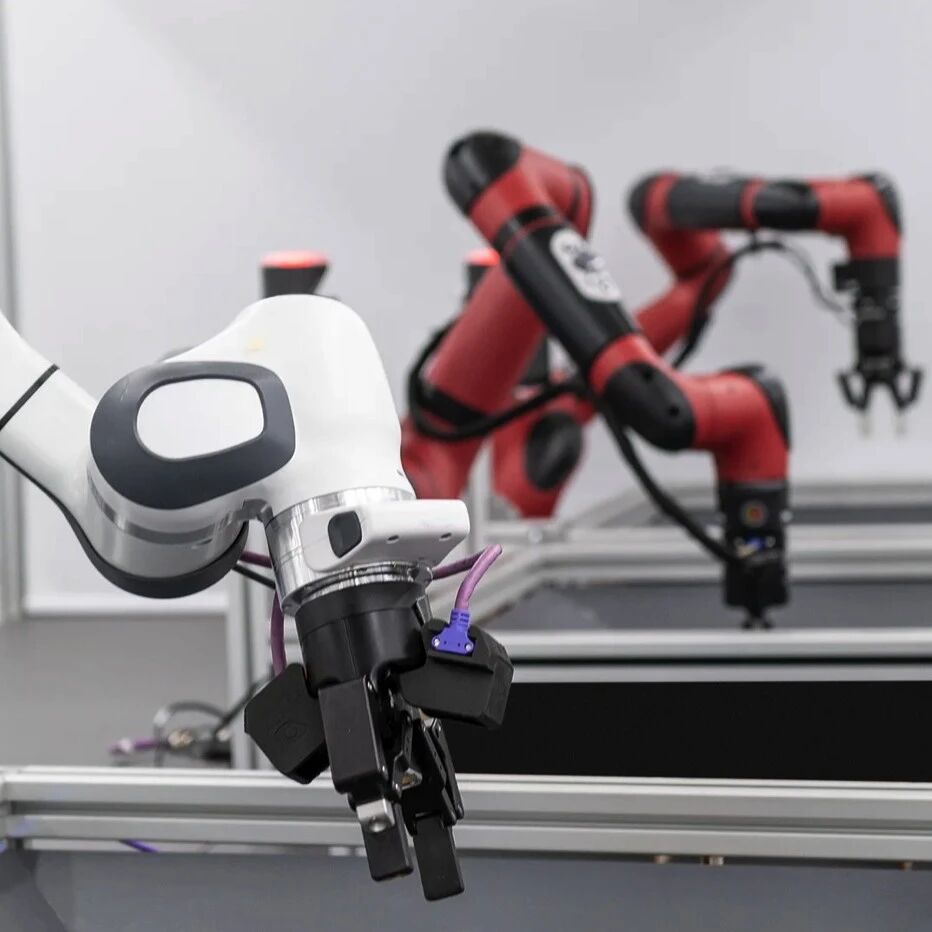
Core Viewpoint - The article discusses Google's strategic decision to reintegrate its robotics software company, Intrinsic, back into its core operations, marking a shift from an experimental approach to a focus on core strategic capabilities in robotics and AI [1][6][15]. Group 1: Strategic Shift - Google's reintegration of Intrinsic signifies a strategic contraction and resource reallocation, responding to the need for a more focused approach in the competitive landscape of AI and robotics [12][15]. - The move reflects a recognition that merely relying on cloud-based algorithms is insufficient for establishing dominance; physical integration of AI capabilities is essential [3][10]. Group 2: Competitive Landscape - In the robotics sector, Amazon and Tesla have established significant commercial scale, with Amazon leveraging warehouse robots for logistics efficiency and Tesla focusing on humanoid robots for manufacturing and service industries [8][9]. - Google's previous strategy was fragmented, lacking a clear commercial path, but the reintegration of Intrinsic indicates a shift towards viewing robotics as a practical application of AI capabilities rather than a distant goal [8][12]. Group 3: Technological Integration - Intrinsic's core product, Flowstate, aims to simplify programming complexities in robotics, allowing users to create applications without extensive coding, positioning it as a potential "Android system" for robotics [5][6]. - By reintegrating Intrinsic, Google can leverage its advanced AI models, enhancing the capabilities of robots to understand natural language and perform complex tasks, thus transforming the competitive landscape [6][13]. Group 4: Future Opportunities - The integration of Flowstate with Google's AI models could enable robots to evolve from mere executors of tasks to intelligent agents capable of understanding and planning actions based on natural language instructions [13][15]. - The article emphasizes that the next phase of AI competition will occur in physical environments, where the ability to integrate AI with real-world applications will be crucial for success [9][10].


从软件泡沫到实体王者:华尔街为什么突然迷上HALO?
美股研究社· 2026-02-26 12:34
Core Viewpoint - The article discusses the shift in investment focus from "light" assets, driven by software and digital technologies, to "heavy" assets that provide physical infrastructure, highlighting the emergence of the HALO (Heavy Asset, Low Obsolescence) strategy as a response to the evolving AI landscape [6][10][18]. Group 1: Market Trends - Over the past two years, the U.S. stock market has been characterized by a focus on "light" assets, such as software and cloud services, which have low marginal costs [2][3]. - The rise of generative AI has led to a belief that software will dominate, but a subtle shift is occurring where heavy asset companies are regaining institutional interest [6][7]. - The HALO strategy emphasizes tangible assets like land, energy infrastructure, and manufacturing, which are becoming increasingly valuable as AI technology evolves [7][8]. Group 2: HALO Strategy Insights - The HALO strategy represents a profound redefinition of value, moving away from abstract software models to the importance of physical assets that cannot be easily replicated [7][10]. - The demand for physical resources is highlighted by the increasing energy and infrastructure needs driven by AI, which cannot be satisfied by virtual solutions alone [11][12]. - Companies in the HALO category, such as Deere & Company and FedEx, possess unique physical networks and control over essential resources, making them critical players in the modern economy [12][13]. Group 3: Investment Implications - The performance of HALO companies has outpaced high-valuation software stocks, indicating a strategic shift in capital allocation towards firms that are essential for AI operations [14][19]. - Heavy asset companies are transitioning from being viewed as defensive investments to offensive assets, leveraging AI to enhance operational efficiency and productivity [16][19]. - The article suggests that the true winners in the AI era will be those companies that combine physical resources with digital capabilities, creating a dual barrier to competition [16][19].

北京大学教授梅宏:盲目鼓吹“AI取代人类”不可取 要回归AI研究的多样性
Zhong Guo Jing Ying Bao· 2026-02-26 09:45
上海市政协副主席、市工商联主席寿子琪表示,"工商联·经济大家讲坛"要着力"解疑释惑,凝心聚 力",阐释好国家政策、研判好发展规律、传递好发展信心,助力企业认清发展优势和潜力,坚定发展 信心,与国家战略同向而行。要着力"服务发展,为企赋能",洞察科技革命和产业变革的趋势,助力企 业抢占未来发展制高点,破解发展瓶颈,推进协同创新,促进产业链、创新链、人才链、金融链深度融 合。要引导民企"彰显担当,践行责任",引领企业弘扬新时代企业家精神、投身公益与"光彩事业",实 现企社良性互动;推进法治、诚信、清廉民企建设,共建优良商务环境;依托学院国际化网络助力企业 扬帆出海、经略全球,努力打造世界一流企业。 汪泓院长则深刻剖析了2026年宏观局势的复杂性,指出在国际秩序重塑、全球经济修复与分化并行的大 背景下,亚太新兴市场与发达经济体的增长差距日益显著。同时,适逢我国"十五五"规划开局之年及人 工智能产业变革的加速期,技术迭代与地缘格局正共同重构商业发展逻辑。当前企业面临的挑战已超越 单一的周期性波动,是对企业战略方向、能力体系与组织韧性的系统性考验。越是在不确定的时代,越 需要理性判断、长期主义和高质量的思想交流。此次中 ...
英伟达FY26 Q4财报:数据中心营收再创历史新高,黄仁勋高呼“代理AI拐点已到”
贝塔投资智库· 2026-02-26 07:46
Core Viewpoint - NVIDIA's quarterly performance continues to show high growth, with key metrics surpassing market expectations [1] Financial Overview - Total revenue reached $68.1 billion, a year-on-year increase of 73%, exceeding market expectations of $66 billion [7] - Net profit was $42.96 billion, up 94% year-on-year [7] - Adjusted earnings per share were $1.62, an 82% increase year-on-year, surpassing the expected $1.53 [7] - Adjusted gross margin was 75.2%, an increase of 1.7 percentage points year-on-year [7] Key Data - NVIDIA expects Q1 FY27 revenue to reach $78 billion, significantly above analyst expectations of $72.78 billion, with a year-on-year growth rate accelerating to 77% [2][3] - The gross margin is projected at 75%, with operating expenses around $7.5 billion [3] Business Highlights - Data center revenue was $62.3 billion, a 75% year-on-year increase and a 22% quarter-on-quarter increase, accounting for over 91% of total revenue [5] - The computing business generated $51.3 billion, a 58% year-on-year increase, while networking business revenue surged 263% to $11 billion, becoming a new growth driver [5] - Gaming revenue was $3.7 billion, a 47% year-on-year increase but a 13% quarter-on-quarter decline due to natural inventory adjustments [9] Customer Structure - Revenue from hyperscale cloud providers accounted for slightly over 50%, with significant growth coming from other data center customers, indicating a diversification of revenue sources [8] Future Growth Drivers - NVIDIA's CEO emphasized that "compute equals revenues," suggesting that as demand for AI applications grows, the relationship between computational investment and revenue generation will drive continued customer investment [10] - The shift in software from "pre-written" to "token-driven" models, particularly with the rise of agentic AI, is expected to be a fundamental driver of long-term growth [11] Competitive Positioning - NVIDIA maintains high profitability through a "efficiency premium" that customers are willing to pay, as its architecture delivers better performance per watt, leading to higher ROI despite higher chip prices [12] - The company is addressing the challenges of power supply in data centers by ensuring that each new architecture generation significantly improves performance per watt [12]


声网发布AI外呼智能体评测基准VoiceAgentEval
Sou Hu Cai Jing· 2026-02-26 07:20
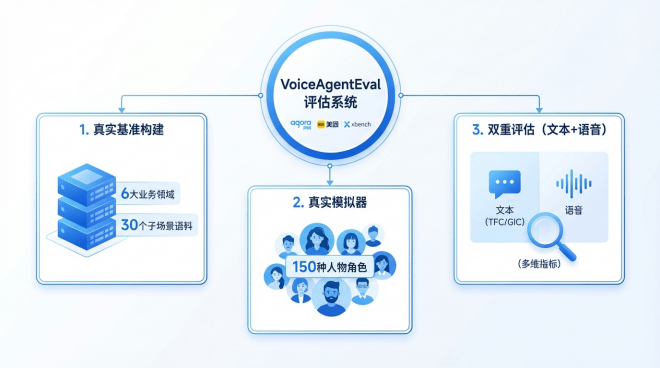
Core Insights - The article discusses the launch of VoiceAgentEval, a comprehensive evaluation standard for AI outbound calling, developed by Agora, Meituan, and xbench, addressing the lack of a dedicated assessment system in the AI outbound industry [1][3]. Group 1: Evaluation Framework - VoiceAgentEval establishes a unified and objective assessment standard for AI outbound calling, moving beyond previous academic benchmarks that do not adequately evaluate advanced communication capabilities [3]. - The evaluation framework consists of three main dimensions: benchmark construction, user simulation, and interaction quality assessment, leveraging the strengths of Agora in conversational AI, Meituan in outbound business scenarios, and xbench in AI benchmarking [3][4]. Group 2: Benchmark Construction - The benchmark is based on real-world data covering six business areas: customer service, sales, recruitment, finance, research, and proactive care, with 30 specific sub-scenarios [4]. - Each sub-scenario includes detailed evaluation plans that feature specific process breakdowns and a weighted scoring system [4]. Group 3: User Simulation - Meituan has developed a user simulator with 150 different personas to simulate real business interactions, allowing for large-scale testing of model task completion capabilities in a controlled environment [4]. Group 4: Evaluation Metrics - The evaluation employs a dual-dimensional assessment approach, combining text and voice evaluations, with a two-layer assessment system for text and 15 metrics for voice, integrating expert ratings and objective data [4][5]. Group 5: Leading Models - According to VoiceAgentEval, the top three performing models in AI outbound calling are ByteDance's Doubao-1.5-32k, OpenAI's GPT-4.1, and Anthropic's Claude-4-Sonnet, with Doubao-1.5-32k and GPT-4.1 excelling in voice interaction experience [5][6]. Group 6: Industry Impact - The release of VoiceAgentEval provides a critical reference for AI outbound practitioners and shifts AI model evaluation from idealized academic assessments to more realistic business scenario evaluations, significantly impacting the deployment of generative AI in the industry [7]. - Agora aims to continue enhancing its conversational AI and real-time audio-video cloud services, with several retail and healthcare companies already integrating its outbound calling features [7].

整治无AI标识不实信息传播,关注AI内容审查赛道投资机遇
Changjiang Securities· 2026-02-26 06:36
Investment Rating - The industry investment rating is "Positive" and maintained [7] Core Insights - Recent incidents of AI-generated synthetic information being disseminated without proper AI labeling have led to public deception and disruption of the online ecosystem. Regulatory authorities have urged platforms to conduct thorough investigations, resulting in the disposal of 13,421 accounts and the removal of over 543,000 pieces of illegal information. This highlights the growing need for AI content review as regulatory scrutiny intensifies [2][4] - The launch of ByteDance's AI video generation model Seedance 2.0 has significantly improved video quality and usability in complex scenarios, but it also raises concerns about the proliferation of deepfake videos, increasing the demand for content verification [10] - Regulatory measures are becoming stricter, transitioning AI content review from a reactive to a proactive compliance approach. Various regulations have been implemented to ensure that AI-generated content is properly labeled, indicating a shift towards compliance in content production [10] Summary by Sections Regulatory Environment - The regulatory landscape is evolving with multiple policies aimed at governing AI-generated content, including the "Identification Measures for AI-Generated Synthetic Content" and the "Interim Measures for the Management of Generative AI Services" [10] - The National Internet Information Office has initiated actions to address the dissemination of unmarked AI-generated false information, indicating a clear regulatory stance on the issue [10] Investment Opportunities - There is a growing demand for key technology service providers involved in AI labeling, deep forgery detection, and digital watermarking. Companies focused on AI fraud prevention and content safety review are also highlighted as potential investment opportunities [2][10]
重构视频创作规则!导演级AI来了→
Xin Lang Cai Jing· 2026-02-26 06:17
Core Insights - The AI video generation model Seedance 2.0 by ByteDance has gained global attention for its ability to create "multi-shot cinematic videos" from text prompts, marking a significant advancement in AI technology [1][3] - The emergence of Seedance 2.0 raises questions about data compliance and copyright issues, particularly as it can replicate voices and generate unseen scenes from a single photo [1][8] Technology Advancements - Seedance 2.0 allows users to upload up to 12 reference files (images, videos, audio) and can replicate visual composition, character traits, and even music ambiance, achieving consistency across multiple shots [3][5] - The video usability rate has increased from 20% to 90%, with a focus on controllability rather than just image quality, indicating a shift towards narrative-driven content creation [5][6] Market Dynamics - The AI video generation sector is experiencing a transformation, with independent filmmakers in China rapidly adopting Seedance 2.0, indicating a shift from AI as a "toy" to a "director-level" tool [4][6] - The cultural media sector in the A-share market saw a significant rise, with stocks like Chinese Online and Reading Group experiencing notable gains, reflecting investor optimism about AI's potential to reshape content creation [7] Compliance and Legal Concerns - The ability of Seedance 2.0 to generate realistic voices and scenes from a single facial photo has raised privacy and copyright concerns, prompting ByteDance to restrict the use of real human images in the model [8][9] - The rapid advancement of AI technology is outpacing regulatory frameworks, leading to potential legal risks that could impact company valuations and market strategies [9][10] Industry Trends - The global AI video sector is becoming increasingly competitive, with various models being launched, each with unique capabilities and strategic focuses [11] - The core competitive advantage in video creation is shifting from technology to creativity, as the proliferation of production tools democratizes content creation [11]

2025年AI行业洞察:企业如何通过AI创造价值-麦肯锡
Sou Hu Cai Jing· 2026-02-26 03:49
2025 年麦肯锡 AI 行业全球调研显示,企业正通过组织架构调整、流程重构等方式挖掘生成式 AI 价值,行业整体处于 AI 应用早期阶段,但大公司推进速度 显著快于中小企业,AI(含生成式 AI 与分析式 AI)的企业渗透率与应用广度持续提升,78% 的受访者表示所在企业至少在一个业务职能中应用 AI,生成 式 AI 应用率也达 71%,且应用场景从单一职能向多职能延伸,平均覆盖三个业务领域。 企业实现生成式 AI 商业价值的核心在于顶层设计与流程重塑,CEO 主导的 AI 治理与工作流重构是影响息税前利润的关键因素,28% 的 AI 应用企业由 CEO 负责 AI 治理,21% 的企业已基于生成式 AI 完成部分工作流的根本性重构。AI 部署架构呈现选择性集中特征,风险合规、数据治理多采用中心化模 式,技术人才与 AI 解决方案落地则以混合模式为主,且大企业的治理与部署体系更完善。 企业对生成式 AI 的风险管控力度持续加强,针对准确性、网络安全、知识产权侵权等核心风险的应对举措显著增加,大企业的风险应对覆盖面更广,尤其 在网络安全和隐私保护领域投入更多,但各企业对 AI 输出内容的审核力度差异较大,27 ...

离开腾讯后,他想做一款能改变历史的三国游戏
3 6 Ke· 2026-02-26 03:03
Core Insights - "My Three Kingdoms" is an AI-driven historical simulation game that allows players to interact with characters and influence historical events, showcasing a unique gameplay experience [2][5][18] Group 1: Game Development and Features - The game aims to utilize AI to create unprecedented gameplay experiences, focusing on character role-playing, dynamic storytelling, and real-time content generation [6][9][12] - The development team, consisting mainly of students, emphasizes a collaborative approach where everyone contributes to game design, reflecting a shift in traditional game development processes due to AI [28][30] - The game is designed to be a buyout model, allowing for controlled token costs and prioritizing game quality over cost-driven pricing [22][23] Group 2: AI Integration and Challenges - AI's role in the game is to enhance narrative depth and player interaction, moving beyond traditional gameplay limitations [15][16][20] - The team faces challenges related to AI memory retention and content generation, requiring selective memory strategies to maintain game state without overwhelming the system [26][35] - The game is still in development, with a target launch by the end of the year, while the team remains flexible to adapt to challenges encountered during the process [36][37] Group 3: Market Perception and Future Outlook - The market shows interest in AI-driven games, but investors remain cautious, observing the potential for explosive growth in AI applications by 2026 [39] - The company plans to self-publish the game to gain experience in distribution, while also navigating the complexities of regulatory approval for AI-generated content [37][38]

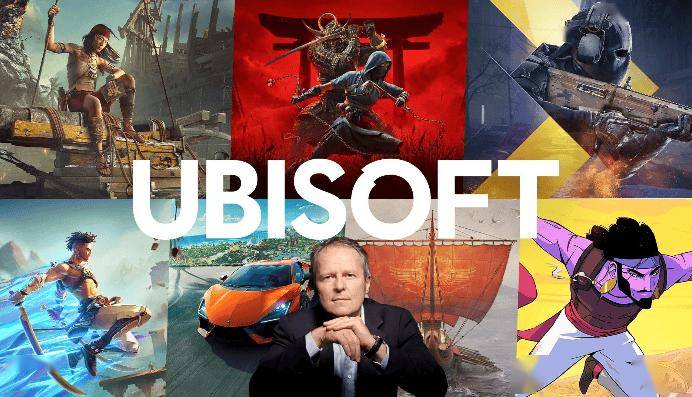
育碧CEO伊夫·吉列莫为儿子执掌工作室辩护:公司本来就是家族企业
Sou Hu Cai Jing· 2026-02-26 02:33
Group 1 - Ubisoft has undergone a significant internal restructuring at the beginning of the year, which includes the cancellation of multiple projects and the closure of several studios [1] - CEO Yves Guillemot has faced criticism for nepotism after appointing his son, Charlie Guillemot, to lead Vantage Studios, which will focus on the Assassin's Creed franchise [1][3] - Yves Guillemot defended the decision by emphasizing the company's family-oriented nature and the long-term vision it provides, despite the backlash [3][4] Group 2 - Charlie Guillemot has experience in rescuing struggling flagship IPs and co-founded a gaming company focused on AI and Web3, which aligns with Ubisoft's increasing emphasis on generative AI strategies [3] - The company plans to implement further layoffs to adjust its scale and alleviate burdens, aiming to address challenges faced in the post-pandemic era [3] - Yves Guillemot expressed hope that the partnership between Charlie Guillemot and Christophe Drennes will drive sustainable growth and restore Ubisoft's former glory [4]