
地缘政治

Search documents
有关俄罗斯与西方矛盾根源 普京最新表态
news flash· 2025-07-13 10:27
Core Viewpoint - The root of the conflict between Russia and the West is geopolitical rather than ideological, as previously thought [1] Group 1 - Russian President Putin stated that the underlying issues with the West stem from geopolitical factors [1]
连印度都开始威胁美国,也想“上桌吃饭”,这对中国未必是好现象
Sou Hu Cai Jing· 2025-07-13 05:44
Group 1 - India's firm stance against the US negotiations reflects its confidence and readiness to engage as an equal partner, rejecting demands to open its agricultural and dairy markets [1][3] - The Indian government has submitted a retaliation list to the WTO against US goods worth $725 million and imposed fines on Wall Street giants totaling nearly $500 million, indicating its assertiveness in international trade [3][5] - India's shift from mimicking China's development model to asserting its own influence on the global stage signifies a strategic transformation, recognizing its potential to engage with major powers like the US [5][6] Group 2 - The current international environment is unstable, and India's actions may negatively impact China's development, which has thrived under a relatively peaceful global order [6][8] - India's rise could lead to increased friction with China, driven by historical grievances and overlapping strategic interests in regions like South Asia and the Indian Ocean [7][8] - The potential collapse of the existing international order could result in conflicts over resources and power, posing significant threats to global stability and China's security [8]

7.12黄金最新行情分析及操作布局
Sou Hu Cai Jing· 2025-07-11 23:50
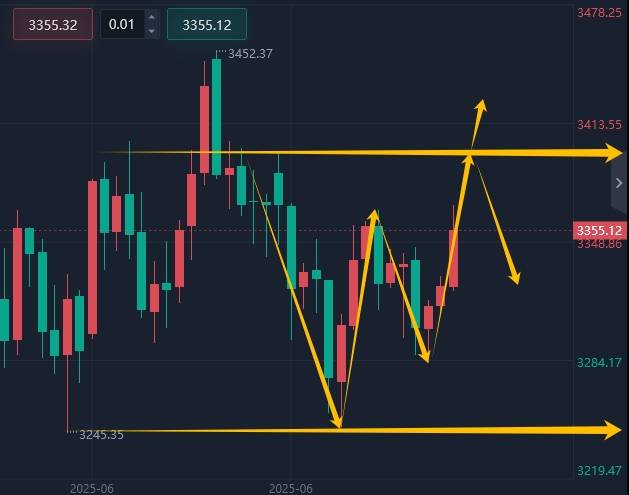
Group 1: Gold Market Analysis - Strong economic data and a rebound in the US dollar index have put pressure on gold prices, leading to a drop below key support levels [1] - Geopolitical tensions and rising inflation concerns have increased safe-haven demand, causing gold prices to rebound after hitting a low [1] - Technical indicators show short-term support for gold, with upward momentum in moving averages, but resistance remains above [3] Group 2: Silver Market Analysis - Silver prices have surged due to technical breakthroughs, inflows from trade war-related safe-haven investments, and expectations of a dovish Federal Reserve [4] - Key resistance for silver is at $37.62, with a potential breakout leading to increased buying interest, while $40 serves as the next psychological resistance [4] - The correlation between silver and gold fundamentals is strong, and the bullish sentiment for silver is expected to continue as long as trade tensions and Fed rate cut expectations persist [4]
海南橡胶: 2025年半年度业绩预告
Zheng Quan Zhi Xing· 2025-07-11 10:11
Group 1 - The company forecasts a net loss of approximately 200 million yuan for the current period, with a range of expected losses between 400 million yuan and 270 million yuan [1] - The previous year's total profit was a loss of 369.49 million yuan, with a net loss attributable to the parent company's owners of 296.48 million yuan [1] - The earnings per share for the previous year was reported at -0.0693 yuan [1] Group 2 - The primary reason for the expected loss is the impact of geopolitical tensions and a continued downturn in the global economic environment, leading to a significant drop in natural rubber prices [1] - The company did realize substantial non-recurring gains from government land compensation projects during the current period [1]

就在今天,7月10日!失去乌又得罪美,俄要的燃机只有中国能产
Sou Hu Cai Jing· 2025-07-11 03:22
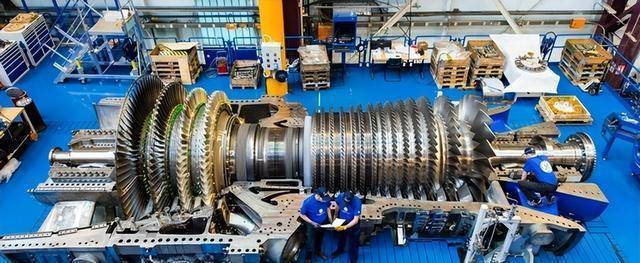
Core Insights - Russia is facing severe challenges in ship propulsion, natural gas transportation, and power generation, highlighting its dependency on Western technology, particularly in gas turbine systems [3][6] - The root of this predicament can be traced back to the post-Soviet era, where Russia failed to maintain its gas turbine development capabilities while Ukraine advanced in this field [5][6] - The geopolitical landscape has shifted, with Russia's energy reliance now heavily tied to China, emphasizing the importance of core technologies in modern industrial systems [6][12] Gas Turbine Dependency - The Russian Navy's 11356-class frigates rely on Ukrainian-designed M7N1 gas turbines, leading to significant operational limitations due to supply disruptions following the Crimea incident [3] - The Nord Stream pipeline's 43 compressor stations, 27 of which depend on Siemens gas turbines, face maintenance challenges due to Western sanctions, impacting gas delivery efficiency [3] Technological Advancements in China - China has made significant strides in gas turbine technology, acquiring full technical documentation and production rights for the UGT-25000 through a technology transfer agreement with Ukraine [8] - The Harbin Turbine Factory successfully localized single-crystal turbine blades, improving the lifespan from 30,000 hours to 50,000 hours and enhancing thermal efficiency from 36.5% to 39.2% [8] - The GT-25000 gas turbine has been deployed in major projects, such as the Arctic LNG project, demonstrating superior efficiency compared to Russian alternatives [9] Competitive Landscape - China's advancements in gas turbine technology are challenging established players like Siemens and General Electric, with the Shanghai Electric AE94.3K achieving a 51% combined cycle efficiency [10] - The establishment of a complete industrial chain in China has led to breakthroughs in critical technologies, which Russia currently lacks [10] Geopolitical Implications - The loss of Ukrainian technology and deteriorating relations with the U.S. have forced Russia to acknowledge its reliance on China for gas turbine technology, marking a significant shift in the global gas turbine market [12]
陆股通2025Q2持仓点评:陆股通Q2增持医药通信非银,减持家电食饮计算机
China Post Securities· 2025-07-10 11:55
- The report does not contain any quantitative models or factors related to the requested analysis






【财富先锋】关税冲击降低 市场押注降息
Sou Hu Cai Jing· 2025-07-10 07:40
Group 1: Major Asset Insights - Gold is expected to continue its bull market, with a mid-term target raised to $4200 due to geopolitical tensions and potential Fed rate cuts in the second half of the year [2][5][26] - Oil prices are likely to remain in the $60-70 range, with a risk of dropping below $55, as OPEC+ plans to increase production amid a shift towards supply surplus [2][27][37] - Copper prices are projected to rise above $5.30 due to tightening global inventories, despite uncertainties related to tariff policies [2][5][40] Group 2: U.S. Stock Market - The U.S. stock market is expected to maintain an upward trend, supported by the resolution of tariff issues and anticipated Fed rate cuts, with a bullish sentiment returning [3][41] - The S&P 500 has regained its bullish momentum, with market expectations for two rate cuts by the Fed later this year [3][41][42] Group 3: Japanese Market - The Nikkei 225 index has shown significant gains, with a potential to break above 42500, driven by foreign capital inflows and improving economic indicators [3][43][45] - Japan's economic recovery is attracting international investment, with a low interest rate environment supporting corporate growth [3][43][45] Group 4: Macroeconomic Outlook - The U.S. economy is experiencing a slowdown, with Q1 GDP growth at 2.1%, the lowest in eight quarters, and a potential for Fed rate cuts in response to economic conditions [11][20] - Inflation in the U.S. is showing signs of decline, but tariff policies may lead to a resurgence in inflation later this year [15][20][18] Group 5: Global Trade Dynamics - The ongoing tariff negotiations between the U.S. and other countries are expected to ease trade tensions, with a likelihood of reaching agreements that could stabilize the global economic environment [22][23] - The impact of U.S. tariff policies on global markets is anticipated to diminish, although minor frictions may still cause short-term volatility in asset prices [22][23]

波兰债务主管:对波兰债券收益率的风险主要是地缘政治,认为国内债务中外国投资者的份额还有提升空间;正在考虑发行日元和瑞士法郎债券。下半年波兰外汇发行活动将趋于平缓。
news flash· 2025-07-10 06:49
Core Viewpoint - The primary risk to Poland's bond yields is geopolitical in nature, with potential for increased foreign investor participation in domestic debt [1] Group 1 - Poland's debt management authority is considering issuing bonds in Japanese yen and Swiss francs [1] - The foreign exchange issuance activity in Poland is expected to slow down in the second half of the year [1]
EIA原油与汽油库存增加,美国加大对伊朗制裁
Hua Tai Qi Huo· 2025-07-10 05:36
Report Summary 1. Investment Rating - The report suggests a short - term range - bound oscillation for oil prices and a medium - term short - position allocation [3] 2. Core View - The current market focuses on the progress of reciprocal tariff negotiations and whether the US, Iran, and Russia will intensify sanctions. The US has increased sanctions on Iran, indicating no significant progress in US - Iran negotiations. Some US lawmakers are considering higher tariffs on countries importing Russian oil. Geopolitical factors remain the biggest black swan in the future oil market [2] 3. Summary by Related Catalogs Market News and Important Data - The price of light crude oil futures for August delivery on the New York Mercantile Exchange rose 5 cents to $68.38 per barrel, a 0.07% increase; the price of Brent crude oil futures for September delivery rose 4 cents to $70.19 per barrel, a 0.06% increase. The main contract of SC crude oil closed up 0.85% at 520 yuan per barrel [1] - As of the week ending July 7, the total refined oil inventory at the Port of Fujairah in the UAE was 20.685 million barrels, an increase of 152,900 barrels from the previous week. Light distillate inventory increased by 637,000 barrels to 8.124 million barrels, medium distillate inventory decreased by 416,000 barrels to 2.306 million barrels, and heavy residual fuel oil inventory increased by 1.308 million barrels to 10.255 million barrels [1] - The US Treasury Department announced additional sanctions on Iran [1] - Affected by Trump's tariff policy, the Brazilian real's decline widened by 1.6% [1] - For the week ending July 4 in the US, EIA crude oil inventory in Cushing, Oklahoma was 464,000 barrels (previous value: - 1.493 million barrels), EIA crude oil inventory was 7.07 million barrels (expected: - 2.071 million barrels, previous value: 3.845 million barrels), and EIA strategic petroleum reserve inventory was 238,000 barrels (previous value: 239,000 barrels) [1] - According to the EIA report, for the week of July 4, US crude oil exports increased by 452,000 barrels per day to 2.757 million barrels per day. Domestic crude oil production decreased by 48,000 barrels to 13.385 million barrels per day. Commercial crude oil inventory excluding strategic reserves increased by 7.07 million barrels to 426 million barrels, a 1.69% increase. The four - week average supply of US petroleum products was 20.564 million barrels per day, a 1.61% decrease from the same period last year. The US strategic petroleum reserve (SPR) inventory increased by 238,000 barrels to 403 million barrels, a 0.06% increase. Commercial crude oil imports excluding strategic reserves were 6.013 million barrels per day, a decrease of 906,000 barrels per day from the previous week. The increase in EIA crude oil inventory was the largest since the week ending January 31, 2025, the decrease in gasoline inventory was the largest since the week ending April 25, 2025, and the decrease in domestic crude oil production was the largest since the week ending May 2, 2025 [1] Investment Logic - The market is concerned about tariff negotiations and potential sanctions. The US's increased sanctions on Iran and the consideration of tariffs on countries importing Russian oil show that geopolitical factors are the major uncertainty in the oil market [2] Strategy - Short - term: Oil prices will oscillate within a range; Medium - term: Short - position allocation [3] Risk - Downside risks: The US lifts sanctions on Iranian oil, and macro black - swan events occur - Upside risks: Supply of sanctioned oil (from Russia, Iran, Venezuela) tightens, and large - scale supply disruptions occur due to Middle - East conflicts [3]
伊朗石油部长罕见发声!怒批以色列掀起战争冲击全球油市
Jin Shi Shu Ju· 2025-07-10 03:57
Group 1 - The Iranian Oil Minister criticized the chaos in the oil market caused by war, particularly referencing the recent 12-day conflict with Israel that led to a spike in crude oil prices [1] - Iran is the third-largest producer in OPEC and will assume the presidency of the organization for one year starting in 2025 [1] - In May, Iran's average daily oil production was reported at 3.3 million barrels, with supply security being a significant concern during the recent military tensions with Israel [1] Group 2 - A ceasefire mediated by Washington was agreed upon by Iran and Israel starting June 24, which provided some relief to oil prices, although concerns about long-term demand and increased production from some OPEC countries led to a price decline [2] - Geopolitical issues, particularly regarding Iran, are viewed as a significant risk factor in the oil market, with ongoing concerns about Iran's nuclear program and its implications for regional stability [2][3] - The U.S. has recently intensified sanctions against Iran, severely impacting its oil exports, which are now primarily conducted through "shadow fleets" that avoid conventional GPS tracking [3]