
AI大模型

Search documents
开启新消费下半场,十大品牌入选贝壳财经2025年度消费案例
Xin Jing Bao· 2025-07-23 13:47
Core Insights - The integration of digital economy and physical economy is reshaping the consumption landscape, emphasizing quality innovation over mere scale growth [1][3] - The 2025 Beike Finance Annual Conference highlighted the importance of innovative business strategies and operational models in the evolving consumer market [1][3] Industry Trends - The consumption structure is evolving with trends such as emotional value, gold fever, trendy toys, sports enthusiasm, and cultural tourism driving the shift from scale growth to quality innovation [1] - The "cultural tourism + commerce" model is rapidly developing, with diverse and personalized consumption potential being released [3] Company Highlights - The top ten brands selected for the 2025 Beike Finance Annual Consumption Case include China Gold, Rushi Sea Resort, Tea Baidao, Unilever, Adidas, Pop Mart, Shou Lvyu Jia, Ziroom, Mafengwo, and Yuexiu Real Estate, covering various sectors such as fashion, trendy toys, vacation, hotels, and lifestyle [1][4][5] - Rushi Sea Resort, which opened in June last year, spans 5,400 acres with a 75% forest coverage, offering diverse experiential projects and enhancing consumer interaction through innovative commercial offerings [2] - China Gold is focusing on product innovation and channel transformation, launching culturally significant high-end products to meet diverse consumer needs in both investment and consumption [2]


广发证券AI创新再落子 推出“ETF大本营”频道
Zheng Quan Ri Bao Zhi Sheng· 2025-07-23 11:44
Core Viewpoint - Guangfa Securities has launched the "ETF Home" channel in its Guangfa Yitaojin App, focusing on AI and large model technology to provide a comprehensive intelligent service platform for investors [1] Group 1: AI and Intelligent Services - The "ETF Home" leverages Guangfa Securities' self-developed "Tianji Zhirong" AI model to simplify complex financial services, making professional investment services accessible to ordinary investors [1] - The platform addresses common investor pain points of "not understanding" and "not knowing how to choose" by creating an intelligent market interpretation system that meets precise information needs during market fluctuations [1] - An automated intelligent companion strategy system has been introduced, providing personalized support for users at every key stage from "adding to watchlist" to "holding and liquidating" [1] Group 2: Operational Efficiency and Tools - The "One-Click Smart Selection Toolkit" integrates intelligent analysis tools like K-line timing and magical nine-turn, enhancing the transition efficiency from "market observation" to "actual trading" [2] - The "ETF Home" ensures seamless integration from opportunity discovery to final trading, allowing investors to follow professional strategies developed by the AI model for grid trading and industry rotation [2]

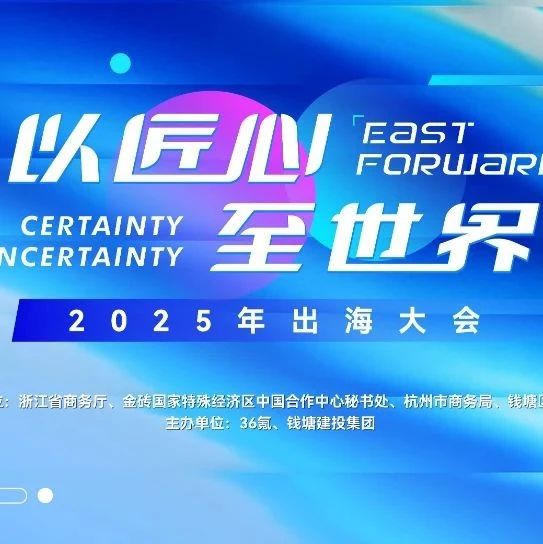
匠心出海,国产品牌如何破浪领航?|2025「以匠心至世界」出海大会亮点全剧透
36氪· 2025-07-23 09:25
Core Viewpoint - The article emphasizes the emergence of a "new maritime movement" for Chinese brands, transitioning from merely exporting products to establishing rules, building ecosystems, and exporting cultural influence on a global scale [2][8]. Group 1: Brand Globalization - By 2025, Chinese brands are expected to enter a "great maritime era," leveraging hard technology, craftsmanship, and Eastern aesthetics to redefine their global presence [2]. - The shift in brand globalization is characterized by a move from "product output" to "value output," focusing on deepening ecosystems and creating global brands [4]. - The article highlights successful case studies, such as "Ma Liu Ji," which integrates Sichuan cuisine with cultural marketing to reshape perceptions of Chinese food abroad [4]. Group 2: Industry Challenges and Strategies - The article discusses the challenges faced by Chinese companies in the consumer electronics sector as they transition from "Made in China" to "Global Brands," emphasizing the need for differentiated competitive advantages [7]. - It addresses the importance of localizing cultural elements and operations to achieve global market success, which is crucial for Chinese products to resonate internationally [7][8]. - The article outlines the necessity for companies to adapt to global supply chain fluctuations and move from export dependency to a more diversified global strategy [4][10]. Group 3: Technology and Cultural Integration - The integration of AI technology with cultural elements is highlighted as a key strategy for Chinese companies to succeed globally, focusing on practical applications in various sectors [6]. - The article mentions the role of AI in enhancing operational efficiency and addressing real-world challenges in international markets [6]. - It emphasizes the importance of understanding cultural differences and leveraging technology to create a competitive edge in the global landscape [6][8]. Group 4: Infrastructure and Compliance - The article stresses the significance of infrastructure, policy, and compliance as foundational elements for successful international expansion [10]. - It discusses the impact of trade tensions and the need for companies to navigate complex regulatory environments to seize opportunities in foreign markets [10]. - The importance of building a robust compliance framework is underscored, as it is essential for sustainable growth in international operations [10]. Group 5: Event Highlights - The upcoming "2025 'Craftsmanship' to 'World'" conference will focus on global expansion strategies, featuring discussions on various sectors including consumption, technology, and finance [3][12]. - The event aims to connect local governments, platforms, and service providers to facilitate cross-industry and cross-cultural exchanges [3]. - It will also showcase successful case studies and provide insights into navigating the complexities of international markets [12].

机场广告,AI乱斗
3 6 Ke· 2025-07-23 06:16
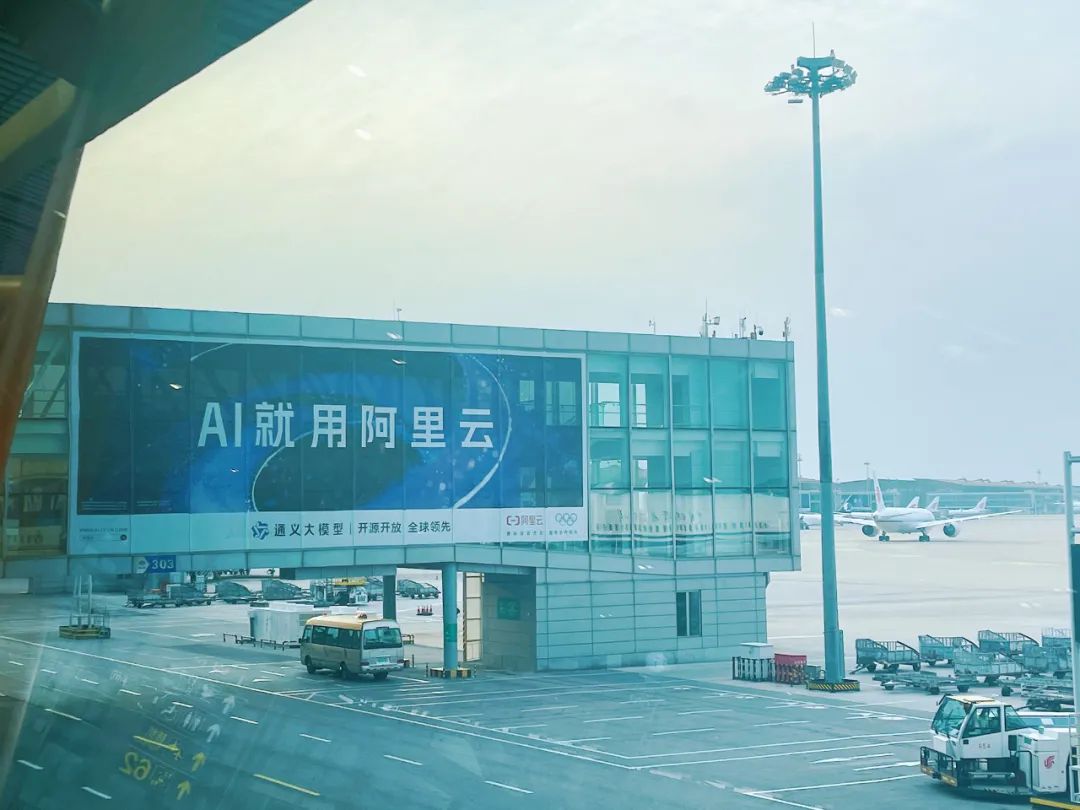
Group 1 - The core observation of the article is the increasing competition among AI and cloud service providers for advertising space in major airports, indicating a significant investment trend in AI marketing strategies [1][3][6] - Alibaba Cloud has made a substantial advertising investment, reportedly exceeding 100 million yuan, marking one of the largest promotional efforts in the current AI model wave [1][3] - Baidu Cloud has also entered the advertising space aggressively, securing high-value locations in airports that were previously occupied by luxury brands, indicating a shift in advertising strategies towards AI [3][6] Group 2 - The AI advertising trend is not limited to a few companies; various players including telecom operators and new energy vehicle manufacturers are also pivoting towards AI, aiming to capture the attention of business travelers in airports [6][8] - In the past two years, IT and internet advertising, particularly related to AI and cloud computing, has accounted for 20% of advertising revenue at airports, second only to the food and beverage industry [8][11] - Major airports in China, such as Beijing Capital and Shanghai Pudong, handle 80% of the country's air passenger traffic, with a significant portion being business travelers who are key decision-makers for AI product purchases [11][13] Group 3 - The competition for prime advertising spots in airports is intense, with companies needing to commit to long-term contracts to secure these high-traffic locations [13][20] - Despite the buzz around AI advertising, many companies are reallocating existing budgets rather than increasing overall spending, indicating a cautious approach to marketing investments [20][21] - Smaller AI firms are beginning to explore offline advertising opportunities in other transportation hubs, as they seek to establish brand presence and attract talent [21][23] Group 4 - The article highlights a potential disconnect between the excitement surrounding AI and the actual financial commitment to advertising, with many companies still hesitant to invest heavily in airport advertising [20][21] - As AI applications expand globally, companies are recognizing the value of offline advertising in unfamiliar markets, where it can provide a more tangible brand presence [23][25] - The overall advertising landscape is shifting, with traditional advertisers reducing budgets, creating opportunities for AI companies to capture market share in the advertising space [23][25]





腾讯云副总裁胡利明:金融IT迎“基础设施重构”与“智能应用爆发”双浪潮
经济观察报· 2025-07-22 12:38
Core Viewpoint - The current development of financial IT can be summarized by two key terms: "domestication" and "intelligence," which are driving the industry into a full-chain upgrade phase [3][6]. Group 1: Trends in Financial IT Development - The demand for digital transformation among financial institutions has been increasing, extending from banks, securities, and insurance to consumer finance and leasing, with clear requirements for overall progress [5]. - The trend has led to an explosive growth of related projects by 2025, with a significant increase in the number of projects involving domestic database selection, cloud platform selection, hardware procurement, and new core system ISV collaborations among brokerages and insurance institutions [6]. - The number of domestic database vendors has decreased by over 60 in the past year, with financial institutions preferring mature products from leading vendors that have undergone extensive business verification and stability testing [7]. Group 2: AI and Intelligent Applications - The emergence of DeepSeek marks a significant turning point for the application of AI large models in the financial sector, enabling a broader range of institutions to develop applications at a low cost [8][10]. - AI applications are evolving through four stages: from "able to chat" to "able to work," then to "self-planning," and finally to "multi-Agent collaboration" [8]. - Current AI applications in financial institutions include code assistants that enhance development efficiency and knowledge base applications, while initial applications in trading and risk control are still in the early planning stages [10][11]. Group 3: Strategic Implementation and Challenges - Financial institutions are actively investing in AI, with many executives placing it at a strategic level, focusing on "phased usable scenarios" during implementation [13]. - A collaborative system of "small models + large models" is recommended, where institutions first establish usable datasets and then train small models for specific tasks while large models handle content generation [14]. - The implementation of intelligent architecture requires modular planning and stepwise advancement, with clear timelines, responsibilities, and acceptance criteria for each phase [14][15].


【链博会智造观察】聚焦XR产业链:芯片与场景突破带来无限想象
Huan Qiu Wang· 2025-07-22 08:38
Core Insights - The industry has shifted focus from "metaverse" to smart glasses, with expectations of a production turning point after overcoming hardware and software challenges [1][4] - IDC predicts global smart glasses shipments will reach 14.518 million units by 2025, representing a 42.5% year-on-year growth [1] - Key breakthroughs in chip technology and ecosystem maturity are crucial for the domestic XR industry to seize opportunities [1][4] Company Insights - Wan You Jing Li (万有引力) aims to fill the gap in the domestic XR industry by developing proprietary chips that enhance display quality, interaction experience, and battery life [1][3] - The company has achieved significant breakthroughs in chip technology, focusing on low latency (targeting below 10 milliseconds) and low power consumption, which extends device battery life from 8 hours to 16 hours [3][4] - Fei Tian Yun Dong (飞天云动) addresses challenges in XR development by integrating upstream hardware manufacturers and downstream industry needs, providing end-to-end services from content creation to operation [4][6] Industry Challenges - The XR industry faces challenges in technology, market fragmentation, and weak collaboration across the supply chain, which hinders resource efficiency [4][6] - The company anticipates four key XR application areas in the next 3-5 years: digital tourism, immersive performances, virtual storefronts, and AR shopping experiences [6][7] Future Prospects - The integration of AI models with XR technology is expected to open new avenues, enhancing human-robot interaction and expanding the application of chips in various sectors [7]

“十四五”时期我国交通强国建设交出亮眼答卷
Ke Ji Ri Bao· 2025-07-22 08:34
Group 1 - The core viewpoint is that China's transportation sector has achieved historic accomplishments during the "14th Five-Year Plan," with significant advancements in the construction of a comprehensive transportation system, enhancing overall capacity, service quality, and operational efficiency [1][2] - The national comprehensive transportation network has been primarily constructed with over 90% completion, including 33 national expressway main lines and 20 high-speed rail lines operating at speeds of 350 km/h [1] - The "eight vertical and eight horizontal" high-speed rail network has been completed and put into operation at 81.5%, covering 97% of cities with populations over 500,000 [1] Group 2 - In the first half of the year, the total number of passengers transported by rail reached 2.24 billion, marking a 6.7% year-on-year increase, setting a new historical record [2] - The railway's role as a backbone for national freight transport is increasing, with over 250 billion tons of goods expected to be transported during the "14th Five-Year Plan," an increase of 50 billion tons compared to the previous five-year period [2] - The postal industry is projected to see business revenue grow from 1.1 trillion yuan to 1.7 trillion yuan from 2020 to 2024, with an average annual growth rate of 11.3% [2] Group 3 - China's express delivery business has ranked first in the world for 11 consecutive years, with an average daily collection of over 500 million parcels [3] - The integration of AI technology is driving a comprehensive upgrade in the logistics chain, enhancing efficiency and service levels in the express delivery sector [3] - The highest daily collection volume for express delivery has reached 729 million parcels, showcasing the effectiveness of automation and intelligent technology in the industry [3]
通义千问深夜更新!Qwen3升级版迈向“分离训练”时代,性能全面超越Kimi-K2,Agent能力亮眼
硬AI· 2025-07-22 08:22
Core Viewpoint - The latest update of Alibaba's Qwen3 model has achieved significant advancements, surpassing top open-source models like Kimi-K2 and even leading closed-source models such as Claude-Opus4-Non-thinking, indicating a competitive edge in the AI large model race [1][3]. Performance Enhancements - The new Qwen3-235B-A22B-Instruct-2507-FP8 model shows remarkable improvements across various core capabilities, including instruction adherence, logical reasoning, text comprehension, mathematics, science, programming, and tool usage, outperforming several leading models in multiple authoritative assessments [3][5]. - In the BFCL (Agent capability) assessment, the Qwen3 model demonstrated exceptional performance, indicating a new level of understanding complex instructions, autonomous planning, and tool utilization [5]. Technical Innovations - The transition to a "separate training" approach marks a significant technological shift, moving away from the previous "mixed thinking mode." This new strategy allows for independent training of the Instruct model for direct responses and the Thinking model for complex reasoning tasks [11][12]. - The Qwen3-235B-A22B-Instruct-2507-FP8 model focuses on "fast thinking," aiming for enhanced speed, accuracy, and strength in tasks like instruction following and knowledge Q&A [12]. Competitive Landscape - The competition in the domestic AI open-source sector has intensified, with each update leading to performance leaps and shifts in leadership among models [14]. - The Qwen3 model has been fully open-sourced on platforms like ModelScope and HuggingFace, allowing AI developers and enthusiasts to experience its capabilities firsthand [15].

金融科技概念股探底回升,金融科技ETF(516860)连续7日获资金净流入,金融科技领域迎来政策与技术双重利好
Sou Hu Cai Jing· 2025-07-22 06:17
Core Viewpoint - The financial technology sector is experiencing a dual benefit from favorable policies and technological advancements, with significant foreign capital inflow indicating strong international confidence in the sector's growth potential [4]. Group 1: Market Performance - As of July 22, 2025, the China Securities Financial Technology Theme Index (930986) decreased by 0.04%, with component stocks showing mixed performance [3]. - The Financial Technology ETF (516860) has seen a recent price of 1.43 yuan, with a two-week cumulative increase of 1.42% as of July 21, 2025 [3]. - The Financial Technology ETF's latest scale reached 1.339 billion yuan, marking a one-year high, and its latest share count reached 937 million, also a one-year high [4]. Group 2: Fund Flows and Performance - The Financial Technology ETF has experienced continuous net inflows over the past seven days, totaling 284 million yuan, with a peak single-day net inflow of 76.39 million yuan [5]. - As of July 21, 2025, the Financial Technology ETF's net value has increased by 124.33% over the past year, ranking 3rd out of 2929 index stock funds [5]. - The ETF has demonstrated a maximum monthly return of 55.92% since inception, with an average monthly return of 10.60% and a historical three-year profit probability of 97.47% [5]. Group 3: Fee Structure and Tracking Accuracy - The Financial Technology ETF has a management fee rate of 0.50% and a custody fee rate of 0.10%, which are among the lowest in comparable funds [6]. - As of July 21, 2025, the ETF's tracking error over the past month was 0.030%, indicating the highest tracking precision among comparable funds [6]. Group 4: Key Holdings - As of June 30, 2025, the top ten weighted stocks in the China Securities Financial Technology Theme Index accounted for 51.2% of the index, including companies like Dongfang Wealth and Tonghuashun [7].
“十四五”期间 我国高铁营业里程增加1万公里 国家综合立体交通网加快构建
Yang Guang Wang· 2025-07-22 01:11
Core Insights - The Chinese government is accelerating the construction of its transportation system during the "14th Five-Year Plan" period, achieving significant milestones in high-speed rail, highways, and postal express networks [1][2] Transportation Infrastructure - The total railway operating mileage is expected to increase by approximately 16,000 kilometers by the end of 2024, with high-speed rail accounting for 10,000 kilometers of this increase [1] - The total length of highways will reach 5.49 million kilometers, an increase of about 290,000 kilometers, including an addition of 30,000 kilometers of expressways [1] - The number of ports with a capacity of over 10,000 tons will increase by 379, and the number of certified civil aviation transport airports will rise to 263, an increase of 22 [1] Civil Aviation Developments - The civil aviation sector has invested over 100 billion yuan annually in infrastructure during the "14th Five-Year Plan," with major airport clusters in Beijing-Tianjin-Hebei, Yangtze River Delta, Guangdong-Hong Kong-Macau, and Chengdu-Chongqing reaching significant development [2] - The total number of civil transport airports is expected to reach around 270 by the end of this year [2] Railway Operations - The current railway operating mileage has reached 162,000 kilometers, covering 99% of cities with populations over 200,000, and high-speed rail exceeds 48,000 kilometers, covering 97% of cities with populations over 500,000 [2] - The railway freight transport volume is projected to exceed 25 billion tons during the "14th Five-Year Plan," an increase of 5 billion tons compared to the previous plan [2] Postal and Express Services - The volume of express delivery services in China has grown from 83 billion items in 2020 to 175 billion items in 2024, with an average annual growth rate of around 20% [2] - China has maintained its position as the world's largest express delivery market for 11 consecutive years, with a peak daily collection volume of 729 million items [2]