供应链安全

Search documents
刚刚,商务部回应多个热点问题!
Jin Rong Shi Bao· 2025-10-16 14:01
Group 1: Service Consumption Expansion - The Ministry of Commerce aims to continuously promote the steady expansion of service consumption through three main strategies: cultivating new growth points, innovating diverse consumption scenarios, and optimizing service supply [2] - Key initiatives include enhancing support policies, promoting the integration of commerce, tourism, culture, and sports, and focusing on high-quality service supply in key areas such as film and animation [2] Group 2: Foreign Trade Performance - In the first three quarters of the year, China's foreign trade showed resilience with a 4% year-on-year increase in goods imports and exports in RMB terms, marking eight consecutive quarters of positive growth [3] - The export of high-end equipment, wind power equipment, and energy storage products has maintained double-digit growth, indicating a strong upward momentum in foreign trade [3] Group 3: Trade Facilitation Measures - The Ministry of Commerce plans to enhance trade facilitation by implementing measures such as reducing exhibition fees and supporting enterprises in participating in various trade fairs [4] - The focus will also be on signing more high-standard free trade agreements and increasing the proportion of zero-tariff products in goods trade [4] Group 4: Rare Earth Export Control - The recent implementation of rare earth export control measures by China is seen as a legitimate action to enhance its export control system and ensure national security [5] - The measures are not a ban on exports but are aimed at preventing illegal flows of rare earth materials to inappropriate uses, with compliance for civilian purposes being prioritized [6]
美方无端指责中国稀土出口管制影响全球多个行业,商务部回应
Nan Fang Du Shi Bao· 2025-10-16 13:22
Core Viewpoint - The recent export control measures on rare earths by China are aimed at enhancing national security and preventing illegal use of these materials, contrary to claims made by the U.S. that these measures will broadly impact various global industries [1][2]. Group 1: China's Export Control Measures - China's recent export control measures on rare earths are based on legal regulations and aim to prevent illegal flows of rare earths to inappropriate uses, such as weapons [1]. - The controlled products include rare earth magnetic materials and related components, as well as rare earth targets already listed in China's export control list [1]. - Prior to the implementation of these measures, China communicated with multiple countries and regions, including the U.S., EU, and Japan, regarding the export controls [1]. Group 2: U.S. Response and Misinterpretation - The U.S. interpretation of China's measures is seen as a distortion that exaggerates the impact, creating unnecessary misunderstandings and panic [2]. - The U.S. has a long history of extraterritorial jurisdiction measures, having implemented multiple semiconductor export controls against China since 2022 [2]. - The U.S. approach is viewed as an attempt to coerce other countries into joining efforts to suppress China, reflecting a broadening of its own national security concerns [2]. Group 3: Industry Concerns and Compliance - European companies have expressed concerns about production halts while waiting for rare earth export application approvals [2]. - China plans to optimize the licensing process during the implementation of these measures, aiming to shorten review times and consider general licenses and exemptions to facilitate compliant trade [2].

高新兴:公司将结合客户需求,保证供应链安全
Zheng Quan Ri Bao Wang· 2025-10-16 09:15
Core Viewpoint - The company emphasizes the importance of ensuring supply chain security and expanding multi-channel resources in response to customer needs [1] Group 1 - The company is actively engaging with investors to address their inquiries [1] - The company is focused on aligning its operations with customer demands [1] - The company aims to enhance its supply chain security [1] Group 2 - The company plans to explore various resource channels to support its operations [1]

欧盟拟强制中企“技术转让” 全球贸易摩擦不断
高工锂电· 2025-10-16 08:59
Core Viewpoint - The article discusses the escalating trade tensions between the EU and China, particularly focusing on the EU's potential new policies requiring Chinese companies to transfer technology to local firms in exchange for investment opportunities in Europe [4][5][7]. Group 1: EU's Trade Policy Changes - The EU is considering a significant shift in its trade policy towards Chinese investments, which may include mandatory technology and intellectual property transfers [4][5]. - This move is seen as a response to protect European industries, especially the automotive sector, and aims to ensure that Chinese investments create jobs and facilitate technology sharing in Europe [4][7]. Group 2: Geopolitical Context - The discussion on technology transfer is part of a broader trend of the EU adopting a tougher stance on China, as evidenced by recent proposals to impose tariffs on steel imports and the Dutch government's takeover of a Chinese-controlled semiconductor manufacturer [8][10]. - European officials are increasingly concerned about supply chain security amid geopolitical risks, particularly in light of China's new export control regulations affecting critical materials [9][10]. Group 3: Strategic Resource Concerns - The article highlights Europe's vulnerability regarding its dependence on Chinese rare earth materials, with countries like Germany and Turkey relying on China for 91% and 93% of their imports, respectively [10][11]. - The inclusion of lithium battery materials and production equipment in China's export controls signifies the strategic importance of the lithium battery industry, elevating it to a level comparable to that of rare earths [11]. Group 4: Global Market Implications - The ongoing trade tensions are creating uncertainty in global markets, with potential implications for supply chain restructuring and investor sentiment [12][13]. - The upcoming APEC summit may provide insights into whether these trade frictions are merely short-term negotiation tactics or indicative of a longer-term structural shift in global trade dynamics [12][13].


台积电被稀土卡脖子?全球芯片链迎来调味盐危机
Sou Hu Cai Jing· 2025-10-15 21:15
《台积电遭遇稀土难题?一撮"盐"料否撼动全球芯片产业》 厨房中,锅铲在台积电的注视下轻轻敲击了两下,火焰依旧旺盛,然而,放置在厨台上的"盐罐"却突然 被人取走。 这个场景听来宛若一则笑谈,然而,自今年十月起正式实施的出口管理新规,却将这家全球最大的晶圆 代工厂推向了舆论的风口浪尖。 新闻媒体突出报道了这一消息,指出该芯片产品含有源自中国大陆的稀土成分,且其含量一旦超过千分 之一,便需履行出口许可证申报程序。 对于依赖中国大陆上游供应链的厂商,尤其是那些致力于最前沿工艺研发的企业而言,这无疑是一次严 峻的考验。 台积电两头在外,问题频出。 美国审批并非总是给予肯定,一时间,台积电面临对美国交付可能放缓的风险,甚至有传言称其可能遭 遇"全面中断"的危机。 这起事件表面看似源于材料问题,但其背后所蕴含的复杂性,远非一罐调味品所能比拟。 现实并不复杂。 在先进制程中,稀有金属并非可有可无的装饰,尤其在五纳米以下的技术节点,对材料的纯度与性能提 出了极为严格的标准。 在过去的十几年间,产业分工使得各企业依据自身最擅长的领域汇聚一堂,台湾的精湛工艺、美国的创 新设计、中国大陆的优质材料与精湛加工,共同编织成了一幅全球协作 ...

Australia’s critical minerals diplomacy gathers pace as local explorers brief Washington ahead of PM–Trump talks
Proactiveinvestors NA· 2025-10-15 15:29
Core Insights - Australia's diplomatic efforts to enhance critical minerals cooperation with the US are gaining traction, with ASX-listed explorers invited to brief the Australian embassy ahead of a meeting between Prime Minister Albanese and President Trump [1][2] Company Engagement - Resolution Minerals Ltd and Nova Minerals Ltd are among the companies invited to participate, focusing on antimony projects crucial for US defense and industrial supply chains [2] - Resolution Minerals is highlighting its Horse Heaven project in Idaho, which has potential for near-term production and is strategically located near Perpetua Resources' Stibnite Gold and Antimony Project [3][5] - Nova Minerals is providing updates on its Estelle Gold and Critical Minerals Project in Alaska, which has received a US$43.4 million award from the US Department of War to support military-grade antimony production by 2026-27 [10][11] Strategic Importance - The Australian government is positioning its expertise as vital to US efforts to secure alternative supply chains and reduce reliance on China, particularly in critical minerals like antimony and tungsten [2][15] - The growing engagement reflects a shift in the US from rhetoric to investment, with potential direct equity stakes and grant programs being considered to support allied projects [13][15] Broader Industry Trends - The inclusion of smaller-cap ASX explorers in high-level discussions indicates a search for shovel-ready opportunities in critical minerals, with Australian companies actively involved in US projects [14][15] - The evolving diplomatic landscape offers visibility and potential government support for companies like Resolution and Nova, which could accelerate their production timelines [15][16]

铜供应忧虑推升智利17亿美元冶炼厂投资热度
Wen Hua Cai Jing· 2025-10-14 01:05
10月13日(周一),智利国有企业ENAMI负责人称,铜买家对供应链多元化的需求或将助力该企业为17亿美元的 冶炼厂项目筹集资金。 ENAMI旗下拥有70年历史的Hernan Videla Lira冶炼厂升级计划长期面临盈利能力与融资前景的质疑。 随着全球其他高效冶炼厂争夺有限精矿资源,矿商为精矿冶炼支付的加工精炼费已经破零,迫使部分海外冶炼厂 停产。 但ENAMI负责人Ivan Mlynarz表示,盈利能力并非潜在投资者的唯一考量。 "在当今地缘逻辑与动态格局下,以及我们如何保障全球供应链安全的背景下,该项目具有极强的吸引 力,"Mlynarz在LME周(LME Week)开幕前表示。这场全球金属行业年度盛会于本周一在伦敦拉开帷幕。"多家 企业正从这一角度审视该项目。" 智利仅占全球冶炼产能的6%。 ENAMI去年关闭了近乎淘汰的Hernan Videla Lira冶炼厂,目前认为重启该厂对帮助智利中小生产商进入全球市场 至关重要。 ENAMI表示计划于2025年底启动初期建设,五年后投产,年产阴极铜24万吨。 Mlynarz透露,包括矿企、大宗商品贸易商和银行在内的17家公司已表示有意出资支持该冶炼厂,以 ...
前瞻布局应对稀土依赖,通用汽车(GM.US)将成美国唯一拥有多重本土磁体供应车企
智通财经网· 2025-10-13 12:42
Core Viewpoint - The article highlights the proactive measures taken by the U.S. government and companies, particularly General Motors (GM), to secure rare earth supply chains amid China's tightening export controls on rare earth materials [1][2]. Group 1: General Motors' Initiatives - General Motors has been working since 2021 to secure domestic rare earth magnet supply, positioning itself to become the only U.S. automaker with multiple large-scale direct supply sources in the coming months [1]. - In late 2021, GM announced plans to build a rare earth magnet manufacturing plant in the U.S. in collaboration with German company VAC, which is expected to start production this fall and reach full capacity by early 2026, with 90% of its output dedicated to GM and the remainder to the U.S. Department of Defense [1]. - GM also signed a long-term supply agreement with MP Materials in 2021, agreeing to invest in a new plant in Texas, with the U.S. Department of Defense subsequently providing funding for both VAC and MP's new facilities [1]. Group 2: Department of Defense Involvement - A senior official from the Department of Defense indicated that if the new facilities only supplied the Department, their viability might be limited to 5 to 10 years, but supplying both the Department and GM would provide a more stable outlook [1]. - In July of this year, the Department of Defense agreed to invest $400 million in MP Materials in exchange for equity to help increase its production capacity [1]. Group 3: Additional Supply Agreements - GM has also reached a multi-year supply agreement with Noveon Magnetics, with rare earth magnets beginning delivery in July [2]. - The exact proportion of GM's rare earth magnet demand that can be met by domestic production has not been disclosed by the company's procurement and supply chain head [2].


李知睿:欧盟关键矿产百亿计划曝光,剑指中国?
Sou Hu Cai Jing· 2025-10-13 04:08
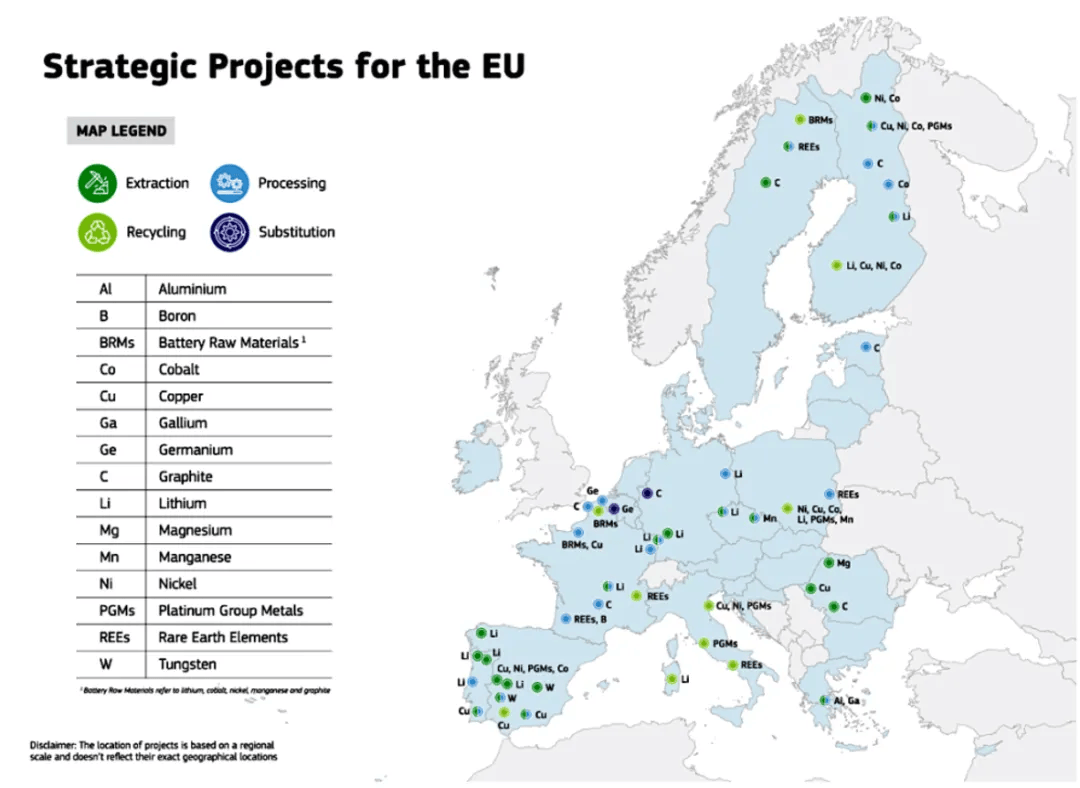
Core Insights - The strategic value of critical minerals such as lithium, cobalt, nickel, graphite, and rare earths is increasingly highlighted as essential for achieving carbon neutrality and supporting industries like electric vehicles and renewable energy [1][5]. Group 1: EU's Challenges in Critical Minerals - The EU faces a "triple dilemma" in the critical minerals sector, including high external dependency, weak processing capabilities, and an inadequate recycling system [2][3][4]. - Over 80% of lithium is sourced from Chile and Argentina, while more than 60% of cobalt comes from the Democratic Republic of Congo, and over 90% of rare earth processing relies on China [2]. Group 2: Legislative and Strategic Initiatives - The EU's Critical Raw Materials Act (CRMA), effective from May 2024, aims to enhance domestic mining and processing of critical minerals, marking a significant legislative shift [5][10]. - The first batch of 47 strategic projects, with an investment of approximately €22.5 billion, spans 13 member states and focuses on key minerals for electric vehicles and clean energy [5][20]. Group 3: International Cooperation and Supply Chain Diversification - The EU is expanding its strategic partnerships outside its borders to mitigate reliance on China, with 13 additional projects announced in June 2025 [6][21]. - The EU's strategic projects are designed to enhance supply chain security and reduce dependency on single sources, particularly from China [8][14]. Group 4: Policy Framework and Goals - The CRMA outlines a framework with specific targets for domestic mining, processing, and recycling by 2030, aiming for at least 10% of mining, 40% of processing, and 25% of recycling to be sourced locally [10][11]. - The EU aims to shift from being a passive buyer of raw materials to actively constructing its supply chain, thereby increasing its control over strategic resources [10][11]. Group 5: Geopolitical Implications and Competitive Landscape - The EU's initiatives reflect a broader geopolitical strategy to counterbalance China's dominance in the critical minerals market, particularly in the context of the U.S.-led "de-risking" agenda [14][30]. - The competition for critical minerals is intensifying, with the EU and U.S. collaborating to limit China's influence in resource-rich countries [30][39]. Group 6: Future Trends and Industry Dynamics - The EU's strategic projects are expected to reshape the global governance of critical minerals, promoting a multi-polar supply chain system that includes the EU, U.S., and Japan [28][29]. - The evolving landscape may lead to increased bargaining power for resource-rich developing countries, altering traditional supply chain dynamics [32][33].
中亚棋局:中国为何在沙漠中心建“超级港口”?
3 6 Ke· 2025-10-11 01:54
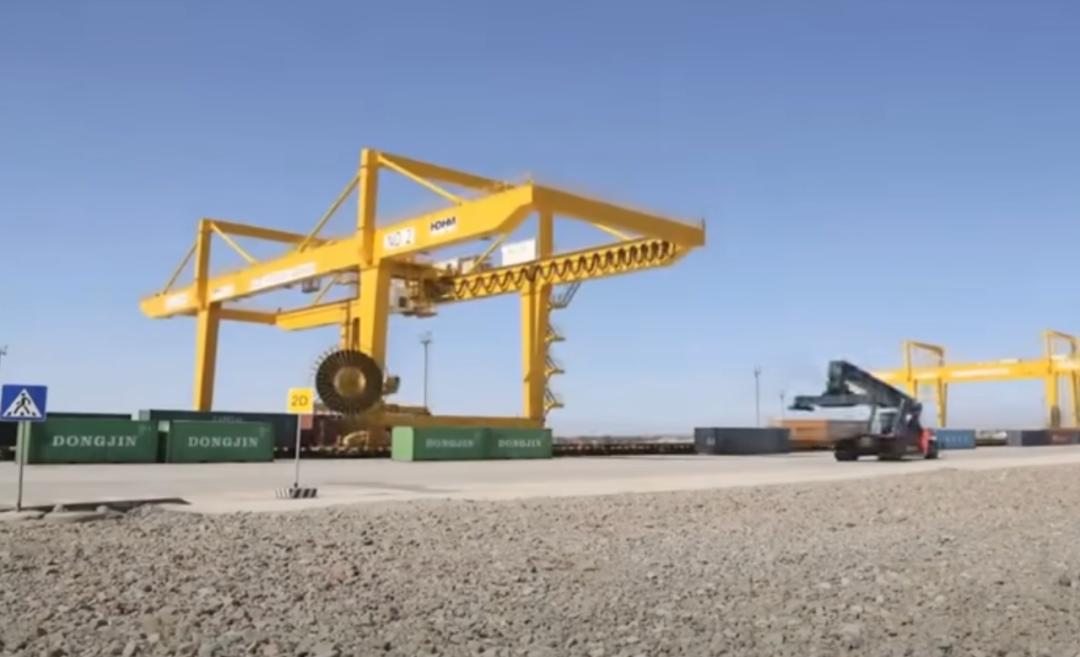
Core Insights - The article discusses the significance of the Horgos inland port in Kazakhstan, which has emerged as a crucial hub for trade between Asia and Europe, despite being located in a desert region far from the ocean [1][2]. Group 1: Horgos Inland Port Overview - Horgos is a massive inland port covering 130 hectares, capable of handling over 350,000 containers annually, and has transformed from a quiet border area into a vital trade connection [5][6]. - The port's trade volume surpassed 100 billion yuan in 2024, marking a year-on-year increase of 43.46%, with a 28.5% rise in railway transport in the first quarter of 2025 [6]. Group 2: Technical Challenges and Solutions - A significant technical challenge arises from the difference in railway gauge: China's standard gauge is 1435 mm, while the former Soviet Union countries use a wider gauge of 1520 mm, creating an 85 mm gap that necessitates a transfer of containers [9][10][11]. - To address this issue, Kazakhstan invested approximately $200 million, while China contributed several billion dollars to develop the Horgos port, which serves as a crucial "gauge change station" [13]. Group 3: Strategic Importance - Horgos plays a pivotal role in the Middle Corridor trade route, which connects China to Europe while avoiding risks associated with maritime and northern land routes, thus serving as a strategic lifeline for trade [14][17]. - The port is integral to China's Belt and Road Initiative, which aims to reshape trade and infrastructure networks across Eurasia, positioning Horgos as a key node in this new Silk Road [17]. Group 4: Economic Impact on Kazakhstan - Horgos has transformed Kazakhstan from a landlocked country to a land-linked one, significantly boosting trade and attracting various industries, leading to a 50% increase in trade volume in Central Asia over the past five years [21][22]. - The port has created thousands of jobs, with specific examples including the Horgos knitting industrial park providing over 1,000 jobs and technology companies offering employment for 1,200 to 1,500 people annually [23]. Group 5: Historical Context - Horgos has historical significance as a key stop on the ancient Silk Road, illustrating the continuity of trade and cultural exchange from ancient times to the present [27][30].