
债券市场

Search documents
央行将恢复国债买卖操作:为什么,有何影响?
Xin Lang Cai Jing· 2025-10-27 13:49
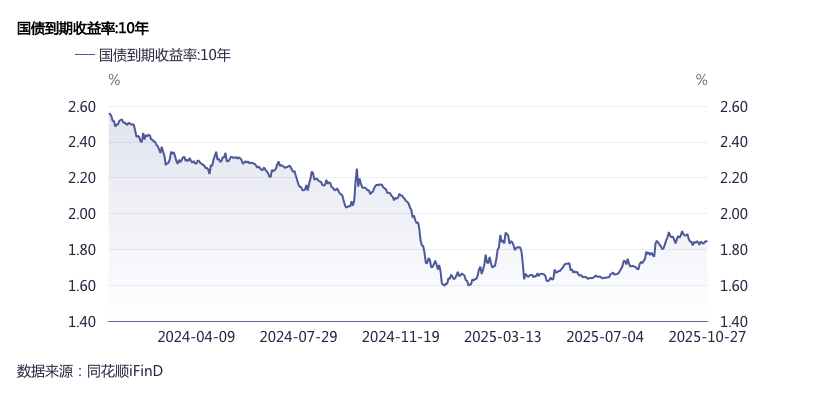
Core Viewpoint - The People's Bank of China (PBOC) is set to resume government bond trading after a nine-month suspension, indicating a shift in market expectations and a need to stabilize the bond market amid rising yields [1][2][3] Group 1: Reasons for Resuming Bond Trading - The resumption is driven by a reversal of the one-sided downward yield expectations, with the 10-year government bond yield rebounding to over 1.8% from a low of 1.6% earlier this year [3][6] - The PBOC's decision aligns with the need to increase its bond holdings, which have significantly decreased during the suspension, as part of its goal to build a strong central bank and financial system [1][7][10] - The bond market's overall stability is crucial, especially in the context of a strong stock market, to prevent negative feedback loops that could exacerbate market volatility [1][11] Group 2: Market Reactions and Implications - Following the announcement, bond yields across various maturities fell by approximately 3 basis points, reflecting market optimism about the resumption [1][11] - Analysts suggest that while the resumption may provide temporary relief and stabilize the market, it may not fundamentally alter the long-term interest rate trends due to broader economic factors [11][12] - The PBOC's approach to bond trading will likely involve a mix of strategies, including "buy short, sell long," to manage yield curves effectively [10][11] Group 3: Broader Economic Context - The PBOC has emphasized the importance of macro-prudential management in observing and assessing bond market conditions, indicating a proactive stance in maintaining financial stability [12][13] - The current liquidity transmission mechanism involves multiple layers, with non-bank institutions facing challenges in accessing funds, highlighting the need for structural adjustments in liquidity provision [13]

中国央行:恢复公开市场国债买卖!
Sou Hu Cai Jing· 2025-10-27 13:35
2025金融街论坛年会27日开幕,中国央行行长潘功胜在年会上表示,今年初,考虑到债券市场供求不平衡压力较大、市场风险有所累积,中国人 民银行暂停了国债买卖。目前,债市整体运行良好,中国人民银行将恢复公开市场国债买卖操作。 潘功胜说,去年,中国人民银行落实中央金融工作会议部署,在二级市场开始国债买卖操作。这是丰富货币政策工具箱、增强国债金融功能、发 挥国债收益率曲线定价基准作用、增进货币政策与财政政策相互协同的重要举措,也有利于中国债券市场改革发展和金融机构提升做市定价能 力。 他说,实践中,央行根据基础货币投放需要,兼顾债券市场供求和收益率曲线形态变化等情况,灵活开展国债买卖双向操作,保障货币政策顺畅 传导和金融市场平稳运行。 潘功胜表示,今年初,考虑到债券市场供求不平衡压力较大、市场风险有所累积,中国人民银行暂停了国债买卖。目前,债市整体运行良好,央 行将恢复公开市场国债买卖操作。 来源:国是直通车 ...

银行资产配置对债券市场影响的动态传导
Xin Lang Cai Jing· 2025-10-27 01:24
Core Insights - The article emphasizes the critical role of banks in the bond market, highlighting that their asset allocation behavior significantly influences bond pricing and market trends, especially in the context of China's financial landscape [1][2] Group 1: Bank Asset Allocation and Bond Market Dynamics - Banks are the largest holders of bonds in China, with a projected holding scale of 91.23 trillion yuan by mid-2025, accounting for over 54% of the market [1] - The study aims to analyze the dynamic transmission mechanism of bank asset allocation on the bond market, moving beyond static perspectives to understand how allocation behavior evolves with economic cycles and regulatory constraints [2][4] Group 2: Static Relationship Between Bank Balance Sheets and Bond Markets - The asset allocation logic of banks is embedded within their balance sheet framework, where the liability side influences funding costs and stability, while the asset side reflects the trade-off between credit issuance and financial investments [3] - An increase in deposit growth and a decrease in funding costs lead banks to favor long-term government and local bonds, while weak deposit growth or rising interest rates push banks towards higher volatility, short-term trading assets [3] Group 3: Credit Issuance and Its Impact on Bond Markets - Empirical analysis from 2016 to 2025 indicates that household short-term loans have a leading effect on bond markets, with a notable increase in ten-year government bond yields observed within four months following an increase in loan growth [5][6] - In contrast, corporate loans exhibit less impact on bond yields, with their influence being more short-lived compared to household loans [6] Group 4: Heterogeneity in Bond Investment Behavior - The study categorizes bond investments into three types based on accounting methods and finds that different types of banks exhibit varying impacts on government bond yields [7] - State-owned banks tend to stabilize the market through their bond investments, while smaller banks may increase market volatility due to their trading strategies and yield preferences [7] Group 5: Conclusions and Policy Implications - The research reveals that credit issuance is pro-cyclical while bond investment is counter-cyclical, indicating a macro-regulatory function of bank asset allocation [8] - Recommendations include optimizing bond asset allocation, enhancing internal fund transfer pricing mechanisms, and strengthening risk management frameworks, particularly for smaller banks [8][9]
同业存单已到配置时机:债券研究周报-20251026
Guohai Securities· 2025-10-26 13:03
Report Overview - The report date is October 26, 2025, and it focuses on the bond market, aiming to solve core issues such as recent bond market trend review, institutional behavior changes, and future bond market trend outlook [3][4] Industry Investment Rating - No industry investment rating is provided in the report Core Viewpoints - The bond market showed an overall volatile performance in the latest week. The yield of the active 10-year Treasury bond remained flat at around 1.84%, and the 30Y - 10Y Treasury bond term spread narrowed. The divergence between interbank certificates of deposit (CDs) and the money market is notable. As of October 24, the spread between the 1Y CD yield and DR007 reached 27bp, the highest level this year. The reasons for the divergence may be that banks' demand for long - term stable liabilities has increased, the maturity pressure of CDs is significantly higher than the seasonal level, and the demand side of CDs has been weak since September but improved in the latest week. As of October 24, the 1Y AAA CD rate was 1.68%, which has investment value from the perspective of institutional behavior. Additionally, the money market was stable this week, with banks' net lending volume remaining above 4 trillion yuan. Large banks continued to buy medium - and short - term bonds and increased their allocation of 10Y China Development Bank bonds, while other products bought 30Y Treasury bonds [4][9][10] Section Summaries 1. This Week's Bond Market Review - The bond market was volatile. The 10 - year Treasury bond yield was stable, and the 30Y - 10Y spread narrowed. The divergence between CDs and the money market was significant. The reasons for the divergence are banks' increased demand for long - term stable liabilities, high CD maturity pressure, and the improvement of CD demand recently. The 1Y AAA CD has investment value. The money market was stable, and banks' net lending was high. Large banks and other products had specific bond - buying behaviors [4][9][10] 2. Bond Yield Curve Tracking 2.1 Key Maturity Interest Rates and Spread Changes - As of October 24, compared with October 20, the 1Y Treasury bond yield rose 0.03bp to 1.47%, the 10Y Treasury bond yield fell 0.12bp to 1.85%, and the 30Y Treasury bond yield fell 0.36bp to 2.21%. The 30Y - 10Y Treasury bond spread fell 0.24bp to 36.40bp, and the 10Y China Development Bank - 10Y Treasury bond spread fell 0.97bp to 15.27bp [11] 2.2 Treasury Bond Term Spread Changes - As of October 24, compared with October 20, the 3Y - 1Y Treasury bond spread fell 0.69bp to 5.78bp, the 5Y - 3Y spread rose 1.36bp to 8.80bp, the 7Y - 5Y spread rose 0.44bp to 15.57bp, the 10Y - 7Y spread fell 1.26bp to 7.55bp, the 20Y - 10Y spread rose 1.49bp to 35.06bp, and the 30Y - 20Y spread fell 1.73bp to 1.34bp [13] 3. Bond Market Leverage and Money Market 3.1 Inter - bank Pledged Repurchase Balance - As of October 24, compared with October 20, the inter - bank pledged repurchase balance decreased by 0.38 trillion yuan to 11.48 trillion yuan [16] 3.2 Inter - bank Bond Market Leverage Ratio Changes - As of October 24, compared with October 20, the inter - bank bond market leverage ratio decreased by 0.25pct to 106.92% [17] 3.3 Pledged Repurchase Turnover - From October 20 to October 24, the average pledged repurchase turnover was 7.83 trillion yuan, and the average overnight repurchase turnover was about 7.01 trillion yuan, with an average overnight trading ratio of 89.55% [18][21] 3.4 Inter - bank Money Market Operation - From October 20 to October 24, banks' net lending first decreased, then increased, and then decreased again. As of October 24, large banks and policy banks' net lending was 4.53 trillion yuan, joint - stock banks and city and rural commercial banks' net borrowing was 0.51 trillion yuan, and the net lending of the banking system was 4.03 trillion yuan. Banks' daily lending also showed a similar trend. As of October 24, large banks and policy banks' daily lending was 3.94 trillion yuan, and small and medium - sized banks' daily lending was 0.46 trillion yuan. In terms of money market rates, as of October 24, DR001 was 1.3221%, DR007 was 1.4110%, R001 was 1.3802%, and R007 was 1.4649% [22] 4. Duration of Medium - and Long - Term Bond Funds 4.1 Median Duration of Bond Funds - As of October 24, the median duration of medium - and long - term bond funds (de - leveraged) was 2.60 years, up 0.02 years from October 20; the median duration (including leverage) was 2.63 years, up 0.01 years from October 20 [33] 4.2 Median Duration of Interest - Rate Bond Funds - As of October 24, the median duration of interest - rate bond funds (including leverage) was 3.63 years, up 0.08 years from October 20, and the median duration of credit bond funds (including leverage) was 2.35 years, up 0.02 years from October 20. The median duration of interest - rate bond funds (de - leveraged) was 3.29 years, up 0.06 years from October 20, and the median duration of credit bond funds (including leverage) was 2.39 years, up 0.01 years from October 20 [34] 5. Changes in Bond Lending Balance - As of October 24, compared with October 20, the borrowing volume of 10Y Treasury bonds decreased overall [39]
流动性与同业存单跟踪:同业存单或存在“补跌”可能
ZHESHANG SECURITIES· 2025-10-26 11:12
1. Report Industry Investment Rating The provided content does not mention the industry investment rating. 2. Core Viewpoints of the Report - Since the third quarter, the increase in inter - bank certificate of deposit (CD) interest rates has been relatively small. Under the circumstances of the bottoming - out of the capital attribute and the weakening of the expectation attribute, inter - bank CDs may experience a "catch - up decline". The expected interest rate of 1 - year inter - bank CDs is raised to around 1.80% [1][4][13]. 3. Summary According to the Directory 3.1同业存单或存在"补跌"可能 - Since the third quarter, due to factors such as the strong rise of A - shares, the "anti - involution" policy, and the new public fund redemption rules, the yields of various bond varieties have increased, but the inter - bank CD interest rate has remained stable. The yields of the 10 - year and 30 - year old treasury bonds have increased by 14bp and 25bp respectively, while the 1 - year inter - bank CD interest rate of state - owned and joint - stock banks has only increased by 4bp [2][11]. - The reasons for the better performance of inter - bank CDs than other bonds are the stable and loose capital situation (DR007 has been around 1.40% for a long time) and the minimal impact of institutional behavior disturbances on the allocation demand for inter - bank CDs. The demanders of inter - bank CDs are mainly broad - based funds and bank self - operation, accounting for about 86% of the holdings. The new public fund redemption rules have little impact on the demand for inter - bank CDs [3][12]. - With the capital attribute bottoming out and the expectation attribute weakening, inter - bank CDs may experience a "catch - up decline". The DR007 is approaching the central bank's 7 - day reverse repurchase rate of 1.4%, and the short - term expectation of policy rate cuts has been revised down. The current spread between 1 - year inter - bank CDs and R007 may converge to within 40bp [4][13]. 3.2 狭义流动性 3.2.1 央行操作:中期流动性持续净投放 - In the short - term, the central bank's reverse repurchase net injection in the past week (10/20 - 10/24) was 781 billion yuan, with large net injections on Tuesday and Wednesday. As of October 24, the central bank's reverse repurchase balance was 867.2 billion yuan, still at a relatively high level [15]. - In the medium - term, in October, the due amount of outright reverse repurchases was 130 billion yuan, and the due amount of MLF was 70 billion yuan. The central bank achieved a net injection of 40 billion yuan in outright reverse repurchases and will achieve a net injection of 20 billion yuan in MLF on October 27 [16]. 3.2.2 机构融入融出情况:供需两旺 - **Supply side**: On October 24, the net funds lent by large - scale banks (flow concept) decreased by 613.9 billion yuan compared with October 17, but were still at a relatively high level in the same period of previous years. The net lending balance of money market funds increased by 19.88 billion yuan, and that of joint - stock banks increased by 22.13 billion yuan, both at a neutral level in the same period of previous years [19]. - **Demand side**: On October 24, the balance of bonds to be repurchased in the inter - bank pledged repurchase market decreased by 515.2 billion yuan compared with October 17. The market leverage ratio was 107%, a decrease of 0.33pct, and the leverage ratio of non - legal person products was 112%, a decrease of 0.65pct [24]. 3.2.3 回购市场成交情况:量价皆稳 - In the past week, the volume and price of the inter - bank pledged repurchase market were stable. The median daily trading volume was about 7.8 trillion yuan, a decrease of 206.9 billion yuan. The median R001 was 1.37%, an increase of 2bp. The liquidity friction was small [29]. 3.2.4 利率互换:基本持平 - The 1 - year FR007 IRS and SHIBOR 3 - month IRS interest rates were basically flat compared with last week. The median of the 1 - year FR007 IRS was 1.54%, in the bottom 10% since 2020, and the median of the 1 - year SHIBOR 3 - month IRS was 1.62%, in the bottom 24% since 2020 [36]. 3.3 政府债:未来一周政府债净缴款压力中性 3.3.1 下周政府债净缴款 - In the next week, the expected net payment of government bonds is 133.7 billion yuan, with a neutral overall pressure. Treasury bonds are expected to have a net repayment of 5.39 billion yuan, and local government bonds are expected to have a net payment of 187.7 billion yuan. The net payment pressure is relatively large from Wednesday to Friday [37]. 3.3.2 当前政府债发行进度 - As of October 24, the net financing progress of treasury bonds was 89.0%, an increase of 4.9% in the past week, with a remaining net financing space of about 734.9 billion yuan in 2025. The issuance progress of new local government bonds was 86.2%, with a remaining issuance space of 717.3 billion yuan. The issuance of refinancing special bonds has completed the annual task [38][41]. 3.4 同业存单:净融资规模明显回落,银行长期负债压力或可控 3.4.1 绝对收益率 - On October 24, the SHIBOR quotes for overnight, 7 - day, 1 - month, 3 - month, 6 - month, 9 - month, and 1 - year remained relatively stable, as did the yields of AAA - rated inter - bank CDs of commercial banks [42]. 3.4.2 发行和存量情况 - In the past week (October 20 - 24), the total issuance volume of inter - bank CDs was 963.2 billion yuan. In terms of issuance terms, the proportions of 1 - month, 3 - month, and 6 - month terms decreased, while those of 9 - month and 1 - year terms increased [44]. 3.4.3 相对估值 - On October 24, the spread between the 1 - year AAA - rated inter - bank CD yield and R007 was 21bp, in the 42% quantile since 2020. The spread between the 10 - year treasury bond yield and the 1 - year AAA - rated inter - bank CD yield was 17bp, in the 38% quantile since 2020 [47].
“税期+跨月”检验宽松成色
Xinda Securities· 2025-10-26 07:27
1. Report Industry Investment Rating No relevant content provided. 2. Core Viewpoints of the Report - The Fourth Plenary Session emphasizes high - quality development and industrial upgrading while focusing on economic construction and achieving annual goals. Given the Q3 GDP growth rate of 4.8% and increased Sino - US trade uncertainty, the timing of "timely efforts" is worth attention. With the recent implementation of 500 billion special refinancing bonds and new policy - based financial instruments, the probability of Q4 reserve requirement ratio cuts and interest rate cuts cannot be excluded, but it is not the market's benchmark expectation yet [2][3][20]. - The money market remained generally loose this week, with the DR001 stable at slightly above 1.3%. The average daily trading volume of pledged repurchase decreased, and the new - caliber capital gap index rose on Friday. The cross - October progress of inter - bank and exchange institutions is slow. If the extreme situation of a significant increase in DR001 in the last week of October does not occur, it may indicate a looser attitude of the central bank, which may also be reflected in short - and medium - term interest rates [2][14][23]. - In November, the estimated issuance scale of government bonds is about 1.9 trillion yuan, with a net financing of about 1.2 trillion yuan, an increase of about 680 billion yuan compared with October. In December, the estimated issuance of government bonds is about 2.32 trillion yuan, with a net financing of about 720 billion yuan [3][35][36]. - Although the supply of certificates of deposit has increased recently, the money market remains loose, and non - bank demand for certificates of deposit is high, keeping certificate of deposit interest rates relatively stable. The increase in the net financing scale of certificates of deposit may be for next year's quota application and liability structure adjustment, and its impact may be short - term. As long as there are no major fluctuations in subsequent capital interest rates, the upward space for certificate of deposit interest rates may be limited [3][64]. - This week, bond market sentiment was weak and volatile, with credit and perpetual bond spreads continuing to narrow. Different types of institutions showed different trends in bond trading, with some increasing their holdings and some reducing them [3][67]. 3. Summary by Relevant Catalogs 3.1 Money Market 3.1.1 This Week's Money Market Review - The central bank's OMO had a net investment of 78.1 billion yuan this week. The Ministry of Finance conducted a 120 - billion - yuan 1 - month treasury cash fixed - deposit operation on Thursday, with a winning bid rate of 1.76%, a 2 - BP decline from the previous value. The money market remained generally loose, with only a limited tightening on Friday near the tax payment period, and the DR001 remained stable at slightly above 1.3% [2][6]. - The average daily trading volume of pledged repurchase decreased by 210 billion yuan to 7.83 trillion yuan. The overall scale of pledged repurchase fluctuated downward, dropping below 11.5 trillion yuan on Friday. The net lending of large - scale banks decreased continuously except on Thursday, while that of joint - stock banks and city commercial banks first increased and then decreased but remained higher than last week. The non - bank rigid lending showed a narrow - range fluctuation, slightly rising compared with last week, mainly due to the increase in money fund lending. The non - bank rigid borrowing fluctuated downward, with borrowing by major non - bank institutions decreasing. The new - caliber capital gap index fluctuated in the first half of the week and dropped to - 405.6 billion on Friday, higher than last week's - 632.9 billion [2][14]. - As of this week, the cross - October progress of inter - bank institutions was slow, only higher than that in 2024. The cross - month progress of the exchange was also at the lowest level in recent years, with the overall market cross - month progress at 11.7%, 2.6 percentage points lower than the average from 2020 - 2024, and the gap compared with previous years slightly widened compared with Thursday [2][18]. 3.1.2 Next Week's Money Market Outlook - This week, the actual net payment scale of government bonds was 214.2 billion yuan. Next week, the treasury bond payment scale will be 247.2 billion yuan. As of this week, the cumulative issuance of new general bonds in 2025 was 673 billion yuan, new special bonds 3.8097 trillion yuan, ordinary refinancing bonds 2.317 trillion yuan, special refinancing bonds 30.9 billion yuan, and replacement bonds 1.9924 trillion yuan. Next week, 12 regions will issue local bonds with a scale of 270.7 billion yuan, and the actual payment scale will be 288.7 billion yuan. The net payment scale of government bonds will decrease from 214.2 billion yuan this week to 133.7 billion yuan [2][24]. - In October, the treasury bond issuance scale was 1.1956 trillion yuan, and the net financing scale decreased by 503.8 billion yuan to 224.5 billion yuan compared with September. The local bond issuance scale was 560.6 billion yuan, and the net financing scale decreased by 177.3 billion yuan to 303.6 billion yuan compared with September. Overall, the government bond issuance scale in October was 1.76 trillion yuan, and the net financing scale decreased by about 681.1 billion yuan compared with September, hitting a new low since April 2024 [2][32]. - It is estimated that the treasury bond issuance scale in November will be about 1.07 trillion yuan, and the net financing scale will be about 640 billion yuan. The local bond issuance scale is expected to be 820 billion yuan, and the net financing scale will be 570 billion yuan. Overall, the government bond issuance scale in November is expected to be about 1.9 trillion yuan, and the net financing will be about 1.2 trillion yuan, an increase of about 680 billion yuan compared with October. It is expected that the government bond issuance in December will be about 2.32 trillion yuan, and the net financing will be about 720 billion yuan [3][35][36]. - Next week, the maturity scale of 7 - day reverse repurchases will rise to 867.2 billion yuan. The net payment scale of government bonds will decrease, but the coincidence of the tax payment period and cross - month time may intensify the fluctuation of the money market. However, the central bank's continuous net investment in MLF and the decrease in the net payment scale of government bonds will ease the impact of the tax payment period. It is expected that the liquidity pressure next week will be relatively controllable [3][41]. 3.2 Inter - bank Certificates of Deposit - This week, the 1 - year Shibor rate rose 1.0 BP to 1.68%. The secondary interest rate of 1 - year AAA - rated inter - bank certificates of deposit rose 0.9 BP to 1.68% [3][42]. - The net financing scale of inter - bank certificates of deposit increased by 112.6 billion yuan to 346.6 billion yuan compared with last week. The net financing scales of state - owned banks, joint - stock banks, city commercial banks, and rural commercial banks were 107.2 billion yuan, 239.4 billion yuan, - 4.5 billion yuan, and 2 billion yuan respectively. The issuance proportion of 1 - year certificates of deposit rose to 28%, and the issuance proportion of 6 - month certificates of deposit was the highest at 36%. Next week, the maturity scale of certificates of deposit will be about 580.8 billion yuan, a decrease of 35.9 billion yuan compared with this week [3][46]. - The issuance success rates of state - owned banks, city commercial banks, and rural commercial banks increased compared with last week, while that of joint - stock banks decreased. The 1 - year issuance spread between city commercial banks and joint - stock banks widened. The supply - demand relative strength index of certificates of deposit fluctuated at a high level after rising in the first half of the week, and the index on Friday was 1.2 percentage points higher than that on October 17, reaching 40.5%. In terms of different maturities, the supply - demand indexes of 1 - month, 9 - month, and 1 - year certificates of deposit increased, while those of 3 - month and 6 - month certificates of deposit decreased slightly [3][59]. 3.3 Bill Market This week, bill interest rates first decreased and then increased. The interest rates of 3 - month and 6 - month national bills decreased by 15 BP and 5 BP respectively compared with October 17, reaching 0.23% and 0.66% [64]. 3.4 Bond Trading Sentiment Tracking This week, the bond market was weakly volatile, and credit and perpetual bond spreads continued to narrow. Large - scale banks tended to significantly increase their bond holdings, with a significant increase in the willingness to hold short - term treasury bonds. Trading - type institutions' willingness to increase bond holdings weakened, while allocation - type institutions' willingness to increase bond holdings increased [3][67].
新刊速读 | 银行资产配置对债券市场影响的动态传导
Xin Hua Cai Jing· 2025-10-24 09:01
Core Insights - The article emphasizes the significant role of banks in the bond market, highlighting that their asset allocation behavior not only determines their own profit models and risk preferences but also profoundly influences bond market trends and pricing mechanisms [1][9] - It identifies a need for more granular analysis of banks' asset-liability management and how their allocation behaviors evolve dynamically with economic cycles, regulatory constraints, and risk management strategies [2][9] Group 1: Static Relationship Between Bank Balance Sheets and Bond Markets - The logic of bank asset allocation is embedded within the framework of their balance sheets, where the liability side determines funding costs and stability, while the asset side reflects the trade-off between credit issuance and financial investments [3] - An increase in deposit growth and a decrease in funding costs lead banks to favor long-term government and local bonds, while weak deposit growth or rising interest rates push banks towards higher volatility, shorter-term assets [3][4] Group 2: Dynamic Transmission of Credit Issuance to Bond Markets - Empirical analysis from 2016 to 2025 using VAR models reveals that household short-term loans have a leading effect on bond markets, with their growth leading to rising ten-year government bond yields within four months [5] - In contrast, household medium- to long-term loans, primarily reflecting real estate demand, influence bond yields with a lag of 8 to 12 months, while corporate loans have a less significant and sustained impact on bond yields [6] Group 3: Heterogeneous Impact of Bond Investment Categories - The study categorizes bond investments into three types based on accounting treatment and finds that different types of banks exhibit varying impacts on government bond yields [7] - State-owned banks' investments in FVOCI accounts tend to lower government bond yields, while smaller banks, facing higher funding costs, often engage in strategies that increase market volatility [7] Group 4: Comprehensive Conclusions and Policy Implications - The research reveals that credit issuance is pro-cyclical while bond investment is counter-cyclical, reflecting the macro-regulatory function of bank asset allocation [8] - It suggests optimizing bond asset allocation, improving internal fund transfer pricing mechanisms, and strengthening risk management frameworks to enhance the sustainability of smaller banks [8][9]
浙商证券浙商早知道-20251024
ZHESHANG SECURITIES· 2025-10-23 23:31
Market Overview - The Shanghai Composite Index rose by 0.2%, while the CSI 300 increased by 0.3%. The STAR Market 50 declined by 0.3%, and the CSI 1000 fell by 0.1%. The ChiNext Index saw a slight increase of 0.1%, and the Hang Seng Index rose by 0.7% [3][4] - The best-performing sectors included coal (+1.8%), oil and petrochemicals (+1.5%), social services (+1.1%), non-ferrous metals (+1.0%), and non-bank financials (+1.0%). The worst-performing sectors were telecommunications (-1.5%), real estate (-1.0%), building materials (-0.9%), electronics (-0.7%), and pharmaceuticals and biology (-0.6%) [3][4] - The total trading volume in the Shanghai and Shenzhen markets reached 1,643.9 billion yuan, with a net inflow of 5.34 billion Hong Kong dollars from southbound funds [3][4] Important Insights - In the bond market, the report emphasizes maintaining a bullish stance during the current bull market, suggesting that when the underlying logic of the main sectors remains unchanged, the market shows strong sustainability and significant excess returns [5] - The report indicates that the technology sector is experiencing a phase of adjustment, while the fixed income perspective remains optimistic about equities [5] - The driving factors for the market include the unchanged underlying logic of the technology sector, insufficient improvement in the economic fundamentals, tightening domestic liquidity, and unexpected overseas risk events [5][6] - The report outlines an asset hierarchy during the bond market adjustment period, ranking them as follows: government bonds > certificates of deposit > local government bonds > perpetual bonds from banks > secondary capital bonds from banks [6][8] - It suggests that low-grade local government bonds may exhibit resilience beyond their credit ratings during liquidity-driven adjustments, and recommends a coupon strategy under liquidity pressure [6][8]
四中全会和十五五规划,我们要关注什么?
2025-10-21 15:00
Summary of Conference Call Records Industry Overview - The conference call discusses the economic outlook and policy implications related to the upcoming 15th Five-Year Plan and the Fourth Plenary Session of the Central Committee. The focus is on the macroeconomic environment, investment opportunities, and challenges facing the economy. Key Points and Arguments Economic Growth Targets - The 15th Five-Year Plan is expected to set an economic growth target of 4.5% or not lower than 4% despite a 4.8% GDP growth in Q3 2025. The economy has faced three consecutive quarters of decline, with significant challenges in fixed asset investment and consumption [2][4][12]. Short-term Economic Stimulus - There is a low likelihood of short-term stimulus measures due to current economic pressures. The need for innovative financial tools and fiscal support is emphasized to achieve growth targets [1][3][4]. Monetary Policy Outlook - The monetary policy is expected to remain stable during the 15th Five-Year Plan period, with a high probability of easing due to weak fundamentals. Interest rate fluctuations will be influenced by fiscal stimulus, fundamental rebounds, and market behaviors [1][6][12]. Investment Opportunities - The bond market is seen as a favorable investment opportunity, with key factors including total demand, central bank and fiscal policy coordination, and U.S.-China regulatory dynamics. The third quarter's disturbances have been fully digested, suggesting a strong buying opportunity [7][8]. Growth Sector Outlook - The market sentiment is influenced by U.S.-China relations and growth expectations. There is a positive outlook on growth sectors, particularly in AI and technology, despite concerns about potential bubbles. The conditions for a shift from growth to value investing are not yet sufficient [8][9]. Focus on New Industries - The Fourth Plenary Session and the 15th Five-Year Plan will prioritize the development of new productive forces, including AI, semiconductors, and smart robotics. The plan aims to enhance competitiveness through digital and green transformations in manufacturing [10][13][16]. Consumer and Service Sector Development - Transitioning towards consumption-driven growth requires fiscal and monetary support, particularly in service consumption and new consumption areas. The need for a unified national market to avoid inefficiencies and ensure effective support is highlighted [5][11]. Corporate Profitability and Market Trends - Despite strong production data, weak demand has led to a situation where companies are generating revenue without profit growth. The upcoming quarterly reports are expected to show a recovery in corporate profits, which may attract new investments [11][14]. Key Areas of Focus in the 15th Five-Year Plan - The plan will emphasize enhancing manufacturing efficiency, developing emerging industries, promoting domestic consumption, and large-scale infrastructure projects to boost economic momentum [16]. Additional Important Insights - The overall economic environment is characterized by strong production, weak domestic demand, and resilient external demand. The need for new policy measures to stimulate domestic demand and adjust corporate strategies in the global supply chain is critical [12][14].