
加息

Search documents
加息未改日元汇率低迷状况
Sou Hu Cai Jing· 2025-12-23 22:42
日本央行此前将"按兵不动"的重要原因归结于对美国政府高关税政策影响的评估尚未完成,需要确认高 关税是否会显著冲击日本企业经营、抑制投资和工资增长,从而破坏刚刚出现的价格和工资改善势头。 但事实上,在10月的货币政策会议中,日本央行内部已基本形成高关税政策对国内企业直接影响有限的 共识。日本央行行长植田和男也在本月月初明确表示,对未来的不确定性正在逐渐消退。此外,日本央 行高度关注的明年春季劳资谈判"初期势头"已显现积极信号。由总行及全国33家分支机构实施的辖区内 企业加薪意向调查显示,有31家分支机构认为,2026财年的加薪幅度将高于或至少与上年度持平。 日本央行近期"按兵不动"的更重要原因来自政府立场。经济界普遍认为,日本政府倾向于积极财政政 策,对加息持谨慎态度,日本央行一度担忧与政府发生政策冲突。分析认为,此次央行加息是日本政府 在多重压力下的"妥协"。首先,在财政扩张政策持续推进的背景下,政府难以忽视日元疲软和通胀风 险。若央行长期停滞加息,日元持续贬值将对冲政府为遏制物价上涨所作的努力。其次,干预央行货币 政策将损害其独立性,可能违反《日本央行法》。再次,美国政府对日本央行的货币政策虎视眈眈,这 些 ...
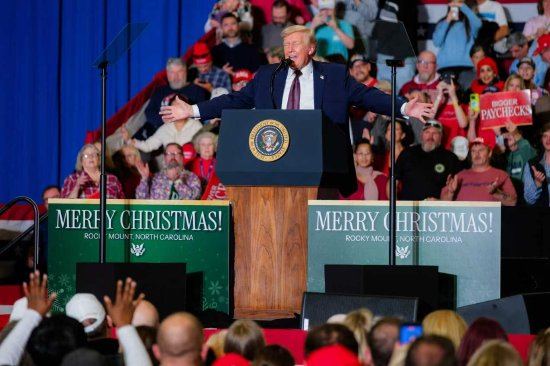
特朗普批评市场“利好不涨”反常现象,并警告异见者休想掌舵美联储
Sou Hu Cai Jing· 2025-12-23 21:25
Core Viewpoint - The article highlights President Trump's praise for the Q3 GDP growth rate of 4.2%, which significantly exceeds the expected 2.5% [1]. However, the market's reaction is unusual, as good news now often leads to market stagnation or declines due to concerns over potential interest rate hikes to combat inflation [1]. Group 1 - The GDP growth rate for Q3 reached 4.2%, surpassing the forecast of 2.5% [1] - The market is reacting negatively to positive economic news, with fears that it may trigger interest rate increases to prevent inflation [1] - Trump argues that strong market performance should not lead to inflation, attributing potential inflation to poor policy decisions [1] Group 2 - Trump expresses a desire for the new Federal Reserve Chairman to lower interest rates during positive market conditions rather than suppressing the market unnecessarily [1] - He envisions a market that behaves naturally, rising and falling as it should, which has not been seen in decades [1] - Trump asserts that inflation issues will resolve themselves and that interest rate hikes should only occur when necessary, not to curb market growth [1]
特朗普称美联储主席应在市场表现良好时降低利率
Xin Lang Cai Jing· 2025-12-23 19:37
Core Viewpoint - President Trump is advocating for the new Federal Reserve Chair to lower interest rates when the economy is performing well, signaling a desire for a candidate committed to rate cuts as he prepares to announce his nominee [1][4]. Economic Performance - The U.S. economy grew at an annualized rate of 4.3% in the third quarter, exceeding the expectations of all but one economist surveyed by Bloomberg [3][6]. - The S&P 500 index has risen for four consecutive days and is on track to reach a record high [3][6]. Political Pressure and Candidate Selection - Trump is under increasing political pressure to address voter concerns about affordability, linking lower interest rates to a boost in the housing market [3][6]. - He has narrowed down his list of candidates for the Federal Reserve Chair to "three to four" individuals and plans to announce his decision in the coming weeks [3][6]. - Notable candidates include National Economic Council Director Kevin Hassett and former Fed Governor Kevin Walsh, along with praise for Fed Governor Christopher Waller [3][6].

澳纽元续涨 澳洲联储鹰派纪要强化支撑
Jin Tou Wang· 2025-12-23 13:48
Group 1 - The Australian and New Zealand dollars continue to rise, supported by a recovery in global stock markets and increasing commodity prices [1] - The Australian dollar against the US dollar showed a daily increase of approximately 0.14%, trading around 0.6665 USD, following a significant rise of 0.7% in the previous trading day [1] - The New Zealand dollar against the US dollar also strengthened, with a daily increase of 0.33%, reported at 0.5811 USD, after a 0.66% rise the day before [1] Group 2 - The Reserve Bank of Australia's December policy meeting minutes highlighted discussions on the necessity and feasibility of future interest rate hikes, particularly in light of unexpected inflation data [2] - The market currently anticipates a low probability of an interest rate hike in February, as the sustainability of recent inflation data remains to be verified [2] - Analysts suggest that the RBA is likely to make a key policy decision regarding interest rates in the first half of next year, based on further economic data [2] Group 3 - In the cross-currency market, the Australian and New Zealand dollars against the Japanese yen experienced slight pullbacks due to profit-taking, yet maintained a strong position near multi-year highs [3] - The divergence in monetary policy between the RBA and the Bank of Japan, with the former maintaining a vigilant stance on inflation and the latter keeping negative interest rates, has created a favorable interest rate differential [3] - Future movements of the Australian and New Zealand dollars will be influenced by global risk sentiment, commodity price fluctuations, and changes in monetary policy expectations from major central banks [3]
邦达亚洲:多重利好因素支撑 黄金刷新历史高位
Xin Lang Cai Jing· 2025-12-23 08:56
Group 1: Bank of Japan's Monetary Policy - Former Bank of Japan board member Makoto Sakurai indicated that the central bank may raise interest rates three more times during Governor Kazuo Ueda's term until early 2028, potentially reaching 1.5% [1][6] - The next rate hike is expected around June or July 2024, with the rate increasing to 1.0%, depending on the strength of the U.S. economy and domestic wage and price developments in Japan [1][6] - The internal estimate for the neutral interest rate level is around 1.75%, suggesting that raising rates to 1.5% would provide room for future cuts while remaining below the neutral level [1][6] Group 2: Gold Price Forecast - JPMorgan forecasts that uncertainty in tariff policies and strong demand from ETFs and central banks will push gold prices above $4,000 per ounce by 2025, with potential to exceed $5,055 by the end of 2026 due to new demand from China's insurance sector and cryptocurrency [2][7] - The long-term trend of diversifying gold in official reserves and by investors is expected to continue, with gold demand driving prices towards $5,000 per ounce by the end of 2026 [2][7] Group 3: Market Reactions - Gold prices surged past the $4,400 mark, trading around $4,480, supported by dovish comments from Federal Reserve officials and renewed market risk aversion due to geopolitical tensions [3][8] - The USD/JPY pair experienced slight declines, trading around 156.00, influenced by profit-taking and a weaker dollar index following dovish remarks from Federal Reserve officials [4][9] - The USD/CAD pair also saw a decline, trading at approximately 1.3740, affected by a weaker dollar index and positive economic data from Canada [5][10]
STARTRADER外汇:澳大利亚通胀压力持续,央行会因此考虑加息吗?
Sou Hu Cai Jing· 2025-12-23 03:12
澳大利亚储备银行2025年12月货币政策委员会会议纪要释放出明确的审慎信号。 会议纪要显示,董事会就当前金融条件是否仍具限制性展开深入讨论。 部分观点认为限制性已消退,主要依据是信贷增长强劲、银行间竞争激烈、市场风险相关成本偏低、住房活动在前期政策调整后明显反弹。另一部分观点认 为限制性仍温和存在,支撑依据包括抵押贷款提前还款额偏高、家庭储蓄增加、货币政策滞后效应尚未完全显现。 劳动力市场方面,成员们一致判断市场仍"略显紧张"。具体表现为未充分利用劳动力比例较低、企业招聘困难持续存在、对超额需求的预估有所上调。 近期失业率上升被定性为暂时现象,这降低了劳动力市场状况出现实质性松动的风险。劳动力市场的紧张状态进一步构成通胀压力的潜在支撑。 会议指出,当前断言通胀持续性已显著增强仍为时过早。 通胀压力持久化的证据增多,董事会对货币政策限制性的信心有所减弱,政策决策需紧密依托数据,未来政策调整方向与通胀和经济供需变化密切相关。 通胀形势是本次会议的首要议题。委员会一致决定将现金利率维持在3.60%不变。 近期通胀数据凸显短期上行风险:10月份整体通胀率升至3.8%,多项指标显示成本压力正逐步扩大,单位劳动力成本和平 ...

降息与地缘共振,贵金属延续强势
Hua Tai Qi Huo· 2025-12-23 02:51
1. Report Industry Investment Rating - The overall rating for commodities and stock index futures is neutral [4] 2. Core View of the Report - Amid the resonance of interest rate cuts and geopolitical factors, precious metals continue to be strong. The current inflation - expectation game stage focuses on non - ferrous metals and precious metals with high certainty. While the market sentiment is still high, there are risks of policy expectation reversals at home and abroad. It is necessary to track the sentiment - driven market trends and also prepare risk plans for potential adjustments [1][3] 3. Summary by Relevant Catalogs Market Analysis - **Policy Expectations in China**: The Politburo meeting on December 8 emphasized "continuing to implement a more proactive fiscal policy and a moderately loose monetary policy" and "increasing counter - cyclical and cross - cyclical adjustment efforts". The Central Economic Work Conference on December 11 focused on boosting consumption and "anti - involution". Multiple ministries responded: the central bank will use reserve - requirement ratio and interest rate cuts; the NDRC will boost consumption and promote new growth drivers; the Ministry of Finance will use government bonds and issue ultra - long - term special treasury bonds. China's November foreign trade growth rebounded significantly (exports +5.9% and imports +1.9% year - on - year in US dollars), but the economic data was still under pressure, and the LPR remained unchanged for the seventh consecutive month (5 - year above LPR at 3.5%, 1 - year LPR at 3%) [1] - **US Federal Reserve**: The Fed's December meeting announced the purchase of $40 billion in short - term bonds in the next 30 days and a 25 - basis - point interest rate cut as expected. The median of the dot - plot maintains the expectation of one interest rate cut each in the next two years. The Fed may pause rate cuts again. The US employment and PMI data are weak. The slowdown of the Fed's rate - cut pace and the Bank of Japan's rate hike in December have led to a currently positive market driven by sentiment, but risks need to be watched [2] - **Bank of Japan**: The Bank of Japan raised interest rates by 25 basis points on December 19 as expected. The impact of the rate hike is limited as the proportion of overseas holders of Japanese government bonds is low and the net long position of the US dollar against the yen has not increased significantly. On December 22, Japanese long - term bonds tumbled [3] - **Commodity Market**: In the current inflation - expectation game, focus on non - ferrous metals and precious metals. The non - ferrous metal sector has high certainty due to long - term supply constraints. In the energy sector, some countries have submitted additional production - cut plans, and the EU will stop importing Russian natural gas by 2027. In the chemical sector, there is "anti - involution" space for some products. In the agricultural products sector, pay attention to China's procurement plan for US goods. For precious metals, look for buying opportunities on dips, but short - term silver risks have risen [3] Strategy - The overall strategy for commodities and stock index futures is neutral [4] To - do News - The market trended strongly with the Shanghai Composite Index back above 3900 and the ChiNext Index up more than 2%. Over 2900 stocks in the Shanghai, Shenzhen, and Beijing stock markets rose, with trading volume exceeding 1.88 trillion yuan. The Shanghai Composite Index rose 0.69%, the Shenzhen Component Index rose 1.47%, and the ChiNext Index rose 2.23% [5] - China's LPR remained unchanged for the seventh consecutive month (5 - year above LPR at 3.5%, 1 - year LPR at 3%) [5] - Japanese government bond yields rose, with the 2 - year yield at 1.105% (the highest since 1997), the 5 - year yield up 3.5 basis points to 1.52%, and the 20 - year yield up 3 basis points to 3% [5] - The US intercepted a tanker in international waters near Venezuela. The tanker was under US sanctions [5] - The US dollar against the yen fell about 20 points, and the Japanese finance minister warned speculators [5] - Spot gold hit a record high, spot silver rose more than 3% above $69 per ounce, LME copper prices neared a record high, and spot platinum rose above $2000 per ounce for the first time since 2008 [5]
澳大利亚央行会议纪要显示 委员们讨论了可能需要加息的情形
Sou Hu Cai Jing· 2025-12-23 01:53
澳大利亚央行在2月至8月期间累计降息75个基点,当前政策重心正转向抑制通胀压力抬头。政策委员会 承认,此前宽松行动的影响"尚未完全显现"。 会议记录显示,面对物价再次飙升的经济形势,央行仍在努力评估其政策设置是否适合,这也解释了为 何行长Michele Bullock两周前把进一步降息排除在了选项之外。会议记录还凸显出决策者的谨慎态度, 他们迄今成功引导经济实现了软着陆,失业率也处于历史低位,仅略高于4%。 "如果金融环境仍略显限制性,并且有证据表明通胀压力明显回升很大一部分源于波动性或暂时性因 素,那么将现金利率维持在当前水平一段时间可能足以使经济保持接近平衡的状态。" 货币市场定价显示,澳大利亚央行的下一步行动料为加息,最早可能在2月实施。澳大利亚联邦银行和 澳大利亚国民银行的经济学家预测,在2月举行的2026年首次会议上,央行将把利率上调至3.85%。 来源:环球市场播报 澳大利亚央行12月8日至9日会议的纪要显示,政策委员会讨论了在通胀风险抬头的情况下,2026年可能 需要转向加息的情形,同时重申未来的任何政策调整都将取决于经济数据。 根据周二发布的会议纪要,澳大利亚央行两周前将现金利率维持在3.6% ...
国泰君安期货商品研究晨报-20251223
Guo Tai Jun An Qi Huo· 2025-12-23 01:38
Report Industry Investment Ratings No specific investment ratings for the industry are provided in the report. Core Views of the Report The report offers insights and analyses on various commodities in the futures market, covering precious metals, base metals, energy, agricultural products, and more. It presents the current market trends, fundamental data, and macro and industry news for each commodity, along with corresponding trend intensities and trading suggestions. Summary by Commodity Category Precious Metals - **Gold**: Inflation is moderately declining, with a trend intensity of 0 [6]. - **Silver**: Reached a new high, with a trend intensity of 0 [6]. - **Platinum**: Domestic and international markets resonate, and the bullish sentiment remains unabated, with a trend intensity of 1 [26][28]. - **Palladium**: The climbing pace has slowed, with an upward trend in oscillations, and a trend intensity of 1 [26][28]. Base Metals - **Copper**: The price rose as the US dollar declined, with a trend intensity of 1 [10][12]. - **Zinc**: Narrow - range fluctuations, with a trend intensity of 0 [13][15]. - **Lead**: Reduced inventory supports the price, with a trend intensity of 0 [16]. - **Tin**: Supply has encountered new disruptions, with a trend intensity of 1 [18][22]. - **Aluminum**: Range - bound oscillations, with a trend intensity of 1; Alumina had a slight rebound, with a trend intensity of 0; Cast aluminum alloy follows the trend of electrolytic aluminum, with a trend intensity of 0 [23][25]. - **Nickel**: The fundamental contradictions have not changed significantly, and concerns about Indonesian policies have increased, with a trend intensity of 0 [30][34]. - **Stainless Steel**: The fundamentals show weak supply and demand, and the news of Indonesian nickel mines has caused disturbances, with a trend intensity of 0 [30][34]. Energy and Chemicals - **Crude Oil - Related**: Not specifically mentioned in a comprehensive way, but some related commodities like fuel oil and asphalt are covered. - **Fuel Oil**: The night - session price rose, and short - term volatility increased, with a trend intensity of 1 [139]. - **Low - Sulfur Fuel Oil**: Mainly followed the upward trend, and the spot price spread between high - and low - sulfur fuels rebounded slightly, with a trend intensity of 1 [139]. - **Asphalt**: The spot price had a narrow - range adjustment, remaining stable despite the oil price trend, with a trend intensity of 1 [80][89]. - **Chemicals**: - **PTA**: Do not chase the high price, and it is in a high - level oscillating market, with a trend intensity of 0 [63][70]. - **MEG**: The trend is relatively weak, with a trend intensity of 0 [63][70]. - **LLDPE**: Some full - density products have been redirected, and the valuation support is limited, with a trend intensity of 0 [94][96]. - **PP**: The PDH profit has been compressed again, and the trend is weakly oscillating, with a trend intensity of 0 [97][99]. - **Caustic Soda**: A short - term rebound, and attention should be paid to inventory changes, with a trend intensity of 0 [100][102]. - **Methanol**: Oscillations are supported, with a trend intensity of 0 [112][115]. - **Urea**: Oscillating, with a trend intensity of 0 [116][119]. - **Styrene**: Short - term oscillations, with a trend intensity of 0 [120]. - **Soda Ash**: The spot market has changed little, with a trend intensity of 0 [124][125]. - **LPG**: The external cost is relatively strong, with a trend intensity of 0 [127][132]. - **Propylene**: There are expectations of supply - demand tightening, and the short - term trend is supported, with a trend intensity of 0 [128][132]. - **PVC**: A short - term rebound, but the upward space may be limited, with a trend intensity of 0 [136][137]. Agricultural Products - **Palm Oil**: The production cut is gradually being realized, and there is a short - term rebound, with a trend intensity of 1 [168][174]. - **Soybean Oil**: The price of US soybeans rebounded, and it is recommended to conduct range - bound operations, with a trend intensity of 0 [168][174]. - **Soybean Meal**: The US soybeans rose overnight, and the Dalian soybean meal may rebound and oscillate, with a trend intensity of +1 [175][177]. - **Soybean**: Oscillating, with a trend intensity of 0 [175][177]. - **Corn**: Attention should be paid to the spot market, with a trend intensity of 0 [178][181]. - **Sugar**: There is an expectation of a weak basis, with a trend intensity of 0 [182][185]. - **Cotton**: The futures price is oscillating strongly, and attention should be paid to downstream pre - holiday stocking, with a trend intensity of 0 [187][191]. - **Eggs**: Oscillating and adjusting, with a trend intensity of 0 [193]. - **Hogs**: Hold the reverse spread, with a trend intensity of - 1 [195][200]. - **Peanuts**: Attention should be paid to the purchases of oil mills, with a trend intensity of 0 [202][204]. Others - **Logs**: Low - level oscillations, with a trend intensity of 0 [59][62]. - **Synthetic Rubber**: The oscillation center has moved up, with a trend intensity of 0 [77][79]. - **Paper Pulp**: Oscillating, with a trend intensity of 0 [104][106]. - **Glass**: The raw sheet price is stable, with a trend intensity of 0 [109][110]. - **Ferroalloys**: - **Silicon Iron**: The sector and fundamentals resonate, and the trend is strongly oscillating, with a trend intensity of 0 [50][54]. - **Manganese Silicon**: The long and short sentiments are intertwined, and the trend is widely oscillating, with a trend intensity of 0 [50][54]. - **Coke and Coking Coal**: Wide - range oscillations, with a trend intensity of 0 for both [55][58]. - **Container Freight Index (European Line)**: Near - term contracts should focus on the opening guidance, while far - term contracts should focus on the progress of the Gaza peace talks, with a trend intensity of 0 [141][155]. - **Short Fibre**: Short - term follow - up of raw materials, with compressed processing fees, with a trend intensity of 0 [157][158]. - **Bottle Chips**: Short - term follow - up of raw materials, with a trend intensity of 0 [157][158]. - **Offset Printing Paper**: It is recommended to wait and see, with a trend intensity of 0 [160]. - **Pure Benzene**: Short - term oscillations, with a trend intensity of 0 [165][166].
欧洲央行执委施纳贝尔:料短期内不会加息 但通胀压力或令利率再度上调
Xin Lang Cai Jing· 2025-12-22 19:24
Core Viewpoint - European Central Bank (ECB) decision-maker Schnabel indicates that while interest rate hikes are not expected in the foreseeable future, persistent inflation pressures will ultimately necessitate an increase in borrowing costs [1][1]. Group 1 - Schnabel believes that interest rate hikes are unlikely in the near term [1]. - Despite the current stance on interest rates, there are ongoing inflationary forces that may lead to future rate increases [1].