滞胀风险

Search documents
美联储当前的困境和策略
2 1 Shi Ji Jing Ji Bao Dao· 2025-05-29 17:23
据央视新闻报道,当地时间5月28日,美联储公布了联邦公开市场委员会(FOMC)5月6日至7日的会议 纪要。这是美国所谓"对等关税"政策宣布实施一个半月后,美联储的第一份会议纪要,以正式文件形式 反映了美联储官员对形势变化的看法,凸显了美联储当前面临的政策困境,讨论了应对策略,强化了会 议声明和美联储主席鲍威尔新闻发布会的政策立场。 孙长忠(清华大学全球私募股权研究院研究员) 面对这一特殊困境,美联储的最佳应对策略只能是保持谨慎,等待观望。"与会者一致认为,鉴于经济 增长和劳动力市场依然稳健且当前货币政策的限制性适度,(FOMC)委员会完全有能力等待通胀和经 济前景更加明朗。在一系列政府政策调整的净经济效应更加明朗之前,采取谨慎态度是恰当的。"这是 对此前美联储及鲍威尔多次强调"不急于降息""等待成本较低""处于有利态势"等观点和态度的延续和强 化,说明尽管美国通胀和失业均有上升风险,但目前美联储更侧重于通胀方面,不降息本身就是控通胀 优先。 2022年至2023年加息期间,美联储是不惜付出衰退代价也要首先把通胀降下来的,那时及此后美联储也 多次强调价格稳定是实现长期可持续就业最大化的根本和前提。5月美联储会议 ...
研究所晨会观点精萃-20250529
Dong Hai Qi Huo· 2025-05-29 00:57
分[析Ta师ble_Report] 行 业 研 究 研 究 所 晨 会 观 投资咨询业务资格: 证监许可[2011]1771号 点 精 萃 从业资格证号:F0256916 投资咨询证号:Z0000671 电话:021-80128600-8632 邮箱:jialj@qh168.com.cn 从业资格证号:F03092124 投资咨询证号:Z0018827 电话:021-80128600-8631 邮箱:mingdy@qh168.com.cn 从业资格证号:F3033924 投资咨询证号:Z0013026 电话:021-80128600-8621 邮箱:Liuhf@qh168.com.cn 从业资格证号:F03091165 投资咨询证号:Z0019876 联系电话:021-80128600-8630 邮箱:liub@qh168.com.cn 从业资格证号:F03089928 投资咨询证号:Z0019740 电话:021-80128600-8622 邮箱:wangyil@qh168.com.cn 冯冰 从业资格证号:F3077183 投资咨询证号:Z0016121 电话:021-80128600-8616 邮箱:f ...
美联储会议纪要19次提及不确定性:适合谨慎降息,几乎全员提及通胀风险,重申恐有“艰难取舍”
华尔街见闻· 2025-05-28 23:16
会议纪要显示,本月稍早的会议上,美联储决策者普遍认为,经济面临的不确定性比之前更高,对待降息适合保持谨慎,等待特朗普政府关税等政策的影响更 明朗,再考虑行动。 与会者一致认为, 经济前景的不确定性进一步增加,因此,在一系列政府政策调整的净经济效应更加明朗之前,采取谨慎态度是恰当的 。 而且,此次纪要中,联储决策者几乎全都表达了对关税长期推升通胀的担忧。继4月的上次会议纪要后,本次纪要中,联储官员再度警惕,联储货币政策委员 会FOMC可能不得不在抗通胀和保就业之间做出"艰难的取舍"。 有"新美联储通讯社"之称的记者Nick Timiraos指出,本次会议纪要中,美联储决策者暗示,他们担心关税大幅上调会推升价格,可能刺激通胀上行。鉴于关税 政策的不确定性加剧,联储官员重申需要采取"谨慎态度"。 Timiraos称,纪要显示,联储决策者基本都认为,经济的不确定性增加,失业和通胀双双上行的风险也增加。这让他们不会改变观望的政策立场。 重申完全有能力等经济和通胀前景更明朗再行动 三周前召开的货币政策会议上,美联储决定继续暂停降息,示警滞胀风险,声明新增失业率和通胀均上升的风险已增加这一表述,并重申经济前景的"不确定 性 ...

黄金上涨遇阻美元加剧看跌情绪
Jin Tou Wang· 2025-05-27 02:23
Group 1 - The international gold price closed at $3342.57 per ounce on May 26, down by $14.43 or 0.43%, with a daily high of $3356.32 and a low of $3323.59 [1] - The U.S. dollar index fell below the support level of 99.172, indicating deeper structural concerns in the market, with traders focusing on the 97.921 level [2] - Moody's downgrade of the U.S. credit rating to Aa1 reflects growing dissatisfaction with the U.S. fiscal situation, including a deficit exceeding $2 trillion and rising debt servicing costs [2] Group 2 - Federal Reserve Governor Christopher Waller warned that current fiscal trends are "fundamentally unsustainable," leading to a rise in long-term Treasury yields above 5.0% as investors seek higher compensation for perceived U.S. credit risk [2] - The market anticipates moderate easing, but doubts about Washington's ability to coordinate effective policies persist, with rising tariffs potentially increasing prices while weakening economic growth [3] - The current federal funds target rate is between 4.25% and 4.50%, but inflation risks from aggressive trade measures may limit the Fed's flexibility [3] Group 3 - Gold prices are expected to maintain an upward trend if they stabilize above $3325.00, with potential targets between $3359.00 and $3375.00 [4] - Short-term resistance for gold is identified at $3358.00 to $3359.00, while important support levels are noted between $3325.00 and $3326.00 [4]
现阶段黄金还能入手吗?黄金后续还有上涨空间吗
Sou Hu Cai Jing· 2025-05-23 08:25
Group 1 - The current gold market is in a phase of short-term adjustment while maintaining long-term support, requiring investors to make cautious decisions based on multiple dimensions [1] - International gold prices have fallen from a high of $3500 per ounce in April to $3234 per ounce in May, with domestic gold jewelry prices dropping below 1000 yuan per gram [1][3] - The decline in gold prices is primarily influenced by a stronger US dollar, easing US-China trade tensions, and technical selling and profit-taking [1][4] Group 2 - Central banks continue to purchase gold, with global net purchases exceeding 300 tons in Q1 2025, and China increasing its gold reserves to 73.77 million ounces (approximately 2294.51 tons) [6][4] - The proportion of gold in China's foreign exchange reserves is only 4.3%, significantly lower than the global average of about 15%, indicating substantial future accumulation potential [6][4] - Geopolitical tensions, such as the ongoing Russia-Ukraine conflict and Middle East issues, contribute to the long-term risk premium for gold [6][4] Group 3 - Short-term support for international gold prices is seen in the range of $3200-$3240 per ounce, with potential downside to $3150 if broken, while resistance is at $3250-$3300 [5][4] - The market sentiment is cautious, with speculative funds withdrawing, as evidenced by over 3 billion yuan net outflow from gold ETFs in April [6][4] - Historical trends suggest that gold often experiences a "first dip, then rise" pattern during interest rate hike cycles, indicating potential for recovery in 2025 if economic data weakens [9][4] Group 4 - Investment strategies suggest accumulating gold in the $3200-$3240 range, with a stop-loss at $3150 and a target price of $3300 [10][4] - A diversified asset allocation strategy is recommended, combining gold with bonds and high-dividend stocks to hedge against interest rate reversal risks [10][4] - Different scenarios for gold prices are outlined, with optimistic projections suggesting prices could exceed $3500 under certain conditions, while pessimistic scenarios could see prices drop to $2500 [10][4]
黄金亚盘震荡盘整,区间内高抛低吸布局
Sou Hu Cai Jing· 2025-05-23 05:03
Group 1 - The current gold market is experiencing fluctuations due to a strong US dollar, volatility in US Treasury bonds, and geopolitical tensions [1][3] - The US dollar index rebounded by 0.3%, surpassing the 100 mark, which increased the cost of gold for non-US currency holders [1] - The passage of the Trump tax cut bill, which is expected to increase government debt by $3.8 trillion, has created an unusual market reaction despite expectations of negative impacts on the dollar [1] Group 2 - The Senate is preparing for a challenging battle over the tax bill, with potential significant adjustments expected, particularly regarding social welfare and energy provisions [3] - The gold market is under pressure from the technical rebound of the dollar and the sell-off of US Treasuries, but long-term support for gold is being built by inflationary pressures from fiscal expansion and increased demand for safe-haven assets due to credit concerns [3] - Investors are advised to focus on potential opportunities created by market corrections rather than being misled by short-term volatility, as the attributes of gold as a currency may be reawakening in the context of global debt expansion [3]

美国“股债汇”齐跌,“抛售美国”交易卷土重来?
Sou Hu Cai Jing· 2025-05-22 07:55
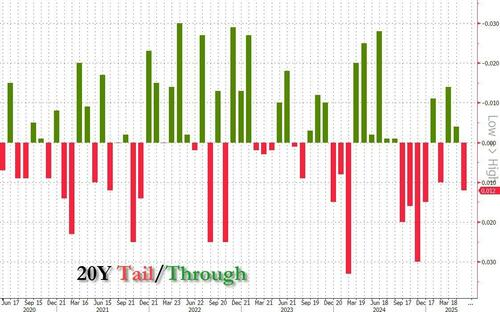
Group 1 - The U.S. Treasury issued $16 billion in 20-year bonds with a yield of 5.047%, reflecting weak demand for U.S. debt and forcing rates higher to attract investors [2] - The Congressional Budget Office estimates that Trump's proposed spending bill could increase public debt by $3.3 trillion by FY 2034, raising the annual deficit to $2.9 trillion, which is 6.9% of GDP [3] - Moody's downgraded the U.S. bond credit rating from Aaa to Aa1, citing rising public debt and interest payments, with warnings that the debt-to-GDP ratio could rise from 100% in 2024 to 125% by 2035 [7] Group 2 - The unpredictability of Trump's policies and the risk of expanding the fiscal deficit have led investors to shy away from long-term bonds, pushing yields higher and bond prices lower [7][8] - The recent auction of 20-year bonds faced weak demand, further undermining market confidence [9] - The U.S. stock market also experienced significant sell-offs, with the Dow Jones Industrial Average dropping 1.91% and the Nasdaq and S&P 500 indices falling 1.41% and 1.61%, respectively [12] Group 3 - The ongoing issue of the U.S. fiscal deficit is unlikely to be resolved in the short term, with both parties contributing to its expansion [14] - The combination of rising interest rates and cost increases due to tariffs may exert pressure on U.S. economic growth, potentially leading to stagflation risks [14] - The recent bond auction may be seen as a critical moment for the market, but it could also be just the beginning of increased volatility in capital markets [14]

美债收益率直逼高点,市场在警告特朗普减税法案
Hua Er Jie Jian Wen· 2025-05-22 00:39
Core Viewpoint - The bond market is reacting negatively to Trump's tax cut plan, raising concerns about the potential for significant increases in the budget deficit over the coming years [1][9] Group 1: Bond Market Reactions - The 20-year U.S. Treasury auction showed unexpected weakness, with the winning yield surpassing 5%, marking one of the worst performances in five years, which heightened concerns about increasing debt [1] - Following the auction results, the 30-year Treasury yield surged to 5.1%, nearing a 20-year high, while the 10-year yield rose to 4.595% [2] - Investors are flocking to safe-haven assets like gold and Bitcoin to hedge against rising government debt and inflation risks, with long-term bond yields increasing by approximately 14 basis points since last Friday [5] Group 2: Political and Economic Implications - Conservative Republican lawmakers are beginning to oppose Trump's tax cut plan, citing rising bond yields as a warning signal [7] - The current U.S. debt is unprecedented, with interest payments exceeding the defense budget, and the total public debt has surged from under $14 trillion in 2016 to nearly $30 trillion [9] - The market's sharp reaction indicates that investors are unwilling to tolerate continuous government borrowing, seeking to enforce fiscal discipline through higher borrowing costs [9] Group 3: Broader Economic Concerns - The rise in bond yields is driven by fears of deficits and higher inflation expectations rather than strong economic fundamentals [10] - There is a mismatch between signals from the stock and bond markets, with stock investors largely ignoring concerns about increasing deficits and inflation [11] - Retailers, including Walmart and Target, are planning to raise prices due to tariffs, contributing to inflationary pressures, which has led to a decline in stock prices [11]
美元指数失守100点关口!美联储警告→
第一财经· 2025-05-21 23:34
Core Viewpoint - The article discusses the recent decline of the US dollar following Moody's downgrade of the US credit rating, highlighting concerns over economic uncertainty and the impact of trade policies on market sentiment [1][5]. Group 1: G7 Meeting and Currency Policy - The G7 meeting focused on monetary policy, with a record high of 80% of investors believing the US is on an unsustainable debt path [3]. - Deutsche Bank's survey indicates that over half of the investors expect future crises to lead to deficit reduction, while 26% see quantitative easing as a potential solution [3]. - Analysts from Brown Brothers Harriman noted that the broad decline of the dollar reflects a loss of confidence in US policies, exacerbated by rising stagflation risks and implicit support for a weaker currency from the Trump administration [3]. Group 2: Market Outlook on the Dollar - Morgan Stanley has a bullish outlook on US assets, raising ratings for US stocks and bonds, but predicts a continued decline of the dollar due to diminishing economic growth premiums relative to other countries [4]. - The dollar index is forecasted to drop by 9% over the next 12 months, reaching 91 points, with significant weakness expected against the euro, yen, and Swiss franc [4]. Group 3: Economic Concerns from Federal Reserve Officials - Recent statements from Federal Reserve officials express growing concerns about economic uncertainty, with deteriorating business and consumer confidence attributed to US trade policies [6][7]. - Atlanta Fed President Bostic supports only one rate cut in 2025, warning that inconsistent tariff policies could disrupt US trade logistics [7]. - Despite a temporary easing of trade tensions, Wall Street perceives ongoing risks of economic recession, particularly following Moody's downgrade of the US credit rating [7].

专家访谈汇总:黄金再度强势飙涨,加仓还是观望?
阿尔法工场研究院· 2025-05-21 14:48
Group 1: Gold Market Insights - Spot gold prices surpassed $3,300 per ounce for the first time since May 9, driven by rising geopolitical tensions and negative GDP growth in the U.S., which increased safe-haven demand [1] - Domestic gold consumption remains strong, with retail sales of gold and silver jewelry in April up 25.3% year-on-year and 14.7% month-on-month, indicating that domestic demand is independent of international gold price fluctuations [1] - There is a divergence in institutional views on gold; bullish arguments include inflation risks and a potential Fed rate cut, while cautious signals highlight the current high price levels and the possibility of profit-taking due to eased trade tensions [1] Group 2: Solar Industry Impact from Tariffs - The U.S. plans to impose extreme tariffs on Southeast Asian solar equipment, with Cambodia facing a 3,521% tariff due to non-cooperation in investigations, while Malaysia faces only 34% [2] - The U.S. heavily relies on Southeast Asia for solar imports, with 80% of imports coming from four countries, leading to a potential shift in procurement to domestic or third-party manufacturers [2] - U.S. solar project developers are facing increased costs due to these tariffs, which may delay installation progress and create cash flow pressures for EPC companies [2] Group 3: Humanoid Robots Development - The commercialization of humanoid robots depends on their ability to create actual value by addressing real-life challenges, with a long-term development cycle similar to that of autonomous driving, estimated at 10-20 years [3] - The industry is entering an accelerated phase due to supportive policies and the presence of a significant talent pool in the field of embodied intelligence, with a focus on practical applications [3] - Early application scenarios have been validated in sectors like power and chemical inspections, indicating a potential for successful technology-commercialization loops [3] Group 4: AI Agent Development - The AI agent market is rapidly evolving, with diverse technical paths and a focus on expanding application scenarios, although a unified standard has yet to be established [4] - There are significant differences between the North American and Chinese markets, with both targeting enterprise-level markets as a core breakthrough point [4] - Current challenges include high token consumption during interactions and the need for robust computational infrastructure, which remains a key limiting factor for commercial scalability [4] Group 5: Public Fund Regulation Changes - New regulations for public funds are driving a shift in strategy, with a focus on core asset pricing and a potential systemic adjustment in strategy paradigms [5] - The easing of U.S.-China tariffs has improved market risk appetite, with a focus on opportunities in the export chain [5] - Social financing growth is supported by low base effects and monetary policy, although potential impacts from tariff shocks should be monitored [5]