
AI大模型

Search documents
余承东:问界事故率相较于行业下降了近90%;小米汽车设计师回应外观争议,情绪价值无可替代;比亚迪智能泊车出事故,不用走保险
雷峰网· 2025-07-10 00:43
Key Points - Xiaomi's chief designer emphasizes that while functional parameters can be compared, emotional value is irreplaceable in automotive design [4] - Yu Chengdong states that the accident rate for the AITO Wenjie has decreased by nearly 90% compared to the industry average, with expectations for further reductions in the future [6] - BYD introduces a "full coverage" smart parking system where the company assumes responsibility for accidents, eliminating the need for insurance claims [8][9] - The founding team of ShunYao Electronics, a former EDA company, is launching a new AI hardware venture called Meihong Technology [10] - Vipshop's operations director has been detained for corruption, accused of accepting substantial kickbacks from suppliers [11] - ZhiYuan Robotics denies rumors of a reverse merger, clarifying that it has only acquired a listed company [13] - Apple announces a significant personnel change with COO Jeff Williams stepping down, marking a major shift in the company's leadership [29] - NVIDIA becomes the first company in history to reach a market capitalization of $4 trillion [30] Domestic News - Xiaomi's automotive design philosophy focuses on scientific, natural, and intuitive design principles [4] - AITO Wenjie's accident rate has significantly decreased, showcasing advancements in smart driving technology [6] - BYD's smart parking system promises to cover accident liabilities, enhancing consumer confidence [8][9] - The founding team of ShunYao Electronics is pivoting to AI hardware, indicating a trend in the tech industry towards AI solutions [10] - Vipshop's corruption scandal highlights ongoing issues within corporate governance in China [11] - ZhiYuan Robotics' acquisition of a listed company reflects strategic moves in the robotics sector [13] International News - Apple's leadership change with Jeff Williams stepping down could impact future strategic directions [29] - NVIDIA's market cap milestone signifies its dominance in the tech industry and the growing importance of AI [30]





黑芝麻智能助力!「深庭纪智能」完成种子+轮融资!
机器人大讲堂· 2025-07-09 13:38
机器人大讲堂获悉, 户外场景下的 AI伴随机器人研发商 「 深庭纪智能」近日成功完成数千万元种子 +轮融 资 , 由黑芝麻智能,软通高科、粒子未来基金等机构参投 。 本轮融资将 用于 持续提升自研 AI大脑的核心 能力,完善从感知、认知到决策的闭环架构,并加速新一代家用机器人产品的量产与落地。 图片来源:深庭纪智能 在产品研发与业务拓展方面 , 深庭纪智能 用端侧 AI大模型、环境感知、多模态交互等最新技术, 打造 自 主前行、主动互动、真正帮助用户解决实际需求的 AI 伙伴 , 目标是让 "陪伴"变得更智能、更安全、更有 趣。 深庭纪智能 申报了多项原创发明专利,不断拓展机器人的 "智力"和"情商"。 例如 多模态的家庭人员 关系自主学习方法和装置 , 大模型智能体记忆能力优化方法和装置 , 情绪输出方法、装置和机器人 , 基 于跟踪的聚类人脸识别方法和装置 , 连续手势识别方法、装置和计算机设备 等。应用最新技术, 深庭纪智 能打造的初版原型机已经在户外场景展开测试。凭借先进的算法,机器人能够精准分辨复杂地形和路线,忠实 地伴随人类左右,甚至可以与人类互动踢足球。机器狗作为其中的代表,曾亮相苏超球场,具备 ...

Robotaxi再增一员 哈啰为何开辟新赛道
Zhong Guo Qi Che Bao Wang· 2025-07-09 07:25
Group 1 - The establishment of "Zhaofu Technology" marks a significant entry into the L4 autonomous driving sector, with a registered capital of 1.288 billion yuan, focusing on technology development, safety applications, and commercialization [2][3] - The three founding shareholders, Ant Group, Haibo, and CATL, have collectively invested over 3 billion yuan in the initial phase, indicating strong financial backing for the venture [3][4] - The collaboration leverages the strengths of each partner: Haibo's experience in shared mobility, Ant Group's advancements in AI and safety, and CATL's expertise in battery technology [4][5] Group 2 - The local government in Minhang District expresses high expectations for the project, aligning it with the region's focus on integrated circuits and software services, which will enhance technological transformation capabilities [5] - The Robotaxi market is projected to be a trillion-dollar opportunity, attracting various players, including Haibo, which aims to create a multi-layered, adaptable Robotaxi operating platform [7][8] - The market for Robotaxi in China is expected to reach a total scale of 47 billion dollars by 2035, with profitability anticipated starting in 2026 [7][8] Group 3 - Haibo's entry into the Robotaxi market is seen as a strategic move to diversify its offerings, building on its established presence in shared mobility [10][11] - The company aims to implement a differentiated competitive strategy, focusing on domestic markets initially while planning for international expansion [11][12] - The successful commercialization of Robotaxi will depend on reducing operational costs and enhancing consumer acceptance, with Haibo's operational expertise providing a competitive edge [11][12]

湖北勘察设计年营收超4000亿 10条举措促行业数字化转型
Chang Jiang Shang Bao· 2025-07-08 23:03
Core Viewpoint - The digital transformation is an essential process for the high-quality development of the surveying and design industry, as highlighted by the recent issuance of the "Measures for Promoting the Digital Transformation and Development of the Surveying and Design Industry in Hubei Province" by multiple government departments, marking it as the first provincial-level policy document in this area in the country [1][2]. Group 1: Digital Transformation Measures - The measures propose 10 initiatives focusing on enhancing digital technology innovation, upgrading enterprise digital transformation, strengthening the cultivation of composite professionals, and improving the digital transformation service system [2][3]. - The document emphasizes a combination of independent innovation and integrated application in technological innovation, establishing a system that includes basic research, technology tackling, and achievement transformation [2]. - A "layered and classified" transformation promotion mechanism has been innovatively established to cater to the characteristics of different types and sizes of enterprises, providing tailored transformation roadmaps and support policies [2][3]. Group 2: Talent Development and Service System - The talent cultivation system is built on the integration of industry and education, focusing on three aspects: subject integration, school-enterprise integration, and faculty integration [3]. - The service system for digital transformation is designed with top-level planning and standard guidance, aiming to create a framework that includes standards, cooperation, and supporting systems [3]. Group 3: Regional Development and Innovation - Hubei's surveying and design industry generates over 400 billion yuan in annual revenue, ranking third nationally and first in Central China, indicating a strong regional presence [1]. - Wuhan aims to leverage digital transformation to enhance its status as a "City of Design," with plans to promote digital design and innovation by 2025 [4][5]. - The city will focus on building a collaborative innovation ecosystem, integrating surveying and design with digital technology and manufacturing, and supporting the establishment of national-level innovation platforms [4][5]. Group 4: Future Directions - The initiatives aim to create a digital design talent hub by developing relevant academic programs and establishing training bases in collaboration with enterprises [5][6]. - Wuhan plans to position itself as a global digital design innovation center, exploring sustainable urban development paths through the integration of digital design and emerging industries [6].
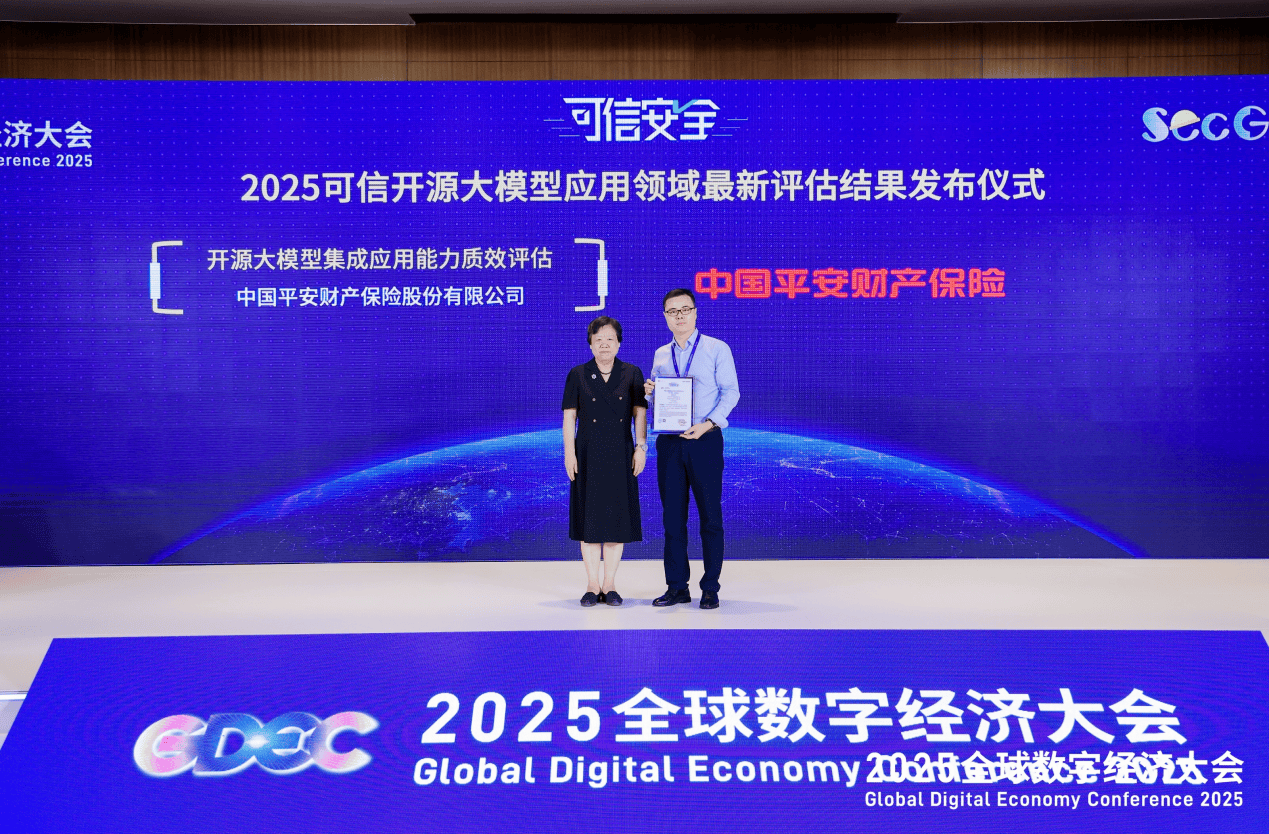
案例数居首位!平安产险9个AI产品入选信通院首批开源大模型创新应用典型案例
Sou Hu Cai Jing· 2025-07-08 10:43
Core Insights - The 2025 Global Digital Economy Conference was held in Beijing, where the China Academy of Information and Communications Technology released the latest assessment results for trustworthy security in 2025, highlighting the achievements of Ping An Property & Casualty Insurance in AI technology innovation and application [1][2] Group 1: AI Product Evaluation - Ping An Property & Casualty Insurance successfully passed the evaluation of nine AI products, which focus on sales, underwriting, claims, and risk control, showcasing their strong application effects and business adaptability [2][3] - The evaluation assessed six dimensions including integration capability, application capability, model performance, security capability, compatibility, and operational management [3] Group 2: AI Capability Construction - The company is actively building an "insurance + technology + service" model, enhancing its AI capabilities in areas such as intelligent search, image processing, knowledge graph, and simulation prediction [4][5] - AskBob, the intelligent search and dialogue engine, utilizes pre-trained large model technology to improve employee efficiency, achieving over 90% effective response rate in underwriting inquiries [4] Group 3: Business Empowerment and Value Restructuring - In 2025, the company completed the localized deployment of the DeepSeek large model, creating AI assistants for various business scenarios, which enhances operational efficiency and customer experience [6][7] - The AI assistant for sales, "Chuang Xiao Bao," enables precise marketing outreach to millions of customers and addresses challenges in non-auto sales [6] - The underwriting process has been transformed from manual to AI-driven, increasing self-underwriting rates by 17 percentage points and reducing initial quote response time to under 2 hours [7] Group 4: Risk Control System - The company has established a comprehensive digital risk control system that includes preemptive measures, real-time warnings, and post-event reviews, significantly enhancing disaster prevention and risk identification capabilities [7] - AI auditing technology is employed for full-chain risk reviews, resulting in annual loss reductions exceeding 5 billion yuan [7]

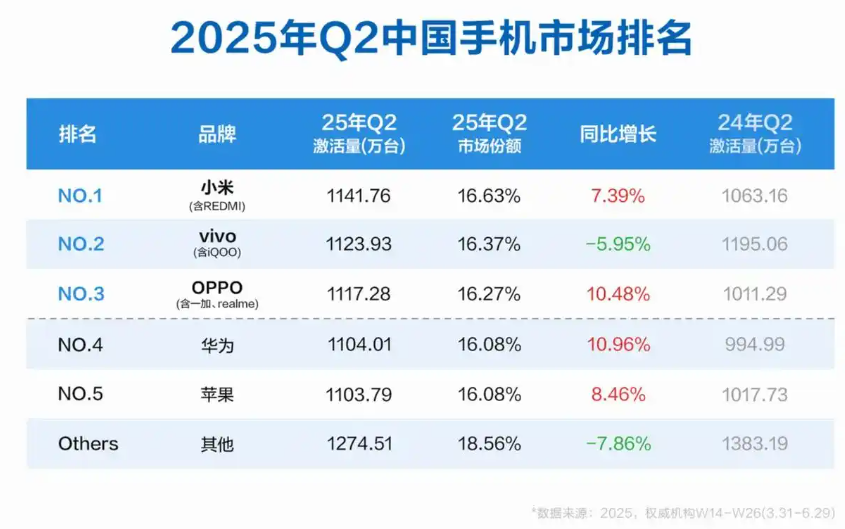
2025年二季度中国手机市场:国产阵营包揽前四 行业集中度持续提升
Ju Chao Zi Xun· 2025-07-08 07:36
华为以10.96%的同比增速(1104.01万台)展现强势回归态势,其自研芯片与鸿蒙生态的持续完善功不可没。苹果虽以 0.01万台微弱差距位列第五,但8.46%的增长表明其在高端市场的统治力依然稳固。 据市场观察,手机行业集中度持续提升,TOP5品牌合计市占率达81.44%,较去年同期提升3.2个百分点;其他品牌阵营 同比下滑7.86%,市场份额压缩至18.56%,中小品牌生存空间进一步收窄。从国内企业来看,国产四强合计份额达 65.35%,较上季度提升1.8个百分点。 产业分析师指出,这一市场格局印证了中国手机产业的三重突破:核心技术创新能力跃升、多品牌运营体系成熟、高端 化战略成效显现。随着国产供应链的全面升级,预计中国品牌在全球市场的竞争力将持续增强。值得注意的是,各头部 品牌在AI大模型、折叠屏、快充等前沿技术领域的持续投入,正在构建新的技术护城河。 领跑者小米集团(含Redmi)以1141.76万台的激活量登顶,市场份额达16.63%,7.39%的同比增速印证了其"技术为 本"战略的成效。其成功关键在于中高端产品线的突破与IoT生态协同优势的持续释放。 vivo系(含iQOO)以16.37%的市场份 ...
DeepSeek向明星道歉,起底闹剧背后的真相
3 6 Ke· 2025-07-07 11:36
Core Viewpoint - The incident involving DeepSeek and actor Wang Yibo highlights the challenges of misinformation in the AI industry, particularly how AI-generated content can lead to false narratives and public confusion [3][10][14] Group 1: Incident Overview - On July 4, a rumor linking Wang Yibo to a corruption case surfaced, leading to DeepSeek issuing an apology for the misinformation [3][5] - DeepSeek acknowledged that due to content review oversights, unverified rumors were incorrectly associated with Wang Yibo, damaging his reputation [3][5] - The apology was based on a court ruling, but the actual statement was generated by AI, not from DeepSeek's developers [6][10] Group 2: Media and Public Reaction - Media outlets reported on the apology, but the source of the statement was not clearly identified, leading to widespread misinformation [5][8] - Fans of Wang Yibo utilized DeepSeek to generate statements distancing him from the corruption case, which were then misinterpreted as factual by various media [8][10] - The incident reflects a broader issue of blind trust in AI outputs by both the public and media, resulting in the spread of false information [10][14] Group 3: AI Model Limitations - The AI model's outputs are based on statistical patterns rather than true understanding, leading to potential inaccuracies [10][14] - AI's tendency to cater to user prompts can result in the generation of misleading content, as seen in this incident [11][14] - The gap in understanding AI technology among the general public contributes to the misinterpretation of AI-generated content as reliable information [14][17]


观澜网络董事长李天天:AI大模型在卫生健康行业的应用探索
Jing Ji Wang· 2025-07-07 07:58
Core Insights - AI large models are significantly impacting the healthcare industry, driving transformation while presenting both opportunities and challenges [1][2][7] Application Status of AI Large Models in Healthcare - AI large models enhance medical efficiency and are primarily integrated into existing workflows due to industry-specific characteristics and regulatory constraints [2] - Current applications include intelligent diagnostic assistance and personalized medical recommendations, with hundreds of hospitals adopting AI solutions like DeepSeek [2] Specific Practices of AI Large Model Applications - DXY (Dingxiangyuan) has developed various solutions leveraging AI large models to improve healthcare services, drawing on over 20 years of industry data [3] Doctor-side Efficiency - DXY's "Clinical Progress Brief" tool addresses information overload for doctors by filtering and summarizing relevant medical literature, thus improving clinical decision-making efficiency [4] Medical Examination and Learning - "Dingxiang Medical Exam" provides personalized learning support for medical professionals, utilizing AI to tailor study plans based on individual performance and knowledge gaps [5] Patient-side Efficiency - DXY's "Dingxiang Doctor" enhances online consultation efficiency by organizing patient information and improving the search experience for health-related queries [6] Rational Considerations for AI Large Model Applications - Emphasis on safety and quality in healthcare applications, with a focus on quantifying impacts on critical health metrics [7][8] - The need for human assistance in AI processes to bridge the digital divide for vulnerable populations [8] Cost-Benefit Balance - Importance of evaluating hidden costs in AI development to avoid unsustainable practices [8] Enhancing AI Literacy Among Medical Personnel - Continuous education and training in AI technologies are essential for healthcare professionals to effectively integrate AI into their practices [8] Cross-Institutional Collaboration - Establishing data-sharing platforms to enhance AI model training and improve accuracy through collaborative efforts across institutions and disciplines [8] Integration of Traditional Medicine - AI can support the preservation and development of traditional medicine, facilitating its integration with modern practices [9] Future Outlook - The healthcare industry is moving towards a more intelligent, efficient, and human-centered approach, with ongoing exploration of AI applications to enhance service delivery [9]
从多模态融合到行业深扎,国内 AI 大模型三大发展方向解析
Sou Hu Cai Jing· 2025-07-07 03:36
Core Insights - The development of AI large models in China is being driven by various institutions such as Baidu, Alibaba, ByteDance, and iFlytek, focusing on technical deepening, application expansion, and ecosystem construction [2][3][4] Technical Deepening - Multi-modal integration is a key focus, with institutions like iFlytek and ByteDance enhancing their models to process and respond to various forms of input, including voice, gestures, and emotions, leading to more natural user interactions [2] - Improvement in reasoning capabilities is being pursued, with ByteDance's Doubao 1.6 - thinking achieving top rankings in complex reasoning tests, while Baidu's Wenxin Yiyan enhances knowledge and reasoning accuracy through external knowledge sources [2] Application Expansion - Industry-specific empowerment is being emphasized, with iFlytek's plans to tailor its models for sectors such as automotive, education, healthcare, and smart cities, while Baidu and Alibaba explore applications in finance, industry, and e-commerce [3] - Innovation in intelligent applications is expected, as ByteDance transitions from an app-centric model to an agent-based model, showcasing the potential for AI to reshape software development paradigms and create new applications [3] Ecosystem Construction - Open-source initiatives are becoming a significant trend, with various models being released by institutions like ByteDance and Baidu, which encourages developer participation and enhances model performance [4] - The establishment of a robust industrial ecosystem is crucial, supported by government policies and local initiatives, such as Shanghai's comprehensive AI industrial chain, which integrates computing power, data, algorithms, and applications [4]



2025上半年中国物业管理市场总结、下半年趋势展望
中指研究院· 2025-07-07 02:54
Investment Rating - The report does not explicitly provide an investment rating for the property management industry Core Insights - The property management market in China is undergoing significant changes due to regulatory actions aimed at addressing long-standing issues and improving service quality [1][2][3] - The introduction of innovative pricing mechanisms, such as the trust-based fee model, aims to enhance transparency and align service quality with pricing [3][4] - The industry is shifting focus from growth in management area to improving service quality and operational efficiency, reflecting a transition to a more sustainable business model [8][30] Market Environment - The Chinese property management market is being regulated to address issues such as service quality and transparency, with government initiatives targeting corruption and service standards [1][2] - The emergence of policies like the reduction of property fees for vacant homes indicates a need to balance the interests of homeowners and property management companies [4][5] - The importance of high-quality service is emphasized, with companies increasingly focusing on service quality as a competitive advantage [6][7] Operational Strategies - Property management companies are increasingly exiting low-quality projects, indicating a shift towards prioritizing quality over quantity in project management [8][9] - The introduction of flexible pricing models, such as Vanke's elastic pricing mechanism, aims to align service quality with customer expectations [10][11] - Companies are focusing on deepening their market presence in specific regions and sectors to enhance operational efficiency and profitability [32][33] Capital Market Performance - The valuation of property management companies has shown slight recovery but remains low compared to historical levels, with a total market capitalization of approximately 259.82 billion [11][12][13] - The property management sector is experiencing liquidity issues, with a notable decline in IPO activity and some companies opting for privatization due to market conditions [15][16][17] - Despite challenges, the sector's characteristics, such as stable cash flow and low asset intensity, suggest potential for recovery and growth [14][18] Technological Applications - The use of new media platforms for brand promotion is expanding, with significant increases in engagement on platforms like WeChat and Douyin [19][20] - AI technologies are being integrated into property management processes, enhancing efficiency in bidding and operational tasks [22][23] Market Size and Growth - The property management industry is transitioning into a phase characterized by a focus on existing assets, with a total management area exceeding 31.41 billion square meters [27][28] - The industry's revenue has surpassed traditional service sectors, indicating strong market demand and growth potential [28][29] - The average profit margins in the industry are declining, reflecting the shift from a growth-oriented to a more sustainable operational model [30][31] Development Strategies - Companies are adopting a strategy of focusing on core services and enhancing operational efficiency to navigate the current market challenges [38][39] - The emphasis on foundational services is increasing, as they provide stable cash flow and customer loyalty, which are crucial in a competitive environment [41][42] - The need for innovative pricing mechanisms is highlighted, with companies exploring flexible pricing models to better meet customer needs and improve service transparency [45][46]